Senator Mike Lee was on “Sunday Morning Futures” with host Maria Bartiromo to talk about the SAVE America Act. This would require proof of ID and citizenship to vote in federal elections.
“Can you tell us what’s going on in the Senate this morning, and what happened yesterday?” Bartiromo asked.
“We are continuing to debate the SAVE America Act because Americans overwhelmingly believe that voters in the United States, you need to be US citizens,” Lee said.
“So, our bill does two things in order to make it easy to vote, and hard to cheat,” Lee continued.
“When you register to vote, you need to prove that you are a citizen, and when you show up to vote, you need to show up with a voter ID,” Lee explained.
Senator Lee explained that securing the vote is important, and noncitizens’ voting will affect the vote of a US citizen.
“It’s not too much to ask, as this is one of our most sacred, fundamental rights, and that right will be diluted, distorted, and offset if we allow noncitizens to vote,” Lee continued.
“Chuck Schumer says it’s dead on arrival. The democrats are unified,” Bartiromo said.
“In its current form, perhaps. In its current form and until we’ve had more debate,” Lee said.
“We need a few weeks to debate this. If we can have a few weeks to debate it, that will sharpen the discussion. And members grow exhausted over time, and with that exhaustion, we’ll find ways of achieving consensus,” Lee explained.
“This will pass if we give it enough time,” Lee said.
“What about putting it in as part of a reconciliation package?” Bartiromo asked.
“The SAVE America Act doesn’t meet the standard characteristics of a budget reconciliation bill because it is not budgetary,” Lee continued.
“We’ve got only a 10-vote closure deficit to overcome here. This is a simpler bill, and it’s preferred by 85 percent of American voters,” Lee explained.
Corrupt Robert Mueller of the Russia Collusion sham is dead. He will go down as one of the worst crooks in American history. President Trump’s response to Mueller’s death will … Read more
China’s People’s Liberation Army (PLA) has been watching and learning from the U.S.-Iran conflict. (Photo by Xinhua/Cheng Min)
China is studying the U.S.-Israeli war against Iran as part of a long-standing pattern of learning from American conflicts to reshape its own military strategy. Just as the 1991 Gulf War exposed the power of high-tech networked warfare and triggered decades of People’s Liberation Army (PLA) modernization, the Iran war is now being analyzed for insights into AI-driven targeting, multi-domain operations, and real-time intelligence integration.
China Military Bugle, a PLA-affiliated outlet, published five lessons from the war for domestic military audiences, an unusual public statement that serves simultaneously as a critique of the U.S., a warning against complacency within PLA ranks, and a signal to the rest of the world not to underestimate Chinese resolve.
The first lesson, labeled ‘Deadliest threat: the enemy within,’ reflects the U.S. and Israeli ability to neutralize high-value targets early in the conflict through human intelligence. Taiwan defense analyst Cheng-Yu Wu, a policy analyst at Taiwan’s Institute for National Defense and Security Research, said the efficiency of the Mossad and CIA proved the depth of infiltration within the Iranian regime.
According to Wu, this fact ‘definitely terrifies China’ because even with Chinese-exported surveillance equipment and techniques in place, the U.S. and Israel found a way to circumvent Iran’s monitoring systems. The lesson reinforces Beijing’s longstanding concern about internal security and the limits of technological surveillance.
The second lesson, ‘Costliest miscalculation: blind faith in peace,’ addresses Iran’s failure to anticipate military action while negotiations were ongoing. Oman-mediated talks had given Tehran the impression that non-military options still existed, but the U.S. launched strikes regardless. Yun Sun, Director of the China Program at the Stimson Center, said the implied message to PLA forces is a hardline position on the U.S. and a criticism of what Chinese commentary calls the American ‘fake promise of peace.’ The PLA is using this lesson to indoctrinate its own armed forces about the need to remain on a war footing and not to trust U.S. diplomatic engagement.
The third lesson, ‘Coldest reality: the logic of superior firepower,’ is the operational core. In the opening 48 hours of Operation Epic Fury, the U.S. deployed B-2 stealth bombers against hardened underground facilities, fired Tomahawk cruise missiles from destroyers in the Arabian Sea, and used a new autonomous drone called LUCAS in combat for the first time. LUCAS is a $35,000 one-way suicide drone reverse-engineered from Iran’s own Shahed design.
The introduction of low-cost, mass-producible attack drones alongside precision missiles is not a tactical footnote for PLA planners. China reached the same doctrinal conclusion years ago and is now watching the U.S. arrive at the same logic and act on it at scale.
The fourth lesson, ‘Cruelest paradox: the illusion of victory,’ addresses the internal political problem authoritarian regimes face in modern warfare. Ruling elites in such systems need to maintain a narrative of inevitable victory to sustain legitimacy. Chinese commentary suggests the PLA may be starting to recognize that propaganda cannot compensate for real military disadvantages against a power like the United States. The fifth lesson, ‘Ultimate reliance: self-reliance,’ draws the conclusion that technological independence is non-negotiable. Iran’s dependence on external support, including Chinese-supplied systems, left it exposed in ways Beijing intends to avoid.
Iran’s air defense network incorporates Chinese and Russian components, and that network has been systematically dismantled in the conflict. The failure modes are of direct interest to PLA engineers: which radar nodes were hit first, how American electronic warfare degraded the command network, and how quickly suppression sequencing worked. Iran is functioning as a live stress test of equipment and doctrine that China shares.
China spent decades helping Iran design its drone fleet and supplied critical guidance and engine system components while, according to unofficial sources, combining PLA space surveillance and navigation satellite architecture to guide Iran’s ballistic missile and drone strikes. The battlefield performance of those systems under American attack is now feeding directly into Chinese defense engineering.
China’s broader military philosophy, known as ‘Systems Destruction Warfare Strategy,’ does not aim to destroy individual American or Israeli weapons platforms, but to disrupt the network connecting U.S. forces. The Iran conflict is reinforcing this direction. The key focus is not individual weapons but how the United States fights wars as a system: integrating satellites, AI tools, intelligence networks, and precision strikes to identify and eliminate high-value targets.
China is observing surveillance patterns, command-and-control responses, missile defense operations, and the timing of strikes to reconstruct U.S. operational behavior for application in a future Indo-Pacific conflict.
The decapitation question has particular relevance for Taiwan. A PLA Navy-affiliated journal published in November outlined how precision strikes on Taipei’s leadership structure could force rapid capitulation. The Iran conflict is now complicating that calculation. Chinese analysts observe that the removal of a large portion of Iran’s top political and military leadership, including the supreme leader, has not collapsed the regime. Iran’s governance structure, succession mechanisms, and geographic depth have allowed it to absorb those losses and continue fighting.
Max Lo, executive director of the Taiwan International Strategic Study Society, stated that ‘the lesson from Tehran is that decapitation is not the end of the war but the beginning of a much more chaotic one.’ Beijing’s takeaway is that decapitation strikes are one component of a broader campaign, not a decisive strategy on their own. In a Taiwan scenario, Chinese planners would treat such strikes as supporting actions within a larger amphibious operation.
The ability of the PLA to fully process these lessons is complicated by an ongoing leadership crisis. A report from the Center for Strategic and International Studies estimates that more than half of PLA leadership has been affected by Xi Jinping’s purges. Of the 47 individuals who have held three-star positions or above since 2022, 41 have reportedly been removed, including those purged after retirement. Only 11 of 52 key positions are currently occupied. This leadership vacuum exists at the moment the PLA most needs experienced officers to analyze and integrate what it is observing.
Irrespective of the outcome of the Iran war, China will have extracted more from several weeks of American combat operations than it could have gained through any other means, without spending a dollar on the conflict itself.
Cuba’s Deputy Foreign Minister during an interview on NBC’s Meet THe Press.
Cuba’s communist government says its military is preparing to fend off a possible military invasion as President Donald Trump escalates economic pressure on the island.
The comments were made by Cuba’s Deputy Foreign Minister Carlos Fernandez de Cossio during an interview on NBC’s Meet the Press.
“Our military is always prepared,” he said. “And in fact it is preparing these days for the possibility of military aggression.”
“We would be naive if we would not do that. But we truly hope that it doesn’t occur.”
The comments come as the Trump administration tightens sanctions, including a de facto fuel blockade that has left the island struggling to maintain basic energy supply.
Cuba has suffered repeated nationwide blackouts in recent months, including a full grid collapse last week and another major outage reported Saturday.
“It is very severe,” de Cossio said of the fuel shortages.
STRATEGIC PRESSURE: After the U.S. cut off Venezuelan oil shipments to Cuba, the island is now facing SEVERE fuel shortages and rolling blackouts.
He went on to express hope that the “boycott that the United States has been imposing does not last and cannot be sustained forever.”
Despite the worsening situation, Cuban officials ruled out any political concessions.
“The nature of the Cuban government… [is] not part of the negotiation,” De Cossio said.
The regime has released a small number of political prisoners and floated limited economic openings, but U.S. officials have dismissed those moves as insufficient.
Cuban authorities also made clear that President Miguel Díaz-Canel will remain in power.
While insisting the country is “not in a state of collapse,” De Cossio acknowledged the growing strain as fuel shortages, blackouts and economic pressure continue to mount.
“We’re being as creative as possible,” he insisted.
Earlier this week, Trump said he expected to have the “honor” of liberating the island from its communist regime.
“It’s a failed nation. They have no money, they have no oil, they have no nothing. They have nice land. They have nice landscape, you know? It’s a beautiful island. I think they have great people.”
”I think Cuba is, in its whole way, with, you know, tourism and everything else, it’s a beautiful island, great weather.”
”I do believe I’ll be the honor of— having the honor of taking Cuba. That’d be good honor, that’s a big honor.”
Trump on Cuba:
I do believe I’ll have the honor of taking Cuba. That would be good. That’s a big honor.
President Donald Trump took to Truth Social on Sunday to brand the “highly incompetent” Democrat Party as America’s greatest enemy following the “death of Iran.”
The statement came hours after Trump issued a direct ultimatum to Iran on Saturday night, demanding the regime fully open the Strait of Hormuz without threats within 48 hours or face devastating military strikes on its power plants.
The president wrote:
Now with the death of Iran, the greatest enemy America has is the Radical Left, Highly Incompetent, Democrat Party! Thank you for your attention to this matter. President DJT
Earlier in the day, Trump blasted the Democrats for holding up Department of Homeland Security funding, which is causing TSA officers to go without pay.
Their tantrum has caused absolute chaos in airports, with hours-long lines and nearly 400 TSA officers quitting.
Senate Democrats are actively blocking the SAVE America Act, legislation that would require proof of citizenship to register to vote in federal elections.
The bill passed the House earlier this year with strong Republican support, but Democrats have vowed to filibuster it, claiming it amounts to voter suppression.
The president vowed on Saturday afternoon that if they continued their petulant holdup, he would deploy ICE agents to airports to handle security and detain illegal aliens while they’re at it.
Trump wrote:
The Radical Left Democrats have hurt so many people with their vicious and uncaring ways. What they have done to the Department of Homeland Security, our fantastic TSA Officers, and, most importantly, the great people of our Country, is an absolute disgrace. If the Democrats do not allow for Just and Proper Security at our Airports, and elsewhere throughout our Country, ICE will do the job far better than ever done before!
The Fascist Democrats will never protect America, but the Republicans will. Just like the Radical Left allowed millions of Criminals to pour into our Country through their ridiculous and dangerous Open Border Policy, the Republicans closed it all down, and we now have the Strongest Border in American History. Likewise, I look forward to moving ICE in on Monday, and have already told them to, “GET READY.” NO MORE WAITING, NO MORE GAMES! President DONALD J. TRUMP
Treasury Secretary Scott Bessent appeared on NBC’s “Meet the Press” to discuss the Trump Administration’s oil sanctions amid the ongoing conflict with Iran.
At one point, Kristen Welker tried to get Bessent to condemn Trump’s social media post celebrating Mueller’s death.
Former special counsel Robert Mueller passed away on Friday.
He was 81 years old. The cause of death is not known at this time.
The New York Times previously reported that Mueller was diagnosed with Parkinson’s four years ago and has had difficulty speaking in recent months.
“Robert Mueller just died. Good, I’m glad he’s dead. He can no longer hurt innocent people! President DONALD J. TRUMP” Trump said.
Kristen Welker tried to get Bessent with a ‘gotcha’ question about Trump’s ruthless social media post on Mueller, but it failed.
“Do you think it’s appropriate for the president of the United States to celebrate the death of an American citizen, someone who is a Bronze Star, Purple Heart recipient and who served in Vietnam?” Kristen Welker asked Bessent.
Bessent pushed back and didn’t take the bait.
“Given what was done to Trump and his family, it’s impossible to understand what he went through,” Bessent said.
“I think we should have a little empathy for what has been done to Trump and his family,” Bessent said as Kristen Welker repeatedly pushed back.
“I watched the look in his eye. Neither one of us can understand what has been done to him and his family,” he said.
WATCH:
Robert Mueller served as a special counsel from May 2017 to March 2019. He indicted more than 30 people, including Trump campaign officials.
President Trump is right. Mueller hurt many innocent people.
Mueller harassed President Trump and his associates with a fishing expedition based on a phony, Hillary Clinton-funded dossier.
Here is a list of just a few of the innocent Americans Mueller hunted down:
Former Trump campaign manager Paul Manafort was indicted on conspiracy, FARA, and money laundering charges.
Former Trump campaign advisor George Papadopoulos was charged with making false statements to the feds.
Trump’s former National Security Advisor, General Mike Flynn, was indicted on making false statements to the feds after he was ambushed by FBI agents.
Trump’s former lawyer, Michael Cohen, was charged with making false statements to Congress.
Former campaign advisor Roger Stone was indicted on witness tampering charges and false statements.
After ruining countless lives, Mueller submitted his final report on his investigation into ‘Trump-Russia collusion’ and concluded that President Trump never conspired with Vladimir Putin during the 2016 election.
The Iranian strategy of firing its missiles against the Gulf countries because of their collaboration with the US-Israeli strikes threatens turning these neighboring states against the mullahs’ regime.
In the case of Saudi Arabia, the threats of military action from Riyadh have evolved into the expulsion of Iranian diplomats over the aggression against the Kingdom.
Saudi Arabia announced the expulsion of Iranian military attachés and embassy staff, declaring them persona non grata and ordering them to leave the Kingdom within 24 hours, the Ministry of Foreign Affairs said Saturday. https://t.co/vi2i1srTzH
“The Saudi Ministry of Foreign Affairs renewed the Kingdom of Saudi Arabia’s unequivocal condemnation of the blatant Iranian attacks against the Kingdom, the states of the Gulf Cooperation Council (GCC), and a number of Arab and Islamic countries.
[…] Reaffirming the ministry’s statement issued on 9th March 2026, […] the Kingdom of Saudi Arabia has notified the military attaché of the Embassy of the Islamic Republic of Iran to the Kingdom, the assistant military attaché, and three members of the mission staff to leave the Kingdom, and has declared them personae non gratae. They are required to depart the Kingdom within 24 hours.”
Iranian missile launch – Wiki Commons
The Saudi Press Agency (SPA) stated that the continued targeting by Iran ‘constitutes a flagrant violation of all relevant international conventions, the principles of good neighborliness and respect for states’ sovereignty, the Beijing Agreement, and United Nations Security Council Resolution 2817’.
“Saudi authorities warned that Tehran’s actions risk further escalation and could have lasting consequences for bilateral relations.
‘The kingdom will not hesitate to take all necessary measures to preserve its sovereignty, safeguard its security, and protect its territory, airspace, citizens, residents, and resources’, the Foreign Ministry said, citing Article 51 of the United Nations Charter, which recognizes the right to self-defense.
Since the start of the conflict involving the United States and Israel against Iran on February 28, Saudi Arabia, like other Gulf countries, has faced repeated missile and drone attacks, most of which have been intercepted by its air defense systems.”
Democrat Rep. Eric Swalwell has been missing votes in Congress while running for California governor, spending his time hanging out at a $23.4 million Beverly Hills mansion owned by one of his top campaign donors.
Swalwell has visited the lavish 9,700-square-foot estate on Roxbury Drive on at least 10 different days since September, according to a report from the New York Post.
The property, owned by Las Vegas timeshare mogul Stephen Cloobeck, features six bedrooms, seven bathrooms, a tennis court, double gates, and luxury artwork that Swalwell has used as a backdrop for social media videos and TV interviews.
Congressional records show Swalwell missed House floor votes on at least three days when he posted content from the mansion.
Swalwell missed more votes in 2025 than any other active member of Congress, more than even the late Rep. Raúl Grijalva, who died in March.
Cloobeck has been a major backer of Swalwell’s gubernatorial campaign. He contributed $1 million to a supporting committee, provided resources from his own short-lived 2025 governor bid, and previously spent $31,000 on a trip flying Swalwell to Nice, France, according to congressional gift reports. Cloobeck has publicly referred to Swalwell as his “Little Brother” and confirmed the use of his home for campaign work, saying of one televised hit, “That’s my backdrop. Mi casa, su casa.”
The visits occurred during key moments in Swalwell’s campaign, including the October government shutdown, his November campaign rollout, a December campaign stop, and multiple days in January.
Swalwell’s campaign spokesperson, Micah Beasley, told Politico the campaign is “grateful to have Stephen Cloobeck’s support in this race.” Neither Swalwell nor Cloobeck responded to further requests for comment from the New York Post.
The story also raises questions about Swalwell’s California residency.
Swalwell claims to have lived in a rented Livermore home since 2017, but neighbors there say they have never seen him, despite his living on the street for years. His actual family home is in Washington, D.C.
The Post reports:
One question is why Swalwell would need to stay at Cloobeck’s casa.
The Bay Area congressman’s neighbors in Livermore couldn’t identify Swalwell when The Post showed them his picture, despite Swalwell claiming to have lived on the quiet cul-de-sac since 2017.
“I’ve never seen him,” said Gita Prusty, who’s lived on the street for five years.
Campaign records show Swalwell has spent thousands of dollars on luxury hotel rooms in and around his district.
Swalwell’s campaign, which did not respond to The Post’s requests for comment, has refused to provide any documentation on a lease agreement or monthly payments for the three-bedroom house, which is just 1,350 square feet and also home to another family.
A Sacramento judge tentatively struck down a lawsuit challenging his ballot eligibility, with a final hearing scheduled for Monday.
Republican gubernatorial candidate Steve Hilton told the Post, “I honestly can’t figure out what’s going on with Eric Swalwell.”
“He obviously has no interest in his current job, because he missed more votes than a member of Congress who died,” Hilton added. “He clearly doesn’t have any real interest in California either, because he lives in another state.”
America’s most iconic symbol—the flag—faces renewed scrutiny as President Trump’s administration doubles down on policies that challenge what it means to protect our nation’s values.
Historic Evolution of the American Flag Reflects National Identity
For over 247 years, the United States has updated its flag 27 times, each change marking the addition of new states and symbolizing unity through shared values. The first official flag, authorized by Congress in 1777, featured 13 stripes for the original colonies and a blue canton representing a new nation built on principles of liberty and self-governance. The flag’s evolution mirrors the nation’s growth, serving as a rallying point for Americans who cherish constitutional rights and national pride. In recent years, debates about the flag’s meaning have intensified, especially as conservative Americans seek to reaffirm traditional values under changing political leadership.
Since January 2025, President Trump has acted on campaign promises by issuing executive orders to declare a national emergency at the southern border and dramatically expand enforcement. The administration now aims to deport one million immigrants annually, more than triple previous records, using expedited removal procedures nationwide and daily arrest quotas. Enforcement now extends to sensitive locations such as schools and hospitals, with local police empowered under new federal agreements. These measures have challenged so-called sanctuary jurisdictions, threatening penalties and funding cuts for noncompliance, and have created a climate of heightened vigilance among law-abiding Americans who believe strong borders are essential to national security.
Policy Changes Test Constitutional Limits and Federal Authority
This administration’s immigration policies have tested executive power and constitutional boundaries. The “One Big Beautiful Bill Act,” signed in July 2025, allocated $170 billion to immigration enforcement and detention, quadrupling previous budgets and enabling indefinite detention of families, including children. The law bypasses historic protections and limits established by the Flores Settlement Agreement, raising alarms about due process and the humanitarian impact. Simultaneously, the administration has suspended refugee admissions, revoked parole programs for several nationalities, and moved to eliminate Temporary Protected Status for hundreds of thousands. Conservative supporters argue these actions restore order and prioritize American interests after years of perceived government overreach.
Conservatives Rally to Defend Traditional Values and Constitutional Rights
Many conservatives view these policy changes as critical victories following years of frustration with leftist agendas, globalism, and fiscal mismanagement. The flag remains a potent symbol—its 27 versions mark America’s resilience and adaptability. Today, the administration’s efforts to reinforce borders and enforce immigration law resonate with those who believe in limited government, constitutional protections, and safeguarding the nation’s heritage. However, critics warn of potential violations to due process and humanitarian principles. As legal challenges unfold, the debate intensifies over how best to defend American values without compromising foundational rights. Limited data available; key insights summarized from current reports as the landscape continues to evolve.
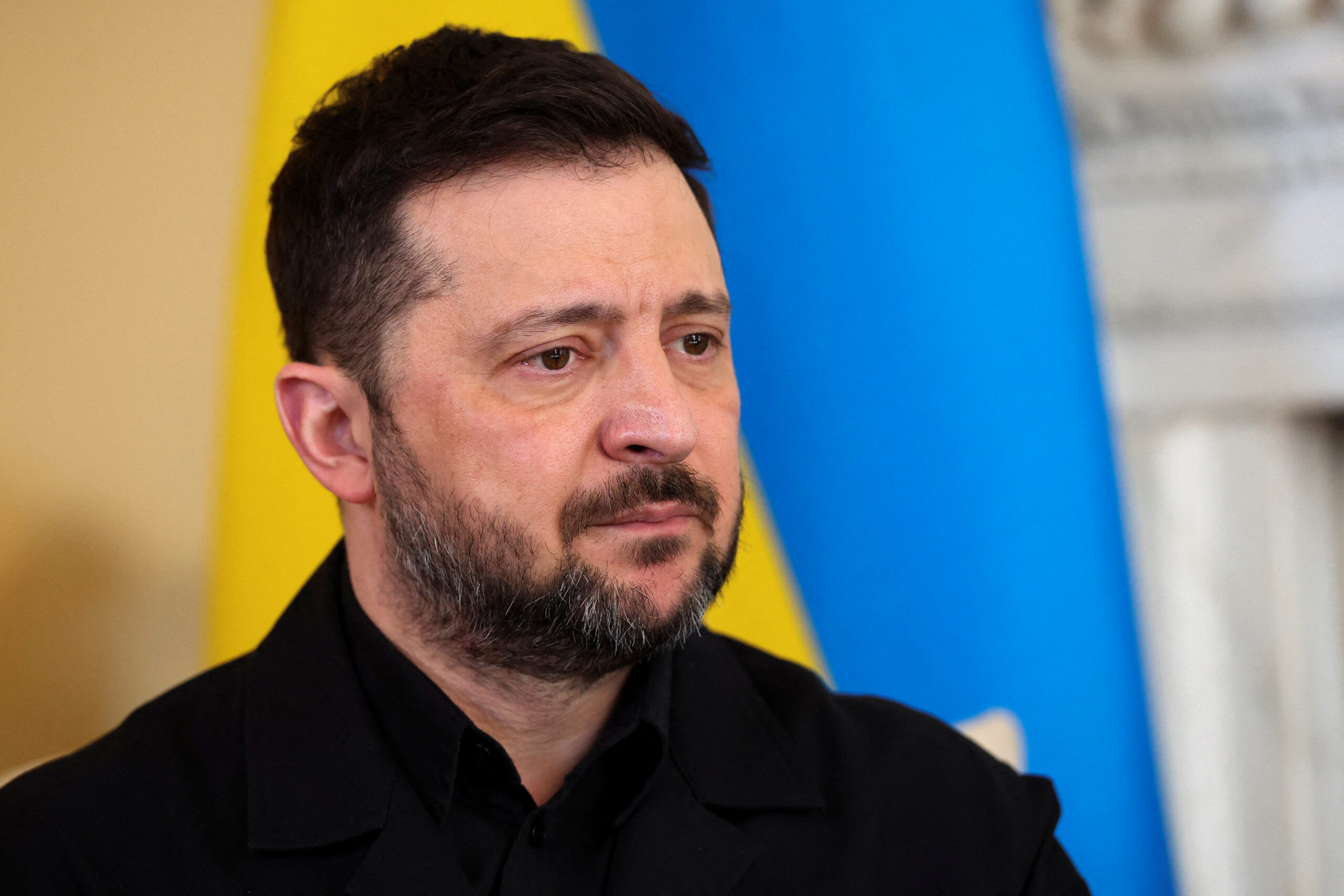
New developments are restricting the Ukrainian president’s room for maneuver.
Volodymyr Zelensky has been president of Ukraine for seven years. He has been at war with Russia for four. He is now facing intense new challenges.
The pressure is mounting on Zelensky to hold presidential elections. Yaroslav Yurchyshyn, a member of Ukraine’s Parliament, says the Ukrainians have been told that the U.S. could pull out of the diplomatic process “if Ukraine was not prepared to compromise, including by holding elections.” They have reportedly also been told that security guarantees are contingent on elections being held. Legislation for holding elections is being prepared.
But the pressure on Zelensky comes, not just from the Americans to hold an election, but from the polls. The public perceives corruption, scandals and increasing authoritarianism, and has through four years of devastation seen all of the assurances of victory, NATO membership, accelerated accession to the European Union, and reacquisition of lost territory vanish. Hence trust in Zelensky is eroding.
According to the sociologist Volodymyr Ishchenko of Freie Universität Berlin, there is a trend whereby Zelensky is seen as a capable wartime leader but not the right man for Ukraine after the war. Polling suggests that Zelensky could lose an election, not only to the former top general Valerii Zaluzhny, who has long been seen as a threat, but also to the former intelligence chief and current chief of staff Kyrylo Budanov. Recent polling by the Kiev International Institute of Sociology in January indicates that 72 percent of Ukrainians trust Zaluzhny and 70 percent trust Budanov, while only 62 percent now trust Zelensky.
Political pressure on Zelensky comes not only from the electorate but from within his own party. The unquestioned loyalty that Zelensky has had from his Servant of the People party is over. Nicolai Petro, professor of political science at University of Rhode Island, told me that about 40 MPs from his own party “are boycotting sessions and refusing to vote on legislation being pushed by the EU.” Some, he says, “are worried that they are being targeted by the National Anticorruption Bureau. Others say that they are sick and tired of being taken for granted by Zelensky.” The recently exposed cash-for-votes system is also collapsing, and some say they are rebelling because “the amount they are being paid under the table has fallen.”
Public opinion is making it harder for Zelensky to maintain his position and not compromise on his redline of territorial concessions. New polling by the Kiev International Institute of Sociology shows a major shift: In a simulated referendum, a majority of Ukrainians say they would support “territorial compromises” if peace came with security guarantees and accelerated EU membership. Sixty-one percent say they would vote yes to that proposal, and only 10 percent say they would vote no. Including only those who say they would vote brings the yes vote up to 86 percent. The polling question did not specify ceding all of Donbas, but even among those who say they are categorically against exchanging Donbas for security guarantees, 54 percent would vote yes to this proposal. Only 14 percent say they would vote no.
But the question of accelerated EU membership is also squeezing Zelensky. The path to the EU is not as smooth as it was made to sound. The revised 20-point peace plan proposes accelerated accession to the EU with a defined target of 2027 or 2028. But when EU President Ursula von der Leyen proposed fast-tracking Ukrainian membership, with benefits accruing as Ukraine increasingly met EU regulations, Germany and France, apparently speaking for many members, balked. Germany’s Chancellor Friedrich Merz rejected the 2027 target date as “not possible” and pushed it back nearly a decade, suggesting a more realistic target of no earlier than 2035.
The wider global picture is also growing unkind to Zelensky. The war on Iran has diverted attention, and especially weapons and air defenses, from Ukraine. Interceptors that would have been sent to Ukraine are being burned up in the skies over the Middle East. The war on Iran is resulting in easing sanctions on Russian oil, pumping the Russian economy full of cash to finance the missiles being launched on Ukraine. It also uses up the interceptors that would have been sent to Ukraine to shoot them down. The coming pressure on Ukraine’s ability to defend itself is threatening. “The risk is very high, in my view,” Zelensky says.
And, finally, Zelensky is facing renewed pressure from President Donald Trump. When asked about Zelensky’s offer to help the U.S. defend against Iranian drones that were the prototype for a class of Russian drone that Ukraine has so much experience facing, a dismissive Trump answered, “No, we don’t need [Ukraine’s] help in drone defense.” In an interview with NBC, Trump repeated that rejection and then added contemptuously that the “last person we need help from is Zelensky.”
In Trump’s ever shifting mood about the war in Ukraine, he seems, once again, to be turning on Zelensky. “I’m surprised that Zelensky doesn’t want to make a deal,” Trump said. “Tell Zelensky to make a deal because Putin’s willing to make a deal.”
“Zelensky is far more difficult to make a deal with,” he added.
Since he became president, Zelensky has known little other than pressure—but is it becoming unsustainable?


 STRATEGIC PRESSURE: After the U.S. cut off Venezuelan oil shipments to Cuba, the island is now facing SEVERE fuel shortages and rolling blackouts.