(VIDEO) Trump Says He’ll Have the “Honor” of “Taking Cuba” – “Whether I Free it, Take it, I Think I Can Do Anything I Want with It”

Donald Trump seated in the Oval Office, smiling during a discussion, with a backdrop of American flags and personal photographs on the desk.

Donald Trump seated in the Oval Office, smiling during a discussion, with a backdrop of American flags and personal photographs on the desk.

President Trump on Monday again floated “taking Cuba,” saying he believes he will have the “honor” of doing so. 

During a press conference in the Oval Office, Trump told reporters that Cuba is “very weakened,” noting that its “very violent” regime has destroyed the country.

“All my life, I’ve been hearing about the United States and Cuba. You know, when will the United States do it?”

This comes as the Department of Justice is preparing to charge Communist Cuban leaders in cases related to drugs or violence.

Cuba also faced a nationwide blackout after Trump cut off the flow of oil by threatening tariffs on any country that provides oil to Cuba through an Executive Order.

Meanwhile,  as The Gateway Pundit recently reported, U.S. Southern Command announced new operations with the Ecuadorian military against narco-terrorists in South America and is still surging troops to the region.

Trump told Fox’s Peter Doocy that Cuba is “talking to us” but declined to say whether he plans to use the military to invade Cuba as he did in Venezuela in January.

“I mean, whether I free it, take it, I think I can do anything I want with it, you want to know the truth. They’re a very weakened nation right now,” he said.

WATCH:

Doocy: When you say Cuba is next, is Cuba— whatever you do with the military there seems like something. Will that look more like Iran or Venezuela?

Trump: I can’t tell you that. I can tell you that they’re talking to us. It’s a failed nation. They have no money, they have no oil, they have no nothing. They have nice land. They have nice landscape, you know? It’s a beautiful island. I think they have great people.

I think Cuba is, in its whole way, with, you know, tourism and everything else, it’s a beautiful island, great weather. They’re not in a hurricane zone, which is nice for a change. You know, they won’t be asking us for money for hurricanes every week, but, but I think Cuba seeing the end. You know, all my life I’ve been hearing about the United States and Cuba. You know, when will the United States do it? I do believe I’ll be the honor of— having the honor of taking Cuba. That’d be good honor, that’s a big honor.

Doocy: Taking Cuba?

Trump: Taking Cuba in some form, yeah, taking Cuba. I mean, whether I free it, take it, I think I can do anything I want with it, you want to know the truth. They’re a very weakened nation right now. They were, for a long time, very violent, very violent leaders. Castro was a very violent leader. His brother’s a very violent leader, extremely violent. That’s how they governed. They governed with violence. But a lot of people would like to go back.

As The Gateway Pundit reported, Trump also told reporters on Sunday, “I think something will happen with Cuba pretty quickly.”

“Cuba’s a failed nation. Cuba also wants to make a deal, and I think we will pretty soon, either make a deal or do whatever we have to do,” Trump said. “We’re talking to Cuba, but we’re going to do Iran before Cuba.”

(VIDEO) Trump Says He’ll Soon “Make a Deal or do Whatever We Have to Do” with Cuba – “I Think Something Will Happen with Cuba Pretty Quickly”

The post (VIDEO) Trump Says He’ll Have the “Honor” of “Taking Cuba” – “Whether I Free it, Take it, I Think I Can Do Anything I Want with It” appeared first on The Gateway Pundit.

Trump to Reschedule China Summit With Xi

President Donald Trump said Monday the United States has asked to postpone his planned meeting with China’s President Xi Jinping in Beijing by “a month or so,” citing his desire to remain in Washington to supervise the ongoing war with Iran.

Trump, who was expected to travel to China at the end of March, told reporters in the Oval Office that the trip was under review. “We’re speaking to China. I’d love to, but because of the war, I want to be here,” he said, adding there were “no tricks” behind the request.

The delay comes amid rising tensions between Washington and Beijing, fueled by the Iran conflict and a new U.S. investigation into Chinese trade practices. Treasury Secretary Scott Bessent said earlier Monday that any rescheduling would be for logistical reasons not linked to U.S. pressure on China over the Strait of Hormuz. White House Press Secretary Karoline Leavitt said a delay was “quite possible.”

The post Trump to Reschedule China Summit With Xi appeared first on The American Conservative.

Tucker Carlson: “Throughout the West Criticizing the Netanyahu Government is Now a Crime Punishable by Imprisonment”

Tucker Carlson, host of the Tucker Carlson Show, speaks into a microphone during a live broadcast from Maine.

Screenshot: Tucker Carlson Network

Tucker Carlson released his latest interview on Monday.

He invited longtime friend and fellow Israel critic Glenn Greenwald as his guest.

Tucker made this bold statement to his audience, “Throughout the West, criticizing the Netanyahu government is now a crime punishable by imprisonment.”

(You can listen to this at 1:02:10 in the video below.)

It’s not clear what he is referring to today.

Glenn Greenwald says that censorship of conservative voices in the West is not as big of threat on free speech as criticizing Israel and Jews.

This video interview comes out just days after Tucker said the CIA has been reading his text messages and is referring a criminal complaint against him.

JUST IN: Tucker Carlson Says CIA Has Been Reading His Texts and is Preparing a Criminal Referral Against Him for Alleged FARA Violation – “You Should Know What the Stakes Are” (VIDEO)

The post Tucker Carlson: “Throughout the West Criticizing the Netanyahu Government is Now a Crime Punishable by Imprisonment” appeared first on The Gateway Pundit.

Trump’s Allies to “TAKE OVER” Senate Floor in Epic Showdown to FORCE Vote on SAVE America Act

Laura Ingraham interviews Utah Senator Mike Lee on Fox News, discussing Democratic concerns regarding proof of citizenship amid political debates.

Laura Ingraham interviews Utah Senator Mike Lee on Fox News, discussing Democratic concerns regarding proof of citizenship amid political debates.
Screenshot

Allies of President Donald Trump are reportedly preparing to “take over the Senate floor” today, Tuesday, to push for action on the SAVE America Act.

According to reports, Trump-aligned senators are planning procedural maneuvers that could trigger extended debate, marathon speeches, and potentially a “talking filibuster” showdown designed to put pressure squarely on both Democrats and RINOs.

As The Gateway Pundit reported, Trump has already threatened to withhold his signature from all future legislation until the Senate delivers proof-of-citizenship voting requirements, strict voter ID, and an end to the Democrat-favorite mail-in ballot fraud machine.

On Monday, Sen. Eric Schmitt (R-MO) teased a critical amendment to the SAVE America Act and confirmed he is working “closely” with Donald Trump ahead of Tuesday’s floor showdown.

Schmitt and other Trump loyalists are done playing games with Senate Majority Leader John Thune’s weak-kneed schedule. They want a marathon session, a talking filibuster, and amendments that will make the bill even stronger, including total restrictions on mail-in voting except for the truly disabled, military, or overseas Americans.

Recent reporting confirms the Senate is “bracing for a showdown” over the legislation, with extended debate and procedural warfare expected as Republicans attempt to force the issue into the spotlight.

Sen. Roger Marshall (R-KS) dropped a bombshell just days ago, telling One America News he is ready and willing to launch a full “talking filibuster” to ram the SAVE America Act through.

No more hiding behind procedural games. Democrats will have to stand on the floor and own their treasonous opposition to basic election security.

Sen. Ron Johnson has even floated forcing votes specifically to “get Democrats on the record” regarding election integrity measures.

According to The Hill, loyalists to President Donald Trump are planning a “Senate floor takeover” to pressure the chamber into passing the SAVE America Act.

The news outlet reported.

President Trump’s allies are planning to take over the Senate floor this week in a bid to pass the Safeguard American Voter Eligibility (SAVE America) Act, setting up a major test for Senate Majority Leader John Thune (R-S.D.), who is under pressure from Trump and the MAGA base to extend the debate over voting reform for as long as possible.

GOP senators are playing their cards close to the vest ahead of this week’s marathon debate over the SAVE America Act, which would require people registering to vote to show documented proof of citizenship.

[…]

Trump allies, frustrated that they aren’t able to force Democrats to stage a talking filibuster to block the bill, are pressing Thune to keep the measure on the floor as long as possible to force Democrats to defend their opposition.

[…]

Sen. Mike Lee (R-Utah), a leading proponent of the bill, says Trump wants to see Republicans go all out and is envisioning an epic floor fight, like the two-month battle that preceded the Senate’s passage of the 1964 Civil Rights Act.

“What I want to do is try to maximize the period of time in which we debate it,” Lee said.

Lee recalled that during the battle over the 1964 Civil Rights Act, the Senate stayed in session for 60 days “and used an approach that is similar to what I think we ought to do here.”

“They faced a 32-vote cloture deficit at the time it came over from the House in March of 64,” Lee said. “They were able to close a 32-vote cloture deficit. It took them 60 days, but they got there.”

“Debating a bill that continues to get more popular even as people are trying to slow it down and stop it and obstruct it sometimes sharpens the minds of individual lawmakers and makes them more amenable in the end to negotiation,” Lee added. “That’s what we’re looking at here.”

During an interview on Fox News’ The Ingraham Angle, Sen. Mike Lee was pressed by host Laura Ingraham about reports of a looming “floor takeover” by Trump allies.

Laura Ingraham:
“Now, word leaked earlier today, Senator, that Trump allies are planning a floor takeover. What does that mean—and how will that make it more likely that this becomes law?”

Sen. Mike Lee:
“I have absolutely no idea what a floor takeover means… but if a floor takeover means that we’re going to make filibustering senators speak against this bill—heck yeah, I’m all for it. Let’s do it. Let’s take over the floor.”

“I saw that phrase in a headline just a little while ago. I’m still confused as to what it means—but if it means enforce the talking filibuster, I’m all in.”

It can be recalled that last week, Senator Mike Lee said there had been major progress in the push to pass the SAVE America Act after mounting pressure on Senate leadership to move the legislation forward.

In an update to supporters, Lee, the lead sponsor of the SAVE America Act, said recent discussions with Thune and his staff have led to meaningful progress on how the bill could be debated and brought to a vote.

Lee confirmed the breakthrough in a new video clip: a HYBRID form of the talking filibuster is now set to be implemented.

Sen. Lee: “There’s been some uncertainty about exactly what procedure we will and will not be using. In the end, we’ve been working closely with Leader Thune and his staff, and they’ve been great to work with.

What we’re coming up with is something that I think is best described as a hybrid version of the talking filibuster. But look, let’s not get mired down in nomenclature. What matters far more than what we call it is what we do with it.

We’re going to bring it to the floor. We’re going to debate it for an extended period of time before filing cloture. And in my view—at least, I don’t want to speak for anyone else—this bill needs to remain on the Senate floor before we file cloture for as long as it takes to get it done.”

Read more:

Sen. Mike Lee Reveals MAJOR Progress on SAVE America Act After Pressure on RINO Thune — HYBRID “Talking Filibuster” Set to Be Implemented

The post Trump’s Allies to “TAKE OVER” Senate Floor in Epic Showdown to FORCE Vote on SAVE America Act appeared first on The Gateway Pundit.

USPS Postmarks Now Stamped 1-2 Days After USPS Takes Possession. 47% Of Population Affected, Mostly Republican Areas (Ballots, Taxes, Legal Docs)

Illustration explaining the USPS change from postmark based on drop-off day to processing date, highlighting differences between old and new methods.

Automated postmarks from Raleigh, NC, displaying postage amounts and dates for mailing services.USPS quietly changed when postmarks are applied to mail. It’s part of their overall “Delivering for America” plan. Instead of same day, your 1st class and similar mail might now get the postmark stamp 1 to 2 days after they took possession of the mail piece. If you want to ensure a same-day postmark, USPS recommends going to a retail counter at any USPS post office.

The processing and distribution centers that apply postmarks are staying the same. It’s the transportation time and movement methods of the mail that have changed. It appears this change will predominantly affect rural areas, which typically vote Republican. Voters should now mail ballots at least 2 days earlier than in any previous election.

A postmark is the dated imprint over a stamp to cancel its use. It serves an internal USPS function. However, for over 7 decades, postmarks have been used by administrators as evidence that a deadline was met. Postmarks have been critical for legal forms, IRS tax filings, mail-in ballots, and many other purposes.

Generally, postmarks are applied at high speeds at USPS Processing & Distribution Centers (P&DC). These are massive facilities that cover specific “regions” of the country. They have dozens of mail-processing machines, dozens of loading docks for tractor-trailers, and so on. Our United States Postal Service uses a spoke-and-hub delivery model. The local Post Offices feed mail to and from the closest hub, often called the P&DC. Illustration explaining the USPS postmark change from drop-off day to processing date, highlighting the new system and tips for obtaining same-day postmarks.
Here’s a simplistic overview: A regional P&DC sends trucks to local post offices between 4-7:00 AM every morning. They drop off outbound mail for that area. The mailmen (carriers) sort and deliver the mail to homes and businesses. Throughout the day, that post office also collects inbound mail. It comes from the counter transactions, curbside blue boxes, homes, apartment complexes, businesses, and so on.

In the evenings, generally between 5-9:00 PM, trucks go back to those post offices and pick up the inbound mail. That mail is brought back to the P&DC that night for processing. That’s 2 trips to every post office, each day. As part of the (RTO) Regional Transportation Optimization initiative, USPS has eliminated evening collections at many post offices.

RTO started in October 2023 as a pilot. Effective Dec. 24, 2025, mail is no longer being picked up nightly at some 12,000 post offices. Inbound mail now sits in these post offices all day, picked up the following morning. RTO is to end evening collection at roughly 24,000 post offices by the end of summer.
Map displaying RPDC locations across the United States for 2026, highlighting various regions and cities with color-coded designations.

According to the National Association of Postal Supervisors (NAPS), about 47% of the nation’s population will be affected by RTO. Additionally, 71% of the country’s ZIP Codes will be impacted. This also means those post offices will no longer be able to provide Express Mail, the overnight delivery service. Republicans must now mail ballots at least 2 days earlier than any previous election.

What criteria selected these locations for RTO? Post offices 50 miles or farther from a processing center (P&DC) will no longer have their mail picked up at the end of the day. Big cities, which typically vote Democratic, will not be affected. There is a regional PD&C in almost every left-leaning big city, as shown in this Excel list on Google Docs.

Democrat strongholds like Philly, Las Vegas, Los Angeles, Atlanta, Chicago, Milwaukee, Houston, Denver, Minneapolis, and more have P&DC’s in their city. This list and interactive maps provide more insight. Example: If you live in northern most part of MI, your mail could take 2 days by truck to reach the closest PD&C in Grand Rapids or Detroit. Trucks make many stops, have driver DOT regulations, and so on

About 15 years ago, there were over 320 P&DC-type mail operations across the country. USPS began a plan to drastically reduce this number by consolidating and closing locations. Their goal of only 60 regional processing centers is nearly complete. This means mail now travels much farther to reach the closest PD&C.

Map illustrating RTO areas of activation as of February 1, 2026, highlighting regions in blue where mail postmarks may be delayed.
Image courtesy of SaveThePostOffice.com

To further reduce costs, the post office also changed the way it moves our mail. They cut airline use by 90%. Almost all our mail is moved by truck now. They also switched from FedEx to UPS trucks. The further the distance to the closest P&DC, the longer it takes for mail to get processed and postmarked.

According to SaveThePostOffice, “Any mail sent M-F from an RTO post office won’t be postmarked until the next day. Saturday mail will be postmarked two days after it was sent. If a piece is sent on a Saturday before a Monday holiday, it won’t be postmarked until Tuesday – a gap of 3 days.”

USPS has done a horrible job informing the public of this dramatic change. Below is a map of 8 States that have the highest risk of postmark delays.

Map showing eight U.S. states with a high risk of postmark delay, indicating areas affected by both RTO post office and cross-state processing issues.
Image courtesy of Brookings Institution.

Additional Resources:
Federal Register – Postmarks and Postal Possession changes
USPS – Postmarking Changes: Myths and Facts
SaveThePostOffice – List of PDC Locations w/ Interactive Map

The post USPS Postmarks Now Stamped 1-2 Days After USPS Takes Possession. 47% Of Population Affected, Mostly Republican Areas (Ballots, Taxes, Legal Docs) appeared first on The Gateway Pundit.

Conquerors of the World

Conquerors of the World

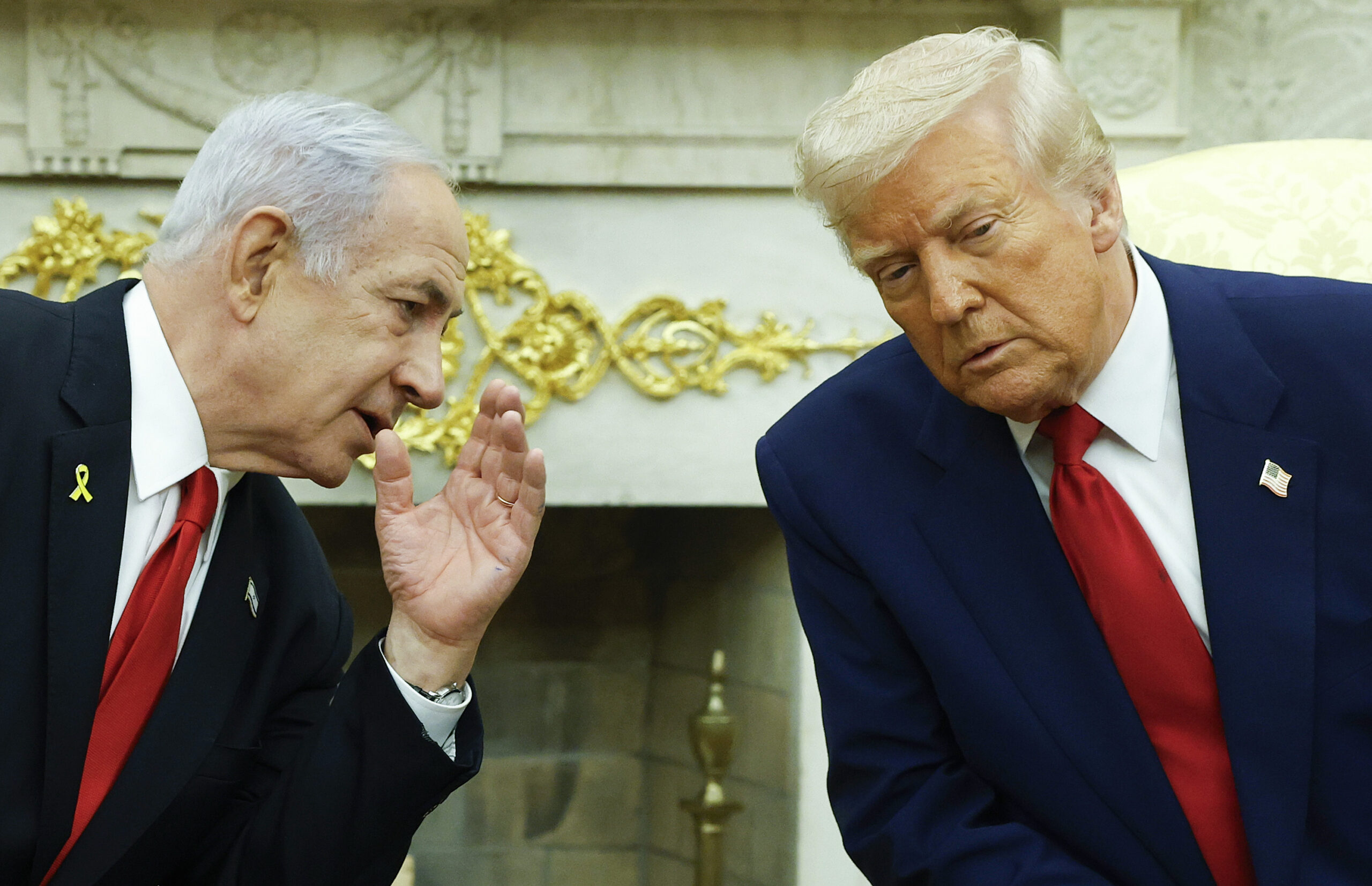
Trump and Bibi are following Alexander, but without the Greek’s honor or panache.

President Trump Meets With Visiting Israeli PM Netanyahu At The White House
TakiMag

The land was called Persia, and in 500 BC was the most powerful state in the known world. It ruled most of central Asia and lorded from the Balkans to Egypt. The name Iran was given to the ancient nation much later on by a minor officer–turned-emperor called Pahlavi in order to make the place sound less Arabic and more Arian. Persia met its Waterloo when successive Persian kings decided to occupy Greek city states around 490 BC. All you history buffs know the rest. 

Marathon came first in 490, when the noble Athenian youths intercepted Persians disembarking from their ships and massacred them to a man. The Athenian leader, the great general Miltiades, ordered a presumably overweight hoplite to run 26 miles to Athens and announce the Greek victory. (The city’s elders were ready to burn Athens down in order to deprive it from the Persians.)  Pheidippides is the name Herodotus gave him; per Lucian, he uttered “Χαίρετε, νικῶμεν”—greetings, we are the victors—and dropped dead from exhaustion. In today’s Los Angeles marathon, anyone who makes it past 18 miles is awarded a medal. This is for safety reasons, something not surprisingly ignored by the Greeks back then.

Ten years later, the Persians were at it again. This time they came by sea and land. King Leonidas of Sparta became and remains the most heroic of all men by holding tens of thousands of Persians at the narrow pass at Thermopylae for days on end with his 300 Spartans. Donald Trump would most likely deem them losers, but there they stayed until they all died doing their duty. In the meantime, the Athenian admiral Themistocles gathered his triremes in the straits of Salamis, just two miles from Athens, and manned them with strong young men itching to engage the barbarians. Once the Persian fleet was bottled up in the narrows, the Greeks attacked, ramming and sinking them to the bottom. The Persian King Xerxes, who had been watching from a hilltop, fled for his life. No Persian ever attempted to invade Greece again. 

But a Greek called Alexander the Great conquered all of Persia some 100 years later, and even married King Darius’s daughter—along with Roxanne, the beautiful Bactrian wife he already had won in battle—thus showing Greek civility towards a defeated foe. Herodotus the historian saw Persia as a misguided nation, preferring tyranny and fear to the Greek love of freedom and the rule of law. Two and a half millennia later, not much has changed. Iranians have always submitted themselves to coercive powers and laws.

Which brings me to Trump and his maniacal partner Benjamin Netanyahu. The latter dared to call his at times genocidal army “Spartans,” an abuse no living Spartan can accept. My mother was a more than 10th-generation pure Spartan, and if she were alive she would have been up in arms over the comparison. Displacing some 700,000 Lebanese while killing hundreds has not made the headlines while we bomb Iran. Israeli hardliners are out to kill everyone opposing them. Defenseless refugees and their children in Lebanon and Jordan are daily being killed by the Israeli air force, and the American government is looking the other way. My only prediction is that Iago Netanyahu will lead Othello Trump to self-destruct—unless the Donald wakes up and smells the rat.   

So, as of today, while the bombing continues, what is the future of the ancient land of Persia? Its people, unlike the Greeks and the Americans, have always chosen to be led by authoritarian men, eschewing democracy and majority rule. My closest friend, Aleko Goulandris, a major shipowner and gentleman, no longer with us, was once invited by the then-King Juan Carlos of Spain to visit with him the shah of Iran in Tehran. During a formal dinner, Aleko and his wife were forced to dine standing while the shah, his wife, and the royal Spanish couple ate to their heart’s content—seated. The reason was that Aleko and his wife were not royal. When I expressed outrage and told Aleko he should have left the table in protest, he said: “I could have been shot.” I said that I would have turned the table over and left. “You wouldn’t be here today,” said my friend. 

There you have it. It was fantasy land, a sergeant’s son, whose father assumed the title Shah, playing King Darius 2,500 years after the fact. But back to the present: For much of the past 200 years, a weak Iran accepted foreign powers such as Britain and America controlling its oil resources. In 1953, the pajama-clad Mohammed Mossadegh nationalized the oil, but not for long. The CIA sent Kim Roosevelt over quicker than you can say “Mohammed.” The pajama premier was overthrown despite his great popularity with the people. The Swiss-educated playboy shah was brought back and installed on the Peacock Throne by the kingmaker Roosevelt. Plus ça change, as they say in gay Paree.

What does the future hold for Iran? No one knows, but since the 16th century the country has been threatened by imperial powers. If Israel has its way, the place will be divided and dominated. If Trump has his, the place will turn into another Syria with a complacent leader at the head. In the meantime, 110 or more dead, innocent children up in heaven are looking down at these two so-called world conquerors.  

The post Conquerors of the World appeared first on The American Conservative.

Right-Sizing the ‘Iran-Linked’ Terror Threat to the U.S.

Right-Sizing the ‘Iran-Linked’ Terror Threat to the U.S.

While there is a real risk of lone-wolf attacks, Iran has few incentives to orchestrate organized terrorism.

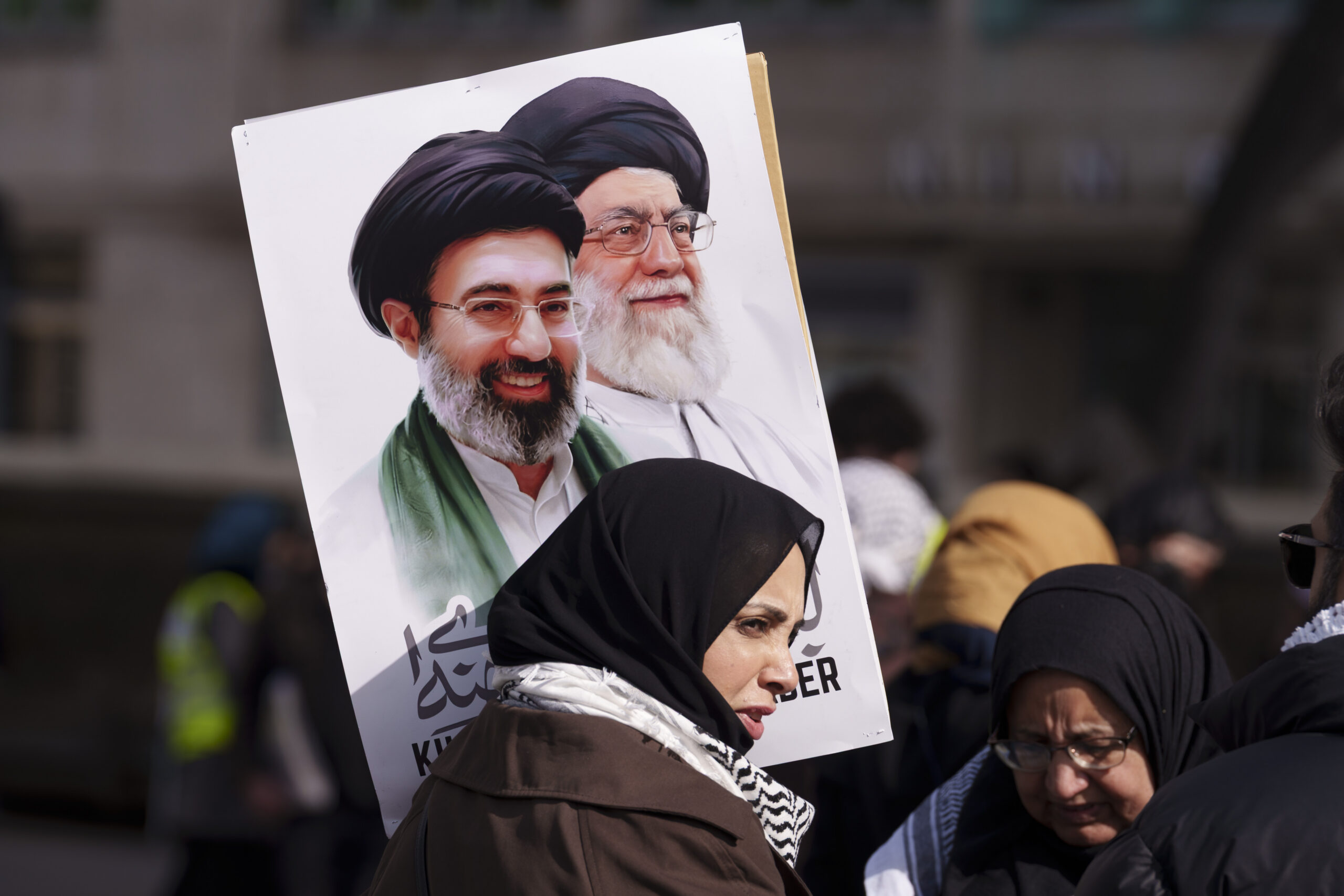
Al-Quds Day Protest

As the war with Iran rages on, much is being said about Iranian-linked acts of terrorism in the United States. While there is indeed a possibility that the Iran war could instigate violence in the American homeland—as it appears to already have done—the severity with which the situation is being described is probably overblown. This owes to the existence of restraints that are likely to prevent “Iranian-linked terrorism” from becoming a top security challenge for America and other Western nations—which is by no means to dismiss the threat entirely. 

Concerns about terrorism that can be traced back to Iran have been voiced from the higher echelons of the expert community.

Bruce Hoffman, senior fellow for counterterrorism and homeland security at the Council on Foreign Relations, warns that the risks of terrorism incidents will increase the longer the war drags on. These incidents, he explains, could take the form of lone-wolf or sleeper-cell attacks. Hoffman even goes as far as suggesting that Iran may choose to target high-profile public events like the upcoming football World Cup and the 250th Independence Day celebrations. 

Similar concerns have been voiced by the Soufan Center’s Colin Clarke, who cautions that Iran may be inclined to resort to terrorism in the United States and other Western nations in order to increase public pressure on the government to end the war.

Like Hoffman, Clarke refers to lone wolf and sleeper-cell attacks, while also mentioning Iranian-directed operations involving criminal entities. He further argues that the assassination of Iran’s Supreme Leader Ali Khamenei could trigger a wave of Shiite lone wolves that could eclipse the threat posed by the Sunni lone wolves who have been influenced by the Salafi-Jihadi ideology espoused by groups like ISIS and Al Qaeda.

Both Hoffman and Clarke cite previous incidents in which Iran has been implicated, including the bombings of the Israeli embassy and Jewish community center in Argentina, the Khobar attacks in Saudi Arabia, and the bombing of the U.S. embassy in Beirut. 

A more in-depth analysis, however, calls into question the severity with which the threat is depicted.  

When it comes to lone-wolf operations, as I have argued before, the Khamenei assassination does indeed carry with it a very real risk of creating Shiite lone-wolves hellbent on revenge. But to argue that Shiite lone-wolves may come to pose a greater threat than ISIS and Al Qaeda–inspired Sunni individuals ignores the key element of rhetoric. Simply stated, Salafi-Jihadi groups openly encourage random violence, whereas “radical Shiites” represented by Iran and its allies do not.  

This point is clearly illustrated through rhetorical comparison. Following the assassination of the former IRGC commander Qassem Soleimani in an American drone strike in early 2020, the former Hezbollah leader Sayyed Hassan Nasrallah—while calling for retaliatory attacks against US troops in the Middle East—emphasized that American civilians were not legitimate targets. ISIS by contrast called for random attacks in Europe to exact revenge for the killing of its former leader, Abu Ibrahim Al-Qureishi. Likewise, shortly after the start of the Israeli war on Gaza, Nasrallah voiced support for operations against American troops in Iraq and Syria, whereas  ISIS and Al-Qaeda called for both lone-wolf and September 11–style attacks in Western nations.

This helps explain why lone-wolf “Islamist” attacks in the West have nearly always been perpetrated by Sunnis and never Shiites. Inspiration relies heavily on encouragement which can easily be found in Salafi-Jihadi rhetoric. 

This is not to say that the latest developments concerning Iran will not give birth to a Shiite lone-wolf phenomenon, but rather that it would be premature to judge that this phenomenon may soon constitute a greater threat than Salafi-Jihadi–inspired terrorism. This is especially the case given that the assassination of Khamenei and the wider war on Iran has not led—thus far—to a shift in rhetoric in which the “radical Shiite axis” is following the Salafi-Jihadi playbook by advocating for revenge attacks in the United States and the West more broadly.

For example, Hezbollah—which is Iran’s number one ally—has resumed cross-border operations against Israel. Iraqi Shiite groups allied with Iran meanwhile have attacked American bases in Iraq. But none of these players has openly called for terrorist attacks in the West, and more importantly did not do so even during the leadership vacuum in Iran.

Just as this rhetorical factor has prevented Shiite lone wolf-terrorism in the past, it is likely to continue to have a restraining effect at the very least.

Meanwhile, to argue that Iran may orchestrate—and not simply inspire—terrorist attacks in the United States and other Western nations via third parties or sleeper cells also overlooks some key factors.

Statements out of Iran indicate that Tehran is looking to capitalize on a new phenomenon represented by the growing and unprecedented anti-Israeli sentiments in the United States, with prominent voices from the American conservative camp accusing Trump of adopting an Israel-first approach.

Iran’s Foreign Minister Abbas Araghchi, for example, accused Trump of sacrificing American interests for the sake of Israel in deciding to go to war against Iran in a post on X: “Trump has turned ‘America First’ into ‘Israel First’—which always means ‘America Last’.”

Secretary of Iran’s National Security Council Ali Larijani echoed Araghchi’s rhetoric, writing  “TRUMP HAS BETRAYED ‘AMERICA FIRST’ TO ADOPT ‘ISRAEL FIRST.’”

What is also interesting about these statements is how they differ sharply from the “Great Satan” label Iran has historically applied to the United States even in non-war times. By focusing on Israel’s role in taking the U.S. to war and apparently softening its anti-American rhetoric, Tehran appears to be embarking on a strategy of “counter-lobbying” Israel, in which it is making common cause with a sizeable segment of American voices who now see their country’s national interest subordinated to Israel’s.

Against this backdrop, to argue that Iran may orchestrate terrorist attacks in the American homeland stands in direct contradiction with its current counter-lobbying strategy and plays into the hands of Israeli lobbying efforts. 

Iran and its allies also possess far greater capabilities today than they did in previous decades when they were implicated in acts of terrorism. Tehran’s missile and drone arsenal has enabled it to conduct fierce attacks in the Gulf region, and its military appears to have succeeded in effectively taking control of the Strait of Hormuz, leading to a sharp spike in energy prices. Hezbollah meanwhile recently launched over 200 rockets in a single salvo, demonstrating that it possesses a formidable arsenal despite the heavy pounding it took in its 57-day war with Israel in late 2024.

This is to say that Iran and its allies are nowhere near degraded to the extent that they will soon be forced to resort to terrorist operations in the United States. Rather, the current war has revealed that Iran and its Shiite axis are capable of causing real damage without taking the risk of committing terrorism. The Tehran-led Shiite axis is also likely aware that mass casualty attacks have led the American public to rally behind their leaders in wars of retaliation, as the cases of Pearl Harbor and 9/11 clearly demonstrate. 

The rising negative views of Israel in the U.S., along with the military capabilities possessed by Iran and its allies, act as restraints preventing Iran from adopting the riskier approach of orchestrating terrorism against the American homeland.

The assassination of Khamenei and the war on Iran are no doubt game-changers. But while the American homeland is not immune to the emergence of Shiite lone-wolf attacks, the major risks to American interests are likely to remain largely confined to the theater of the Middle East.

The post Right-Sizing the ‘Iran-Linked’ Terror Threat to the U.S. appeared first on The American Conservative.

Trump Risks It All on Regime Change Abroad

Trump Risks It All on Regime Change Abroad

The president’s foreign policy gambles could destroy his political movement.

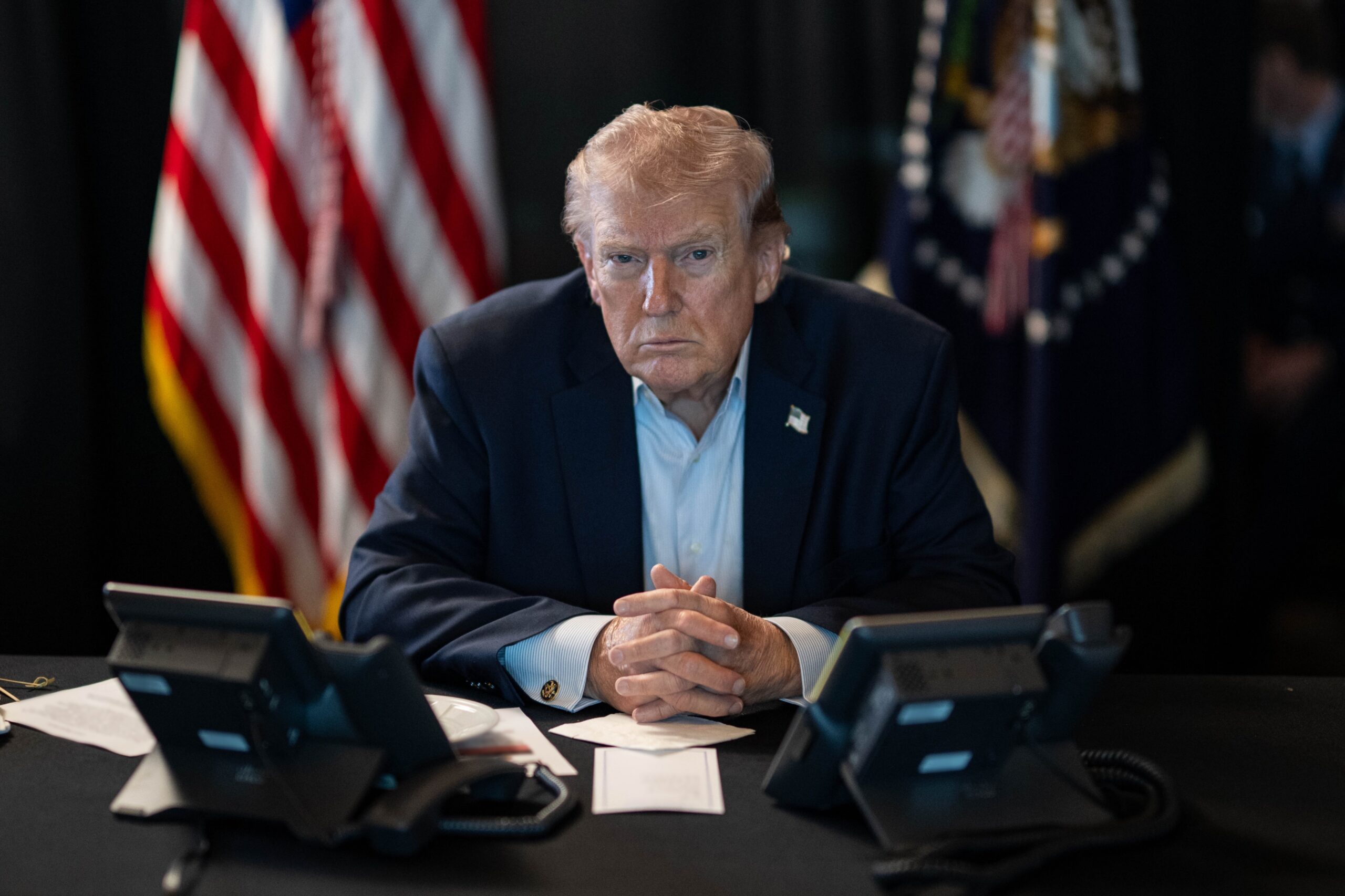
Trump Monitors Military Operations at White House

It is supremely ironic that President Donald Trump, who in 2016 gained a reputation as a staunch opponent of regime-change wars, is 10 years later placing a huge political bet on achieving success with multiple U.S. crusades of that nature. He has already launched regime-change military campaigns against Venezuela and Iran. Some comments by Trump indicate that he is contemplating a campaign to oust the entrenched communist regime in Cuba.

It’s a massive gamble for the president and the Republican Party. If Trump can carry off the strategy, and pro-U.S. successor governments replace repressive and hostile systems in all three countries, his historical legacy would be impressive in the eyes of many. Indeed, if clear successes emerge in the next few months, the GOP might even make major gains in the 2026 midterm congressional elections and even improve its long-term prospects.

A failure to achieve such transformational outcomes at low cost in American blood and treasure, though, would likely prove politically disastrous for Trump and his supporters. The early indicators are not especially encouraging for the administration’s strategy.

Venezuela has hardly undergone a free-market, democratic transformation. Washington merely replaced the principal leftist leader, President Nicolas Maduro, with his more cooperative vice president, Delcy Rodriguez, and some of her colleagues. Many conservatives who had backed Trump on other issues were unsatisfied with that outcome, and they continue to press Washington to install Nobel Peace Prize winner María Corina Machado and her free market activists instead. The president will be under growing pressure to comply. But that more activist course risks triggering new fighting and long-term resistance from currently compliant former Maduro supporters and functionaries. Consequently, the situation in Venezuela is very delicate and uncertain.

As for Iran, the political and military environment seems even more problematic. Unlike in Venezuela, the war’s opening decapitation strikes were meant to collapse the regime, but they failed. Despite growing domestic dissatisfaction with the country’s theocratic regime, the nature and strength of a secular opposition is unclear. Moreover, even discontented populations usually are not inclined to collaborate with a foreign attacker. 

The regional dynamics are equally volatile. Trump apparently believes that the ongoing U.S.–Israeli offensive against Iran will not turn into another quagmire for the United States, the way similar ventures did in Afghanistan and Iraq. But early developments with respect to the Iran conflict are not especially encouraging. Iranian forces have launched successful attacks on Persian Gulf countries that are reliable allies of the United States and in some cases host U.S. military bases. Such attacks underscore to those governments the growing danger of maintaining security ties to Washington. 

Iran has scored even more notable achievements by impeding the flow of commerce, especially oil tanker traffic, through the narrow Strait of Hormuz.  Those disruptions already have adversely impacted global energy markets, causing crude oil prices to spike by more than 20 percent. If that situation continues, the war against Iran could trigger a global economic recession and predictable negative political consequences for the Trump administration and other incumbent governments.

The president has encountered another significant and unusual political problem. Previous U.S. military interventions all initially enjoyed widespread popular support. That pattern was true even in cases such as the wars in Vietnam, Afghanistan, and Iraq, all of which ultimately became pervasively unpopular. However, Trump’s new military initiatives do not even start out with the initial cushion of support. The intervention in Venezuela did not have solid public backing in the United States, and the new war in Iran already appears to be broadly unpopular. It is uncertain how the American electorate would react to an armed intervention to remove Cuba’s communist dictatorship, but polling data indicate that most members of the public do not seem favorable to U.S. involvement in regime-change wars anywhere.

That is why venturing down the regime-change policy path is so perilous politically for both Trump and the GOP. To many people, it may seem especially ironic that Trump has decided to stake the viability and historical reputation of his presidency on such a strategy. It should not come as a great surprise, though.  Those who believed that Trump was an advocate of a new U.S. foreign policy based on realism and restraint were always naïve. Much of their optimism was based on a handful of enticing comments he made (primarily during the 2016 presidential campaign) condemning the regime-change, nation-building wars that his recent predecessors had waged in the Balkans and the Muslim world.  

As I pointed out on several occasions, though, an examination of Trump’s actual conduct regarding numerous other issues during his first term as president confirmed that his usual preference was for aggressive, nationalistic measures, not caution and restraint. He almost single-handedly destroyed the nuclear arms control system that Washington had developed with Moscow during the final decade of the Cold War. Despite campaign promises to the contrary, Trump kept the United States mired in the Afghanistan quagmire throughout his term. Instead of reversing Washington’s growing military support for Ukraine in that country’s rapidly worsening quarrel with Russia, Trump escalated U.S. involvement. For the first time, Washington shipped weapons to Ukraine, trained Ukrainian troops, and conducted joint military exercises with Kiev’s forces. Contrary to the absurd, largely partisan, media myth that Trump was “Putin’s puppet,” U.S. policy became more hardline and anti-Russian during his time in the White House.

Those actions should have underscored that Trump was no advocate of realism and restraint. His conduct since returning to the Oval Office in January 2025 has merely reinforced that point. Trump’s attempt to bully Denmark into selling Greenland to the United States illustrated his congenital belligerence. The various efforts to impose punitive tariffs on countries that defied him regarding random issues belonged in the same category. Trump’s new regime-change wars provide even more definitive evidence.

It is possible that the president could win his high-stakes political gamble. Having regimes subservient to the United States governing Venezuela, Iran, and Cuba would be massively transformational in both the economic and security arenas.  The economic impact of such ideological shifts would be huge. Venezuela and Iran possess, respectively, the largest and third largest volumes of global oil reserves. Washington would be in position to exert pressure on the new client governments to sell their oil exports at below-market prices in the short term, an outcome many myopic American consumers—and voters—would welcome. A subservient Cuba would almost immediately become a mecca for U.S. investments in numerous fields.

The impact on security affairs might be even greater. A “friendly” Iran that eagerly “cooperated” with the United States and Israel would be a major factor that at least temporarily restored unchallenged U.S. hegemony in the Middle East. Tehran’s shift back into Washington’s camp would also constitute a major blow against Russian and Chinese influence in the region. Most Americans would welcome both outcomes.

What Trump and his supporters are reluctant to acknowledge, though, is that his aggressive, regime-change ventures constitute a very long-shot bet. Most long shots don’t win, and that is likely to prove true in this case as well. 

The post Trump Risks It All on Regime Change Abroad appeared first on The American Conservative.

WATCH: Investigative Journalist Nick Shirley Releases Video Uncovering $170 Million in Fraud in California

A young man stands outside the Madina Learning Center, showcasing the educational facility and nearby seafood restaurant in a sunny urban setting.

Investigative journalist Nick Shirley released his latest video on Monday, uncovering $170 million in fraud in California.

And this is just the tip of the iceberg in Democrat-run California.

“We uncovered over $170,000,000 in fraud as these fraudsters live in luxury with no consequences,” Nick Shirley said.

“California’s version of Medicaid called ‘Medi-Cal’ has more than doubled since 2022 from $108 billion to a proposed $222 billion in 2026. Their population, however, has not grown exponentially. However, their spending has,” Nick Shirley said.

“There has been a 1,000 percent increase in hospice care in Los Angeles County,” Nick Shirley said. It’s estimated that the fraud in California could be in the hundreds of billions of dollars.”

Nick Shirley visited ‘hospices’ in Los Angeles and ‘daycares’ in San Diego.

The Somali ‘daycare’ owner/operator screamed at Nick Shirley and called the police after he asked her why there weren’t any children in the facility.

WATCH:

In December, Nick Shirley exposed more than $110 million in Somali fraud in Minnesota in one day.

An angry Somali woman ‘working’ at a daycare – with no children inside – slammed the door as journalist Nick Shirley asked some simple questions about the so-called children’s center.

Minnesota Childcare Center claims it takes care of 102 children, however, the facility is empty.

Another Somali learning center couldn’t even spell ‘learning’ correctly.

Screencap of Twitter/X video.

In a follow up video, Nick Shirley exposed more than $16 million in Somali welfare fraud.

“In this 51 minute video David and I expose another $16 Million in fraud as Minnesota welfare programs continue to operate fraudulently and steal from law-abiding taxpayers,” Nick Shirley said in January.

The post WATCH: Investigative Journalist Nick Shirley Releases Video Uncovering $170 Million in Fraud in California appeared first on The Gateway Pundit.

REPORT: New York City Spent Approximately $81,000 PER PERSON on Services for the Homeless Last Year

Screencap of YouTube video.

According to the comptroller, New York City spent an eye-popping $81,000 per person on services for the homeless last year.

This leads to some obvious questions. Why are there still homeless people in New York City? How does this city spend this kind of money and still have a homeless problem?

Also, would it not have been better to just give $81,000 to each homeless person on the condition that they get off the street? Couldn’t that have worked better in the end?

The New York Post reports:

NYC spent roughly $81K per person on homeless services last year: comptroller

New York City spent roughly $81,000 per person on homeless services last year — amounting to a whopping $368 million in total bills, a shocking new state report found.

Spending on the city’s Department of Homeless Services’ “Street Homeless Solutions” division more than tripled over the last six years, from $102 million in 2019 — or about $28,000 per “unsheltered homeless person,” according to the report from the state comptroller’s office.

The cost per person was roughly equivalent to the city’s median household income as of the 2024 US Census — $81,228 annually.

Unsheltered homeless people constitute those living regularly on the streets, compared to those who are in some kind of affordable housing or long-term shelter system.

The Big Apple’s unsheltered homeless population increased by 26% over the same timeframe, the report released by Comptroller Thomas P. DiNapoli found.

About 3,588 unsheltered homeless people were reported in the 2019 fiscal year, while 4,505 were reported in the fiscal year 2025.

One of the problems with homelessness in American cities is that there are too many people making a lot of money ‘solving’ the problem, which never gets solved and only seems to grow.

Comedian and podcaster Adam Carolla recently talked about this problem and although he was referring to Los Angeles, the problem is exactly the same. He notes that when his friend Dr. Drew Pinsky offered his services as an addiction specialist -for free- to the city of Los Angeles, the woke members of the city council turned him down. Watch:

This problem will never be solved with leftists in charge of cities. They do not want it solved. Too many people are making a living from it, because it has been turned into an industry. There is no incentive to fix the problem.

The post REPORT: New York City Spent Approximately $81,000 PER PERSON on Services for the Homeless Last Year appeared first on The Gateway Pundit.