Rep. James Comer to Subpoena Epstein Guard After Chilling Google Search and Mysterious $5,000 Deposit Days Before Epstein’s Alleged Suicide (VIDEO)

Fox News hosts discuss new details surrounding Jeffrey Epstein's death, with a city skyline visible in the background.

Fox News hosts discuss new details surrounding Jeffrey Epstein's death, with a city skyline visible in the background.

House Oversight Chairman Rep. James Comer (R-KY) announced that Congress will subpoena Jeffrey Epstein’s former prison guard, Tova Noel, for a transcribed interview as lawmakers reopen questions surrounding the disgraced financier’s controversial death in federal custody.

Comer revealed the move during an appearance on Fox News, saying new media reports and previously uncovered Justice Department records raise serious concerns about Noel’s actions on the night Epstein died inside the Metropolitan Correctional Center (MCC) in New York.

Jesse Watters:
This jailhouse guard — what’s going on with her?

James Comer:
Well, the recent media reports, what you just said, are very concerning — especially the suspicious activity report on a $5,000 mysterious deposit that she had. The reason that stands out to me, Jesse, is because very seldom are suspicious activity reports even reported for sums less than $10,000.

That’s a mystery there, and that’s something that, according to the DOJ documents, they never looked into — never asked her about.

Because of this, because of the media reports, and because of the fact that, honestly, most people on the committee aren’t confident 100% that Epstein’s death was a suicide, we’re going to ask Ms. Noel to come in for a transcribed interview.

Again, no one’s accusing her of any wrongdoing, but we have a lot of questions about Epstein — questions about who else was involved in abusing girls.

Why did the government not do a better job of investigating and prosecuting Epstein when they had a chance years before they finally convicted him? Was Epstein a spy? Was our government involved in any way, shape, or form in trying to destroy evidence or hide evidence from any of those four properties?

Now, was Epstein’s death a suicide, as the government has reported, or was there something else?

Again, no one’s accusing this prison guard of any wrongdoing, but I will announce tonight on your show that we are going to ask her to come in and sit for an interview because we have a lot of questions.

WATCH:

Comer’s announcement is a direct response to the jaw-dropping details unearthed in DOJ records, which paint a picture of gross negligence, or worse, deliberate sabotage, at the Metropolitan Correctional Center (MCC).

As The Gateway Pundit previously reported, citing New York Post reporting, Noel was caught googling “latest on Epstein in jail” at 5:42 a.m. and again at 5:52 a.m., a mere 40 minutes before her colleague, Michael Thomas, “discovered” Epstein hanging in his cell at 6:30 a.m.

Instead of performing her mandated 30-minute checks on the high-profile inmate, Noel was busy snoozing on the job and shopping for furniture online, while Thomas browsed motorcycles.

Both guards later admitted to falsifying records but escaped real punishment thanks to a sweetheart deferred prosecution deal approved by an Obama-appointed judge in 2021.

But the plot thickens even further. FBI forensics highlighted Noel’s Google search as the only one of note in their 66-page examination of the guards’ computers.

Why the special attention? Noel flat-out lied to investigators, claiming she “didn’t remember” searching for Epstein and insisting the records were “inaccurate.”

Adding fuel to the conspiracy fire, Chase Bank flagged a series of suspicious cash deposits into Noel’s account, culminating in a whopping $5,000 deposit on July 30, 2019, just 10 days before Epstein’s death.

From December 2018 onward, seven deposits totaling $11,880 appeared, right around the time Noel started working in Epstein’s Special Housing Unit. Yet, the DOJ never bothered to question her about it.

An internal FBI briefing identified Noel as the mysterious “orange flash” captured on camera moving toward Epstein’s cell at 10:40 p.m. the night before his death, carrying what appeared to be linens or inmate clothing, the last time anyone approached the tier’s entrance.

Noel denied it. Now, she’s facing a lawsuit for alleged assault at her new gig as a medical office assistant at Montefiore Einstein Advanced Care.

The post Rep. James Comer to Subpoena Epstein Guard After Chilling Google Search and Mysterious $5,000 Deposit Days Before Epstein’s Alleged Suicide (VIDEO) appeared first on The Gateway Pundit.

Supply Chain COLLAPSE Warning—Energy Looms…

As U.S. air strikes pummel Iranian nuclear facilities and oil prices spike globally, survival experts are issuing urgent warnings that everyday Americans need to prepare immediately for catastrophic disruptions that could reshape life as we know it.

Three Critical Steps Before Chaos Hits Your Doorstep

Survival specialists are pushing three immediate actions that separate the prepared from the vulnerable. First, assemble an emergency kit stocked with non-perishable food, water supplies for at least two weeks, battery-powered radios, and backup power sources. Second, identify and secure access to fallout shelters or reinforced basement spaces that offer protection from nuclear fallout. Third, create a detailed family emergency plan that establishes rendezvous points and communication protocols when traditional systems fail. These aren’t abstract preparations for some distant future crisis. They’re practical responses to real-time geopolitical meltdown.

The Nuclear Breakout That Changed Everything

Iran’s uranium enrichment program crossed the threshold that made this conflict inevitable. By May 2025, Tehran had accumulated over 400 kilograms of uranium enriched to 60 percent purity at the Fordow facility. That’s enough fissile material for approximately ten nuclear weapons, with breakout time assessed as effectively zero by international monitoring groups. Israel launched preemptive strikes on Iranian nuclear sites in June 2025, triggering the cascade of retaliation and escalation that brought U.S. forces into direct combat operations. The numbers don’t lie about what Iran accomplished during years of international hesitation.

Why This War Looks Different From What You Expected

Operation Epic Fury relies exclusively on air power, and the arithmetic explains why. Iran spans 636,000 square miles with a population of 87 million and maintains 610,000 active military personnel. Occupying that territory would require troop levels the United States cannot sustain without reinstating a draft, which remains politically impossible. The Trump administration’s strategy focuses on degrading nuclear and missile capabilities while avoiding the nation-building disasters that plagued Iraq and Afghanistan. Iranian forces prepared for this scenario through their Mosaic Defense doctrine, leveraging mountainous terrain and asymmetric warfare capabilities that make ground invasion prohibitively costly.

Economic Collapse Preceded the First Bomb

Iran’s regime was already drowning before military strikes began. The rial hit 1.45 million per dollar in December 2025, with inflation running at 49 percent and GDP growth in negative territory. Government deficits exceeded 6 percent as oil revenues evaporated under sanctions. Massive protests erupted in January 2026, with casualty estimates ranging from 3,000 to 30,000 killed as security forces crushed dissent. This economic freefall created the instability that makes regime survival dependent on external conflict and proxy warfare. The regime chose escalation because it had already lost control of its domestic situation.

Supply Chains and Energy Markets Face Sustained Disruption

Penn Wharton analysts project $210 billion in direct U.S. economic costs from this conflict, but that figure understates the cascading impacts. Global oil prices are spiking as Iranian production goes offline and shipping routes through the Strait of Hormuz face constant threat. Supply chains already strained from previous disruptions now confront the reality of Middle Eastern trade routes closing or becoming prohibitively expensive to insure. Preppers like Maine-based Derrick, who has been stockpiling since 2007, are urging immediate action to secure cash reserves, gasoline supplies, and essential goods before shortages become acute. The grocery store shelves that emptied during COVID could look abundant compared to what sustained Middle East conflict produces.

Community Networks Matter More Than Bunkers

UK-based prepper Dan Goss emphasizes that neighbor relationships and local networks often prove more valuable than elaborate survival gear. When infrastructure fails, the ability to trade skills, share resources, and provide mutual security determines who thrives versus who merely survives. This perspective adds practical wisdom to the sometimes commercialized prepper movement that profits from fear while selling expensive equipment. Strong communities with trust and cooperation can weather disruptions that leave isolated individuals vulnerable regardless of their stockpiles. The social fabric holds or tears based on relationships built before crisis strikes.

The Nuclear Threat That Justifies Extreme Preparation

Iranian leadership has signaled willingness to employ doomsday regional strikes involving proxies across Syria, Lebanon, and potentially Russian support. These aren’t idle threats from a regime with nothing left to lose. Nuclear fallout from tactical weapons or dirty bombs could persist for years, requiring populations to shelter in place with adequate supplies and radiation protection. The Cold War generation understood these risks intellectually, but current Americans lack the civil defense infrastructure and cultural preparedness that characterized the 1950s and 1960s. Fallout shelters disappeared from public consciousness even as the threats evolved and multiplied.

Separating Legitimate Concerns From Panic Profiteering

The prepper industry blends genuine survival wisdom with commercial incentives that can inflate threats to drive gear sales. Evaluating these warnings requires distinguishing between data-driven analysis and sensationalism. The U.S.-Iran conflict presents real risks documented by credible analysts, but some prepper content exaggerates likelihood of worst-case scenarios. Iranian regime instability, nuclear program advancement, and regional proxy networks create legitimate dangers that prudent Americans should address through reasonable preparation. That differs fundamentally from panic buying based on apocalyptic predictions designed to move merchandise. Common sense preparation serves families well regardless of whether specific catastrophes materialize.

Sources:

How to Survive World War 3 Guide and Information – Parcil Safety

I’m Doomsday Prepper Ready WW3 – The Express

Data Analysis of the State of the U.S.-Iran Conflict – Data Republican

Key War Survival Skills Expert Advice – Unilad

Strategic Challenges US Military Campaign Against Iran – Global Affairs

Is WW3 Happening Likely Iran US – The Times

Cargo Vessel Erupts in Flames in Strait of Hormuz After Being Struck by Unknown Projectile Amid Escalating Middle East Conflict

Map highlighting key locations in the Middle East and East Africa, including cities and geographical features, with marked points indicating specific areas of interest.

Map highlighting key locations in the Middle East and East Africa, including cities and geographical features, with marked points indicating specific areas of interest.

A cargo vessel erupted in flames after being struck by an unidentified projectile while transiting the highly strategic Strait of Hormuz.

According to the United Kingdom Maritime Trade Operations (UKMTO), the ship was hit while transiting the narrow waterway near the coast of Oman. The impact triggered a fire onboard, forcing the crew to evacuate and call for emergency assistance.

According to the announcement:

“UKMTO has received a report of an incident 11NM north of Oman in the Straits of Hormuz. It has been reported that a cargo vessel has been hit by an unknown projectile in the Straits of Hormuz which has resulted in a fire onboard.

“The vessel has requested assistance and the crew are evacuating the vessel. Vessels are advised to transit with caution and report any suspicious activity to UKMTO while authorities continue to investigate.”

Maritime authorities are investigating a second security incident near the United Arab Emirates after another commercial vessel was reportedly struck by an unidentified projectile.

The latest incident occurred approximately 50 nautical miles northwest of Dubai in the United Arab Emirates.

In a statement, UKMTO said the master of a bulk carrier reported that the vessel had been struck by an unknown projectile while transiting the area.

“UKMTO has received a report of an incident 50NM northwest of Dubai, United Arab Emirates. The Master of a Bulk Carrier has reported their vessel being hit by an unknown projectile. There is no report of any environmental impact. The crew are reported safe and well. Authorities are investigating. Vessels are advised to transit with caution and report any suspicious activity to UKMTO.”

If confirmed as a deliberate attack, the incident could mark a dangerous escalation in the region.

President Donald Trump previously warned that any attempt to disrupt the strait would trigger severe consequences from the U.S. military.

As The Gateway Pundit has extensively reported, Iran’s IRGC has been issuing dire warnings to ships attempting to navigate the Strait of Hormuz, declaring that “no ship is allowed to pass” in a blatant act of international piracy.

Then President Trump urged commercial oil tankers to “show some guts” and push through the strategic Strait of Hormuz, declaring that there is “nothing to be afraid of” after U.S. military strikes severely weakened the Iranian regime’s naval capabilities.

On Tuesday, according to a report from CBS News, U.S. intelligence officials believe Iran may be taking steps to deploy naval mines in the shipping lanes of the Strait of Hormuz.

Intelligence estimates suggest the Iranian regime possesses between 2,000 and 6,000 naval mines, many capable of being deployed by small boats or other vessels operating in the Persian Gulf.

President Trump responded forcefully on Truth Social, making it clear that any attempt by Iran to mine the strait would be met with overwhelming consequences.

“If Iran has put out any mines in the Hormuz Strait, and we have no reports of them doing so, we want them removed, IMMEDIATELY! If for any reason mines were placed, and they are not removed forthwith, the Military consequences to Iran will be at a level never seen before.

“If, on the other hand, they remove what may have been placed, it will be a giant step in the right direction! Additionally, we are using the same Technology and Missile capabilities deployed against Drug Traffickers to permanently eliminate any boat or ship attempting to mine the Hormuz Strait. They will be dealt with quickly and violently. BEWARE!”

Just thirteen minutes later, Trump returned to Truth Social with a dramatic update revealing that U.S. forces had already taken action.

“I am pleased to report that within the last few hours, we have hit, and completely destroyed, 10 inactive mine laying boats and/or ships, with more to follow!”

Read more:

“Military Consequences… At a Level Never Seen Before”: Trump Issues Dire Warning After Report Iran May Be Deploying Mines in Strait of Hormuz — Then Announces U.S. Destroyed 10 Mine-Laying Boats

The post Cargo Vessel Erupts in Flames in Strait of Hormuz After Being Struck by Unknown Projectile Amid Escalating Middle East Conflict appeared first on The Gateway Pundit.

Why the Iran Crisis Will NOT Trigger a Major Oil Price Shock

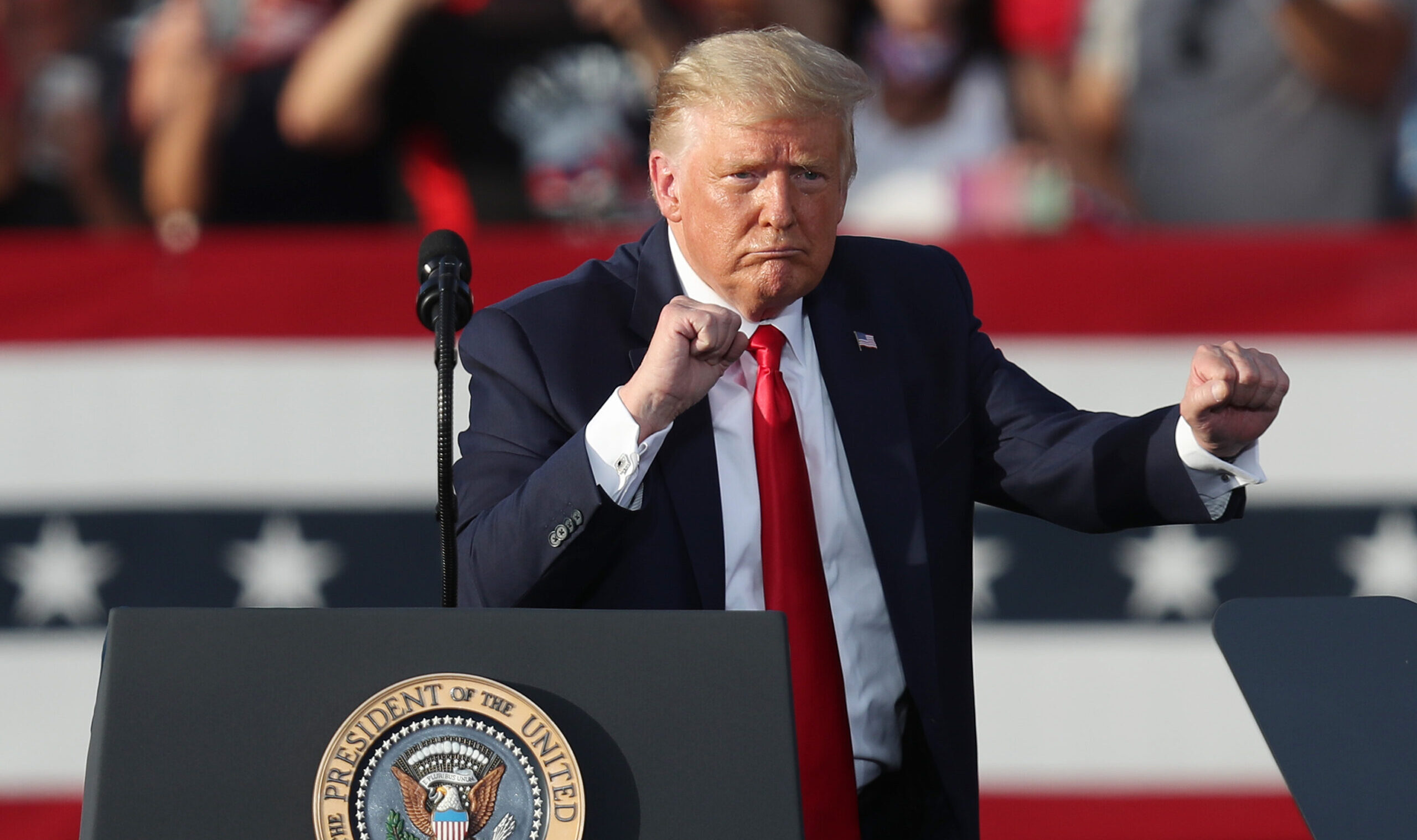
A split image featuring oil rigs against an Iranian flag backdrop and a dancing Donald Trump at a rally, highlighting oil industry and political themes.

A split image featuring oil rigs against an Iranian flag backdrop and a dancing Donald Trump at a rally, highlighting oil industry and political themes.

WATCH: Why the Iran Crisis Will NOT Trigger a Major Oil Price Shock

On this episode of The Patriot Perspective, we broke down one of the biggest economic and geopolitical questions in the world right now: whether the conflict with Iran will send oil prices soaring or whether the recent spikes are more temporary than many people think.

The discussion began with a basic point that much of the media has missed. Oil prices have gone up in recent weeks, but not to a level that suggests a lasting economic crisis.

Even with growing tensions in the Middle East and repeated threats to shipping in the Strait of Hormuz, prices have not exploded as many analysts predicted.

In fact, after President Donald Trump announced political insurance for certain oil tankers moving through the Strait of Hormuz this week, oil prices dropped sharply.

That market response was important. The Strait of Hormuz remains one of the most important oil chokepoints in the world, and any disruption there can affect global energy supplies. But as we argued, the market is not reacting only to physical threats.

The market is also reacting to whether Iran believes Trump is serious.

At this point, Iran has little reason to assume that Trump is bluffing. He has already shown that attacks on American interests and allied infrastructure will be met with force.

We also made the case that while oil could still spike again, especially if Iran lays mines or attacks more tankers, the odds of a full-scale runaway energy shock remain low.

The market has repeatedly moved not only on military developments but also on Trump’s words. When Trump projects strength and deterrence, the market calms.

The episode also placed the current situation in context. We pointed out that the oil market has still not seen the kind of sustained surge Americans experienced in 2022 under Joe Biden.

Back then, prices rose sharply amid poor energy policy, including Biden’s decision to halt new fracking approvals for a period. By contrast, today’s price increases look more like conflict-driven fluctuations than the beginning of a historic spike.

We argued that Americans are not facing the kind of prolonged pain that defined the Biden period and that Trump’s broader energy posture has kept gas prices relatively stable even in the middle of a war.

The conversation also widened to include China, Europe, and the Gulf states.

While China still depends on some oil flowing through the region, Beijing has diversified enough to avoid taking the biggest hit.

Europe may be more vulnerable, especially if Gulf production slows and maritime insecurity continues.

The United States, by comparison, remains in a stronger position because of domestic energy capacity and because instability in the region often increases allied dependence on Washington.

Oil will likely continue to move within a volatile range, but there is no clear reason to believe prices are about to spiral out of control.

Iran still has the capacity to disrupt, but it also faces growing military pressure and a president in Washington who has shown he is willing to act.

As we concluded, this is a dangerous moment, but not one that justifies panic buying or exaggerated predictions.

For now, oil remains a story of volatility, deterrence, and the power of presidential leadership.

The Patriot Perspective has recently switched its main platform from Rumble to YouTube, and we would greatly appreciate it if our old subscribers would subscribe to us there. [HERE]

The post Why the Iran Crisis Will NOT Trigger a Major Oil Price Shock appeared first on The Gateway Pundit.

Starmer’s Latest Political Snafu: The Iran War

Starmer’s Latest Political Snafu: The Iran War

The Labour prime minister’s indecision and the abject state of the British military have created an embarrassing display.

BRITAIN-IRAN-US-ISRAEL-POLITICS-WAR
UK Special Coverage

Forty-four years ago, Margaret Thatcher sent a British task force 8,000 miles to liberate the Falkland Islands. They had been invaded by Argentina. Last week Britain wasn’t even able to send a frigate to protect British personnel and their families in Akrotiri in Cyprus against Iranian drones.

The HMS Dragon was still in dock in Portsmouth even as Iran was attacking the UK’s base on the Mediterranean island. The French, Britain’s historic rival, had to step in with a gunboat to deter further aggression. The humiliation of the British military and Prime Minister Sir Keir Starmer’s government was complete. Had Thatcher still been around, she would have sacked the defense secretary and half the military top brass.

From the start of this war, the state of Britain’s leadership has been dire. “This is not Winston Churchill,” said Donald Trump last week after Starmer refused to allow the U.S. to use British air bases to refuel planes headed for the Gulf. The prime minister had said the America-Israeli action was illegal under international law. (Britain’s closest military allies in the Commonwealth, Canada and Australia, seemed to think the strike against the weaponry of Iran’s regime was legitimate.) But after the American-Israeli success in taking out Ayatollah Ali Khamenei and leaders of the Iranian Revolutionary Guard, Starmer changed his tune. He conducted what has become a typical U-turn and agreed to let U.S. warplanes land at Diego Garcia and Fairford in Gloucestershire. Suddenly, international law wasn’t a problem. 

Number 10 tried to cover itself by saying that the U.S. could only use British bases in “defensive operations”—as if bureaucrats were going to log every American assault on Iran’s military establishment to ensure that they waited until ballistic missiles were actually launched before targeting them. 

Tony Blair, the former Labour Prime Minister and sometime Starmer mentor, was aghast. At a private meeting he remarked that “if your ally is the indispensable cornerstone of your defence strategy… you’d better turn up”. The Brits belatedly let it be known that the aircraft carrier Prince of Wales was being placed on alert. This didn’t impress the POTUS. “That’s OK, Prime Minister Starmer, we don’t need them any longer,” he said on Truth Social, adding, “We don’t need people that join wars after we’ve already won!” Ouch. Starmer then hit the phones, desperately trying to reduce the damage to the so-called special relationship.

So how did he get into this mess? According to Tim Shipman in the Spectator, Starmer had initially been minded to help the U.S. But his left-wing Energy Secretary Ed Miliband rounded up a few Cabinet colleagues and told Starmer that he could not risk being an accessory to U.S. imperialism. Didn’t he remember the disaster in Iraq, they said? There’s no plan. You can’t have regime change from the air. It is time to make a break from Trump, who is deeply unpopular with British voters.

A stronger leader might have told Miliband to stick to net zero. Starmer is himself massively unpopular with British voters and decisive action over Iran might have improved his image. Instead he conducted yet another classic Starmer U-turn. 

The Conservative leader, Kemi Badenoch, had no hesitation in supporting the American-Israeli actions and called out Starmer’s “dither and delay”. She said that a nuclear-armed Iran would pose a direct threat to the UK and it would therefore have been perfectly legal for Britain to support the U.S. from the start. Starmer, she added, was now a hostage to his left wing.

Yet parties on the left were hardly more supportive of the PM than the Tories. The Liberal Democrat leader, Ed Davey, also condemned the PM’s equivocation. He thought the UK should have remained aloof throughout from what he described as a “unilateral and unlawful act” by the Americans. The Green Party leader, Zack Polanski, accused Starmer of dragging Britain into an illegal war and said that all British bases should be off limits to Trump’s warmongers.

The right-wing Reform UK might have been expected to support full British participation in the U.S.-Israel action, since its leader, Nigel Farage, has had a close relationship with Donald Trump. But it was not entirely supportive. Indeed, its Treasury spokesman, Robert Jenrick, told BBC TV on Sunday that, while it was OK for the U.S. to use British bases for refueling, it would not be right for British planes to take part in offensive bombing raids over Iran.

Why this hesitation? Well, Reform realizes that the British public is very much opposed to the war, according to opinion polls. YouGov reported that voters here opposed US strikes on Iran by 49 percent to 28 percent. It is safe to say that Donald Trump is not exactly popular with the Brits. His net approval rating is minus-70.

A lot of this has to do with the president’s infelicitous language and his recent claim that British armed forces had “stayed a little back from the front lines” during the  Iraq and Afghanistan conflicts. This apparent accusation of cowardice went down very badly with many working-class voters who have close ties to the military. Even the Farage-supporting pop star Rod Stewart said it was offensive to the memory of the 450 British soldiers who gave their lives in those American-led actions. Trump’s triumphalism over Iran is also a vote-loser here.

Things could have been different. When America and the UK bombed Serbia during the 1999 Kosovo conflict, there was widespread public support for the action, even though it had not been sanctioned by the United Nations. Outside university campuses, there is very little support in Britain for the regime in Iran. In times past the British might have backed more positive action against the ayatollah’s arsenal.

But right now the prospect of Britain participating in any military action seems pretty remote. The last 40 years have seen a rejection of military values in Britain in favor of elite self-flagellation over the supposed evils of the Empire. In a YouGov poll last year, only 11 percent of young Britons said they would definitely fight for their own country, let alone someone else’s. 

If Argentina decided to launch a second invasion of the Malvinas, as they call the Falklands, they would likely find it a walkover.

The post Starmer’s Latest Political Snafu: The Iran War appeared first on The American Conservative.

Appeasing Allies

Appeasing Allies

When perpetuating an alliance becomes its own end, danger is not far off.

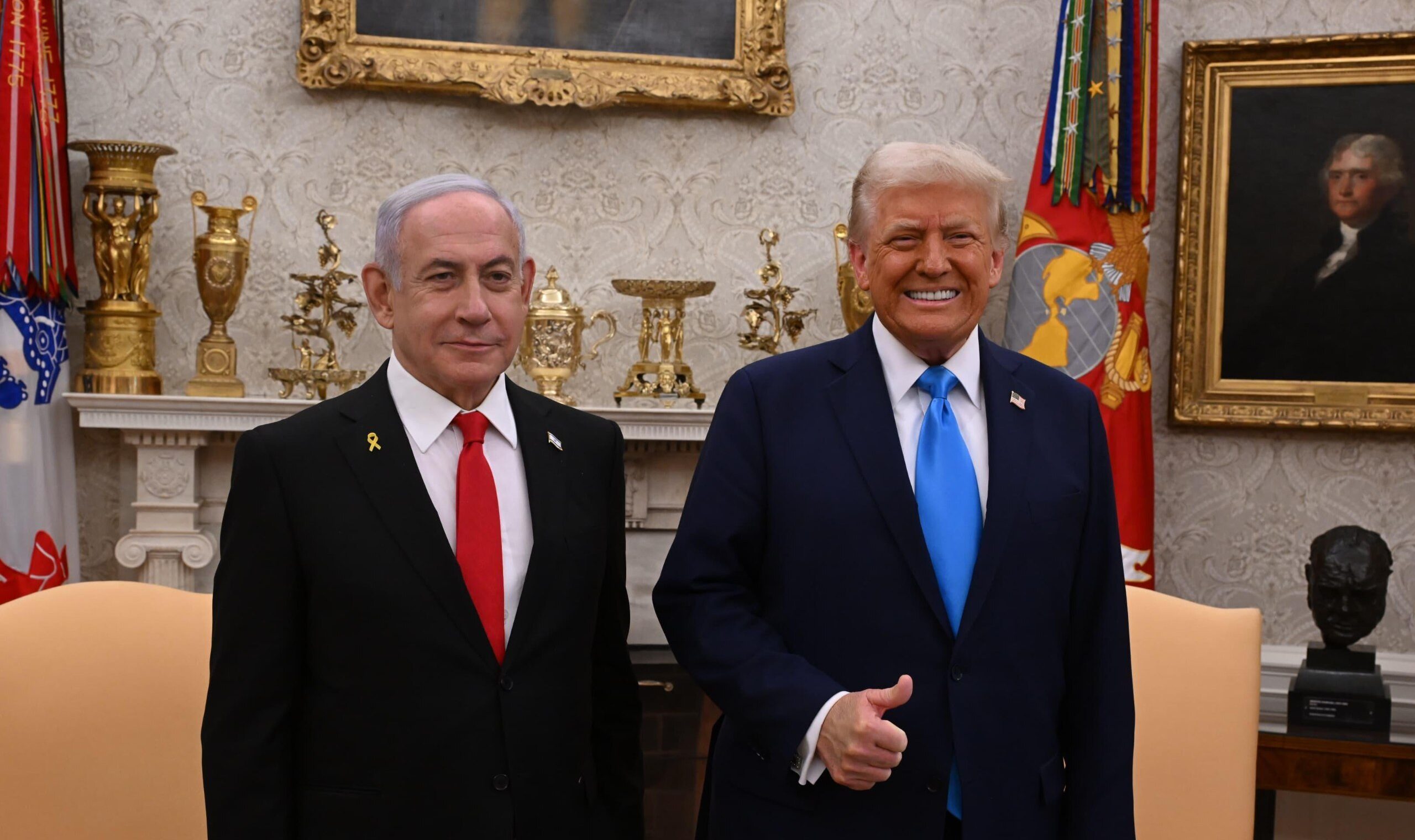
US President Trump - Israeli Prime Minister Netanyahu meeting in Washington

The concept of “appeasement” is something invoked by foes of diplomacy who are in love with making bad Second World War analogies and applying black-and-white absolutism to the nuances of geopolitics. But there is one place where the term might actually have some constructive purpose: not for giving in to rivals by practicing diplomacy, but for giving in to the demands of allies uncritically. Such appeasement does in fact exist and is indeed dangerous, but not in the way that most who deploy the term mean.

Only defense contractors and ideologues see any reason for a nation far outside the greater Middle East region to support war with Iran (or any such perpetual and costly military operations in general). The global balance of power is not at stake, and no indigenous power has the capability to dominate the entire region. But defense of the alliance is constantly cited in U.S. foreign policy circles as the primary reason to engage with Iran in partnership with Israel. While there is some debate over who is in the driver’s seat of recent operations, with President Donald Trump claiming ownership on the American end and Secretary of State Marco Rubio implying Israeli initiative on the other, the key point is that all parties involved cite the necessity of upholding the partnership between the two states as sacrosanct. 

These alliance networks were built during the Cold War to combat the never-realized possibility of Soviet domination over the region. They became obsolete with the fall of the Union. Much like NATO, having lost their original impetus, they are now being retooled around increasingly abstract ends in order to justify their perpetuation in the game of primacy. And if recent rhetoric from within Israel is to be believed, these archaic alliance networks could well be on a collision course, as NATO member Turkey is increasingly viewed as the next rival for Israel in the region. 

The viability of alliance networks comes from circumstance and geography. There have been many alliances that arguably have deterred war, just as there have been many, like the catastrophically rigid systems in place on the eve of the First World War, that have plunged their participants into disaster. But a general trend that can be gleaned from history is that the further afield from core interests an alliance network is, the more forced, ideological, and profit-driven they have to become in order to retain their relevance. This creates a feedback loop that turns a network of convenience into an end of self-perpetuation in itself and can lead policymakers to do things not for the publicly debated national interest, but for the alliance itself. The dual-loyalty aspect is not so much explicitly for a foreign nation, but for the international relationship network itself, above the individual countries that are the constituent parts of the alliance.

The U.S.-Israeli relationship is by no means alone in this kind of artificial construction, but it is foremost in looking at this dynamic today—a relationship that must be “appeased” for its own sake rather than that of its constituent members. Now NATO itself, following the same path, will see many constituent alliance network members advocate for a reluctant public to deploy forces for some faraway conflict on behalf of a state which is not even part of their traditional defense network. With the breakdown of spatial relationships to serve the homunculus of global elite patronage, one can only imagine a backlash is growing. But the foreign policy establishments in many countries continue their work of appeasing the alliance.

There is another path. The distance and geography of the United States and its first century of not only survival but prosperity show that such a country does not need permanent alliance networks, nor must constantly appease them if it does have such arrangements. If anything, the post–Cold War era in particular has shown that constructing these networks has only increased the likelihood of being dragged into conflict and experiencing backlash at home. 

The United States’ founding was an effective opting-out of subordinating one’s regional interest for global commitment in the context of the British Empire. And one of its first diplomatic crises after achieving independence, the Quasi-War, occurred to extract itself from French designs of using the young and still unstable country as a pawn in its own game of global revisionism. Francophilia then was even stronger in America than the present foreign policy establishment’s love for Israel is today. But if the Washington and Adams administrations could break dependency on a supposedly permanent alliance, then it is well within the realm of possibility that a future American government could end the appeasement arrangement with Israel or any other liability state for being against the national interest.

The post Appeasing Allies appeared first on The American Conservative.

Is It Still the Department of ‘War’ or Not?

Is It Still the Department of ‘War’ or Not?

Republican congressmen refuse to call the conflict in Iran what it is.

US-IRAN-ISRAEL-WAR

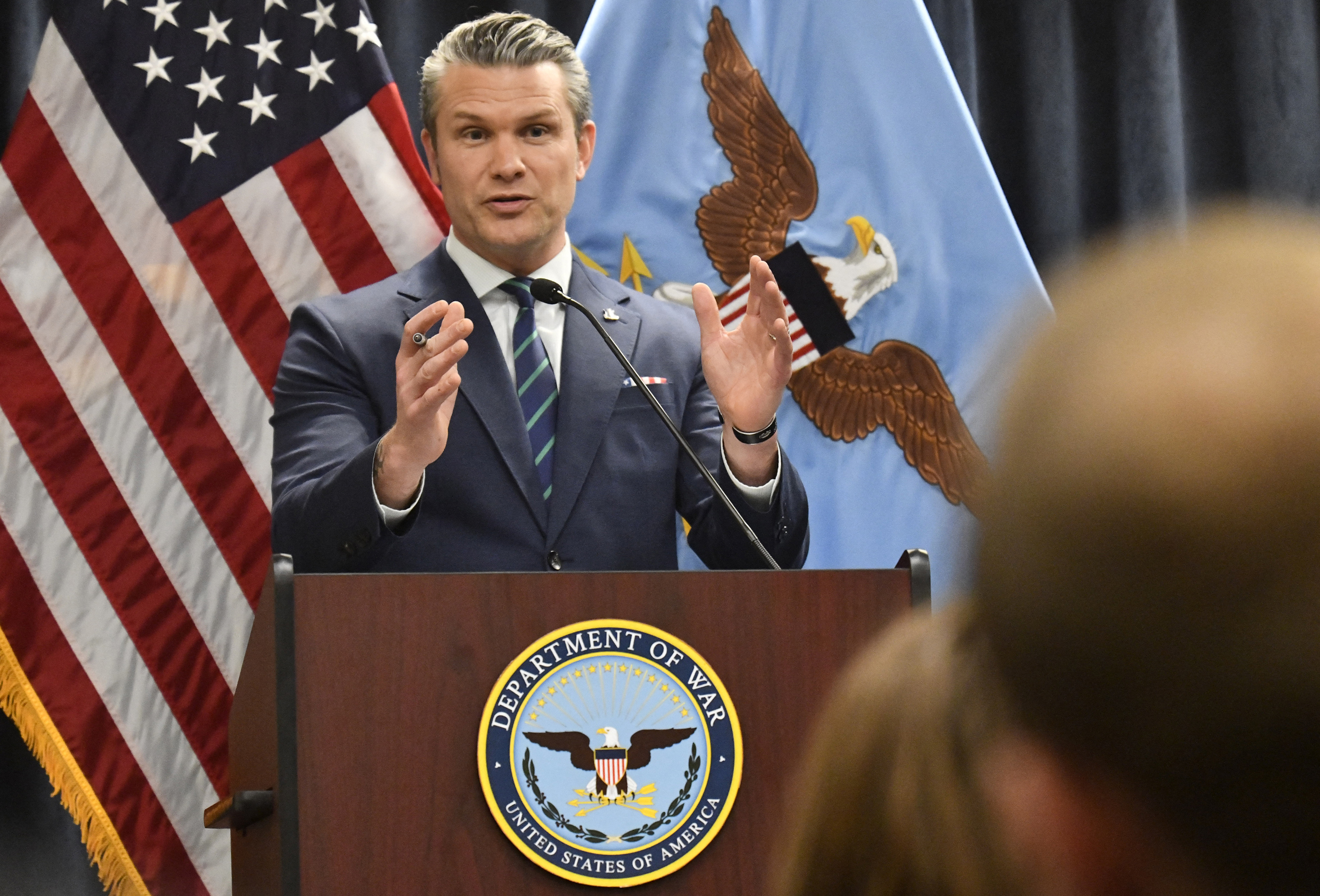
In September, Donald Trump renamed the Department of Defense to its previous title, the Department of War.

The president said at the time, “It used to be called the Department of War and it had a stronger sound… We want defense, but we want offense too.” Secretary of Defense/War Pete Hegseth would add, “This name change is not just about renaming, it’s about restoring.”

“Words matter,” he insisted.

Words do matter. Both Trump and Hegseth both promised at various times that this administration would not seek new or endless wars, yet also seemed to want to emphasize that the Pentagon is about one thing and one thing only: war. Calling it mere “defense” would no longer do.

Which is why after the U.S. went to war with Iran on February 28, President Donald Trump would say forthrightly, “We’re doing very well on the warfront.” 

“We may have casualties,” the president also said. “That often happens in war.”

Hegseth said last Sunday, “We set the terms of this war.” Secretary of State Marco Rubio said Monday, “9,000 Americans have been able to leave the region since the start of this war.”

So, we’re at war, spearheaded by America’s Department of War.

Easy enough to define, yes? Well, not according to Republican members of Congress, who this week had to vote on allowing the president to continue his unilateral war on Iran.

Top warmonger and Republican Senator Lindsey Graham of South Carolina had the gall to say, “I don’t know if this is technically a war.”

Republican Senator and new Homeland Security Chief nominee Markwayne Mullin said, “We haven’t declared war… they have declared war on us.”

As the New York Times noted, Republicans described “the widening conflict as a ‘major combat operation,’ a ‘mission,’ ‘hostilities’ or really just anything other than ‘war.’”

Rand Paul was the only Republican to vote against this war last week in the Senate.

On the House side, the Thursday vote to allow Trump to continue his war with Iran broke against the resolution 212–219, with the only Republicans voting against it being Rep. Thomas Massie of Kentucky and Rep. Warren Davidson of Ohio.

As for the Republicans who voted for war, Rep. Mike Flood of Nebraska contended that it was not a war but just “a significant military operation.”

Florida’s Rep. Anna Paulina Luna insists, “Strategic strikes are not war.”

Speaker of the House Mike Johnson of Louisiana led his party in pretending the U.S. is not at war, saying, “They declared war on us…we’re not at war right now.” Johnson said last week, “We’re not at war right now. We’re four days into a very specific, clear mission—an operation.”

Massie called Johnson’s remarks, “Orwellian levels of double speak.”

He’s right. This is semantics. It is the job of Congress to declare war and the job of the commander-in-chief to execute it. Right now, the president is just going to war on his own, something many presidents this century and the last have done with the acquiescence of Congress.

Republicans refusing to call the United States’ current military actions in Iran a war are abdicating their congressional duty. In doing so, lawmakers likely hope they can salvage their reputations if this war goes south, as Iraq did. The 2002 Iraq war votes haunted many of the politicians who cast them for years.

How this war ends or ends up is unknown. What is known is that U.S. military action in Vietnam was never declared a war either, just a “police action.” But ask any veteran of that conflict if it was a war, and you might get a different answer.

Americans didn’t always play such semantic games. When Japan bombed Pearl Harbor in 1941, did Americans consider that attack “strategic strikes” or just a “major combat operation?” No, they considered it war. So did Congress, which declared it such, marking the last time Congress would declare any of America’s wars as is constitutionally required.

What kind of action in Iran, exactly, is America’s Department of War pursuing right now?

When the Trump administration renamed the Department of Defense in September, antiwar libertarian icon and former Republican Congressman Ron Paul of Texas agreed with the change, writing, “the US has been at war nearly constantly since the end of World War II, so it’s not like the ‘Defense Department’ has been in any way a defensive department.”

Paul added, “With that in mind, returning the Department of Defense to the Department of War, which is how it started, may not be such a bad idea after all — as long as we can be honest about the rest of the terms around our warmaking.”

Honesty about the terms we use is a great idea. A necessary idea.

Especially when it comes to war.

The post Is It Still the Department of ‘War’ or Not? appeared first on The American Conservative.

Don’t Declare ‘Mission Accomplished’ in Venezuela Yet

Don’t Declare ‘Mission Accomplished’ in Venezuela Yet

There are still lots of ways things could fall apart quickly.

VENEZUELA-US-DIPLOMACY-ENERGY

Americans, Venezuelans, and international observers alike were stunned by the daring night raid on Caracas that resulted in the capture of Venezuelan President Nicolás Maduro, decapitating the government and demonstrating the absolute superiority of American arms and special operations units. The strongman was carted back to the United States in chains (and a surprisingly stylish outfit) and literally paraded through the streets of New York City. Trump announced to the world that the U.S. would thereafter be taking control of Venezuela’s oil supplies and running the country.

At first, it wasn’t clear what that meant for Venezuela, but it soon became evident that the Trump administration was happy to work with Maduro’s vice president, Delcy Rodríguez, whose government continues to operate under an American sword of Damocles. The Delcy government has freed political prisoners and reestablished diplomatic relations with the U.S. It’s even held a series of talks with American officials—including Energy Secretary Chris Wright and, most recently, Secretary of the Interior Doug Burgum—on integrating Venezuela back into the American economy and revitalizing the country’s degraded oil industry under U.S. control.

The shocking success of the military operation and the relative ease with which the U.S. has dealt with the remaining government were a political coup for the administration, creating the impression among some commentators that the issue has been settled and the Trump administration can declare victory in Venezuela once and for all. That is, unfortunately, very much not the case. The capture of Maduro was but one step on a long road that remains fraught with hazards. Until the U.S. and Venezuela reach the end of that road, we can’t say the raid was effective in creating a stable bilateral relationship.

Perhaps the biggest danger pertains to a possible transition to democracy. The Trump administration has at least gestured towards some kind of democratization of Venezuela. Although the administration appears perfectly content to continue working with the current government for the foreseeable future, it is under consistent pressure from powerful constituencies on the right to call for elections and normalize the political situation in the country.

A push to topple the remainder of the socialist Chavista regime would completely destroy the superficial stability Venezuela has achieved post-Maduro. Figures like Diosdado Cabello, the minister of the interior who controls the Chavista militias, are hated by the opposition and would almost certainly be bound for a lifetime in prison if they lost power to an opposition government. In such a situation, they may well decide that they have little more to lose from further resistance and begin an active insurgency.

The situation is particularly dangerous because of the presence of organized crime and guerrilla movements in Venezuela with links to the government. Drug cartels and Colombian narcoterrorists have operations scattered throughout the country, moving cocaine and illegally mining gold in Venezuela’s southern provinces. These forces could wreak havoc on the country if allied with defecting forces from the Venezuelan government and would be extremely difficult for the existing American military presence around Venezuela to respond to; counterinsurgency is not a task that can easily be accomplished by air strikes.

Indeed, even if the remaining Chavistas faced no difficulties whatsoever in a democratic transition, Venezuela could still face a debilitating insurgency from cartels and Colombian narcos, who have a vested interest in preventing the country from returning to the rule of law. Any new government would find itself in a thoroughly difficult position: It would need to clamp down on organized crime with police and military bodies of questionable loyalty, many of whose members have links with the very criminals they are supposed to suppress. And they would need to do so while also attempting a large-scale reorganization of government after having been out of power, and thus largely without political experience, for nearly thirty years.

Venezuela analyst Phil Gunson of the International Crisis Group told The American Conservative that the potential risk of violent insurgency from organized crime during a democratic transition could be “a huge problem.”

“In those circumstances, it doesn’t take very many people with access to weaponry to create havoc,” he said. “Even democratic governments with functioning bureaucracies and security forces find it very difficult to combat terrorist groups.”

Neighboring Colombia provides the worst-case scenario: The country’s narcoterrorists have waged a decades-long civil war against the elected government and the experienced Colombian Army. The conflict has killed hundreds of thousands of people, and at points during the ’80s and ’90s guerrilla groups controlled large swathes of the nation’s territory. Only after decades of American assistance (to the tune of billions of dollars) has Colombia managed to largely contain the narcos and maintain its territorial integrity, though it remains locked in a never-ending battle to clamp down on cocaine production.

So far, the Trump administration has wisely refrained from causing any political upheavals in Venezuela and contented itself with rebuilding Venezuela’s broken economy with the assistance of Delcy Rodriguez’s government. But the current state of affairs is still only transitional. American attention is being drawn away from the region by war in the Middle East and upcoming midterm elections. The president and secretary of state will face further political pressure to democratize the country. The Venezuelan opposition figure María Corina Machado, who finds herself largely left out in the cold by the Trump administration, may even attempt to force the United States’ hand on the issue.

So let’s wait to hang the “Mission Accomplished” banner over Caracas. This one could still turn from a headline-grabbing success into a strategic disaster.

The post Don’t Declare ‘Mission Accomplished’ in Venezuela Yet appeared first on The American Conservative.

On Iran, Trump Should Take the Money and Run (Again)

On Iran, Trump Should Take the Money and Run (Again)

The war looks like a case of diminishing returns, but ending it now allows the president to claim tangible victories.

President Trump Holds Two Campaign Rallies In Florida
(Joe Raedle/Getty Images)

“Very complete, pretty much”—thus President Donald Trump has described the progress of the war in Iran. (Of course, in the same Monday speech, he suggested with a classic bit of Trumpian triangulation that the United States might capture the Strait of Hormuz, so your mileage may vary.) The awesome strength of American conventional arms has been on full display. The Pentagon has announced encouraging signs that Israeli and American strikes have largely degraded Iranian missile and drone capacity. 

Yet costs are mounting. Interceptor stocks have been run down at an unprecedented rate, and widely circulated satellite imagery shows that Iranian missiles and drones have rendered significant damage to expensive, high-tech American defensive weapons like the THAAD system. The extent of damage to American bases is not known, but the fact that a third aircraft carrier is being moved post-hoc into the theater suggests that all is not well. A surprisingly robust showing from Hezbollah has demanded an Israeli ground response in Lebanon. The effective closure of the Strait of Hormuz has disrupted markets—clearly spooking Trump and prompting his soothing noises Monday afternoon—and, even if the war ends abruptly, it will take weeks or months for oil and natural gas supplies to return to normal. The destruction of Gulf infrastructure will also be a drag on the world economy as those nations divert capital from investments to rebuilding their own countries. While numbers are down, Iran is still launching munitions, especially drones, and scoring hits against the Gulf. There is no sign of regime collapse or change materializing from the ground.

The full military tale will not be told for some time, and the judgment of operational merits and flaws must be postponed. (What are we to make of the fact that the U.S. seemed unprepared for the scale of strikes on the Gulf? What about the fact that the timeline for establishing full air superiority over Iran grew from two days to six weeks?) Similarly, it will take time to tally the full political, diplomatic, and economic damage. (Is replacing the indecisive Ali Khamenei with his IRGC stooge son actually an improvement? Will American diplomacy have any credibility after the third episode in a year where negotiations served as cover for overt military action? Are we now committed to an expensive and unstable strategy of “mowing the grass”? How much have we cannibalized our own defense posture in East Asia to support this campaign?) But the challenges of the peace can be solved only after the war itself is concluded. Trump can still credibly claim to have smashed the Iranian military and put a hurting on regime leadership, keeping things in the punitive raid genre. This is spinnable; while some portion of his supporters will still have lost trust in him, he will be able to stanch the losses and win some capital with the word “victory” in other, less interventionism-skeptical quarters. If the war drags on, the ill consequences will be harder to spin away.

Of course, it does take two to tango. If Iran is still lobbing drones and the odd missile at regional targets, cutting and running is politically difficult. But if the extent of American success has not been greatly overstated, a choreographed end to the war is probably looking more and more attractive to the Islamic Republic. (Granted, the Lebanon problem is a snarl; it is plausible that Israel will continue operations against Hezbollah irrespective of the rest of the theater, which will make it politically difficult for Iran to disengage. Clients with independent interests and an outsize claim on patron responsibility are not a liability unique to the United States.) Iran has reestablished deterrence to some degree with this war—the regime did not buckle under extreme pressure, and it has maintained a credible strike capability—so its own war aims are probably close to completion. Bring on the deal.

Trump’s adaptability and responsiveness to changing circumstances are one of his great political strengths. Continuing the war,  let alone launching a ground invasion, increasingly looks like a case of diminishing returns. The president seems to agree. It’s time for him to do what he’s best at: take the money and run.

The post On Iran, Trump Should Take the Money and Run (Again) appeared first on The American Conservative.

AMERICA: Hundreds of Strangers Show up for Funeral of Navy Veteran in Tennessee With No Known Living Relatives (VIDEO)

Screencap of Twitter/X video.

A Navy veteran in Tennessee named Lonnie D. Wayman recently passed away with no known living relatives to claim his body. When his funeral happened today, it was attended by hundreds of strangers.

Every once in a while, a story appears out of nowhere that shows who and what America really is. This is one of them.

Wayman was laid to rest with full military honors.

FOX News reported:

‘Unclaimed’ Navy veteran given full military honors as community refuses to let him be buried alone

Community members and fellow veterans gathered Tuesday morning at the Middle Tennessee State Veterans Cemetery to lay Lonnie D. Wayman, a U.S. Navy veteran with no known family, to rest with full military honors, FOX 17 Nashville reported.

In a country that promises to honor those who serve, the turnout made clear that “unclaimed” does not mean forgotten.

Wayman had been listed as an “unclaimed” veteran, officials said, after no relatives came forward to claim his remains. Organizers invited members of the public and veterans groups to attend the 9 a.m. burial at the Nashville cemetery so he would not be laid to rest alone.

A Veterans Affairs (VA) representative told those gathered that the word “unclaimed” did not fit what was unfolding before them.

“When the paperwork for Lonnie Wayman came across my desk, it was marked as an unclaimed veteran,” the representative said. “But I say that’s incorrect. I say that’s a misnomer, that thanks to the support from the United States military, the good folks at Gupton Mortuary, and all the support I see here today, we are able to claim our honorable veterans and provide them the dignity and honor that they have earned.”

Rows of veterans, community members and military personnel stood in quiet tribute as prayers were offered and honors rendered in recognition of Wayman’s service in the Navy.

Check out the videos below:

This is Americans showing up to support the best among us. God bless our troops and God bless America.

The post AMERICA: Hundreds of Strangers Show up for Funeral of Navy Veteran in Tennessee With No Known Living Relatives (VIDEO) appeared first on The Gateway Pundit.