The post The NFL’s Number One Draft Pick Continues to Show He’s a Class Act appeared first on The Gateway Pundit.


The post The NFL’s Number One Draft Pick Continues to Show He’s a Class Act appeared first on The Gateway Pundit.


President Trump on Saturday evening released footage of the gunman who stormed the lobby of the Washington Hilton and opened fire at the White House Correspondents’ Dinner.
President Trump, First Lady Melania, Vice President Vance and others were rushed out of the White House Correspondents’ Dinner amid a ‘security incident.’
The President and his entire Cabinet were safely evacuated after shots were fired in the lobby of the Washington Hilton at the White House Correspondents’ Dinner.
Trump held a press conference in the White House press briefing room after the shooter, identified as Cole Allen, 31, of Torrence, California.
The president said a Secret Service Agent was shot during his encounter with Cole Allen.
During the press conference, President Trump released footage of Cole Allen in the lobby of the Washington Hilton.
WATCH:
The president released a photo of the shooter:
Trump released a statement after the shooting on Truth Social:
Quite an evening in D.C. Secret Service and Law Enforcement did a fantastic job. They acted quickly and bravely. The shooter has been apprehended, and I have recommended that we “LET THE SHOW GO ON” but, will entirely be guided by Law Enforcement. They will make a decision shortly.
Regardless of that decision, the evening will be much different than planned, and we’ll just, plain, have to do it again. President DONALD J. TRUMP
President Trump released a second statement and said at the request of law enforcement, he will not be returning to the ballroom:
Law Enforcement has requested that we leave the premises, consistent with protocol, which we will do, immediately. I will be giving a press conference in 30 minutes from the White House Press Briefing Room.
The First Lady, plus the Vice President, and all Cabinet members, are in perfect condition. We will be speaking to you in a half an hour. I have spoken with all the representatives in charge of the event, and we will be rescheduling within 30 days. President DONALD J. TRUMP
The post BREAKING: President Trump Shares Footage of WHCD Shooter in Lobby of Washington Hilton (VIDEO) appeared first on The Gateway Pundit.
Violent unreason still has its days in the sun.
Since I buy books faster than I read them, they accumulate on my shelves. I never buy a book without intending to read it, but often it has to wait for years before it is so honored, and at my death there will be many that remain undeservedly unread.
It must be 30 years at least, and probably nearer forty, since I bought a copy of the second edition, published in 1831, of Sir Walter Scott’s Letters on Demonology and Witchcraft. Finally, for the sake of a book that I was writing, I read it; and I finished it with a growing admiration for Scott’s humanity, humor, wisdom, learning, and insight into human psychology.
Scott is one of the great unread, barely more than a name in literary history even for people who read a lot. In the days when there were many more second-hand bookstores than there are now, and my delight was to frequent them, none seemed to be without a complete set of the Waverley novels, and sometimes several sets in bindings of various degrees of luxury. Though Scott was the most influential novelist of the first third of the 19th century, few read him now: For though life expectancy has increased greatly since his time, it still seems too short to spend on him.
Some might conclude that a book by Scott, now two centuries old and on so arcane a subject, would have little to tell us today, but they would be mistaken. He makes shrewd observations that could hardly be more pertinent to us today. Here is one, where he comments on the spread of accusations of witchcraft:
It has always been remarked, that those morbid affections of mind which depend on the imagination are sure to become more common, in proportion as public attention is fastened on stories connected with their display.
Reading this, who will not think that this is the explanation of the vast increase in gender dysphoria and transsexualism in the last few years, and indeed of the spread of psychopathology in general? The more we dwell on our psychological state, the worse it becomes; the more the psychotherapeutic dog chases the psychopathological tail, the faster and faster the two of them twirl round in useless or harmful circles. Note that Scott does not deny that there are morbid affections of the mind, but only asserts that advertising—only that rewarding them with attention—will increase the numbers who suffer from them.
Scott is scathing about the witch-craze and associated frauds, and funny about ghosts, but he is illuminating about the psychology of the perpetrators, the victims, and the believers. Education is no absolute protection against credulity, he says, and the educated man may be reluctant to give up his credulity because he does not want to admit even to himself that he has been credulous.
Scott describes the methods used by witchfinders in 17th century Scotland (where and when the craze was at its worst). They used both physical and psychological torture to extract confessions and further denunciations, which of course led to yet more arrests and more confessions and more denunciations. Among other methods, they pioneered sleep deprivation and hunger.
poor wretches, abandoned as they conceived, by God and the world, deprived of all human sympathy, and exposed to personal tortures of an acute description, became disposed to throw away their lives that were rendered bitter to them, by a voluntary confession of guilt, rather than struggle hopelessly against so many evils.
Scott ends with qualified optimism. Though, he says, “it seems… that every generation of the human race must swallow a certain measure of nonsense,” yet
whatever follies the present race may be guilty of, the sense of humanity is too universally spread to permit them to think of Tormenting wretches till they confess what is impossible, and then burning them for their pains.
Of even this qualified optimism, I am far from certain. I suppose it depends on what you consider the recent past, but what I consider the recent past is far from reassuring. The Cultural Revolution in China, for example, was at least the equal of the witch-craze. The show trials in the Stalinist Soviet Union were alarming not only in themselves, but in the degree to which members of the intellectual elite in the West were willing to believe the guilt of the accused who admitted to the most preposterous of crimes, and managed to disguise from themselves the obvious means by which the confessions were obtained, which were precisely those of the witchfinders in Scotland three centuries before. An eminent British trial lawyer, D. N. Pritt, a member of parliament for the Labour Party, attended the trials and pronounced them completely above board, because, like the accused witches in Scotland, the accused in the Soviet trials confirmed each other’s evidence.
There are none so blind as those who will not see. He wrote of the trial of Kamenev, Zinoviev and 16 others, that “it seems plain… on a number of different grounds, that anything in the nature of forced confessions is intrinsically impossible.” One of the grounds was that, if the confessions were forced, Stalin and his apparatus would have been monstrous. In other words, how could all those witches have been burnt if there were no such thing as witchcraft, to whose existence so many people, from the poorest peasant to King James I himself, had attested, and whose effects they had witnessed?
It is always hazardous to push analogies too far, but is not the search for institutional racism, as the explanation of the ills besetting the world (as ills will always beset it) a little like the searching out of witches or Trotskyist wreckers? No one is burnt at the stake or summarily shot, and that is not a small or unimportant difference. But just as during the witch-craze it was dangerous to not only to be accused of witchcraft but to express doubt about its existence, so it is now, or recently has been, dangerous, at any rate to career if not to life, to question the existence of institutional racism.
There is an amusing and instructive story about a British judge in Scott’s book. A prosecution witness tried to give testimony about a murderer’s identity that was told him by a ghost. The judge said he could not admit it because it was hearsay. But, if the prosecution cared to produce the ghost itself, he, the judge, would gladly listen to what it had to say.
Of course, it is always easier to identify the idiocy of the past than that of the present.
The post Is the Witchcraft Mania Really Behind Us? appeared first on The American Conservative.
The “grooming gangs” framing has obscured that black-market commercial element of child abuse.
In March this year, trading standards officers in the West Midlands town of Dudley closed down a number of “rogue” businesses, mostly mini-marts and vape shops, due to links to organized criminal gangs. Their priority criterion was not tax evasion or counterfeit goods. It was the grooming threat to children.
The shops are staffed by a continuous flow of migrant workers, including men from Kurdistan and Afghanistan, many of whom arrived in the “Boriswave” of migration, the surge of non-EU immigration that took place while Boris Johnson was prime minister. In one shop, officers found a book in Kurdish which listed English chat-up phrases. At another, intelligence indicated that men were driving children as young as 12 to unknown locations.
“We get the people behind the counter to empty their pockets, and they’ve got reams of condoms” Kuldeep Maan, principal trading standards officer at Dudley Council, told a Channel 4 reporter.
This is not the grooming gangs story most British people think they know. That story has a familiar cast: Pakistani men, working-class white girls, takeaways and taxis, and authorities too frightened of being called racist to intervene. That story is true. It is also radically incomplete. And its incompleteness—the way it has fixed public attention on one pattern, one demographic, one era—has allowed the underlying problem to evolve, expand, and embed itself ever more deeply into British criminal life while the national conversation was framed in a different direction.
In the 2000s and 2010s, the grooming gangs typically operated through the nighttime economy, primarily the takeaways and taxis which subsequently became part of the known grooming gang story. In the 2020s, the shopfronts may have changed but the underlying structure is recognizable: loosely organized networks, often rooted in shared background or kinship, operating across multiple criminal markets and adapting to new opportunities as they arise. At the same time, a new wave of criminal infrastructure, imported alongside legitimate migration, has turbocharged a problem Britain always had and never fully solved.
To understand how we got here we need to start with what these networks actually are, because the term that has defined this debate for 15 years is wrong, or at least insufficient. These are not grooming gangs. They are child trafficking and slavery networks, operating within Britain’s criminal economy, structured around ethnic kinship ties, and enabled by an institutional failure that has persisted across decades and governments. Until the law, the police, and the public understand it in those terms the response will remain inadequate—and children will keep paying the price.
Let’s start with the crime itself. What is actually being described when we talk about “grooming gangs”?
The gangs first entered public consciousness with the reporting of Andrew Norfolk, a journalist for the Times. Norfolk’s focus was on crimes in the Midlands, where, he reported, groups of men were befriending girls aged 11–16 on the streets and entrapping them—he referred to the crime as “on-street grooming.”
“Most of the victims are white and most of the convicted offenders are of Pakistani heritage, unlike other known models of child-sex offending in Britain,” Norfolk reported in his first article on the matter in January 2011, setting the stage for the current understanding of what a grooming gang is.
But in the same article, he cited a 2009 report by the Child Exploitation and Online Protection Centre [CEOP] which had found that “Kurds are identified as being dominant in the North East of England, but Anglo-Asian [predominantly British-born Bangladeshi and Pakistani] groups appear to be in control in the Midlands. There are […] suggestions that in London, West Indian (Caribbean) and Bangladeshi networks are similarly exploiting […] females for sex.” What CEOP was describing was a patchwork of criminal networks forming along lines of trust and familiarity, then competing for control of illicit markets.
That distinction matters enormously. This is how organized crime works everywhere. Networks form along lines of trust—family, kinship, shared background—and then compete for control of illicit markets. The ethnicity of a network reflects who its members trust: Pakistani gangs in Rotherham, Kurdish networks in the Northeast, West Indian operations in London. Different communities, same criminal methods.
The grooming model at the heart of these networks, often referred to as the “Romeo Pimp” or “Loverboy” method, confirms this. Norfolk described older boys luring a much younger girl into a fake relationship before passing her on to others. Julie Bindel watched the scene unfold a step further in 2007, reporting in the Times that, at the Mall in Blackburn, “Well-dressed Asian [meaning of Indian subcontinental heritage] teenage boys can be found on the lookout for young white girls, following them around those stores that sell cheap jewelery and perfume. Meanwhile, older men sit on the benches, watching their workers and potential recruits in action. The older men are ‘employing’ the boys to chat up the girls and eventually hand them over.” The same year, the Journal of Aggression, Maltreatment & Trauma identified this method as a primary route into commercial sexual exploitation—sex trafficking—alongside drug addiction, manipulation, and violence.
The boys weren’t merely grooming girls to pass them around family and friendship groups. They were grooming them to traffic them into criminal enterprises. This is the reframing that is urgently needed. The failure to make it has had concrete, damaging consequences for how these networks have been policed.
The evidence for this framing was present from the beginning. It was ignored. Norfolk’s reporting eventually forced Rotherham Council to commission Alexis Jay, the Scottish Government’s former chief social work advisor, to look into grooming gang cases in the area. In the introduction to her report, published in 2014, Jay noted: “At an operational level, the Police gave no priority to CSE [child sexual exploitation], regarding many child victims with contempt and failing to act on their abuse as a crime. Further stark evidence came in 2002, 2003, and 2006 with three reports known to the Police and the Council, which could not have been clearer in their description of the situation in Rotherham.”
The three reports in question were written by Angie Heal, a strategic drugs analyst who had been hired in 2002 by South Yorkshire Police to research drug use and supply in the area. Her investigations revealed that children were being given drugs in the grooming process. Her first report, published the same year, advised that if the grooming gangs could not be convicted of sex offences, they could be tackled by bringing drug charges. The report was widely read, but according to Heal there was a “complete lack of interest” in the link between the drug trade and child abuse.
Her second report, published in 2003, found a “significant number of girls and some boys who are being sexually exploited.” Her third, published in 2006, found “systematic physical and sexual violence against young women,” including trafficking to other towns. That report was sent to Rotherham Drugs Partnership, the district commander, and the chief superintendents, to no avail. The following year Heal left South Yorkshire Police.
Jay is scathing about the way these reports were handled, writing: “The first of these reports was effectively suppressed because some senior officers disbelieved the data it contained. This had led to suggestions of cover-up. The other two reports set out the links between child sexual exploitation and drugs, guns and criminality in the Borough. These reports were ignored and no action was taken to deal with the issues that were identified in them.”
Over a decade on and little has changed. It seems that everyone recognizes sexual slavery and child trafficking when it happens abroad, but no one spots it when British girls and boys are the victims. The distinction isn’t purely semantic. As Louise Baroness Casey noted in her 2025 audit on group-based child sexual exploitation and abuse, it “is easier for a police officer to realize a child is being criminally exploited, for example, through finding them with a significant amount of drugs or money, than it would be to spot the often subtle signs that the same child was also being sexually exploited.”
Casey goes on to say: “This audit is concerned that, because of this, patterns of child sexual exploitation may be obscured.” This is indeed a worry. But it also points to a missed opportunity: If criminal exploitation is easier to detect, and if sexual exploitation so often accompanies it, then every drug raid, every county-lines arrest, every seized stash of cash should trigger the question—are children being sexually exploited here too?
Let’s be clear: Britain’s baseline of child exploitation predates mass immigration. The Casey audit found that white perpetrators still account for a meaningful proportion of group-based child sexual exploitation cases—though it does not differentiate between White British and White Other (Albanian, for example), a gap that is itself telling. All the same, the problem was never exclusively imported; think of Oliver Twist falling into the hands of Fagin and Bill Sikes. But Britain, like other Western societies, has been through a civilizing process since the 19th century. At home, the Factory Acts of 1833 and 1842, and Elementary Education Acts of 1870 and 1880 brought children out of the work force and into the classroom, while the Metropolitan Police Act 1839 and Towns Police Clauses Act 1847 introduced a formal police force to control violence and crack down on prostitution. There was also a drive to tackle drunken and disorderly behavior in the 1880s. Abroad, the British Empire moved to eliminate barbaric practices such as sati (widow-burning) in 1829 and thuggee (ritual robbery and murder) in the 1830s, as well as imposing British ideals through Anglicanization.
But the pushback against colonial rule and all that came with it has had the unfortunate effect of mandating tolerance for foreign cultural practices, even at home. The consequences are harrowing. According to the Home Office there were 2,949 honor-based offenses recorded by the police in England and Wales in the year ending March 2025, a figure up 7 percent on the previous year. Offences included coercion, abuse, rape, forced marriage, and female genital mutilation. The Halo Project, a charity supporting black and minority women and girls suffering domestic abuse, estimates that there are 12-15 honor based killings in the UK every year. In 2022, the UK Parliament heard evidence that honor-based abuse (HBA) was an “invisible crime,” due to the fact that it has become a “culturally sensitive problem,” leading to HBA being “dismissed as a cultural issue.” The submission noted that “HBA has become a politically charged and hypersensitive issue creating obstacles to preventing [it].” Of course, not all members of ethnic minority groups exploit children. But certain ethnic minority groups, as groups, have tolerated, or failed to report to authorities, practices and crimes—including the sexual exploitation of children and honor offenses—that members of British society as a whole regard with the highest degree of moral opprobrium. The compound effect is not that Oliver Twist’s story is no longer tolerated; it’s that it wasn’t—until multiculturalism became the order of the day.
What multiculturalism has done—specifically, what decades of managed, largely unexamined mass immigration has done—is import organized criminal networks that have expanded and entrenched the market in ways that would not otherwise have occurred. The institutional failure lies not merely in fearing being called racist, but in allowing those networks to operate in order to perpetuate the founding myth of multiculturalism: that all cultures are equally civilized.
Once that piece is recognized for what it is, the mechanism loses its mystery: migration brings communities. Communities generate trust networks. Trust networks, in any society, can be exploited by criminal elements within them—and in some cases, those criminal elements migrate alongside the communities they prey on and profit from.
Take, for example, Birmingham in the early 2000s. In 2005, a Birmingham newspaper, the Sunday Mercury, reported gang violence under the headline: “RIVAL GANGS UNITE TO FIGHT; Sikh and Muslim crime lords call truce to stand against black gunmen.”
A gangland source told the paper: “The Asian gangs are increasingly taking over the drugs and prostitution trade from the black gangs. This has caused a lot of friction. They have worked together in the past but they are now both trying to establish their dominance in the market and are stepping on each others’ toes in the process.”
The report noted that the Asian gangs “were originally formed in the 1980s to counter the rising influence of the far right and to defend their communities from racist attacks. When the neo-Nazi threat diminished, the gangs continued to exist and turned into opposing crime syndicates and began turning on each other over religious grounds.”
What emerges from these reports is a picture of Britain’s urban ganglands that will be familiar to anyone who has studied organized crime in American cities: territorial, shifting, multi-ethnic, and bound together less by ideology than by the economics of drugs and prostitution. Yet while grooming gangs have become totemic of the failures of multiculturalism, the gang warfare and drugs trade that weaves through the sexual exploitation of children has largely gone unnoticed by a public for whom such matters still feel like an American problem. The result is a national conversation that has fixated on child grooming ethnicity and religion while ignoring the criminal infrastructure, which, in its current dimension, is the product of multiculturalism, and which makes the abuse possible.
The pattern is repeating itself now in a new form on Dudley’s streets, and in hundreds of towns like it across Britain. The managed importation of large populations, without adequate consideration of the criminal networks that travel alongside legitimate communities, and without the institutional capacity to police what follows, has made a preexisting problem dramatically worse. We see it in the explosion of vape shops and “Turkish barbers” even in sleepy rural market towns, as criminal networks seek to expand their territories and customer bases ever further. Added to that the ideological environment of multiculturalism—in which naming patterns was treated as racism, in which managers instructed social workers to omit the ethnicity of perpetrators from their reports, in which the charge of racism was more feared than the reality of rape—provided exactly the cover those ever-expanding networks needed to operate with impunity for decades.
Alexis Jay noted in 2014 that council workers in Rotherham had been told not to refer to the ethnic origins of perpetrators when carrying out training. She asked why the charge of racism was so feared, even in the face of clear evidence. The answer is that the entire apparatus of British public life had been built around a definition of anti-racism designed to protect the ideology of multiculturalism. That apparatus protected no one but the perpetrators.
Ethnicity is a thread in this story, not the whole cloth. The men in Dudley using a Kurdish phrase book to chat up children are not grooming gang members in the commonly understood meaning of that phrase. They are foot-soldiers in a criminal enterprise, doing what criminal enterprises do: recruiting, expanding, adapting. Until Britain is willing to name what these networks are—child trafficking operations, criminal enterprises, organized crime—and to pursue them with the tools we use against organized crime, children will continue to be left defenseless against those who seek to exploit and abuse them.
The post The Grooming Gangs’ Unexamined Organized Crime Angle appeared first on The American Conservative.
Doha’s careful balancing act has been threatened by severe security and economic challenges.
As a small but extremely gas-rich country surrounded by larger neighbors with a history of tense rivalries, Qatar has long depended on stability and careful geopolitical balancing to secure its prosperity. Yet in the past ten months, and especially since February 28, 2026, Doha has been drawn unwillingly into regional conflagration, facing missile and drone attacks that have severely disrupted its aviation, banking, shipping, tourism, and other critical sectors, as well as an Israeli strike in September 2025 on a busy residential neighborhood. A prolonged war involving Iran would erode Qatar’s hard-earned reputation as a safe, reliable hub for business and investment, giving Doha every incentive to welcome deescalation through Pakistani diplomatic channels.
The Iranian revolution in 1979 came eight years after Qatar gained independence. Doha joined other Gulf Arab capitals in perceiving a threat from the new regime in Tehran, understanding the Islamic Republic to be committed to exporting its revolution and overthrowing “un-Islamic” governments in order to create an “Islamic world order”.
For these reasons Qatar supported Baghdad during the Iran–Iraq War, though to a much lesser degree than some other Gulf Cooperation Council (GCC) members, and without ever severing diplomatic relations with Tehran. Since becoming a sovereign state in 1971, Qatar has experienced minimal sectarian tensions, which has limited the Iranian regime’s ability to foment unrest or exacerbate divisions between the ruling Al Thani family and the country’s Shi’a minority. The Qatari leadership has maintained a broadly inclusive approach toward its Shi’a population, around 10 percent of the country’s citizenry and largely concentrated in Doha and parts of northern Qatar. Unlike Bahrain or Saudi Arabia’s Eastern Province, Qatar never witnessed large-scale Shi’a political opposition. While the Iranian revolution inspired Shi’a movements elsewhere in the Gulf, Qatar remained largely insulated from such activism, in part due to the state’s efforts to integrate Shi’a citizens into the civil service and business sectors. Overall, a stable social contract between the Al Thani family and Qatar’s Shi’a communities has helped the country avoid the significant sectarian tensions seen in other Gulf states. Consequently, the leadership in Doha perceived far less of an Iranian threat than some of its neighbors on the Arabian Peninsula and Ba’athist Iraq.
Soon after the Iran–Iraq War ended in 1988, Qatari–Iranian relations moved into a period of normalization, largely underpinned by a convergence of energy interests owing to the co-ownership of the world’s largest non-associated natural gas field, North Dome/South Pars, and growing diplomatic visits between the two nations. From the 1990s into the 2000s, as Qatar’s astonishing economic ascendancy occurred, driven largely by its liquefied natural gas sector, Doha grew acutely aware of the risks a war involving Iran could pose to its security and prosperity.
Within this context, Qatar adopted a bridging role between Iran and its adversaries in the Arab world and the West, advocating for Tehran’s inclusion in regional security arrangements as early as the aftermath of the 1990–91 Gulf War—a time when that stance was rejected by other GCC states. Notably, in 2006, Qatar was the only UN Security Council member to vote against a resolution demanding that Tehran suspend all uranium enrichment.
Qatar’s history of strained relations with certain neighbors, particularly Saudi Arabia, have at times further informed Doha’s perspective on how to approach Iran. In 1992, the killing of two Qatari guards on the Saudi border triggered a diplomatic crisis with Riyadh, prompting Doha to deepen ties with Tehran. Twenty-five years later, when a Saudi- and Emirati-led coalition imposed an unprecedented blockade on Qatar, Doha relied on the Bushehr port and Iran’s airspace to withstand pressure from its immediate neighbors. Tehran’s firm condemnation of the blockade enhanced its standing among Qataris, underscoring the strategic importance of maintaining normalized relations with Iran amid that GCC crisis.
Despite its pragmatic engagement with Tehran, Qatar has a record of strongly disagreeing with Iran on certain issues pushing back against its regional foreign policy. This was evident in 1996, when Qatar condemned Iran for allegedly backing a coup plot in Bahrain for the second time since 1981. In the 2010s, Qatar also challenged Iran in Syria and Yemen by sponsoring Sunni Islamist rebels seeking to overthrow then-President Bashar al-Assad’s regime and joining the Saudi-led coalition to counter the Iran-backed Houthi rebels (albeit in a limited manner). Qatar also recalled its ambassador in Iran to show solidarity with Riyadh amid the Saudi–Iranian crisis of early 2016, before reversing that move early on in the 2017–21 blockade.
Over time, Qatar’s approach to Iran has rested on three consistent pillars: First, engagement with Tehran should always occur when it can advance Qatar’s economic and energy interests; second, Doha must consistently support Arab–Iranian dialogue on regional issues; third, Qatar should oppose any Iranian attempt to dominate the Arab world.
On the Iranian side, there have long been suspicions about Qatar due to its close military partnership with Washington. While Qatar has long valued the U.S. CENTCOM forward headquarters being based at Al Udeid Air Base, Tehran has consistently viewed the large American military presence there as a menace to Iranian national security. The carefully choreographed Iranian missile and drone strikes on Al Udeid toward the end of last year’s 12-Day War between Iran and Israel underscored the precarious position Qatar faces during American strikes on Iran, both in June 2025 and, far more extensively, since late February 2026.
Though less intense than Iran’s attacks on the UAE and Kuwait, Tehran’s missile and drone strikes against targets in Qatar since February 28 have fundamentally changed nature of Qatari–Iranian relations. Never since the Islamic Republic came to power had it ever been so directly hostile to Qatar. These attacks on Qatar have been officially framed by Tehran as retaliation for Doha’s alleged role in facilitating Operation Epic Fury on February 28, 2026. However, Qatar reiterated before the conflict that its bases and airspace would not be used against Iran, and has unequivocally denied that they were engaged at any point in this ongoing war.
Nevertheless, Tehran’s aggression has continued with Iran targeting vital LNG facilities—forcing Qatar to suspend production—and Hamad International Airport. The Iranian attacks on March 18 hit Ras Laffan Industrial City, which houses the largest liquefied natural gas export facility in the world, together with power and water plants and associated energy infrastructure. The impact on the global economy will be significant. Qatar accounts for one-fifth of all LNG exports worldwide, and these strikes wiped out 17 percent of the country’s LNG exporting capacity for the next three to five years. Qatar also produces 30 percent of the world’s helium, which is critical for industries ranging from semiconductors to medical imaging, and disruption has had immediate ramifications for global supply chains. Iran’s attacks on Qatar persisted even after the Pakistani-mediated ceasefire of April 7–8, underscoring the Iranian regime’s intent to coerce Doha into fundamentally altering its relationship with Washington and ending the U.S. military presence on Qatari soil.
In the postwar period, Qatar’s foreign policy is likely to undergo careful recalibration. Its economic model, which has been anchored in secure skies, safe passage of gas exports through the Strait of Hormuz, tranquility in Doha, and reliable global logistics hubs, demands adaptation to the new geopolitical and security landscape created by this conflict. Pragmatic engagement with Iran will remain necessary and, as the foreign ministry has emphasized, Doha recognizes that Iran is not going anywhere, which means constructive dialogue with Tehran will be essential. That Qatar has expelled Iranian military attaches but not all diplomats, even as Iranian missiles and drones pound the country, speaks to Doha’s commitment to maintaining open channels of communication to Tehran.
But post-war engagement will be more cautious and constrained. Trust has eroded, with Qatar viewing Iran through a lens of fear and suspicion. On a societal level, Qataris and expatriates in Doha will long carry trauma resulting from Iran’s indiscriminate missile and drone strikes on the country’s civilian infrastructure. Closer geopolitical alignment with Saudi Arabia and some other GCC states, alongside increased defense spending to bolster national resilience against sustained Iranian threats, can be expected.
In the more immediate term, Qatar’s priority will be to support regional deescalation efforts led by Islamabad and, to a lesser extent, Ankara and Cairo. Doha’s position is that talks must yield a comprehensive agreement, not merely a temporary pause, to prevent the region from returning to the brink and, crucially, to ensure the reopening of the Strait of Hormuz and the restarting of LNG exports from Ras Laffan. The challenge for Qatar and its fellow GCC members will be to engage post-conflict Iran while simultaneously deterring Tehran from targeting vulnerable high-revenue generating infrastructure in the Gulf amid any future U.S.-Iran confrontation. How or if the Qataris will achieve that remains unclear, but there is no denying that a continuation of this current war is simply unsustainable for Qatar and for the world economy it supplies.
The post Qatar’s Calculus Amid the Iran War appeared first on The American Conservative.


Speaking after the event, interim DC Police Chief Jeffery Carroll confirmed the suspect, 31-year-old Cole Tomas Allen of Torrance, California, had checked into the hotel as a guest before the chaos erupted.
Allen was armed with a shotgun, a handgun, and multiple knives when he allegedly assembled a long weapon in an unsecured back area and opened fire near the magnetometers at the security checkpoint.
“He was armed with a shotgun, a handgun, and multiple knives,” Carroll said.
Carroll explained that the suspect and law enforcement officers “exchanged gunfire,” and he ran through the security checkpoint.
The suspect was shot and taken to the hospital to be treated.
WATCH:
DC Police Chief: “Preliminary information; we do believe he was a guest here at the hotel.” pic.twitter.com/3yNSq71MV1
— CSPAN (@cspan) April 26, 2026
It appears that there is “no reason to believe at this time that anyone else was involved” and that it “does not appear to be any sort of danger to the public,” Carroll said.
WASHINGTON, DC POLICE PRESS CONFERENCE
Jeffery W. Carroll says an armed suspect (shotgun, handgun, multiple knives) charged a Secret Service checkpoint in Washington, DC.
• Suspect was not shot, taken to hospital for evaluation
• Early info suggests he wanted to “hit as… pic.twitter.com/hFdFZsf95t
— ✦ Margot Haddad ✦ (@margothaddad) April 26, 2026
One Secret Service agent was struck by a bullet but survived thanks to his bulletproof vest.
President Donald Trump also addressed the shooting during an urgent White House press conference just before the update from police.
Trump confirmed speaking directly to the wounded Secret Service agent, saying, “I just spoke to the officer. He’s in great shape!”
The president repeatedly praised the Secret Service for their quick action to prevent any loss of life.
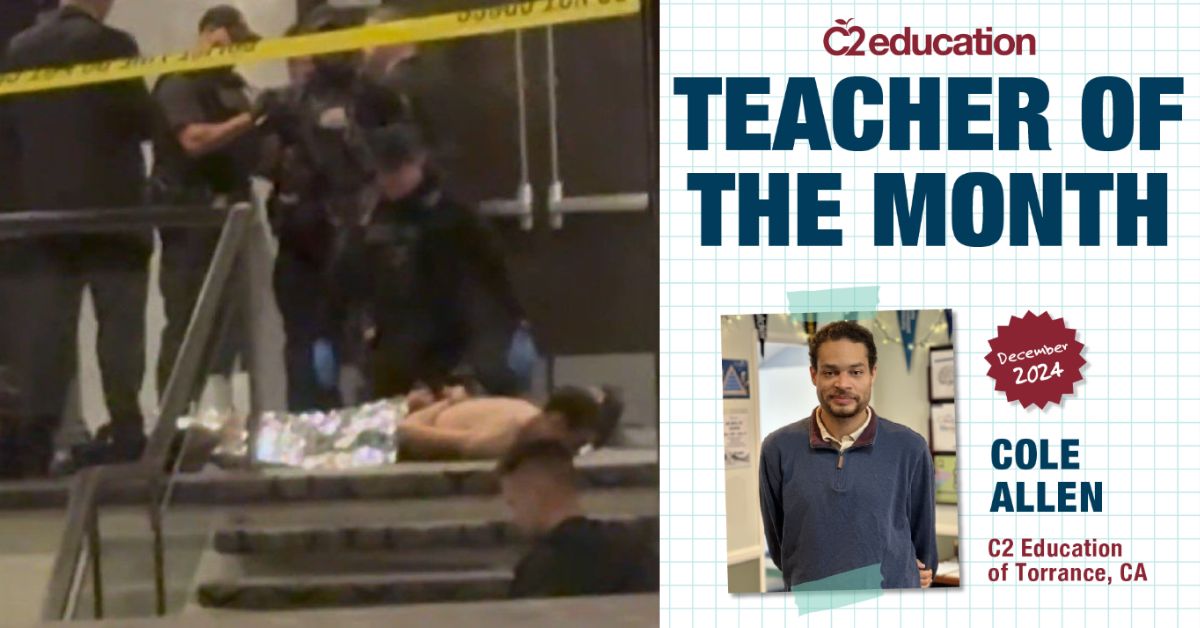
Allen, a Caltech graduate who earned a master’s in computer science from California State University, Dominguez Hills, had been working as a teacher and was even named “Teacher of the Month” in December 2024 at C2 Education in Torrance.
No manifesto has been released, and authorities have not yet disclosed a motive.
The post DC Police: WHCD Shooter Was Registered Hotel Guest Armed with Shotgun, Handgun, and Multiple Knives (VIDEO) appeared first on The Gateway Pundit.


Israel announced on Thursday the appointment of its first “special envoy to the Christian world” following some recent embarrassing incidents directed at the faith’s adherents.
Israeli Foreign Minister Gideon Sa’ar appointed veteran diplomat George Deek to the newly created role, saying the move is “intended to deepen Israel’s ties with Christian communities around the world.”
“He is a member of the Arab-Christian community in Jaffa and has been active in this society since a young age. His father, Yosef Deek, was the chairman of the Christian-Orthodox community in Jaffa and Israel for many years,” the Foreign Ministry said of George Deek.
“The State of Israel attaches great importance to its relations with the Christian world and with its Christian friends around the world. I am confident that George, an esteemed and experienced diplomat, will contribute greatly to deepening the friendship and strengthening the ties between the State of Israel and the Christian world,” Sa’ar said, according to a translation.
שר החוץ גדעון סער מינה את ג׳ורג׳ דיק לשליח מיוחד לעולם הנוצרי. המינוי נועד להעמיק את קשרי ישראל עם קהילות נוצריות בעולם.
דיק, דיפלומט ותיק בעל 18 שנות ניסיון, שימש עד לאחרונה כשגריר ישראל באזרבייג׳ן והיה השגריר הנוצרי הראשון בתולדות ישראל. הוא זכה באות המנהל המצטיין של משרד… pic.twitter.com/ScMFBnRC6K
— משרד החוץ (@IsraelHebrew) April 23, 2026
Earlier this week, the Israeli Defense Forces stated that one of its soldiers who took a sledgehammer to a statue of Jesus in southern Lebanon, and another who photographed him doing it, would be removed from combat operations and imprisoned for 30 days.
In addition to that incident earlier this week, Israeli police initially blocked Latin Patriarch Pierbattista Pizzaballa, the top Roman Catholic official in the Holy Land, and other senior clergy from conducting a Palm Sunday service at the Church of the Holy Sepulchre due to wartime restrictions, The Times of Israel reported.
Prime Minister Benjamin Netanyahu intervened, granting the clergy “full and immediate access” to the site.
The Times of Israel further reported that “a 2024 Annual Report by the Rossing Center for Education and Dialogue documented 111 reported cases of attacks against Christians, including 46 physical attacks, 35 attacks against church properties, and 13 cases of harassment.”
Most perpetrators appeared to belong to the ultra-Orthodox and national-religious communities, and they directed their attacks primarily at Christian clergy members or people wearing visible Christian symbols.
Netanyahu posted Monday on social media in response to the Jesus statue incident, “Yesterday, like the overwhelming majority of Israelis, I was stunned and saddened to learn that an IDF soldier damaged a Catholic religious icon in southern Lebanon. I condemn the act in the strongest terms.”
The prime minister also noted that Israel allows for religious freedom, unlike many other nations in the region. “All religions flourish in our land and we view members of all faiths as equals in building our society and region,” he wrote.
As the Jewish state, Israel cherishes and upholds the Jewish values of tolerance and mutual respect between Jews and worshippers of all faiths. All religions flourish in our land and we view members of all faiths as equals in building our society and region.
Yesterday, like the…
— Benjamin Netanyahu – בנימין נתניהו (@netanyahu) April 20, 2026
The Times of Israel reported, “Israel’s Christians account for 1.9 percent of the country’s population, and grew by 0.7% from 2023 to 2024, Israel’s Central Bureau of Statistics reported in December. Some 184,200 Christians currently live in Israel, according to the CBS. Nazareth has the largest Christian population with 18,900, followed by Haifa (18,800), Jerusalem (13,400) and Nof HaGalil (10,800).”
Among the American electorate, white evangelical Christians have the most favorable view of Israel at 65 percent support, with those who adhere to the Jewish faith coming in close behind at 64 percent, according to a Pew Research Center poll published this month.
An NBC News survey published last month determined that 57 percent of Democrats view Israel negatively, while 54 percent of Republicans view the Jewish state positively.
This article appeared originally on The Western Journal.
The post Israel Appoints Its First Ever ‘Special Envoy to Christian World’ After Controversial Incidents appeared first on The Gateway Pundit.


President Trump is holding a press conference after shots were fired at the White House Correspondents’ Dinner at the Washington Hilton on Saturday evening.
The President, First Lady Melania, and other dignitaries were rushed to safety after a shooter opened fire in the lobby of the Washington Hilton Hotel.
The shooter has been taken into custody.
WATCH LIVE:
The post WATCH LIVE: President Trump Holds Presser After Shooting Incident at White House Correspondents’ Dinner appeared first on The Gateway Pundit.


Allen is in custody, despite initial reports that he was fatally shot, and was taken alive after Secret Service agents neutralized him in the lobby near the security screening area.
“The attempted shooter at the White House Correspondent’s Dinner is 31 year old Cole Tomas Allen from Torrance, California and he is in custody,” New York Post and Fox News reporter Karol Markowicz confirmed in a post on X.
NEWS: The attempted shooter at the White House Correspondent’s Dinner is 31 year old Cole Tomas Allen from Torrance, California and he is in custody.
— Karol Markowicz (@karol) April 26, 2026
Reports indicate Allen assembled a long weapon in an unsecured back room before attempting to open fire near the magnetometers.
Video footage circulating on social media shows law enforcement and Secret Service agents detaining a man on the ground in the Hilton lobby.
WATCH:
BREAKING: The suspect in the White House Correspondents’ Dinner shooting has been identified as 31-year-old Cole Tomas Allen of Torrance, California.
-Video has emerged showing someone on the ground with U.S. Secret Service agents inside the Washington Hilton
-Believed to… https://t.co/EOkEIKYxj1 pic.twitter.com/PQoka3QLSR
— Mario Nawfal (@MarioNawfal) April 26, 2026
Allen appears to be a Caltech graduate who earned his master’s degree in computer science from California State University, Dominguez Hills last year.
Allen also worked as a teacher. He was named “Teacher of the Month” in December 2024 at C2 Education in Torrance, according to an Instagram post.

No manifesto or clear motive has been publicly released as of early Sunday morning, and the investigation remains ongoing.
BREAKING: The first image of the alleged shooter from the White House Correspondents’ Dinner has emerged, showing a body on the stairs at the Washington Hilton surrounded by law enforcement.
Secret Service rushed Trump and other officials off the dais after gunfire erupted,… https://t.co/Y4xVaod1QP pic.twitter.com/YiVld5LUkV
— Mario Nawfal (@MarioNawfal) April 26, 2026
The shooting comes as the very same media figures who have spent weeks protesting Trump’s attendance at the dinner were demanding “forceful” pushback or outright boycotts.
As The Gateway Pundit reported, over 250 journalists signed a letter demanding the White House Correspondents’ Association use the night to condemn the president, while outlets like HuffPost boycotted entirely, and Jim Acosta called for reporters to “walk the f*ck out.”
The Associated Press reports:
A law enforcement official confirmed there was a shooter. A law enforcement officer was shot in the bullet-resistant vest but is expected to be OK, one law-enforcement officer told The Associated Press.
Some in the crowd reported hearing what they believed to be five to eight shots fired. The banquet hall — where hundreds of prominent journalists, celebrities and national leaders were awaiting Trump’s remarks — was immediately evacuated. Members of the National Guard took up position inside the building as people were allowed to leave but not immediately re-enter. Security outside was also extremely tight.
Those in attendance included Trump, Vice President JD Vance, Defense Secretary Pete Hegseth, Secretary of State Marco Rubio and many other leaders of the Trump administration.
The Gateway Pundit will continue updating this developing story as more details emerge from law enforcement and the White House.
The post WHCD Shooter Identified as Cole Allen, a 30-Year-Old Former ‘Teacher of the Month’ from California appeared first on The Gateway Pundit.

President Reagan was shot 25 years ago on March 30, 1981, outside the Washington Hilton in Washington, D.C. Tonight, only minutes before the White House Correspondents’ Dinner was set to kick off, multiple shots were heard ringing out inside the venue.
President Trump, First Lady Melania Trump, Vice President JD Vance, Speaker of the House Mike Johnson, Secretary of War Pete Hegseth, Karoline Leavitt, DNI Tulsi Gabbard, and several other cabinet members were in attendance for the dinner when the reported 6-7 shots were fired. Charlie Kirk’s widow, Erika Kirk, was also in attendance and was seen visibly shaken, hiding under the table.
This video shows VP JD Vance quickly exiting the room and then President Trump and First Lady Melania being hustled out of the room on the other side of the stage.
BREAKING: Closeup video of VP JD Vance being FORCEFULLY pulled out of the WHCA Dinner following shots fired
Thankful that these guys took swift action. pic.twitter.com/Ts60V6pPpU
— Nick Sortor (@nicksortor) April 26, 2026
The shooter allegedly attempted to enter the room but was stopped by the Secret Service at the magnetometer. Every guest entering the main dining room where the event was set to take place had to pass through manetometers to check for weapons or metal objects like guns or knives. According to unconfirmed reports, the shooter was trying to get through the manetometer when he was stopped by US Secret Service. One of the US Secret Service members was reportedly shot by the alleged shooter, but was fortunately unharmed as his protective vest deflected the bullet.
Several reports were circulating, especially by CNN, which claimed the shooter was shot dead in the lobby of the hotel. It appears, by videos and images circulating on social media, that the alleged shooter is still alive. From the photos, the shooter appears to be a male with white or light brown skin, but this is unconfirmed.
LA Times reporter Gavin J. Quinton shared this image of the person he believes is the shooter:
This is an image, unconfirmed, that I believe to be the body of the shooter at the @whca dinner.
Multiple shots were fired at the White House correspondents dinner with president Trump in attendance.
A Los Angeles times reporter heard 5-6 shots ring out, shortly before… pic.twitter.com/KpWCbiWSGi
— Gavin J. Quinton (@GavinJQuinton) April 26, 2026
BREAKING: Reported image of the shooter apprehended by Secret Service agents at the Washington Hilton
This is not confirmed. pic.twitter.com/tmmQevqvEG
Independent journalist Nick Sortor shared this video showing law enforcment holding down the alleged shooter.
— Nick Sortor (@nicksortor) April 26, 2026
Video of alleged shooter on the ground at WHCD pic.twitter.com/TTPJNUx4Jx
This video shows a clearer image of the alleged shooter inside the lobby of the Hilton hotel in Washington DC:
— Comfortably Smug (@ComfortablySmug) April 26, 2026
Unconfirmed reports of the identity of the shooter are circulating around on social media
BREAKING: The WHCA Dinner shooter has reportedly been identified as 31 year old Cole Allen of Torrance, CA, LE sources tell @karol
Allen is in CUSTODY.
And he was apparently a “teacher of the month” in December 2024.
We have a HUGE issue with radicalized teachers. pic.twitter.com/htibt0A6Ig
— Nick Sortor (@nicksortor) April 26, 2026
The post REPORTED IMAGE and VIDEO of SHOOTER At White House Correspondents’ Dinner Shared By Reporters appeared first on The Gateway Pundit.