Leftist Leaders Gather In Barcelona to Plot Their Anti-Trump Agenda With ‘In Defense of Democracy’ Summit

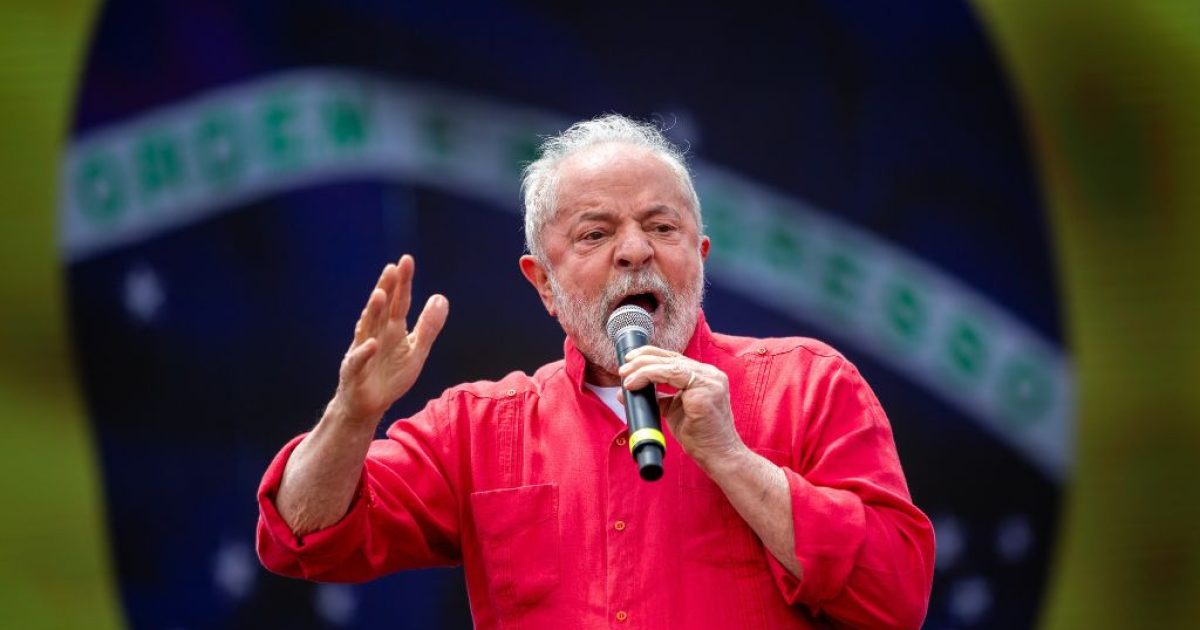
A man in a red shirt passionately speaks into a microphone at a public event with a colorful background.

A man in a red shirt passionately speaks into a microphone at a public event with a colorful background.

Leftist leaders from Europe and Latin America are meeting in Barcelona this week for a series of conferences to coordinate opposition to right-wing political movements.

Reuters reports that Spanish Prime Minister Pedro Sanchez and Brazilian President Luiz Inacio Lula da Silva are leading the gatherings, which bring together political parties, activists, and officials aligned with the progressive movement.

The events, including a summit titled “In Defence of Democracy,” are being organized by the Spanish government and allied political networks.

Organizers say the goal is to strengthen cooperation between left-wing movements and agree on shared political priorities, including climate policy and international cooperation.

The meetings come as conservative and nationalist parties have gained ground in elections across Europe and beyond in recent years.

Sanchez, speaking during a visit to China, said the gatherings were intended to show that left-wing governments could work together.

“I think it’s important that progressive parties and governments unite to convey to the public… that we belong to something that goes beyond domestic politics,” he said.

The conference will include around 3,000 participants, including current and former heads of state, hundreds of mayors, trade union representatives, and political activists.

Lula, meanwhile, insisted that this “is not going to going to be an anti-Trump meeting.”

“We are going to discuss the state of democracy, to see what went wrong and what we have to do to repair it,” he told the Spanish newspaper El Pais.

Both Sanchez and Lula have been at loggerheads with the U.S. since Trump took office last year, particularly over foreign policy decisions such as the conflict in Iran.

Among the other attendees will be South African President Cyril Ramaphosa and Mexican President Claudia Sheinbaum.

Organizers say the meetings will conclude with a joint declaration outlining coordinated action on a range of issues.

Giacomo Filibeck, Secretary-General of the Party of European Socialists, said the gatherings were intended to counter what he described as growing right-wing influence.

“Radical forces are at play in our countries to sponsor extreme right-wing movements… we have to show there is an alternative,” he said.

The global left is currently celebrating its victory over Viktor Orban in Hungary, who was widely viewed as the most influential right-wing bogeyman in Europe.

However, his replacement still holds a sensible position on immigration, having once been a member of Orban’s Fidesz political party.

The post Leftist Leaders Gather In Barcelona to Plot Their Anti-Trump Agenda With ‘In Defense of Democracy’ Summit appeared first on The Gateway Pundit.

WATCH: Obama Films Desperate Video Pleading with Virginians to Approve Redistricting Referendum That Could Flip Up to Four House Seats to Democrats

Barack Obama speaking passionately in a home setting, emphasizing the importance of unity for the country, with books and a basketball in the background.

Barack Obama speaking passionately in a home setting, emphasizing the importance of unity for the country, with books and a basketball in the background.

Barack Obama released a video on Thursday calling for Virginia voters to approve a constitutional amendment on the April 21 special election ballot that would temporarily suspend the state’s bipartisan redistricting commission and let the Democrat-controlled General Assembly redraw congressional district maps.

The measure, framed by supporters as a response to Republican-led mid-decade redistricting in other states, would allow lawmakers to adopt new congressional maps for the 2026 midterms and beyond, continuing through the 2030 census.

Democrats say the proposed maps could shift Virginia’s current 6-5 Democratic advantage in the U.S. House delegation to as many as 10-1.

In the video, Obama stated:

“By voting yes, you can push back against the Republicans trying to give themselves an unfair advantage in the midterms.”

The former president continued, “By voting yes, you can take a temporary step to level the playing field. And we’re counting on you.”

WATCH:

The referendum appears on the ballot as, “Should the Constitution of Virginia be amended to allow the General Assembly to temporarily adopt new congressional districts to restore fairness in the upcoming elections, while ensuring Virginia’s standard redistricting process resumes for all future redistricting after the 2030 census?”

ABC News reports:

The “Yes” side has fundraised and spent millions more on advertisements than the “No” side, according to campaign finance filings and an analysis by AdImpact. It’s also been bolstered by celeb power from figures such as Kerry Washington, John Legend and Pusha T.

Yet polling has still shown a close race, despite the seeming momentum behind the “Yes” efforts. A Washington Post-Schar School poll conducted in late March, after early voting had begun in the state, found that 52% of likely voters in the referendum supported the move, while 47% were opposed — a result just outside the poll’s margin of error.

Early voting ends on April 18.

Election Day is Tuesday, April 21.

The post WATCH: Obama Films Desperate Video Pleading with Virginians to Approve Redistricting Referendum That Could Flip Up to Four House Seats to Democrats appeared first on The Gateway Pundit.

Ilhan Omar Blames ‘Accounting Error’ For Financial Disclosure Showing Multimillion-Dollar Wealth

Credit: Gage Skidmore

Rep. Ilhan Omar has dramatically revised financial disclosures that previously showed multimillion-dollar assets, now claiming the figures were the result of an “accounting error.”

The far-left Somali Democrat, who regularly demands that lawmakers raise taxes on the super-rich, had reported assets between $6 million and $30 million in a prior filing.

Yet according to The Wall Street Journal, an amended disclosure now places total assets at just $18,004 to $95,000.

The sharp drop follows scrutiny over the sudden jump in reported wealth.

Omar’s office said the earlier figures were incorrect and attributed the discrepancy to reliance on accountants.

“The amended disclosure confirms what we’ve said all along: The congresswoman is not a millionaire,” a spokesperson said.

Businesses linked to Omar’s husband, Tim Mynett, including a venture capital firm and a California winery, had previously been listed in the multimillion-dollar range.

In the amended filing, both are now listed as having no value once liabilities are included.

A letter from Omar’s legal team claimed the “error” was unintentional and said no wrongdoing occurred.

“As the busiest of people, it is very common for members and their spouses to rely on learned professionals,” the letter said.

“While the error is of course unfortunate, there is nothing untoward and nothing illegal has occurred.”

The updated disclosure was filed in response to a request for information from the Office of Congressional Conduct.

Despite the revised asset figures, the filing still shows 2024 income from those same businesses ranging from $102,503 to $1,005,200, including $213,200 paid to Mynett by the venture firm and $3,000 from the winery.

Separate documents cited in the filing valued the venture firm at $7.9 million and the winery at $1.5 million, with Mynett holding partial ownership stakes.

Omar also reported student loan and credit card debt ranging from $15,001 to $50,000.

Minnesota Democrat Rep. Ilhan Omar Suddenly Somehow Worth $30 Million, According to Report

The financial disclosures come amid continued scrutiny of Omar’s immigration status, with continued allegations that she married her brother to obtain U.S. citizenship.


The post Ilhan Omar Blames ‘Accounting Error’ For Financial Disclosure Showing Multimillion-Dollar Wealth appeared first on The Gateway Pundit.

WATCH: Communist Mayor Zohran Mamdani Compares Government to ‘Yoshi’ from Mario Kart, Calls Corporate Greed ‘Bowser’ in Bizarre Speech

Official speaking event featuring a man at a podium with two women smiling in the background, flags and a plaque visible.

Official speaking event featuring a man at a podium with two women smiling in the background, flags and a plaque visible.

New York City Mayor Zohran Mamdani used a Mario Kart video game analogy during a press conference this week to describe the relationship between government and philanthropy.

The far-left politician added that, “Bowser is corporate greed in this scenario.”

The comments were made while Mamdani was announcing a new era for the Mayor’s Fund, a public-private partnership vehicle, and launching the Child Care Action Fund.

The initiative aims to raise $20 million in 2026 from philanthropic donations to support universal childcare infrastructure, with more than $3.5 million already committed from groups including the Marguerite Casey Foundation, NYC Forward Fund, and Robin Hood.

Funds would support family outreach, provider support, workforce development, physical capacity building, and research.

Things took a strange turn when Mamdani began comparing the government to Yoshi in Mario Kart.

“I like to think of it this way,” Mamdani began. “Government is driving the race car, and philanthropy is there to give it that turbo boost to cross the finish line.”

“Or if you are a Mario Kart fan, government is Yoshi, and philanthropy is the golden mushroom, [the] edge we need to beat Bowser on the Rainbow Road. To belabor this metaphor even further, Bowser is corporate greed in this scenario.”

He also emphasized his administration’s view of government’s role, saying, “Our administration holds an unwavering conviction that government can provide both public goods and public excellence, from filling more than 102,000 potholes across our city to delivering on universal childcare to affordable groceries.”

WATCH:

Mamdani framed the Child Care Action Fund as a way for philanthropists, foundations, and business leaders to help achieve universal childcare for children as young as six weeks old, claiming this will be good because it will lead to more parents returning to the workforce sooner, before their babies are even two months old, apparently.

He closed with the old proverb, “If you want to go fast, go alone. If you want to go far, go together.”

Mamdani made universal childcare, aka taxpayer-funded babysitting, a signature priority since his mayoral campaign.

The post WATCH: Communist Mayor Zohran Mamdani Compares Government to ‘Yoshi’ from Mario Kart, Calls Corporate Greed ‘Bowser’ in Bizarre Speech appeared first on The Gateway Pundit.

A First Pass at Scoring the Iran War

A First Pass at Scoring the Iran War

Despite the battlefield success, the scale of Washington’s dysfunction has been on full display.

Trump Monitors Military Operations at White House
(The White House via X Account/Anadolu via Getty Images)

Listen to the Trump administration’s assessments of the war in Iran, and you could be forgiven for believing that Washington’s biggest adversary in the Middle East was at death’s door. When he’s not on Truth Social lobbing rhetorical grenades at what’s left of the Iranian government, President Donald Trump is giving impromptu remarks to the press about the dire state of the Iranian military and how the air campaign will be wrapped up soon. Speaking to the nation on April 1 in a rare prime-time televised address, Trump dressed up the conflict as an unquestionable success. 

“Tonight, Iran’s navy is gone,” Trump bellowed.

Their air force is in ruins. Their leaders, most of them, terrorist regime they led, are now dead. Their command and control of the Islamic Revolutionary Guard Corps is being decimated as we speak. Their ability to launch missiles and drones is dramatically curtailed, and their weapons, factories and rocket launchers are being blown to pieces. Very few of them left.

To be fair, the president known for embellishment and braggadocio wasn’t necessarily lying. As of April 3, the United States had conducted more than 12,000 strikes on an assortment of Iranian military and government targets, from navy vessels and command-and-control headquarters to weapons manufacturing facilities and ballistic missile launchers. So many Iranian political and security officials have been killed—Supreme Leader Ayatollah Ali Khamenei; Islamic Revolutionary Guard Corps (IRGC) Commander Mohammad Pakpour; Defense Minister Aziz Nasirzadeh; and the senior security official Ali Larijani, to name just a few—that it’s difficult to keep track of the ever-evolving roster on a daily basis. The Pentagon reports that more than two-thirds of Iran’s ballistic missile launchers are destroyed. Assuming those numbers are correct, it would go a long way to explaining the 90 percent drop-off in Iranian ballistic missile and drone attacks since the war’s early days. 

The other explanation is more worrisome: Iran is conserving its firepower for a long military engagement and picking its spots for maximum impact. Indeed, the Iranians don’t need to fire hundreds of missiles or drones every day to create significant damage. Far from it: Keeping up a steady pace of a few dozen a day is more than enough to roil the energy markets. The clearest example of this was the mid-March strike against Qatar’s largest liquified natural gas plant, which took 17 percent of the country’s production off-line and caused $20 billion worth of damage that will take years to repair. As beat up as the Iranian security establishment is, its war strategy—maximize the economic and political pain around the Persian Gulf to the point where Trump decides cutting the conflict short is the best option possible—is logically sound and is being implemented to a tee. Trump is betting on munitions; Iran is betting on time, psychology, and economics.

At the time of writing, a fragile ceasefire has been announced, but the United States and Iran do not seem close to resolving the issues, like the status of Iran’s nuclear program, that have bedeviled bilateral relations for decades. Once the war is over and the chips settle, historians and foreign policy analysts around the world will write long-form articles and books dissecting the U.S. military strategy, the decision-making process that led to the decision to go to war, and how the conflict has changed the Middle East’s geopolitical alignment. A final verdict will have to wait.

Still, some preliminary conclusions and lessons come to mind even as the fighting and bombing continue. Some, such as Washington’s propensity to willingly stumble into wars of choice that often generate more problems than they solve, appear systemic. Others, such as how Gulf Arab states reorient their security policies after the war is over—assuming they do—will be pored over by regional scholars in the months and years to come. 

One of the first, most glaring lessons is that the men and women who run U.S. foreign policy—or at least those who make the decisions—continue to commit the same mistakes. Poor judgement is inherent or ingrained in the system. Viewed from a 40,000-foot level, it’s both fascinating and disturbing how similar the 2026 Iran War is with the 2003 Iraq War, not so much in how it’s being fought or what the U.S. objectives are, but in how susceptible our country’s policymakers are to overestimating U.S. power and succumbing to threat inflation. Just as President George W. Bush, Defense Secretary Donald Rumsfeld, and Secretary of State Colin Powell underscored the supposed dire, existential security threat posed by Iraq’s Saddam Hussein, Trump, Defense Secretary Pete Hegseth, and Secretary of State Marco Rubio have tried to convince the American people that Iran is nothing short of a more maniacal version of the old Safavid empire. A nuclear-armed Iran, Trump alleged, would wipe out Israel and eventually send intercontinental ballistic missiles into American cities, a more Trumpian version of Condoleezza Rice’s “we don’t want the smoking gun to be a mushroom cloud” tagline more than two decades earlier.

Yet the reality was far less scary than proponents of both wars made it out to be. Saddam was a ghastly brute, but his weapons of mass destruction program proved to be a bad joke. The Iraqi military, described as threatening to the region and to the U.S. homeland, was little more than a collection of disoriented, disheveled, and under-equipped units. Saddam’s purported alliance with Al Qaeda’s Osama bin Laden was a myth as credible as the Easter Bunny. Some realist academics understood this, taking out a full-page ad in the New York Times advising the Bush administration to continue a policy of containment and avoid war. The decisionmakers didn’t listen.

Twenty-three years later, we are essentially watching the same movie, even if the characters are different. Iran has taken Iraq’s place as the monster whose evil powers are grossly exaggerated. Rubio made Iran’s ballistic missiles out to be an imminent danger that needed to be destroyed in order to avert Iranian attacks against U.S. military bases in the Middle East. Yet the U.S. intelligence community never backed up that claim, which suggests Rubio was either lying to the American people or didn’t bother to consult with intelligence officials before he mouthed off to the press. 

Ironically, Trump’s decision to go to war with Iran wound up turning Rubio’s fear into a self-fulfilling prophecy; multiple U.S. military installations, from Saudi Arabia and Kuwait to the United Arab Emirates, Qatar, and Iraq have been the target of Iranian missile and drone barrages ever since. Some expensive U.S. military aircraft have been hit and American lives have been lost. It seems that Iran’s ballistic missiles were only a threat to American bases if a U.S. president was reckless enough to go to war with Tehran in the first place.

Another similarity between the two wars is worth highlighting: U.S. officials have habitually fooled the American public into believing the military can pretty much do anything it wants in short order with next to no costs. In the months leading up to the invasion of Iraq, Rumsfeld, Vice President Dick Cheney, and Deputy Defense Secretary Paul Wolfowitz assured lawmakers and citizens alike that regime-change in Baghdad would be fast, low-risk, and cheap. As history shows, those promises unraveled within months, if not weeks. In the end, the Bush administration’s war of choice resulted in the deaths of more than 4,400 American servicemembers, cost trillions of dollars, and gave Al Qaeda an opportunity to expand into the heart of the Middle East. 
One would have hoped the Trump administration learned lessons from that fiasco. Instead, Trump himself, the chief advocate of America First, committed some of the same blunders as the neoconservatives. As in Iraq, American expectations in Iran fell by the wayside very early on. The deaths of Iran’s Supreme Leader Ali Khamenei and his close advisers were supposed to elicit such turmoil in the Iranian ranks that one of two things would occur—the Iranian population would rise up and overthrow the 47-year-old clerical regime, or a new political leader would magically emerge, as in Venezuela, and transform Iran into a pro-U.S. puppet state. Six weeks of American and Israeli bombardment later, neither of those scenarios have come to pass. Iran is still led by a Khamenei, the IRGC is consolidating its hold over Iranian politics, Tehran’s negotiating position is as hardline as ever, and ordinary Iranians are staying home for fear of getting killed. The faces may be different, but the same regime in Tehran still stands. 

The second lesson of the Iran War is as critical as the first: In terms of grand strategy, the United States has a terrible time prioritizing and can’t even bother to stick with the national security policies it writes for itself. 

Every American administration comes into office with major plans for the global problems they wish to address and grand opinions on which region of the world is most important to U.S. security interests. In 2009, the newly-elected President Barack Obama vowed to remove the United States from the post-9/11 wars that dominated the U.S. foreign policy apparatus for the previous eight years. At his inaugurations in 2017 and 2025, Trump pledged to do the same. And when Joe Biden entered the White House in 2021, he tried to ditch the Middle East for greener pastures and refocus American defense resources on containing China. National security strategies were written, policy speeches were given around Washington’s think-tank circuit, and officials ran up to Capitol Hill to testify about why the new doctrine would succeed where the old ones failed. 

But time and again, prioritization is sacrificed or simply discarded. The documents U.S. defense officials produce turn out to be a collection of empty words as events pull the United States in multiple directions. The result is typically an extension of the status quo. Far from leaving the global war on terrorism in the rear-view mirror, Obama escalated it by sending 30,000 additional troops to Afghanistan and increasing drone strikes in places like Yemen and Somalia. Trump actually increased the American force presence in the Middle East during his first term, bombed Syria’s former regime twice, and assassinated the IRGC commander Qassem Soleimani. Biden’s foreign policy will forever be tainted as one that armed, financed, and otherwise enabled Israel’s own war in Gaza. And Trump, despite making a big deal on the campaign trail about ending wars and pulling American involvement out of unnecessary quagmires, has followed in his predecessor’s footsteps by diving head-first into a part of the world that has burned the United States multiple times before. As a consequence, the pivot to East Asia that the last three presidents have talked about is repeatedly deferred further into the future.

The war in Iran holds a valuable lesson for the Gulf states too. These rich, autocratic royal families are used to hosting European soccer tournaments and being courted by Western business elites, not to dealing with missiles and drones flying into their kingdoms. The Saudis, Emiratis, and Kuwaitis have no love lost for the Iranians, but none of them wanted a war in their neighborhood—war is bad for business, after all. Gulf Arab officials spent weeks trying to convince the White House that quitting diplomacy and embarking on another military adventure would do more harm than good.

That advice fell on deaf ears. The Gulf finds itself in the middle of a conflict it never wanted, provoked by an ostensible strategic partner in the United States who refused to really take their worries seriously. The result has been a deep hit in investor confidence, sagging stock market numbers, and economic damage in the tens of billions of dollars. Saudi Arabia saw its crude oil production decline by 50 percent in March, a consequence of Iranian missile and drone strikes on their oil fields as well as Tehran’s effective closure of the Strait of Hormuz, where roughly 20 percent of the globe’s oil passes through every day. At the time of writing, the UAE has been the target of 457 Iranian ballistic missile attacks and more than 2,000 drone incidents, the vast majority of which have been neutralized by air defenses.

When the war ends, Washington’s traditional partners in the Middle East will need to do some soul-searching about whether continuing the current strategic relationship with the U.S. is the best option for them. Although the Saudi Crown Prince Mohammed bin Salman and the Emirati President Sheikh Mohamed bin Zayed are highly unlikely to be so blatant in public, both leaders will naturally begin to wonder whether American military bases in their respective countries instigate war rather than deter it. If they don’t already exist, plans will likely be drafted to explore alternative security arrangements apart from relying so heavily on the Americans.

Unfortunately, these states don’t have many good options, and those that are on the table come with drawbacks and problems. The Gulf Cooperation Council could establish a formal, region-wide air defense and intelligence network to counter whatever threat Iran poses after the war, but this initiative presumes the six Arab states under the GCC umbrella can stay together under the weight of competing interests. Given the rivalries and fraught history between some of them, maintaining that unity beyond the short-term is no sure bet.

Beijing might at first be viewed as an appealing candidate to replace dependency on Washington, yet the Chinese have exhibited throughout the Iran war that they neither possess the capability to become the Persian Gulf’s security guarantor nor find this prospect particularly appealing. Beijing wants Persian Gulf oil to power its own economy, but little else. Moscow, too, is a non-starter. Considering the number of Russian allies that have fallen since 2024—Bashar al-Assad, Nicolas Maduro, Ali Khamenei—who in his right mind would expect Russia’s President Vladimir Putin to save the day if a security crisis reared its ugly head? And surely no Arab leader would be clueless enough to expect the Europeans to do much in the security realm, especially when sustaining Ukraine’s fight against Russia remains the continent’s principal aim.

The only certainty is the Gulf monarchies are in perhaps the toughest position of all, trapped between a neighbor in Iran that is now more bellicose than it was a few months earlier, an American defense commitment that is looking increasingly shaky, and a global oil market that Tehran can meddle with at will.

Regardless of how the war ends, the United States and Iran will both claim victory to satisfy their domestic audiences. As he has in the past, Trump will squawk about how Operation Epic Fury was an unqualified success that prevented Iran from building a nuclear weapon, degraded its military capacity by at least a decade, and humbled the regime into respecting the full weight and power of the U.S. military. The regime, in turn, will come out of the conflict having survived, with its even more hardline leadership celebrating its ability to battle the Great Satan and emerge on the other side of it with the Strait of Hormuz under its de facto control. Partisans in both countries will attempt to persuade their constituents that the war was either a masterstroke or a road to ruin.

But based on the facts as they exist today, the provisional verdict is depressing. This is a war that could have been avoided if the Trump administration actually gave diplomacy with Iran a serious chance to succeed. Regrettably, the United States opted to roll the dice on a military solution for the umpteenth time, only to find out yet again that wars have consequences for even the strongest powers.

The post A First Pass at Scoring the Iran War appeared first on The American Conservative.

UNBELIEVABLE: What Michelle Just Called America…

Barack Obama

Former First Lady Michelle Obama sparked outrage among patriots by dismissing America as a “janky version” of itself during a podcast appearance, raising serious questions about respect for the nation that gave her family unprecedented opportunities.

Obama’s Inflammatory Rhetoric Targets Nation

Michelle Obama delivered controversial remarks on her podcast “IMO with Michelle Obama and Craig Robinson” during an April 2026 episode that quickly went viral. The former first lady stated, “We haven’t been this janky for a while, and I think our muscle of understanding our truth just got a little lax.” The colloquial term “janky,” meaning broken or substandard, represents a stark departure from the diplomatic language typically expected from former first ladies. Conservative commentators immediately challenged the appropriateness of such dismissive language from someone who lived in the White House for eight years.

The timing of Obama’s comments proved particularly notable, coming during President Trump’s second term as his administration addresses serious public safety concerns. Federal immigration enforcement operations in Minnesota followed the January murders of U.S. citizens Renee Good and Alex Pretti in Minneapolis. Former President Barack Obama had previously called Pretti’s killing a “wake-up call” regarding threats to American values. Michelle Obama’s characterization of the nation as “janky” appeared to critics as thinly veiled criticism of enforcement actions designed to protect American citizens from preventable violence.

Washington Insider Questions America’s Direction

Conservative critics quickly highlighted what they viewed as Obama’s lack of credibility to assess ordinary Americans’ experiences. One commentator directly addressed this disconnect, stating: “I don’t care what Michelle Obama has to say, but that’s someone who has lived in DC for more than 30 years.” This criticism underscores a fundamental frustration among conservatives with elite figures who spent decades benefiting from American opportunities while now characterizing the nation in negative terms. The Obama family’s rise from relative obscurity to the pinnacle of political power represents the American dream, making dismissive rhetoric about the country particularly galling to patriots.

Obama attempted to frame her assessment as part of a broader discussion about national growth, suggesting the “janky” period represents a temporary phase. She acknowledged positive community responses, citing Minnesota as an example of communities protecting one another. However, this qualifier did little to soften the impact of her primary characterization. The podcast conversation, which included comedian guests discussing minority experiences and immigration, provided a platform for what critics viewed as one-sided grievance politics rather than balanced assessment of America’s strengths and challenges.

Media Amplifies Partisan Divide

CNN coverage characterized the controversy as a “fiery debate about politics, race, and double standards in public discourse.” The network’s framing suggested concerns about whether similar criticism from white public figures would generate equivalent backlash, shifting focus from the substance of Obama’s remarks to racial grievance narratives. This approach reflects the media’s tendency to deflect legitimate criticism of progressive figures by invoking accusations of bias. Fox News provided alternative coverage highlighting conservative objections, demonstrating the stark partisan divide in how Americans receive criticism of their country from prominent political figures.

The viral spread of Obama’s comments led supporters to coin the term “Janky Era” to describe Trump’s second term, transforming her criticism into a rallying cry for administration opponents. This demonstrates how inflammatory rhetoric from influential figures can shape political discourse and deepen national divisions. For conservatives who spent years defending America against accusations of systemic racism and oppression, Obama’s characterization represents another attack on the exceptional nation that has provided unprecedented freedom and opportunity to people of all backgrounds. The controversy highlights ongoing tensions about acceptable criticism of America and whether prominent figures should prioritize national unity over partisan grievance.

Sources:

BET: Michelle Obama Says America Is in a ‘Janky Version’ of Itself

Fox News: Michelle Obama Comment Video Coverage

BOMBSHELL POLL: Republicans Take Control of California Gubernatorial Race as Disgraced Eric Swalwell’s Downfall Hands GOP Shot at Top Two Primary Sweep

Image of a California flag featuring a bear, with two men speaking at a microphone, highlighting themes of leadership and public service in California.

Image of a California flag featuring a bear, with two men speaking at a microphone, highlighting themes of leadership and public service in California.

A new statewide poll released on Thursday shows Republicans firmly in command of California’s 2026 gubernatorial race after former Rep. Eric Swalwell suspended his campaign amid rape allegations and resigned from Congress.

The Emerson College Polling survey, conducted April 14-15, finds two Republicans, former Fox News host Steve Hilton and Riverside County Sheriff Chad Bianco, occupying the top two spots in the jungle primary.

Under California’s system, the two highest vote-getters advance to the November general election regardless of party.

Full results (all likely voters):

  • Steve Hilton (R): 17%
  • Chad Bianco (R): 14%
  • Tom Steyer (D): 14%
  • Xavier Becerra (D): 10%
  • Katie Porter (D): 10% (tied with Becerra in some breakdowns)
  • Matt Mahan (D, San Jose Mayor): 5%
  • Undecided: 23%

President Donald Trump has endorsed Hilton.

“I have known and respected Steve Hilton, who is running for Governor of California, for many years,” Trump wrote on Truth Social on Sunday. “He is a truly fine man, one who has watched as this once great State has gone to Hell. Gavin Newscum and the Democrats have done an absolutely horrendous job. People are fleeing, crime is increasing, and Taxes are the highest of any State in the Country, maybe the World. Steve can turn it around, before it is too late, and, as President, I will help him to do so! With Federal help, and a Great Governor, like Steve Hilton, California can be better than ever before! Steve Hilton has my COMPLETE & TOTAL ENDORSEMENT. He will be a GREAT Governor and, importantly, WILL NEVER LET YOU DOWN!!!

Many in the GOP have noted that Trump’s endorsement could consolidate the Republican vote for Hilton, making it more difficult to lock Democrats out of the general election. This is a rare case when a split vote is actually good for defeating the left.

Among Democrats only, the vote is now split three ways: Tom Steyer at 20%, Xavier Becerra at 19%, and Katie Porter at 15%.

Emerson College Polling Executive Director Spencer Kimball noted the direct impact of Swalwell’s exit, “In the first Emerson poll since Eric Swalwell’s departure from the race for Governor, Democrats now split their vote between Tom Steyer (20%), Xavier Becerra (19%), and Katie Porter (15%), with Becerra gaining 15 points among Democrats without Swalwell on the ballot.”

The poll marks a sharp reversal from earlier surveys.

A SurveyUSA poll released just days earlier (while Swalwell was still in the race) had Steyer leading with 21% and Hilton at 18%.

In the Emerson poll from March, Republicans had held steady leads, but Democratic support was more consolidated behind Swalwell.

California has not elected a Republican governor since Arnold Schwarzenegger’s re-election in 2006 and has not had a GOP statewide officeholder since 2011.

The state’s deep-blue status makes the current fragmentation of the Democratic field historically significant. With 61 candidates on the primary ballot, the Democratic vote is splintered across multiple well-known figures.

Swalwell had been one of the top-polling Democrats before the allegations surfaced. He suspended his gubernatorial campaign on Sunday and announced his resignation from Congress the following day.

Multiple women accused him of sexual assault and misconduct dating back years, and a former staffer accused him of raping her twice.

Martin Shkreli and Jack Posobiec also released videos of Swalwell kissing a porn star in a bed while other men were present in the room.

Swalwell has denied the allegations.

The post BOMBSHELL POLL: Republicans Take Control of California Gubernatorial Race as Disgraced Eric Swalwell’s Downfall Hands GOP Shot at Top Two Primary Sweep appeared first on The Gateway Pundit.

U.S. Space Command Warns Russia Planning ‘Space Pearl Harbor’ With Nuclear Weapon in Orbit (VIDEO)

Futuristic rocket with solar panels and radiation symbol in space, orbiting Earth with the moon and sun in the background.

Russia is reportedly developing a nuclear weapon designed to be deployed in space that could cripple global communications and cause widespread disruption.

General Stephen Whiting, head of U.S. Space Command, has admitted that Washington is “very concerned” about plans to place a nuclear anti-satellite weapon into orbit.

“They are thinking about placing in orbit a nuclear anti-satellite weapon that would hold at risk everyone’s satellites in low Earth orbit, and that would be an outcome that we just couldn’t tolerate,” Whiting said.

Watch the clip below:

The weapon could be used to destroy large numbers of satellites in low Earth orbit, potentially taking out communications systems, GPS networks and parts of the global internet.

A detonation in orbit could damage or destroy up to 10,000 satellites, roughly 80 percent of those currently in space.

Officials have described the potential attack as a “space Pearl Harbor.”

Whiting said the threat forms part of a broader pattern of Russian activity in space, including widespread GPS and satellite communication jamming.

“The problem with GPS jamming is it’s being done in a way that’s affecting civil aviation in eastern Europe and across southern Europe,” he said.

“When we put at risk civilian airliners full of citizens just trying to go on business or holiday, that’s incredibly problematic.”

The general said Russia is seeking ways to counter what it sees as Western military advantages by targeting space-based systems.

“They look at the United States, they look at NATO and they see an overmatch there of conventional arms,” Whiting said.

“And they believe that novel ways of trying to undermine the United States and Nato, such as by neutralising our space capabilities, helps them to level the battlefield.”

The proposed weapon would violate the Outer Space Treaty, which prohibits placing nuclear weapons in orbit.

U.S. officials have been aware of the threat for at least two years, with intelligence first briefed to Congress in 2024.

Whiting warned that space is increasingly becoming a central domain for future conflict.

“The next big war will likely be a war that starts in space,” he said.

He also urged allies to increase defence spending in the sector, noting that Britain currently spends less than one percent of its defence budget on space capabilities.

The post U.S. Space Command Warns Russia Planning ‘Space Pearl Harbor’ With Nuclear Weapon in Orbit (VIDEO) appeared first on The Gateway Pundit.

The Capitol Hillbillies

The Capitol Hillbillies

Plus: space travel and liberalism.

Unfit to Serve: Biden Cover-up
(Tom Williams/CQ-Roll Call, Inc via Getty Images)

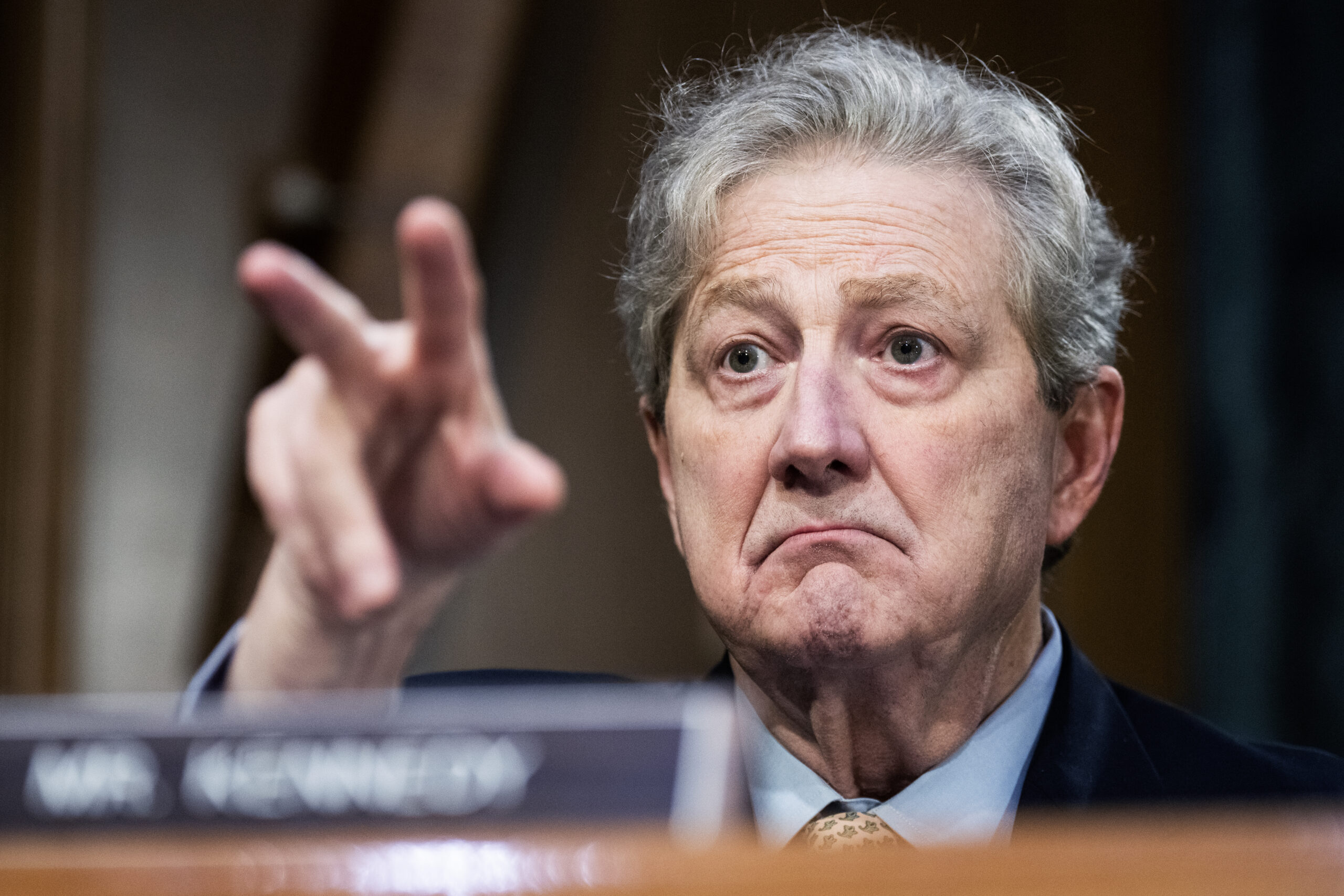
This much must be said for politicians who like to be seen as ornery SOBS: They want us to think they are loyal only to their own high moral principles and sometimes, just maybe, answerable to the voters. That being the case, they once in a while say something worth saying. The Republican Sen. John Kennedy of Louisiana, the ornery SOB in this case, has apologized for our bombing of a girls’ school in Iran and thinks it’s high time the Trump administration figures out how to end this war and get on with it.  

Mostly, though, Kennedy’s act is increasingly hard to watch without wincing. A former Democrat—he endorsed John Kerry over George W. Bush in 2004—Kennedy now affects an embarrassingly over-the-top yokel routine that invites comparison to Foghorn Leghorn of Looney Tunes fame and other cartoon characters from the 73-year-old’s boyhood. It’s like he’s not sure whether he represents the good people of Louisiana or those of Dogpatch—the “menfolk,” anyway. 

This act might mislead the uninformed to think Kennedy really did wander off the set of Petticoat Junction, if not Hee-Haw” What this performative nonsense attempts to conceal is the fact that Kennedy is by no means the country bumpkin he portrays. He has an undergraduate degree in philosophy from Vanderbilt and a law degree from the University of Virginia, and he did postgraduate work at Oxford. Whether, like Jethroe Bodine, he ever had ambitions to be a “double-nought spy,” is not known, though he might well have gussied up his resume in hopes of securing a position at the State Department. 

It doesn’t take three minutes to find clips of the way Kennedy spoke back when he was a Democrat. Then he sounded like what he was and is—an educated man whose hundreds of acres of farmland has been passed down through his family since before the Civil War. His family was once among the richest in Louisiana. If Kennedy operates a still behind the Russell Office Building and carries a flintlock blunderbuss to keep the “infernal revenooers” away, that would be as much a shock as the self-circulated rumor that he finds indoor plumbing a wonderment and a challenge.

Why this act seems to work, with some of our fellow citizens, is a subject unto itself. Fewer and fewer Americans live and work on farms—especially small farms—but more and more of us seem to fantasize about it. Millions of college-educated office workers who’ve never gotten anywhere near a tractor sit in their cubes at the office or before their laptops in their subdivision homes and listen to “country music.” The songs invariably mention dirt roads, pickup trucks, swimmin’ holes and long-legged gals in cut-off jeans.  

There’s even a number in which two of these singers, Alex Miller and Emily Ann Roberts, argue about which one is “more country.” What makes it so revealing is that one way these two make the case for their superiority is by dropping brand names. Alex “can stack bales of hay in a barn loft all day” but, better still, he wears a Bass Pro hat and likes a Copenhagen chew.

Emily Ann, not to be outdone, knows how to boot-scoot in her Lucchese footwear. Alex and Emily Ann, put differently, are dependable consumers of just the right products, and if that doesn’t make them “authentic,” it’s hard to imagine, in the America of our day, what would. The more I see of Alex Miller’s schtick, I’m beginning to wonder if he is not a product too, AI-generated like the soulful R&B singer Eddie Dalton, whose music topped the charts this spring. 

Something else that has topped the charts this spring is Kennedy’s book, How to Test Negative for Stupid: And Why Washington Never Will, which has become a New York Times best-seller. Chockablock with the senator’s “zany turns of phrase,” as a Times news story about the book puts it, it has sold half a million copies, which isn’t bad for a work he “dictated using a hand-held recorder at his kitchen table.” Not in his Capitol Hill office, his home office or even his dining room table, mind you: his kitchen table. You know, the one with the Formica top, where he carves up his chitlins. 

Here too, his studied candor is on display. He seems to adore his fellow cracker Lindsey Graham. “If you want to stump Lindsey, just ask him to name a country he wouldn’t bomb,” Kennedy writes. Invite him to dinner, “and you don’t know if he’ll sit down for an intelligent conversation or get drunk and vomit in the fishbowl. But that’s why I like him.” 

President Donald Trump “can be cruel,” Kennedy writes, “sometimes he is wrong, and he and I are unalike in many ways. I’ve acknowledged that. But we are alike in our appreciation of candor.” Well, maybe not. Trump seems to have no idea what will come out of his mouth at any moment. Kennedy’s candor, if it can be called that, always sounds so calculated that you begin to wonder if he is not an AI concoction himself. 

Further questions can be directed to Kennedy’s chief of staff, Claude Hopper. 

The Artemis II moon shot was hard enough to fathom without NASA confusing us with jargon that none of us outside the Mission Control Center probably understand. Acronyms, too. ICPS, apparently, refers to interim cryogenic propulsion stage—whatever the means. When the thing takes off and power cables are disconnected, that’s umbilical separation. Until this, most of us would have guessed that would have something to do with childbirth.

Even weather reports are hard enough to understand, now that the people who tell us whether it will rain or not call themselves meteorologists. Rain they call “precipitation,” and when they want to tell us to expect it or not, it’s “probability of precipitation.” 

But they aren’t all stuffed shirts, these meteorologists. When they want to be informal or cute, they call snow “that white stuff.” At least we won’t have to hear that for months to come. 

How could this happen? Why all this support for the MAGA movement? Why this recent explosion of right-wing populism? John Gray, late of the London School of Economics, had something to say about the subject in an Institute for Arts and Ideas presentation in December. 

Populism, Gray explained, “is a word liberals use to describe the political backlash against the social disruption produced by their own policies. They don’t understand that what they have done or failed to do has produced or helped to produce [these] morbid phenomena that we now see. It has nothing to do with them. The only things that they will admit to is they weren’t liberal enough.”

The post The Capitol Hillbillies appeared first on The American Conservative.
A New Free Speech Case in Florida

A New Free Speech Case in Florida

Raquel Pacheco, an Army National Guard veteran, alleges that officials in Miami Beach attempted to suppress her speech rights for criticizing Israel.

Previews - FIFA Club World Cup 2025
(Photo by Hector Vivas – FIFA/FIFA via Getty Images)

The American-Arab Anti-Discrimination Committee (ADC) filed a new lawsuit last month on behalf of the Miami Beach resident and Army National Guard veteran Raquel Pacheco, arguing that Miami Beach city officials conducted a coordinated campaign to suppress constitutionally protected speech—namely, the advocacy for the rights of Palestinians and criticism of the foreign government of Israel. 

On January 7, 2026, Pacheco posted a comment on Facebook criticizing City of Miami Beach Mayor Steven Meiner’s stance on Palestine. She wrote, “The guy who consistently calls for the death of all Palestinians, tried to shut down a theater for showing a movie that hurt his feelings, and refuses to stand up for the LGBTQ community in any way… wants you to know that you’re all welcome here,” referring to a 2024 attempt by Meiner to chill pro-Palestinian speech; Meiner had threatened to revoke the lease of O Cinema, a private Miami Beach movie theater, over its screenings of the Academy Award–winning documentary No Other Land, which documents Israel’s destruction of Palestinian villages in the West Bank.

The mayor reportedly flagged Pacheco’s Facebook comment for police, and on January 12, in an incident condemned by the Foundation for Individual Rights and Expression (FIRE), two Miami Beach Police Department officers visited Pacheco’s home, questioned her about the post, and advised her to “refrain from posting things like that because that could get something incited.” Pacheco recorded the encounter and the video was posted on X, rapidly going viral. 

In the video, Miami Beach police officers confront Pacheco in her doorway. The complaint notes that when Pacheco opened the door, she invoked her right to have an attorney present before answering any questions, which the officers ignored, proceeding to question her anyway. Reading out-loud her own Facebook comments, the officer claimed that the purpose of their visit is “trying to prevent… somebody else getting agitated or agreeing with the statement,” saying that her comments could “probably incite somebody to do something radical.” 

When it comes to “incitement,” the Supreme Court has long recognized that speech is constitutionally protected unless 1) it is directed to producing “imminent lawless action” and 2) is likely to produce such action. Speech like Pacheco’s that is merely provocative or critical of public figures, but not an immediate call to violence, is entirely protected by the first amendment.

The ADC’s complaint, filed on Pacheco’s behalf against the City of Miami Beach, Meiner, Police Chief Wayne Jones, City Manager Eric Carpenter, two city commissioners, and unnamed police detectives, alleges four separate First Amendment violations.

The first count charges viewpoint discrimination and invokes the Supreme Court’s repeated holding that viewpoint discrimination is an “egregious form of content discrimination” that is “presumptively unconstitutional,” (Matal v. Tam, 2017, quoting Rosenberger v. Rector & Visitors of the Univ. of Va, 1995) and that political speech, particularly advocacy on controversial issues like pro-Palestinian advocacy, occupies “the highest, most protected position” (R.A.V. v. St. Paul, 1992) under the First Amendment. The ADC’s complaint argues that dispatching police to Pacheco’s home to question her about a post criticizing a public official, and instructing her not to post such content again, is exactly the kind of viewpoint-targeted government action the Constitution forbids. 

The second count charges unlawful retaliation, alleging that defendants took direct adverse action against Pacheco in response to protected political speech in a manner that “would chill the future speech of a person of ordinary firmness.” The ADC complaint quotes a second circuit case, Okwedy v. Molinari, which held that “oral or written statements made by public officials” may give rise to a First Amendment claim where they “can reasonably be interpreted as intimating that some form of punishment or adverse regulatory action will follow the failure to accede to the official’s request.” The detective’s directive to Pacheco to “refrain from posting things like that” plainly meets that standard, ADC argues.

The third count charges unlawful prior restraint; the Supreme Court has held that government prohibitions on speech before it occurs are presumptively unconstitutional, and that this principle applies not just to written legal orders but to informal threats and warnings by officials (Multimedia Holdings Corp. v. Circuit Court, 2005).

The fourth count charges unlawful viewpoint discrimination in a public forum, directed at Commissioners Suarez and Bhatt for blocking Pacheco from their official Facebook accounts. The complaint argues that by opening the interactive spaces of their official pages for public discussion of governmental matters, the commissioners created designated public forums subject to First Amendment constraints, and that excluding Pacheco from those pages on the basis of her pro-Palestinian views, violated her constitutionally protected rights to “to read and participate in a public forum, right to petition the government for redress of grievances, and right to access official statements.”

The speech-chilling measures taken against Pacheco, the ADC notes, come amidst two years of official conduct targeting pro-Palestinian speech in Miami Beach. In September 2024, the city passed an anti-BDS ordinance requiring vendors to certify they do not boycott the State of Israel. Under anti-BDS laws, now active across 38 states, Americans can boycott any other foreign government, and even other state governments within the United States but boycotts of that one foreign government are strictly prohibited. Miami Beach’s anti-protest ordinance, adopted in March 2024, is already the subject of separate litigation, with that complaint arguing that Meiner and Suarez made clear the ordinance was designed to impair expression critical of Israel, infringing on the first amendment protections of Miami residents.

The ADC hopes the case will establish that a mayor cannot weaponize police against constituents who criticize him on social media, regardless of the political views being expressed. “It’s virtually unheard of in America for police to show up at someone’s doorstep to interrogate her for airing a political view on social media,” Jenin Younes, the ADC’s National Legal Director tells The American Conservative. “It’s absolutely crucial for the future of free speech that courts make clear to law enforcement and political actors that this conduct isn’t tolerable under the first amendment.”

The post A New Free Speech Case in Florida appeared first on The American Conservative.