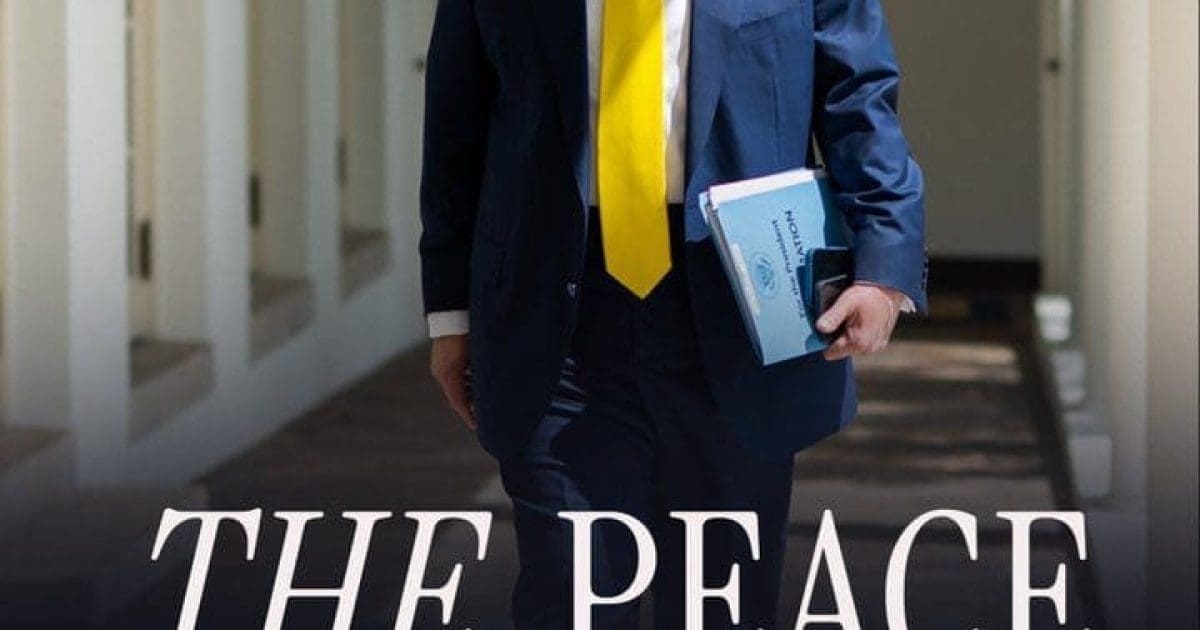
Pope Leo Is Criticized for Attacking Peacemaker President Trump While Ignoring Those Killed by Radical Islam This is truly madness. President Trump has multiple peace treaties to his credit, but … Read more
Garret Anderson, the Los Angeles Angels’ all-time hits leader and hero of their 2002 World Series championship, has passed away suddenly at just 53 from an undisclosed medical emergency.
Angels Legend’s Stellar Career
Garret Anderson debuted with the California Angels in 1994 and played 17 MLB seasons, mostly with the franchise through his 2010 retirement. He holds Angels records for hits (2,368), games played (2,013), at-bats (7,989), runs (1,024), RBIs (1,292), and total bases (3,743). A left-handed hitter, Anderson blasted 272 home runs for the team. His consistency defined an era of Angels baseball, earning three All-Star nods and 2003 All-Star Game MVP honors.
Sudden Passing Shocks Baseball World
The Los Angeles Angels announced Anderson’s death Friday morning from Anaheim, California, without disclosing the medical emergency’s cause or location. Sources confirm no prior health issues reported for the 53-year-old. This mirrors occasional sudden athlete deaths in MLB, though specifics remain private. The franchise, steward of his legacy, notified fans promptly while honoring family wishes amid widespread mourning.
Family and Franchise Mourn Icon
Anderson leaves behind wife Teresa, daughters Brianne and Bailey, and son Garret “Trey” Anderson III. The Angels organization, holding institutional memory of his 2002 World Series heroics, leads tributes. No tensions exist between stakeholders; the team acts as respectful guardian of his history. MLB influencers prepare to amplify remembrances, uniting Southern California fans in grief for their hero.
Fans and alumni grieve deeply, with short-term tributes expected alongside potential memorial events. Long-term, Anderson’s records bolster Hall of Fame discussions and Angels lore from their lone title.
Immediate reactions include fan outpourings and MLB-wide acknowledgments of Anderson’s underappreciated status as a “multitalented” hits leader. Socially, the loss heightens athlete wellness awareness without economic ripples beyond minor merchandise upticks. Uniform reporting from AP wires underscores his .293 career average and steady production. Baseball historians will highlight his grand slams and RBI streaks, cementing his place in franchise eternity.
Married Democrat Rep. Jimmy Gomez, a longtime friend and political ally of disgraced former Rep. Eric Swalwell, was reportedly seen kissing a much younger congressional aide outside a private backyard party hosted by Swalwell in the summer of 2023.
According to multiple sources who spoke to the New York Post, the alleged incident occurred down the street from Swalwell’s home near the Capitol as guests were leaving the gathering, which marked the start of the August 2023 congressional recess.
The aide, who worked for a different House Democrat and is more than two decades younger than the 51-year-old Gomez, was reportedly sitting on the hood of a car when the two were seen “going at it,” one witness told the Post.
“A few of us were getting out of the event and saw them, for lack of better words, making out … It was outside behind some cars,” the source said.
“They were down the street a little bit. But it wasn’t that discreet.”
Another source said the encounter was visible to several people leaving the event.
A spokesperson for the congressman denied the allegations outright, telling the New York Post the reported makeout session “did not happen” and calling the accounts “not true.”
The woman involved declined to comment when contacted by the outlet.
A third source briefed on the matter said he had heard the story from three or four other Democrats who claimed to have witnessed it firsthand.
Gomez was part of Swalwell’s informal social circle, often referred to as the “Cool Kids Clique,” which also included Ruben Gallego. The group was known for frequent socializing and drinking together in Washington.
Swalwell resigned from Congress last week and suspended his campaign for California governor after multiple women came forward with allegations of sexual misconduct ranging from harassment to rape.
At least five women have accused Swalwell of wrongdoing.
One former staffer told the San Francisco Chronicle and CNN that Swalwell sexually assaulted her twice while she was too intoxicated to consent.
Swalwell has denied all of the allegations, calling them false, and his attorney has said he denies “each and every” claim.
Gomez quickly distanced himself from Swalwell once the allegations became public. He resigned as co-chair of Swalwell’s gubernatorial campaign, describing the reports as “shocking” and “the ugliest and most serious accusations imaginable.”
Congressional ethics rules generally do not prohibit consensual relationships between members of Congress and staffers they do not directly supervise, but one source familiar with the environment on Capitol Hill told the Post that “this behavior of open philandering by married male members of Congress is pervasive and long overdue to be addressed,” adding that it creates “a culture of abuse.”
“Regardless [of whether] it is a staff member of their own or another congressman, there is a massive power dynamic that fosters a culture of abuse. You have these married male congressmen openly cheating on their wives with female staffers — how is that not grounds for expulsion?”
Texas Republican Rep. Tony Gonzales resigned on the same day as Swalwell rather than face an expulsion vote over an affair with a district staffer who later died by suicide.
Florida Republican Rep. Cory Mills is currently under an ethics investigation over an alleged affair with a 27-year-old political organizer.
No statements or press releases have been issued by Rep. Gomez or his office since the New York Post story was published on Saturday.
The woman at the center of the allegation has not spoken publicly.
The fragile ceasefire in the Middle East has done little to nothing to calm tensions between America and its European allies, as President Trump launched another scathing attack on NATO, dismissing the alliance as ineffective and irrelevant during a moment of crisis.
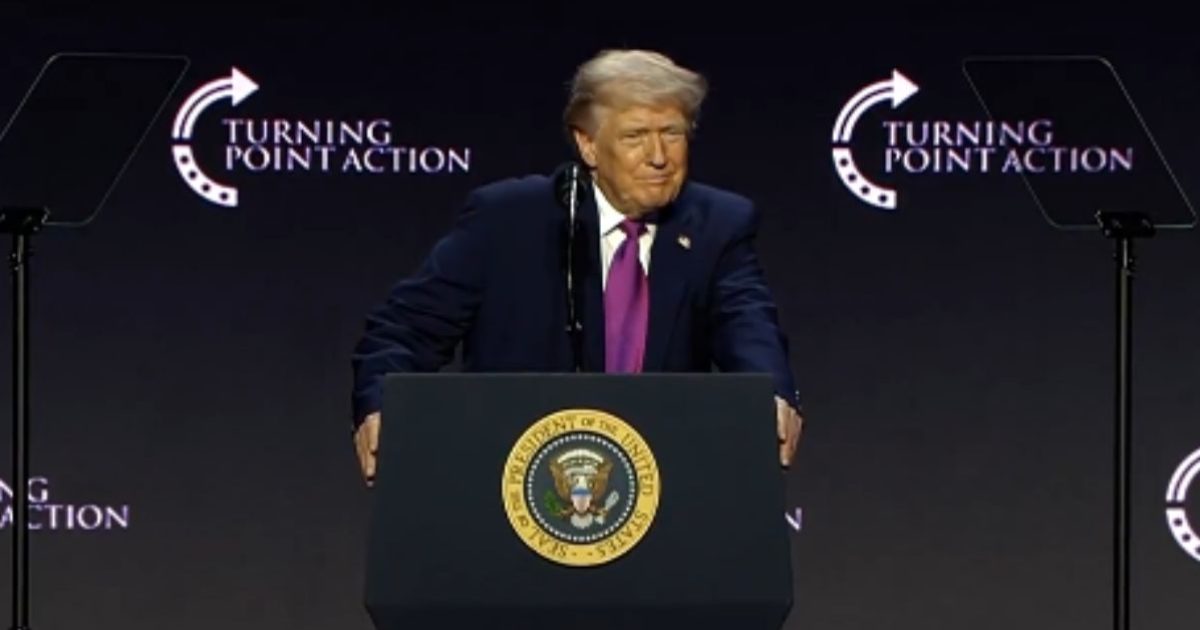
While speaking at a political event in Phoenix and later on social media, Trump made clear that he had rejected a recent offer of assistance from NATO regarding security in the Strait of Hormuz. The strategic waterway, which handles roughly one-fifth of global oil shipments, had been disrupted for weeks during the ongoing war in Iran.
“Now that the Hormuz Strait situation is almost over, I received a call from NATO asking if we would like some help,” Trump said. “I told them I would have liked your help two months ago, but now I don’t want your help anymore.”
“They were absolutely useless. They need us so badly” — Trump goads his Turning Point audience into booing NATO pic.twitter.com/oCiL4rS6yd
The remarks reflect a deepening rift between the United States and the NATO alliance, which Trump has repeatedly criticized for failing to support America during its recent military confrontation with Iran. Going even further, the president described the bloc as “absolutely useless when we needed them.”
At the heart of the dispute lies the closure—and subsequent reopening—of the Strait of Hormuz. Iranian Foreign Minister Abbas Araghchi announced that the passage had been reopened to commercial vessels following a temporary ceasefire arrangement.
Trump quickly confirmed the development, claiming that Tehran had effectively committed to keeping the strait open. At the same time, he emphasized that American naval measures targeting Iranian shipping would remain in place until a broader agreement is finalized.
The confrontation over Hormuz highlighted what many have long viewed as a structural imbalance within NATO. While the United States carried out the bulk of military operations and enforcement measures, European allies largely have remained on the sidelines.
Administration officials have described this lack of support as a turning point, going so far as to suggest that NATO “turned their backs” on the United States during a critical moment of need. Trump echoed that sentiment, arguing that America must increasingly rely on its own capabilities.
“We have to rely on ourselves,” he said, adding that America cannot “rely on outside countries and sources.”
Trump also pointed to the alliance’s financial dimension, noting that the United States has spent enormous sums in support of NATO over the years. “We’ve spent close to a trillion dollars…” We’re always helping them,” he added, reinforcing his longstanding critique of the bloc’s deeply imbalanced burden-sharing.
The president’s frustration has once again revived speculation about a potential American withdrawal from NATO, an idea he has floated repeatedly in recent years. While no formal steps have been taken, the tone of his remarks has grown sharper since the Iran conflict began.
Despite these tensions, European leaders have moved to assert their own role in the region. In Paris, French President Emmanuel Macron convened a high-level meeting of international partners to address maritime security in the Gulf.
Alongside UK Prime Minister Keir Starmer, Macron announced plans for a multinational initiative to safeguard commercial shipping through the Strait of Hormuz. The proposed mission, they said, would focus on defensive measures such as mine clearance and escort operations.
Starmer, for his part, has described the effort as a “peaceful and defensive” operation designed to reassure global markets and maintain the flow of trade. However, the initiative quite notably excludes direct US participation, underscoring the growing divergence between Washington and its allies.
Macron emphasized that the mission would be “neutral” and independent from the broader conflict, a stance that appears intended to distance Europe from the escalation led by the United States. Military planners are expected to meet in London to develop operational details.
Still, questions remain about Europe’s actual capacity to deliver on such ambitions. Analysts have pointed out that European naval forces are limited, with few countries able to commit significant assets to sustained operations in the region.
The United Kingdom, for example, has deployed only a single major warship, while France—despite possessing the EU’s most capable military—has committed a modest number of vessels. Other nations, including Germany and Italy, have signaled willingness to contribute but claim to face legal and logistical constraints.
Within Europe, there is disagreement over whether the United States should play a role in any future mission. Some leaders have argued that American involvement remains essential, while others have suggested that a European-led approach would reduce the risk of further escalation.
Such discussions for Trump, however, appear beside the point. In a characteristically blunt post, he dismissed NATO outright, writing that he told the alliance to “stay away” unless it intended to “load up their ships with oil.”
He then went on to call NATO a “paper tiger,” a phrase that underscores his view that the alliance lacks both credibility and effectiveness in real-world conflicts.
The episode has reignited a broader debate about NATO’s purpose and future in a rapidly changing geopolitical environment. Originally conceived as a defensive pact during the Cold War, the alliance now faces growing skepticism from both policymakers and the public.
Critics argue that NATO has evolved into a bureaucratic structure that relies disproportionately on American resources while offering limited strategic value in return. The Iran conflict, they contend, has exposed these weaknesses in stark terms.
At the same time, European leaders appear increasingly aware of the need to demonstrate greater autonomy. The Hormuz initiative can be seen as an attempt to project independence, even as underlying capabilities remain constrained.
Global energy markets have also felt the impact of the crisis. Oil prices surged following the initial closure of the strait, highlighting the vulnerability of supply chains to geopolitical disruptions.
Although the reopening of Hormuz has eased immediate concerns, strong uncertainty persists as negotiations between America and Tehran continue. Trump has indicated that talks could resume soon, though significant differences remain.
The ceasefire, for now, appears to have created a temporary pause in hostilities, but it has also laid bare the fractures within the Western alliance. The divergence between American and European approaches to security is becoming increasingly difficult to ignore.
The long-term implications of this shift are still unfolding. If current trends continue, NATO may face mounting pressure to redefine its role—or risk further erosion of its relevance.
U.S. State Department officials traveled to Havana last week, marking the first time in roughly a decade that a U.S. government aircraft has landed in Cuba.
According to Axios, the delegation held multiple meetings with Cuban officials, including Raul Guillermo Rodriguez Castro, the grandson of former leader Raúl Castro.
The meeting was described as a series of high-level talks with the ruling regime, which has overseen decades of economic and humanitarian disaster.
During the meetings, U.S. officials pressed Cuban leaders to implement sweeping economic and political reforms in the collapsing communist state.
A senior State Department official told the outlet that the Cuban economy is in “free fall” and warned that the ruling elite has only a limited window to act before the U.S. gives up on diplomacy.
The U.S. delegation is also said to have offered assistance in restoring internet access across the island through Starlink satellite services.
Officials reiterated longstanding U.S. demands, including the release of political prisoners, expanded political freedoms, and steps toward free and fair elections.
Another stipulation included compensation for U.S. individuals and companies whose assets were seized following the 1959 revolution led by Fidel Castro.
The delegation also raised concerns about the regime’s foreign intelligence and military activity, less than 100 miles from the American mainland.
The last major diplomatic event between the U.S. and Cuba took place under Barack Obama, who sought to implement a “Cuban Thaw” aimed at restoring relations with the island.
The talks come as President Trump and Secretary of State Marco Rubio, who is of Cuban ancestry, seek to bring an end to the island’s longstanding communist regime.
🚨 TRUMP GOES OFF ON CUBA: “It’s been horribly run for many years”
President Trump just dropped truth on Cuba during a press interaction:
“We’re going to see with Cuba. Cuba is another story. It’s a tier 1 country… It’s got a bad system. It’s been very oppressive, as you… pic.twitter.com/QDxpAPieMU
While no direct threats were issued, Trump has previously threatened the possibility of military action to liberate the island from its communist rulers.
A White House spokesperson said that while the president is “committed to pursuing a diplomatic solution, if possible, but will not let the island collapse into a major national security threat if Cuba’s leaders are unwilling or unable to act.”
Back in January, the U.S. launched a limited military operation to capture Venezuelan dictator Nicolás Maduro, marking the opening phase of regime change.
While Maduro’s deputy, Delcy Rodríguez, remains in power, the government has since moved to cooperate with the U.S. on a range of issues, most notably oil production.
Maduro’s removal dealt a major blow to Havana, which had long relied on its socialist ally for subsidized oil shipments in exchange for security and military support.
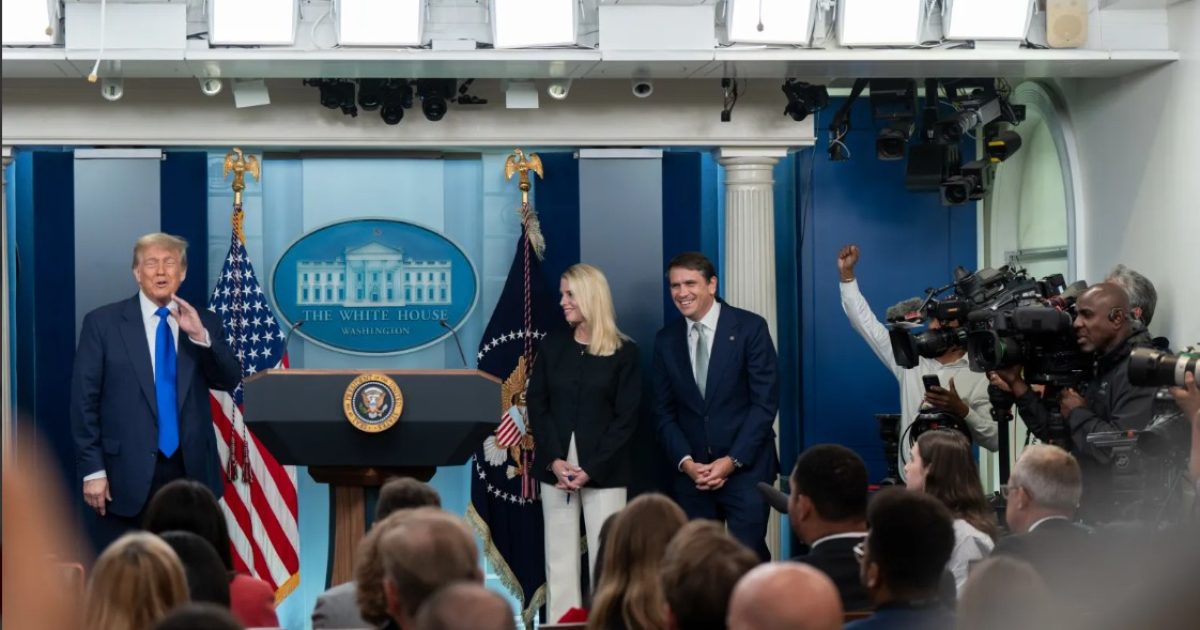
President Trump handles the press like no previous president. He is completely honest and stands for zero nonsense. Photo courtesy of the White House press office.
Media outlets have labeled President Trump a dictator and tyrant who uses his office vindictively against critics. They accuse him of trying to shut down the media as retribution. But the fact is that President Trump has rightly accused the mainstream media of being biased, pushing a left-wing agenda while damaging the country’s reputation and citizen trust in government.
The consistent framing of ICE deportations as illegal and unjustified is one of the most concrete examples of how the media has twisted the narrative to make people hate the administration and to believe that federal law enforcement has no authority. Media stories consistently omit crucial details from their ICE-related reporting, such as the fact that the individual was a noncitizen.
In the case of Abrego Garcia, many people still believe he was a U.S. citizen because media outlets referred to him inconsistently as a Maryland man instead of an illegal alien. They omit other details, such as whether the individual is a gang member, has past convictions, has a current deportation order, or lacks legal status. Instead, they focus on the person being allegedly hard-working and on the timing of the arrest, such as the day before graduation or while on the way to the hospital to see a newborn baby.
This portrayal of ICE as an illegitimate Nazi force or “Gestapo” has emboldened citizens to form anti-ICE groups, to run advertisements on television and on the internet encouraging ICE resistance, and has been responsible for much of the violence and chaos associated with deportation policies.
Trump’s recent remarks about taking away ABC’s license were not intended to punish them for criticizing him. He argued that ABC lacked credibility, saying, “I think the licenses should be taken away from ABC because your news is so fake and it’s so wrong.” He elaborated: “When you’re 97% negative on Trump, and then Trump wins the election in a landslide, that means obviously your news is not credible.”
The context was an interview in which reporters pressed him on Jeffrey Epstein, despite the documented fact that Trump had expelled Epstein from his Mar-a-Lago club and was known to have disliked him. Trump also noted that multiple Democrats had received money from Epstein and had visited his island. He pointed out that the media refused to investigate these very real situations while continuing to hound President Trump about Epstein, despite there being no evidence of wrongdoing.
The media characterized Trump’s statement as a move to take away their license to criticize him, but that is not what he said.
The pattern of inaccurate negative predictions reinforces Trump’s credibility argument. Media outlets said he had no path to victory. He won all seven swing states, plus the popular vote and the electoral vote. They predicted thousands of American deaths in the Iran conflict. Fatalities remain below twenty. They forecast oil at $200 a barrel. It is roughly half that. They predicted Gulf allies would turn against the U.S. Those allies have been the most consistent supporters. They said BRICS nations would back Iran. BRICS has largely abandoned Iran. They said the stock market would crash. But it is up.
They described a counterterrorism operation conducted with the Nigerian government as bombing Nigeria. However, it was carried out in cooperation with the Nigerian government and supported by a grateful Christian population.
They said America was attacking Ecuador. But the joint counter-narcotrafficking operation was carried out with the support of Ecuador’s government.
They said that Trump threatened democracy by removing the democratically elected president of Venezuela, when the same media reported in 2024 that Nicolás Maduro had stolen the election and that most of the free world refused to acknowledge the win.
The election itself was widely disputed, with opposition figures and multiple countries rejecting the official results, and protests breaking out across Venezuela over alleged fraud.
The media demanded he be sent back to Venezuela rather than reporting on the protests against him and the support and gratitude toward the U.S. for removing the dictator. The media refused to interview Venezuelan people to find out what they actually wanted, which was for Maduro to be gone. They did the same with the Iran conflict.
They attacked Trump while declining to cover decades of IRGC repression, including executions, torture, and the detention of women, gay people, regime critics, and journalists. The media vacillated between claiming Iran had no nuclear program, that Iran did not want nuclear weapons, and that the U.S. had already destroyed its nuclear program, with some even arguing that Iran should have nuclear weapons to be fair.
They stopped reporting on the violence committed by Hamas, the Houthis, and Hezbollah, Iranian proxies. They told us that Reza Pahlavi had no internal support, even as thousands of Iranians were gunned down in the streets, many of them shouting “long live the king.” Instead of asking Iranians what they actually wanted, the media focused on a single school that was accidentally hit as proof that regime change in Iran was immoral.
And when the IRGC demanded payment for use of the Strait of Hormuz, the media blamed Trump rather than the IRGC, despite the fact that such tolls violate international norms on transit passage under the United Nations Convention on the Law of the Sea (UNCLOS).
Meanwhile, much of the same press has worked to rehabilitate Xi Jinping, primary backer of Russia’s Ukraine invasion, primary state sponsor of the Tehran regime, and perpetrator of a documented genocide against Uyghur Muslims and cultural genocide against Tibetans and Mongolians, as a stabilizing force preferable to Trump. Media outlets have simultaneously denied that a Christian genocide is occurring in Nigeria despite a decade of documentation showing thousands murdered and thousands kidnapped by Islamist extremists.
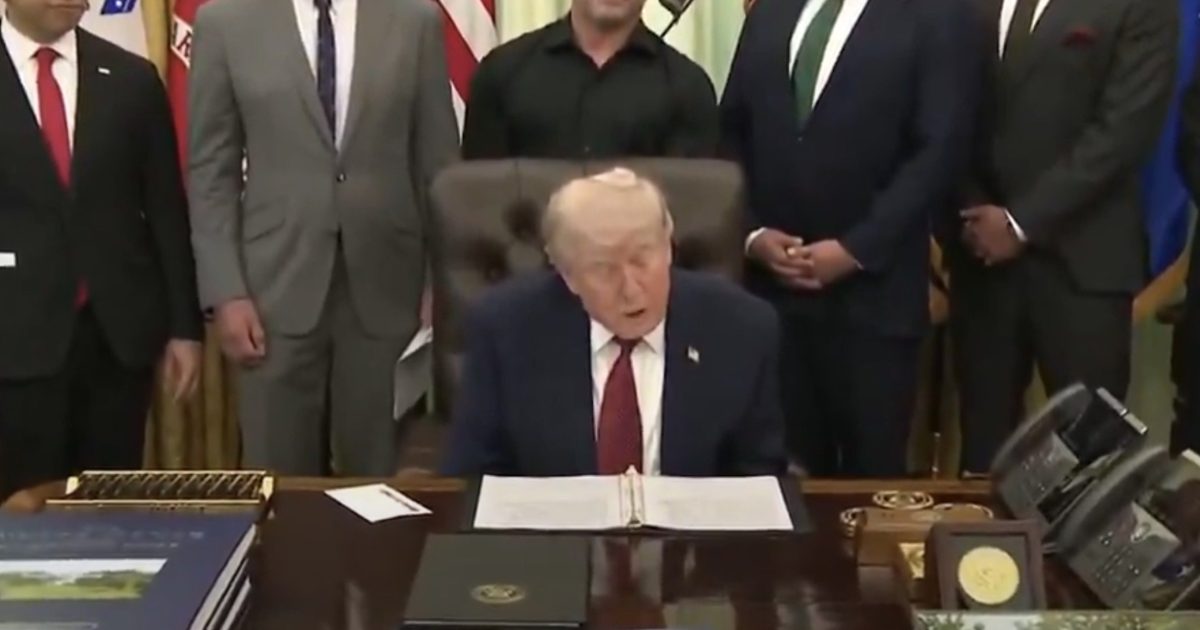
President Donald Trump has signed an executive order expanding federal research into psychedelic drugs and explore their use in controlled medical settings.
The order direct the Food and Drug Administration to issue new guidance for clinical trials involving substances such as psilocybin, ibogaine, LSD, and MDMA.
The podcast host Joe Rogan, who has long advocated for research into psychedelics, attended the signing ceremony.
Such drugs are currently classified as Schedule I, meaning they are considered to have no accepted medical use and a high potential for abuse.
The administration believes in the potential role of these treatments in addressing post-traumatic stress disorder and other mental health conditions, particularly among military veterans.
The National Institutes of Health is also being tasked with supporting additional studies into the drugs.
President Trump is set to announce new efforts to boost research into psychedelics and potentially make the drugs available in controlled therapeutic environments, according to people who spoke on the condition of anonymity.https://t.co/WyMjovUHtd
Health Secretary Robert F. Kennedy Jr. long advocated for expanding research into psychedelics, arguing they could play a role in treating depression and other conditions.
FDA’s war on public health is about to end. This includes its aggressive suppression of psychedelics, peptides, stem cells, raw milk, hyperbaric therapies, chelating compounds, ivermectin, hydroxychloroquine, vitamins, clean foods, sunshine, exercise, nutraceuticals and anything…
Ibogaine, one of the substances under consideration, has been linked to potential heart risks.
Former Texas Governor Rick Perry has previously claimed the effects of ibogaine treatment had fantastic potential in treating a variety of health issues.
Rick Perry & W. Bryan Hubbard on the ‘Miraculous’ Clinical Trial Results Seen w/ Plant-Based Psychoactive Compound Ibogaine
“The results of that study are nothing short of miraculous when it comes to the way in which Ibogaine has been revealed to have significant… pic.twitter.com/0tbliNE8kD
Researchers and industry figures say restrictions have stunted progress in studying potential medical applications and breakthrough treatments.
However, some experts have warned that widespread use remains years away and would require extensive clinical validation.
Psychedelics such as psilocybin, LSD, and MDMA still remain illegal under federal law and are restricted to approved research.
Some states have begun loosening restrictions, with Oregon and Colorado allowing supervised psilocybin use and New Mexico moving toward a medical program.
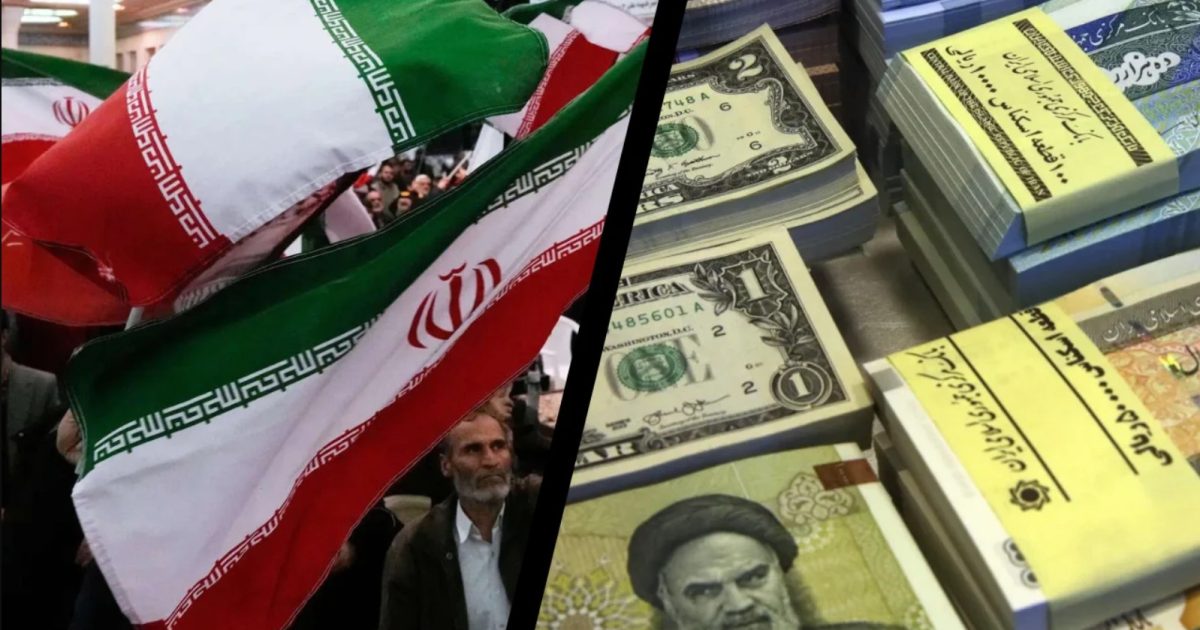
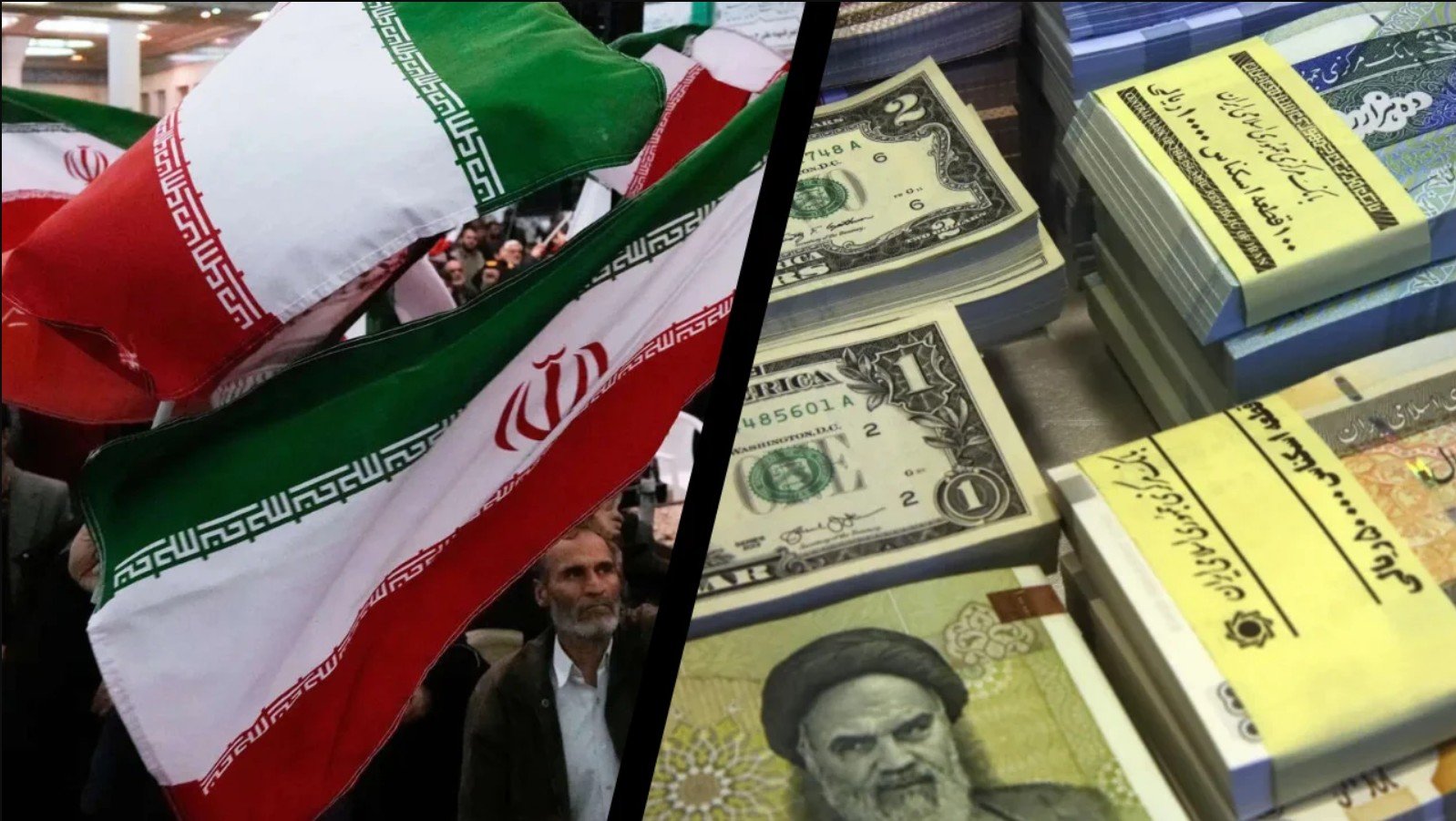
The Iranian economy was already in crisis before the U.S.-Iran conflict. Now, in addition to the damage caused by U.S. bombing, the blockade has cut off almost all external revenue to the IRGC, driving the economy closer to complete collapse. Photo courtesy of Homeland Security Today.
Iran’s economy entered 2026 already in structural collapse, and the February 28 war has since accelerated every negative trend simultaneously. The IMF projects a 6.1% real GDP contraction for 2026, one of the largest country-level revisions in the April World Economic Outlook, cut by 7.2 points from the January forecast, alongside projected consumer price inflation of 68.9%.
That figure carries important methodological caveats. It assumes a short-lived conflict, counts oil extracted into floating storage as produced output regardless of whether it can be sold, and will not capture the full destruction of infrastructure until Q2 and Q3 data are published later in the year. Specialized war impact analyses put the contraction at 10% or more, and historical precedent from Iraq in 2003 and Ukraine in 2022 shows that initial estimates in active war zones are consistently revised sharply downward in subsequent quarters.
Pre-war contraction was already underway. Iran’s GDP shrank by 0.6% in the first half of the Iranian fiscal year, including oil, and by 0.8% excluding it, driven by weak demand, falling investment, and a 12.9% collapse in construction. Agriculture contracted 2.9% and industry and mining 3.4%. Nominal GDP per capita has since fallen to $3,415 in 2026, down from $4,264 in 2025, a nearly 20% drop in a single year.
The currency has been in effective freefall for years. The rial fell from approximately 42,000 to over 1.1 million against the dollar, reaching 1,750,000 per dollar at its December 2025 low. Since the war began, the rial has fallen another 8% on the black market. The central bank responded by issuing a 10 million rial note, one month after putting the 5 million rial note into circulation. That denomination sequence signals the velocity of monetary collapse.
Inflation had already reached crisis levels before the first strike. Food price inflation hit 99% year-over-year by February 2026, a historical high, while overall inflation stood at 47.5% on the eve of the conflict. Since the war began, Tehran residents report prices rising roughly 40% in the conflict period alone. The IMF’s own projected inflation figure of 68.9% for the full year, under a short-conflict assumption, means that a 6.1% GDP contraction coexists with near-hyperinflationary conditions, a combination that constitutes economic collapse for ordinary citizens regardless of the headline output number.
Poverty and food security were deteriorating before the war, and compounded them. The World Bank estimated in 2023/24 that 36% of Iranians subsist on less than $8.30 per day at 2021 PPP. Independent estimates as of March 2025 placed 22% to 50% of the population below the poverty line. The Ministry of Social Welfare reported in 2024 that 57% of Iranians face some level of malnutrition, and authorities had already warned of famine conditions before the blockade took effect.
Oil revenue was the regime’s primary survival mechanism and its primary vulnerability. Exports were worth at least $30 billion in 2025, accounting for roughly one-quarter of government revenue. The IRGC processes approximately half of those exports and attempted to impose a transit fee system on Strait of Hormuz traffic, though no payments by shipping companies have been verified. Major firms, including Maersk and Hapag-Lloyd, kept ships out of the strait entirely rather than engage.
China remained the primary buyer of Iranian oil through the sanctions period. The U.S. naval blockade, formalized on April 13 and covering the entirety of the Iranian coastline, has since eliminated both oil export income and toll revenue to zero.
Iran’s structural weaknesses predate the conflict by decades. The banking system is chronically undercapitalized, carrying billions in non-performing loans. The government’s budget deficit stood at approximately 1,800 trillion tomans (an informal Iranian unit of account equal to 10 rials), and the 2026 budget was the most contractionary in decades.
Iran’s partnership with Venezuela predated the conflict and was built on barter trade. Iran supplied refinery repairs, gasoline, and blending components in exchange for Venezuelan heavy crude and gold. The two countries also relied on shared shadow-fleet networks to coordinate the sale of sanctioned crude to Chinese refiners.
The loss of the IRGC’s Venezuela sanctions-evasion partnership, following Maduro’s capture by the U.S. in January 2026, closed one of the regime’s primary channels for moving sanctioned oil outside formal markets. Iran supplied Caracas with refinery repairs and gasoline. In exchange, Venezuela sent heavy crude and gold to Tehran. The two countries used shared shadow-fleet networks to coordinate the sale of sanctioned crude to Chinese refiners.
This revenue stream collapsed with Maduro’s capture in January 2026. It also exposed an estimated $2 to $4.7 billion in Iranian assets in Venezuela to legal challenge and dismantled a sanctions-evasion structure both regimes had relied on for years.
The IMF’s severe scenario projects global growth to fall to 2% if energy shocks persist into 2027 and central banks raise rates to combat inflation, a near-recession threshold reached only four times since 1980.
In practice, however, that outcome is extremely unlikely. Straight-line projections consistently underestimate human ingenuity. In the history of the world, no slow-moving crisis has ever produced the predicted catastrophe implied by straight-line mathematical modeling. These calculations ignore adaptive responses.
The moment this conflict began, Gulf countries started looking for workarounds and overland bypasses, and the U.S. began increasing energy exports. These workarounds will continue to improve as long as the Strait remains closed.
Furthermore, it is unlikely that Iran could maintain a closure of the Strait of Hormuz for a year under constant pressure from U.S. military strikes and the presence of the U.S. Navy. If a significant percentage of Europeans were to face severe energy and food shortages, Europe might even commit some of its weak navies to support the U.S. in reopening the strait.
The sanctions-evasion network Iran spent years building, including Venezuela, Syria, shadow fleets, and Chinese teapot refiners, has been systematically dismantled by President Trump. Every other actor in the global economy has both the incentive and the capacity to adapt. Gulf states reroute shipments, U.S. exports increase, and Asian buyers source oil elsewhere.
Iran is the single node in the system that cannot adapt, because the U.S. is actively closing every workaround as it emerges.
For Iran, if the blockade holds through the summer, the conditions for a contraction exceeding 20% are present across multiple simultaneous vectors: zero export revenue, hyperinflation, infrastructure destruction, food supply depletion, and currency collapse. No institution has yet published that figure as a formal Iran-specific forecast; however, it is a reasonable estimate for an economy already facing a crisis, which has now had all of its external sources of income reduced to zero.
Minnesota Lieutenant Governor Peggy Flanagan has called for Democrats in positions of power to aggressively target and prosecute ICE agents while declaring that the agency must be “ripped apart.”
Flanagan made the comments during an appearance on MSNOW’s “The Weekend” on Saturday.
The far-left politician, who is also a candidate in the Democratic primary for U.S. Senate in Minnesota, stated in the interview, “We need folks who are willing to rip ICE apart.”
“Everybody who can in these positions…should be taking advantage and prosecuting as many of these folks as possible,” Flanagan continued.
WATCH:
Minnesota Democrat Lt Governor Peggy Flanagan says Democrats need to “rip ICE apart.”
FLANAGAN: “Everybody who can in these positions…should be taking advantage and prosecuting as many of these folks as possible.” pic.twitter.com/fx9bL1XH8x
This is not the first time Flanagan has used the phrase “rip ICE apart.”
In February, following the death of a Minnesota woman who was interfering with an ICE operation, Flanagan declared, “We need ICE OUT of Minnesota. They need to repair and restore what they have broken. Then we need to rip ICE apart.”
She has repeatedly described ICE as needing a “complete and total overhaul” and has advocated for removing the agency from Minnesota entirely.
Flanagan, a member of the Ojibwe Native American tribe, appeared on Somali television wearing a hijab and told viewers that the Somali community is “part of the fabric of the state of Minnesota,” after the massive fraud scandal in the community made national news.
President Donald Trump paid tribute to the late Charlie Kirk at a Turning Point USA “Build the Red Wall” rally on Friday in Phoenix, Arizona, declaring that the assassination has not stopped the America First movement but has only made it stronger.
“Seven months ago, our country lost a fearless warrior…Charlie Kirk, just an amazing guy,” Trump said.
Trump continued, “Charlie was murdered by a cruel and vicious assassin who believed that by silencing his voice, he could kill an entire giant movement.”
“Standing here today, it’s clear to see that Charlie’s voice is not silenced,” the president continued. “It’s roaring, and roaring back louder, frankly, than ever before.”
The line drew massive applause from the audience.
WATCH:
WATCH: “Charlie Kirk’s Voice Roars Louder than Ever Before” President Trump on the Continued Support for His Message – 04/17/26 pic.twitter.com/yjhcL8K6Dv
Kirk was assassinated on September 10 while speaking at an event at Utah Valley University in Orem, Utah.
Tyler Robinson, a 23-year-old Utah man who was living with his transgender furry boyfriend, has been charged with aggravated murder, felony discharge of a firearm causing serious bodily injury, commission of a violent offense in the presence of a child, and other charges related to the assassination.
Robinson has pleaded not guilty. A trial date has not been set.
If convicted, Robinson will be eligible for the death penalty.








 (@RSBNetwork)