David Sacks Breaks Down the Ideology Behind the DSA for His Horrified Podcast Co-Hosts (VIDEO)

Screencap of Twitter/X video.

David Sacks is the Silicone Valley tech figure who has served as Donald Trump’s ‘Bitcoin Czar’ during the second term. Sacks also co-hosts a podcast with some similar folks called the All-In podcast.

During a recent episode, Sacks broke down the ideology of the Democratic Socialists of America (DSA) for his co-hosts and gasps could be heard as he went through it all.

The only surprising thing here is that his co-hosts didn’t seem to know any of this. Are they living under a rock?

Partial transcript via the Independent Sentinel:

I think the choices of the future are going to be communism, or if you want to call it socialism in the Democrat party, or nationalism in the Republican party. I mean, that is where we’re headed. Those are the two populist directions.

But let’s look at what these DSA candidates stand for. So, let’s look at what their platform is, and you decide if it’s extreme:

– They actually say they want to abolish the Senate.

– to abolish the carceral state, that means basically police forces and prisons.

– to abolish ICE and grant amnesty for all.

– They do not support any deportations whatsoever.

– They want to replace the president and Supreme Court with an executive and judiciary that is chosen by and subordinate to Congress, which basically now, I guess, this means this House.

– And with respect to House elections, they want to abolish the electoral college.

– They want to replace the two-party system with a multi-party democracy.

– And they want to expand the House of Representatives, implement proportional representation and ranked-choice voting in all elections, which would be a total makeover of our constitutional system.

– They want to free Palestine.

– They want public ownership of major corporations.

– And they want to defund the Department of War.

This is a very radical organization, and you would laugh at a lot of these types of proposals, but you can’t really laugh at it anymore, because these guys are taking over the Democratic Party, and you can see the Democratic establishment is in complete panic right now, because they have lost control of the party to Zohran Mamdani and his allies.

So, Jason, like you said, I mean, let’s take this one race here, New York 13. You’ve got this ally of Hakeem Jeffries, longtime incumbent congressman Esscaillat. I guess that is his name. He is the chair of the Congressional Hispanic Caucus, and he was defeated by an unemployed 32-year-old PhD candidate. She’s never had a job; she’s been in college for 10 years, I guess, writing this PhD thesis, and I think even by DSA standards, she might be kind of a lunatic.

Watch the whole thing below:

These people do not want to debate policy.

They are engaged in a hostile takeover and it won’t end until they are stopped.

The post David Sacks Breaks Down the Ideology Behind the DSA for His Horrified Podcast Co-Hosts (VIDEO) appeared first on The Gateway Pundit.

CNN’s Kaitlan Collins Already Rushing to Defend DSA Members, Insists Democratic Socialism is Not Communism

Screencap of Twitter/X video.

If you were curious about how long it would take for journalists to start rushing to the aid and defense of the Democratic Socialists (communists) who just won elections in New York City, wonder no more. Your answer is here.

Kaitlan Collins of CNN is already out there insisting that Democratic Socialism is not communism. And she is saying it in response to Trump, because that’s all Kaitlan Collins does, is try to prove she is smart and Trump is not.

You know more of this is coming, right? The media is going to bend over backwards to tell you how harmless and genuine these people are. They will defend them from criticism and insist everyone has got them all wrong.

From The Hill:

Kaitlan Collins pushes back on Trump rhetoric: Democratic socialism ‘is not communism’

CNN’s chief White House correspondent Kaitlan Collins pushed back on President Donald Trump’s rhetoric about the rise of democratic socialism in the U.S., which Trump has incorrectly conflated with communism, following several victories from progressive House candidates in New York primaries.

During “The Source with Kaitlan Collins” on Friday, the CNN anchor aired remarks Trump made earlier that day at the annual Faith & Freedom Coalition Conference, where he described democratic socialists as “hardcore Godless communists” and “the most serious threat to our country since its existence.”

Collins challenged the president’s “border apocalyptic” comments that America could become a communist nation.

“While Democrats themselves have been wrestling with what Tuesday night means for the direction of their party, socialism, much less democratic socialism, is not communism,” she said.

She is referring to the string of Democratic primary victories in New York on Tuesday from democratic socialists backed by New York City Mayor Zohran Mamdani (D).

Collins is wrong and everyone knows it.

The stated goals of the DSA are most certainly communist. Mamdani himself has spoken of seizing the means of production.

Like other people in the media, Kaitlan Collins is just a useful idiot for the radical left.

The post CNN’s Kaitlan Collins Already Rushing to Defend DSA Members, Insists Democratic Socialism is Not Communism appeared first on The Gateway Pundit.

Three Possible Paths Forward for U.S.–Iran Relations

Three Possible Paths Forward for U.S.–Iran Relations

Washington should pursue a limited nuclear agreement where possible, while reducing its military exposure in the Middle East.

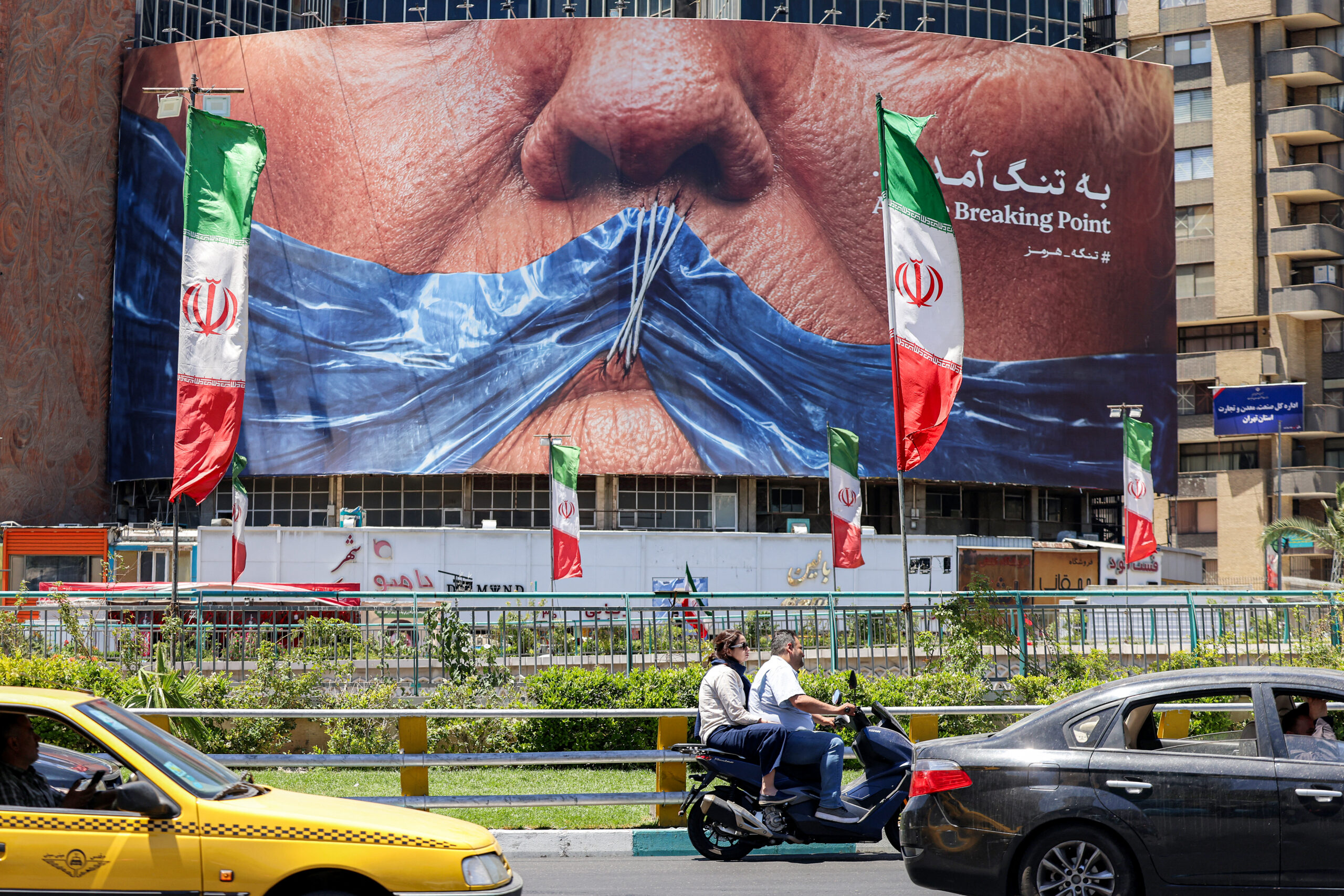
IRAN-US-ISRAEL-WAR
(Photo by ATTA KENARE / AFP via Getty Images) /

The signing of the memorandum of understanding (MOU) between the United States and Iran has opened the possibility for a new trajectory in one of Washington’s most intractable relationships. Although the deal is tenuous, the Trump administration has signaled a willingness to quickly change its approach after failing to achieve its objectives in a costly war. Already, the United States has granted waivers for Iran to sell its oil into the global market and signaled some willingness to move away from the maximalist demands that contributed to the crisis—though given the recent strikes, how durable that movement will be is an open question. But what might the U.S. relationship with Iran look like by the end of Donald Trump’s presidency? 

There are three scenarios worth considering. Each considers three key variables: the status of Iran’s nuclear program, Iran’s economic condition, and the U.S. military footprint in the Middle East. Taken as a whole, these scenarios are intended not to be predictions but instead serve as models to consider what direction the relationship may head in, and the implications of the policies chosen today. 

The most likely scenario is a return to something resembling the status quo ante. This consists of the United States and Israel periodically carrying out strikes against Iran’s nuclear (and possibly missile production) facilities, sustained sanctions that curb Iran’s growth, and a robust U.S. military posture in the region, with more troops regularly deployed for ongoing operations than before the war. Under a “mowing the grass” approach, the nuclear issue is not permanently resolved, and the United States remains entrenched in the Middle East. While it’s worth acknowledging this real possibility, it is an undesirable outcome and not one that we will dwell on. 

Two alternative, non-maximalist paths are available. One is a limited diplomatic deal that curtails Iran’s nuclear program without requiring Tehran’s capitulation. We call this “the charm offensive.” The other involves a declaration of victory by Trump and reduced U.S. exposure in the region, forcing local powers to manage the balance of power without assuming Washington will underwrite every confrontation with Iran (a.k.a. “Time to Get out of Dodge”). Crucially, both recognize that Iranian capitulation is a pipe dream and that another round of fighting will not be worth the cost.

The Charm Offensive

In this scenario, the ceasefire holds, and Iran proves willing to work in good faith toward a lasting agreement. 

Iran, having successfully weathered U.S. attacks and imposed costs in return, does have leverage, but it plays its hand carefully and does not antagonize Trump. Instead, it offers Washington a way to claim victory: The war brought Iran back to the table, and now Trump can secure a deal that meaningfully limits Iran’s nuclear program. For its part, Tehran asks for reconstruction funds as part of any deal, which the Trump administration initially delivers on, although it falls on the next president to decide whether it is politically and economically feasible to sustain these payments. With the initial reconstruction funds and sanctions relief, Iran is able to rebuild its infrastructure and begin revitalizing its economy, strengthening it beyond pre-war levels.  

The United States does not rush for the exits. While it draws down to pre-war levels, it maintains its bases in the region. Gulf partners express some dismay at American accommodation of Tehran, but the continued U.S. presence reassures them enough to stay quiet. That said, they successfully push for Trump and Congress to allocate billions more to missile and drone defense systems in the region. 

Time to Get Out of Dodge

There is another path, one that does not depend on a diplomatic breakthrough on a vexing issue. Here, Trump declares victory and moves on. No lasting agreement comes out of the MOU. Eager to leave the strategic defeat against Iran in the rearview mirror, however, Trump changes the narrative, treating the Iran problem as largely solved and reducing U.S. exposure in the region. While there is no agreement limiting Iran’s nuclear program, a combination of reduced U.S. pressure and Iranian caution dissuades Tehran from racing toward a nuclear weapon, as it has no desire to hand Washington a pretext for another round of strikes. At the end of the Trump administration, Iran has a very short breakout time and the United States has little insight into Iran’s nuclear activities, but Iran has not engaged in saber-rattling and instead is working to manage its shifting position in its neighborhood. 

Iran is bolstered economically by being able to charge a fee for ships navigating the Strait of Hormuz, but it does not receive relief from U.S. sanctions, which carry on largely as they had before and during the conflict. Iran seeks greater trade with China, Pakistan, and India, but outside of oil sales, it is unable to develop robust export markets. Iran’s size and resources make it a regional power, but it is not able to economically or militarily dominate the region.  

Iran remains a threat in the Middle East, but the Trump administration wants to avoid being sucked back into a conflict; the White House quietly draws down U.S. military presence there to well below pre-war levels. Though the United States maintains a presence in Qatar, the U.S. drawdown spurs Gulf states to become more self-reliant. Moreover, Gulf states take steps toward a regional security architecture while also cautiously pursuing a modus vivendi with Iran, recognizing that Iran is here to stay. The balancing coalition is adequate to prevent Iran from seeking regional domination. 

Which Scenario Best Serves the United States? 

The worst outcome would be to pretend that the war vindicated the tired maximalist approach to Iran. Maximalism did not work before or during the war. It certainly won’t work now. The MOU, while necessary to halt a mistaken war, represents a strategic defeat for the United States. Returning to “mowing the grass” or “maximum pressure” would be the easiest mistake to make, allowing Washington to avoid hard choices in the short term while locking the United States into a costly cycle. Doing so would solve little—the war has made clear the limits of U.S. power vis-à-vis Iran—would not prevent Iran from obtaining a nuclear weapon over the longer term, would not change Iran’s government, and would cost the United States massively in both dollars and opportunities to shift its resources elsewhere. 

The Charm Offensive could be the best option for preventing Iran from obtaining a nuclear weapon, but Iran will have reasons to doubt the credibility of the United States, and any agreement will be fragile. If reconstruction payments are halted or a new administration walks away from an agreement, Iran could quickly make progress toward a nuclear weapon. And because Iran would likely emerge in a better economic position and with a stronger sense of its own leverage, the collapse of a deal could leave the United States facing a more capable Iran. That’s all the more reason to prioritize keeping a deal afloat. 

If the United States gets out of Dodge, Washington will have reduced leverage in the region, and Iran may come to play a greater role in the Middle East. But the United States can live with that. Most importantly, the United States will have less risk of being pulled back into a war that is not vital to U.S. interests, regardless of what trajectory Iran takes. Freed from the burden of trying to manage an unmanageable region, the United States will be able to redirect resources and attention to more pressing matters—as at least three presidents, Trump included, have wanted to do. 

Ideally, the United States would combine elements of both non-maximalist paths, pursuing a limited nuclear agreement where possible, while reducing its military exposure and ambitions in the region regardless. But if the choice is between trying to return to an old, untenable approach and accepting a less dominant but less costly role, the latter better serves U.S. interests.

The post Three Possible Paths Forward for U.S.–Iran Relations appeared first on The American Conservative.

Self-Control Goes Off the Rails

Self-Control Goes Off the Rails

 Screaming on the train is not just annoying; it speaks to a deeper change in ideology and mores.

Interior View of a Streamlined Coach
TakiMag

Small incidents can reveal much of significance beyond themselves: ways of thought, for example, or even the nature of cultures and subcultures. For example, on the train from London to Paris recently, I sat near a small group of young English women, dressed in the cheap, glossy, figure-hugging finery that, no matter their figures, they thought glamorous. They talked loudly the whole way and interspersed their conversation with prolonged shrieks, or sometimes cackles, of laughter. 

It used to be said by the French that the English took their pleasures sadly; now, alas, they take them loudly. I think that the two ways of taking pleasure are related dialectically. In the loudness is desperation, not joy; they behave like people who are trying to convince others, and perhaps themselves, that they are having a wonderful time, that they are happy. Quiet enjoyment is something quite beyond them, even in theory. 

In this, they are the victims of the cult, ultimately derived from psychotherapeutic notions, of self-expression as a good in itself, no matter what is expressed, how it is expressed, or in what circumstances it is expressed. A thought or emotion that is not expressed outwardly will turn inward and fester, and therefore self-restraint or control is a kind of treason to the self. 

I decided that I should say something to these young women, who were probably thoughtless rather than deeply malicious, but I waited till very nearly our arrival before approaching them. Not to say something would be to assume that they were incapable of self-modification, and would be, worse still, cowardice. I waited in order not to appear intolerant or too easily angered, and I spoke much more mildly than my inner thoughts might have prompted me to speak. 

I addressed myself to one of them, who had a handsome but slightly hard face. I asked her discreetly whether, on their return, she and her friends might make less noise and talk more quietly. 

“Are you saying that I was noisy?” she asked defensively, and rather aggressively. 

“No,” I replied, “I was talking about your group.”

“But are you saying that I was noisy?”

“No, not you specifically, but your group as a whole.”

“It’s a girls’ event,” she said. 

That was an interesting reply. Behind it, I surmise, was a whole hinterland of semi-formed ideology. It supposed that women had for centuries been constrained to sit quietly in the corner, weaving, spinning, or knitting, and saying very little. They had been both oppressed and suppressed. Now it was their turn to be heard, without restraint or apology. Their conduct was a form of revenge, restitution, and exercise of power. A girls’ event conferred on them a plethora of rights that were inalienable. 

“Nevertheless—,” I began.   

“Is this a quiet coach?” she asked defiantly. 

“No,” I said, “but out of consideration for others—” 

Another of the young women, with a rather more pleasant face (and perhaps, not coincidentally, dressed with greater refinement than the others), said, “I didn’t realize we were making so much noise.”

So there was hope yet, if she had the courage to speak out in her group. 

The question, whether this was a quiet coach, was an interesting and revelatory one. What it implied was that either there was a rule against making noise there, or there was no limit to the amount of noise that people were entitled to make. What is not forbidden is permitted. Self-control is redundant. 

Of course, if there are rules, there must be rule-makers. But if everything is permitted against which there is no rule, then it is up to the rule-makers, and to them alone, to decide the limits of the permissible. They are the ultimate, and indeed only, moral guides—though a morality that consists of compliance with enforced rules is no morality at all, only mere obedience to power. 

Unfortunately, such a coarse conception of human interaction leads inevitably to the limitation, not the extension, of liberty. Where disorder is permissible, and the permission is taken, there will eventually be a reaction. Burke expressed this well nearly a quarter of  a millennium ago, in his Letter to a Member of the National Assembly:

Men are qualified for civil liberty in exact proportion to their dispositions to put moral chains upon their own appetites. Society cannot exist unless a controlling power upon will and appetite be placed somewhere. The less of it there is within, the more of it there must be without. It is ordained in the eternal constitution of things that men of intemperate minds cannot be free. Their passions forge their fetters.

And he continued, “This sentence the prevalent part of your countrymen execute on themselves.”

The young women on the train had no disposition to place moral chains on their wish to talk loudly, scream, shout, and impose themselves on others. They almost certainly thought of freedom as the complete absence of such moral chains. For the moment, they were undisturbed in the enjoyment of what they thought was their liberty; and, of course, such conduct as theirs in trains is in itself a minor matter.

But a disposition is precisely that: a general inclination, and it is unlikely that those who feel no need to control themselves in the noise they make in a train out of consideration for others will control themselves well in other situations. Once the principle that all that is not forbidden by the authorities is permissible in all other senses becomes widely, if not universally, accepted, disorder inevitably will result, including in the lives of those who hold the principle. As Burke put it, they execute it on themselves; they forge their own fetters.

A reaction might be—I cannot say for certain that it is—coming: that of authoritarianism, which is another way to forge fetters, albeit of a different kind. Excessive disorder will bring forth a demand for excessive order. Between enslavement to the passions and enslavement to the state there is a happy medium: It is called self-control.

One further reflection: There were 72 passengers in the coach, of whom only six were loud and coarse, everyone else behaving well—a small minority, then, fewer than 10 percent.  But from the point of view of setting the tone, that minority were the elite. 

The post Self-Control Goes Off the Rails appeared first on The American Conservative.

Ben Shapiro Blames ‘Useless White People’ for Socialism

Ben Shapiro Blames ‘Useless White People’ for Socialism

The Daily Wire podcaster supported policies that boosted the hard left in New York.

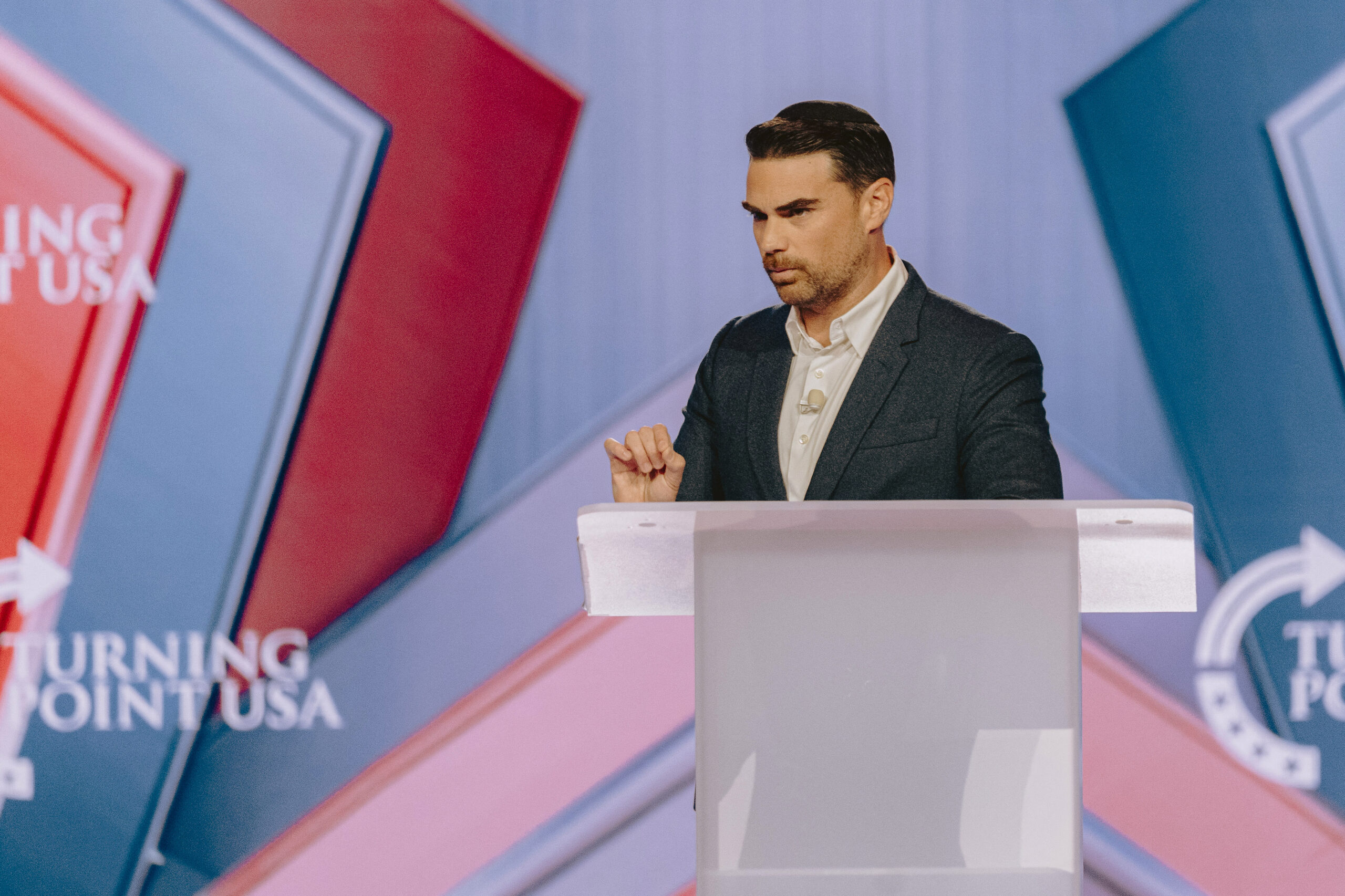
US-POLITICS-TURNING POINT-KIRK

The Democratic Socialists of America won big in New York’s Democratic primaries last Tuesday. By the time the ballots were tallied, conservative media had identified a scapegoat: white people.

Specifically, “overeducated, useless white people,” in the words of the Daily Wire podcaster Ben Shapiro.

Batya Ungar-Sargon—a pro-Trump leftist—wrote a Substack essay with this imperious headline: “Stop Calling Them ‘Socialists.’ They’re Over-Credentialed White Gentrifiers Driven by Resentment Ousting Working-Class Candidates.”

For those not in the know: “White gentrification” is when white people move into an area and make it nicer, “white flight” is when they move away, making it worse, and both phenomena prove how evil white people are.

Ungar-Sargon has some expertise in the evils of white people, having authored a PhD dissertation at U.C. Berkeley that examined “how rape and colonialism contributed to the development of modern English fiction,” according to Wikipedia. So, next time your mom’s snuggled up with a book by Jane Austen, let her know that rapey colonialism made the reading experience possible.

The New York Post also did some white-bashing after the shock elections. “The Young and the Clueless,” blared the cover headline on Thursday, above a photograph of triumphant-looking young people with fists in the air. The subheadline: “Just 7% of voters, mostly white and under 30, pick Israel-hating radicals to represent Dems.”

I’m trying to imagine Shapiro calling out “useless Hispanics,” Ungar-Sargon lamenting “Jewish gentrifiers,” or the Post doing a cover story on “mostly black” street criminals.

I can easily imagine Shapiro hating on Muslims. In fact, I don’t need to imagine. “Israelis like to build. Arabs like to bomb crap and live in open sewage,” Shapiro once wrote on the hellsite formerly known as Twitter.

It’s pretty rich of Shapiro to blame white people for DSA victories. Any sentient being can see that the Democrats and hard left benefit from the country’s ongoing demographic transformation, i.e., from its becoming less white. Well, anyone but Shapiro can see that. “I don’t give a good damn about the so-called ‘browning of America,’” he wrote in 2017. “Color doesn’t matter. Ideology does.”

At least, that’s how Shapiro conceived of the relationship—or in his view, non-relationship—between ethnicity and nationhood in America. For Israel, things are different. “If you believe that the Jewish state has a right to exist, then you must allow Israel to transfer the Palestinians and the Israeli-Arabs from Judea, Samaria, Gaza and Israel proper,” Shapiro wrote two decades ago. “It’s an ugly solution, but it is the only solution.”

Some might even call it the final solution.

While Shapiro’s rhetoric about Muslims may have softened, his views don’t seem to have changed. “I think Israel should have gone harder and faster in Gaza,” Shapiro told Vanity Fair in a profile of him published this week. Should have gone harder and faster in Gaza. Those repulsive words should disqualify Shapiro from ever again opining on U.S. foreign policy.

In sum: Shapiro supports the forcible displacement of non-Jews from Greater Israel, even as he welcomes the dilution of America’s European stock via mass migration. Set aside your own views on those matters: Does this not seem a rather bewildering instance of moral incoherence?

The browning of America about which Shapiro doesn’t give a “good damn” is well apparent in New York City, which was 90 percent white in 1950 and is under 30 percent white today. That Gotham’s immigrant newcomers hail mostly from places outside Europe probably pleases Shapiro, given his views on the superlative importance of ideology. He’s a big booster of David Harsanyi’s book Eurotrash: Why America Must Reject the Failed Ideas of a Dying Continent

Unfortunately, since color and ideology are more tightly correlated than Shapiro’s past comments would suggest, and not remotely in the direction he seems to believe, conservative candidates no longer stand a chance in the Big Apple.

In last year’s mayoral election, the moderate Gov. Andrew Cuomo won a majority of whites, yet the Ugandan-born, Indian-American DSA candidate Zohran Mamdani dominated the election thanks to overwhelming support from foreign-born residents, who make up around 37 percent of the city’s population.

From his new throne at Gracie Mansion, Mamdani played kingmaker in last week’s elections, as did the Turkish-American influencer Hasan Piker. They had endorsed the DSA candidates who unseated Democratic incumbents in the U.S. House: Darializa Avila Chevalier, a black Latina, and Claire Valdez, who describes herself as “a dual citizen of Ysleta del Sur Pueblo Nation and the United States.” Brad Lander, a former DSA leader backed by the mayor, also won; he’s Jewish. Mamdani and Piker supported candidates down-ballot as well, such as Aber Kawas, a Palestinian-American.

Sorry, why should white people be scapegoated for all this, exactly?

It would make more sense to blame Israel, since its assault on Gaza and out-of-control bellicosity across the Middle East has become a wedge issue within the Democratic Party, to the advantage of upstart socialists taking on an out-of-touch establishment. Given Israel’s plummeting favorability ratings among Americans, left-wing candidates may ride anti-Israel sentiment to more congressional seats and even the White House in the coming years. 

Socialism really is on the rise in America, in part due to changing demographics, but in part due also to Israel’s unseemly belligerence. That’s hardly a surprise, though Ben Shapiro never had the foresight to give a good damn. If he’d gotten his way, socialism might have risen only harder and faster.

The post Ben Shapiro Blames ‘Useless White People’ for Socialism appeared first on The American Conservative.

Hollywood Libs Pour Love on Beijing, Tout China as ‘First Petro-Zero Economy,’ But Facts Show Different Story

Map of China featuring its national flag, highlighting the country's geographical shape and political significance.

Map of China featuring its national flag, highlighting the country's geographical shape and political significance.

It’s hardly a new phenomenon, sadly, when Hollywood stars kiss up to China. Usually, they don’t even try to bother letting facts get in the way.

Ah, but that’s where Edward Norton and Ted Danson went wrong. The “Fight Club” and “Cheers” star decided to simp for Beijing’s energy policy on the latter’s podcast this week, with the two libs declaring that China was on its way to being the “first petro-zero economy.”

The problem there: Not only is China not there yet, it’s the world’s biggest carbon-emitter and its largest user of coal, and it’s only getting worse.

But, you know, other than that

Norton, apparently not terribly bright without imaginary friend Brad Pitt along with him, was the one who made the “first petro-zero economy” quote in a condemnation of “American exceptionalism,” because apparently exceptionalism equals renewables, or something.

“They are going to be the first electro-superpower,” he said of China.

“Which we could have been,” Danson interjected. “And now we’re going to have to buy it from them when this [Donald Trump] goes away and we come to our senses. We won’t have that industry like China does.”

Norton agreed.

“And by the way, it’s both sides of the aisle,” Norton said. “In the state of California, we have now the most regressive policy toward residential solar, distributed solar collection, and storage… but even under Gavin Newsom.”

Of course, this is because you can’t build a millimeter of air in California without 62 different permits, and you basically can’t change a lightbulb without changing a law, but one digresses. When the People’s Republic of Sacramento is being brought forth as an argument as to why centrally planned Chinese energy policy is kicking our butts, it’s hard to take you seriously.

As Norton went on to point out, “This is a state that should be energy independent… This is a state that should have gigawatts of residential distributed solar.”

To be fair, he gives both Florida and Texas — under Republican governors — credit for getting stuff done. But then he says that “if you get to travel” to other places — assumedly like China — you get to see that stuff can get done on green energy.

“We have this enduring narrative of American exceptionalism, like of, America’s ‘alpha,’ of America’s cultural superiority,” a rambling Norton said.

“And the question is, and I don’t think people fully grasp the degree to which we’re going to ghettoize ourselves as an energy state, in terms of education, in terms of health. We’re not anywhere near the top of what other people are experiencing. And if we embrace this idea of pride in regression, where is that going to take us? It’s not going to take us into a place that we’re happy about for our kids.”

Wow, man. Wow. Deep. Also? False.

China is hands-down the world’s largest energy consumer, representing about a third of consumption in 2023. According to Our World in Data, most of that — over 25,000 terawatt-hours of the 42,756 terawatt-hours it produces — comes from coal. Only 9 percent of the total comes from renewables of any sort, and that’s including nuclear power.

In the United States, yes, we have a slightly lower percentage of our power from renewables — 8.2 percent. However, most of our energy doesn’t come from coal but from cleaner petro-sources, with oil (9,949 terawatt-hours) and gas (9,022 terawatt-hours) being the top two sources. We consume less than one-tenth of China’s coal — 2,196 terawatt-hours.

So, China is nowhere near becoming “the first electro-superpower.” To the extent they might have more electric cars, those cars are powered by coal consumption. (China only burned up a little over 8,000 terawatt-hours of coal at the turn of the century.) The United States’ reliance on every form of carbon power except natural gas, which is relatively clean, has been either steady or decreasing.

However, “if you get to travel” and you get the Beijing propaganda treatment like Hollywood stars tend to get, you’ll believe anything about the country’s Sinofuturist façade, including the fake news that they’re some green-energy powerhouse. Maybe if Norton spent a little more time in China — like California, where he’s intimately familiar with how central planning ruins everything, including renewable energy — he’d realize this is a hoax and stop rah-rah-ing Beijing’s energy policies.

The difference is that the moment he said this in China, the Chinese government would have him locked up on some specious charges. You can’t make a pretend “first electro-superpower” omelette without breaking a few eggs, after all.

This article appeared originally on The Western Journal.

The post Hollywood Libs Pour Love on Beijing, Tout China as ‘First Petro-Zero Economy,’ But Facts Show Different Story appeared first on The Gateway Pundit.
WHAT HAPPENED TO FIGHTING THE OLIGARCHY? Billionaire George Soros Pours $100 Million Into Midterms for Democrats

George Sorors: Image: Creative Commons Attribution-Share Alike 2.0 Generic license/ Author Michael Wuertenberg

Someone get Bernie Sanders on the phone, quick. A billionaire is trying to buy our elections. Oh wait, never mind. This billionaire is spending his money trying to get Democrats elected, so it’s OK.

George Soros, the original Dr. Evil, has poured more than $100 million into the midterm elections, in an effort to help the Democrats win.

You will not hear any complaints from Bernie, AOC, or any of the other Democratic Socialists (communists) who constantly complain about billionaires influencing our elections.

The New York Post reports:

George and Alex Soros have funneled staggering $103M into midterms so far, on track to shatter spending record

Billionaire Democratic kingmaker George Soros spent a staggering $102.8 million in the midterm election cycle — reportedly making him the largest individual donor to date and chief architect of the party’s seismic shift toward the radical left.

With the November elections still more than four months away, Soros could shatter his own spending record of $128 million set during the last midterms four years ago, when he was the biggest single donor.

“Money talks, and Soros money says the most insidious, unconstitutional, costly tax hikes in American history are on the table,” said Douglas Kellogg, state projects director for Americans for Tax Reform.

Soros is a “wannabe Bond villain,” responsible for the radical takeover of the Democratic Party, he added.

Only a fraction of this cycle’s contributions — $793,800 — were made in the 95-year-old mega donor’s name, a review of publicly available Federal Election Commission data reveals.

Almost all of the money — $102 million — was funneled through the Democracy Political Action Committee, the super PAC Soros launched in 2020, which acts as the family’s main political arm, obfuscating efforts to know which radical candidates the clan is propping up.

More from NewsBusters:

The news comes after it was reported in April that Soros kicked off his 2026 spending with $50 million. The level of Soros’ expenditures signals that the 95-year-old leftist billionaire isn’t exactly riding off into the sunset for retirement despite formally handing control over his multibillion-dollar philanthropic empire to his more radical son Alex. In fact, the elder Soros has proven beyond any doubt that he has no intention of ceasing his attempts to buy political outcomes that comport with his utopian ideals.

This is just a reminder that when Bernie and AOC say they’re ‘fighting the oligarchy’ it doesn’t mean what they say it does.

Some billionaires are more equal than others.

The post WHAT HAPPENED TO FIGHTING THE OLIGARCHY? Billionaire George Soros Pours $100 Million Into Midterms for Democrats appeared first on The Gateway Pundit.

Gay Pride Parade in Providence, RI Features Float With RAINBOW GUILLOTINE and Other Violent Imagery Aimed at City’s Gay Mayor (VIDEO)

Screencap of YouTube video.

A float in the Providence, Rhode Island gay pride parade featured a rainbow-colored guillotine, as well as a steamroller covered with blood, chasing an effigy of the city’s gay Mayor Brett Smiley.

The makers of the float are going after Smiley for not being far left enough for their liking.

This is not unlike what happened to gay state senator Scott Weiner in California this week. The left has begun going after their own as traitors to the revolution.

This is the same city where leftists claimed that a mural of murdered legal immigrant Iryna Zarutska was too divisive for the community. Smiley sided with the left.

From WPRI News in Providence:

RI Pride to ‘strengthen’ parade rules after float depicts violence against Providence mayor

Rhode Island Pride says it will be “strengthening” its parade entry requirements after a float in last weekend’s Illuminated Night Parade depicted violence against Mayor Brett Smiley.

The organization’s president, Rodney Davis, told 12 News that the nonprofit was conducting its own review of the matter to determine what was presented, what details were provided during registration, and “whether any material information was omitted that would have affected the approval process.”

Photos of the float posted on social media showed what appeared to be a representation of Smiley hanging in front of a bloody steamroller, while the back of the float featured what looked to be a rainbow-colored guillotine. The float had a logo for the Providence Worker’s Defense.

“Rhode Island Pride has always recognized that Pride is rooted in protest, advocacy, visibility, and the right of community members to raise concerns about public issues,” Davis said. “At the same time, we want to be clear that any entry or display that depicts or suggests violence is not consistent with the standards of our event and will not be permitted.”

Here’s an image of the bloody steamroller with the effigy of Smiley.

These are the people who call Trump supporters Nazis.

The video report below features comments from the makers of the float.

This is going to get worse before it gets better.

The post Gay Pride Parade in Providence, RI Features Float With RAINBOW GUILLOTINE and Other Violent Imagery Aimed at City’s Gay Mayor (VIDEO) appeared first on The Gateway Pundit.

University of Colorado, Boulder Students for Justice in Palestine Honor Man Who Burned Jewish Woman to Death

Mohamed Sabry Soliman Photo credit: Boulder Police Department

In June of 2025,  one of Joe Biden’s illegals attacked Jews in Boulder, Colorado, during a walk to call attention to the hostages still being held by Hamas terrorists at the time.

During the attack, he injured 13 people, including a Holocaust survivor, and killed a dog.

The suspect, Mohamed Sabry Soliman, who is Egyptian and in the country on an expired visa,  was initially charged with 16 counts of attempted murder in the first degree.

One of his victims, 82-year-old Boulder, Colorado resident Karen Diamond, suffered third-degree burns from the attack and, after fighting for her life for three weeks in the hospital, succumbed to her injuries and died.

In May 2026, Soliman was sentenced to life in prison without parole, plus thousands of additional years on other charges (first-degree murder, attempted murder, assault, use of incendiary devices, animal cruelty, etc.). He faces separate federal hate crime charges.

Despite his barbaric acts, University of Colorado, Boulder Students for Justice in Palestine have chosen to honor a “man who sacrificed his comfort and his proximity to empire, willingly expending his own liberty in attaining his objective.”

Jonathan Turley shared on X, “At the University of Colorado, Boulder Students for Justice in Palestine, honored the “man who sacrificed his comfort and his proximity to empire, willingly expending his own liberty in attaining his objective.” The man? Mohamed Sabry Soliman who burned to death a Jewish woman…”

“…A terrorist threw Molotov Cocktails and used a flamethrower to kill the 82-year-old woman and injure 13 others. While the posting has been removed and condemned by the university, it is a glimpse into the rising anti-Semitism and hatred in our country.”

Channel 9NEWSreports:

“Boulder Students for Justice in Palestine” called the June 1, 2025, attack “a case of chickens coming home to roost” and described Mohamed Soliman’s decision to hurl Molotov cocktails at participants in a Run for Their Lives walk to raise awareness for Israeli hostages being held by Hamas as “the only sane response available to a rational human being.”

The post, which is no longer up on the organization’s Instagram page but was still up on its website Tuesday evening, also condemned the federal hate crime and terrorism charges filed against Soliman, calling them “the same legal mechanisms consistently deployed against Arabs and Muslims in the United States since 2001.”

CU Boulder responded to 9NEWS request for a statement:

“We denounce antisemitism, Islamophobia, and violence in all forms, and prohibit discrimination and harassment on the basis of protected class,” the university said. “The post has been reported to the appropriate campus offices for further review.”

CU stripped Boulder SJP of its recognized student organization status in 2024 after the group failed to remedy policy violations following a protest at a campus career fair, CU said. But even with that status revoked, prominent Denver-based First Amendment attorney David Lane said the university can’t do much else here.

The post University of Colorado, Boulder Students for Justice in Palestine Honor Man Who Burned Jewish Woman to Death appeared first on The Gateway Pundit.

Anthropic’s AI Export Ban on Claude Mythos Tool Partially Lifted by Trump Administration

A menacing robot with a skull face reaches for a sign labeled "MYTHOS ARMAGEDDON," while a terrified man recoils in fear.

A menacing robot with a skull face reaches for a sign labeled "MYTHOS ARMAGEDDON," while a terrified man recoils in fear.
Anthropic’s AI Claude Mythos was previously deemed a National Security risk – AI-Generated Image by Grok

Mythos will get around.

Back in March, news arose that the US Donald J. Trump administration had ‘blacklisted’ AI Anthropic for being a National Security risk.

Later in May, the administration moved to forbid Anthropic’s plan to expand the Mythos AI Tool for the same reason.

Read: Trump Administration Fights Anthropic’s Plan To Expand Mythos AI Tool That Could Cause Doomsday ‘If It Falls in the Wrong Hands’

Read: CEO of Blacklisted AI Company Anthropic, Dario Amodei Says His AI Models ‘May Have Gained Consciousness’ and Are Exhibiting Signs of Anxiety – Gets Trolled by Elon Musk

Today, the US has partially scrapped its export ban on Anthropic’s most advanced artificial intelligence model.

Politico reported:

“The release clears the way for a select group of more than 100 companies and agencies to gain access to the Mythos 5 model, two weeks after the administration imposed restrictions, amid fears that the software could be used to launch cyberattacks. But a second advanced Anthropic model, called Fable 5, remains blocked.

Meanwhile, pressure from the White House led Anthropic’s leading competitor, OpenAI, to limit the release of its most advanced model this week because of similar cyber concerns.”

Trump signed an executive order rejecting mandatory federal controls on AI, asking tech companies to submit new models to a voluntary government review before making them available.

“Conversations between Anthropic and the administration are expected to continue through the weekend on restoring access to Fable, according to a person who was granted anonymity to describe the private discussions.”

Breaking news about the Trump Administration's deal with Anthropic to release the Mythos 5 model to select companies and federal agencies.

“The conversations have also focused on determining a standardized framework to evaluate cases of suspected security bypasses in the future, the person said, beyond just addressing the recent episode.”

Read more from June 13th:

U.S. Orders Anthropic to Disable Its Latest AI Model for Foreign Users Over Security Concerns

The post Anthropic’s AI Export Ban on Claude Mythos Tool Partially Lifted by Trump Administration appeared first on The Gateway Pundit.