
Ted Cruz Is an Opportunistic Chameleon
Who remembers the Texan’s skepticism of foreign adventurism?
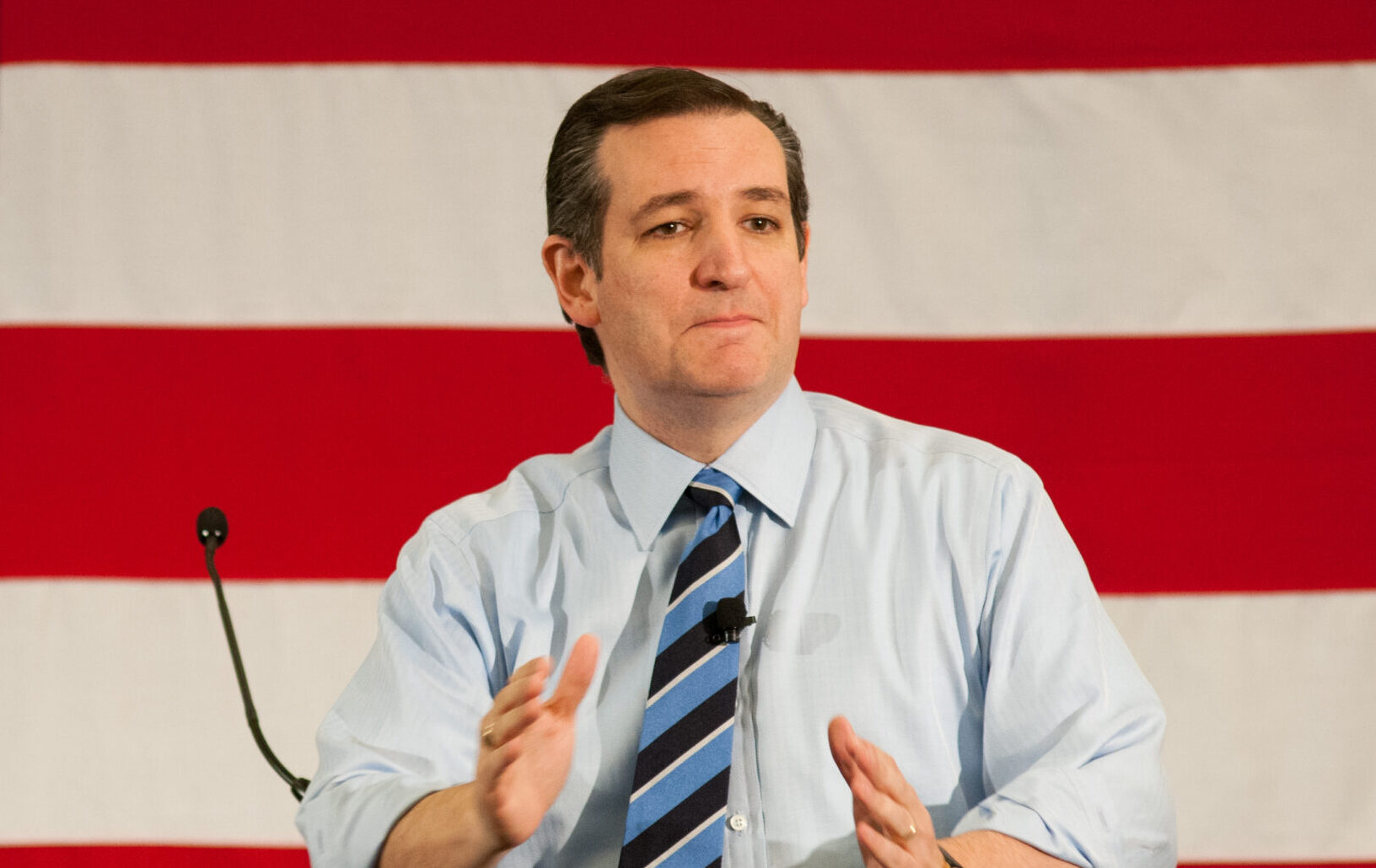
Today, loudly and proudly, Senator Ted Cruz (R-TX) is a staunch supporter of the Iran War, the state of Israel, and U.S.-led regime change in other countries; he is outspoken against what he sees as rising antisemitism in America, particularly on the right.
When he opposed a potential U.S.–Iran peace deal in June, the Washington Examiner reported that “Cruz, considered a possible 2028 presidential candidate” was “positioning himself as more hawkish than the White House.”
Other top 2028 Republican presidential prospects include Vice President J.D. Vance, who is considered less hawkish than other White House officials, and also Secretary of State Marco Rubio, who in the 2016 presidential election was the neoconservative choice.
Cruz is now clearly aiming to be the most pro-war, pro-Israel, and thoroughly neoconservative Republican presidential candidate.
A decade ago, he was aiming to be something else.
Cruz told Iowans in 2015 that their foreign policy choice shouldn’t be between “retreat from the world and be isolationist and leave everyone alone, or we’ve got to be these crazy neocon-invade-every-country-on-Earth and send our kids to die in the Middle East.”
Gearing up to run for president, Cruz criticized neoconservatism frequently back then.
Some “crazy neocons” didn’t like it.
“I’m not sure where the neocons wish us to invade (left my decoder ring at the last Elders of Zion meeting), but what exactly does this would-be Commander in Chief wish us to do?” wrote the American Enterprise Institute’s Vice President Danielle Pletka.
Pletka’s “Elders of Zion” quip implied that perhaps Cruz was leaning into antisemitism.
Labeling Cruz an “isolationist,” Pletka would also say, “Good for Ted Cruz for being honest. He doesn’t want to be anywhere in the world, doesn’t want America to lead, and harkening back to the likes of Pat Buchanan and Charles Lindbergh is truth in advertising for him.”
She wasn’t the only one upset with Cruz, nor was Pletka the only hawk to equate Cruz’s criticism of neoconservatism with Jew hatred.
“He knows that the term in the usual far-left and far-right parlance means warmonger, if not warmongering Jewish advisers, so it is not something he should’ve done,” said the former President George W. Bush National Security Council official Elliot Abrams.
The columnist Jonah Goldberg would add, “Abrams is right — and Cruz surely knows — that for many people ‘neocon’ has become code for suspiciously Hebraic super-hawk.”
The Bush State Department alumnus Eliot Cohen said of Cruz’s naughty word, “It’s an epithet. It’s always used pejoratively.”
If Cruz’s use of the term was jarring to neoconservatives accustomed to being gatekeepers of what foreign policy positions were acceptable on the right, including what rhetoric might be permitted, for non-interventionist conservatives it was not surprising.
Cruz was elected to the Senate in 2012 as part of a Tea Party wave of Republicans, which at the time meant cuddling up to the popular libertarian Rep. Ron Paul (R-TX), who was attracting large audiences while running for president in 2012. It also meant cultivating ties with his senator son, Rand Paul, whose 2010 Kentucky primary race was in part a Republican intra-party war between the rising son of Ron and the neocon old guard. Dick Cheney would endorse Paul’s GOP primary opponent, but the Tea Party darling Sarah Palin gave the libertarian a major assist with her endorsement.
Cruz was definitely in, and actively wanting to be in, the Paul-Palin conservative camp and not the Dick Cheney one.
Both Pauls endorsed Cruz for senate. Though Cruz would eventually try to say he was somewhere between Rand Paul and the much more hawkish Sen. John McCain (R-AZ) on foreign policy, the popular spot in the GOP base at the time was the Tea Party and the Pauls and so, again, there was Cruz. (The future neocon star Nikki Haley also once embraced the Tea Party.)
When the former senator and hawkish GOP presidential candidate Rick Santorum was asked in 2015 about Cruz’s use of the word “neocon,” he replied, “You don’t accuse someone of being a neocon if you see yourself as a Reagan conservative on national security. And he’s not.”
He added, “The Republican party, thanks to Ron and Rand Paul, have brought in different elements into the party, and I think Ted’s comfortable in those elements.”
Santorum did not mean this as a compliment, but he was right about Cruz seeming comfortable—or at least pretending to be—in “those elements.”
Which at the time also included praising the former NSA contractor Edward Snowden for his 2013 revelations about mass surveillance by the U.S. government.
“If it is the case that the federal government is seizing millions of personal records about law-abiding citizens, and if it is the case that there are minimal restrictions on accessing or reviewing those records, then I think Mr. Snowden has done a considerable public service by bringing it to light,” Cruz said at a 2013 event hosted by The Blaze.
Cruz said, while running for president three years later, that Snowden was a “traitor” who should be “tried for treason.”
As a 2016 Republican primary candidate, Rubio would say of his fellow competitor, “I never believed Edward Snowden was a good public servant the way that Ted Cruz once said that he had done a public service for America.”
Working for the Paul family in various capacities and coming from the libertarian right, this is my memory of Cruz’s chameleon politics; while I can only speak for myself, I don’t believe I’m the only libertarian embarrassed to have ever considered the man an ally.
We should all expect deception from politicians. But Cruz certainly went deep.
Cruz’s shapeshifting certainly didn’t stop here. As The American Conservative’s Curt Mills’ recently opined, “Could say a lot about Cruz, but have to almost admire his consistent shamelessness. At the dawn of his national career, he tried to destroy Obamacare, when that was impossible, Obama had just been convincingly re-elected, etc, just for attention.”
“Remember he spoke at Nat Con II, and in contrast to Rubio, he didn’t even try to placate the audience—just an open bog standard, old guard Republican speech. It was sort of impressive,” Mills added of Cruz’s speech at the 2021 National Conservatism Conference. “Now, he’s just going to run for president in 2028 on an open, Damned Proud demi foreign agent platform. It won’t win, but think it will have more legs than a lot of quisling Machiavels’ attempts will.”
Mills’s words were accompanied by a Cruz post with the senator gloating about Israel’s major investments in Texas.
Which is definitely Ted Cruz of the 2026 vintage: a full-fledged, neocon Zionist hellbent on painting others who question American wars or U.S.-Israel relations as being antisemitic. It’s hard to imagine the cast of neoconservatives quoted here having anything harsh to say about Cruz today.
It’s amusing to imagine what a 2013 or even 2015 Cruz would think of the “crazy” neoconservatism he’s so fully embraced today. Or even whatever he might end up becoming in the future as political winds shift with his ambitions. Cruz went through more changes and nuances than even this, but this column can only be so long.
So who is the real Ted Cruz? It’s a good question, but probably one that no one can truly answer.
The post Ted Cruz Is an Opportunistic Chameleon appeared first on The American Conservative.