Jeanine Pirro’s Office Convenes Rare Special Grand Jury to Investigate Truancy, Attendance and Graduation Records in Democrat-Run DC Schools

Image: Video screenshot.

Federal prosecutors have convened a rarely used special grand jury to investigate attendance, truancy and graduation practices inside Washington, D.C.’s scandal-plagued public school system.

The sprawling investigation reportedly centers on how the Democrat-run District supervises and protects young people, and whether its schools are accurately documenting student attendance and awarding diplomas.

Teachers and other employees from several D.C. Public Schools campuses have been contacted by federal prosecutors and questioned about student absences, graduation practices and how attendance records are maintained, according to 7News.

Some of those called before the panel are connected to Ballou High School, which was at the center of a massive graduation scandal less than a decade ago.

At least one school employee has already testified before the special grand jury, while others are reportedly scheduled to appear.

A law enforcement official told Fox News the investigation is about “safeguarding youth in the District.”

Preliminary data reviewed by 7News shows that 50.4% of D.C. students in grades nine through 12 were chronically truant during the 2025–2026 school year, meaning they missed at least 10% of the school year without an accepted excuse.

Meanwhile, 57% of D.C. high school students were chronically absent for either excused or unexcused reasons.

The numbers at several individual high schools are even more staggering:

  • Ballou High School: 84.4% chronically truant
  • Anacostia High School: 84.1%
  • Dunbar High School: 79.6%
  • Eastern High School: 78.5%
  • H.D. Woodson High School: 77.6%
  • Roosevelt High School: 72.7%

At Ballou, more than eight out of every ten students were classified as chronically truant.

Yet Ballou reported that 136 of the 153 students in its 2025 graduating cohort received diplomas, a graduation rate of 88.9%. That was a jump of more than ten percentage points from the previous year.

The graduation and truancy figures cover different student populations, and the publicly available data does not establish that chronically truant students were among those who graduated. But the apparent disconnect is certain to raise questions—particularly given Ballou’s ugly history.

In 2018, a city investigation found that Ballou had graduated students who had missed too many classes or improperly completed makeup courses.

The scandal quickly spread beyond Ballou. Investigators ultimately found that approximately one-third of D.C.’s entire 2017 graduating class had failed to meet the required standards for graduation.

The FBI opened an investigation at the time, but the probe apparently went nowhere. City officials claimed they subsequently tightened enforcement of attendance and graduation rules.

Eight years later, the truancy crisis is still raging.

During the 2023–2024 school year, nearly 16,000 DCPS students, roughly one-third of the school system’s K–12 enrollment, were classified as truant.

Pirro has repeatedly connected widespread truancy with juvenile crime, curfew violations and the violent “teen takeovers” that have terrorized residents and businesses across the capital.

As The Gateway Pundit previously reported, Pirro announced in May that her office would aggressively prosecute parents who enable minors to violate the District’s curfew laws.

“We’re coming for you, and we’re coming for your parents,” Pirro warned.

Pirro also sought school records for students suspected of repeatedly skipping school and violating curfew. According to The Washington Post, District officials did not voluntarily provide the requested records.

Now a federal special grand jury is asking the questions.

Far-left D.C. Mayor Muriel Bowser’s office responded by saying city officials were focused on welcoming students back for the new school year and insisted that the District makes its school data public.

But publishing horrifying numbers is not the same as fixing the problem.

For years, D.C.’s Democrat establishment has thrown money at failing institutions while students disappear from classrooms, academic standards are questioned and juvenile crime spills into the streets.

The post Jeanine Pirro’s Office Convenes Rare Special Grand Jury to Investigate Truancy, Attendance and Graduation Records in Democrat-Run DC Schools appeared first on The Gateway Pundit.

The Brexit Miracle, Ten Years On

The Brexit Miracle, Ten Years On

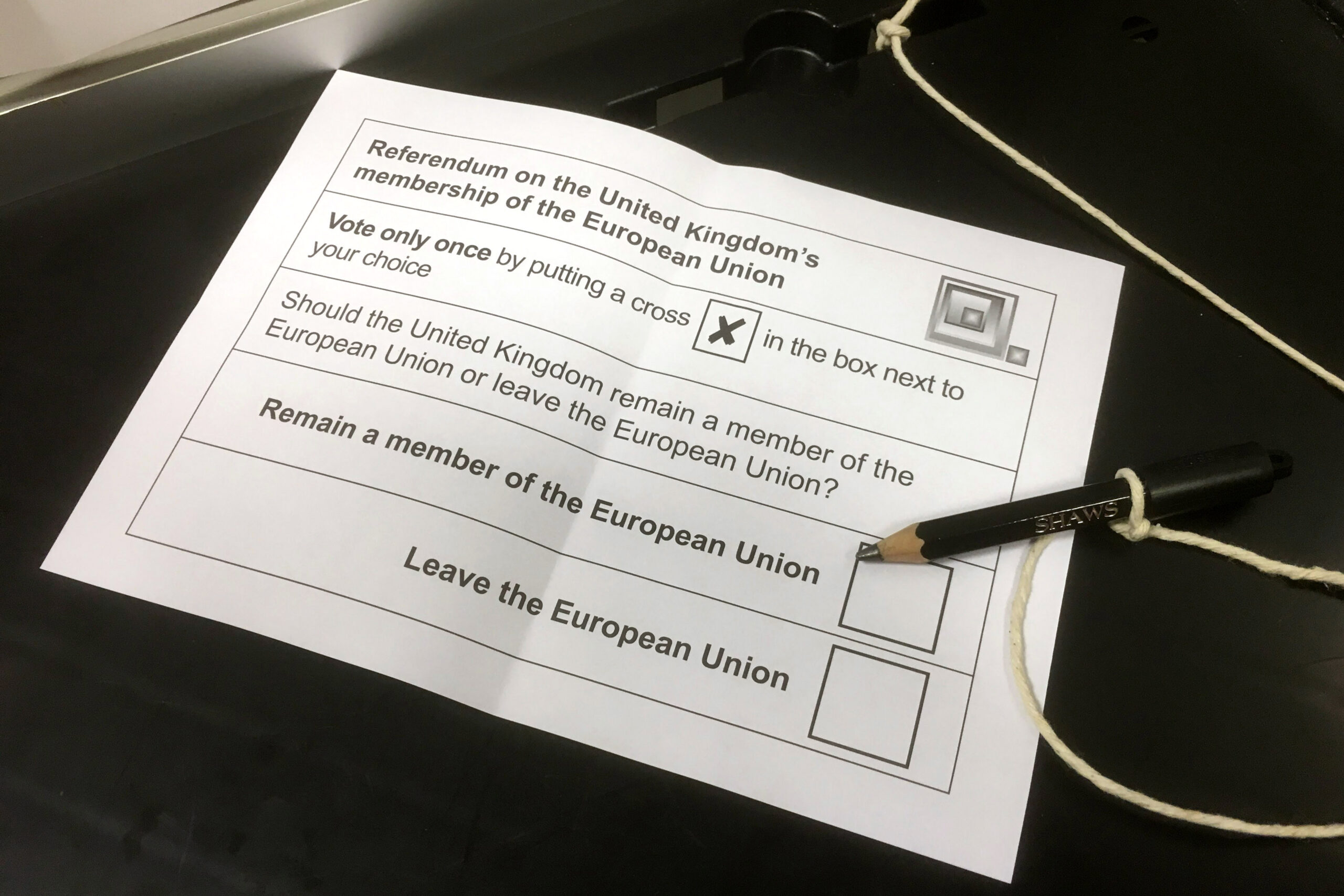
A book from one of the architects of Leave shows how accidents of circumstance and a few personalities determined the UK’s future.

The United Kingdom Goes To The Polls In The EU Referendum

Ten Years On: The Untold Story of Brexit – Reflections on a Life of Campaigning, by Matthew Elliott

“Even now, people call the Brexit vote a victory for right-wing populism … They are right that Brexit was a victory for populism; they are wrong to think it was for the right-wing kind,” says Matthew Elliott in Ten Years On, which is certain to be the most insightful and honest telling of how Brexit happened. The referendum’s 10th anniversary passed in June; the day before, the prime minister, Sir Keir Starmer, resigned. This will mean that in 10 years we’ll have had seven heads of government.

So has Brexit broken Britain or did a broken Britain produce Brexit? Elliott was the chief executive of Vote Leave, the official campaign to get us out of the EU (I was a director), and we of course say that however Brexit happened, it’s a thoroughly good thing that it did. As now at least we can solve our own problems, and it won’t be the fault of furriners if we don’t. The age of political excuses is over, the time of finding out is begun.

Elliott’s book shows, with more candor and precision than anything I have seen anywhere else, how it was a generation of right-wing failure that brought us to this point. Failure of tactics, strategy, personnel, and even principles. I don’t know whether the idea that a vast conservative settlement, capable of sustained electoral success, but in fact being rotten to the core, is something Americans can appreciate, but let us see how Brexit over here looks over there.

***

Starmer’s departure was heralded by your president canvassing it on social media. Such are the ties of blood and comity between us that we were merely Truth Socialed, rather than Maduro’d. But even here, the departure of yet another lackluster PM is just what Jack Womack was aiming at in his dystopic sci-fi novel, Random Acts of Senseless Violence; his 12-year-old prep-school protagonist is as blithely oblivious about that year’s fifth presidential assassination as any of the grown-ups are.

Adult indifference is the hallmark of the British state currently. When Starmer stood in front of Number 10 to resign, his words were drowned out by a fool called Steve Bray playing amplified music (in this instance, Beethoven’s “Ode to Joy,” aka the EU’s national [sic] anthem). Bray has been a serial bore in Westminster since, you’ve guessed it, the referendum a decade ago. 

Why can’t the British state stop a lout outside the Downing Street gates from disrupting prime ministerial press conferences? You’re maybe tempted to say, and in that precise tone of voice, “nobody knows.” But of course everyone who cares does. It’s because although we’ve left the EU, we’ve remained welded to something called the ECHR, which was a piece of paper we wrote after the war to see if the Germans would mind awfully being slightly less so. We don’t need it, we shouldn’t be in it, the Tory Party now pretends it wants to quit it, but here we still are, after decade upon decade of Conservative failure to do anything conservative.

In short order, our next prime minister, a lackluster Scouser called Andy Burnham, who lost two Labour leadership elections, but won his third attempt in July because there wasn’t a contest, came to London on the train. 

It might have surprised Americans to see just how little security there was for the PM-elect when he left Manchester, where he had been mayor, or on the train to the big smoke, or at Euston, the London station he arrived at, or for the humble black cab he took to parliament. Burnham, I regret to say, wears black tee-shirts, a la Ricky Gervais. This is a kind of faux-populist uniform for progressive time-servers here, and as such, unknown garb for Lord Elliott, as Matthew now is.

Three men were indispensable to winning the referendum 10 years ago: Elliott, who drew the Leave campaign together, and perhaps still more important, kept it more or less united; Boris Johnson, then the outgoing mayor of London, and at the time, the country’s most popular celebrity, never mind politician; and Jeremy Corbyn, the IRA-loving, antisemite-enabling leader of Her Majesty’s Loyal Opposition. 

Of these three, the greatest, in the cause of Brexit winning, was Corbyn, then Labour leader and a longtime skeptic of the EU. As Elliott rightly notes, any other Labour leader would have wanted Remain to win, and, unlike Corbyn, who polled dismally, would have had the popularity to add something to the pro-EU campaign. But God decided that what Britain needed in 2016 was a Marxist crank who would do that final piece of heavy lifting the British right would have been quite incapable of doing on its own.

So that’s how the referendum was won, but how did we get to having one in the first place?

***

Britain does a good trick in politically seeming ancient and rooted, when in fact we’re trivial, untrue to ourselves, and—I say this clinically—spastically reckless.

That the referendum on British membership of the EU happened at all was one such instance. It was our third national referendum—the first had been in 1975, as a device by the wily then Labour PM, Harold Wilson, to keep the UK in the EEC, to which it had acceded in 1973, and manage his own party, which mostly disliked that fact.

Our second national referendum was in 2011, on whether we should fundamentally change our voting system, from majoritarian first-past-the-post single-member districts being the basis of our parliamentary system of government to a dismal thing called AV. This was the coalition price Liberal leader Nick Clegg demanded of his coalition-partner David Cameron, after the latter failed to win the 2010 general election (against Gordon Brown, the most unpopular PM in history up to that point). 

As a sidebar, I was first introduced to the joys of redistricting by my late friend Ed Lipman at university 30 years ago (the mad stuff you get up to when you’re young). Ed, whose father Sam was Commentary’s music critic, the New Criterion’s publisher, and a sometime Reagan appointee to the NEA, was a whirlwind in early-’90s Cambridge, where he had come after a first degree at Columbia.

A self-professed “Upper West Side nationalist,” Ed had no time for pious Brits like me muttering about how unseemly your racialized congressional districts were. “But Ed, they’ve been created solely on the basis of the color of people’s skin!” To which this great and corrosive cynic replied, “And fantastic news for the GOP it is! It makes their majorities top heavy and our districts far more competitive.” There was to be no such conservative hard-headedness on whether Britain’s voting system should be changed in 2011.

It’s impossible even 20 years on to contemplate just how selfish and shallow the leadership of “the right” by Cameron, and his mainstays George Osborne and Michael Gove, was. But an American, much attached to his constitution, might reasonably ask, “What, you were casually going to junk how the House of Commons happened, and everything that flowed from that politically, just because some dicks signed up to this simply in order to get into office?” We sure were! But thankfully the No to AV campaign was run by—Matthew Elliot, who won it, and, by his own reckoning, used this experience to determine how he would go about running a campaign to leave the EU, should ever the opportunity arise. 

Elliott was no cradle Tory—his father, a social worker, was out on strike for a year under Thatcher—but he was certainly a juvenile autodidact, self-dosing on Milton Friedman and whatever other truthiness came his way. 

Musical—a dab hand with the church organ to this day—his political formation left him with the traits which were to be so indispensable in the winning of Brexit, even in the face of everything its keenest supporters did to try and lose the referendum. Namely his preternatural ability to stay unflaggingly calm and polite. 

It’s a mark of how self-effacing the man is that when his parents saw him on the television news during the AV referendum, they vaguely knew he was involved, but had no idea on which side.

AV was no walk in the park. Prominent Cameronian Tories like Michael Gove promised support, then welched, and the actual winning of the campaign required securing a substantial proportion of natural Labour voters. Once again, the gifts of Elliott were on display here. 

“After I awkwardly explained our strategy,” Elliott relates of one trade union baron he cajoled to join up with the opponents of AV, the Labour heavy got to the point: “I think you’re a Tory c*nt,” he said. “But on this campaign, you’ll be our c*nt, and win the f—ing referendum”.’

All of which meant that Elliott, although a committed Leaver, was congenitally allergic to the self-harming histrionics too many other of his fellow long marchers self-indulgently engaged in. Given that, even come the referendum itself, most Tories didn’t support Leave, and mere years before, the handful who openly did were in single figures in parliament, the triumph of gaining Brexit against the official right, which did not want it, is all the more remarkable.

***

Each step in Elliott’s career, as a political entrepreneur, was, one way or another, assisted by the failure of the right’s formal leadership. He set up, ran, and, critically for the British scene, secured funding for a campaign group called the Taxpayers’ Alliance (the TPA). It did what it said, but was only able to do so because of market failure—namely the official Tory party, in the form of its finance spokesman, latter minster, George Osborne, who was no friend to the ordinary tax victim. 

His inspiration for the TPA naturally owed much to Grover Norquist’s Americans for Tax Reform. In due course he’d also get Sarah, his delightful American wife, from the same place. 

One precocious lesson Elliott took from the American scene wasn’t from his natural conservative allies, but from the Obama campaign. Latinos for Obama, Croatian-Americans for Obama, Republicans for Obama—whatever the peripheral group was, their campaigning utility to the overall project was immediately apparent to Elliott. This was to be of crucial importance come 2016 when dozens of such campaigns—“vapers for Leave”—spontaneously emerged.

The lesson that Elliott took from both sides of the Atlantic was that true believers mustn’t be allowed to throw away their thing. His analysis of why Leave lost in 1975 was the conventional one: The No campaign, which wanted Britain out, was composed of unappealing misfits from the fringes of British politics. Given the depth of establishment resistance to any serious effort to leave, the attempt to do so would have to look above all else professional and reasonable. Disciplined pursuit of this strategy would cause much sorrow and end many friendships—worst of all, ones forged in foxholes, given how few in number the longtime Leavers had been and were. 

***

That there was a referendum was of course because of yet more official Tory failure. Cameron failed to win the 2010 general election on his own, and to govern had to go into coalition with the Europhile Liberal Democrats. Doing so negated much opportunity even for Euroskeptic posturing, and, parliamentary politics being what it is, each Lib Dem MP who was a minister meant one less Tory backbencher who got a red box and a Whitehall office. Thus bitterness and belief fused nicely to build up internal Tory opposition to Cameron (whose lack of love for his party’s more lumpen followers was snobbishly transparent). 

From the outside came the threat of UKIP, led by Nigel Farage,and fuelled by decades of what he portrayed as Tory betrayal on so much, not least on the EU, which the Tories talked about, but never did anything about. 

Cameron, having alienated too many of his own MPs, and not having won anything like a large enough majority in the 2015 general election to safely ignore them, rashly, bumptiously, gave in to the demand for a referendum. He expected to manage his political problems by winning this battle. Why he didn’t is the story of Ten Years On

Elliott, and others, were able to frame the pitiful “negotiations” Cameron conducted with Brussels as being so much pabulum. But, as Elliott was at pains to point out to the never fully convinced Euroskeptic base, this trick was only possible by having been—truly or otherwise—openminded in the first place. Thus, when Cameron didn’t bring home the bacon, the disappointment hit home, and hard.

None of this would have happened if the Leave campaign’s eventual campaign director, Dominic Cummings, had been right in his polling, which scientifically “proved” that there was no chance the Tories could win the 2015 election and thus be in no place to concede any sort of plebiscite—but there you go.

I shan’t mention here how much the referendum campaign cost. It would simply be too, too embarrassing as a Europoor to admit that. In so many ways, British politics is unbelievably cheap. Yet the campaign still had to be paid for, however reluctant British donors are to give. And, before the short, official campaign started, we lacked any of the charms Remain enjoyed, such as government patronage, or, indeed, taxpayers’ spondulicks. Easily three quarters of the lolly we raised was due to Elliott’s donor network. 

In America this man would make presidents, or at least their campaigns, if there is a difference—I do not know enough about your politics to be sure. 

Not everyone wanted to win. And I don’t just mean the people hardcore leavers habitually accused of that, such as our front men Boris Johnson and Michael Gove. Farage very clearly bought into the overwhelming political consensus that Leave wouldn’t win, and aimed, perfectly reasonably, to be King of the Losers.

After all, since he failed to gain control of the official Leave campaign, Farage could, entirely plausibly, blame its eventual failure on the Tories who ran it, and foolishly didn’t put him front and center on the telly every evening. But they didn’t lose, and for that we have to turn to David Cameron.

An overrated electoral asset (failing to win in 2010, only just scraping by in 2015), Cameron was clapped out electorally. His right hand-man George Osborne was still more unpopular: for a certain sort of Tory, no greater joy exists than watching, and rewatching, and rewatching him being booed at the Paralympics.

Cameron further lacked a popular, actually pro-EU Labour leader to compensate for his own failings, as Corbyn was none of these things. And as Elliott notes, Cameron was still so confident of victory, he alternated between pulling punches, so that the Tories could all the more easily be reunited after his inevitable referendum victory, and lazily allowing the lamest Remain campaign imaginable. The result ludicrously, and therefore counterproductively, threatened us with everything up to and including World War Three. 

Indeed, in one of the most important passages in Elliott’s book, he demonstrates with painful clarity that all Cameron had to do was showily reject the pitiful terms the EU had offered him in its most recent “renegotiation” and then there was every chance he would have won the referendum, as the Leave campaign would have fallen apart, destroyed from within by Cummings, Elliott’s choice as campaign director.

From potentially failing to keep on side the MPs whose support was necessary to pass into law a referendum bill which was at least not actively unfair to Leave, to spouting contradictory bollocks such as the need for not one but two referenda (i.e., giving Remain two chances to avoid defeat), so much of Vote Leave’s efforts seemed curiously self-sabotaging. 

Unfailingly kind, Elliott still insists that Cummings was vital to Leave’s success. As too, he says, was the backbench Tory MP Steve Baker, who did so much to rally Tory MPs to risk their political futures by going against their seemingly all-powerful leader. Baker’s role is a testament to how important it is to actually do stuff, because no one can believe just how idle Tory MPs are when left to their own devices.

That Steve, a freshman MP, achieved so much was, once again, the consequence of how much Cameron, Osborne, and Gove had failed politically, with opposition to them being a legacy above all else of the hated coalition with the Liberals (which they championed and obviously benefited from). 

This then was the political problem Cameron was trying to solve with the referendum: not the epochal matter of Britain’s postwar national strategy, but the mere fact that his, and his faction’s, ascendancy over the Tory party was as weak as the electoral results he achieved as leader deserved it being. Cameron no more cared whether the Conservatives were in or out than the Number 10 cat did. 

Whereas the people Elliott marshalled in the Leave campaign cared so painfully much.

***

Once the campaign was called, and once Farage was stopped from running the Leave side, it was never going to be lost. Or so it seems to me. That the campaign was called was because of David Cameron’s ineffable arrogance and political incompetence. In this the despised Osborne was entirely correct: The Tory leadership could have got away with avoiding a referendum until the point at which Leavers could win control of the party, then Parliament, then the public. These variables were all a long way off, if even realizable.

This then is the difference with Trump. He, from here, does look very like what Kissinger said he was: “One of those figures in history who appears from time to time to mark the end of an era and to force it to give up its old pretences.” But that’s the thing: He did that. Brexit, in contrast, was needlessly conceded as an opportunity by weak men gambling. Those of us who wanted it had decades of failure behind us in getting it, and could have suffered for many more years, had Cameron held his nerve, or delivered the political goods for his party.

But he didn’t, and the referendum happened, and the right side won because that was the side Matthew Elliott was running. We had enough petty egomaniacs trying to capsize the boat, thank God we had him to steady it. Inevitably various Tory Number 10s could have had him, with multiple PMs asking him to come and work for them. Thank goodness, for Brexit, they failed there too.

The post The Brexit Miracle, Ten Years On appeared first on The American Conservative.

Trump Says Iran’s Oil Hub Kharg Island Is Being Blown “TO SMITHEREENS” (VIDEO)

Trump posted an AI-generated video showing Kharg Island being blown up.

President Trump issued a stunning message Sunday night indicating that Iran’s most important oil-export hub was under devastating attack.

“Kharg Island being blown to smithereens!!! President DJT,” Trump announced on Truth Social.

Trump’s post included a dramatic AI-generated video depicting explosions across the island.

Neither the White House nor the Department of War had publicly confirmed a new attack on Kharg Island’s oil facilities. Reuters reported that Iranian state media had also issued no immediate response.

Kharg Island is the crown jewel of Iran’s energy industry. Before the war, the island handled approximately 90 percent of the regime’s oil exports.

Earlier Sunday, US forces conducted a confirmed strike against two Iranian rocket launchers on Larak Island, roughly 410 miles east of Kharg Island.

US Central Command said Islamic Revolutionary Guard Corps forces were observed preparing to launch rockets carrying sea mines into the Strait of Hormuz.

CENTCOM described the operation as a “limited, precise action” against Iranian forces posing an “imminent threat” to civilian mariners, commercial vessels, and international commerce.

“In essence, Iran created the threat and the U.S. military eliminated it to protect civilian mariners, commercial shipping, and the free flow of global commerce,” CENTCOM said, according to the Associated Press.

The official CENTCOM account identified the immediate threat as IRGC preparations to deploy rockets carrying sea mines into the Strait of Hormuz.

The Iranian regime later retaliated by firing ballistic missiles at two US bases in Jordan.

Jordan’s armed forces reportedly intercepted eight missiles that entered the country’s airspace. Nearly all the incoming missiles were shot down, and no significant damage was immediately reported.

The post Trump Says Iran’s Oil Hub Kharg Island Is Being Blown “TO SMITHEREENS” (VIDEO) appeared first on The Gateway Pundit.

OMG! Obama Judge Rules Possession of AI-Generated Child Pornography Is Legal

A federal appeals court has ruled that the private possession of AI-generated child pornography is protected by the First Amendment, so long as no real child was involved in creating the images.

The Seventh Circuit upheld the dismissal of a possession charge against Wisconsin resident Steven Anderegg.

According to investigators, Anderegg had hundreds of AI-generated sexually explicit images depicting children on his personal devices.

Anderegg still faces three other charges related to allegedly producing and distributing the material and transferring it to a minor under 16.

The Justice Department appealed the dismissal, arguing that the government should be permitted to prohibit possession of all obscene virtual child sexual abuse material.

However, the appeals court said it was bound by the Supreme Court’s 2002 decision in Ashcroft v. Free Speech Coalition.

That ruling struck down restrictions covering sexually explicit depictions of fictional children when no actual minors were exploited in their production.

Two judges nevertheless expressed serious concerns about applying the nearly 25-year-old precedent to modern artificial intelligence.

“Indeed, in Free Speech Coalition, the Supreme Court addressed the scope of First Amendment protections for virtual CSAM [child sexual abuse material], but that was nearly twenty five years ago, and the image generation technology available today was likely unimaginable back then,” Judge John Lee wrote.

“Given the relentless advancement in artificial intelligence models, we have some concerns about the lines these cases draw, but we are not free to redraw them ourselves.”

The result is a disturbing legal distinction.

Possession of child sexual abuse material involving real children can be criminalized because actual victims were exploited.

But entirely artificial depictions will receive constitutional protection when privately possessed at home.

Judges Lee and Joshua Kolar also cited research findings of child sexual abuse images in a major dataset used to train image-generating AI.

That raises the possibility that supposedly artificial material could still be connected to the exploitation of real children.

Unfortunately, the judges said the issue was not sufficiently developed in Anderegg’s case to decide it.

Justice Clarence Thomas warned about this problem as far back as 2002, suggesting technological advances could eventually make virtual depictions indistinguishable from images involving actual victims.

The decision will now only be reversed if the Supreme Court agrees to revisit its earlier ruling.

The post OMG! Obama Judge Rules Possession of AI-Generated Child Pornography Is Legal appeared first on The Gateway Pundit.

Trump’s Broken Deals Make Foreign Policy Difficult

Trump’s Broken Deals Make Foreign Policy Difficult

America’s friends and adversaries alike believe the U.S. president can’t be trusted.

US-ISRAEL-IRAN-WAR-POLITICS-TRUMP
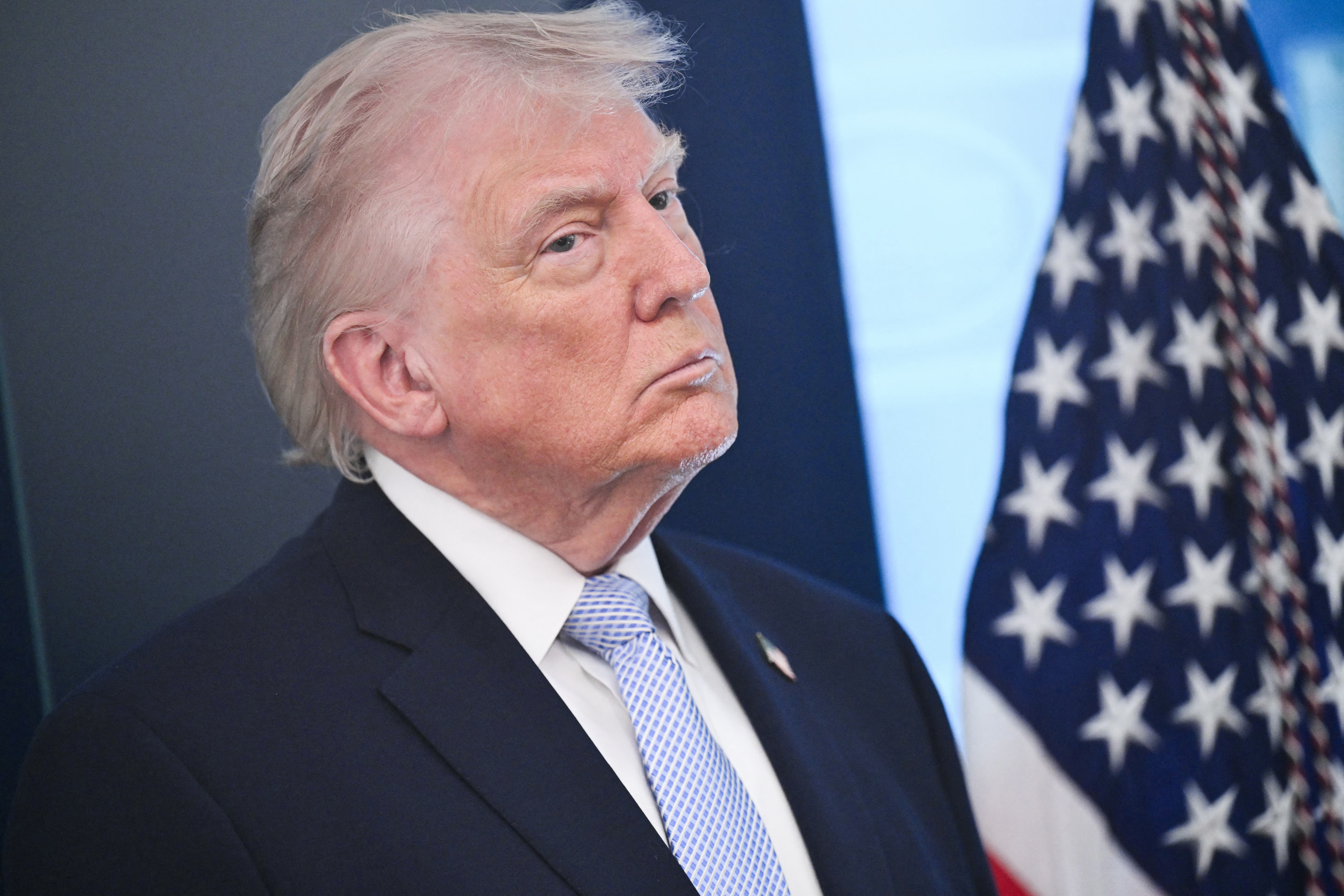
Photo by SAUL LOEB / AFP via Getty Images

Canada’s Prime Minister Mark Carney took to the airwaves on August 22 to explain in a speech and Q&A why he walked away from trade negotiations with the United States and thereby opened Canada to economy-crushing tariffs from the country once considered its closest friend. Carney gave three key reasons.

The U.S. proposal, Carney said, demanded compromises on the protection of Canadian culture and the French language, including the promotion of French-language shows on streaming platforms and mandatory labelling in French as well as English on packaging.

Carney also said it was “unacceptable” that the U.S. “wanted to restrict” which countries Canada traded with, which was stipulated in the proposal.

Finally, the U.S., at the last minute, had rewritten items already agreed to: “The U.S. proposed new terms that were uneconomic, unfair, and undermined the net benefits to Canada.” That, he said, called into question “the reliability of any deal.” 

The Trump administration’s unreliability, the prime minister explained, was not a new problem or one likely to go away soon. 

“If you execute a deal, you have to stand by that deal,” Carney said in the Q&A. “We have a deal with the Americans…. We have side letters that clarify behavior in steel, in aluminum, in autos. All of those are being violated day in, day out.” Under President Donald Trump, Carney said, America’s “signature was written in pencil.”

Other U.S. partners, namely Saudi Arabia and Ukraine, have made similar complaints in recent weeks. After more than a year of negotiations, the U.S. signed a nuclear deal with Saudi Arabia. The deal stipulated that, following a joint two-year study on economic feasibility, the U.S. would help build a nuclear facility in Saudi Arabia, allowing it to enrich uranium on its own soil.

But the next day, Trump announced on Truth Social, “There will be no enrichment of material!” He went on to stipulate that approval of the deal “is totally subject to Saudi Arabia joining the very respected and successful Abraham Accords,” the Mideast agreements through which some Muslim-majority countries have normalized relations with Israel. The first stipulation contradicted what Riyadh had signed; the second was added after the fact and seemed designed to kill the deal.

Ukraine too has seen U.S. pledges reversed after they were made. On July 8, Trump told Ukrainian President Volodymyr Zelensky that the U.S. would give Ukraine the right to manufacture Patriot defense missiles. “We’ll show them how to do it,” Trump said. Days later, Trump claimed he’d never agreed to that. Adding painful insult to the injury of eroded trust, Trump explained, “those people you give the technology, they could someday turn on you.” Like Canada, Ukraine has experienced Trump’s signature being written in pencil and America being turned into an apparent adversary.

Perhaps the country with the most extensive recent history of Trump’s diplomatic duplicity is Iran. During the Obama administration, the U.S. and Iran struck a nuclear deal, the 2015 Joint Comprehensive Plan of Action (JCPOA). Iran was verifiably complying with the agreement when Trump withdrew from it in 2018. Nevertheless, Iran appeared willing to negotiate a new agreement even more favorable to the United States. Yet Trump, having torn up the first one, bombed Iran during negotiations on the new one.

The JCPOA had limited Iran to enriching uranium to levels necessary for civilian use but insufficient for weaponization, in accordance with its rights and obligations as a signatory to the Nuclear Non-Proliferation Treaty. It further subjected Iran to perhaps the toughest inspection regime in history. The JCPOA assured that Iran could not work on building a bomb without the U.S. quickly becoming aware of its efforts. The International Atomic Energy Agency verified that Iran was completely and consistently in compliance with the commitments made under that agreement. It was Trump, not Tehran, who unilaterally broke the agreement and walked away.

Still, after Trump returned to the White House, Iran was willing to renegotiate their civilian nuclear program with the U.S. and was reportedly open to the resumption of maximum inspections, to the dilution of its stockpile of near-weapons-grade enriched uranium, and to caps on future enrichment at the 3.67 percent necessary for a civilian energy program. It even appeared ready to suspend nuclear enrichment for three to five years before joining a nuclear consortium that would distribute the enrichment process across the different member states. Instead, the U.S. attacked Iran, killing its leaders.

Though Trump boasts of the art of the deal, there is a historical pattern that suggests, instead, the art of the broken deal. When asked what message he has for other governments about the reliability of making a deal with the United States, Carney didn’t provide one. Trump’s record, he seemed to think, speaks for itself.

The post Trump’s Broken Deals Make Foreign Policy Difficult appeared first on The American Conservative.

The Minorities Who Built Karachi

The Minorities Who Built Karachi

Pakistan’s troubled relations with its religious minorities are only part of the story.

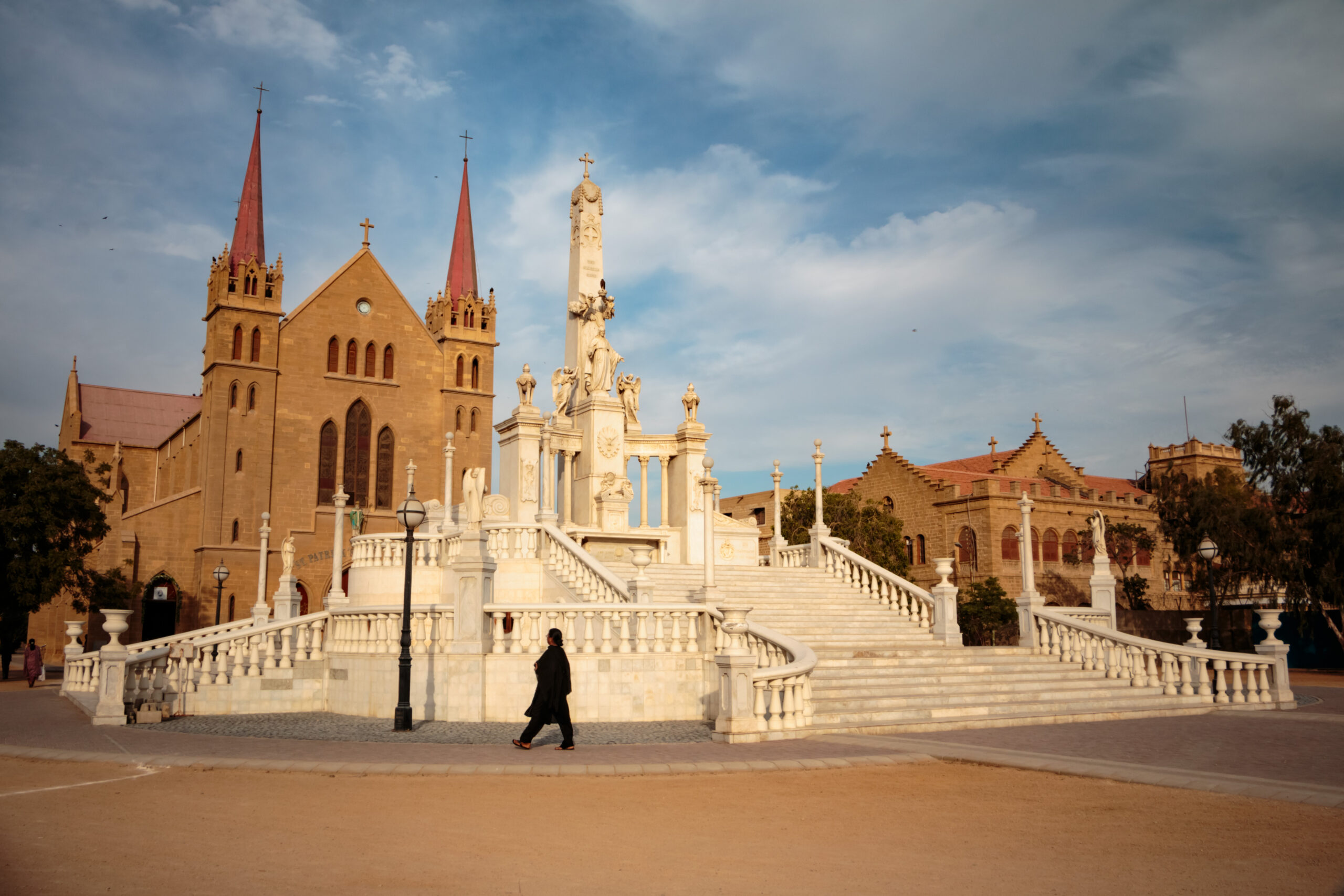
Saint Patrick's Cathedral, Karachi, Sindh, Pakistan
Photo by Camille Delbos/Art In All of Us/Corbis via Getty Images

Pakistan has been in the news recently, for reasons that would have seemed improbable a few years ago. It has become an intermediary between the United States and Iran, while also forging new strategic ties with Saudi Arabia and Turkey through the Mecca Defense Pact. Yet for all the attention garnered by its geopolitical moves, Pakistan—the real Pakistan—remains a country about which most Americans know little. To find that Pakistan, you have to go to Karachi.

Karachi is Pakistan’s largest city, its commercial capital, and its busiest port. It is also where the country’s religious minorities are most visible—not just as victims in headlines, but as communities that helped build the city and remain part of its life.

The first thing that struck me on my arrival in Karachi was a building that seemed to belong elsewhere. St. Patrick’s Cathedral rises above Saddar, the downtown area, in warm-colored stone. Its Gothic arches and soaring spires look more like something out of Ireland or England than a building on the Arabian Sea. Completed in 1881, it remains a working Catholic cathedral. Its very presence is a reminder that Karachi’s religious history is more complicated than the image of Pakistan most often conveyed abroad. 

Of course, that history should not be romanticized, and the Western picture of Pakistan is not entirely wrong. Christians face occasional mob violence and blasphemy accusations. The Jaranwala attacks of 2023, when mobs torched churches and Christian homes after allegations of blasphemy, were a stark reminder of this reality. Pakistan has strict laws against blasphemy, and Human Rights Watch has documented how these are often exploited for blackmail, extortion, and land grabs (the U.S. Commission on International Religious Freedom has likewise highlighted Pakistan’s blasphemy laws as a major impediment to religious liberty).

But the response to such abuses is also part of the story. After Jaranwala, police arrested the alleged perpetrators and opened criminal cases, although justice is still far from being delivered fully. Pakistan’s then–chief justice, Qazi Faez Isa, personally visited the devastated Christian community.

The response has also become institutional. Pakistan established a national committee to bring together religious leaders, including those of non-Muslim communities, to promote interfaith harmony, counter sectarian and extremist rhetoric, and reinforce constitutional equality. And in December 2025, Field Marshal Asim Munir, Pakistan’s army chief, attended Christmas celebrations at Christ Church in Rawalpindi. Invoking the commitment of Pakistan’s founding father, Muhammad Ali Jinnah, to religious tolerance, Marshal Munir characterized the protection of minority rights as a cornerstone of Pakistani national identity, and praised the contributions of the country’s Christians to national development and security.

None of this means that Pakistan has solved its problems with religious freedom. Arrests, committees, and speeches matter only insofar as they translate into effective protection and fair treatment. Implementation is the test. But the direction of official policy increasingly seems to be toward treating religious minorities not as outsiders, but as full members of the Pakistani nation.

That distinction became much more tangible to me once I left the realm of official statements and encountered Karachi itself.

The history of Christianity in Karachi is inseparable from the city’s transformation from a small port into a commercial center. Scottish Presbyterians established St. Andrew’s Kirk. Goan Catholics from Portuguese India became prominent in professional life as teachers, clerks, lawyers, and doctors. 

They built churches and schools. St. Patrick’s High School, founded in 1861, educated generations of students from different faiths, while Holy Family Hospital became a critical part of Karachi’s healthcare system. 

But the Christian presence I encountered was not confined to churches and history books. At the Beach Luxury Hotel, an all-Christian Pakistani jazz band provided the music at a French National Day reception organized by the French Consulate General. At one point, a saxophonist delivered a masterful rendition of “La Marseillaise.”

The setting added another layer to the scene. In the 1960s and ’70s, when the city was widely regarded (alongside Beirut) as one of the region’s great hubs of culture and cosmopolitanism, the Beach Luxury was one of the places where Karachi’s famous nightlife unfolded. Some things have changed since then, no doubt, but there was a pleasing continuity.

The jazz band was not appearing as a relic of a vanished past, but as living proof that Pakistani Christians pursue careers, sustain institutions and cultural lives, and have a firm place in the international networks that have long been part of Karachi.

The Christian story becomes even more revealing when considered alongside those of Karachi’s other minorities.

Parsis, or Zoroastrians, arrived early, and built many of the city’s hospitals, schools, houses, and commercial and philanthropic institutions.  Jamshed Nusserwanjee Mehta, a Parsi and Karachi’s first elected mayor, helped shape civic and infrastructural initiatives whose influence outlived his time in office. The Parsi community is tiny today—around 3,000 people—but its influence was anything but.

During my visit, I went to Dar-e-Meher, the Zoroastrian fire temple in the heart of Saddar. But my most memorable encounter with Karachi’s Parsis took place not there but at the Parsi Institute, where I was taken into what might be called the inner sanctum of Parsi social life: the communal swimming pool. And I was offered a beer. 

It was a wonderfully incongruous moment. Here was a tiny Zoroastrian community, in a city of some 20 million people, maintaining its own institutions and social world with a considerably more relaxed air than the solemn phrase “religious minority” might suggest.

The same principle is visible in Karachi’s Hindu community, whose active temples, such as Swaminarayan Mandir and Panchmukhi Hanuman Mandir and neighborhood networks are additional reminders that the city’s diversity is not merely historical.  

And then there was Karachi after dark. I spent evenings at the Sindh Club, the grand Raj-era institution established in 1871. One of Asia’s oldest and finest clubs, it was founded for British Army officers, civilian professionals, and other Europeans, and has since evolved into a fully fledged Pakistani institution, while retaining much of its original Victorian character.

Sitting there in the evening, I reflected on a broader political lesson in Karachi’s history. The city’s churches, schools, and temples are monuments not only to religious communities, but also to the movement of people and capital that made the city what it is. Commercial cities create practical incentives for tolerance—not because governments decree it, but because commerce, migration, and everyday economic life require people of different faiths and customs to coexist and cooperate with one another. 

The minorities of Karachi are not interlopers or relics, but part of the stubbornly plural fabric of one of the world’s great cities, which—like the nation it anchors—resists easy categorization.

The post The Minorities Who Built Karachi appeared first on The American Conservative.
Google Maps Renames Lake Ontario ‘Lake America’ Following Trump Executive Order

Screenshot: Google Maps

Google Maps has officially begun displaying Lake Ontario as “Lake America” to users in the United States.

The move comes days after President Donald Trump ordered the historic lake renamed amid his escalating trade war with Canada.

The change began rolling out over the weekend, making Google the first major online maps provider to implement Trump’s latest geographic rebranding.

Trump signed an executive order Thursday directing the federal government to adopt “Lake America” as the official U.S. name for Lake Ontario, the easternmost of the five Great Lakes.

President Trump Signs Executive Order Renaming Lake Ontario to “Lake America” – And Explains Why (VIDEO)

The move follows Trump’s 2025 decision to rename the Gulf of Mexico as the Gulf of America.

This change that was subsequently adopted for U.S. users by major mapping services after federal geographic databases were updated.

Google said it is following the U.S. Geographic Names Information System.

“People using Maps in the U.S. will see ‘Lake America,’ those in Canada will continue to see ‘Lake Ontario,’ and those outside of the U.S. and Canada will see both names,” the company said.

The renaming is the latest flashpoint in the ongoing trade dispute between Trump and Canadian Prime Minister Mark Carney.

Trade negotiations collapsed earlier this month after Carney chose to walk away.

The breakdown led Trump to impose U.S. tariffs on Canadian goods, with retaliatory Canadian tariffs expected to take effect on September 8th.

Carney has pushed back on Trump’s executive order.

“We know that America is changing,” Carney said. “Their trading relationships, their foreign policies, their national monuments, their hydronyms.”

“Canadians also know that naming reality means calling it Lake Ontario — then, now and always.”

Ontario Premier Doug Ford joined the protest Saturday, unveiling a large lakeside sign declaring “Lake Ontario Now and Always.”

Ford has recently threatened to cut off electricity to the U.S. over the disputed.

Trump, meanwhile, posted an AI-generated video depicting ducks sporting his signature hairstyle and carrying semiautomatic weapons while guarding a body of water beneath a “Lake America” sign.

The post Google Maps Renames Lake Ontario ‘Lake America’ Following Trump Executive Order appeared first on The Gateway Pundit.

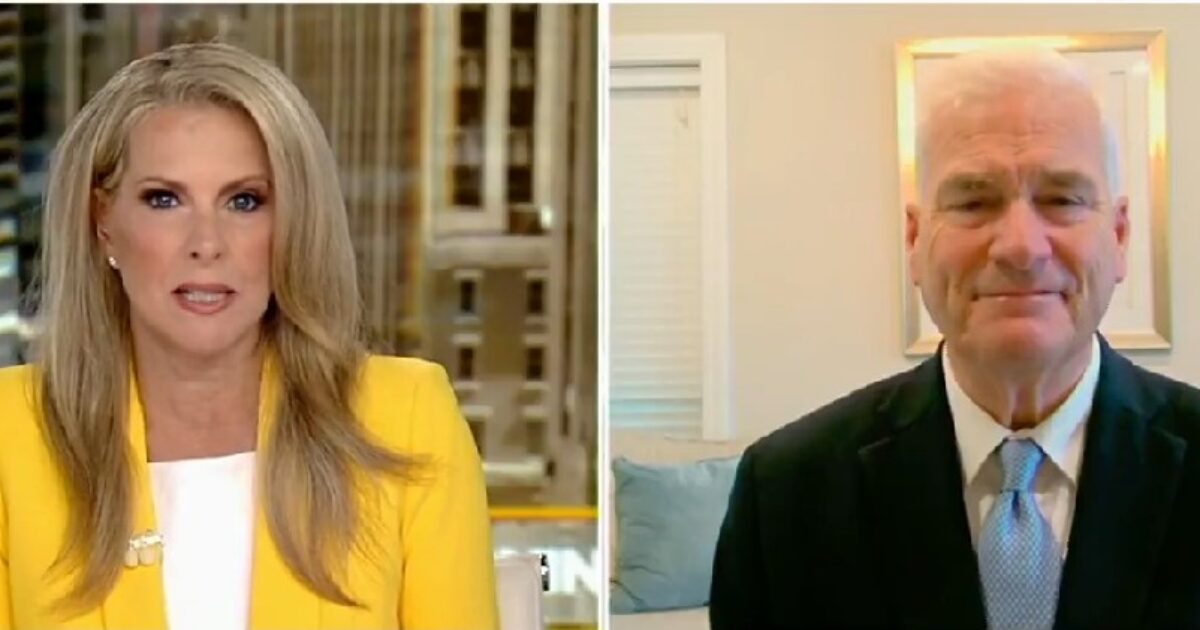
Majority Whip Tom Emmer Weighs in on SAVE America Act, Blasts Senate for Not Acting, “You Don’t Have the Votes for Something That is an 80 Percent Issue Across This Country?” (VIDEO)

Majority Whip Tom Emmer was on “Sunday Morning Futures” with guest host Cheryl Casone to discuss the SAVE America Act and the Clarity Act.

Rep Emmer expressed his frustration with the Senate for not passing legislation that is supported by a majority of Americans.

“Let’s first talk about the agenda. What is at the top of the agenda? Obviously, short-term government funding. You want to avert any kind of pre-election shutdown,” Casone said.

“You’ve only got 16 legislative days before you leave again on October 1st. What can you get done?” Casone asked.

“First off, you hit the number one thing. The short-term funding bill that was sent over by the Senate. The continuing resolution that would fund the government through December 11th. That will be a priority over in the House because we get things done,” Emmer said.

“We’ve sent our priorities over to the Senate. We sent the Clarity Act, which is about digital assets. A market structure bill. We sent that a year ago Cheryl, with almost a hundred Democrat votes, and it languishes over in the Senate,” Emmer said.

“We sent the SAVE America Act several times, and it sits over there, languishing in the Senate, and we sent over obviously Reconciliation 3.0, which is also just sitting there in the Senate,” Emmer continued.

“It really is gonna be on the Senate’s shoulders to start getting something done when we get back. As for the House, we’ve got appropriations bills. Many of our members have different priorities. Those will be addressed,” Emmer continued.

“The House has been working Cheryl. We’ve been getting our stuff over to the Senate. The Senate has got to start to perform,” Emmer said.

“It’s still unclear if Senator Majority Leader John Thune has the votes for SAVE America. The SAVE America Act is still a hanging question mark right now. What do you know? What can you share with us?” Casone asked.

“What’s coming out of the Senate. Everybody has heard them say we don’t have the votes. Really? You don’t have the votes for something that is an 80 percent issue across this country?” Emmer asked.

“People believe it’s reasonable that in order to vote in this country, you must first establish that you are a lawful citizen. That’s number one. Number two, when you show up to vote, you make sure that you identify, you can confirm that you are that citizen who is lawfully right to vote by showing a photo ID. That’s an 80 percent issue,” Emmer said.

“When you say you don’t have the votes, tell us what the problem is. What exactly do you disagree with when it comes to the American people, and they are not telling us that,” Emmer explained.

Watch:

The post Majority Whip Tom Emmer Weighs in on SAVE America Act, Blasts Senate for Not Acting, “You Don’t Have the Votes for Something That is an 80 Percent Issue Across This Country?” (VIDEO) appeared first on The Gateway Pundit.

Steve Hilton Weighs in on Affordability Crisis Under California Governor Gavin Newsom, “We are Sleepwalking Towards an Economic Cliff” – (VIDEO)

California Republican Gubernatorial candidate Steve Hilton was on “Sunday Morning Futures” with guest host Cheryl Casone to discuss the ongoing affordability crisis under current California Governor Gavin Newsom.

“Joining me now on the state of California’s economy, Republican candidate for California Governor, Steve Hilton,” Casone said.

“Even San Francisco Democrats are breaking ranks with their own party, planning to vote no against the billionaire tax. They say it would destroy the economy. Your thoughts?” Casone asked.

“Well, they are right, but what’s so infuriating Cheryl, is the attitude you see there from Gavin Newsom. I mean, this project that you are talking about, it could have built the shipyard that the largest in the world to manufacture ships, five times bigger than the current biggest one in the world, which is in China, giving America a massive advantage. And it’s gone to Texas, and Newsom stands there talking about it like he is some passive bystander,” Hilton said.

“He is talking about refiners closing, and this is gone and that is gone as if he had nothing to do with it. He’s been the Governor for nearly the last eight years,” Hilton said.

“The refineries gone? No, not gone, shut down because of Newsom’s policies, and the Democrat policies that we’ve had 16 years now of one-party rule,” Hilton continued.

“Every day, when I hear business leaders say to me, ‘if you don’t win in November, we’re out,’” Hilton said.

“The exodus of business from California that we’ve seen in the last few years will turn into a stampede. We are sleepwalking towards an economic cliff. We already have the highest unemployment rate of all 50 states, the highest poverty rate, the highest cost of living. If we don’t change direction in November and have some common sense and pro-business policies, I really fear for what will happen to this state,” Hilton explained.

Hilton is running against former HHS Secretary Xavier Becerra, who is the Democrat nominee for California Governor.

“You are up against Xavier Becerra. You’ve gone after his record. You’ve got these new ads that are attacking his record handling unaccompanied migrant children when he was HHS Secretary,” Casone said.

“You’ve got some breaking news with regards to this letter that you are now sending to Attorney General Todd Blanche and FBI Director Kash Patel. What is it?” Casone asked.

“This guy Becerra. He is a 36-year career politician. He will be worse even than Newsom if he’s elected,” Hilton said.

“The really terrible thing is that he is up to his neck in a corruption scandal that’s involving his former chief of staff,” Hilton said.

“Becerra claims he knew nothing about this illegal scheme, but we’ve got the witness statement from the case,” Hilton continued.

Watch:

The post Steve Hilton Weighs in on Affordability Crisis Under California Governor Gavin Newsom, “We are Sleepwalking Towards an Economic Cliff” – (VIDEO) appeared first on The Gateway Pundit.

Rep. Maria Salazar Blasts Trump’s Venezuela Oil Deal — Then Suddenly Changes Her Mind

Congresswoman Maria Elvira Salazar’s Congressional Portrait

Republican Rep. María Elvira Salazar performed a rapid reversal Saturday after initially criticizing President Donald Trump’s massive new oil agreement with Venezuela before deleting her posts and returning to praise the deal.

Salazar, a Florida congresswoman and longtime critic of Venezuela’s socialist regime, argued that any agreement struck under the current regime could not be trusted beyond Trump’s presidency.

“Any oil ‘deal’ with Venezuela’s interim regime has an expiration date: the day President Trump leaves the White House,” Salazar wrote on X.

She also warned that Rodríguez was simply “buying time,” arguing that the Venezuelan regime had previously seized American investments and could do so again.

“The regime has stolen American investments before, and it will do again the moment it can,” she wrote.

Salazar, who is known for her support for amnesty and illegal immigration, subsequently deleted both the English and Spanish versions of her post.

Around an hour later, however, the Florida congresswoman returned to X with a markedly different assessment.

“The U.S.-Venezuela oil deal is a great deal for the United States and the Venezuelan people,” Salazar declared.

“For years, China took advantage of Venezuela’s weakness to buy its oil at deep discounts.

”Now America is stepping in, and American investment and influence offer Venezuela a path toward prosperity, stability, and security.”

Salazar maintained her opposition to Venezuela’s current leadership, adding: “Delcy is the wrong person to make this deal with.”

She argued that the agreement should last far beyond Trump’s presidency, provided Venezuela establishes democratic institutions and holds free elections.

“We want this deal to last 100 years,” she wrote.

Trump announced the landmark agreement on Friday, saying the U.S. had negotiated with Rodríguez to give private American companies access to 65 billion barrels of proven Venezuelan oil reserves.

Trump said the agreement would come “at no cost to the American Taxpayer” and predicted it would significantly increase American oil supplies while helping drive down energy prices.

BREAKING: President Trump Announces Massive Oil Deal with Venezuela – “BIGGEST OIL DEAL IN WORLD HISTORY!”

Venezuela, meanwhile, said American companies would receive access to 17 oil fields, generating up to $100 billion in investment and more than $209 billion in tax revenue.

Rodríguez has served as Venezuela’s interim leader since January, following the capture and extradition of Nicolas Maduro and his wife, Cilia Flores, by U.S. Special Forces.

Salazar did not explain why she deleted her original posts or what prompted her sudden change of tone.

The post Rep. Maria Salazar Blasts Trump’s Venezuela Oil Deal — Then Suddenly Changes Her Mind appeared first on The Gateway Pundit.