
The ‘Soft Left’ Pushes Burnham Toward Migration Madness
A divide has emerged in Britain’s Labour government.
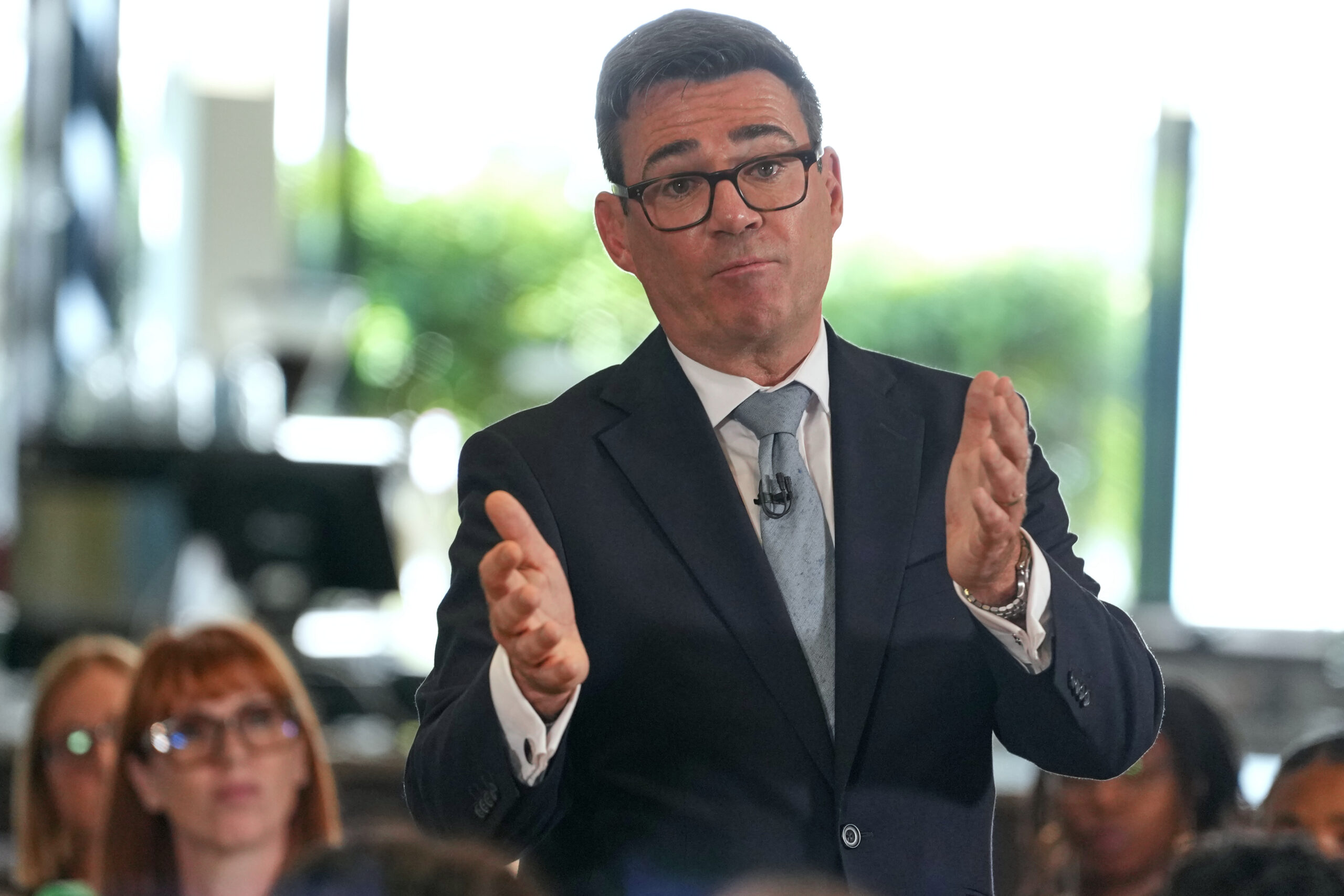
All is not well in the court of Andy Burnham. Despite the UK prime minister’s relentlessly buoyant disposition, cracks are beginning to form in the ruling Labour Party. A new divide is emerging between the more pragmatic ministers in the cabinet and the so-called “soft left,” particularly on immigration. And the bad news is that the sensible side may be losing.
When Burnham entered No. 10 and picked his cabinet, the decision to keep Shabana Mahmood in place as home secretary seemed to send all the right signals. Mahmood, championed by the socially conservative Blue Labour wing of her party, had long taken a tough line on mass and illegal migration, stressing the need to stop the English Channel crossings and to reduce the overall numbers of arrivals. Most importantly, she had proposed a series of reforms to what’s known in Britain as “indefinite leave to remain” (IRL), a form of permanent residency for migrants short of full UK citizenship. As things stand, migrants currently qualify for ILR—and access to Britain’s insanely generous welfare state—after just five years in the country. Mahmood proposed extending this qualifying period to 10 years in most cases, and 15 years in the case of health and care workers.
Mahmood drew up her reforms in response to the so-called “Boriswave.” These are the 2.5 million migrants who arrived between 2021 and the 2024 election, under the previous Conservative government, mostly to fill post-lockdown labor shortages. In 2022 alone, 1.2 million migrants arrived legally in the UK. In 2027, this cohort will start qualifying for ILR. This means they can stay in Britain forever, can start claiming benefits, and will have no obligation to remain in the sector that they were initially invited to work in. Unless something is done, the welfare bill could balloon and the social-care system could collapse.
At first, it seemed as if Mahmood had Burnham’s backing. But now his cabinet is in open revolt. Angela Rayner—the current housing and communities secretary and a former deputy prime minister with strong ties to the unions—has made plain her distaste for the ILR reforms, branding them “unfair” and “un-British.” In an interview with Sky News, Miattiah Fahnbullleh, the energy secretary, refused point-blank to say that she agreed with her colleague’s reforms. After the interview, Fahnbullleh joked that she was unable to give a straight answer as she had promised she would “never lie.”
Normally, such a public breach of collective cabinet responsibility would be a resigning matter. Fahnbullleh has since been forced to state that she “fully” supports the “government’s position on migration reform,” which is a telling remark. Either she is being dishonest, as she plainly does not support making it harder for migrants to gain permanent residence. Or she is telling the truth, and she knows that Mahmood has caved and the ILR reforms have been watered down behind the scenes.
Unfortunately, it seems the latter is the most likely. The reforms were due to be presented to parliament on October 14 and then immediately implemented, but this did not happen. Home Office internal documents show there is now no timeline for the reforms, meaning they will be delayed at best, shelved at worst. The potential for a fiscal crisis, caused by millions of new benefit claimants, may now be impossible to avert. The biggest blunder of the Boris Johnson era could soon be locked in forever.
The architects of this disaster are not radical leftists or open-borders fanatics, but a group whose politics it is more difficult to pin down. Those calling the shots in the Labour Party are members of the aforementioned “soft left.” They have no recognizable principles or philosophy, despite having absolute certainty in their moral superiority. They are guided not by socialism, Marxism, or trade unionism, but by what they think makes them seem like nice people. The urge to be seen to “Be Kind to Migrants” has thus put them on a collision course with Mahmood’s ILR reforms, no matter how dire the consequences of inaction could prove to be.
Ultimately, the soft left hold the whip hand because these are Labour MPs who put Burnham in Downing Street in the first place. These are the same MPs who scuppered Keir Starmer’s very modest reforms to welfare (it is “unkind,” apparently, to want to prevent millions of people from languishing for life on benefits). Indeed, they are the MPs who thought Starmer was incorrigibly right-wing (no laughing at the back).
Burnham’s recent backsliding on Brexit has proven to be catnip to this crowd. His flirtation with restoring “freedom of movement” with the European Union may also have been a ploy to keep the soft left sweet, even if it seemed guaranteed to infuriate the general public. (Even a plurality of left-wing Green Party voters think immigration levels have been too high.)
Still, there are some tentative signs that common sense could prevail in the coming weeks and months. Energy is one such area. Notably, Burnham has agreed to allow the Jackdaw gas field in the North Sea to be drilled, and reports suggest he may also approve drilling in the far larger (and far more CO2 polluting) Rosebank oil field. The soft left opposes both of these moves, as its members have succumbed to the delusion that Britain’s Net Zero zealotry is setting a good example for the world. But the fact that Britain can no longer afford these eco-indulgences seems to have forced Burnham’s hand.
We can only hope that the looming economic catastrophe of opening up the welfare state to millions of migrants starts to weigh on the prime minister, too. The UK will pay an extraordinary price if Burnham puts the whims of the soft left above the interests of the nation.
The post The ‘Soft Left’ Pushes Burnham Toward Migration Madness appeared first on The American Conservative.