He Sought Help for a Broken Leg That Wouldn’t Heal. The Hospital Treated Him for COVID — Then Declared Him Brain Dead

Image courtesy of The Defender

By

This article was originally published by The Defender — Children’s Health Defense’s News & Views Website.

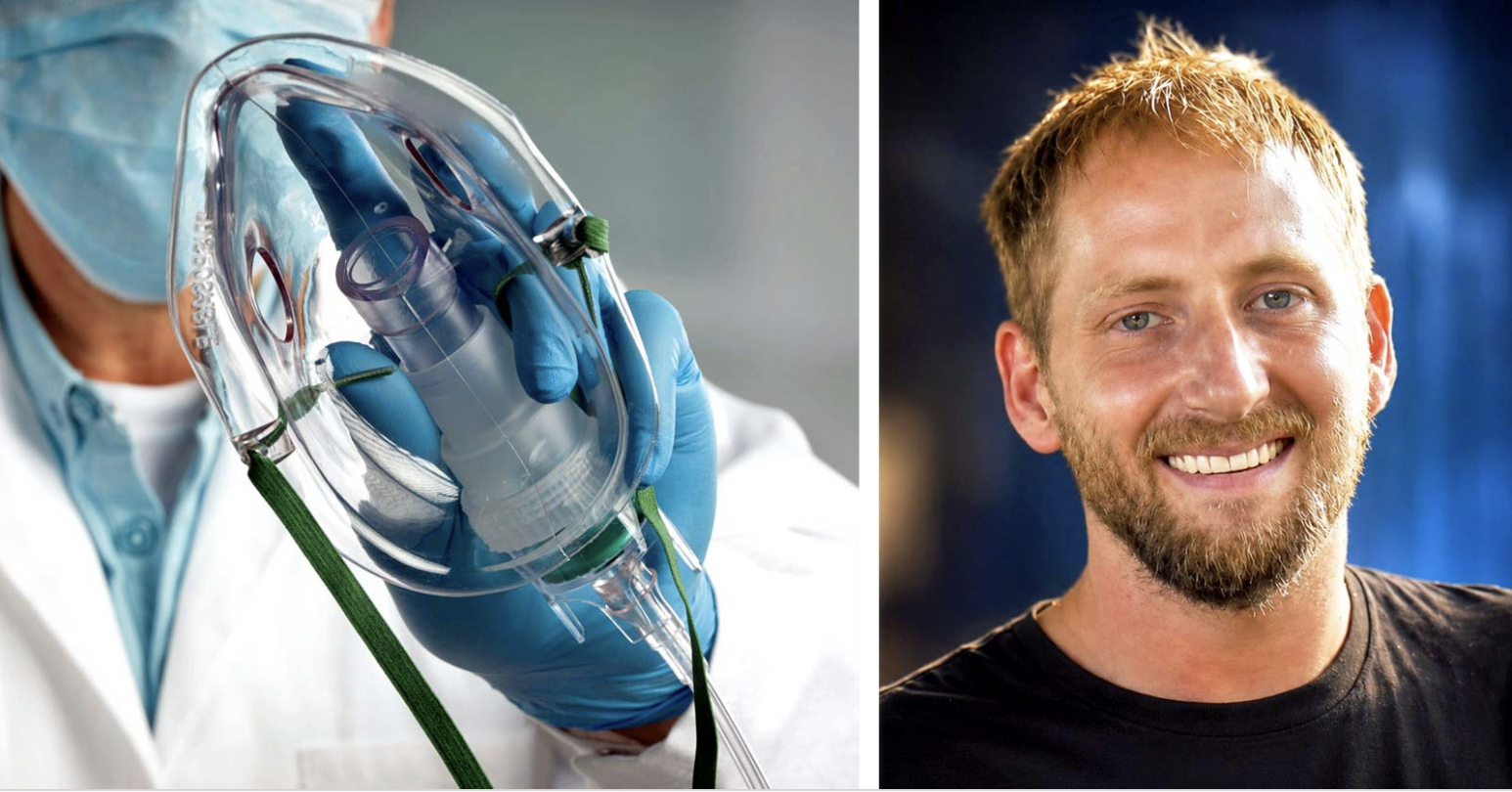
In 2020, Andy Hodge was leading a happy life. The 38-year-old licensed plumber, a single father of three, lived in Kentucky with his sister, Ellie Hodge Hayse, and her family — a life Ellie described as “perfection.”

That changed in August 2020, when Andy broke his left leg in a work-related accident. The accident, subsequent surgeries and hospitalizations, and a positive COVID-19 PCR test set off a cascade of events that led to his death on March 2, 2021.

In an interview with The Defender, Ellie detailed Andy’s hospital treatment, including COVID-19 hospital protocols, which she believes caused his death. She shared extensive documentation with The Defender to corroborate her story.

Ellie discussed the aftermath of Andy’s death, including finding inconsistencies in hospital documents that raise questions about the treatment he received.

After lawyers refused to take her case, she co-launched Dead Serious…Kinda Not, an advocacy group for families of COVID-19 hospital protocol victims.

“We can’t have a chapter where I can set it down and say, ‘This is what happened to my brother,’” Ellie said. “We don’t get that. We get nothing, and it makes me sad.”

Admitted for leg injury complications — but treated for respiratory issues

According to Ellie, Andy’s orthopedist, Dr. David Seligson, described Andy’s injury, which included a “crushed” ankle, as “one of the worst cases” he’d ever seen, and suggested the surgery to repair it would be complicated and high-risk.

Doctors at University of Louisville (UofL) hospital placed screws in Andy’s leg and prescribed a follow-up course of blood thinners and antibiotics.

Two months later, Andy began experiencing a “different” kind of leg pain. It turned out the screws were protruding from his ankle.

After running into delays — which UofL hospital attributed to being “short-staffed due to COVID” — Andy was scheduled for a second surgery.

The second surgery was also unsuccessful, and Andy continued to experience “horrible” pain. Yet, on Jan. 18, 2021, a nurse practitioner at UoL Orthopedics cleared him to return to work.

Still in pain, Andy visited the emergency room at Twin Lakes Regional Medical Center in Leitchfield, Kentucky, on Feb. 10, 2021.

But there, the staff didn’t focus on Andy’s leg. In a text message, Andy told Ellie that a nurse at Twin Lakes said, “We’re not worried about your leg right now. We’re worried about saving your life.”

Andy was admitted, placed on oxygen and prescribed a new round of antibiotics. Four days in, he said he was “feeling better,” but staff were ignoring complaints about his leg, which was still sore.

Andy told Ellie that if the hospital put him on a ventilator, to “please don’t let them shut it off.”

The next day, Twin Lakes doctors transferred Andy to Owensboro Health Regional Hospital (part of the same hospital system) for a bronchoscopy. Andy and Ellie asked that instead, he be transferred to Norton Hospital in Louisville. But Andy changed his mind because, as he told Ellie, his doctors told him he would die if he did not accept the transfer to Owensboro.

Little food or water — but five doses of remdesivir under the COVID protocol

Andy was admitted to Owensboro on Feb. 17, 2021, in stable condition. Though doctors initially told them Andy was being transferred for a bronchoscopy, hospital records listed it as an “emergency transfer” for respiratory issues.

“What I can say isn’t in the notes anywhere is his leg. They didn’t check it. They didn’t even acknowledge it,” Ellie said.

Ellie later learned that Andy was tested twice for COVID-19 on Feb. 17, 2021. While his nasal swab test was negative, PCR testing by physician and Owensboro board member Dr. Jason Mills was positive — so the hospital initiated its COVID-19 protocol.

The next day, Owensboro gave Andy the first of five remdesivir doses. According to Ellie, hospital staff also didn’t offer Andy much food or drink and didn’t administer “maintenance medications that he needed every day” for his leg.

Hospital staff told Ellie that the COVID-19 protocol didn’t allow other treatments to be administered, as doctors would be unable to “scientifically say” whether it was the protocol medications or other medications that succeeded in treating him.

They also told Ellie that Andy couldn’t receive visitors due to a 14-day “isolation protocol.” She later learned that she had the right to visit Andy twice a day, despite the protocols.

Placed on a ventilator after a stroke was left unaddressed for hours

On Feb. 20, 2021, Andy told Ellie he was “doing better” and was being relocated to a room on the COVID-19 floor.

However, while Andy appeared in good spirits during a video call, he complained of a headache and said hospital staff kept telling him that “everything is COVID.”

By the next morning, Ellie awoke to the news that Andy had had a stroke — and to a message Andy sent the previous evening, shortly after the call ended, that included a photo that showed his lip sagging.

Andy insisted he hadn’t had a stroke, but Ellie learned that he was diagnosed with a stroke at 1:20 a.m., nearly two hours after Andy’s text message, and wasn’t treated until 4:38 a.m., outside the three-hour window for administering a tissue plasminogen activator, a time-sensitive treatment for ischemic strokes.

According to hospital documents, physicians wrote that the decision not to provide a tissue plasminogen activator was “also complicated by the fact that patient just received prophylactic Lovenox,” a blood thinner, shortly before his stroke.

Ellie and other relatives remained on a video call with Andy throughout that day — not knowing that it would be the last time they would speak with him.

Late that evening, without his family’s knowledge or approval, Owensboro staff placed Andy on a ventilator. The news caught Ellie by surprise — and was accompanied by evidence that Andy had resisted being ventilated.

“I wake up, and he’s vented. They didn’t ask permission. He was restrained to the bed. They said he was fighting the vent … I can imagine that maybe he was trying to tell them he didn’t want the vent, and they forced it,” Ellie said.

Ellie said she implored the nurse, and several other doctors in the days that followed, to examine Andy’s leg, but to no avail.

Instead, doctors and hospital staff repeatedly told her that Andy “wouldn’t make it” and that she was being “inhumane” for keeping him on a ventilator.

On Feb. 23, 2021, Andy received his final dose of remdesivir.

It wasn’t until Feb. 24, 2021, that a physician at the hospital told Ellie that a blood clot had been found in Andy’s right leg. However, Ellie later learned physicians had previously observed a clot. The same physician claimed he tried calling her — but he had been calling Andy’s phone instead.

Rather than address Andy’s leg troubles, doctors instead tracked Andy’s condition through what Ellie later found out were “window visits” — visually observing Andy through the window of his hospital room, “due to COVID.”

Hospital claimed Andy was brain-dead, but family saw signs of consciousness

By Feb. 26, 2021, doctors at Owensboro declared Andy brain-dead, based on a test performed a day earlier. Ellie said the test was questionable.

“If you look at the records, it says, ‘This test cannot be used to deem brain death due to patient is on a paralytic.’” Ellie learned that a medical student had given Andy a paralytic, typically used only during surgery to block muscle movement, on the same day as the test that was used to determine his brain death.

On Feb. 27, 2021, Ellie made a video call to Andy’s phone with a nurse present in his room. Elli and other family members decided to “talk to him and stimulate his brain and tell him we’re there, we love him, to keep fighting.”

“Every time I would speak to him, his blood pressure would go up, way up. You could see life,” Ellie said.

The nurse in the room with Andy, “Angela,” agreed with Ellie — or seemed to. Later that day, with the video call still in progress, another nurse, “Rachel,” entered Andy’s room to siphon fluids out of his mouth, causing him to gag — another sign he wasn’t brain-dead.

But instead of pursuing this, the nurse disconnected Andy’s phone when the call ended. The next day, Ellie learned that the nurse had shut Andy’s phone because she felt it was a “liability” to be recorded on the job.

Ellie and her husband finally visited Andy on Feb. 28, 2021. Once more, Andy showed signs of life when he heard Ellie’s voice.

“When I start talking, his blood pressure starts going up. Those doctors saw that. They were right behind me,” Ellie said. By the next day, Ellie said hospital staff were giving her “all kinds of promises” and were claiming they were “sorry for the misunderstanding.” Yet, “they still weren’t acknowledging his leg.”

It was at this time that Seligson, who had originally treated Andy’s leg, contacted Ellie. She said he sounded “traumatized, terrified” at the news of Andy’s condition and his treatment at Owensboro. He told her he would visit Andy the next day and to tell the hospital to simply “keep him on the ventilator.”

But when Ellie informed the hospital about Seligson’s planned visit, the hospital ethics committee said it had already met that afternoon, without her knowledge, and had changed Andy’s status to “DNR.”

The committee also decided to place a sign at the door to Andy’s room, prohibiting anyone from treating him.

Ellie said that when she and other family members questioned hospital staff about changing Andy’s status and threatened legal action, they were told — in a message they recorded — that the decision of the ethics committee “trumps” any court order.

Did the hospital intend to harvest Andy’s organs?

On March 2, 2021, Andy was declared dead. Ellie’s mother learned of Andy’s death in a rushed phone call from Dr. Brad Brasher, one of the physicians treating Andy.

“He told my mom that Andy passed away, his heart stopped, that he hopes that this gives some closure, and he’s very sorry,” Ellie said.

The aftermath of Andy’s death led to a series of eye-opening revelations for Ellie, through her examination of the documents, interactions with entities involved in Andy’s care and his funeral, and discussions with outside physicians and experts.

Ellie learned that the Kentucky Organ Donor Affiliates — later known as Network for Hope — was at Andy’s bedside on at least three and as many as six occasions while he was on a ventilator. During this period, Ellie recalled that an Owensboro physician asked if Andy was an organ donor.

Earlier this year, the U.S. Department of Health and Human Services (HHS) shut down Network for Hope after a whistleblower reported incidents of the organization attempting to harvest organs from living patients.

Ellie said she can’t be certain whether Andy’s organs were left intact or if any were harvested. “I can’t say that they did, but I can’t say that they didn’t. I’m going to leave it at that. But they better hope they didn’t.”

Owensboro did not perform an autopsy on Andy after his death. The funeral home, which collected Andy’s body directly from the hospital, subsequently embalmed him.

Ellie’s review of Andy’s hospital documents after his death revealed further inconsistencies or details that she was previously unaware of. These included:

  • The use of “multiple” lethal cocktails of sedatives and paralytics, including morphine, fentanyl, ketamine and Precedex. Ellie suggested this was done to put Andy “in a coma with medication” to support the claim he was brain-dead.
  • Andy’s ventilator failed three times in one day and stopped providing Andy with nitric oxide. Ellie learned that the U.S. Food and Drug Administration recalled the model used in the hospital later that year due to malfunctions.
  • Andy’s charts showed that he lost 41 pounds in 21 days at Owensboro. Ellie said this is a sign he was not fed properly.
  • Andy’s records showed no evidence at any time that he had developed COVID-19 antibodies, casting doubt on the accuracy of the positive PCR test.
  • An independent physician who analyzed Andy’s records on behalf of his family determined that Andy’s bronchoscopy was performed to “pull a positive” PCR test result. He also determined, through analysis of Andy’s hospital photos, that Andy’s injured leg lacked blood flow and was discolored.
  • Despite COVID-19 being listed as Andy’s cause of death, the “died of communicable disease” check box on his post-death toe tag was unchecked.
  • Andy’s records also include the names of personnel “that don’t even exist,” including a registered nurse purportedly by the name of “Paula Brasher.”

In the aftermath of Andy’s death, possible conflicts of interest came to light

Despite what Ellie believes is compelling evidence of hospital wrongdoing, she said she has faced difficulty pursuing legal action.

“I have called probably every lawyer in this state. I have probably called every lawyer that has a license to practice law outside of their states. Every single time, I get the same exact answer: ‘Oh, you’ve got a case, but unfortunately, we’re not going to be able to handle it,’” Ellie said.

Ellie said the Public Readiness and Emergency Preparedness Act of 2005 (PREP Act) poses a significant barrier. The law provides the manufacturers of emergency countermeasures used during public health emergencies, including the COVID-19 pandemic, and those who administer the products, with a legal liability shield.

Ellie filed a work-related workers’ compensation claim, partly to bypass the PREP Act. The claim was successful. She later learned the company that paid the claim was Sedgwick, which also served as Owensboro’s third-party administrator — a potential conflict of interest.

Ellie also learned that in January 2021, weeks before Twin Lakes insisted that Andy transfer to Owensboro Health Regional Hospital, Owensboro had acquired Twin Lakes.

“If you dig deeper, you’ll see that Owensboro also had already planned to take Twin Lakes COVID medical patients, and the very day Andy was transferred is the day that Owensboro became the big COVID spot in Kentucky,” Ellie said.

‘We can get accountability. We can protect our kids’

Ellie said she has taken matters into her own hands by launching Dead Serious…Kinda Not, an informal group that “welcomes anybody who has lost a hospital protocol patient.” The group is active in about 30 states.

“We can use our voices and our stories,” Ellie said. “We connect dots and get the medical records,” using a tool her group developed that analyzes medical records, puts them in chronological order and “can point the red flags out.”

Dead Serious…Kinda Not co-organized a remembrance event in Washington, D.C., for COVID-19 hospital protocol victims on Sept. 27-28, with family members as speakers.

“We’re going to get names read … and they’re going to be remembered. We’re going to do slideshows and we’re going to do photos,” Ellie said before the event.

“Will we ever get justice? No. It’s never there to be had. But we can get accountability. We can protect our kids, children that are going to have these same issues if we don’t change them now.”

This article was originally published by The Defender — Children’s Health Defense’s News & Views Website under Creative Commons license CC BY-NC-ND 4.0. Please consider subscribing to The Defender or donating to Children’s Health Defense.

The post He Sought Help for a Broken Leg That Wouldn’t Heal. The Hospital Treated Him for COVID — Then Declared Him Brain Dead appeared first on The Gateway Pundit.

Join Joe Hoft, Mel K, John Eastman, Esq and Michael Jaco at New California Event Thursday and Friday in San Juan Obispo

Join Joe Hoft, Mel K, John Eastman, Esq, and Michael Jaco at the New California Event on Thursday and Friday in San Juan Obispo.

Get your tickets here.

The Crisis in California

California is the most dramatic illustration of the problem. It is the most populous state in the Union, with roughly 39 million people. A handful of coastal metropolitan regions — Los Angeles, the San Francisco Bay Area, and Sacramento — dominate its politics, culture, and policy. The result has been a generation of governance that many inland, northern, and rural Californians experience as tyranny.

High taxes and a hostile business climate have driven companies and families out. Open-border policies and sanctuary rules have strained public services and public safety. Destructive wildfires have been worsened by forest mismanagement. Homelessness remains a visible crisis on city streets even when official counts claim improvement. Elections have repeatedly returned the same leadership despite widespread dissatisfaction outside the urban cores. Rural counties find themselves governed by a legislature and executive whose priorities and values are alien to their communities.

The fundamental issue is structural. When one or two urban centers can permanently outvote the rest of a vast state, democratic accountability collapses for everyone outside those centers. The people who produce the food, the energy, the timber, and much of the practical work of the state are reduced to permanent political minorities in their own homes.

This is not a temporary policy disagreement. It is a constitutional and cultural mismatch that cannot be fixed by ordinary elections inside the existing state boundaries. The only peaceful, lawful, and American remedy is division.

The West Virginia Model: How a New State Was Actually Formed

Article IV, Section 3 of the United States Constitution provides the path: “New States may be admitted by the Congress into this Union; but no new State shall be formed or erected within the Jurisdiction of any other State; nor any State be formed by the Junction of two or more States, or Parts of States, without the Consent of the Legislatures of the States concerned as well as of the Congress.”[1]

The critical historical question is what happens when the existing state government refuses consent — or has itself rejected the authority of the United States. West Virginia answers that question.

When Virginia seceded and joined the Confederacy, the people of the northwestern counties refused to go along. Those counties wanted to remain loyal to the Union and free of slavery. Because the Confederate government of Virginia would never consent to their departure, the people of those counties did not wait for permission. They organized themselves.

Delegates from the loyal counties met, formed their own constitutional conventions, and created their own government. They established a new legislature (a Senate and a House of Delegates) based on the counties that wished to separate. They chose their own executive and began building the judicial institutions of a functioning state. In short, they did not rely on the existing Virginia government to “okay” their exit. They created a complete constitutional body themselves — a new legislature, executive, and framework of laws — resting on the consent of the people of those counties.

Congress then recognized that new government. In 1863 West Virginia was admitted to the Union as a new state. The United States accepted the legitimacy of the government the people of the region had formed. The hostile, seceded Virginia government was not allowed to veto the process. The people of the separating region, acting through their own representative institutions, and the Congress of the United States were sufficient.[2]

There is a precedent and a need.  Join the courageous people of New California.

The post Join Joe Hoft, Mel K, John Eastman, Esq and Michael Jaco at New California Event Thursday and Friday in San Juan Obispo appeared first on The Gateway Pundit.

Socialist Running for Congress in New York Wants Democrats to Pass a ‘Trans Bill of Rights’ if They Win Midterms (VIDEO)

Screencap of YouTube video.

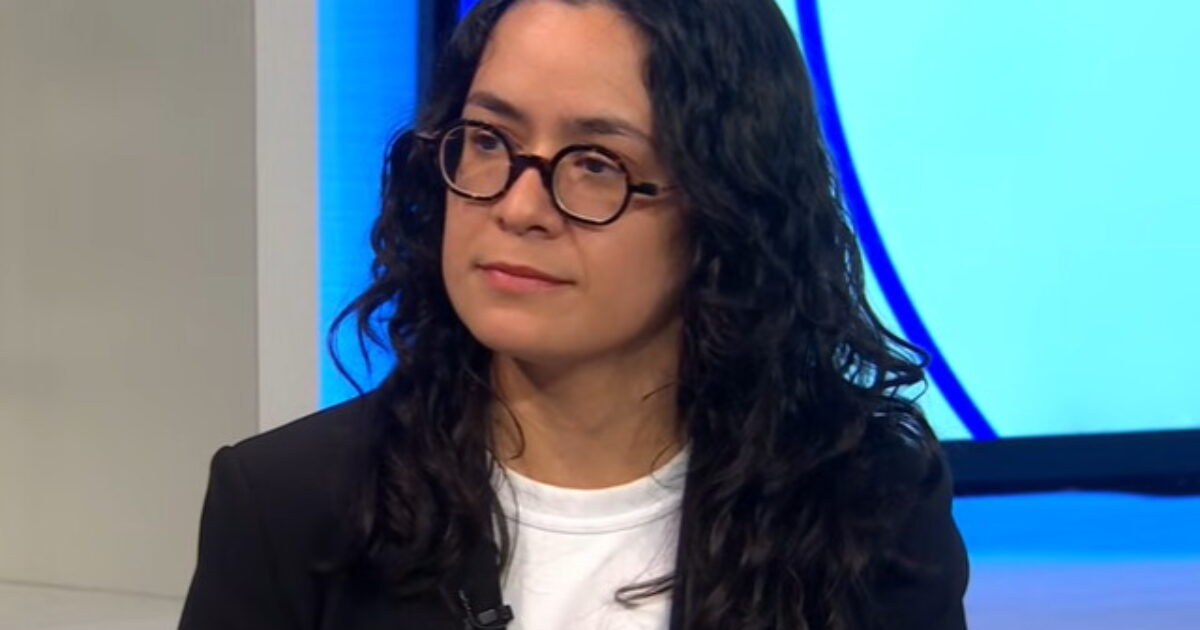
Claire Valdez is a DSA type Democrat running in New York’s 7th Congressional District.

During a recent podcast appearance, Valdez describes meeting with House Minority Leader Hakeem Jeffries and says that she brought up several issues that are important to her, including a ‘trans bill of rights’ which she wants Democrats to pass if they win the midterms.

Democrats have made it clear that they will not let go of the trans issue, no matter what the public thinks. There is simply too much money in the LGBT activist community and the Democrats need it to run campaigns.

Breitbart News reports:

Socialist Democrat Nominee Claire Valdez Says She Pitched ‘Trans Bill of Rights’ to Hakeem Jeffries

Socialist Claire Valdez affirmed that a “trans bill of rights” is among the top issues that she wants Democrats to deliver on if they take back control of the U.S. House of Representatives.

Valdez and Avila Chevalier were also asked if they had spoken to House Minority Leader Rep. Hakeem Jeffries (D-NY) about issues like whether ending the war with Iran is a “condition” for “supporting him as speaker” if Democrats take control of the U.S. House.

“We saw the reporting that Hakeem Jeffries has reached out to you guys, and that you’ve talked with him,” cohost Holly Pretsky said. “Is this something you talked to him about as a condition for, maybe, supporting him as Speaker should Democrats take the House back?”

“We haven’t talked about — we haven’t had that kind of conversation, but I, you know, in my conversation recently I wanted to emphasize how important certain issues were in my district and that were defining parts of my race, and that includes the war,” Valdez responded. “It includes the genocide, Medicare for all, Trans Bill of Rights, like, there are a lot of things that I ran on that I want to deliver for my district, and I think it’s our responsibility to do exactly that.”

Watch the video:

Why does the trans community need its own bill of rights?

Did you notice that the question is never even asked?

The post Socialist Running for Congress in New York Wants Democrats to Pass a ‘Trans Bill of Rights’ if They Win Midterms (VIDEO) appeared first on The Gateway Pundit.

Republicans Starting to Realize They Have a Shot at Picking Up a Senate Seat in Minnesota With Michele Tafoya (VIDEO)

Screencap of Twitter/X video.

Michele Tafoya, the former sports broadcaster running as a Republican in the Minnesota Senate race, is hitting the campaign trail hard and voters in the state are taking her very seriously.

This could be the sleeper race of 2026. Even John Thune has been in Minnesota campaigning with her.

Tonight on FOX News, Bret Baier devoted an entire segment to Tafoya’s rise and the fact that the GOP increasingly sees this election as a possible pickup in the Senate.

The issue of fraud is taking a toll on Democrat candidate Peggy Flanagan.

Watch the whole thing:

Alpha News of Minnesota has done a report on how Thune is trying to help Tafoya in the state:

Republican U.S. Sen. John Thune of South Dakota, who serves as Senate majority leader, traveled to Minnesota Tuesday to join Michele Tafoya for a series of campaign stops as polling continues to show a tight race for Minnesota’s open U.S. Senate seat.

Thune and Tafoya visited Cambria, where they met with company leadership and workers before participating in an agricultural roundtable with farmers hosted by the Minnesota Farm Bureau, which has endorsed Tafoya’s campaign. The visit also included a fundraiser for Tafoya’s campaign that raised nearly $300,000.

“The best farm policy comes from producers, from people who are actually out there making a living on the farm,” Thune said during a press conference at Pfarr Family Farm in Le Sueur. “We can have all these meetings in Washington as we’re talking about policy, but there’s no substitute for getting out and hearing firsthand from the people who are actually out there producing the food and fiber that feeds and clothes and fuels our world.”

Thune said securing year-round E15 remains one of his priorities as Congress works on a new farm bill, calling it “enormously helpful and important.”

“If you want to see fuel costs go down, create more supply of fuel, and we can do that with E15,” Thune said.

Democrats will absolutely lose their minds if they lose this seat in the Senate.

The post Republicans Starting to Realize They Have a Shot at Picking Up a Senate Seat in Minnesota With Michele Tafoya (VIDEO) appeared first on The Gateway Pundit.
Undercover Recording Suggests James Talarico Campaign is Disregarding Black Voters (VIDEO)

Man in a suit with a concerned expression, sitting in front of a blurred Texas flag background.

Man in a suit with a concerned expression, sitting in front of a blurred Texas flag background.
James Talarico

In the Texas Senate race, far left Democrat James Talarico has had an ongoing issue with black voters. His primary opponent Jasmine Crockett has said repeatedly that she believes racism played a major role in the primary and perhaps many black voters agree with her.

There is a newly surfaced recording of the vice chair of the Texas Democrats, Sheena Flanary, who is black, and she describes being basically dismissed by the James Talarico campaign, even when she tried to offer support.

The details are pretty damning.

Transcript via Newsbusters:

Crockett Supporter: “We put in a lot of work, you know, to get Jasmine in. And then, what I felt like I saw, is that, you know, that they chose the White guy, is what it felt like.”

Sheena Flanary: “Yeah.”

Crockett Supporter: “You know what I mean?”

Flanary: “Yeah.”

Crockett Supporter: “It felt very, um, kind of racist.”

Flanary: “Yeah.”

Crockett Supporter: “The way it was done, just felt really like intentionally racist and sexist.”

Flanary: “Yeah. You’re not wrong. I felt it, too. And, I tried to reach out a few times and it wasn’t receptive and reciprocated. And, I’m like, ‘I’m not, why am I trying so hard? So.”

Crockett Supporter: “Oh, you mean reach out to like the Tala…(sic)?”

Flanary: “Yeah, the campaign. I’ve had a bad taste in my mouth from a few interactions that I’ve attempted to actual reach out to them, with no requests for anything, you know, on my behalf, just, you know, to try to support – and I was kind of rebuffed.

“And, I’m like, ‘Okay, so do you want Black people to help you or you don’t want Black people to help you?’ It was kind of weird.

“I mean, even me and my husband even offered to do a fundraiser for him. So, he didn’t even want our money. Which is so weird because, before this, I thought we were kind of cool.”

Crockett Supporter: “So, he’s making all these, kind of like, you know, statements to, sort of like, ensure Black support – like he would support reparations and blah, blah, blah, blah – but, it feels like you said, a little bit too late and I feel like he’s just trying to pacify Black people who he’s largely overlooked.

“Like, he has not been looking out for Black people.”

Listen to the clip below:

In related news, James Talarico has been kind of missing lately.

Is his campaign imploding?

The post Undercover Recording Suggests James Talarico Campaign is Disregarding Black Voters (VIDEO) appeared first on The Gateway Pundit.
Trump Gives Brazil’s Bolsonaro a Boost

Trump Gives Brazil’s Bolsonaro a Boost

The administration has sought to influence elections in Latin America.

BRAZIL-ELECTION-RUNOFF-CAMPAIGN
(Sergio Lima / AFP via Getty Images)

Brazilians cast their votes Sunday in the first round of an election that the polls predicted would be very close. It was, though the polls failed to predict which candidate would take first place. Flávio Bolsonaro, the right-wing son of the previous president, Jair Bolsonaro, beat the incumbent left-wing President Luiz Inácio Lula da Silva by 2 points, 47 to 45 percent. Since Bolsonaro failed to secure an outright majority, a runoff will be held on October 25.

Da Silva said, “I confess I was convinced I would win the election in the first round.”

There are several reasons for Bolsonaro’s unexpectedly strong performance. But one of them is the Trump administration’s role. It would not be the first time the U.S. has interfered in a Brazilian election, or even be the second.

In 1964, the U.S. cooperated in the coup that removed João Goulart from power, beginning a military dictatorship that would govern Brazil for the next two decades. The evidence that Washington cooperated in the coup is well documented. President Lyndon B. Johnson said he was “prepared to do everything that we need to do” to assist. 

Years later, when Dilma Rousseff was removed in a coup whose leading players were allies of the American government, the U.S. implicitly recognized the new coup government by welcoming one of its key representatives to Washington.

Lula, Brazilian intelligence, and a small group of U.S. senators have all accused the Trump administration of interfering in Brazil’s current election as well. The three Democratic senators—Jeanne Shaheen, Peter Welch and Tim Kaine—accused the Trump administration of “an effort to interfere with, and potentially undermine, Brazil’s general election.”

That interference has taken many forms, including tariffs on Brazil. Flávio’s brother, Eduardo, had lobbied hard for those tariffs. The tariffs were not just about rebalancing trade. When Trump informed da Silva of the levies, the first two justifications he provided were “Brazil’s insidious attacks on free elections, and the fundamental Free Speech Rights of Americans.” The tariffs were clearly meant to help the Bolsonaros, who are Trump allies, and hamper da Silva, who has been a vocal critic of the Trump administration’s foreign policy. Mark Weisbrot, a Latin America expert and codirector of the Center for Economic and Policy Research, told The American Conservative that Trump made it clear that Brazilians would suffer “tariffs and other punishments if they do not elect Bolsonaro.” The threat was a repeat of Trump’s strategy of interference in the recent elections in Honduras. 

Flávio also successfully lobbied Trump to classify two Brazilian crime groups as terrorist organizations. The move was seen as a setback for da Silva, who opposed the classification, and a boost for Flávio Bolsonaro. Trump’s declaration that da Silva is “weak on taking on drug gangs” can be seen as further evidence that the effort was intended to undercut support for the current Brazilian president.

This was not the only lobbying done by Bolsonaros. Flávio has visited Trump in the White House, and Eduardo has met often with U.S. lawmakers.

Washington also tried to send State Department officials to Brazil “on a mission to cast doubt on the fairness and integrity of the country’s electoral system,” the Washington Post reported. The officials also planned to meet with Flávio Bolsonaro. Moreover, the Trump administration has directed funds to promote right-wing organizations including civil society groups in Brazil.

Weisbrot told TAC that “Bolsonaro has a media and social media advantage and a big money advantage,” and “Trump is playing a huge role because he so monopolizes the media.” This summer, as a Brazilian news outlet reported, the consulate in São Paulo invited anti-Lula influencers to participate in meetings on free speech.

And just two days before the election, the U.S. closed consular services in Brazil, citing security concerns. Da Silva has complained that the unusual move is meant to make the elections seem unstable.

It’s not clear to what extent Trump’s interference in the Brazilian election affected the results in the first round. But the fact that the Trump administration tried to influence the results is worth noting, if only to better understand its aims in the region.

Trump has demonstrated a pattern of interfering in Latin America’s presidential elections, in the last seven of which since the start of 2025 right-wing candidates have won. Trump has been less than reticent about the role he has played, boasting that Latin American politics features “lots of people that I got elected.” He has managed to help get “his people” into power in Colombia, Honduras, Argentina, Chile and Venezuela. Whether Bolsonaro in Brazil becomes the latest leader boosted into power by Trump remains to be seen.

The post Trump Gives Brazil’s Bolsonaro a Boost appeared first on The American Conservative.

The Coming Age of Austerity

The Coming Age of Austerity

Worrying about the fisc is uncool, but the alternatives may prove worse.

US-ECONOMY-DEBT

When the author was young, lo! these many slipping years ago, one of the faddish ways people with degrees would complain about the world was to talk about “austerity,” a dirty word in the same vein as “neoliberalism” and a few other choice terms that were soon replaced by the new vocabulary of griping furnished by the then-cutting edge identity politics.

The basic argument was that government spending and headcounts declined after the initial spasms of emergency legislation dealing with the 2008 financial crisis. In the subsequent period of low interest rates, the argument ran, there was more latitude for aggressive government spending to solve whatever structural economic problems you thought ailed the country.

While this line of argument was deployed mostly as a socially acceptable way to grouse about Barack Obama for college-educated young people, a dispositionally disgruntled demographic, it did contain a kernel of insight. There were (and are) real causes of concern about our system, particularly financialization and stagnation; it is easier to do something when credit is cheap.

The details undercut this simple picture somewhat. While total government spending declined, federal spending still grew steadily, and it is federal spending specifically, not total government spending, that is the primary variable for the national debt. Nor was government spending necessarily a political winner: The bank and auto company bailouts were spectacularly unpopular, and quantitative easing ended up bolstering financial institutions’ cash reserves more than stimulating any kind of tangible growth. Hence the Tea Party revolution, which was, in its strange way, the right-wing counterpart of the Occupy movement.

In any case, whatever pretensions to austerity were still hanging around flew out the window during Covid and the Biden presidency. Joe Biden, for better or worse, had the sort of visionary scope that Obama eschewed. In addition to a second, larger, and probably unnecessary round of Covid stimulus, there were packages for green energy, the semiconductor industry, and a grab-bag of other causes and interests on whom the sun of Washington smiled for a season. The result was, perhaps predictably, the worst bout of inflation the country had suffered since the ’80s. 

It turns out that Americans loathe inflation, which is pretty amusing for someone who spends a lot of time writing about parts of the world where a 20 percent inflation rate barely warrants comment. They delivered unified government to the Republicans in 2024 on inflation, and they seem primed to throw them out of Congress this year on the same grounds. (Although the residual classical monetarist in me would like to distinguish between supply shocks and inflation simpliciter.) At the same time, the Trump administration has an ambitious if not always coherent program that needs to be paid for and that only minimally involves the legislature’s oversight. 

Bond markets have been going berserk as a result, tightening credit even apart from the Federal Reserve raising benchmark interest rates. This is less than ideal: Tightening credit cramps growth, and growth declining means there will be less revenue filling the kitty at the same time that servicing the American sovereign debt is getting more expensive. 

Something’s gotta give here. Either the American people will have to make their political peace with running the economy hot and the consequent inflation, or real austerity will come and wash all this spending off the streets. A debt crisis could force the issue. 

Fiscal hawks have had a bad habit of predicting catastrophes that don’t come on schedule. I’m not an economist or a financier, so I won’t pretend to know whether the decisive moment will be next year, or in 2028, or further down the road. Yet it is simply true that servicing government debt is becoming thematic: At $1.2 trillion annually, it accounts for 19 percent of annual federal spending, a line-item second only to Social Security. More money going to interest payments, even short of some sort of cataclysmic reckoning, will simply continue to drag on other spending priorities. By hook or by crook, the government will be doing less.

This condition comes at a bad time in American politics. The Democrats are currently duking it out among themselves over whether a little socialism or a horse’s dose of it is the winning formula. The Republicans have also decided they don’t mind cranking on the taps for their own pet priorities, whether it’s blowing up mullahs or trying to get middle-class women to have children. An actual statesman running for president in 2028 would be sounding the alarm, trying to ameliorate or obviate the crisis before it happens. In the real world, however, it looks like the politicos will do what politicos always do: pass the buck and hold on for dear life. When the music stops, though, it is unlikely to come back on for a long while. Welcome to the Age of Austerity.

The post The Coming Age of Austerity appeared first on The American Conservative.

REVEALED: American Airlines M*sturbator Identified – Drunk Woman Caught on Camera Touching Herself

Credit: Wikimedia Commons

The woman who allegedly removed her clothes and began pleasuring herself on an American Airlines flight last month has been identified, and bystander footage of the woman’s mile-high stunt has surfaced. 

The Gateway Pundit previously reported on this incident, but the woman had not been identified at the time, and it was unclear what exactly happened.

American Airlines Flight 1779 was en route from Baltimore/Washington International Thurgood Marshall Airport to Miami International Airport on September 11 when the unruly passenger removed all of her clothes and started touching herself, according to a flight attendant onboard.

“FA1 REPORTS THAT PAX IN SEAT 9DEF HAS TAKEN OFF ALL HER CLOTHES AND WAS SEEN BY OTHER PAX TOU* HERSELF IN AN INDECENT MANNER. FOM SAYS THIS MUST BE REPORTED TO IOC/OSM AND HAVE ,” a message on the Aircraft Communications Addressing and Reporting System read.

She was subsequently detained upon landing in Miami.

Woman Detained for Stripping and Performing Indecent Acts on American Airlines Flight


According to the New York Post, the woman was a 46 year-old bartender from Maryland. She was confronted by a flight attendant during the incident, and she put her clothes back on then “fell asleep for the remainder of the flight.”

The woman had reportedly admitted to having several drinks during her flight delay.

Video from the flight, obtained by TMZ, shows the woman lying on the row of seats with her legs against the window side and appearing to pleasure herself.

Police reported that Inzer had bloodshot eyes and “strong odor of alcohol” when she was questioned.

She has reportedly not been arrested or charged with a crime, and the FBI is currently investigating the incident due to jurisdiction uncertainty.

More from TMZ.

The post REVEALED: American Airlines M*sturbator Identified – Drunk Woman Caught on Camera Touching Herself appeared first on The Gateway Pundit.

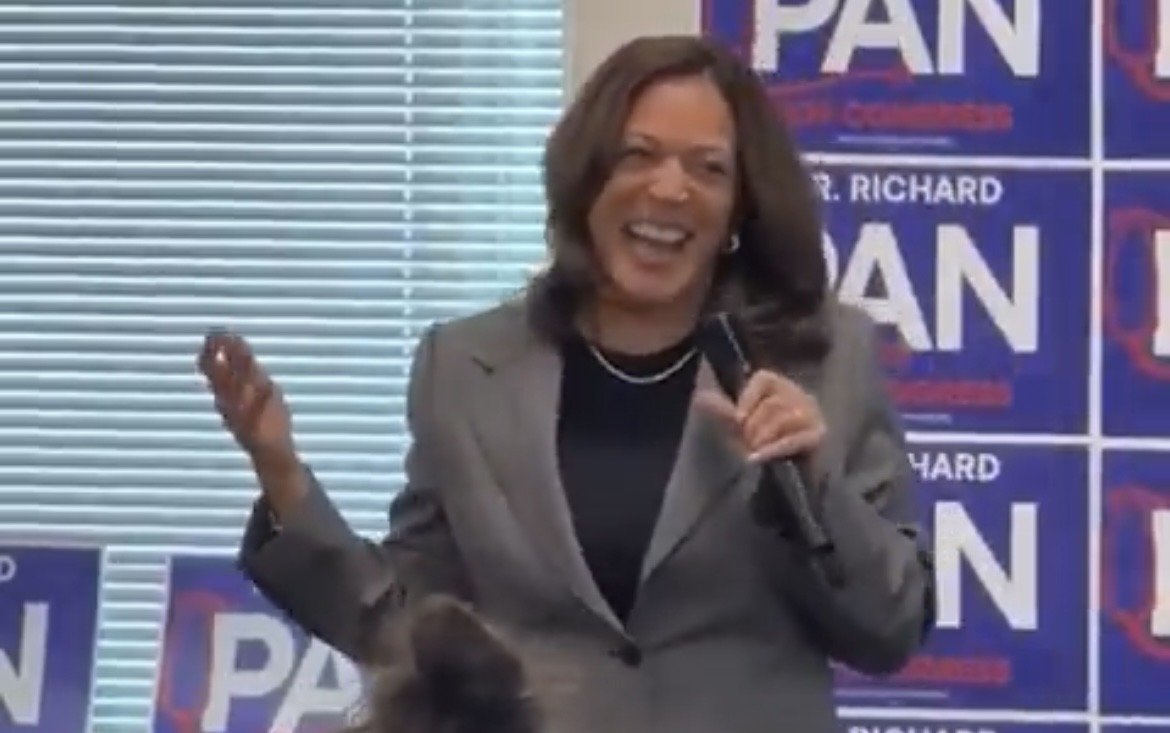
Crowd is Silent as Kamala Harris Maniacally Laughs During Campaign Event with Democrat Congressional Candidate Richard Pan (VIDEO)

Kamala Harris hit the campaign trail on Friday with Democrat Congressional candidate Richard Pan – and it was a disaster.

Dr. Richard Pan is a former California state senator who is currently running for California’s 6th Congressional District in the Sacramento area.

Pan is facing off against incumbent Republican-turned-Independent Rep. Kevin Kiley.

Kamala Harris and Richard Pan blocked reporters from covering the campaign event at Pan’s headquarters, according to KCRA:

Former Vice President Kamala Harris and Democratic Congressional candidate Richard Pan blocked some news organizations, including KCRA 3, from covering their public appearance in Sacramento on Friday.

Harris’ team and Pan’s team are blaming each other for the decision to exclude some journalists from covering the event.

While several other outlets, including two local TV stations, The Sacramento Bee and Los Angeles Times, covered Harris’ stop at Pan’s campaign headquarters, KCRA 3 was not invited and not approved to cover the event, Pan’s campaign confirmed.

A spokesman for Pan’s campaign told KCRA 3 on Friday night the decision to exclude not just KCRA 3 but also The New York Times, was at the direction of Kamala Harris’ team.

Richard Pan denied banning KCRA and other outlets from the event.

WATCH:

Maybe this is why Richard Pan and Kamala Harris didn’t want the press in the room…

Harris maniacally laughed as she tried to crack a joke (she sounded drunk).

The crowd was dead silent as Kamala Harris waited for them to join her in laughter.

“Please remember to shower!” Harris told the room full of campaign staffers at Pan’s headquarters, laughing.

The staffers sat there quietly and did not laugh.

WATCH:

The post Crowd is Silent as Kamala Harris Maniacally Laughs During Campaign Event with Democrat Congressional Candidate Richard Pan (VIDEO) appeared first on The Gateway Pundit.

Cornell Appoints Former Acting Attorney General Who Was Fired by Trump for Insubordination to Lead Investigation

As a tempest swirls around Cornell University amid a high-profile case of alleged sexual misconduct, the college has appointed a former acting U.S. Attorney General to investigate.

The bare facts of the polarizing 2024 incident are that a woman had sex with multiple members of a Cornell fraternity.

A lawsuit filed in September alleges the incident was gang rape at Cornell’s Chi Phi fraternity. The woman, identified as Jane Doe, said she was too intoxicated to consent to sexual activity and took ketamine under pressure, according to USA Today.

The lawsuit names seven males who belonged to the fraternity at the time, as well as the fraternity, the university, and others. Cornell investigated the incident at the time. The men involved have all denied allegations against them.

As noted by The New Yorker, a welter of confusing and contradictory evidence has appeared, much of which indicates what might be called revolting and reprehensible conduct, but the issue of rape is less clear.

For example, texts surfaced apparently inviting men to have sex with the women, while texts also surfaced in the immediate aftermath of the Oct. 19, 2024 incident, in which Jane Doe appears to brush off the evening.

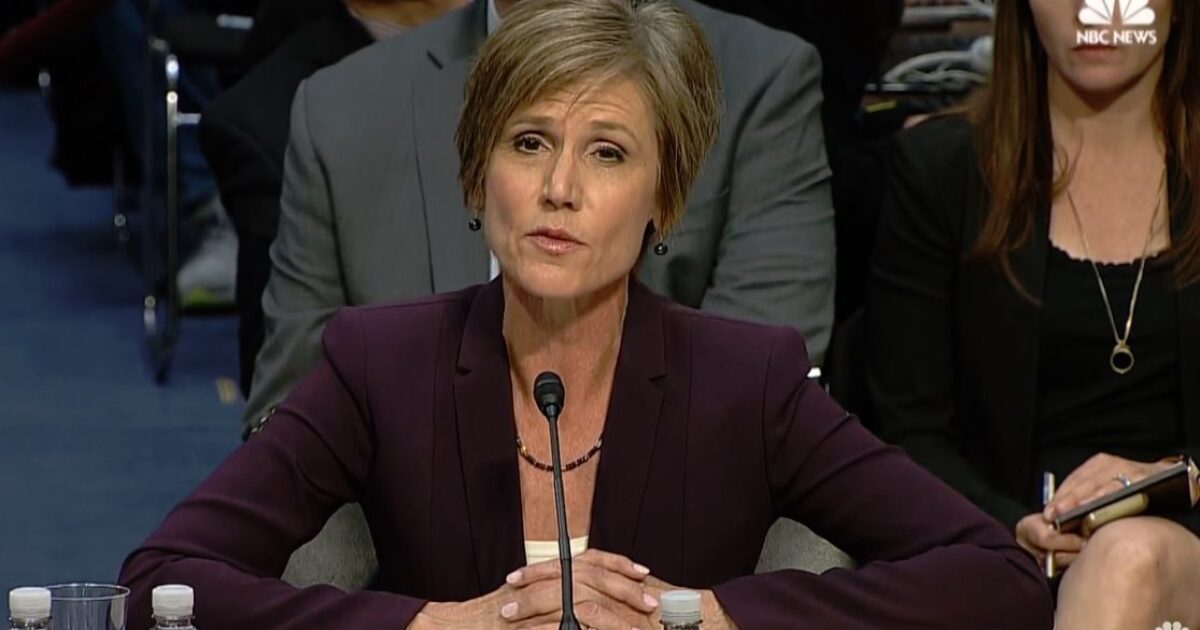
As the case makes headlines day after day, Cornell has responded by hiring Sally Yates to investigate.

Yates will join fellow Democrats Gov. Kathy Hochul and Attorney General Letitia James in investigating the case. Although she comes with service that included being the deputy attorney general at the Justice Department, and acting Attorney General after President Donald Trump took office in January 2017,  the appointee of former President Barack Obama also comes with the black mark of having been fired days into Trump’s term.

As noted by WNBC-TV, Yates was fired for refusing to defend in court Trump’s ban on immigration from certain countries. Trump called that an act of insubordination, saying she had “betrayed the Department of Justice,” and fired her.

But on Tuesday, Cornell said she had been hired “to lead a comprehensive independent review of how the University prevents and responds to sexual harassment, sexual assault and related misconduct on campus.”

Although the release announcing that Yates would be investigating said the scope was wide-ranging, it noted that “Yates and her team will conduct a detailed review of the University’s response to the allegations involving Jane Doe and members of the Chi Phi fraternity in October 2024, including whether Cornell followed its policies and procedures in responding to the matter.”

“Sally Yates brings extraordinary experience, independence and judgment to this work,” Anne Meinig Smalling, Chair of the Special Committee investigating the incident.

“The questions raised by the Jane Doe matter warrant a rigorous examination of Cornell’s response to that case, but our responsibility is broader. We have asked Ms. Yates and her team to examine Cornell’s overall approach to preventing and responding to sexual misconduct, identify where we are doing things well and where we can do better, and recommend changes that will help make our community safer,” Smalling said.

The review will also assess Cornell’s existing rules for responding to sexual assault allegations in the context of “Title IX, the Clery Act, the Violence Against Women Act’s Campus SaVE Act and New York State law, as well as recognized best practices in higher education for preventing and responding to sexual misconduct.”

Cornell said Yates “led U.S. Soccer’s independent investigation into allegations of abusive behavior and sexual misconduct in women’s professional soccer.”

Yates is a partner in the law firm King & Spalding.

This article appeared originally on The Western Journal.

The post Cornell Appoints Former Acting Attorney General Who Was Fired by Trump for Insubordination to Lead Investigation appeared first on The Gateway Pundit.