BUSTED: Turns Out Group Called ‘Republicans for Talarico’ Was a Completely FAKE SCAM

Man in a suit with a concerned expression, sitting in front of a blurred Texas flag background.

Man in a suit with a concerned expression, sitting in front of a blurred Texas flag background.
James Talarico

The Gateway Pundit recently reported on a group of supposedly ‘Republican Moms’ who claimed they were crossing over to vote for far left Texas senate candidate James Talarico. It looked very suspect.

Now we are learning that a group called ‘Republicans for Talarico’ is a completely fake scam.

Who could have predicted such a thing?

The Daily Wire reports:

‘Republicans For Talarico’ Exposed As Complete Scam

Leftist outlet MS NOW aired a segment featuring three Texas women who identified themselves as Republicans and vowed to cross over for James Talarico — but records show at least some of them have voted in Democratic primaries and donated to liberal candidates and causes.

Talarico, who has sparked backlash for his fringe views on Christianity, affection for transgender children, and disdain for the American flag, is banking on Republican crossover support to become the first Texas Democrat elected statewide in decades.

“Republicans for Talarico is as real as the six genders that Talarico claims exist, but has yet to explain what they are. This lame rebrand of White Dudes for Kamala is full of lifelong Democrat donors, activists, and other losers,” RNC spokesman Zach Kraft said in a statement to The Daily Wire.

That “rebrand” was put on display earlier this month when MS NOW aired a segment from the political show “Long Play,” featuring three white women from Tarrant County who portrayed themselves as disgruntled conservatives eager to vote for one of the most liberal candidates in Texas to run for federal office. The exchange went viral after Talarico’s campaign seized on the segment, dubbing the women “Republican Moms.”

During the segment, former school board candidate Mindy McClure described herself as a “moderate Republican,” but as the saying goes, follow the money. Federal Election Commission filings show McClure has repeatedly given through ActBlue to Democratic candidates and anti-Trump groups dating back to 2018, including the Lincoln Project and Kamala Harris’ 2024 presidential campaign.

Polls promoted by the liberal media continue to show Talarico ahead in this race, despite the fact that he is an absolute train wreck of a candidate.

The polling for Abdul El-Sayed in Michigan, which showed him winning by double digits was completely wrong. Same goes for Francesca Hong in Wisconsin.

It’s almost like the media and the pollsters are trying to influence races in favor of the far left. Almost.

The post BUSTED: Turns Out Group Called ‘Republicans for Talarico’ Was a Completely FAKE SCAM appeared first on The Gateway Pundit.

Trump Responds to WaPo Leak on His Secret Flight From Turkey and Plane Switch Amid Iranian Threat (VIDEO)

President Trump on Tuesday evening confirmed he secretly switched planes last month as he departed Ankara, Turkey.

Trump stopped to talk to reporters after he returned to DC from attending the Patriot Games final in Ohio.

A reporter asked President Trump about a leak to the Washington Post that revealed he secretly switched planes as he departed Turkey for the UK and used Air Force One as a ‘decoy.’

“It’s only up to the Secret Service. I just follow what they’d like to do. So, I go by the Secret Service and the military. They wanted me to go on a different flight, a different plane,” Trump told reporters.

“I guess there was a threat out there. I didn’t really ask too much about it,” Trump said.

“I think actually the plane that I flew on was at greater risk. I think it was at greater risk because that would be the plane I think that they would be more likely to go for,” Trump said.

WATCH:

President Trump took a secret flight from Turkey to the UK on an alternate military aircraft on July 8 after he was quietly moved from Air Force One due to an Iranian threat.

According to a leak to The Washington Post, Air Force One was used as a ‘decoy’ while President Trump flew on a smaller C-2A plane. Pool reporters thought they were flying with President Trump from Turkey to the UK.

However, President Trump was quietly moved from Air Force One to the smaller plane by jumping into an airport catering truck.

The post Trump Responds to WaPo Leak on His Secret Flight From Turkey and Plane Switch Amid Iranian Threat (VIDEO) appeared first on The Gateway Pundit.

The Government Faces High-Stakes Search-and-Seizure Challenges in Virginia

The Government Faces High-Stakes Search-and-Seizure Challenges in Virginia

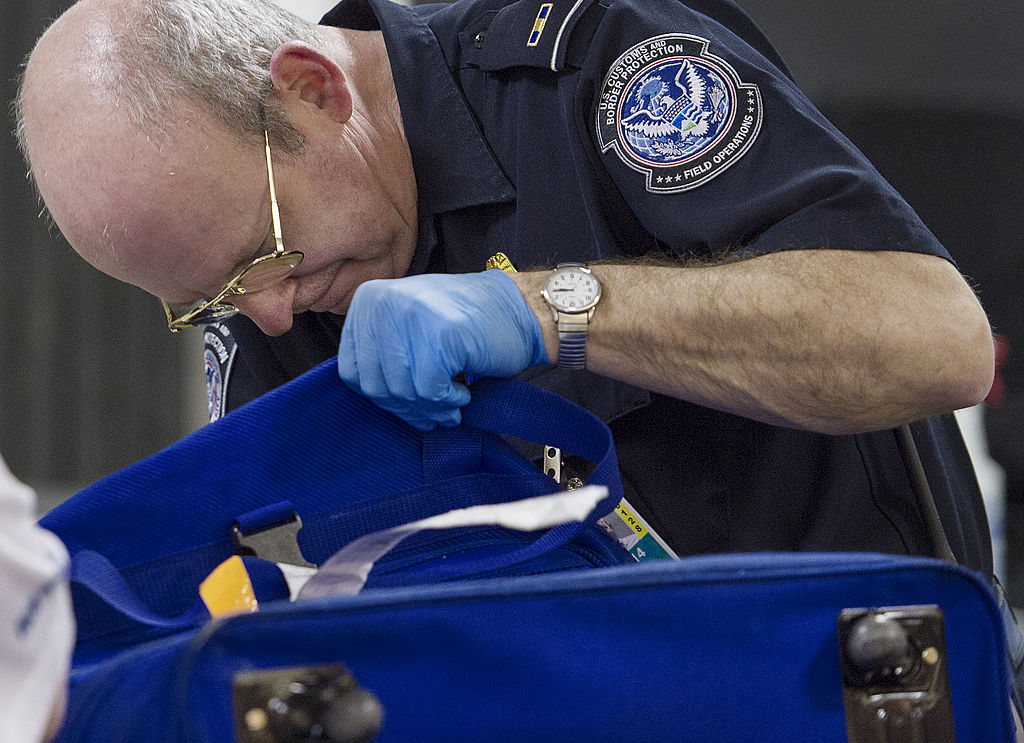
Federal law enforcement’s ability to take phones at the border is being challenged in court.

US-TRAVEL-AIRPORT
(PAUL J. RICHARDS/AFP via Getty Images)

Two cases in the Eastern District of Virginia—a court regarded as one of the most deferential to executive branch concerns regarding national security—are testing the federal government’s authority to seize and search Americans’ phones when they re-enter the country from abroad.

In the first, decided July 15, a federal judge ruled that Customs and Border Protection (CBP) agents had violated the Fourth Amendment when they searched the phones of an American citizen who directs a Palestinian advocacy organization. In the second, argued July 29 in the same courthouse, another judge refused to dismiss a claim by a prominent American journalist whose phones were similarly seized when he returned from overseas travel, and ordered a government accounting for the actions and a limited discovery on behalf of plaintiffs.

Both individuals claim they were stopped and searched in retaliation for exercising their First Amendment rights to challenge U.S. policy in the Middle East.

At the center of the first case is Osama Abu Irshaid, the executive director of American Muslims for Palestine (AMP) and a U.S. citizen. Abu Irshaid landed at Dulles International Airport on June 3, 2024, on a return flight from Doha, Qatar. Soon after deplaning, Abu Irshaid was met by CBP officers, who immediately escorted him to secondary inspections. There, CBP Officer Scott Cowles (who testified that he had advance knowledge of Abu Irshaid’s arrival) questioned Abu Irshaid for about an hour and performed what CBP calls an “advanced” search, in which federal agents “connect equipment, wired or wireless, to copy and/or analyze the contents of an electronic device. Abu Irshaid’s devices were not returned until after he sued for their release.

While in secondary inspection, Abu Irshaid was asked by CBP officer Cowles about a letter from Rep. James Comer (R-KY), chairman of the House Oversight Committee, which claimed that Abu Irshaid’s organization had “substantial ties to Hamas.” (Cowles testified that “if Congress was willing to publish the letter, it was at least worth me asking” about the alleged ties.) To justify a forensic search, Cowles cited a “national security concern” to his supervisor, which was all that was required. The government ultimately argued at trial that its officers had reasonable suspicion that Abu Irshaid was financing terrorism.

In the July 15 opinion, U.S. District Judge Michael Nachmanoff determined CBP’s forensic search of Abu Irshaid’s devices did not have a legal basis. Nachmanoff acknowledged the general rule for border searches, affirmed under the Fourth Circuit’s 2024 decision in United States v. Nkongho, was that federal agents don’t need a warrant for “routine searches” (e.g., an officer manually scrolling through an unlocked phone). But the court found that a forensic search, like that conducted on Abu Irshaid’s devices, is not a “routine search,” and because it can take weeks for devices to be returned, classifies the government action as a property seizure in which “a traveler has a strong possessory interest.” For that, the government must show “individualized suspicion of an offense bearing some nexus to the border search exception’s purposes of protecting national security, collecting duties, blocking the entry of unwanted persons, or disrupting efforts to export or import contraband.” A “mere hunch is not enough,” as the precedent Nachmanoff cited put it, and the judge concluded that “there was not reasonable suspicion of Plaintiff engaging in terrorism financing to search his devices.” 

But while the court ruled Abu Irshaid’s Fourth Amendment rights had been violated through the warrantless forensic search, it did not find that the government action had violated his First Amendment rights.

Abu Irshaid had argued that the searches were made in retaliation for his affiliation with AMP and his advocacy for Palestinians, a claim that requires plaintiffs demonstrate three points: that the activity was protected, that the government did something that would deter a person of ordinary firmness from continuing it, and—crucially—that the protected activity caused the government’s action. The court ruled that “the first element is not in serious question in this case,” and also sided with Abu Irshaid on the second, arguing that there is an “intuitive chill implicated by the unjustified forensic search of cell phones.” On the third element, however, Nachmanoff ruled that Abu Irshaid had not shown his advocacy caused the searches. Abu Irshaid’s lawyers had argued that the Comer letter, which claimed Abu Irshaid’s organization supported Hamas, was a prima facie First Amendment violation, and that because the letter’s contents factored into the rationale for the search, the searches wouldn’t have happened had he not engaged in the advocacy the letter attacked.

The court rejected that argument and declared that “no evidence indicates that the CBP officers took any interest in these aspects of the Comer letter in determining whether to search Plaintiff’s phones.” Cowles was “drawn instead to the letter’s mention of terrorism and national security” and to “the simple existence of the letter, its recency, and an ‘ongoing congressional inquiry.’”

Further complicating the matter is that the animus Abu Irshaid points to appeared to stem from Congress, not CBP, which the court called a “particularly complex” inquiry because “the official with the malicious motive does not carry out the retaliatory action himself.” 

On July 29, Judge Leonie Brinkema of the same Eastern District Court heard arguments in a different case over two phones the government seized from journalist Max Blumenthal at Dulles after traveling abroad, including to Iran, and held for about a week. Blumenthal filed a miscellaneous action under Federal Rule of Criminal Procedure 41(g), which asks only for the return of property and, in the words of the court, “also for any information that was obtained from [his] devices.” While Assistant U.S. Attorney Dennis Barghaan argued that Blumenthal’s devices had all been returned, and that agents had been unable to conduct a search of them, Brinkema refused to take the government at its word, saying “we don’t know if somebody ran some password algorithm over the phone and tried to figure out how to get into it.” Brinkema ordered a limited discovery, with a channel for anything the government says it cannot disclose in public filings.

Brinkema said Blumenthal’s occupation as a journalist who reports critically on the U.S. government contributed toward that decision. The case carries “particular concern to the Court,” Brinkema said, “because there’s been so much recently in the ether about attempts by the government to intrude upon a reporter’s right to report.” She cited as an example recent subpoenas that were issued to New York Times reporters. She even suggested Blumenthal could have an expert examine the devices for any sign that they were “tampered with or accessed in some way.”

Brinkema later agreed to Barghaan’s request to set subject-matter limits so that discovery would not become what he called “an open field to ask any and all questions about why were they interested in Mr. Blumenthal’s phones,” which the government argued would be “completely irrelevant to the limited issue before the Court at this point.”

But that limited scope of discovery follows from the fact that Blumenthal —unlike Abu Irshaid—has not sued under the First or Fourth Amendments. Were Blumenthal to bring the kind of civil action Abu Irshaid brought, the question of “why [government agents] were interested in Mr. Blumenthal’s phones” would be relevant and a separate motion for discovery could be filed later.

Even without discovery, there is already reason to believe the seizure of Blumenthal’s devices was motivated by animus toward his exercise of his First Amendment rights. Blumenthal points to a post on X by Laura Loomer—an influential activist in Trumpworld—who on July 5 called for Secretary  of Homeland Security Markwayne Mullin to “have Max Blumenthal taken off the plane by U.S. Marshals when he lands back in the U.S.” and “have Max detained.”  In a separate post on August 2, Loomer publicly took credit for his stop and search at Dulles, declaring “I reported him to the authorities” over his travel abroad.

Whether that would be enough to prove retaliation is another matter, however, and the Abu Irshaid case shows the obstacles to achieving a favorable verdict for plaintiffs.

The post The Government Faces High-Stakes Search-and-Seizure Challenges in Virginia appeared first on The American Conservative.

How Trump Can Break the Iran Logjam

How Trump Can Break the Iran Logjam

The president should boldly initiate a “peace race” with Tehran.

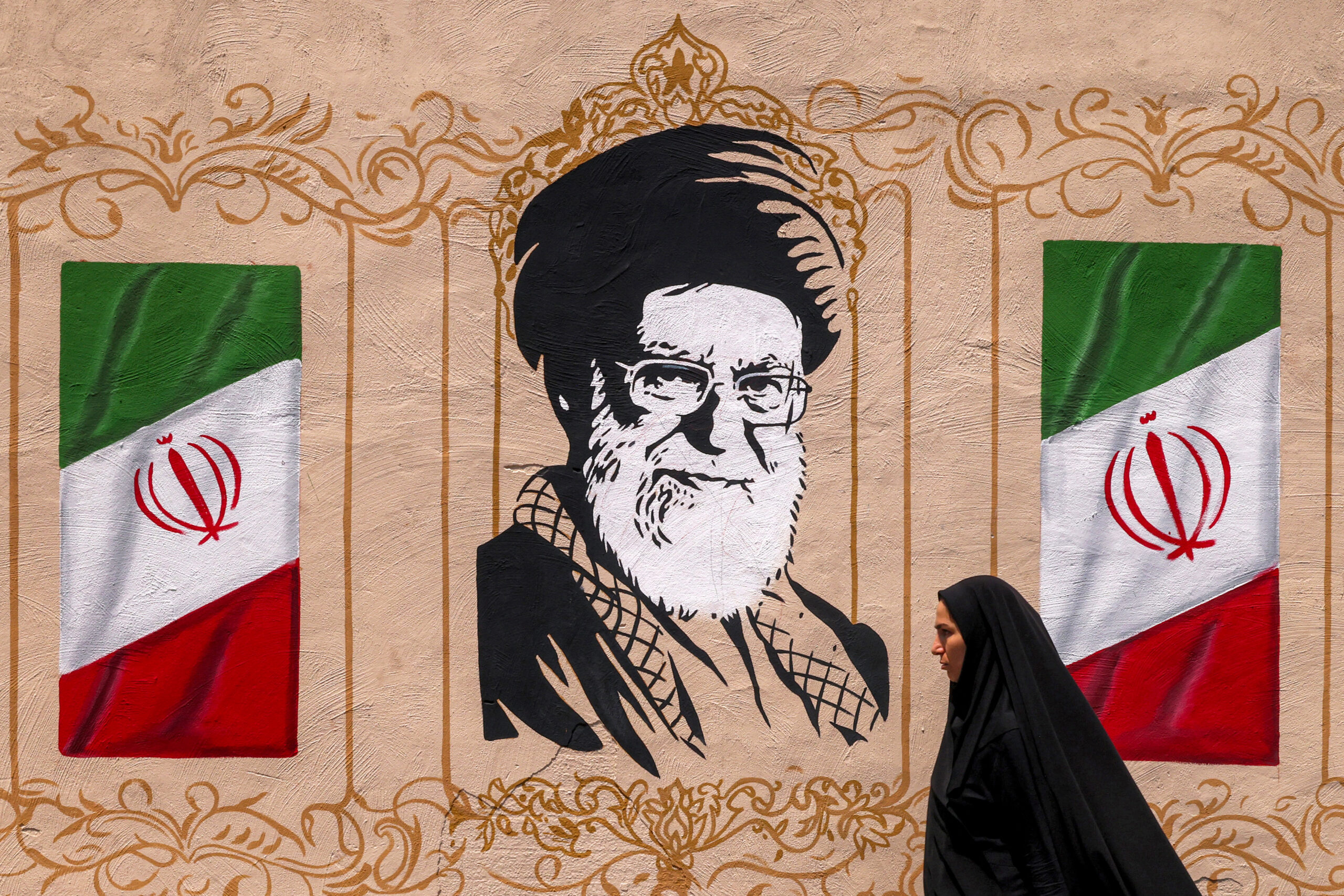
IRAN-US-ISRAEL-WAR
Photo by ATTA KENARE / AFP via Getty Images

Time to face an uncomfortable truth: America lost the Iran War. It’s a development not only discomfiting but world-historical, marking the pitiful conclusion of American primacy and the “U.S.-led international order.”

President Donald Trump is in a bind. Escalating the war in hopes of changing the outcome would worsen its deleterious effects and almost certainly fail to force Iranian capitulation. But reaching a peace agreement is difficult, thanks to a near-total absence of Iranian trust in any commitments that Trump might make.

The solution to Trump’s predicament, I’ve come to believe, can be found in an unlikely source: a little-discussed work of political psychology published more than a half century ago. More on that anon but, in short, Trump should initiate a “peace race” with the Islamic Republic: unilaterally make a bold concession, invite Tehran to reciprocate, and continue the cycle until the U.S. and Iran have transformed mutual antipathy into constructive relations.

But before I get to the “call to action” portions of this column, let’s take stock of the stunning defeat America has suffered.

Iran won’t soon relinquish its newfound control over the Strait of Hormuz, so the U.S. must relinquish its role as global guarantor of trade routes. American retrenchment from Iran’s vicinity seems inevitable, both because Tehran demands it and because our bases in the region are wrecked and would cost a fortune to rebuild. After unprovoked U.S.-Israeli attacks, Iran has greater incentive and willingness to acquire a nuclear deterrent. Moreover, the war has accelerated America’s decline relative to China, its chief rival and only peer competitor.

How did this happen?

We threw just about everything we had at Iran—including most of our offensive long-range missiles and defensive interceptor missiles—yet we didn’t accomplish our goals. Trump was able to secure a ceasefire in June, but it quickly fell apart after the U.S. arguably violated it by creating a Hormuz route outside Iranian control. Over the last few weeks, Tehran has set the tempo and geographical scope of hostilities and eschewed a pause in fighting initiated by Trump. The Iranians seem intent on denying the U.S. any breathing room to rearm, calm markets, and relaunch the war under more favorable conditions.

Clearly, the White House badly underestimated Tehran’s resilience and resolve—an inexcusable miscalculation considering the frantic warnings issued by Iran experts before the war. There aren’t many silver linings here amid the gloom and doom. (One strong candidate is American retrenchment from the Middle East, a region of long-diminished strategic value and a sandtrap upon which U.S. foreign policy recurrently founders.)

Theoretically, Trump could launch a land invasion or destroy civilian infrastructure, but he’s constrained by public opinion, energy prices, munitions stockpiles, and Iran’s retaliatory capabilities, which remain mostly intact even after the U.S. strategic bombing campaign. Trump has indicated he’ll maintain economic pressure, hoping for Iran to throw in the towel. But the Iranians have demonstrated a high pain tolerance and believe they’re fighting an existential war. With oil prices rising, his poll numbers declining, and the midterms drawing near, Trump may find that his own pain tolerance is a great deal lower.

Given these constraints, America’s top general Dan Caine is reportedly urging Trump officials to find an off-ramp. But an easy off-ramp is precisely what Iran’s ascendant hardliners aim to deny the American president. A statement released on Sunday by the secretary of Iran’s national security council demanded the U.S. make significant military and economic concessions before the Hormuz is reopened. On Monday, an advisor to Iran’s lead negotiator ruled out the possibility of any agreement with Trump.

In short, Trump can neither restart the war nor secure a deal. And he probably can’t let the problem fester for long, because of the pain tolerance issue, nor simply walk away, since Iran requires concessions to open Hormuz. It’s an astonishing predicament. Still, he’s gotten out of seemingly hopeless traps before, and he can do so again. That brings me back to the “little-discussed work of political psychology” I mentioned earlier.

Charles Osgood wrote An Alternative to War or Surrender as a how-to guide on easing tensions with the Soviet Union and averting nuclear holocaust. The book, published in 1962, was clearly aimed at President John F. Kennedy, and the context was the most perilous phase of the Cold War. In our own perilous context, it may hold the key Trump needs to break the Iran logjam and save his presidency.

In the book, Osgood developed a policy he termed Graduated Reciprocation in Tension-reduction or GRIT. (The initials, he observed, suggest the kind of determined tough-mindedness needed to carry the policy out. GRIT is an alternative to war and surrender, after all.) The “essential idea of Grit,” Osgood wrote, was simple: “that the tensions/arms race spiral may offer the model for its own reversal.” The aim was to replace bilateral tensions with mutual trust. So, how can Trump get the GRIT ball rolling?

Rather than signing a paper agreement containing a set of commitments that neither the Americans nor the Iranians trust the other side to uphold, Trump should simply announce that he is making some dramatic concession and urge Tehran to respond with a concession of its own. Osgood stressed that no concession should cripple America’s capacity to thwart aggression (which seems less of a problem here than in the Cold War, when the U.S. faced a nuclear-armed peer competitor). At the same time, concessions should be sufficiently meaningful to signal an earnest desire for peace. 

Osgood also recommended that unilateral initiatives “be announced publicly at some reasonable interval period prior to their execution and identified as part of a deliberate policy of reducing and controlling tensions.” The interval gives time for the other nation to consider its response and for its doves—as well as third-party mediators—to build pressure on its government to reciprocate. It also heightens the psychological impact of seeing the American president follow through on a promised gesture of goodwill.

At first, the other side will suspect some kind of trickery, but since GRIT involves deeds rather than mere words, it should lead to a recognition of the genuine opportunity on offer. Osgood held that an American president should be willing to make a second unilateral concession even if the first one went unreciprocated. If and when the other side reciprocates, the Americans can then select another unilateral concession from a predetermined “supply of potential actions, graduated in the degree of risk entailed and diversified over various spheres and loci of application.” And the cycle, hopefully, continues.

There’s no big mystery about what sort of meaningful concessions Trump can make. As the New York Times reports, the aforementioned statement released by Iran’s national security council “called for the United States to lift its naval blockade and sanctions on Iran, withdraw the U.S. military from around Iran, pay war reparations and release frozen Iranian assets, as well as end attacks on Iran’s allies in the region and threats against the country.”

Now, Iran hawks might object that I’m essentially urging Trump to give in to outrageous Iranian demands. Capitulation! Treason! The Islamic Republic killed 2,000—no, make that two million protesters this year alone! 

A few points in my defense: 1) Trump already agreed to do all of the above, more or less, in the memorandum of understanding he signed in June; 2) under GRIT, he would do these one at a time, rather than all at once, and in between Iran would make concessions of its own; 3) the Iran hawks got us into this catastrophe and should retire from geopolitical commentary.

GRIT seems well-suited to Trump’s psychology. Rather than slinking away in apparent defeat, he would seize the initiative. He’d need to deliver big, attention-grabbing Oval Office addresses to announce new concessions and acknowledge the most recent concession made by Iran. A man of action, Trump tires of tedious, drawn-out diplomatic procedures and might not even read the agreements he signs. Under GRIT, he and Iran would visibly enact the peace process rather than have their negotiators quibble over legalistic language.

It’s worth a shot.

The post How Trump Can Break the Iran Logjam appeared first on The American Conservative.

Congress Is Fake

Congress Is Fake

The House and Senate have drained themselves of power and relevance.

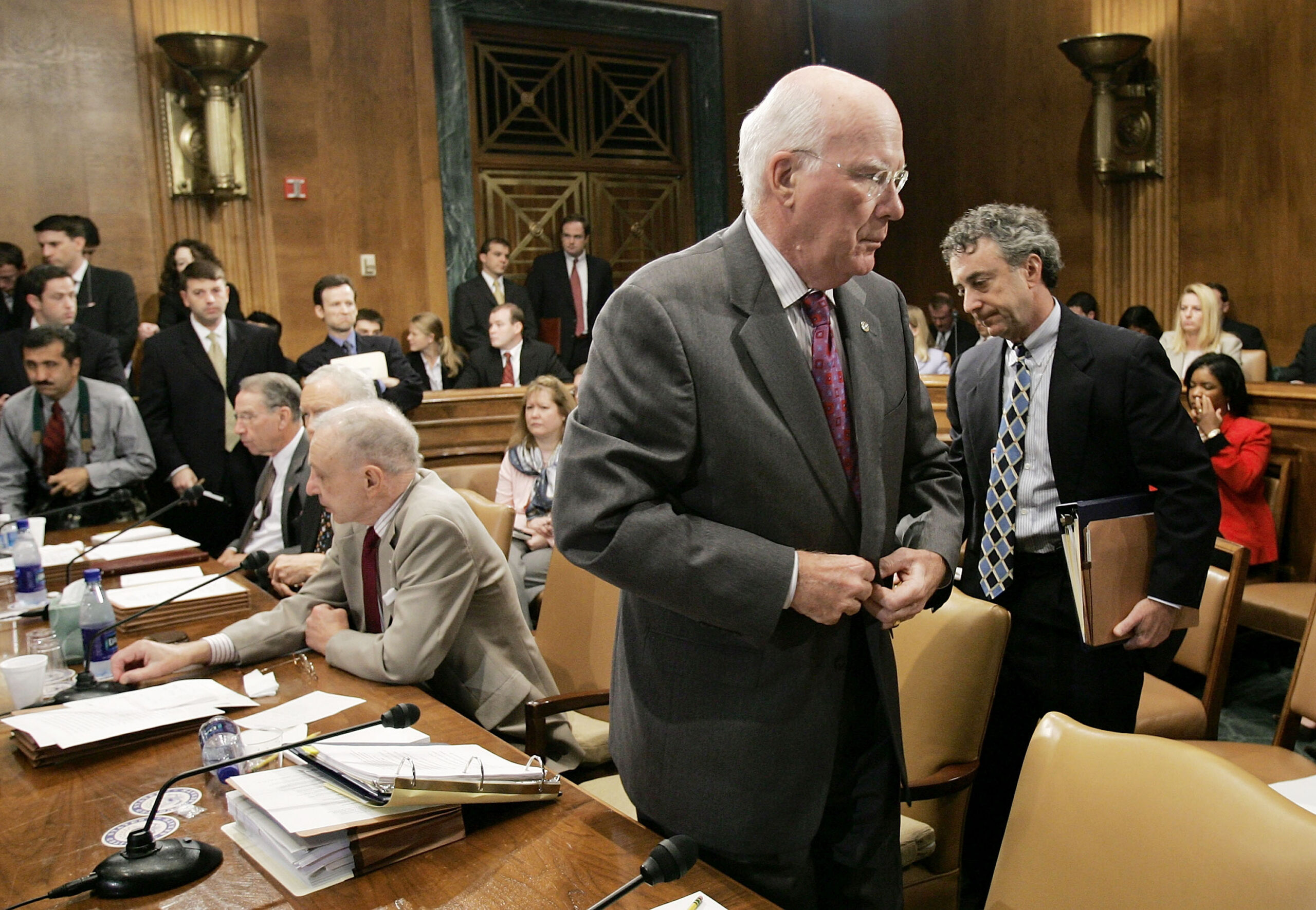
Senate Judiciary Committee Votes On Roberts Nomination
Photo by Win McNamee/Getty Images

On July 26, Senator Mike Lee (R-UT) wrote a message to Senate Majority Leader John Thune (R-SD) in a post on X: 

I hereby object to any effort to put the Senate into recess in August—at least until such time as the Senate has passed the SAVE America Act—and hereby request a roll call vote. Do not assume you have my consent. You do not.

On August 8, the Senate went into its customary August recess without objection. No roll call vote was held. The SAVE America Act (which would implement stringent national voter ID requirements, and is championed by both the president and the GOP’s right flank) remains unpassed.

In theory, Lee should have had serious leverage: Senate rules give considerable power to individual members, and the SAVE America Act is red-hot with the MAGA base (cognizant of this latter fact, Lee—or @BasedMikeLee, as his X account styles him—had been hyping the issue online for weeks). Reportedly more than 20 other Republican lawmakers had also agreed to back his effort, which meant the numbers were there to force a roll call vote. It all should have been enough to get the world’s greatest deliberative body to, well, deliberate.

But in the event, it was not. Based Mike Lee’s colleagues have places to be, and during August those places don’t include the Senate floor. Not to mention that the underlying bill has no chance of getting 60 votes, so unless Thune & co. were willing to go nuclear on the filibuster—and they’re not—all would have been for naught anyway. (Lee’s plan, for what it’s worth, involved the use of something called the “talking filibuster,” which would have forced Dems to stop the bill from passing via actual speechifying; this, too, is opposed by GOP leadership.) Finally, there is the fact that the SAVE America Act, though pitched as a panacea for all that ails party and country, secretly gives moderate Republicans the willies; these squishy pols would therefore strongly prefer to avoid a real vote.

So it was convenient to all concerned that this effort failed. Even the senior senator from Utah got something out of it: His anti-establishment credentials were burnished, especially among those unfamiliar with Senate procedure, and he was free to get back to posting about the existential importance of passing this bill. 

It’s admittedly a little unfair to single out Lee, who is at least committing himself to something rather than wallowing in the cynicism and nihilism that seem to have eaten up so many of his confreres on Capitol Hill. But the whole episode does provide a neat illustration of a discomfiting truth: namely, that Congress is fake.

I mean this spiritually rather than literally, for it is true the bare minimum (usually) gets done. One can depend upon the government eventually being funded and executive branch nominees eventually being confirmed. The War Machine will also get its annual authorization (“must-pass” legislation, don’t you know). But good luck with anything beyond that.

A total of 18,350 bills have been introduced in the 119th Congress so far, which puts our current legislature near historical highs. But only 104 of these have been passed into law—fewer than at any time since before the Great Depression. (Even that figure is arguably too generous, since many of these enacted bills do very niche things like raise the retirement age for Capitol police officers or name a post office.) 

Members of Congress are doing more posturing—introducing goofy “messaging bills” to grab a headline or cash in on a news cycle—and less bona fide legislating than ever before. Indeed, many seem to treat Capitol Hill more as a stage upon which to strut and preen before the eyes of donors than as a jobsite (but then again, I’m not aware of many other workplaces in America with a 3 ½ day workweek).

For another illustration of congressional fakery, consider committee hearings. Before working on the Hill, I had supposed that a hearing was a solemn, purposeful affair, in which the committee members sat down and gave their full attention to the witnesses (presumably experts or high officials) as they testified on weighty matters of state.

How naive I was! Hearings today are about generating viral clips. The witnesses are invited, not because they have some unique insight or perspective to offer, but because they are useful foils: They can either be relied upon to say what the committee wants them to say, or they will make excellent punching bags. And far from sitting in rapt attention throughout, the “down-dais” members (that is, everyone except the top Republican and Democrat) spend as little time in the room as possible. They arrive right when the proceedings open—thus securing a place in the questioning order—and then leave for other business. As they flit to and fro across the Capitol complex, some poor staffer stays to follow the order, furiously texting the office thread when the boss’s turn approaches. And the questioning itself doesn’t elicit information; rather, it gives the lawmaker a chance to look good for the cameras (either by touting some signature priority with the aid of a Good Witness, or by raining down righteous fury on a Bad Witness). The mark of a successful hearing is a video that does numbers on X or YouTube.

Perhaps most egregiously, Congress has lost all sense of itself as an institution with prerogatives and interests that transcend partisan affiliations. It doesn’t act like a coequal branch: When there is unified government, it cringes before the White House, and when power is divided, it is a reflexive (and impotent) source of opposition. The 119th Congress has therefore blithely allowed President Donald Trump to wage an illegal, asinine, and unwinnable war in the Middle East, just as the 117th Congress smiled and stepped aside as President Joe Biden elected to abandon the enforcement of immigration law altogether. 

This unfortunate situation is, of course, the product of structural forces (like the dreaded “polarization”), but it is hardly an inevitable feature of modern civic life. In the ’70s, for example, Congress worked assiduously to rein in the imperial presidency, passing major, bipartisan bills like the War Powers Resolution and the Congressional Budget and Impoundment Control Act to reassert legislative authority. And even during the Reagan years, that old GOP warhorse Bob Dole used his perch as Senate majority leader to set up a congressional probe into the Gipper’s malfeasance on Iran-Contra (can one imagine John Thune, let alone Mike Johnson, doing something similar?).

In describing Rome’s transition from republic to empire, Gibbon reminds us that the emperors carefully maintained the forms of the legislature long after they had emptied it of all sovereign power. “The masters of the Roman world,” he writes, “concealed their irresistible strength and humbly professed themselves the accountable ministers of the senate, whose supreme decrees they dictated and obeyed.”

Thanks to the total lack of institutional identity or corporate spirit among our lawmakers, such manipulation by the executive is hardly necessary today. Though, interestingly, the near-total surrender of its prerogatives hasn’t entirely ingratiated Congress to the White House; indeed, by rendering itself so contemptible and pathetic, one gets the impression that what little resistance remains has become that much harder to bear. 

In a press conference Monday, Trump rattled off examples of hard-left proposals to bulldoze our constitutional order: eliminate the presidency, dissolve the Supreme Court, abolish Congress’ upper chamber. But at that last item he couldn’t help but give a little chuckle: “You know, sometimes I’d like to get rid of the Senate too.”

The post Congress Is Fake appeared first on The American Conservative.

State Department Has Revoked Over 175K Visas to Date for Criminals and Others During Trump’s 2nd Term

A politician speaking at a podium during a press conference, emphasizing key points with hand gestures in a professional setting.

The U.S. State Department announced Monday that the administration has revoked the visas of over 175,000 individuals since President Donald Trump took office last year.

“Under President Trump, the United States Department of State has revoked more than 175,000 visas from foreign nationals who violated the terms of their visas, committed crimes, called for violence against U.S. citizens, defrauded Americans, abused our immigration system, or endangered national security,” the State Department said in a statement to Fox News.

“The majority of these visas were revoked due to law enforcement encounters for a range of criminal activity, with assault, driving under the influence, theft, and drug crimes being the leading causes. A significant share of visas were revoked for reckless driving, sexual assault, child abuse, fraud and embezzlement, and other crimes,” the department added.

The agency further noted that a U.S. embassy in North Africa revoked over 100 visas for parents who had engaged in “birth tourism,” i.e., people who came to the country primarily to give birth so their children would be American citizens.

In February, Secretary of State Marco Rubio explained at a news conference in Hungary, “I’ve said this repeatedly. I don’t know why it’s so hard for some to comprehend it, so let me repeate it again. A visa — no one is entitled to a visa. There is no constitutional right to a visa.”

“A visa is permission to enter our country as a visitor. … If you enter our country as a visitor, as a visitor in our country — be it a student, a tourist, a journalist, whatever you want to be — and you undertake activities that are against the national interest, the national security of the United States, we will take away your visa,” he continued.

“In fact, if we knew you were going to do it, we probably wouldn’t have given you your visa,” Rubio said.

The announcement regarding the number of revoked visas to date comes after President Trump signed two executive orders Thursday that take another pass at reining in birthright citizenship, including banning “birth tourism.”

In June, the Supreme Court, in a 6-3 ruling, took an expansive view of the 14th Amendment’s language, which provides, “All persons born or naturalized in the United States, and subject to the jurisdiction thereof, are citizens of the United States and of the State wherein they reside.”

The president pointed to the language that children must be born to parents “subject to the jurisdiction” of the U.S. (i.e., not citizens of foreign nations in the country illegally) for their children to be American citizens.

The majority of the Supreme Court held otherwise and struck down Trump’s executive order.

Trump told reporters Thursday at the White House that the court’s ruling was a “very, very unfortunate decision, so we’re making adjustments.”

One of Trump’s orders specifically denies citizenship to children of parents who participated in “birth tourism” schemes.

“Birth tourism operators use deceptive advertisements and inducements to entice foreign nationals to travel to the United States for the purpose of giving birth on American soil,” the order states.

“The immigration laws of the United States establish discrete categories of temporary nonimmigrant visas to allow foreign visitors into the United States for study, exchange, temporary employment, tourism, and other transitory activities that are now exploited by birth tourism operators.”

This article appeared originally on The Western Journal.

The post State Department Has Revoked Over 175K Visas to Date for Criminals and Others During Trump’s 2nd Term appeared first on The Gateway Pundit.

Nutty Communist Francesca Hong Struggles in Wisconsin Governor’s Race – Primary Is Too Close to Call

The famously insane Communist Francesca Hong is struggling in her race for governor of Wisconsin.

The vocal leftist who hates whitey and Thanksgiving is currently trailing David Crowley in the governor’s race.

Hong led the field going into today’s primary.

Crowley is no winner, himself. The current leader in the governor’s race not the brightest bulb in the big tent.

Hong is leading in Dane County where the University of Wisconsin is located.

The woman’s mind is polluted with pure poison.

The post Nutty Communist Francesca Hong Struggles in Wisconsin Governor’s Race – Primary Is Too Close to Call appeared first on The Gateway Pundit.

Brilliant and Beautiful Former NFL Reporter Michele TaFoya Wins GOP Senate Primary in Minnesota

Former NFL reporter Michele Tafoya won her primary election on Tuesday night in Minnesota. – image from her campaign page

The brilliant FOX News contributor Michele TaFoya won the Republican primary election for US Senate in Minnesota tonight.

TaFoya promises to CRUSH fraud – something that is out of control in Minnesota.

She is a great candidate for the northern state.

From the Michele TaFoya website:

Michele Tafoya is a four-time Emmy Award-winning broadcaster, record-setting NFL sideline reporter, and now a political and cultural commentator focused on accountability, integrity, and family-first leadership.

For nearly three decades, Tafoya built a reputation for calling it like she sees it on the biggest stages in sports. She worked her final NBC Sunday Night Football broadcast at Super Bowl LVI on February 13, 2022 — her fifth Super Bowl — retiring the following day after covering 327 NFL games, the most national primetime games of any sideline reporter in league history.

Over the course of her career, Tafoya became the most-honored national television sideline reporter in U.S. sports history. She earned four Sports Emmy Awards for Outstanding Sports Personality – Sports Reporter and is the only finalist for that award every year since its inception in 2011. She was also twice honored with Gracie Awards from American Women in Radio and Television and was consistently ranked among the most respected and trusted figures in sports media. The San Francisco Chronicle famously called her “widely recognized as the best sideline reporter in sports.”

But after years on the sidelines, Tafoya felt called to step into a new arena.

If President Trump will declare an election emergency and Democrats will be forced to follow the rules and not cheat – TaFoya is a shoe-in in Minnesota.

The post Brilliant and Beautiful Former NFL Reporter Michele TaFoya Wins GOP Senate Primary in Minnesota appeared first on The Gateway Pundit.

JUST IN: 14-Term Connecticut Democrat Incumbent Rep. John Larson Unseated by Former Hartford Mayor Who Cheered on DSA Members

Another long-serving Democrat incumbent got booted from office.

14-term Connecticut Democrat incumbent Rep. John Larson was unseated by former Hartford Mayor Luke Bronin on Tuesday evening.

John Larson, 78, served in Congress for 28 years. He was first elected to the House in 1998.

Bronin was endorsed by Pete Buttigieg.

While Luke Bronin does not identify as a Democratic Socialist, he said he would certainly welcome their takeover of the Democrat party.

WATCH:

Bronin, 47, attacked John Larson as an establishment Democrat.

“Congressman Larson has been in office for 28 years,” Bronin said on NBC this week as he argued it’s time for a change.

WATCH:

Bronin pounced on John Larson over his age and health issues.

Last February, Larson froze up mid-sentence during a speech on the House floor.

He never fully recovered from the medical episode. Bronin repeatedly attacked Larson over his age and health issues.

WATCH:

The post JUST IN: 14-Term Connecticut Democrat Incumbent Rep. John Larson Unseated by Former Hartford Mayor Who Cheered on DSA Members appeared first on The Gateway Pundit.

AOC Splits with Longtime Fiancé — Socialist Squad Member Freezes Eggs and Eyes Higher Office After Years of “Spouse” Perks Without a Wedding

Rep. Alexandria Ocasio-Cortez, the radical socialist from New York’s 14th District and face of the Squad, has quietly split from her longtime fiancé Riley Roberts, according to multiple reports.

TMZ reported the breakup Tuesday, citing Puck’s Chief Washington Correspondent Leigh Ann Caldwell, who first learned from a Democratic source about 18 months ago that the engagement was over.

Multiple Capitol Hill sources told TMZ the pair have not been seen together publicly in ages. Their last known public photograph together was at the 2021 Met Gala, the same event where AOC wore her infamous “Tax the Rich” dress and where she claimed Roberts as her “spouse” to score him a free ticket.

Just days earlier, the 36-year-old Bronx-Queens Democrat publicly announced she was freezing her eggs, filming herself injecting fertility drugs and declaring she wanted to feel “more in control of my life.”

When a reporter asked if her “fiancé” was supportive, she carefully avoided the word and replied only that “all of my loved ones have been very supportive.”

WATCH:

More from New York Post:

The Bronx and Queens rep referred to him as a “spouse” for that junket so the two could have some food and lodging expenses covered as gifts.

They also appeared together at the coveted Met Gala — where she sported her infamous “Tax the Rich” dress, which garnered significant scrutiny from the House Ethics Committee in a report issued last year. Roberts scored a free ticket to the $35,000-per-person Big Apple event because he was considered her “spouse.”

“The Committee ‘takes very seriously its obligation to provide sound and dispassionate advice to the Members of this House’’ and would have informed Representative Ocasio-Cortez and her counsel that Mr. Roberts did not fit the definition of a ‘spouse’ for purposes of the Charitable Events Exception,” the report stated.

Ethics investigators noted that even as Roberts was claimed as a “spouse” to accept gifts and privately sponsored travel, the fiancé was not forced to disclose his financial interests to the House “as is required of Members who are legally married.”

[…]

Some conservative critics speculated that Ocasio-Cortez was holding off on a wedding to avoid scrutiny over Roberts’ finances, as it would be subject to House disclosures after marriage.

The post AOC Splits with Longtime Fiancé — Socialist Squad Member Freezes Eggs and Eyes Higher Office After Years of “Spouse” Perks Without a Wedding appeared first on The Gateway Pundit.