When Republicans Won on an Antiwar Platform—and Delivered

When Republicans Won on an Antiwar Platform—and Delivered

In 1952, the GOP ran on ending war and inflation. Sound familiar?
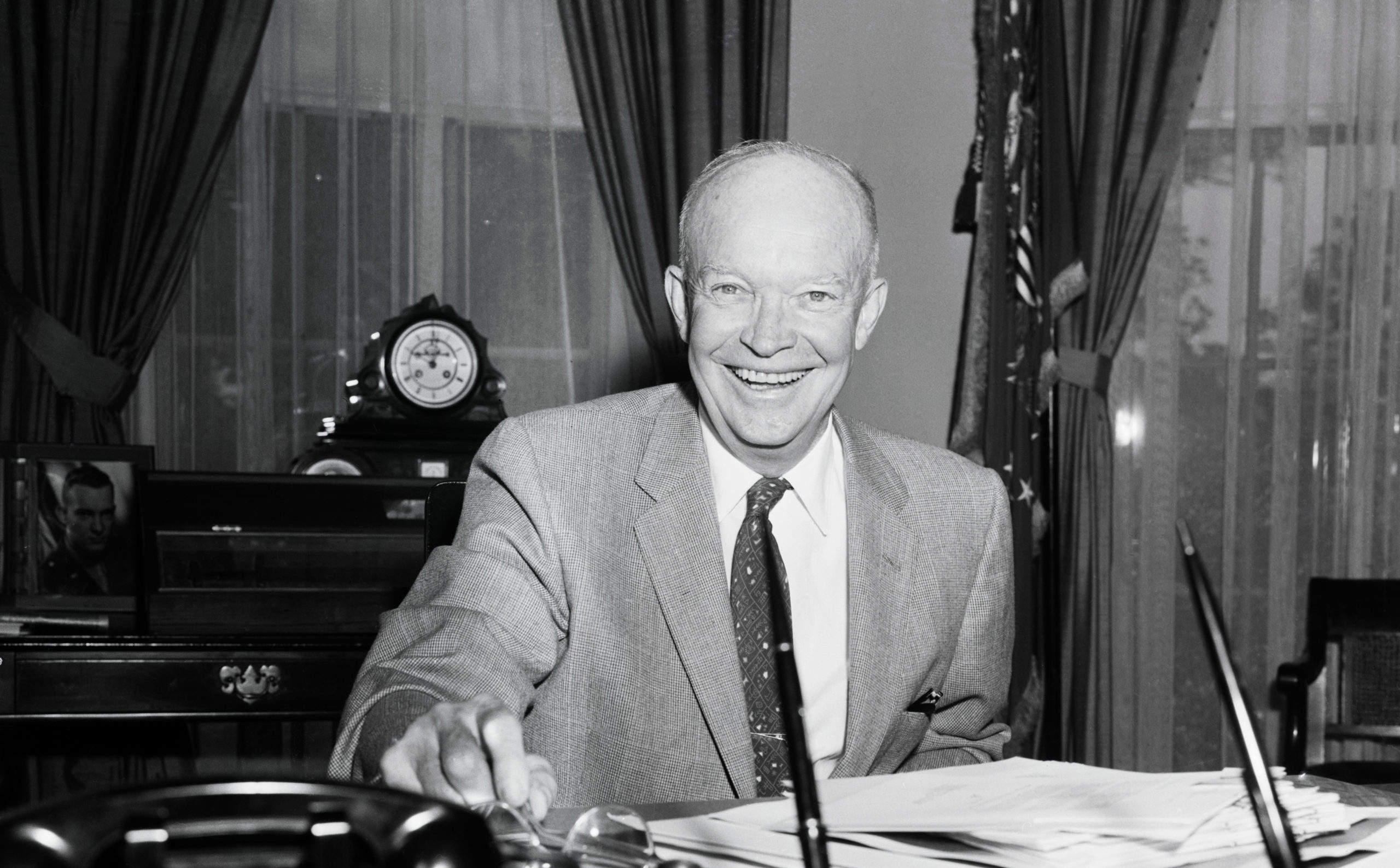
President Dwight Eisenhower at His Desk
Getty Images.

In their final poll ahead of the 2026 midterms, NYT/Siena found that the Democratic Party holds an 11-point lead over Republicans on the generic congressional ballot, suggesting the GOP is all but certain to lose its congressional majorities. The same poll found that President Donald Trump’s approval rating has dipped to a new low of 34 percent.

A rebuke of this magnitude should be understood as more than the cyclical expression of displeasure at an incumbent. Rather, it represents a deep rejection of the direction the second Trump administration has taken since the heady days of spring 2025.

Earlier this month, AP-NORC polled Americans about their top issues going into the midterms. To no one’s surprise, the most significant was the economy and cost of living at 84 percent. But not far behind is the war with Iran, cited by 64 percent of respondents—20 points more than the number who said immigration, and five times more than said transgender issues.

On February 28, the United States, together with Israel, launched a surprise attack on Iran. This failed to produce regime change, but it did lead to the closing of the Strait of Hormuz and the destruction of Gulf energy infrastructure. Voters are reminded how intimately this war of choice impacts the cost of living every time they visit the pump, where (as of writing) a gallon of gas averages $4.26 per gallon nationally and diesel an unsustainable $6.32.

Backtracking on a core campaign promise of “no new wars,” unilaterally launching an aggressive war without a vote by Congress or public debate, and allowing it to continue for eight months and counting without a clear exit strategy are decisions that have irrevocably split Trump’s winning 2024 coalition and reenergized what had been an aimless Democratic Party.

As many have pointed out, including in The American Conservative, war with Iran was a destructive but deliberate policy choice, not an inevitability or a response to an urgent national security crisis. The coming massacre of the GOP did not have to happen.

There once was an era, in the not too distant past, when Republicans campaigned against endless war and unnecessary military spending with huge electoral dividends (and then kept their promises).

In 1952, the country was aching after 20 years of Democratic presidents. The Korean War was then in its third year, victory still out of reach despite tens of thousands of American casualties. Corruption scandals plagued officials in the Truman administration. And Truman himself, facing polling numbers even lower than Donald Trump’s, had bowed out of the Democratic primaries and was not running for reelection.

Under these circumstances, the Indiana Republican State Central Committee produced a brochure proclaiming that “THE ONE ALTERNATIVE to the warmongering, Socialistic scandals of the Truman administration is to vote straight Republican on November 4!” (Emphasis in original.)

The brochure encouraged support for every Indiana Republican under this antiwar, Old Right framing, but spotlighted the top of the ticket and statewide races. It urged voters to give former Supreme Allied Commander Dwight D. Eisenhower “the assignment of pulling America out of her mad, rocketing inflation… and of developing for America a foreign policy that is sane and secure, instead of rash and reckless!”

How many voters today would use that same terminology, “rash and reckless,” to describe the decision to outsource decision-making to the Israeli prime minister’s office?

The brochure, issued officially by the state party, also demanded an end to chronic overseas intervention in terms that will be familiar to the generation that came of age during the Global War on Terror:

3 WARS IN 35 YEARS (!) is the tragic record of the 3 Democrat Presidents of this century. Death, destruction and despair for millions of Americans. The unprecedented peacetime draft continues. More and more young Americans into bloody foreign battles. And at a cost which is bankrupting us all.

As a horrifying mirror image, in the past 35 years the last three Republican presidents have all entered wars in the Persian Gulf.

And while today the Trump White House attempts to dodge the economic fallout of the Iran War, which has cost taxpayers over $43 billion as of September and worsened inflation by roiling global energy markets, the Republican Party of 1952 had no trouble discerning the connection between government spending on empire and economic woes at home:

THE WAR BOOM continues only because the war is extended. This unholy conflict, producing only inflated dollars soaked in our young men’s blood, pushes our high prices, soaring taxes and monstrous national debt higher and higher and HIGHER!

No hesitation in recognizing the gruesomeness of war, or in emphasizing how dire a political issue becomes when you begin measuring the cost in blood. Contrast that healthy emotionalism with the distant obtuseness presented by today’s Republicans.

When a man whose wife was killed in action in March questioned Vice President J.D. Vance during a CNN townhall about the “failure in the leadership” responsible for his loss, the man tasked with publicly defending the administration pleaded ignorance.

After offering condolences, Vance said, “When you talk about failures that we were—the administration, the Department of War, whoever you want to say—was implicated in, I want to know about that stuff. Because if there were failures, and I don’t doubt that there were, I just, literally the first time I’ve heard about this is this conversation, and I want to fix that stuff.”

The differences in Republican messaging between 1952 and 2026 are not purely reducible to the distinction between incumbent and challenger. Donald Trump and his surrogates used similar language campaigning in 2024 against Joe Biden, Kamala Harris, and their involvement in the Ukraine War. And after his election—again, by an 11-point margin—Dwight D. Eisenhower, while admittedly an internationalist, did achieve an armistice in Korea and a decrease in military spending.

The Republican Party may have changed, but the American voter hasn’t. When presented with a clear choice, and given the opportunity to vote for less war overseas and a prioritization of American concerns, he takes it, no matter which party makes the promise.

That is why anti-war conservatives won in 1952, and it’s why pro-war conservatives will lose today.

The post When Republicans Won on an Antiwar Platform—and Delivered appeared first on The American Conservative.
Pakistan’s Afghan Crisis

Pakistan’s Afghan Crisis

Islamabad’s hopes for “Taliban 2.0” have turned into a nightmare.

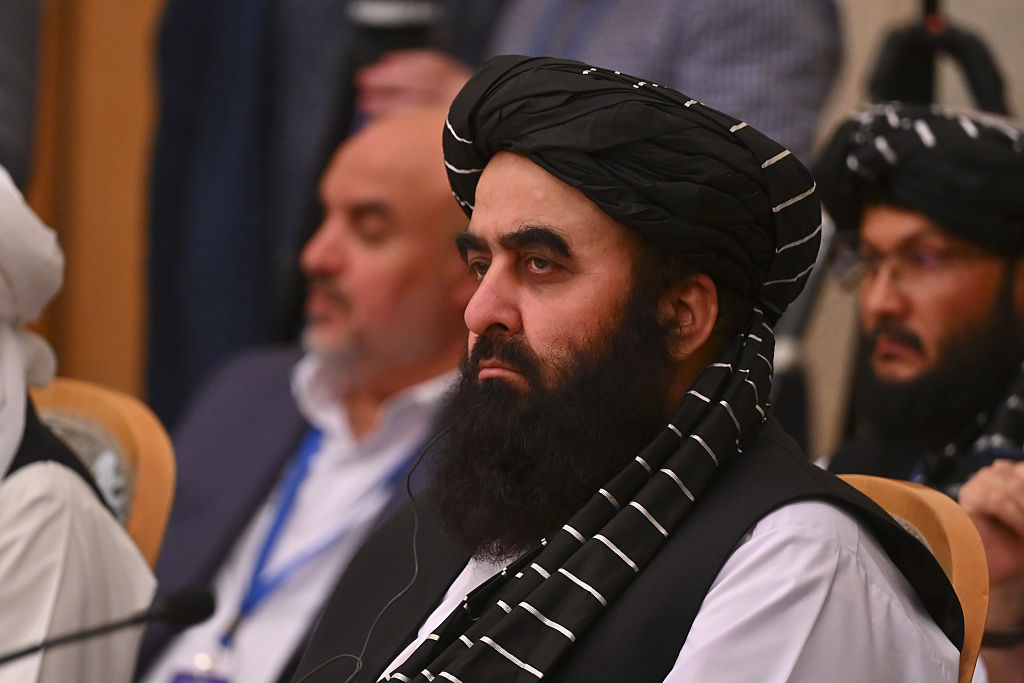
Moscow Format Consultations on Afghanistan
(Sefa Karacan/Anadolu via Getty Images)

It is difficult to exaggerate the extent to which Pakistan has buyer’s remorse following many years of supporting the Taliban insurgency against the previous Afghan government. Islamabad expected the Afghan Taliban’s return to power just over five years ago to make Afghan-Pakistani relations increasingly cooperative across many domains. But what Pakistan once saw as a valuable opportunity has become its nightmare.

When the Taliban reclaimed power in Afghanistan in August 2021, many took for granted that Pakistan would be the principal beneficiary. At that time, there was every reason to assume that Islamabad would have significant influence over the new authorities in Kabul and use it to further its national interests while serving as “big brother” to post-occupation Afghanistan. Right after the Taliban reclaimed Afghanistan, Pakistan’s then-Prime Minister Imran Khan declared that the Afghans had “broken the shackles of slavery.”

Islamabad had clear expectations that the “Taliban 2.0” would cooperate against groups that threaten the Pakistani state and work to counter Indian influence in the region. But the bilateral relationship has basically moved in the completely opposite direction, exposing serious limits to Pakistani leverage vis-à-vis Afghanistan and highlighting just how much the Afghan Taliban’s own interests greatly diverge from Islamabad’s.

Bilateral relations between Pakistan and the Afghan Taliban have plunged to an all-time low. This month marks one year since Islamabad and Kabul began sustained hostilities over a border dispute and the presence of militant groups—chiefly Tehreek-e-Taliban Pakistan (TTP), also known as the Pakistani Taliban, and the Balochistan Liberation Army (BLA)—on Afghan soil. Both the TTP and BLA have targeted Pakistan with a significantly increased frequency since 2024. With the two countries in an “open war” since February, the conflict has had a devastating impact on humanitarian crises along the Durand Line, while the prospects for deescalation remain very dim. 

Islamabad has struggled to secure meaningful global support for its military operations against Afghanistan-based groups threatening Pakistan. Russia, China, and Western nations are all focused on their unique interests in post-occupation Afghanistan and the wider region, helping to explain why they are not currently applying greater pressure on Kabul anywhere close to the degree desired by Islamabad. Consequently, Pakistan sees itself as unsupported as it wages what it understands to be a necessary and morally righteous war against terrorism.

Today, Pakistan sees the Islamic Emirate regime in Kabul as anything but a counterterrorism ally. As Aizaz Ahmad Chaudhary, the former Pakistani ambassador to the United States, stated at an international conference held earlier this month in Islamabad, Afghanistan is now reverting to its pre-9/11 ways. Other Pakistani officials go as far as describing the Kabul regime itself as a terrorist entity more than an actual government.

Kabul is increasingly engaging New Delhi, suggesting that post-occupation Afghanistan will become geopolitically aligned with India against Pakistan, rather than vice versa as Islamabad had planned years ago. This feeds into deep fears in Pakistan about an emerging anti-Pakistani partnership comprising its northern and eastern neighbors. The Afghan Foreign Minister Amir Khan Muttaqi’s week-long visit to India a year ago did much to inform this threat perception of a Taliban-India nexus. Pakistani officials also allege that India supports the TTP as part of an effort to destabilize Pakistan. Islamabad claims that concrete evidence backs up this accusation and resents what it considers the international community’s failure to hold India accountable.

Islamic Emirate officials deny providing sanctuary to these two groups. The de facto government in Kabul holds that Pakistan’s terrorism crisis is its own internal problem stemming from Islamabad’s failures, and that Pakistan is simply trying to pin the blame on external forces. 

It is necessary to recognize that the Afghan Taliban is not a monolithic entity. A crackdown on the TTP could alienate hardline individuals and factions within the de facto government in Kabul, possibly pushing some toward joining Islamic State Khorasan Province (ISKP). Therefore, regime cohesion is an important consideration for Kabul, contributing to the Islamic Emirate’s reluctance to confront a group committed to toppling the Pakistani government. At the same time, the Afghan Taliban understands Pakistan’s military operations, including strikes far beyond the border regions and into Kabul, as acts of international aggression that violate Afghanistan’s sovereignty. Officials in Kabul find outrageous and unacceptable the loss of civilian life on the Afghan side of the border in this conflict.

Against this backdrop, it is difficult to imagine Islamabad and Kabul reaching a new understanding on their border dispute and terrorism. While Qatar, Turkey, and China have attempted to help broker a diplomatic settlement to the Pakistan–Afghan Taliban conflict since last year, such efforts have thus far proven futile.

Internationally, the growing trend is toward establishing relations with the Afghan Taliban, which gives the Islamic Emirate greater legitimacy. This alarms Pakistan.

Although Russia, at least so far, is the only country formally to recognize Afghanistan’s Taliban government, a host of other countries such as China, Iran, the United Arab Emirates, and the Central Asian republics have established de facto ties with Kabul. Driven largely by commercial, trade, and security interests, these states will probably not support Pakistan’s military operations in Afghanistan at the level Islamabad believes it deserves. The TPP and BLA primarily threaten Pakistan. Meanwhile other countries in the neighborhood see the Islamic Emirate as a necessary partner (even if a very flawed one) in the fight against ISKP—seen by most states in West Asia and beyond as the most dangerous non-state actor currently operating in Afghanistan. Nonetheless, officials in Islamabad hold that if more regional and global support for Pakistan’s fight against the TTP and BLA doesn’t come through, more countries will eventually pay a price.

Pakistan is unlikely to find much of the support it seeks from the West, where many continue to view Pakistan through the lens of its own history with violent extremist groups. Washington continues to have a hangover from its nearly two-decade experience of occupying Afghanistan and fighting the Taliban, which consumed vast amounts of American resources and ended with immense frustration and humiliation in 2021. Therefore, although Washington does care about nonstate actors in Afghanistan, including ISKP, TTP, and BLA, and although the U.S. and Pakistan work closely on counterterrorism efforts, it is unrealistic to expect Washington to provide any direct military support for Pakistan’s operations against targets in Afghanistan. 

In all likelihood, Washington will provide Islamabad selective cooperation in Pakistan’s campaign against the TTP and BLA without taking any action that could risk pulling the U.S. back into a protracted conflict in this region, especially so long as the Trump administration’s focus remains on the Iran War, now approaching its ninth month.

Russia, meanwhile, sees its relationship with the “Taliban 2.0” as essential to fighting ISKP, which poses a serious threat to Russia and Central Asian republics where Moscow has vested interests. Concerns related to drug trafficking also factor into Russia’s interests in maintaining a formal relationship with the Islamic Emirate. Consequently, Moscow is at odds with Islamabad on how to deal with Afghanistan’s new realities. Russia seeks greater regional influence and trade connectivity while wanting to prevent post-occupation Afghanistan from returning to the West’s orbit of geopolitical influence. 

Within this context, Moscow has invested diplomatic capital in post-2021 Kabul, and Pakistan should not expect the Russians to subject the Islamic Emirate to any heavy-handed pressure that could undermine Moscow’s relationships with the Afghan Taliban. The most recent meeting of the Moscow Format—a multilateral platform for discussing security in Afghanistan—on October 5 revealed such disagreements between Russia and Pakistan regarding terrorism-related issues in Afghanistan. Looking ahead, while the Russians might be counted on to try to apply some degree of pressure on Kabul privately while providing Islamabad with intelligence cooperation, Moscow is unlikely to impose serious costs on the Islamic Emirate over TTP and BLA sanctuaries in Afghanistan.

Aside from Pakistan, perhaps no country in the world is as concerned about the TTP and BLA’s activities as China, whose citizens, investments, and infrastructure linked to the China–Pakistan Economic Corridor have been targeted by these groups. Yet Beijing’s de facto relationship with the Afghan Taliban will shape its approach to challenges posed by violent anti-state organizations that attack Pakistan while China continues playing a bridging role between Islamabad and Kabul. These factors help explain why China will probably not become directly involved in Pakistan’s military operations against groups in Afghanistan. It is more likely that Beijing’s foreign policy toward the Pakistan–Afghan Taliban war will rest on diplomatic pressure, mediation, security assistance, and intelligence cooperation with Islamabad. 

Pakistan’s war with the Afghan Taliban shows the folly of Islamabad’s past expectations that a former ally could be counted on to help advance its interests. While Islamabad greatly contributed to the circumstances that restored the Islamic Emirate’s rule, it lacks the means to dictate Kabul’s priorities, policies toward nonstate actors, and regional foreign policy. The de facto Afghan authorities’ reluctance to crack down on the TTP and BLA, combined with Kabul’s growing engagement with New Delhi, has left Pakistan facing a nightmarish dilemma that will not be easy to resolve.

In one way or another, Pakistan must reconcile its grave security concerns about post-occupation Afghanistan with new geopolitical realities in which regional and global powers’ broader interests are not aligned with Islamabad’s top priorities. Without Pakistan and the Afghan Taliban reaching a new understanding, this war risks raging on and becoming a protracted conflict that will lead to much more human suffering on both sides of the restive Afghan–Pakistani frontier.

The post Pakistan’s Afghan Crisis appeared first on The American Conservative.
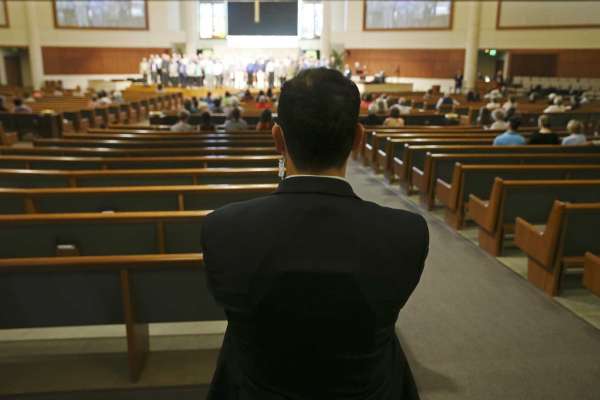
The Armed Church: Why Christians Are Safer in America Than in Other Countries

While Christians are easy targets in other countries, U.S. churches are protected by professional security and armed parishioners. Photo courtesy of Gentle Response.


Christians are experiencing some of the worst persecution of modern times, with believers around the world being killed because they are easy targets. Outside the United States, many have no weapons and have been taught that being a Christian means being a pacifist who turns the other cheek and does not defend himself.

Less than two days ago, on October 23, 2026, gunmen carrying pistols and a long gun opened fire on a funeral at a Greek Orthodox church in Jordan’s Karak governorate. They killed seven people and wounded 34 others.

In Damascus in June 2025, an Islamic State suicide bomber entered Mar Elias Church, opened fire on worshippers and detonated his explosive vest. The attack killed 22 people, according to Syria’s Ministry of Health, and Islamists have repeatedly targeted Syria’s Christians since. In July 2025, Allied Democratic Forces rebels stormed a Catholic church in Komanda, Congo, during a vigil, killing at least 38 people inside with guns and machetes. The rebels are affiliated with the Islamic State.

In Nigeria, Christians are killed on a daily basis. According to Open Doors’ 2026 World Watch List, 3,490 Christians were killed for their faith in Nigeria between October 2024 and September 2025. That is an average of more than nine per day and 72 percent of the 4,849 Christians killed worldwide.

Massacres followed by mass burials have become the norm for Christians in Nigeria’s Middle Belt. On Easter Sunday 2026, gunmen raided a Catholic church and an evangelical church in Ariko, in Kaduna State, killing worshippers and abducting dozens.

In April, Islamic State West Africa Province gunmen killed 29 Christians. On June 22, 2026, Fulani gunmen killed 28 Christians, including Rev. Markus Nyam of the Church of Christ in Nations, in Kawel village in Bokkos County.

In October, Boko Haram fighters locked an evangelist inside his house in Adamawa State and set it on fire.

Witnesses have repeatedly described attackers carrying AK-47s and machetes. Some Fulani herdsmen attack Christian villages with AK-47s and rocket-propelled grenades, while villagers try to defend themselves with clubs or knives. One local told WORLD, “if someone comes to attack you with an AK-47, you’re dead.”

In Jordan, Syria, Congo and Nigeria, the attackers were armed and the worshippers were not.

Islamists have also killed Christians in Europe, where civilian gun ownership is a fraction of the American rate. The Small Arms Survey estimated 120.5 civilian firearms per 100 residents in the United States in 2017, compared with 19.6 in both France and Germany.

In July 2016, two 19-year-old men slit the throat of Father Jacques Hamel, 85, at the foot of the altar during morning Mass in Saint-Étienne-du-Rouvray, France. Police shot both attackers dead as they left the church. The Islamic State claimed the attack.

In October 2020, a Tunisian man armed with a knife killed three people at the Notre-Dame Basilica in Nice.

In December 2016, Anis Amri, a Tunisian, hijacked a truck and drove it into the Christmas market beside Berlin’s Kaiser Wilhelm Memorial Church, killing 12 people. A 13th victim later died of his injuries. The Islamic State claimed that attack as well. Amri fled to Italy, where police shot him dead days later.

Christmas markets in Europe have been targeted by jihadist attacks and foiled plots every year since. The Islamic State has promoted vehicle ramming as a tactic in its propaganda.

While Christians in other countries have been taught that carrying weapons or serving as soldiers conflicts with their religion, Americans have been taught the opposite. American Christians, particularly evangelicals, link defense of one’s country, one’s loved ones and certainly one’s church to their faith, with ample examples to encourage them.

Most notably, in the Bible, King David, one of God’s most favored sons, killed countless warriors on the battlefield. In American history, the image of George Washington praying at Valley Forge, whether the event actually happened or not, has become a symbol for American Christian soldiers of how their faith fits with military service.

Eisenhower, Patton and President Franklin Delano Roosevelt each have at least one famous wartime prayer associated with their names. More recently, Secretary of War Pete Hegseth has made prayer a regular feature of military life.

In the United States, armed church members and security teams have ended attacks at churches in Colorado, Texas and Michigan.

Armed church members are part of the security plan at most Protestant churches in the country. In a 2022 Lifeway Research survey of 1,000 Protestant pastors, 54 percent said armed church members were part of their security measures, up from 45 percent in 2019. The figure rose to 65 percent among pastors in the South and 74 percent among churches with 250 or more in attendance.

In the 2019 survey, 71 percent of Pentecostal pastors, 65 percent of Baptist pastors and 53 percent of Church of Christ pastors said armed church members were part of their security measures. Only about one in five pastors reported a no-firearms policy at worship services.

It is generally believed that a robber’s worst nightmare is when his intended victim turns out to be armed. An interesting demographic data point about churches is that the people in the pews are more likely than other Americans to own guns and vote Republican.

According to a 2023 Pew Research Center survey, 32 percent of American adults personally own a gun, including 45 percent of Republicans and 51 percent of conservative Republicans, compared with 20 percent of Democrats. A 2022 Public Religion Research Institute survey found that 54 percent of white evangelical Protestants and 58 percent of white Republicans have guns in their homes or garages. Pew’s most recent breakdown by religion, from 2017, found that 41 percent of white evangelicals owned a gun, more than any other religious group.

PRRI also found that white evangelical Protestants were the only religious group in which a majority did not support gun control measures.

According to Pew, 62 percent of registered voters who attended religious services at least monthly aligned with Republicans in 2023, compared with 41 percent of those who attended less often.

A church security industry has grown to train church members to serve as security volunteers in their own congregations, and some of its founders describe the work as a ministry. Training programs now operate in all 50 states and have trained thousands of people in hundreds of churches to build safety teams. Some courses run more than 70 hours, incorporate Christian principles, and cover conflict resolution, self-defense, threat assessment, firearm handling, trauma medicine, and local laws.

For these congregations, defending the church is part of serving it. The people protecting the worshippers are often the worshippers themselves.

Incidents like the January 18, 2026, disruption of worship at Cities Church in St. Paul, Minnesota, led by Don Lemon, as well as the political left’s assaults on everything from Christmas decorations to crosses on churches and public prayer, remind Christians that maintaining the Second Amendment is necessary to ensure that the First Amendment’s protection of religious freedom is upheld.

The post The Armed Church: Why Christians Are Safer in America Than in Other Countries appeared first on The Gateway Pundit.

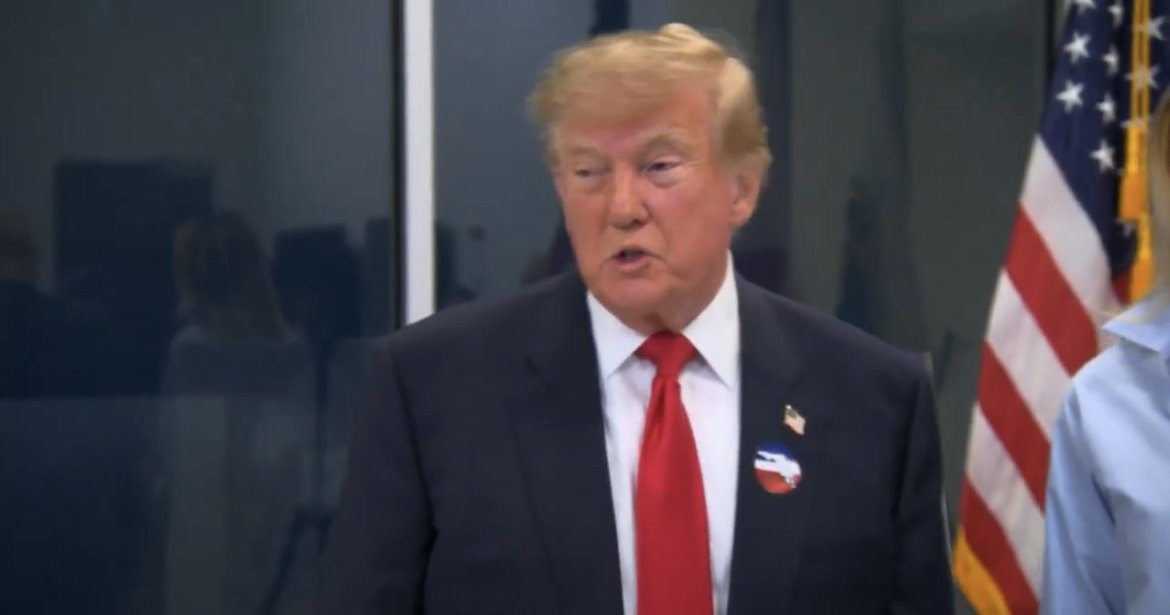
Trump Slams Obama and Bill Clinton After Former Presidents Take Shots at Him on the Campaign Trail (VIDEO)

President Trump on Saturday slammed former presidents Barack Obama and Bill Clinton for taking shots at him on the campaign trail.

Earlier this week, Bill Clinton hit the campaign trail in Florida and took a shot at Trump over his Rose Garden renovations.

“I think Congress made a mistake not protesting turning the Rose Garden into what looks like the entrance to Liberace’s bathroom,” Clinton said in Hollywood, Florida, on Tuesday.

WATCH:

Barack Obama hit the campaign trail on Saturday and stumped for Ohio Democrats in Cleveland.

Obama also trashed President Trump’s White House renovations.

“[Trump] has got the White House looking like Saddam Hussein opened up a Cheesecake Factory. It’s gold everywhere,” Obama said.

On Saturday afternoon, President Trump and First Lady Melania were spotted walking into a polling station in Palm Beach.

President Trump was asked about Slick Willie and Barack Obama’s harsh criticism of his presidency.

“They’re critical because we beat them,” Trump said.

“I would be out there fighting, too,” he said of Obama and Clinton.

“Obama was a lousy president. Clinton was not bad, but he got caught up in a lot of scandals,” Trump said.

WATCH:

The post Trump Slams Obama and Bill Clinton After Former Presidents Take Shots at Him on the Campaign Trail (VIDEO) appeared first on The Gateway Pundit.

President Trump in Georgia – “We are Going to Crush the Radical Left Democrats All Across the Country” (VIDEO)

President Trump held a rally in Perry, Georgia, on Saturday to an enthusiastic crowd of patriots who love the United States of America.

Watch:

President Trump told the crowd that we are going to win the midterm election.

“We are going to crush the radical left Democrats all across the country,” Trump said.

“We are going to win the Republican House, and we are gonna win the Republican Senate in record numbers,” Trump said.

“People are gonna be very, very surprised come November 3rd. Oh, I look forward to November 3rd,” Trump continued.

Watch:

President Trump blasted Ilhan Omar and said that she needs to resign from Congress.

“She comes from one of the worst countries, maybe the worst country in the world and she is telling us how to run our country,” Trump said.

“What that group of people have done to Minnesota, one of the most beautiful places at one time,” Trump continued.

“When asked whether or not she was married to her brother, she said, ‘not to my knowledge,’” Trump said.

“Therefore, because she used a fake name to be sworn in, I assume she must immediately resign from Congress,” Trump said.

Watch:

The post President Trump in Georgia – “We are Going to Crush the Radical Left Democrats All Across the Country” (VIDEO) appeared first on The Gateway Pundit.

Undecided Michigan Voter Says It’s a ‘TURN OFF’ to See Obama Campaigning for Abdul El-Sayed (VIDEO)

Screencap of Twitter/X video.

Abdul El-Sayed has a black voter problem in Michigan. It first became apparent during the Democrat primary but it has persisted for him.

Lots of black voters in the state just don’t seem to like him and are crossing over to vote for Republican Mike Rogers.

This is why the Democrats have sent former President Obama to the state to campaign for him and other Democrats, but even that doesn’t seem to be working.

In the video below, an undecided voter who is black, tells a reporter that seeing Obama campaign for El-Sayed is a ‘turn off’ for her.

Is the Obama magic completely gone?

More details from Eric Daugherty:

An undecided Michigan voter STUNS the left, saying Democrat Senate candidate Abdul El Sayed bringing in Barack Hussein Obama to campaign for him today is a total “TURN OFF”

“No, honestly, it’s a turn off.”

“Just because I’ve seen too many candidates use him just to manipulate the Democratic vote. I’m not 100% sold on Abdul!”

Rightfully so.

Democrats keep wheeling out Hussein in the final stretch every cycle thinking voters won’t notice they are being played!

They do this EVERY TIME — and only where they’re desperate

Michigan citizens see right through the Hussein rescue tour.

They KNOW Abdul going full jihadist and socialist is horrible for their communities

Here’s the video:

The left is pushing very hard for El-Sayed because he is a test case for them.

They think that if Abdul El-Sayed can win in Michigan, that they can push these types of candidates anywhere else in the country.

The post Undecided Michigan Voter Says It’s a ‘TURN OFF’ to See Obama Campaigning for Abdul El-Sayed (VIDEO) appeared first on The Gateway Pundit.

Joe Rogan Blows the Mind of a Guest by Comparing Mamdani’s NYC Budget to the Budget for the Entire State of Florida (VIDEO)

Screencap of Twitter/X video.

Joe Rogan blew the mind of a guest during a recent episode of his podcast by simply comparing Zohran Mamdani’s budget for New York City to the budget for the entire state of Florida.

Florida has three times as many people as New York City but operates on a much leaner budget than the Big Apple.

The guest is podcaster and writer Michael Malice, who has his face painted for some reason, perhaps for Halloween.

Partial transcript via the Vigilant Fox:

ROGAN: “You see, Mamdani is trying to figure out a way to use his budget. His budget is higher than the budget of the entire state of Florida, which has three times more people.”

MALICE: “No, it’s not. Is it really?”

ROGAN: “Yes, it is. Yeah.”

MALICE: “No way!”

ROGAN: “Yeah, yeah, yeah. Look it up… New York City’s budget… is more than the budget for the entire state of Florida, which has roughly three times as many people living in it.”

MALICE: “Holy… is that true, Jamie?”

ROGAN (reading): “Eye-popping amount… insider called ‘insanity’… a record $127 billion budget proposal… The socialist city leader’s plan includes a whopping 9.5% proposed property tax hike on New Yorkers, which he claims would be a last resort, while allocating another $1.2 billion for migrants. MIGRANTS!”

MALICE: “What’s the Florida budget, Jamie?”

[Malice sees the numbers]

MALICE: “HOLY SH*T!”

ROGAN: “Yeah, triple per capita. So the Florida House budget is $113.6 billion to $115 billion (proposed), and the New York proposal is $127 billion. So it is more.”

MALICE: “Holy crap!”

CONTEXT: New York City’s current budget is $125,800,000,000 for about 8.5 million people. Florida’s is $117,600,000,000 for about 23 million.

That’s roughly $14,800 per New Yorker versus $5,100 per Floridian.

See the video below:

Isn’t it incredible that New York City has that kind of budget and it’s STILL not enough for Mamdani?

He actually wants to raise taxes to bring in more.

He can’t find a single wasteful program to cut? Not even one?

The post Joe Rogan Blows the Mind of a Guest by Comparing Mamdani’s NYC Budget to the Budget for the Entire State of Florida (VIDEO) appeared first on The Gateway Pundit.

WATCH LIVE: Trump Holds Midterm Rally in Perry, Georgia

President Trump holds a midterm rally in Perry, Georgia – October 24, 2026

President Trump will speak at a midterm rally in Perry, Georgia, tonight for Senate nominee Mike Collins and gubernatorial nominee Rick Jackson.

Trump is holding the rally at the Guardian Centers of Georgia, a training complex for military and emergency response.

“I will be doing a BIG RALLY today in the Great State of Georgia, in honor of Mike Collins, one of the hardest working and most respected Congressmen in D.C., and the phenomenal Rick Jackson, who will hopefully be Georgia’s next Governor,” Trump wrote on Truth Social this morning.

“They are two incredible people! Their opponents are Radical Left Lowlifes and Lunatics who want to Take Away Your Guns, Open Your Borders, Allow Men To Play In Women’s Sports, and have Transgender nonsense for everyone. I Won Georgia in a Record Vote. See you later!!!”

TO THE GREAT PEOPLE OF GEORGIA, GET OUT AND VOTE FOR:

– Mike Collins for U.S. Senate
– Rick Jackson for Governor
– Greg Dolezal for Lieutenant Governor
– Brian Strickland for Attorney General
– Tim Fleming for Secretary of State
– Jim Kingston for U.S. Congress (GA-01)
– Brian Jack for U.S. Congress (GA-03)
– Rich McCormick for U.S. Congress (GA-07)
– Austin Scott for U.S. Congress (GA-08)
– Andrew Clyde for U.S. Congress (GA-09)
– Houston Gaines for U.S. Congress (GA-10)
– John Cowan for U.S. Congress (GA-11)
– Rick Allen for U.S. Congress (GA-12)
– Clay Fuller for U.S. Congress (GA-14)

These Great Patriots have my Complete and Total Endorsement — They will never let you down! President DONALD J. TRUMP
swampthevoteusa.com/georgia/

The line for Trump’s rally began forming this morning, with many supporters already lined up seven hours before Trump took the stage. One Puerto Rican Trump supporter told Fox News, “Puerto Ricans, we love Trump. Hispanics, we love Trump!”

WATCH:

Trump is scheduled to speak at 7 pm ET.

Watch live below:

The post WATCH LIVE: Trump Holds Midterm Rally in Perry, Georgia appeared first on The Gateway Pundit.

REPORT: Senior Democrats Are Already Trying to ‘Temper Expectations’ Over the Midterms

Screencap of Twitter/X video.

Senior figures in the Democrat Party are reportedly already trying to temper the expectations of supporters over the midterms. What does that tell you? Have they looked at some bad internal polling?

Leftists are expecting a blue wave election. What happens if the Republicans keep the Senate and the Democrats win the House by only a small margin? What if the Republicans keep both the House and Senate?

You will see a lot of angry Democrats out there if either of those scenarios play out and they will be looking for people to blame.

And mind you, this is not coming from a conservative outlet.

It’s from Politico:

Senior Democrats are tempering their expectations about how big of a House majority they might win, as both parties see a tightening battlefield.

The latest rounds of internal polling from both parties from the middle of October show GOP candidates gaining ground in the Midwest and narrowing races in a key Colorado seat and elsewhere, according to six people familiar with the data who were granted anonymity to discuss it. Republicans’ deluge of money also seems to be helping shore up some imperiled Florida seats even as they face serious problems in North Carolina and Texas. The GOP gerrymandered those three states in their favor in the Trump-induced round of redistricting following the 2024 election.

Now, Democrats on Capitol Hill are starting to privately caution some of their bolder colleagues that it seems very possible they don’t hit the 235-seat height of their majority following the 2018 elections, according to one of those people and two others with direct knowledge of the conversations.

“I don’t think anyone ever believed we were going to have 2018 numbers,” one House Democrat said. “I honestly think the results are going to be all over the place. Caution seems smart to me. But, optimistic is also a good place to be.”…

Some Democrats feel their own internal polling is over-indexing their strength in some cases, according to two other operatives working on competitive races, granted anonymity to speak candidly.

This guy makes an excellent point.

If Democrats lose everything, we will be in for quite a show.

The post REPORT: Senior Democrats Are Already Trying to ‘Temper Expectations’ Over the Midterms appeared first on The Gateway Pundit.

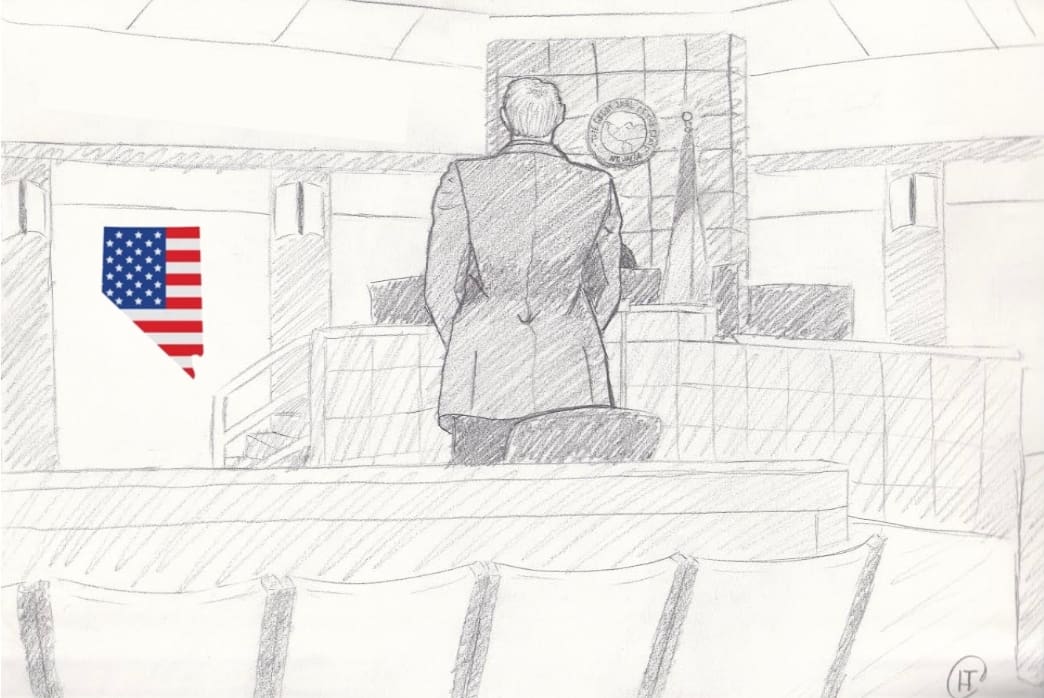
The Nevada Supreme Court Refuses to Rule on the Voters’ Right to Verify Their Vote is Counted

The Nevada Supreme Court Refuses to Rule on the Voters’ Right to Verify Their Vote is Counted

Update on Nevada Supreme Court Case 93319

Voters across the country are denied by design the right to verify the only ballot that matters: the ballot that actually gets counted. In electronic tabulation your votes are computed from an electronic “version” of your ballot, a version you are never allowed to see. If you cannot see it, you cannot verify it before it’s counted.

This matters immensely because the explicit design of electronic tabulation completely rejects voter oversight of what goes into the count. The count determines results, and the design of electronic tabulation denies any and all voters the opportunity to personally confirm that their votes are exactly what is being counted. Rather, you are forced to assume it. Federal law, so we are told, is there to “help” Americans “feel confident” that their votes are counted accurately. But this is not so. Besides the fact that those who are not Americans are routinely voting, Americans are forbidden the opportunity to ensure that their votes–which are their commands–are in fact obeyed

A hand-counted paper process can help make the problem with electronic tabulation controlling the counting of the votes even clearer: in a hand count, the very paper voted on is the very paper counted. In that process, the voter can see that the paper they cast is exactly the same as what is read into the count. This cannot happen in electronic tabulation. Even if paper ballots are used in your state–and this includes mailed ballots–the paper only supplies a later scan. After the paper is surrendered and the scan is finished, we are forced to assume that accurate data is generated, if any relevant data at all, to supply the count and reveal the results.

Yet federal law (the Help America Vote Act, HAVA) commands that voters be able to verify their ballot before it is counted.

Electronic tabulation prevents that verification: because between the casting and counting of your ballot it injects the creation of an electronic version of your ballot. You can only assume your vote is counted because the design forbids you to see the thing that gets counted, if it gets counted at all let alone counted accurately. This injection of the unseen ballot makes any verification performed on the paper irrelevant and meaningless. But it is not harmless. Without verification, voters are denied oversight. Without oversight, we are made mere spectators in a theater of elections only, a theater built and maintained by tyrants. Sound familiar?

What then is the value of “verifying” a ballot that is not counted? It has no value to the voter. It does have great value to our enemies, both foreign and domestic. That value is the maintenance of the illusion of integrity in our elections, making them nothing more than a massive con job, until We the People choose to demand otherwise. We are living in the time of the Great Election Illusion. Americans are being entertained by election theater while America’s foundation is burning. The question is, what are we going to do about it?

In the June 2026 Primary, I asked to verify that the scanner got it right. I was denied, and so I sued. Nevada law says that voters must be allowed to verify and correct their choices before a ballot is “cast and counted.” The question is therefore simple: does checking the paper that does exist and does not get counted verify an electronic record the voter must assume exists and must assume gets counted? The answer is no.

It is impossible to verify something unseen and before it even exists! But eight judges in black robes have determined that you do not have the right to even see a ballot that actually gets counted. Voter oversight has been declared dead by a judiciary that seems to prefer tyranny.

On October 15, all seven justices of the Nevada Supreme Court unanimously affirmed the judgment against me in the lower court. The Court called the law’s requirement—that election systems allow voters to verify their votes before ballots are “cast and counted”—a “term of art.” In effect, it rewrote the law to excuse the ruling that denies voters the verification right the statute mandates. Unable to explain how it is possible for a voter to verify a ballot they have never seen–because it is not possible, the panel of seven judges decided to reduce the law instead of reading the law and let it speak its command. They silenced the law so they did not have to hear the law.

But wait, there’s more! They silenced the law and they also silenced me. They took the words they seem not to want to hear and replaced them with the words they did. My words were precise: I want to verify the one record that gets counted. The Nevada Supreme Court (The Censoring Seven) took them and turned them into “he wants to have a second look on a record inside the machine.” The difference is subtle but consequential. I asked for one look, a look at the record that is counted, as the law says I can. That claim they did not defeat, and they changed what I asked into this: a second look–a look the law says nothing about. Doing this gave them an argument they could win. They moved the goalposts to create the conditions and claims they could defeat. It’s peevish and childish, unbecoming of those with power.

The Censoring Seven not only rewrote the law and legislated from their bench, but they also reasoned backward to reach their absurd conclusions. The law that commands voter verification is to define what the election process must include. The law is supposed to control the kinds of options the State would choose, rejecting systems that do not allow voter verification of the record that gets counted. The law is to restrain the extent of the election system, not the other way around.

But here they reversed the order and went backward, telling the law what it should say because the permitted system would not be changed. They argued that the electronic record is created and counted so fast that it was unreasonable to ask to see it. The request would cause a delay the system could not tolerate. But that is exactly backward, making the permitted election system govern the extent of the mandate of law. If the system operates so a voter cannot see it then that system is what is unreasonable, not the voter’s request. (But remember, the claim was not asking to see inside the machine as a second look. It was to see and verify the record that gets counted. This matters because the command to let the voter verify is supreme to the statute that gives permission to use electronic counting.) They treated the statute’s permission to use electronic tabulation as the preeminent measure for what the law would be allowed to say, going so far as to erase language from the law from their bench so it would no longer have a voice. The effect of censoring that voice is to silence ours.

On October 16, a Petition for Rehearing was filed asking the Court to reconsider its ruling: a “term of art” label cannot erase law, and the equipment’s design cannot mute the law that governs it.

The petition also places a federal question before the Censoring Seven: Does the Help America Vote Act permit a voter to verify paper that is only scanned and not counted, when a different electronic record, never seen or corrected by the voter, is counted?

If the Nevada Supreme Court’s final decision resolves the meaning of federal law, I may ask the U.S. Supreme Court to review it through a petition for certiorari. Federal law allows the Court to review qualifying final decisions from a state’s highest court when a federal statute is at issue. This petition preserves only a possible path to that review. It does not guarantee the U.S. Supreme Court will take the case.

The fight goes on, and your vote is our weapon!

The post The Nevada Supreme Court Refuses to Rule on the Voters’ Right to Verify Their Vote is Counted appeared first on The Gateway Pundit.