The End of the Story in Ukraine?

The End of the Story in Ukraine?

The proxy war against Russia is running aground on the physical limitations of the American war machine.

ARMENIA-EUROPE-EPC-POLITICS-DIPLOMACY-SUMMIT
(Photo by Ludovic MARIN / AFP via Getty Images)

It looks as if we’re getting to the tough choices part of the program. CNN reported Thursday that Ukraine has run out of Patriot interceptor missiles. This news came after several days of wrangling and slap-fighting between Washington and Kiev over intelligence-sharing, internet support for Ukrainian operations, and whether or not Ukraine would continue striking Russian energy infrastructure. 

This is bad for Ukraine, although not altogether surprising. For months, the press has been full of ominous stories and analyses about the dire state of American munitions stockpiles after the U.S. began its latest little jaunt in the Middle East. (Including those in The American Conservative—please subscribe!) Two weeks ago Axios reported that the U.S. had moved Patriots to Saudi Arabia and Qatar to protect energy interests in the Persian Gulf region from Iran and its allies. That decision was hardly a shock; the main weapon Iran has deployed against the U.S. and its fellow travelers has been wreaking havoc on oil and gas interests, and consequently on Western economies. Keeping Aramco up and running is a priority for the White House, especially as fuel prices have become the thematic issue for the American midterm elections.

But the fact is that material reality is beginning to bite. As Jennifer Kavanagh has written in these pages, interceptor stockpiles are probably still at a level where the U.S. can comfortably continue the war in Iran without undue risk to American assets, but such a continuation will come at the cost of readiness in other theaters. The competition between Ukraine and American clients in the Middle East for advanced munitions is not a new phenomenon, and has previously resulted in some resource-shuffling that would be amusing if it weren’t so desperate. The Iran War is new, though, and it is a war that, because of direct American involvement and its bearing on American economic interests, will always tend to demand more attention and resources than the proxy conflict in Europe. America’s extension (one might justifiably say overextension without a hint of partisanship) doubtless has informed Russia’s escalating attacks on Ukraine.

One reasonable interpretation of the White House’s alleged fresh hostility to Ukraine—widely decried in the pro-Ukrainian sections of the Western press—is that it arises from the bare recognition of this physical reality. There are only so many missiles to go around; the U.S. is not going to sacrifice the safety of its own military personnel and its own economic security for Ukraine. The well is dry, and the Ukrainians are going to have to pack things up here. 

Of course, the question is whether the pushme-pullyou dynamic inherent to the Ukraine War will now take over. When things are going badly for the Russians, the Ukrainians become more intractable; when things are going badly for the Ukrainians, the Russians have less incentive to quit. Hence the argument for the necessity of President Donald Trump’s deal to waive sanctions on Russian diesel to “soften” Russia’s position: offer some goodies in exchange for Russia calling off the dogs. The proof will be in the pudding, but prospectively it is not clear that the volume of diesel moved under the deal will amount to a very large goodie at all.

After five paragraphs of even-keeled exposition of the news, is it too early to say we told you so? We really, really told you so. The limitations of the American defense-industrial base and the finite nature of American munitions stockpiles are not fresh topics! No amount of will or principle, no amount of admirable Ukrainian valor and ferocity, can overcome physical reality, and this physical reality was as large and obvious as an iceberg hulking on the horizon, or a volcano twitching and smoking over a city, or a tornado ripping merrily through the green fields of Kansas toward an idyllic trailer park. The United States is a polity of unparalleled wealth and might, but it is not, in the end, exempt from the laws of the universe; Uncle Sam is not quite up to the challenges of godhead. We told you so, and now the Ukrainians, our allies in the Middle East, and the American people are going to bear the consequences of going ahead and trying to sustain vast wars in two separate theaters anyway. It’s just a matter of deciding who is going to get to hold the muddiest part of the stick.

Trying to continue in this fashion is, I would submit, madness, but we may not even have the luxury of indulging madness at this point. The missiles are running out. That is the end of the story.

And you know what? Don’t even mention Taiwan.

The post The End of the Story in Ukraine? appeared first on The American Conservative.

The Right-Wing Tide Reaches Brazil

The Right-Wing Tide Reaches Brazil

A President Flavio Bolsonaro would be friendly to Trump, but not a game-changer for American interests.

BRAZIL-ELECTION-RUNOFF-CAMPAIGN
(Sergio Lima / AFP via Getty Images)

Brazil is heading to a runoff election to determine the fate of the country for the next four years, and the right-wing tide sweeping Latin America appears to be about to overtake Brazil as well. 

On October 4, Brazilians went to the polls for a bitterly disputed presidential election that pitted the left-wing incumbent, Luiz Inácio Lula da Silva, against Flavio Bolsonaro, the son and political heir of the former president Jair Bolsonaro. The results of the first round look promising for the Brazilian right, which outperformed the polls. Flavio Bolsonaro secured first place in the presidential contest with a hair over 47 percent, with Lula taking 45 percent. The right was even more successful in the legislative elections.

As neither candidate secured an absolute majority, the election will proceed to a runoff on October 25, which Flavio is heavily favored to win. He will probably pick up most of the 2 percent of the vote that went to the right-wing candidate Ronaldo Caiado, and a plurality of the 3 percent for the right-wing candidate Renan Santos. Lula, on the other hand, has no similar reserve of votes to draw upon; he will need a major groundswell of new voters turning out for the second round to secure a victory. The polling is bleak for Lula: AtlasIntel’s latest poll, released on Friday, puts Bolsonaro ahead 51 percent to 46 percent.

For the Bolsonaros, the election is existential. Jair Bolsonaro has been incarcerated or under house arrest since 2025, when he was convicted by the Brazilian Supreme Court for attempting to engineer a coup d’etat after losing to Lula in the 2022 presidential election. His sentence carried a penalty of 27 years and 3 months imprisonment and prohibits him from running for office.

The Bolsonaros claim that the election was fraudulent and that Jair was attempting to preserve the constitutional order. Right-wing Brazilian activists, convinced that Lula had robbed Bolsonaro of the 2022 election, organized a major riot on January 8, 2023, when Bolsonaristas attacked the seat of government in the capital of Brasilia in an attempt to precipitate intervention by the military and prevent Lula from taking office. Over 2,000 were arrested, and hundreds have been convicted of crimes ranging from destruction of property to insurrection.

The incident is a notable parallel to the events of January 6, 2021 in the U.S., and the Bolsonaros hope to extend the parallel still further. Flavio has pledged that, if elected, he will pardon his father—whose declining health occasioned his release from prison to house arrest—along with anyone convicted of crimes connected with the January 8 riots.

The right retaking control of the Brazilian government would have major repercussions throughout the region and beyond. Under Lula, Brazil has been one of the firmest opponents of the Trump administration’s foreign policy, and the country is powerful and independent enough to have made both Trump and Elon Musk, the richest man in the world, blink. 

Musk was the first to tussle with the Brazilian Supreme Court Justice Alexandre de Moraes and the Brazilian left: In 2024, Moraes ordered X, Musk’s social media company, to censor Brazilian accounts posting inflammatory political content. Musk defied the court, arguing that the demand violated the principle of free speech, and shuttered the company’s office in Brazil, but Moraes doubled down and blocked the social network from the country entirely. After a little over a month, Musk knuckled under, suspending the accounts as requested and paying a hefty fine for his intransigence.

Trump has significantly more leverage to work with, but Brazil proved a tougher nut to crack than the president anticipated. In July 2025, the Trump administration increased tariffs on Brazilian goods to 50 percent and sanctioned Moraes to protest the treatment of Jair Bolsonaro. Lula didn’t flinch, and before the end of the year the U.S. had lifted many of the tariffs and ended sanctions on Moraes. The reversal was a hard one for the Trump administration, and unexpected; few countries have managed to make the president back down in comparable fashion.

Lula was also a major supporter of efforts to counterbalance U.S. hegemony—including serving as a major ally for Nicolas Maduro’s regime in Venezuela. Lula’s government has cultivated ties with Russia and China, expanding economic integration with China in particular and providing the Chinese with an important base for increasing their influence in the Western Hemisphere.

While a President Flavio Bolsonaro won’t cut China out of the Brazilian markets—it is Brazil’s largest trade partner, to the tune of over $170 billion of commerce in 2023—Brazil will certainly be much more amenable to the priorities and policies of the Trump administration, with which the family has cultivated close ties. With Lula out of office and Brazil pivoting to a pro-U.S. orientation, the Chinese will find it significantly more difficult to expand non-economic partnerships in the region, a major priority for the Trump administration.

Flavio Bolsonaro has also pledged to sign Brazil onto the Shield of the Americas, Trump’s regional anti-narcotics alliance, allowing for further regional coordination on fighting drugs and organized crime. The northwestern portion of the country, an isolated region of the Amazon rainforest bordering on Colombia, Venezuela, and Peru, is a major conduit for drug trafficking, and organized crime groups exploit the border to avoid crackdowns by crossing from one country to the other. Effective coordination via Shield of the Americas could produce real progress in the area.

The administration shouldn’t get too enthused, though. The Brazilians will still need to placate the Chinese, and much of a Bolsonaro administration’s term is likely to be consumed by bitter disputes with the Brazilian Supreme Court, an immensely powerful entity with sweeping legal authority. The incoming government may be friendlier to the Trump administration, but that is no guarantee it will significantly improve American interests, at least in the short term.

The post The Right-Wing Tide Reaches Brazil appeared first on The American Conservative.
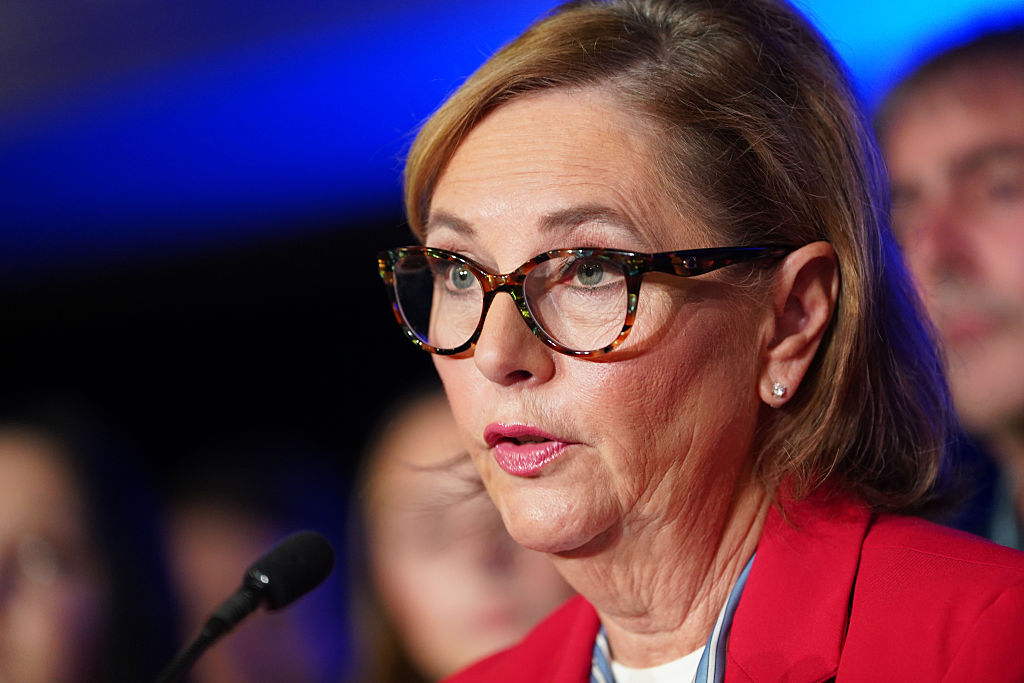
Could Lindsey Graham’s War Cost His Sister a Senate Seat?

Could Lindsey Graham’s War Cost His Sister a Senate Seat?

The late senator’s legacy threatens Darline Graham’s political future.

South Carolina Senate Candidate Darline Graham Holds Watch Party On Night Of Runoff Election
(Megan Varner/Getty Images)

“Lindsey liked war,” said President Donald Trump on the day of Sen. Lindsey Graham’s (R-SC) funeral in July. “He’s never seen a war he did not like.”

Now Graham’s sister might find out that voters even in ruby-red South Carolina like the Iran War a great deal less than her brother did.

Appointed three days after her brother’s death to finish out his term, Sen. Darline Graham (R-SC) faces an actual election in South Carolina, where Republican senators have been safe for at least 20 years.

Not this year. A late September poll by the right-leaning Trafalgar group showed a neck-and-neck race between Graham and her Democratic challenger, the pediatrician Annie Andrews, with the Republican leading by only 1 point. Another survey from Insider Advantage, taken in the same period, also revealed a 1 percent difference favoring Graham. A Rasmussen poll released Friday showed Graham at 49 percent and Andrews at 45. Six percent of respondents were not sure.

By contrast, Lindsey Graham defeated his 2020 Democratic opponent by 10 points.

A number of red states this election year are seeing unusual surges by Democratic candidates due to voters’ concerns about rising gasoline prices and general inflation, and South Carolina is no exception. Andrews has not only centered her messaging around high costs but tied them to the Iran war. And the Democrat repeatedly emphasizes that Darline Graham voted three times for that war to continue.

In their only debate, televised on Sunday night, Andrews highlighted the war again while the Republican senator hewed to the standard neocon posturing worthy of a Graham.

“My opponent… had the opportunity to vote to end the war,” Andrews charged. “But three times in a row, she voted to continue it.”

“Why in the world would we stop now when they’re still dangerous?” Graham said. “And we are close to ending the war. Again, I think the president wants to end the war. I know he does. We all want the war to end.”

This is the closest Graham came to sympathizing with South Carolina voters who have tired of the war and the resulting price spikes. It felt like some recognition that the situation was dire on this front, for the state and for her campaign.

Still, the hawkish hits kept coming.

“But I support a strong military,” Graham added. “I believe in peace through strength.”


“I fully believe that we need to stand with Israel,” Graham added, predictably. “The same people that want to hurt and attack Israel want to come after us.”

“The terrorists that were close to getting a nuclear weapon will come here,” she said, repeating the common neocon refrain. “So, we need to stand with our strongest ally.”

She even tried to blame the war on Democrats.

“Let’s not forget again how the war started,” Graham continued. “The Democrats let Iran get a nuclear weapon almost.”

The 2003 Iraq War, including the fight-them-over-there-so-you-won’t-have-to-fight-them-here rhetoric, was popular at one time in “Bush Country,” as South Carolina has been called.

Today’s Iran War? Not so much. Andrews has capitalized on antiwar sentiments as she tries to yank a Senate seat from the Republicans.

“This reckless war in Iran has helped drive fuel prices to record highs,” Andrews said at a campaign stop. “Darline Graham has voted multiple times to continue this war that is directly responsible for the six-dollar diesel.”

“We need to lower the damn diesel,” she said.

When Lindsey Graham was still Andrews’s target—and when she had far less chance of becoming Senator than she does today—her rhetoric was even sharper on the war. “Lindsey Graham wants to send your sons and daughters to war,” Andrews said in March. “Your sons and daughters are the reason I am in this fight.”

Her focus now is on the impact of the war on voters’ pocketbooks. Judging by the polls, that new rhetorical strategy is working.

As a South Carolinian, I would still put my money on Graham winning. But the closeness of this race would have been unthinkable absent the political context created by Trump’s war. Moreover, many South Carolinians are uncomfortable with how the sister of the late Senator was awarded a high office by bloodright. Adding to the difficulty for Darline, a sizable number of South Carolina conservatives had supported Lindsey’s closest primary challenger, Rep. Ralph Norman (R-SC), who ran as an “America First” war skeptic. Many who had pinched their noses and voted for Lindsey may not do the same for Darline. Some Norman supporters have even pushed for a write-in campaign.

The Iran War itself probably won’t sway the election, but the higher prices very well could, and voters do know the former led to the latter. Voters watch the news. They budget. They pump gas.

They also see Republican leaders treating them as if they were stupid.

“Everybody’s frustrated about fuel prices, obviously, but that’s not related to policies, that’s not related to Republicans in office,” House Speaker Mike Johnson (R-LA) recently said in an interview, adding “this is related to the Strait of Hormuz.”

Well, what else could be related to the Strait of Hormuz? Perhaps the Iran War—a signature policy of “Republicans in office,” especially the one in the White House.

Antiwar Republican Rep. Thomas Massie (R-KY) recently shared that clip of Johnson and asked, “Who wants to tell him?”

Exactly. No one needs to tell South Carolina’s voters that the war is helping cause their financial pain.

Trump is right: Lindsey Graham loved war. His greatest legacy is arguably the U.S. war with Iran.

It meant a lot to him. It could also cost his sister his Senate seat.

The post Could Lindsey Graham’s War Cost His Sister a Senate Seat? appeared first on The American Conservative.

RJ Mitte’s Relationship with Fiancée was Rocky Before He Took His Own Life: TMZ

RJ Mitte / screen image

“Breaking Bad” star RJ Mitte has died at the age of 34.

According to TMZ, RJ Mitte died by suicide on Monday in Texas.

RJ Mitte played Walter White Jr. on “Breaking Bad,” the highly popular television series created by Vince Gilligan.

Mitte was diagnosed with a mild case of cerebral palsy when he was a child.

Breaking Bad ran from 2008 to 2013 and won nearly 100 awards, including 16 Primetime Emmy Awards.

RJ Mitte was engaged to his longtime partner Kennedy Suarez. He proposed to her last year.

According to TMZ, RJ Mitte’s relationship with his fiancée was strained because she gave him an ultimatum: choose between her or his mom.

TMZ reported:

RJ Mitte faced an impossible choice in the days leading up to his death … multiple sources close to his family tell us his frustrated fiancée gave him an ultimatum — choose between her and his mom.

Our sources tell TMZ … there was mounting tension between RJ and his fiancée Kennedy Suarez, who felt RJ’s mom was meddling in their relationship.

According to our sources … Kennedy and RJ’s mom, Dyna, did not get along … and Kennedy wanted RJ to favor her, or else.

RJ had an extremely close relationship with Dyna and his sister, Lacianne… and wasn’t willing to cut his mom off … and that caused serious friction in his relationship with Kennedy.

RJ and Kennedy were friends for 10 years before they began dating in 2020. They got engaged October 10, 2025, almost a year to the day before he took his life.

We’re told RJ and Kennedy were still together a week before he died. It’s unclear if they broke up in the days before RJ’s death.

The post RJ Mitte’s Relationship with Fiancée was Rocky Before He Took His Own Life: TMZ appeared first on The Gateway Pundit.

(VIDEO) White House Press Secretary Katie Zacharia Addresses Claims She Lied About Being a Lawyer

White House Press Secretary Katie Zacharia

White House Katie Zacharia opened up on Thursday about a recent controversy surrounding her resumé as the media tries to spin it into a scandal, claiming she lied about being an “attorney.”

We have not found evidence that Zacharia has ever presented herself as a practicing attorney.

Still, immediately after her first press briefing on Tuesday, the knives were out, with the left-wing media smearing her for her performance and questioning whether she is indeed a lawyer.

CNN quickly published a story with the headline, “Katie Zacharia presented herself as a lawyer. She’s not.”

CNN and other left-wing outlets have been losing it ever since, claiming she lied about being a lawyer.

However, the term lawyer is often used as a broad term for someone who earned their Juris Doctor (JD) degree, while an attorney is a lawyer who has passed the bar exam and is licensed to practice. In simple terms, a lawyer is someone who has studied law and earned a degree, and an attorney is licensed to practice law. It’s a square-versus-rectangle debate that the media is sensationalizing.

According to the Wall Street Journal, Zacharia sat for the bar exam in 2011, all while planning a wedding and planning a move to China with her soon-to-be husband, but did not pass.

CNN reports that “Zacharia said in a statement she had ‘practiced international transactional law, with all the appropriate credentials.’ She told the New York Times that she consulted with Pepperdine’s president about how to identify herself, and that she was told not to use ‘attorney’ or ‘esquire,’ but that ‘lawyer’ was OK.”

Likewise, she told Real America’s Voice’s Jack Posobiec during an interview on Thursday, “I consulted, for a very long time, many people in the field: Is it okay and acceptable if I label myself lawyer, not attorney at law, not Katie Zachariah Esquire, but lawyer, and provide legal analysis, not legal advice?”

“And they said absolutely across the board. You can call yourself a lawyer. You have a JD, and to buffer that, you have international legal experience in transactional law, which gives you the ability to analyze it, not necessarily give advice, and so that’s where a lot of this discussion has come from,” she continued.

“It’s unfortunate that people dub this as some kind of conspiracy or want to put me in a camp. The truth is, I was very careful how I executed this, and I never came across as someone who was an attorney at law.”

Asked whether she would weigh in on legal matters in the White House or provide legal consultation to President Trump, Zacharia responded, “No, no. For the press secretary, my job is to amplify and communicate his message and to interact with the press and build relationships and strengthen relationships and communicate clearly the message of the administration, and I only intend to do that.”

“I’m not being hired as White House counsel, and that’s the long and the short of that.”

WATCH:

The post (VIDEO) White House Press Secretary Katie Zacharia Addresses Claims She Lied About Being a Lawyer appeared first on The Gateway Pundit.

DEVELOPING: Wildfire Erupts in Malibu Amid Gusty Santa Ana Winds (VIDEO)

Here we go.

A wildfire erupted in Malibu on Thursday amid gusty Santa Ana winds and red flag warnings.

Santa Anas are very dry, often warm winds in California that can reach gusts exceeding 80 mph, creating dangerous fire conditions.

A high wind warning and heat advisory are currently in effect in Southern California. Temperatures soared into the 90s with very low humidity.

A brush fire, dubbed the Bryson Fire, broke out near Mulholland Highway in the Malibu area on Thursday evening.

The fire rapidly exploded to 45 acres.

KTLA reported:

A brush fire erupted in the Malibu area Thursday afternoon as powerful Santa Ana winds and dangerously dry conditions gripped Southern California, prompting officials to issue an evacuation orders and warnings.

The blaze, dubbed the Bryson Fire, was reported in the 400 block of Encinal Canyon Road, near Mulholland Highway, north of Malibu, according to officials with the L.A. County Fire Department.

The fire, burning through medium brush and moving south, had burned approximately 2 acres before spreading to 5 acres by 5:15 p.m. before exploding to 45 acres, according to Watch Duty.

Multiple firefighting helicopters joined the fight, as well as fixed-wing airplanes as the flames continued to be kicked up by high winds. Fire officials were working to get ground crews in place for the firefight and possible structure protection.

WATCH:

DEVELOPING…

The post DEVELOPING: Wildfire Erupts in Malibu Amid Gusty Santa Ana Winds (VIDEO) appeared first on The Gateway Pundit.

WHOA! Elon Showcases Tesla Roadster Flying and Doing Flips – Accelerates From 0 to 60 MPH in 0.81 Seconds- FLYING CARS ARE REAL! (VIDEOS)

Elon Musk’s Tesla Roadster unveiled at Texas event – October 15, 2026

Elon Musk on Thursday unveiled his next-generation Tesla Roadster during an event in Texas, showing off a car that can fly, do flips, and go from 0 to 60 mph in under one second.

Musk held the expo on Thursday evening to showcase the new Tesla model.

During the event, a demonstration showed the car hovering off the ground, then flipping over multiple cars and a semi-truck cab.

“This will be an actual car that’s on the roads. You know, I’m not sure it’s necessarily legal in all jurisdictions,” Musk joked. “But there will be such a car that someone can own, so it’s going to be pretty wild.”

WATCH:

It was also shown driving upside down on a vertical ramp, then flipping and landing vertically on the ground. “Well, it worked,” Musk said:

In under one second, the car used rocket thrusters to go from 0 to 60 miles per hour. The final time was 0.81 seconds.

WATCH:

MORE:

Fox Business reported on the event earlier Thursday:

Tesla is set to unveil the redesigned Roadster on Thursday after the EV-maker first previewed a next-generation version of its electric sports car nearly nine years ago.

The automaker first revealed a prototype of the $200,000 Roadster in 2017 and the company said at the time it would begin deliveries in 2020. While the price of the Roadster hasn’t been updated, reservations cost buyers $50,000 apiece.

Tesla CEO Elon Musk has downplayed the importance of the Roadster to the company’s finances, saying in 2023 that it’s a “small potato situation” that wouldn’t “move the needle in a major way financially.”

While the Roadster may not be a key part of Tesla’s auto lineup from a financial perspective, high-performance luxury sports cars can serve as platforms for the automaker’s technology.

The post WHOA! Elon Showcases Tesla Roadster Flying and Doing Flips – Accelerates From 0 to 60 MPH in 0.81 Seconds- FLYING CARS ARE REAL! (VIDEOS) appeared first on The Gateway Pundit.

SURPRISE! Final Cost of Obama’s Hideous Presidential Center Now Projected at THREE TIMES the Original Estimate

Aerial view of the Obama Presidential Center under construction, showcasing the building's unique architecture and surrounding landscape, preparing for its grand opening in June.

Aerial view of the Obama Presidential Center under construction, showcasing the building's unique architecture and surrounding landscape, preparing for its grand opening in June.
Credit: ABC7 Chicago

Obama’s eyesore of a presidential center in Chicago opened barely three months ago and is now projected to cost three times more than originally estimated. How fitting!

Just weeks ago it was reported that employees at the center are already complaining about the working conditions and now this. Not to mention the contractors who were allegedly jilted out of money owed for work done.

At least Obama doesn’t have to worry about the extra costs. His party and all of their rich friends would never leave him hanging.

FOX News reports:

Obama’s billion-dollar baby: Chicago center’s price tag hits monumental milestone, tripling original estimate

The price tag for the beleaguered Obama Presidential Center is now projected to top $1 billion, nearly triple its original estimate, the foundation overseeing construction of the Chicago facility told Fox News Digital.

Confirmation of the 10-figure cost marks another chapter in the troubled history of the much-delayed project, which opened five years behind schedule amid controversy over its use of public parkland and claims that subcontractors were stiffed out of millions of dollars. It comes as newly released financial records reviewed by Fox News Digital offer a fresh look at the finances of the Obama Foundation, the former president’s private nonprofit that oversaw construction of the billion-dollar project.

The sprawling campus on the Windy City’s south side was originally expected to open in 2021, with construction costs estimated at $300 million to $350 million. But years of federal reviews, legal challenges and construction delays preceded its eventual opening in June 2026, by which time projected costs had skyrocketed to approximately $850 million.

Hailed by Democrats and supporters as a historic investment in the community and a tribute to the former president’s legacy, the center was promoted as a catalyst for jobs, economic growth and new opportunities for underserved communities.

Anyone want to take bets on how much this eventually ends up costing Chicago taxpayers?

The left will justify any expense for this monstrosity.

But, no kings or something.

The post SURPRISE! Final Cost of Obama’s Hideous Presidential Center Now Projected at THREE TIMES the Original Estimate appeared first on The Gateway Pundit.

911 Call From Room 2030 Sparks Fury

When a double killing unfolds inside a family and behind a hotel-room door, the public’s first impulse is to hunt for an explanation; the law’s first obligation is to secure facts, preserve process, and proceed deliberately. Both are on display in the Pocono Mountains case in which police charged 27-year-old Metallica Rose Harrison with killing her husband, Charles Harrison, and their three-year-old son in a guest room at the Great Wolf Lodge.

At a Glance

  • Police say Harrison called 911 from Great Wolf Lodge; officers found her husband and toddler son dead in the room, and Harrison injured.
  • She is charged with two counts of criminal homicide; investigators recovered extensive physical evidence and filed an affidavit of probable cause.
  • The case sits within the rare, studied category of familicide, though patterns cannot substitute for proof of motive in a specific prosecution.
  • Pennsylvania’s charging and arraignment process now governs the cadence of what comes next: custody, preliminary arraignment, and a preliminary hearing.

What investigators allege happened inside room 2030

Pocono Township police were dispatched at approximately 3:13 p.m. to room 2030 at the Great Wolf Lodge in Scotrun after a distress call traced to a woman identified as Metallica Rose Harrison. Responding officers discovered two deceased victims—a man and a three-year-old boy whom authorities identified as her husband and son—and located Harrison in the room with injuries; she was transported for treatment and then taken into custody. The department announced two counts of criminal homicide and referenced a filed affidavit of probable cause. County and state investigative partners, including the Monroe County district attorney and coroner, joined the probe, and officials described an intensive scene examination with a substantial volume of recovered evidence pending lab analysis.

Subsequent local reporting based on the complaint describes multiple stab wounds to Charles Harrison and a fatal stab wound to the child. Surveillance footage reportedly showed the family entering the room the evening prior, with no recorded door activity afterward. Portions of the 911 call summarized in those reports indicate Harrison told dispatchers her husband and son were already dead. At the hospital, she declined to be interviewed, according to the same accounts. Autopsies were scheduled in the days immediately following, and investigators cautioned that laboratory work and case development would continue over weeks and months.

How the case moves through Pennsylvania’s criminal process

Once police file a criminal complaint for homicide, Pennsylvania procedure sets a predictable sequence. After arrest, a preliminary arraignment—often within hours—advises the defendant of the charges and rights, sets bail where applicable (homicide typically involves detention), and schedules a preliminary hearing. That hearing is not a trial; it tests whether the Commonwealth has presented sufficient evidence to hold the case for court. If the magistrate binds the charges over, the case proceeds to the Court of Common Pleas for formal arraignment and pretrial litigation—motions on evidence, expert access, and discovery—before any trial. This cadence both protects due process and preserves the integrity of complex forensic work that cannot be rushed.

For the public trying to understand why information releases feel incremental, this is the reason. Investigators tend to speak through charging documents and hearings, not rolling briefings, especially when child victims are involved. Autopsy results, toxicology, and forensic timelines are central in a stabbing case; those answers arrive on laboratory schedules, not news cycles.

Where this fits in the landscape of family homicide—and where it does not

Prosecutors have framed the incident as a violent domestic tragedy; the configuration—a spouse and a young child killed together—matches the studied category of familicide. In the United States, rigorous work cataloging cases from 2000 to 2009 found roughly two dozen familicides annually, with most offenders male and firearms the predominant method; incidents explicitly tied to financial motives were a minority subset, on the order of several per year. The base rates underscore rarity, not predictability, and they warn against imputing motive by template.

Cross-national syntheses point to recurring correlates—relationship dissolution, financial strain, and mental-health conditions—yet emphasize that population-level data remain too sparse for precise risk prediction. Some samples identify spousal revenge and psychotic disorders as frequently recorded motives in intrafamilial child killings. These are associations in aggregate data, not evidence about any defendant in any single prosecution. In a courtroom, motive is proven (or not) with case-specific facts: statements, digital traces, medical findings, and physical evidence.

The evidentiary spine in a resort-room homicide

Stabbing homicides are resolved less by conjecture than by cumulative, convergent proof. Investigators typically stitch together: the 911 call record; door logs and surveillance metadata establishing ingress and egress; bloodstain pattern and transfer analysis charting movement and sequence; wound-pathology reports detailing force, angle, and number of blows; DNA confirming contact and handling of weapons; and any contemporaneous communications by involved parties. In hotel settings, passkey audits and camera coverage often narrow the window of opportunity to those already inside the room. Taken together, such elements provide the probable-cause backbone for charges and, later, the scaffolding for trial evidence. Public statements by Monroe County officials indicate precisely that kind of multi-agency, evidence-heavy approach here, with dozens of items collected and autopsies queued to lock down cause and timing of death.

The law draws a bright line between probable cause sufficient to arrest and proof beyond a reasonable doubt at trial. That gap is bridged—if it can be—by laboratory results, medical examiner testimony, and the defense’s ability to test and contest every inference. The filing of two criminal homicide counts is a consequential step; it is not the last word.

How to read developments responsibly as the case proceeds

Cases like this attract intense media attention because they violate the most fundamental expectation of safety—home, family, and in this instance, a leisure setting that caters to children. The wiser posture is patience anchored in process. Expect focused updates at procedural milestones: preliminary hearing, completion of autopsies, and any motions addressing admissibility of key statements or forensic results. Treat aggregate research on familicide as context, not conclusion; it explains how rare events have clustered historically, not why any particular person did what police allege. In the meantime, the Commonwealth will have to do in court what investigators began in that hotel room: lay each brick of evidence in sequence and let it bear weight.

Sources:

pjmedia.com, crimewatch.net, poconorecord.com, wbng.com, wfmz.com, abc13.com, katu.com, 2822news.com

How the CCP Lies About Living Standards to Promote the “Chinese Dream”

Democrats have done a lot to help the Chinese become wealthy. However, since Trump’s first term and the start of the U.S.-China trade war, China’s economy has steadily declined. Photo courtesy of ECNS

Xi Jinping has promised a “Chinese Dream” of national rejuvenation, greater prosperity and a powerful, modern China by midcentury. Yet the CCP’s presentation of living standards obscures how far ordinary Chinese remain from American prosperity.

Housing figures include shared building areas, headline unemployment statistics omit rural joblessness, and Beijing suspended youth unemployment reporting before introducing a revised measure that excludes students. These practices can make progress toward Xi’s promise appear greater than the underlying conditions justify.

This year, U.S. nominal GDP per capita is projected to reach $94,430, more than six times China’s projected $14,870. Assuming annual growth in nominal dollar GDP per capita of 5% in China and 2% in the United States, China would need about 64 years to catch up, let alone surpass the United States.

In the meantime, the Chinese Communist Party needs people to believe they are becoming rich. Housing statistics help create that impression: official figures suggest the average American home is only 54% larger than its Chinese counterpart, at 1,845 square feet versus 1,197 square feet.

But these figures seem counterintuitive when the vast majority of people in China live in one- or two-bedroom apartments, while about 62% of U.S. households live in freestanding, single-family houses, which might be four or more times the size of the average Chinese home.

The CCP creates this impression by measuring homes differently than the United States does. China reports housing size in gross building area, which includes each unit’s share of hallways, stairwells, elevator shafts, and lobbies, while U.S. figures count only the space inside the home. Shared areas typically account for 15% to 25% of a Chinese apartment’s listed size and can reach 30% or more.

According to People’s Daily, urban residents had 36.6 m² of building area per person in 2017 but only 25.7 m² of indoor space, meaning about 30% of the reported area was not living space.

Adjusting China’s official housing figures using that ratio and comparing them with U.S. EIA data, the average American home is roughly 2.3 to 2.6 times the size of the average urban Chinese home, and Americans have about 2.4 to 2.8 times as much indoor space per person.

China lags so far behind in vehicle ownership that even the CCP does not try to spin the numbers. Instead, it touts high-speed rail and criticizes America for having so many cars, while China vies to export cars to the United States.

The United States had 288.3 million registered cars, trucks, and buses in 2024 for a population of 340.1 million, or about 848 vehicles per 1,000 people. China had 366 million automobiles at the end of 2025 for a population of 1.405 billion, or about 261 per 1,000. Americans have about 3.3 times as many vehicles per person.

Unemployment is also higher in China, but Beijing has two statistical workarounds: it redefined youth unemployment, and its urban unemployment figures omit migrant workers who lose their factory jobs and return to the countryside.

The U.S. unemployment rate was 4.2% in September 2026, compared with China’s surveyed urban rate of 5.3% in August. U.S. figures include rural areas, while China publishes no rural unemployment rate. Its closest available measure covers rural-registered migrant workers still living in cities, whose unemployment rate was 4.8% in June 2026.

China changed its youth unemployment measure after the rate reached a record 21.3% in June 2023. Two months later, the National Bureau of Statistics suspended publication, saying it needed to review its methodology. When the series returned, it excluded students, who accounted for more than 65 million of China’s 96 million urban 16-to-24-year-olds in 2022.

Under the revised measure, China’s youth unemployment rate was 14.9% in June 2026, down from 18.9% in August 2025. The U.S. teenage unemployment rate was 14.5% in September 2026, but the figures are not directly comparable: China counts nonstudents aged 16 to 24, while the U.S. figure covers ages 16 to 19 and includes students looking for work.

Even before the methodology changed, Peking University economist Zhang Dandan estimated that including 16 million young people who had stopped looking for work would put youth unemployment at 46.5% in March 2023, compared with the official 19.7%. Her article in Caixin was removed.

Another gap concerns migrant workers. China’s urban survey counts them while they live in cities, but those who lose their jobs and return to their registered rural homes fall outside its coverage. During the first quarter of 2020, China’s migrant workforce fell by about 50 million, yet those workers were not counted as unemployed.

The trade war has severely damaged China’s economy and lowered living standards. In April 2025, when U.S. tariffs on Chinese goods reached 145%, Goldman Sachs estimated that 16 million Chinese jobs depended on exports to the United States. Natixis economist Alicia Garcia-Herrero estimated that the tariffs could cost 6 million to 9 million jobs. After the additional tariff rate was reduced to 30% in May, she said the impact could still go unrecorded in unemployment figures because employers put workers on unpaid leave or reduced their hours instead of laying them off.

This creates underemployment: employers can divide the remaining work between two workers rather than dismissing one, keeping both officially employed but earning less.

China’s own migrant worker survey shows further strain. Average monthly income among its 301 million migrant workers rose just 2.3% in 2025, the smallest increase in a decade, while migrant employment in construction fell by more than 14 million between 2021 and 2025.

Consumer spending also provides a gauge of economic health and living standards. Goods sales by larger retailers fell 4.0%, according to the National Bureau of Statistics. Retail sales had shrunk 0.6% in May, while fixed-asset investment fell 7.2% in the first eight months of 2026. These figures suggest weak consumer demand and declining investment, offering little sign of a strong recovery in jobs.

The post How the CCP Lies About Living Standards to Promote the “Chinese Dream” appeared first on The Gateway Pundit.