Embattled former FBI Director James Comey asked the court for a 4-month delay of the trial scheduled for next month in the Trump assassination threat case.
The Justice Department did not oppose Comey’s request.
Earlier this year, a grand jury from the Eastern District of North Carolina indicted Comey on two felony counts:
COUNT ONE: Knowingly and willfully make a threat to take the life of, and to inflict bodily harm upon, the President of the United States;
COUNT TWO: knowingly and willfully did transmit in interstate and foreign commerce a communication that contained a threat to kill the President, Donald J. Trump
James Comey posted his threatening ‘8647’ Instagram post in May 2025.
“Cool shell formation on my beach walk,” Comey said.
’86 47′ is a threat to ‘eliminate/kill’ the 47th president.
Comey Trump assassination social media post (Screenshot via @Comey on X)
In a court filing earlier this year, Comey’s lawyers asked Judge Louise Flanagan, a George W. Bush appointee, to push back the trial date to October.
The trial was previously tentatively scheduled for July 15.
Comey’s lead counsel, Patrick Fitzgerald, a former US Attorney for the Northern District of Illinois, told the judge that Comey will file motions seeking dismissal of the indictment:
“Mr. Comey expects to file multiple motions on constitutional grounds seeking dismissal of the indictment. Some of these motions may be dependent upon the discovery to be produced by the Government, and may require extensive briefing,” Fitzgerald wrote.
“Discovery is still forthcoming from the Government. For that reason, Mr. Comey respectfully requests that the Court extend the current scheduling deadlines, and set the following schedule for motions and arraignment,” he added.
On Monday, Comey’s lawyers asked for the October trial to be pushed back four months, and the Justice Department does not oppose the delay.
JUST IN: Former FBI Director James Comey asks for 4-month delay of trial set for next month on charges that he threatened President Trump’s life. DOJ does not oppose the delay! Doc: https://t.co/W43xsoZWUM
Christian Eder, right, receives a division citation from then-Amarillo Police Chief Martin Birkenfeld on March 24, 2024. (Photo courtesy of the Amarillo Police Department)
A former Amarillo, Texas, police officer allegedly weaponized the city’s surveillance system to track a local father dozens of times after developing a personal interest in a female officer the man had previously dated.
Christian Eder, 29, was fired from the Amarillo Police Department on July 17 after an internal investigation found that he allegedly misused law-enforcement databases for personal purposes. He now faces 78 counts of tampering with a government record, ABC 7 Amarillo reported.
According to NewsChannel 10, an internal audit found Eder searched the father’s license plate through the city’s Flock automated license plate reader system 76 times between February and June 2026.
Screenshot
He also allegedly searched the man’s name twice through TLOxp, a law-enforcement database containing information such as addresses, phone numbers, vehicles, and businesses.
Investigators reportedly found no police calls, cases, or assignments that would have justified the searches. Eder allegedly entered false explanations, including “city planning,” while dozens of other searches were reportedly marked with the reason “want.”
The father, who spoke anonymously, said Eder became interested in him after pursuing a female APD officer whom the man had previously dated.
The victim said he later learned Eder had allegedly been using a department-issued phone to monitor the female officer’s active patrol-car and body-camera feeds.
The father became suspicious after seeing Eder’s marked patrol vehicle slowly driving through his apartment parking lot at approximately 1 a.m.
He said the female officer later told him Eder claimed to have seen him leaving his apartment at that exact time.
The man eventually contacted Eder directly and asked him to stop. According to the report, Eder responded with a dismissive message beginning, “lol, tough guy.”
The father said he would have immediately gone to Internal Affairs had he known his vehicle was being tracked through Flock. Instead, he feared that confronting Eder could make the situation more dangerous.
Because Eder reportedly had tactical training and served as a SWAT alternate, the father said he became terrified for his family’s safety.
“I’ve had to change where my kids sleep in my house,” the father told NewsChannel 10.
He also said he changed his daily routines and asked investigators for descriptions of Eder’s personal vehicles so he could watch for them.
His request was reportedly denied, even though Eder allegedly had access to sensitive information about him and his family.
The most shocking part of the case may be the charges.
Prosecutors declined to pursue felony stalking charges, according to NewsChannel 10. Instead, Eder faces 78 Class A misdemeanor counts of tampering with a government record. Each count carries a possible sentence of up to one year in jail and a $4,000 fine.
The case also exposed serious oversight failures within the department. Before the investigation, officers could reportedly access Flock software from work phones while off duty, without automatic alerts flagging excessive searches.
Police Chief Thomas Hover said he was “deeply frustrated and disappointed” that Eder allegedly used criminal-justice information for personal reasons.
APD has since announced plans for increased supervisory review, expanded audits, reduced software access, and shorter data-retention periods.
But those changes came only after a father said his family’s life had been turned upside down.
The Gateway Pundit previously reported on a South Carolina officer who was fired after allegedly using Flock cameras 166 times to track a former romantic partner.
TGP also recently reported that President Donald Trump supports Flock cameras for law enforcement while acknowledging that critics view the technology as a possible invasion of privacy.
Flock cameras may help police locate stolen vehicles and dangerous suspects. But when officers use those systems to pursue romantic interests, intimidate private citizens, or monitor families without a legitimate law-enforcement purpose, the technology becomes a tool for abuse.
A father should never have to rearrange where his children sleep because a police officer allegedly decided to use taxpayer-funded surveillance equipment as his personal stalking device.
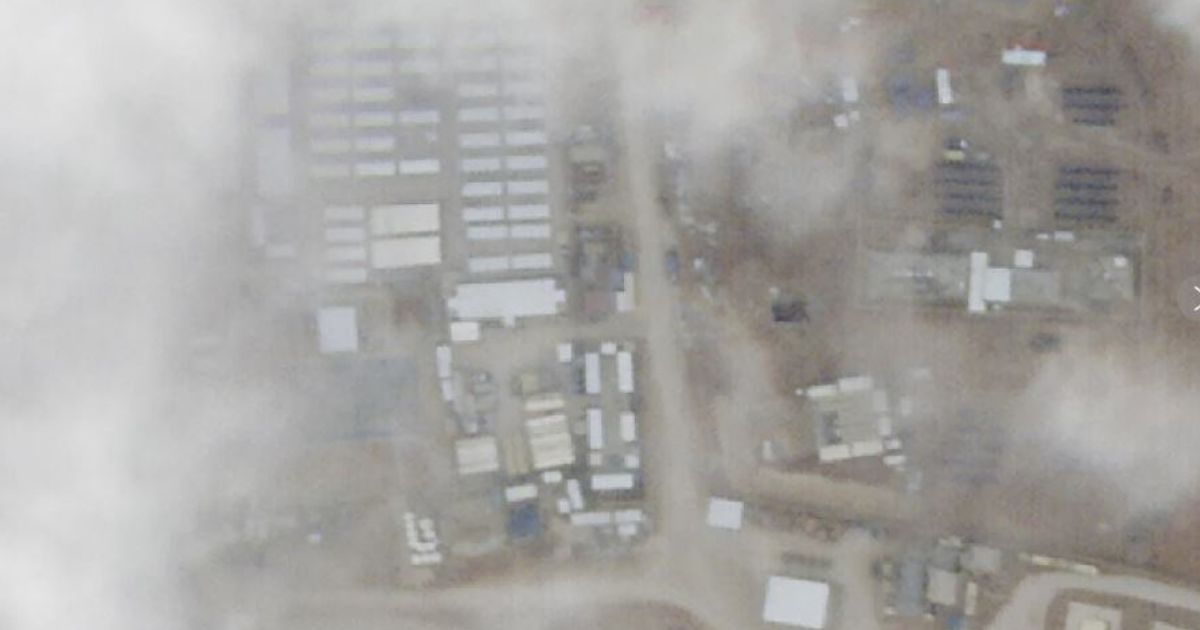
A satellite image taken Monday of the Jordanian base targeted by a bomb-carrying drone that killed three U.S. soldiers appears to show damage at the site. (@AP – Planet Labs PBC / X screen shot)
We now know that Communist China’s fingerprints are on a deadly Iranian attack on American troops.
US officials have linked satellite imagery supplied to Iran by Chinese entities to the Iranian missile strike that killed three American soldiers at Muwaffaq Salti Air Base in northeastern Jordan, according to a report in The Wall Street Journal on Saturday.
Citing unnamed U.S. officials familiar with the matter, it states that before Iran’s July 17, 2026 ballistic-missile attack on Muwaffaq Salti Air Base in northeastern Jordan, Tehran obtained high-resolution satellite images of the base from Chinese entities. The U.S. has connected that imagery to the strike. Iran also acquired images after the attack.
The July 17th strike hit the sleeping quarters at the base, killing three soldiers and wounding four others. It was one of three missile attacks on the installation within 24 hours.
According to the report, the Iranian regime obtained high-resolution images of the base both before and after the attack.
US officials have linked satellite imagery supplied to Iran by Chinese entities to an Iranian attack that killed three American troops at a base in Jordan, The Wall Street Journal reported on Saturday.
Tehran acquired high-resolution images of the installation both before and after the July attack, according to officials familiar with the incident. They described the findings as the strongest evidence yet that Chinese support for Iran during the war has had deadly consequences for American forces.
The officials declined to identify the suppliers and did not accuse the Chinese government of direct involvement.
The officials stopped short of accusing the Chinese government of direct involvement and declined to identify the suppliers.
But American officials described the findings as the strongest evidence yet that Chinese support for Iran has had deadly consequences for US forces.
Three American soldiers are dead.
And what was Beijing’s response when senior US officials confronted their Chinese counterparts with the findings?
Senior US officials raised the findings with Chinese counterparts, who rejected the allegations and demanded evidence, the Journal reported. China’s embassy in Washington did not answer the specific allegations, saying its cooperation with Iran complied with international law.
Deny everything and demand evidence. Right out of the Communist playbook.
Notice that China’s embassy in Washington would not even answer the specific allegations… They just insisted their cooperation with the Iranian regime “complied with international law.”
Does helping Tehran photograph an American base before and after a deadly missile strike comply with international law?
The findings come at a sensitive time. President Trump is scheduled to sit down with Chinese leader Xi Jinping at a summit on September 24th.
Will the deaths of three American soldiers be on the agenda?
The American people deserve answers.
Deny everything and demand evidence. Right out of the Communist playbook.
Notice that China’s embassy in Washington would not even answer the specific allegations… They just insisted their cooperation with the Iranian regime “complied with international law.”
Does helping Tehran photograph an American base before and after a deadly missile strike comply with international law?
Thursday marked the one-year anniversary of the assassination of Turning Point USA founder Charlie Kirk. That date has brought renewed attention to his image and legacy and the years he spent fighting as a warrior for American values and for Jesus Christ.
The country could not collectively mourn the brutal slaying of a father and husband, as his leftist detractors have been ceaseless in their viciousness. They could not wait until he was pronounced dead to celebrate.
Why would they stop now?
In keeping with their absolutely abhorrent behavior, Kirk’s memorial outside of the Turning Point USA headquarters in Phoenix, Arizona, was vandalized Sunday, but his widow Erika Kirk had a message for the perpetrators.
The 8-foot-tall bronze statue of Kirk throwing hats in a T-shirt that reads “FREEDOM” across the chest depicts him in his final moments that day at Utah Valley University. Alongside it, a message reads, “May Charlie be received into the merciful arms of Jesus, our loving Savior.”
KSAZ-TV reported the statue was created by Utah-based sculptor Quintin McCann who began his work right after Kirk’s death. TPUSA unveiled it Thursday.
Reposting images of the vandal’s work, the widow Kirk wrote in response, “Charlie once said we should be building two statues for every statue that they tear down. His instinct was always to build, not to destroy. They thought a bullet would silence my husband’s voice but it only made it louder.
“They think spray paint can obscure his legacy, but it will only spread it further. Every attempt to tear down what Charlie built makes us root deeper and work even harder.”
She then responded to the absolutely evil act of spray-painting “Satan” over “Jesus” in the message.
“And if you think crossing out the name of Jesus Christ will silence Christians, history has already proved you wrong. We know what it costs to stand firm for Christ and we will stand anyway.
“God will not be mocked. We’ll put His name right back where it belongs, clean up the mess, restore Charlie’s statue, and keep building. We will never give up and never surrender.”
Charlie once said we should be building two statues for every statue that they tear down. His instinct was always to build, not to destroy.
They thought a bullet would silence my husband’s voice but it only made it louder. They think spray paint can obscure his legacy, but it… https://t.co/nfMlpsSwKd
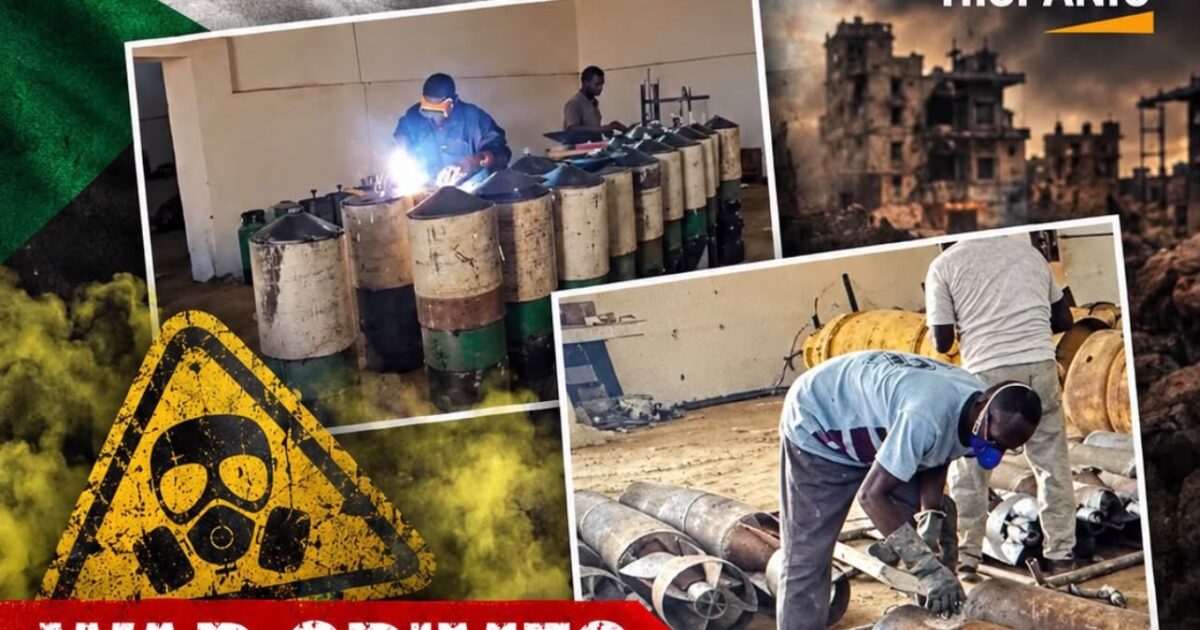
A newly disclosed intelligence dossier is providing the most detailed evidence yet of an alleged secret chemical weapons program operated by Sudan’s military during the country’s devastating civil war.
The dossier contains military documents, photographs, videos, voice recordings and intercepted messages that appear to show the Sudanese Armed Forces (SAF) developing, testing, producing and stockpiling chlorine-based weapons in 2024.
The evidence reportedly points to the involvement of senior SAF officers and raises questions about the knowledge of Gen. Abdel Fattah al-Burhan, Sudan’s military chief and de facto leader.
According to the documents, Brig. Gen. Tariq Hussain oversaw the alleged program. In July 2024, he reportedly proposed weaponizing chlorine as SAF forces battled the Rapid Support Forces (RSF) around Khartoum.
The weapons were reportedly designed to combine approximately 15 kilograms of chlorine gas with explosives, allowing them to cause both blast and toxic effects.
Videos examined by investigators reportedly show desert tests in July 2024, including a test launched from Merowe Airport. By October, nearly 300 chemical munitions had allegedly been produced, with hundreds stored at Merowe. One intercepted message indicated that 106 had already been used, although the exact number cannot be independently confirmed.
The dossier also raises concerns about the source of the chlorine. Some supplies were reportedly imported, including cylinders from Egypt, while other material may have been diverted from civilian water-treatment facilities.
Organizations including UNICEF, CARE and the International Committee of the Red Cross had supplied chlorine for water purification during the war. UNICEF has said it has no record that its supplies were diverted or misused and emphasized that the material was provided exclusively to make drinking water safe.
The allegations are particularly significant because the United States had already determined that Sudan’s government used chemical weapons in 2024. Washington subsequently imposed sanctions connected to the alleged use.
The newly disclosed material appears to provide additional evidence behind those earlier U.S. conclusions. It reportedly includes communications suggesting that senior military officials sought to eliminate evidence of the program after the U.S. sanctions.
One intercepted communication allegedly instructed officials to remove “all traces” of the operation.
Sudan’s military has rejected the allegations as baseless. Experts who reviewed the material have cautioned that definitive confirmation would require an independent investigation and physical access to suspected sites inside Sudan.
The alleged use of chlorine weapons would constitute a serious violation of the Chemical Weapons Convention, to which Sudan is a party.
The Sudanese Armed Forces, Rapid Support Forces, and the Civil War
The current conflict pits the Sudanese Armed Forces (SAF) against the Rapid Support Forces (RSF), two former allies whose struggle for power has devastated the country since April 2023.
The Sudanese Armed Forces are Sudan’s official national military. Their modern institutional roots trace back to the Sudan Defence Force, established under British colonial rule in 1925. After independence in 1956, the force evolved into the national army.
Under the long rule of Omar al-Bashir (1989–2019), the SAF was a central pillar of the Islamist-leaning regime.
Gen. Abdel Fattah al-Burhan rose through its ranks, including service in Darfur, and eventually became its commander. Following Bashir’s ouster, al-Burhan led the military component of the transitional arrangements and later became head of the SAF-aligned government, now based primarily in Port Sudan.
The Rapid Support Forces originated as a formalized paramilitary force in 2013 under Bashir. They grew out of the Janjaweed Arab tribal militias that the government armed and deployed during the Darfur conflict in the early 2000s to suppress mainly non-Arab rebel groups.
Those earlier campaigns involved widespread atrocities widely described as amounting to genocide or ethnic cleansing.
The force expanded through state support, gold-mining revenues in Darfur, foreign deployments—including as mercenaries in Yemen—and recruitment that later included fighters from neighboring countries.
By the final years of Bashir’s rule, the RSF had become a powerful parallel security force.
In 2019, popular protests toppled Bashir. The SAF under al-Burhan and the RSF under Hemedti jointly seized power and initially shared authority in a transitional Sovereign Council, with al-Burhan as chairman and Hemedti as deputy, alongside civilian representatives.
They cooperated again during the October 2021 military coup that dissolved the civilian-led government.
Tensions subsequently escalated over the planned integration of the RSF into the regular army as part of a transition toward civilian rule, as well as disputes over control of resources and political power.
Fighting erupted in Khartoum on April 15, 2023. Each side has accused the other of firing first.
What began as urban combat in the capital rapidly spread across the country.
The war has produced one of the world’s worst humanitarian crises.
Estimates of total deaths vary widely due to undercounting and indirect causes such as disease and starvation. Recorded direct fatalities from violence exceed 50,000 according to some trackers, while higher estimates of overall deaths reach into the hundreds of thousands.
Millions have been displaced. Internal displacement approached 11–12 million at its peak, with roughly 9 million internally displaced and several million more refugees in neighboring countries, according to 2026 data, alongside significant returns in some areas.
Widespread famine, destruction of infrastructure, and atrocities have been documented on both sides.
Foreign actors have fueled the conflict through arms, funding, and other forms of support.
The SAF maintains operational and political ties to Islamist networks, including groups associated with the Sudanese Muslim Brotherhood, or Sudanese Islamic Movement, and remnants of the former Bashir-era regime.
These include auxiliary forces such as the Al-Baraa ibn Malik Brigade, which has fought alongside the SAF.
Analysts describe the relationship as a tactical or strategic alliance that has provided fighters and support, although al-Burhan has publicly rejected claims that Islamists control the army.
The dossier also raises concerns about the source of the chlorine
Some supplies were reportedly imported, including cylinders from Egypt, while other material may have been diverted from civilian water-treatment facilities.
Organizations including UNICEF, CARE and the International Committee of the Red Cross had supplied chlorine for water purification during the war. UNICEF has said it has no record that its supplies were diverted or misused and emphasized that the material was provided exclusively to make drinking water safe.
The allegations are particularly significant because the United States had already determined that Sudan’s government used chemical weapons in 2024. Washington subsequently imposed sanctions connected to the alleged use.
The newly disclosed material appears to provide additional evidence behind those earlier U.S. conclusions. It reportedly includes communications suggesting that senior military officials sought to eliminate evidence of the program after the U.S. sanctions.
One intercepted communication allegedly instructed officials to remove “all traces” of the operation.
Sudan’s military has rejected the allegations as baseless. Experts who reviewed the material have cautioned that definitive confirmation would require an independent investigation and physical access to suspected sites inside Sudan.
The alleged use of chlorine weapons would constitute a serious violation of the Chemical Weapons Convention, to which Sudan is a party.
The Organisation for the Prohibition of Chemical Weapons (OPCW) has received requests for clarification concerning the allegations, while calls are growing for an independent international investigation to determine whether chemical weapons were produced and used, who authorized their deployment, and whether senior military leaders were involved.
As of September 2026, the newly revealed evidence represents the most extensive public documentation yet of the alleged Sudanese chlorine weapons program, although independent forensic verification on the ground remains pending.
The Organisation for the Prohibition of Chemical Weapons (OPCW) has received requests for clarification concerning the allegations, while calls are growing for an independent international investigation to determine whether chemical weapons were produced and used, who authorized their deployment, and whether senior military leaders were involved.
As of September 2026, the newly revealed evidence represents the most extensive public documentation yet of the alleged Sudanese chlorine weapons program, although independent forensic verification on the ground remains pending.
BREAKING:
New leaked video shows the Muslim Brotherhood-allied Sudanese Armed Forces (SAF) preparing chemical weapons munitions.
It has also been revealed that the Red Cross and other Western aid organizations provided the materials that SAF used to build the chemical weapons.… pic.twitter.com/bXHoNXNEhp
Heliport Landing Zone at South Lawn of White House
President Trump on Monday released the first photo of the Heliport Landing Zone on the South Lawn of the White House.
Trump said the black and white granite helicopter landing pad was completed ahead of schedule and under budget.
Full statement from President Trump:
This is the first picture taken of the new Heliport Landing Zone on the South Lawn of the White House!
It is magnificently made of carved granite in shades of Black and White. It is truly a work of art and, even the Trump Haters are saying, “Wow, that’s really good!” It was completed ahead of schedule, under budget and, again, though expensive, was a Gift to America!
As part of the Project, the poorly conditioned asphalt at the Main Entrance was replaced with Highest Grade, 4 and 5 inch thick, White Granite! At a strength of 35,000 pounds per square inch, and rated “1 Million Years, PLUS, the Highest Rating there is for stone, aside from being beautiful, it is essentially indestructible. There will be no cracks, or defacement, EVER!
The Heliport path travels directly into the Main Entrance where the green entrance doors, from what was years ago a maintenance area, were changed to White House White with new, highest level hardware, locks, and hinges.
It is an Honor, “in my spare time,” to bring back the Beauty and Magnificence of the White House, to levels it has never seen before, not even after its construction in 1792. Like our Nation, under the Dumocrats, was in decline, the White House was a badly maintained “dump.”
Senator Mitch McConnell announced Monday evening that he would return to the Senate to cast a vote after a three-month absence.
McConnell was hospitalized on June 14 after he was found unconscious at his DC home.
The 84-year-old Kentucky Senator said he was hospitalized after he took a fall.
Until Monday, the public has only seen two ‘proof of life’ photos of McConnell in the last three months.
In a statement on Monday, McConnell said he is “not quite back to 100%.”
“Today, I’ll cast my first Senate vote since I took a bad fall back in June. I’m really looking forward to being back on the Senate floor and seeing my colleagues,” McConnell said.
“My recovery has been a long and often frustrating process, and the lingering effects of childhood polio haven’t made it any easier. I’m still not quite back to 100%, but I’ve assured Leader Thune that, as I continue with physical therapy on the advice of my doctors, I will do my best to be present for tough votes when our Conference needs me,” McConnell said.
“Elaine and I are very grateful for all the continued well wishes from our fellow Kentuckians, and I’m glad to get back to more of business as usual on their behalf this month,” he added.
Today, I’ll cast my first Senate vote since I took a bad fall back in June. I’m really looking forward to being back on the Senate floor and seeing my colleagues.
My recovery has been a long and often frustrating process, and the lingering effects of childhood polio haven’t made…
On August 6, Senator McConnell was discharged from the rehab center and said he will continue his recovery at home.
“Earlier today, I was discharged from the rehabilitation center to continue my recovery at home. Elaine and I are grateful for the many well wishes and support from friends, colleagues, and Kentuckians, and for the attentive care I’ve received from excellent doctors, nurses, therapists, and hospital staff,” McConnell said in a statement.
“On the advice of my doctors, I’ll maintain an intensive regimen of physical therapy from home during the state work period, and I’ll continue to engage with my staff and colleagues on important Senate business,” McConnell said.
Florida Republican Attorney General James Uthmeier will seek the death penalty in the case of two adults who are accused of trapping four children in a tractor-trailer cab for more than six years.
Keisha Monique Epps, 51, and Tamra Marshon Stewart, 37, are charged with sexual battery, molestation, and neglect, according to a report from Fox News.
They were arrested on Aug. 6.
The victims included two boys and two girls — one was 9 years old, another was 6, and two were 5.
“These children were trapped in a rolling prison and abused by the adults who were supposed to protect them,” Uthmeier said.
“We will pursue with everything we have the death penalty. We will seek executions, if you want to come in here and you want to physically molest, abuse, and violate our little kids.”
Under Florida law, those who commit sexual battery against a child under 12 years old can be subject to the death penalty.
Epps and Stewart, who are engaged, allegedly lived in the cab with the children.
Epps worked as a truck driver.
Stewart is accused of sexually abusing the two girls for years.
When the boys confronted Stewart over the abuse they saw, he allegedly punched them in their heads, per Fox News.
Stewart admitted to investigators that he committed three acts of sexual battery against one of the girls.
Beyond the alleged abuse, Epps and Stewart disallowed the children from taking showers or using the restroom.
Uthmeier said they had to relieve themselves in cups and paper bags.
“They might take a shower, but they would leave the kids locked in this rolling dungeon,” Uthmeier said of the occasions when they would make stops.
The children now endure “severe physical infirmities.”
They have not attended school for years, and a detective said the children were “walking with an unnatural gait from being confined to the cab.”
Uthmeier’s office said that Stewart has been charged with “two counts of sexual battery by a person in familial or custodial authority, two counts of lewd or lascivious molestation of a child under 12, two counts of battery of a child by expelling certain fluids or materials, two counts of child neglect without great bodily harm, and two counts of child neglect causing permanent disfigurement.”
Epps meanwhile faces “two counts of sexual battery by a person in familial or custodial authority, two counts of lewd or lascivious molestation of a child under 12, two counts of child neglect without great bodily harm, two counts of child neglect causing permanent disfigurement, and four counts of failure to report child abuse.”
Senator Mitch McConnell is wheeled out to his vehicle on Monday to vote at US Senate after 3-month absence. – Myles Morell video
The Gateway Pundit reporter Myles Morrell was outside former Senate Majority Leader and current Senator Mitch McConnell’s DC home on Monday when he was wheeled out to attend the US Senate to vote on Monday.
McConnell on Monday announced his return to the Senate to cast a vote after a three-month absence.
Myles tells us he knew the US Senate was voting around 5 PM on Monday so he went to McConnell’s homee to get a glimpse of the 84-year-old senator.
Myles had a hunch when McConnell would be wheeled out.
He was right!
This is Mitch McConnell’s first public appearance since his reported stroke earlier this year.
Watch as McConnell is wheeled out of his home on Monday.
McConnell released a statement earlier in the day.
McConnell said he is “not quite back to 100%.”
“Today, I’ll cast my first Senate vote since I took a bad fall back in June. I’m really looking forward to being back on the Senate floor and seeing my colleagues,” McConnell said.
“My recovery has been a long and often frustrating process, and the lingering effects of childhood polio haven’t made it any easier. I’m still not quite back to 100%, but I’ve assured Leader Thune that, as I continue with physical therapy on the advice of my doctors, I will do my best to be present for tough votes when our Conference needs me,” McConnell said.
JD Vance was the first sitting U.S. vice president to visit Armenia, where the two countries signed cooperation agreements that weakened Russian and Iranian influence in the region. Photo courtesy of Armenian Public Radio. ‘
President Trump brokered a 2025 peace framework between Armenia and Azerbaijan that is advancing a U.S.-controlled trade corridor along Iran’s northern border, drawing Armenia toward Washington and expanding American influence in a region long dominated by Russia and Iran.
Recent developments show the project moving from diplomacy into physical implementation, with bipartisan support in Congress for finishing the deal before Trump leaves office.
Armenia and Azerbaijan agreed on September 9, 2026, to delimit their border from north to south, including sections where the Trump Route for International Peace and Prosperity, or TRIPP, will pass.
The announcement followed a September 8 meeting in Baku between U.S. Chargé d’Affaires in Armenia David Allen and Azerbaijani Deputy Foreign Minister Elnur Mammadov. They discussed implementing TRIPP and creating a company to manage construction along the route. That week, Azerbaijani Foreign Minister Jeyhun Bayramov confirmed that Baku is monitoring Armenia’s constitutional amendment process, which Azerbaijan has made a precondition for signing the final peace agreement.
The peace process follows decades of conflict over Nagorno-Karabakh, an ethnically Armenian enclave internationally recognized as Azerbaijani territory. Azerbaijan recaptured the territory in a September 2023 military offensive, ending three decades of Armenian separatist control and prompting the exodus of more than 100,000 ethnic Armenians.
On August 8, 2025, Armenian Prime Minister Nikol Pashinyan and Azerbaijani President Ilham Aliyev signed a joint declaration at the White House, mediated by President Trump. They agreed to end the fighting, open trade and travel, establish diplomatic relations, and build TRIPP, a 44-kilometer rail and road corridor through Armenia’s Syunik province connecting mainland Azerbaijan with its Nakhchivan exclave. Under the agreement, the United States would lease the route for 99 years with exclusive development rights, while the corridor would remain under Armenian jurisdiction.
Following the signing, Pashinyan and Aliyev jointly nominated Trump for the Nobel Peace Prize in an application submitted to the Norwegian Nobel Committee. Aliyev separately said Trump “really deserves” the prize.
TRIPP moved toward implementation on September 1, 2026, when its official Facebook page launched in Armenia. The page was created jointly by Armenia’s Ministry of Foreign Affairs and the U.S. Department of State and is managed by the Armenian ministry and the U.S. Embassy in Armenia.
On September 9, Rep. Abraham Hamadeh of Arizona, a member of the House Armed Services Committee, predicted a final Armenia-Azerbaijan peace agreement well before the end of Trump’s term. He said TRIPP could bind the countries together politically and economically while opening the South Caucasus to greater Western trade and investment. Hamadeh visited Azerbaijan in June and Armenia in August, meeting with both countries’ leaders and emerging as an active congressional interlocutor in the region.
TRIPP runs along Iran’s northern border. Iran has opposed the corridor and similar arrangements, viewing them as threats to its transit role, influence in Armenia, and border with Armenia. Tehran once called the region, historically known as Zangezur and including Syunik, its own “red line.” It also increased its military presence near the border during years of negotiations.
U.S. engagement accelerated from February 9 to 11, when Vice President JD Vance became the first sitting U.S. vice president to visit Armenia and the highest-ranking American to visit either country. In Yerevan, Vance met with Pashinyan, signed a civil nuclear agreement, and visited the Tsitsernakaberd Armenian Genocide Memorial with his wife, Usha. The following day, he met Aliyev at the Zagulba Presidential Residence in Baku and signed a strategic partnership charter covering trade, energy, and security.
The State Department said the trip was intended to advance Trump’s peace initiative and promote TRIPP. In Armenia, Vance announced up to $9 billion in nuclear investment and an $11 million reconnaissance drone sale. The corridor is projected to reduce cargo transit between Asia and Europe from 18 days to 12 along the Middle Corridor.
Iran’s ambassador to Armenia announced in February 2026 that the two countries planned to form a comprehensive strategic partnership within the year. That month, the United States and Israel launched strikes on Iran, beginning a conflict that remains ongoing. Iran and Armenia continued discussing a long-term cooperation agreement.
On July 8, Iranian President Masoud Pezeshkian reportedly warned Pashinyan that “extra-regional powers,” referring to the United States and TRIPP, must not be allowed to interfere in Armenian-Iranian relations.
Azerbaijan is uniquely positioned as the only country sharing substantial borders with both Russia and Iran, placing it between two of Washington’s principal geopolitical challengers. The 2025 U.S. National Security Strategy identifies the South Caucasus as a critical Eurasian node and Azerbaijan’s location on Iran’s northwestern flank as a strategic asset. The Heritage Foundation has identified U.S. interests in the region as limiting Russian and Iranian influence, securing energy routes to global markets, and preserving American access to the Caspian Sea and Central Asia.
The Baku-Tbilisi-Ceyhan pipeline, which passes through Azerbaijan and Georgia, supplies approximately 40 percent of Israel’s oil annually. Iran and Russia have deepened regional coordination through military technology transfers connected to Russia’s war in Ukraine. Russia has also pursued the International North-South Transport Corridor linking Russia with Iran and India.
Armenia and Georgia are the region’s two historically Christian states, distinct from Muslim-majority Azerbaijan, and each has followed a different course with Washington, Moscow, and Tehran. Armenia was once considered the Kremlin’s outpost in the South Caucasus, hosting a Russian military base in Gyumri and belonging to the Russia-led Collective Security Treaty Organization and Eurasian Economic Union. Trade between Russia and Armenia grew by more than 300 percent from 2021 to 2024, and an estimated 2.5 million to 3 million ethnic Armenians live in Russia, with remittances providing significant revenue for Armenia.
Since Azerbaijan’s 2023 recapture of Nagorno-Karabakh, which Armenia considered inadequately supported by Russia, Armenia has been exploring EU membership and moving toward the West. Pashinyan’s Civil Contract party was returned to power with roughly 50 percent of the vote in parliamentary elections held June 7, 2026, extending his mandate to continue that course.
Armenia’s break with Moscow has unfolded in stages rather than through a single formal act. It froze its CSTO participation in February 2024 and stopped funding the organization. Later that year, Pashinyan called withdrawal the “next logical step.” By November 2025, Armenia’s National Assembly speaker said the country had “effectively withdrawn”, although the deputy foreign minister said no formal mandate had been issued. As of April 2026, Armenia had not formally withdrawn but had ended all participation, including joint military exercises, and Russia told Armenia to stop claiming membership. Russian border guards have left parts of Armenia’s border with Azerbaijan but remain stationed along its borders with Turkey and Iran.
The fate of Russia’s Gyumri base is similarly unresolved. Pashinyan has said the base is not “vital” to Armenia’s security, and Putin told reporters on September 2, 2026, that Russia would withdraw “tomorrow” if Armenia no longer wants it there. As of this writing the base remains operational, and Jamestown’s most recent analysis describes a Pashinyan-Putin meeting the same day as “frosty,” with no resolution in sight.
Georgia’s relationship with Washington has moved in the opposite direction. The U.S.-Georgia strategic partnership was effectively frozen in November 2024 amid democratic backsliding under the ruling Georgian Dream party and the government’s suspension of its EU accession process. Georgia’s attempts to reset relations with the Trump administration have been unsuccessful. TRIPP’s passage through Armenia is also expected to reduce Georgia’s importance as the region’s traditional east-west transit corridor.
Georgia describes its foreign policy as “sovereign and pragmatic”. It maintains limited economic engagement with Russia, expands relations with China and Arab states, and continues positioning itself within the Middle Corridor.
Neither Armenia nor Azerbaijan has signed the final peace agreement. Baku says it will not sign until Armenia removes claims to Azerbaijani territory from its constitution. Armenia is preparing constitutional changes, but they require approval in a referendum scheduled for 2027.
TRIPP has triggered domestic opposition in Armenia over the 99-year U.S. lease. Russia has been sidelined in the peace process and is watching the expansion of U.S. influence in the region with unease.









 BREAKING: Mitch McConnell has just been seen for the first time in over THREE MONTHS, leaving his DC home with a massive police escort