REPORT: Iran Plotting to Set Off a ‘Dirty Bomb’ in Washington, DC

United States Capitol building showcasing its iconic dome and architectural details under a cloudy sky.

United States Capitol building showcasing its iconic dome and architectural details under a cloudy sky.
United States Capitol via Wikimedia Commons

Mainstream media sources are now reporting that Iran is plotting to set off a ‘dirty bomb’ in Washington, DC.

A dirty bomb would be a weapon with nuclear elements, not necessarily a ‘nuclear bomb’ but a device that would make the city basically uninhabitable, in addition to causing massive amounts of physical damage.

Such a device would kill an untold number of people immediately and then countless others over time through radiation. It would be a nightmare.

This report is from CNN:

New US intelligence indicates that Iran is developing plans to target senior Trump administration officials by detonating a so-called dirty bomb or a chemical weapon in Washington, DC, even as officials continue to debate whether Iran can or will attempt to execute such a plot, according to seven US officials.

Sources familiar with the latest intelligence characterized the Iranian planning as, for now, an effort to give itself options rather than an indicator of an imminent attack. But the plotting picked up by the US has been very specific and includes locations and targets, two of the sources said, and has sparked a flurry of US contingency planning.

In a statement, White House spokesperson Lauren Bis said that the US is “monitoring any and all potential threats, but at this time there are no credible threats to the homeland.”

But American officials have viewed the intelligence as a signal of an alarming willingness to escalate by Iran as it faces intense pressure from ongoing US military strikes and a punishing economic blockade that top administration officials have said is “devastating” the country. It shows that Tehran is now actively planning for potential attacks inside US territory, according to those sources, even if there is no evidence they have decided to move forward yet.

“Whether they actually have the personnel in place to execute is a matter of debate,” one of the sources said.

The materials for such a bomb may have already been planted inside the country, according to some reports:

The United States ha no choice but to take such threats seriously.

The post REPORT: Iran Plotting to Set Off a ‘Dirty Bomb’ in Washington, DC appeared first on The Gateway Pundit.

Seattle Mayor Katie Wilson Orders Park Named for American President to be Renamed

Screencap of Twitter/X video.

Seattle Mayor Katie Wilson has ordered the renaming of a city park which is currently named after former American President Andrew Jackson.

Apparently, the former President of the United States no longer reflects the ‘values’ of the city of Seattle.

Good to know.

Do public spaces filled with homeless people and used needles reflect the ‘values’ of the city?

FOX News reports:

Seattle Mayor Katie Wilson has ordered a city park named after President Andrew Jackson to be renamed to better fit “the values of our city.”

The city argues that Jackson’s legacy includes policies that forcibly displaced Native American peoples from their ancestral lands. Wilson directed the Seattle Parks and Recreation to begin a community renaming process on Monday. The 160-acre Jackson Park plays host to the Jackson Park Golf Course.

“We’ve heard from community members who want to change the name of Jackson Park, and now is the right time to move this conversation forward. With new light rail connections and opportunities to make the park more accessible and welcoming, we should have a park that reflects the values of our city,” Wilson said in a statement.

“I’m directing Seattle Parks and Recreation to begin a community naming process to find a name that better reflects this place, its history, and the people who enjoy it,” she added.

The renaming effort comes just days after Wilson also backed an effort to block a girls sports initiative that overwhelmingly passed a statewide vote.

A cynical person might think Wilson is only doing this because the left is intent on destroying all signs and symbols of American heritage.

So here’s the $64,000 question.

Who is the park going to be renamed for? Who does Katie Wilson believe is worthy of such an honor?

The post Seattle Mayor Katie Wilson Orders Park Named for American President to be Renamed appeared first on The Gateway Pundit.

Rubio, Nvidia, and the Controlled Demolition of MAGA

Rubio, Nvidia, and the Controlled Demolition of MAGA

A faction of the Trump administration is courting enormous economic risks for personal political gain.

President Trump Speaks In The Oval Office Alongside Israeli And Lebanese Officials
(Photo by Alex Wong/Getty Images)

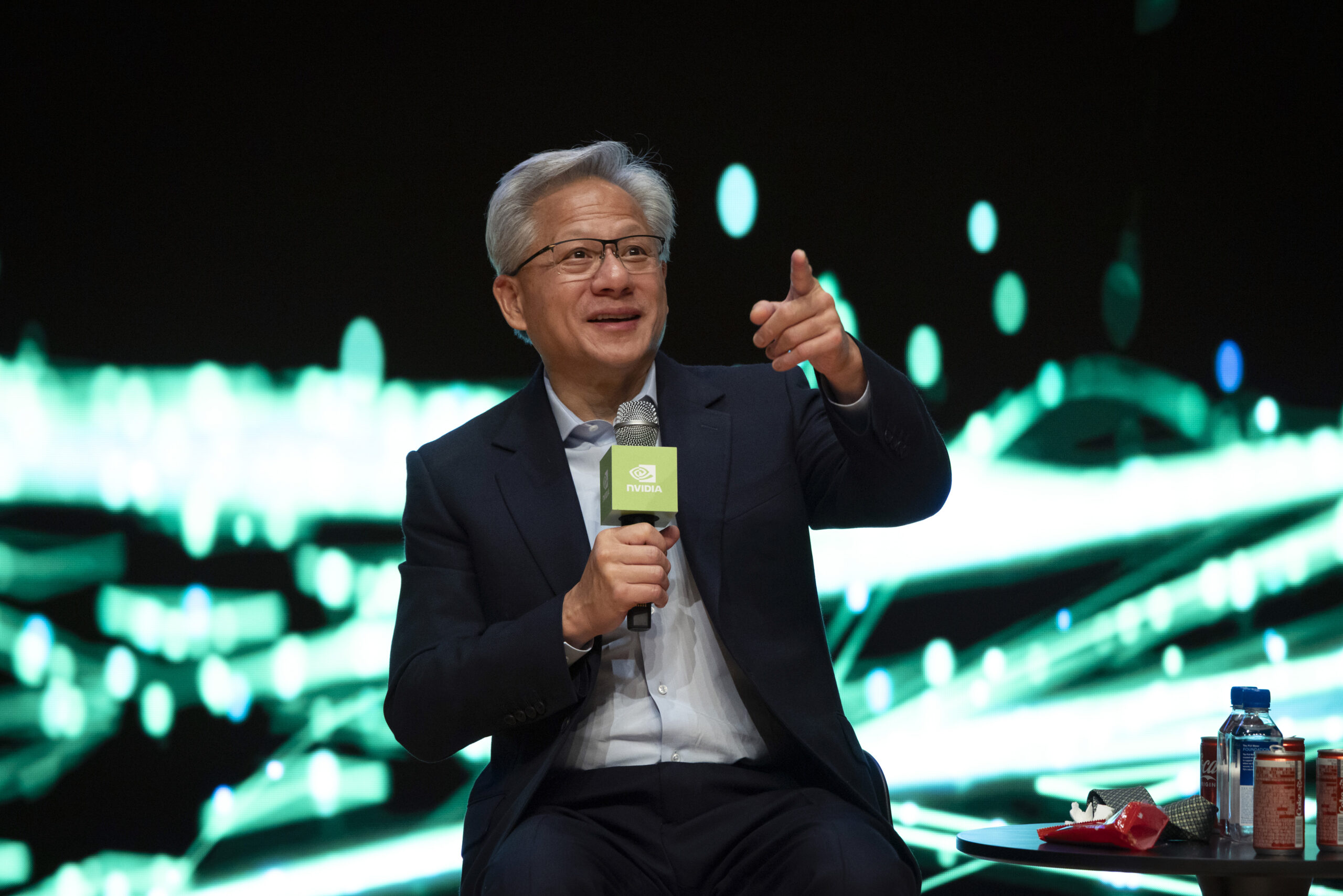
It is difficult to say where the ongoing Nvidia saga will go. The scandal around the CEO Jensen Huang seems to be unfolding—and unravelling—quickly, with initial claims that he was compromised by a Chinese spy starting to fall apart under scrutiny. There appears to be a committed group of people in the media gunning for Huang—and these people have now pivoted to questions around who Nvidia was exporting its chips to and whether these entities were linked in any way to the Chinese government. 

In the coming days and weeks, we will no doubt see the outcome of this particular drama. But perhaps even more interesting is what it tells us about the Trump administration after it suffered a brutal defeat in the midterms. The Huang would-be scandal seems to indicate that certain players inside the administration are willing to take extraordinary risks to accomplish their goals—risks that include crashing the American financial system and plunging the U.S. economy into a serious recession. Looked at dispassionately, running this level of risk to achieve rather mediocre goals appears unhinged.

The Washington Post reports that Secretary of State Marco Rubio was deeply involved in launching the Huang scandal. Per the Post, Rubio wrote a memo to President Donald Trump expressing concerns about Huang’s relationships in Asia. The memo was based on intel assessments Rubio had received from the CIA. After not finding an audience with the president, Rubio juiced up the memo and, apparently, had it leaked to the press. Shortly afterwards, sources from within the CIA told reporters that they weren’t sure whether the claims that Huang’s romantic partner was a Chinese spy were true.

Rubio is widely known to be a China hawk and has been opposed to Silicon Valley figures like Huang who argue that Washington should compete with Beijing in the technology space rather than try to isolate it. Rubio and others pushing for confrontation—who mostly appear to be lawyers with limited business experience—seem to think that America can achieve dominance in the technology space by not competing with China. Instead, the hawks argue, American companies should refuse to sell China advanced chips, thus ensuring that Chinese AI models will lag American models. 

This strategy has not worked well in the past. Restricting technology exports to the Chinese merely encourages them to build their own. And when they do, they inevitably create cheaper products and then end up flooding the global market with them. This is the outcome that CEOs like Huang fear. They argue that America is better off maintaining global market share in sectors in which it succeeds. The evidence so far is on the side of Huang and other Silicon Valley CEOs.

But beyond this debate, what is fascinating is the sheer level of risk that the China hawks are now willing to run to achieve these goals. In the past few weeks, technology stocks in the United States have been taking a severe beating. Most of the so-called hyperscaler companies—that is, the companies that are building out the data center infrastructure on which the AI boom rests—have seen their stock prices fall. Hedge funds have started rapidly dumping technology stocks too, and investors are starting to question whether AI hype is driving a market bubble that is on the brink of bursting. If the stock market goes down, it will take the data-center-building boom with it—and from there, the American economy will almost certainly fall into a recession. A financial crisis that rivals the 2008 meltdown might follow. 

Normally, if an administration were faced with this sort of looming crisis there would be an all-hands-on-deck effort to keep the show on the road. But instead, the China hawks have decided that now is the time to take down the company that is the most important single player in the AI ecosystem. Nvidia does not just produce the chips that AI runs on, it also finances a huge amount of the underlying infrastructure. The way this works is that Nvidia sells the chips needed to run the AI platforms to companies like Microsoft, OpenAI, Oracle, AMD, and Intel. Then, it takes the revenue that it earns and reinvests it in these companies to spur on the AI investment boom. However sustainable this is in the long term, it is strongly in the interest of the Trump administration to keep this arrangement going for as long as it remains in power. If the cycle breaks down and drags the stock market and the economy down with it, Trump and those around him will be blamed for the collapse—just as President George W. Bush and his cohort were blamed for the 2008 financial crisis. 

Since the Huang story was leaked to the press, Nvidia’s stock has fallen 13 percent and shows no sign of recovering. Yet the Trump administration keeps piling on the pressure, with Treasury Secretary Scott Bessent telling the company’s board to investigate whether the company was using chip sales to China to “goose their revenues and earnings.” Based on their public appearances, the China hawks seem to think that destroying the beating heart of the AI boom is a political winner. Shortly after the scandal erupted, Rubio gave a speech at the Federalist Society that has been widely seen as launching his bid for the 2028 presidential nomination. Yet it seems obvious that if the Nvidia scandal ends up crashing the American stock market, Rubio will be the one to take the brunt of the blame. His rivals will simply state that his actions crushed peoples’ 401(k)s, and his candidacy will sink like a stone.

Many of us are watching this play out and wondering if certain figures in the Trump administration have not been tricked into destroying themselves and taking down what remains of the movement with them. The problem here is clearly not Trump himself, who is known to be sympathetic to Huang. Rather, the problem is ambitious politicians within the administration, who have convinced themselves that if they can achieve their “vision” of U.S. dominance, this will make them viable candidates for higher office—while giving little to no thought to the possible negative consequences of their actions. One wonders whether crafty people who have long wanted to bury the MAGA movement have not latched onto this ambition and pushed it to the point of self-destruction.

After hubris comes nemesis, after all, and the fact that this all started right after the disastrous midterms also favours this conclusion. What we might well be watching is a controlled demolition of the Trump administration.

The post Rubio, Nvidia, and the Controlled Demolition of MAGA appeared first on The American Conservative.

Jensen Huang Did Nothing Wrong—or Not Much

Jensen Huang Did Nothing Wrong—or Not Much

 The hue and cry against one of the world’s greatest living businessmen is American puritanism distilled.

APEC Summit Takes Place In South Korea
TakiMag

Cheating on one’s wife is now the new treason, and sex in general soon will be. At least here in America. It’s monogamy or else, dear friends.  

I find financial matters about as fascinating as a lengthy history of orthodontics, but this one, Huang and Huang, I find fascinating for the reaction to it. The idea that the head of a company has a mistress, and the revelation of the affair costs hundreds of billions because the mistress might be a Mata Hari, would make a bad Hollywood movie—but it’s good for the tabloids. 

And yet it’s all true, Mata Hari included, and the affair may finally pop the bloated AI bubble. Here we have all these star companies, Google’s owner Alphabet, Amazon, Apple, Tesla, Meta, Microsoft, and Nvidia, all down because of Mister Huang’s affair with Miss Huang (no relation). The plot might have come from a comic book—and yet it happened in real life. Mister Huang even stepped down for his affair with Miss Huang (no relation), and also for other affairs, including with a subordinate. As the saying goes, only in America.

Back on the old continent, masters of the universe, as Tom Wolfe called them, used to have it their own way where girlfriends were concerned. The greatest womanizer of them all, the Fiat chairman Gianni Agnelli, was cheered time and again for his successes with the fairer sex. Although happily married, he nonetheless enjoyed multiple affairs with well-known film stars like Anita Ekberg and others who are still living (and hence shall remain unnamed). Gianni was once asked about his womanizing and answered without missing a beat. Basically he said that a man could be a very good husband and have affairs, whereas one could also be a very bad husband and be completely loyal. 

I remember asking him after that interview whether he had prepared the devastating response, but he shook his head and said he hadn’t. My father was also a womanizer and always had a mistress. The only time my mother met one of them, she told her how sorry she was about her being in mourning. (The mistress was always dressed in black.) My parents lived happily married for close to 60 years. 

As Sir James Goldsmith wisely said, “When a man marries his mistress he creates a vacancy.” Jimmy Goldsmith had many mistresses and a very loyal wife who came to pick him up from his mistress’s chateau in France and flew him to Spain, where he died the next day in order to escape French death duties. 

These European sexual attitudes might shock, shock (à la Captain Renault in Casablanca) American puritans, but that is how things were when I was growing up. In Athens, Paris, and Rome, many married men of wealth had mistresses, whereas in London not as much. (Some top Brits found relief outside of their marriages, but from their male butlers rather than the mistresses favored on the continent.) But back to Huang and Huang and others. 

I feel bad about the fired chairman because of his lovey-dovey proclivities. He cofounded the company in 1993 to become the world’s top chipmaker, and turned it into one of the driving forces of the AI revolution. Mind you, he gets to keep his billions, which should ensure him future playgirls (this time well outside puritanical company rules). I just have to laugh about the media’s concern with pillow-talk between the lovebirds giving the game away.

What I don’t understand is why a stock plunges upon revelations of hanky-panky. In Italy and France the stock would most likely rise. Jensen Huang turns out to be as flawed as some of us, and far less flawed than most of us. He was looked upon as a geek in college who never got the girl; he now has a cool $150 billion and got some of the girls working for him. Journalists are jealous because they never get the dough, and not even the girls. 

The part that makes me laugh the loudest is the charge of dodging accountability. That’s what those who never get the girl charge against those who do but don’t talk about it. To be honest, I loathe the triumphalism of the media, especially after someone gets caught acting like a human. 

I know, I know, fooling around when one’s married is a no-no, but some of us are weak, and happen to like girls too much. By the lights of the fetid pool of lefty media, Huang should be shot, but I prefer to see him enjoy his moolah, his wife, and as many girlfriends as possible. If your righteous indignation is boiling over, I’m sorry. 

The post Jensen Huang Did Nothing Wrong—or Not Much appeared first on The American Conservative.

Trump’s Envoys Are Right: Europe’s Security Order Must Change

Trump’s Envoys Are Right: Europe’s Security Order Must Change

But the Europeans should lead the process of changing it.

U.S. Vice President JD Vance Leads U.S. Delegation In Peace Talks With Iran In Pakistan
(Photo by Jacquelyn Martin – Pool/Getty Images)

After an eight-month pause, trilateral talks aimed at ending the Russia–Ukraine War resumed in Abu Dhabi last week, this time with an updated focus: Europe’s security architecture. In the lead up to the meeting, President Donald Trump’s envoy and son-in-law, Jared Kushner, described the goal: “to develop practical arrangements that address the security concerns of all sides, reduce the risk of future conflict, and create a more stable and predictable security environment.”

European leaders immediately and loudly objected to this new direction, with some calling it a clear concession to the Kremlin. But this reaction is misplaced. Any discussion over how to end the war must address the shape of Europe’s security order for the simple reason that it is the flaws, shortcomings, and inconsistencies of the existing system that led to the outbreak of the conflict in the first place. 

Washington should not, however, underestimate the challenges involved in updating Europe’s security arrangements. A lasting solution will require not just European buy-in, but European leadership and the development of rules capable of managing what will be a contested and adversarial relationship between Russia and its neighbors for many years to come. 

Opponents of this broader focus have put forward a litany of reasons why the question of security architecture should be excluded from negotiations, at least at this stage. 

For some, the complaint is one of sequencing. They argue the discussions about modifying Europe’s security system can only begin once the fighting in Ukraine stops. History, however, suggests that this is unrealistic. Negotiations to end long-running bitter conflicts almost always occur as fighting continues on the battlefield. Talks to end the Korean War, for instance, started in 1951, about a year after the war began, but no deal was reached until 1953, after over 150 rounds of negotiations.  

For other critics, the concern is not one of timing, but the simple fact that Europe’s security architecture is on the table at all. Europe already has a security architecture, they argue, and it is based around the EU and NATO. If it needs updating (and some believe it does not), it is no business of Moscow’s. After all, they assert, Russia has repeatedly violated its commitments and shouldn’t get a say in Europe’s security in any case. 

There are several problems with this position, however. First, the , signed in 1990 to govern post–Cold War relations between Russia and the rest of Europe, is 36 years old and badly out of date, built to manage a Europe that looked very different than what exists today. Since then, the Soviet Union dissolved, NATO expanded to include 32 members, the European Economic Community became the European Union, and that organization took in new members. Yugoslavia broke into independent states after a series of brutal civil wars in which NATO interfered. Wars have been fought in Georgia and Ukraine, and most arms control treaties between the U.S., NATO, and Russia have expired. The balance of economic and military power on the continent has shifted. That a system set up for a fundamentally different Europe is not up to the task of managing today’s security relationships should not be controversial. 

Second, to define Europe’s security architecture as sufficiently robust because it has NATO and the EU is a strange distortion. If true, then Europe’s security order excludes the dozen or so European countries that are not members of either organization (for instance, both Russia and Ukraine) but incorporates Canada and the United States which lie an ocean away. Surely Russia deserves more of a say in Europe’s security architecture, of which it must be a part, than does the United States. 

And finally, it is not only Moscow that has shown an interest in revising the security architecture established in Europe at the end of the Cold War. The United States and both NATO and the EU have made their own changes to the rules and shape of Europe’s security order since 1990, often violating the spirit of agreements signed at the time. Their most recent updates occurred less than five years ago, when Finland and Sweden joined NATO. Although NATO’s eastward expansion is not technically prohibited by past agreements, the encroachment of its forces and military infrastructure toward the Russian border has clearly violated the Paris Charter’s commitment to “indivisible security” by making new NATO members more secure at Russia’s expense. 

From Moscow’s perspective, then, a request to revisit Europe’s security architecture is justified on at least two grounds: first, that this security order has been altered numerous times over the past four decades, sometimes by Russia but more often by NATO and EU members; and second, that Russia too is a member of Europe and deserves a say in the “European security order.” 

It is not a concession to Russia, but to reality, to acknowledge that shortcomings of Europe’s post-Cold War security architecture, including disagreements about who is included and who is not, are among the most important causes of the war in Ukraine. Russia’s primary objection has been the gradual development of a European security system that encompasses its neighbors while leaving Russia itself on the outside. This does not justify Russia’s use of force, but it does suggest that any lasting resolution to the conflict in Ukraine will require steps toward an updated security arrangement that formally incorporates the changes that have occurred over the past three decades, clarifies questions of membership, and addresses the grievances of Russia and its European neighbors in an enduring way.  

The U.S. is therefore right to bring this issue into ongoing trilateral talks now. Addressing the so-called “root causes” of the conflict is indeed a Russian demand, but it is also in Ukraine’s and Europe’s interests if the aim is a stable peace that guards against the recurrence of war. The question, then, is not whether Europe’s security order should be incorporated into ongoing talks but rather how to address this issue, given its complexity.

So far, the U.S. approach has been ineffective. By seeming ready to work with Moscow over the heads of the Europeans, U.S. negotiators have exacerbated Europe’s perception of insecurity without achieving any real progress. It is clear that Washington cannot “deliver Europe” as some in Russia might have hoped when Trump returned to the White House in 2025.

A better strategy would be to have Europe lead the renegotiation of its security architecture directly, with the U.S. acting not as mediator, but as supporting player. The Trump administration has already indicated that it expects Europe to manage its own conventional deterrence and take on more responsibility for its own defense. Since they are the ones who will have to implement any new security system and carry its burdens increasingly without U.S. involvement, it should also be up to Europe’s leaders to define how that future system will be organized and how it will incorporate Russia.

To this point, much of Europe has not been ready to talk seriously with Russia about the continent’s security order. This is changing due to Europe’s fear that it will be left out of discussions likely to affect its future and its understanding that the price of a seat at the table in ongoing negotiations over the Russia–Ukraine War is a willingness to engage with Moscow. 

However, Europe’s readiness to talk is just a first step. A dialogue to devise a new European security architecture will not be quick or easy and it is unrealistic to think that it will be complete soon. The EU and Russia have both put forward maximalist proposals and negotiating from these to a mutually acceptable outcome will be challenging. Europe’s updated security order is likely to take shape over many years, made up not of a single grand bargain but instead a set of smaller agreements signed over time as trust between parties grows. 

This does not mean that the end of the current war must wait until this process is complete. Instead, talks to deal with Ukraine-specific issues and those related to Europe’s security architecture can occur in parallel, with the goal of achieving some baseline set of principles as part of a war settlement and deferring remaining issues to a later point. 

A near-term agreement might include a temporary freeze on new deployments of long-range missiles by all parties and new military construction close to the shared NATO–Russia border. It should also include efforts to manage areas of highest risk, including the Baltic region and Kaliningrad, the Black Sea, and the hybrid domain. An initial arrangement might clearly define redlines, mandate deescalatory steps by both sides, and include joint commitments to avoid certain types of activities or provocations. A return of all parties to the Open Skies treaty might be a medium-term goal. Finally, the establishment of a new crisis communication channel could prevent miscalculation. 

If the goal is to end the war in Ukraine, the European security architecture cannot be a taboo subject, nor can the discussion be managed primarily by the United States. It must be a European-led effort. Europe’s growing willingness to engage in a serious discussion is a positive sign that the Trump administration should encourage but not micromanage. Europe’s first challenge will be developing a group of interlocutors capable of representing diverse interests but also ready to put aside ideology in favor of pragmatism. It is not clear the recently proposed team—which would include officials from vocally anti-Russia governments and from the EU–can achieve a diplomatic breakthrough, but it is a starting point.

The process of building a new European security architecture will undoubtedly suffer from setbacks. But that this process seems to have started in earnest is cause for hope.

The post Trump’s Envoys Are Right: Europe’s Security Order Must Change appeared first on The American Conservative.

RINO ALERT: Wyoming Republican Gov.-Elect Eric Barlow Nominates Lifelong Democrat Who Donated Thousands to Obama, Clinton, Biden and Democrat Party as Attorney General

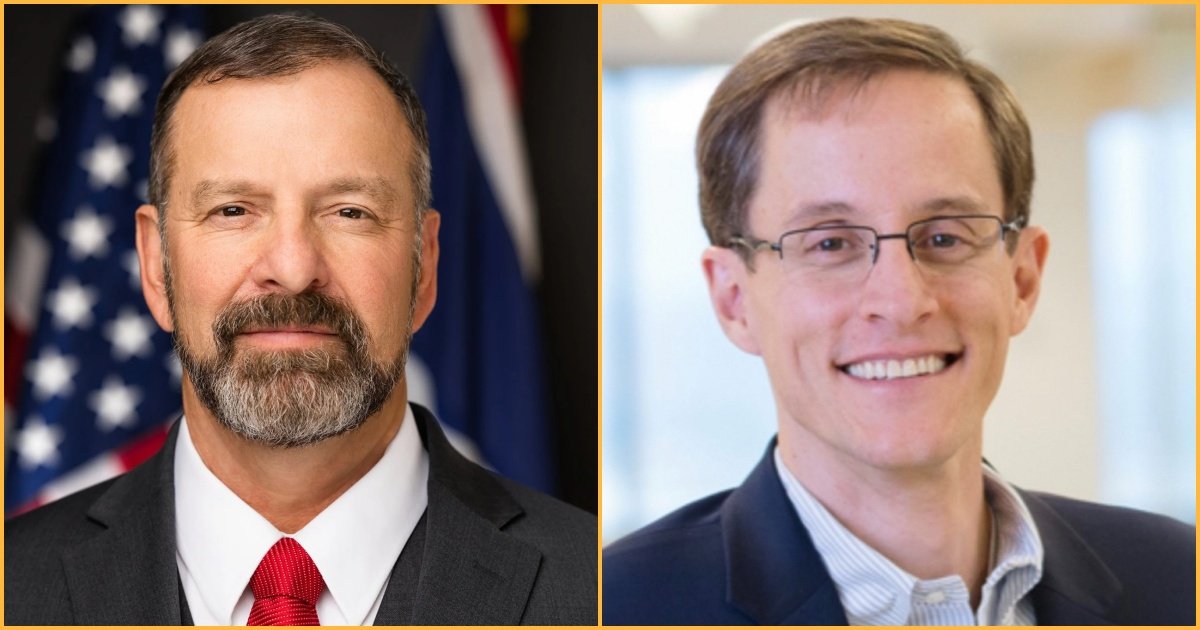
Gov.-elect Eric Barlow (Left); Cheyenne attorney Walter Eggers (Right)

Wyoming’s newly elected Republican governor is already drawing fire from conservatives after nominating a longtime Democrat donor and registered Democrat as the state’s next Attorney General.

Gov.-elect Eric Barlow announced on November 10 that he is nominating Cheyenne attorney Walter Eggers for the post. The nomination is subject to Wyoming Senate confirmation. Barlow also named Erin Taylor as chief of staff and Eydie Trautwein as chief operating officer, the State Freedom Caucus Network announced on X.

Eggers isn’t simply a registered Democrat. He has a lengthy history of financially supporting Democratic politicians and party organizations.

In an interview with Cowboy State Daily, Eggers personally confirmed that he is a lifelong Democrat.

And his campaign contributions back that up.

According to reporting based on Federal Election Commission records, Eggers has contributed:

  • At least $18,735 to the Wyoming Democratic Party.
  • $2,300 to Barack Obama.
  • Approximately $1,300 to Hillary Clinton.
  • $1,000 to Joe Biden’s presidential campaign.
  • Additional contributions to the Democrat National Committee and Democrat congressional candidates.

Eggers also donated to Republican congressional candidate Tim Stubson in 2016, though his long history of supporting Democrats is unmistakable.

For years, Eggers made recurring contributions to the Wyoming Democratic Party, including payments of $150.

The Open Range Record also reported that Eggers contributed $250 to Kamala Harris in 2024.

Republican voters have every right to question this nomination.

During his campaign, Barlow repeatedly touted his conservative credentials, declaring, “My record shows I am a conservative Republican.”

His campaign platform even highlighted his purported commitment to all 23 planks of the Wyoming Republican Party platform.

Barlow defeated Trump-endorsed Republican Megan Degenfelder in the August gubernatorial primary before winning the November general election.

The Wyoming Freedom Caucus had previously warned that Barlow was insufficiently conservative, criticizing his legislative record and support for increased government spending.

Now, before he has even taken office, Barlow’s choice for attorney general is raising fresh questions about those warnings.

Wyoming Republican Party Vice Chairman Bob Ferguson blasted the nomination, telling The Open Range Record that Barlow’s legislative history made his selection of a Democrat unsurprising.

The Senate confirmation process will determine whether a lifelong Democrat donor becomes the top lawyer for one of the country’s reddest states.

The post RINO ALERT: Wyoming Republican Gov.-Elect Eric Barlow Nominates Lifelong Democrat Who Donated Thousands to Obama, Clinton, Biden and Democrat Party as Attorney General appeared first on The Gateway Pundit.

Texas AG Ken Paxton DROPS Lawsuit Seeking to Ban CAIR and Muslim Brotherhood from Operating in Texas Following Democrat Midterm Victories

Speaker addressing an audience at a conference, wearing a suit and tie, with colorful stage lighting in the background.

Speaker addressing an audience at a conference, wearing a suit and tie, with colorful stage lighting in the background.
“Ken Paxton” by Gage Skidmore, CC BY-SA 2.0

Texas Attorney General Ken Paxton has ended his high-profile lawsuit aimed at shutting down the Council on American-Islamic Relations (CAIR) and its Texas chapters, along with the Muslim Brotherhood, from operating in the Lone Star State.

On Monday, Paxton’s office filed a notice of nonsuit without prejudice in the 471st Judicial District Court of Collin County, withdrawing all claims against the Muslim Brotherhood, CAIR, and its Houston, Austin, and Dallas-Fort Worth affiliates.

The court filing, timestamped November 16, 2026, at 10:09 a.m., offered no explanation for the decision.

The move comes less than two weeks after Democrats secured major statewide victories in Texas and just days after Democrat Governor-elect Gina Hinojosa announced her intention to reverse Republican Governor Greg Abbott’s terrorist designation of CAIR.

Because the lawsuit was withdrawn without prejudice, Texas retains the ability to refile its claims. However, with Democrat Attorney General-elect Nathan Johnson preparing to take office in January, the future of that legal effort remains uncertain.

In February, Paxton announced his lawsuit, alleging that CAIR operated as the American extension of the Muslim Brotherhood.

The original lawsuit sought to prohibit the organizations from conducting activities in Texas, including recruiting members, raising money, and acquiring property.

The lawsuit followed Abbott’s November 18, 2025, proclamation designating both organizations as foreign terrorist organizations and transnational criminal organizations under Texas law.

In January, the Trump administration imposed federal terrorist designations on specific Muslim Brotherhood chapters in Lebanon, Egypt, and Jordan. CAIR itself has not received a federal terrorist designation.

Abbott subsequently demanded that Paxton use his authority to revoke CAIR’s nonprofit status and shut down its Texas operations.

Now, nearly nine months after filing the lawsuit, Paxton is walking away from the case, according to investigative reporter Breanna Morello.

As The Gateway Pundit reported Sunday, Democrat Governor-elect Gina Hinojosa has already announced plans to dismantle Abbott’s designation.

CAIR’s political affiliate, CAIR Action, identified Hinojosa as its preferred gubernatorial candidate ahead of the November elections.

On Monday, CAIR publicly celebrated Hinojosa’s pledge and urged incoming Texas officials to abandon other investigations initiated under Republican leadership.


The post Texas AG Ken Paxton DROPS Lawsuit Seeking to Ban CAIR and Muslim Brotherhood from Operating in Texas Following Democrat Midterm Victories appeared first on The Gateway Pundit.

New Jersey Governor Mikie Sherrill Backs Democrat Effort to Abolish the Electoral College System (VIDEO)

Screencap of YouTube video.

As the Gateway Pundit has been reporting for two weeks now, the Democrats are laying the groundwork to abolish the Electoral College system.

Doing this would take electoral power away from smaller states and red states, and ensure that every presidential election is decided by big blue cities like New York City and Los Angeles, both of which are now controlled by the Democratic Socialists of America (DSA).

New Jersey Governor Mikie Sherrill appeared on MSNOW over the weekend and was asked about this. She fully supports the move.

The governor stupidly claims that because of the Electoral College, votes in Wyoming are worth more than votes in New Jersey. That’s a lie. The Electoral College guarantees that the votes of a rural state like Wyoming matter as much as a densely populated state like New Jersey.

Sherrill says all of this with a big, toothy grin on her face.

Transcript by Real Clear Politics:

ALICIA MENENDEZ, MS NOW ANCHOR: Governor, there’s one big change we have heard discussed since the midterms, and that is this idea of just getting rid of the Electoral College and having presidents elected by popular vote.

Is that something that you would support and could move forward in a state like New Jersey?

GOV. MIKIE SHERRILL (D-NJ): Yes.

Alicia, you know New Jersey. You know that our votes in New Jersey are worth about one-fifth of what a vote in Wyoming is, for example. That’s not democracy.

Certainly, I think really creating direct vote for people for the president would be fantastic.

Watch the video below:

Scrapping the Electoral College would require a change to the United States Constitution but Democrats are trying to go around the Constitution and make this change with a simple agreement by the states.

They are actually going to try to do this. The people who claim to be the guardians of our ‘sacred democracy’ are going to try to circumvent the system in order to guarantee that only they win elections.

The post New Jersey Governor Mikie Sherrill Backs Democrat Effort to Abolish the Electoral College System (VIDEO) appeared first on The Gateway Pundit.

Justice Clarence Thomas Puts Democrat-Controlled States on Notice Over Sweeping Gun Bans After Supreme Court Declines Maryland Second Amendment Challenge

Clarence Thomas – The Oyez Project

Supreme Court Justice Clarence Thomas is sounding the alarm over Democrat-controlled states imposing sweeping restrictions on the constitutional rights of law-abiding gun owners.

On Monday, the U.S. Supreme Court declined to hear Novotny v. Moore, a Second Amendment challenge to Maryland’s extensive restrictions on where Americans can legally carry firearms.

But Justice Thomas made clear that the constitutional fight is far from over.

In a four-page statement accompanying the court’s decision, Thomas questioned whether the increasingly expansive gun-free zones enacted by left-wing state legislatures have any legitimate basis in American history.

Maryland’s sweeping restrictions include:

  • Public demonstrations and surrounding areas.
  • Public transportation facilities.
  • Restaurants and establishments serving alcohol.
  • Museums, stadiums, and amusement parks.
  • Healthcare facilities.
  • Thousands of acres of state parks and forests.

In January, the Fourth Circuit Court of Appeals upheld most of Maryland’s restrictions, although it rejected the state’s blanket prohibition on carrying firearms on private property open to the public without express permission.

Thomas agreed with the Supreme Court’s decision not to take up the latest challenge because it involved too many distinct restrictions requiring separate historical examinations.

However, the conservative justice explicitly called for the court to revisit the issue in a narrower case.

Thomas wrote:

I harbor serious doubts that our Nation’s historical tradition of firearm regulation supports many of these sweeping restrictions.

Thomas singled out several Democrat-controlled states that have dramatically expanded their so-called sensitive places:

  • New Jersey: At least 25 categories of restricted locations, including public libraries, zoos, and state-owned beaches.

  • New York: 20 categories of restricted locations, including houses of worship.

  • California: 29 categories of gun-free locations, including banks, athletic facilities, and certain public gatherings.

The justice also noted similar restrictions in Illinois and Hawaii.

“Their cumulative effect is to prohibit firearms wherever people gather for eating, drinking, recreation, amusement, and free speech—an affront to the right of ‘law-abiding citizens,’” Thomas wrote. Expanding “sensitive places” to every public congregation, he noted, would “eviscerate the general right to publicly carry arms for self-defense.”

This is not a merits ruling. The Fourth Circuit decision remains in place for now, and Maryland’s restrictions stay on the books.

But Thomas, who authored the landmark New York State Rifle & Pistol Association v. Bruen decision recognizing the right to carry outside the home, is signaling that lower courts and blue-state legislatures are stretching the “sensitive places” exception far beyond the narrow historical examples of legislatures, polling places, and courthouses. States are treating the exception as a blank check.

As The Gateway Pundit previously reported in June, the Supreme Court delivered a major victory for Second Amendment advocates when it struck down Hawaii’s law requiring concealed-carry permit holders to obtain explicit permission before carrying firearms onto private property open to the public.

All three liberal justices dissented.

The Gateway Pundit also reported in March 2025 that Justices Thomas and Samuel Alito dissented when the Supreme Court upheld the Biden administration’s regulations targeting so-called ghost guns.

Meanwhile, the Supreme Court is scheduled to hear oral arguments on December 2 in separate cases challenging bans on commonly owned semiautomatic firearms, including AR-15 rifles.

The Trump administration has filed a brief supporting the Second Amendment challenges, arguing that governments cannot categorically prohibit firearms commonly possessed by law-abiding Americans for lawful purposes.


The post Justice Clarence Thomas Puts Democrat-Controlled States on Notice Over Sweeping Gun Bans After Supreme Court Declines Maryland Second Amendment Challenge appeared first on The Gateway Pundit.

Out of Work Transgender Actors Claim Hollywood Has Turned its Back on Them: ‘No One Wants Us Any More’

Screencap of Twitter/X video.

Transgender actors are having a rough go of lately, claiming that acting jobs they used to get have dried up. They are not getting offers anymore and believe that Hollywood has turned its back on them.

Is this a backlash to the era of woke, or has Hollywood just decided that trans actors don’t improve the bottom line on movies?

Maybe a little of both. We will get to that, but first, a little more on this story.

From The Guardian:

At the start of 2024, Trace Lysette was feeling like she had reached the apex of her career. She had just been nominated for an Independent Spirit Award for best lead performance for her title role in the acclaimed drama Monica, earning a spot among A-listers like Natalie Portman, Jessica Chastain and Jeffrey Wright. She and her costar Patricia Clarkson had graced the cover of Variety and appeared on The Kelly Clarkson Show. She had landed a part in NBC’s Quantum Leap revival. Then everything came crashing down.

“I thought for sure I would have gotten some offers for a series regular on a TV show, which would have helped me finally buy a house,” recalls Lysette, who is trans. “But it didn’t come.” Instead, the calls stopped…

Lysette is hardly alone. Vico Ortiz, a Los Angeles-based transmasculine, non-binary and genderqueer actor best known for playing the non-binary pirate Jim Jimenez in the HBO Max series Our Flag Means Death, has noticed a shift in the industry as well. “We all used to be booked and busy, and then it was like: ‘Oh shit, we’re all getting dropped like flies,’”…

In late September, Jack Haven, the trans star of Netflix’s Atypical and the 2026 queer Cannes film festival darling Teenage Sex and Death at Camp Miasma, made a public plea for help to qualify for Screen Actors Guild health insurance for the upcoming calendar year…

Even Oscar and Bafta nominee Elliot Page, fresh off his performance in Christopher Nolan’s commercial and critical smash The Odyssey, recently admitted that he doesn’t have his next project lined up.

Here’s the harsh truth for these folks.

It’s not actually all about them and the fact that they’re trans. It’s about massive changes that have happened in the entertainment industry. Things are tough all over, not just for them.

In the last few years, have you noticed that when you’re watching TV, you see a lot of movie actors in commercials? It didn’t used to be that way. In years past, movie stars did not typically do TV commercials for phone companies, insurance, or food products.

The reason that is happening now is because these people are desperate for a paycheck and will take one anywhere they can get it.

These changes have little to nothing to do with abandoning trans actors. It has to do with the destruction of Hollywood and the entertainment industry through progressive governance, which nearly all of these people voted for.

The post Out of Work Transgender Actors Claim Hollywood Has Turned its Back on Them: ‘No One Wants Us Any More’ appeared first on The Gateway Pundit.