Driveway Ambush Shattered By Roaring Trimmer

Self-defense is not a theory class; it is whatever works in the seconds you have. In rural Pennsylvania, a 23-year-old Amish woman facing an alleged knifepoint kidnapping attempt proved the point with a motorized weed whacker—and lived to give police the description that led to an arrest.

At a Glance

  • State police say a man approached an Amish woman in Sadsbury Township with a serrated knife and handcuffs and demanded to restrain her.
  • The woman screamed, revved a weed whacker, and advanced, prompting the assailant to flee; investigators later arrested a 26-year-old suspect.
  • Charges filed include attempted kidnapping and related offenses; as with all arrests, the charges will be tested in court.
  • The episode is already being drafted into national narratives on immigration and crime; the facts on the ground remain a single, concrete case, not a trendline.

What Police Say Happened in Sadsbury Township

Pennsylvania State Police and local reporting paint a consistent account. On an October afternoon in Lancaster County, a 23-year-old Amish woman was trimming weeds near her driveway when a man came up behind her, tapped her shoulder, and showed a long serrated knife and a pair of handcuffs. According to police accounts, he told her to allow him to cuff her—assuring her that if she cooperated, she would be safe. Instead, she screamed, squeezed the throttle on her weed whacker, and moved toward him. He ran. Within days, troopers identified and arrested a 26-year-old suspect, Junior Jose Davila-Moran, on kidnapping-related charges and other counts. Local television and court document summaries match that narrative and the charge set.

Two elements in this description matter for understanding the legal frame. First, the display of a weapon paired with a demand to restrain the victim with handcuffs satisfies the classic criteria for attempted kidnapping and terroristic threats in many state codes—specific intent plus an overt act. Second, the victim’s resistance was immediate and decisive; there was no prolonged struggle, only a burst of noise, movement, and the unmistakable prospect of injury to anyone closing distance. That is often enough to break an attacker’s will in a crime of opportunity.

How A Weed Whacker Became A Defensive Tool

Most people never imagine a landscaping implement as a defensive instrument, yet its properties map neatly to the realities of close-quarters resistance. A gas-powered string trimmer produces an aversive blast—engine noise, flying debris, the whir of cutting line—that signals risk to an assailant. At arm’s length, the rotating head can lacerate skin and overwhelm a knife wielder’s calculus about control of distance and pain tolerance. The Amish woman combined the tool’s sensory shock with rapid forward movement and a shouted alarm; that changes the psychology of the encounter, converting a planned coercion into a chaotic, costly fight. Police summaries indicate that was enough to end it within seconds.

This is not advice to trust yard tools over purpose-built options; it is an observation that most successful civilian self-defense is opportunistic. People reach for what is in their hands, raise their voice, and create time and space to break contact. In this case, noise, motion, and a credible threat of injury did the work of a much more elaborate plan.

From Arrest To Courtroom: What The Charges Signal

When investigators move from initial complaint to custody, the charge sheet reveals how they are interpreting the facts. Here, reporting attributes to state police and local prosecutors a stack that includes attempted kidnapping, false imprisonment, simple assault, terroristic threats, and weapons counts. The combination reflects more than redundancy: it is a hedge against the uncertainties of witness memory, forensic corroboration, and a jury’s appetite for inferences about intent. Attempted kidnapping requires proof of intent to confine or move the victim unlawfully; the display of handcuffs and a knife, coupled with a demand to submit to restraint, is direct evidence of that intent in a way that jurors understand.

The case will now resolve at the measured pace of pretrial hearings, possible plea negotiations, and, if needed, trial. That is the correct venue to adjudicate disputed details and immigration status claims attached to the suspect by some outlets; an arrest is an allegation, not a conviction.

Crime, Immigration, And The Narrative Temptation

Within hours of the arrest, political and social feeds began drafting the episode into broader talking points about unauthorized immigration and crime, citing federal identification of the suspect’s status. The pattern is familiar: crime stories that feature undocumented suspects are often framed to emphasize threat, sometimes as a proxy for larger debates about border policy. Decades of scholarship document how news organizations toggle between “crime” and “security” frames when immigration is involved—and how that framing can shape public attitudes independent of any change in underlying crime rates.

That interplay matters here because the Sadsbury Township case is a single incident. It answers the concrete questions—what happened on one driveway, what charges were filed—but it cannot, by itself, establish a trend or a risk gradient. Experiments and content analyses have shown that repeated exposure to crime-tinged immigration narratives can harden perceptions in ways not anchored to broad statistical patterns. The responsible way to read this case is as exactly what it is: a localized alleged crime investigated by state police, not a dataset.

Practical Lessons For Civilians Without Turning Anecdote Into Policy

Strip away the national political scaffolding and you are left with practical takeaways that travel well across communities. First, awareness buys you time; the victim’s immediate vocalization likely drew attention and stole the assailant’s initiative. Second, movement beats hesitation. Closing distance with a loud, spinning tool inverted the threat calculation—no small feat when a knife is present. Third, improvisation is a feature, not a bug, of real-world self-defense. When there is no firearm, no spray, no baton, the tool in your hand is the right tool; your goal is not to “win,” but to break contact and survive the next minute. That is precisely what happened here, and it was enough.

For law enforcement, the episode underscores the value of rapid, specific victim statements—weapon description, unique items like handcuffs, approach vector—that can be matched against leads and, in this case, used to identify a suspect across state lines. For prosecutors, it is a reminder that intent evidence can be startlingly straightforward: commands to submit to restraints while brandishing a weapon tell a jury what words like “kidnapping” mean in practice.

Why This Story Resonates—And Where To Keep Your Bearings

Stories like this endure because they are vivid, legible, and morally uncomplicated: a young woman at work, a predatory approach, a sudden act of will, and the blessed ordinariness of a tool repurposed to survive the day. It also lands at the intersection of two American fixations—rural virtue and the specter of stranger danger. That combination is fertile ground for symbolic politics. Keep two anchors in place. First, the legal process will determine what, if anything, the prosecution can prove beyond a reasonable doubt about this defendant. Second, one arrest, however bracing the facts, does not stand in for national crime policy or migration flows. Read the facts, admire the presence of mind, and let the courtroom do its work.

Sources:

nypost.com, abc27.com, pennlive.com, bizpacreview.com, truecrimenews.com, newsbreak.com, academic.oup.com, eloncdn.blob.core.windows.net, journals.sagepub.com, leg.colorado.gov, natcom.org

Victor Davis Hanson Suggests Democrats Look Desperate as Midterm Races Tighten (VIDEO)

Screencap of Twitter/X video.

Conservative historian and scholar Victor Davis Hanson appeared on the Ingraham Angle on Monday night and suggested that as the midterm races are tightening, Democrats look increasingly desperate.

Hanson pointed to the fact that o many Democrats are crying foul before election day ha even happened. He remind the audience that Democrats used to accuse people doing this of ‘election denialism.’

Hanson also points out some of the crazy tactics Democrats are using in this election, like running a candidate in Alaska who has the same name as the Republican candidate.

Watch the whole thing below:

Hanson recently wrote an op-ed about the choice Americans face in this midterm election.

Here’s an excerpt from the New York Post:

No ordinary midterm — this election is a stark choice for America’s future

There are two ways of looking at the midterm elections, now just a week away.

From one angle, it’s a simple referendum on the issues and politicians of the day.

From another, it involves a far deeper conflict of visions (as Thomas Sowell puts it): socialism vs. capitalism, intrusive vs. limited government, and the destruction of time-honored institutions and traditions vs. their preservation and renewal.

Rarely in American history have the two parties been so far apart — or the choice between them so stark.

In brief, Islamist-sympathizing socialism is on the ballot against free-market capitalism and American exceptionalism…

But the choice goes much further: Voters face a “deep” midterm election that will help determine the nation’s very existence.

The new Democratic agenda is not about lowering gas prices.

Americans are being asked to hand Congress to what has become the most radical major party in US history, as socialists and neo-communists believe they can finally win statewide races.

That would mean endless lawfare: If Democrats win the House, they’ll spend the next two years impeaching, investigating and hounding Trump, his administration and his family, paralyzing the remainder of his presidency.

Hanson is right about all of this, of course.

This midterm is a battle for the soul of America.

The post Victor Davis Hanson Suggests Democrats Look Desperate as Midterm Races Tighten (VIDEO) appeared first on The Gateway Pundit.

Russia–Ukraine Peace Compromise Is Necessary. It Won’t Be Fair

Russia–Ukraine Peace Compromise Is Necessary. It Won’t Be Fair

Kiev will need to make painful concessions to guarantee its survival.

U.S. President's Special Envoy Steve Witkoff And Jared Kushner In Kyiv, Ukraine
Photo by Maxym Marusenko/NurPhoto via Getty Images

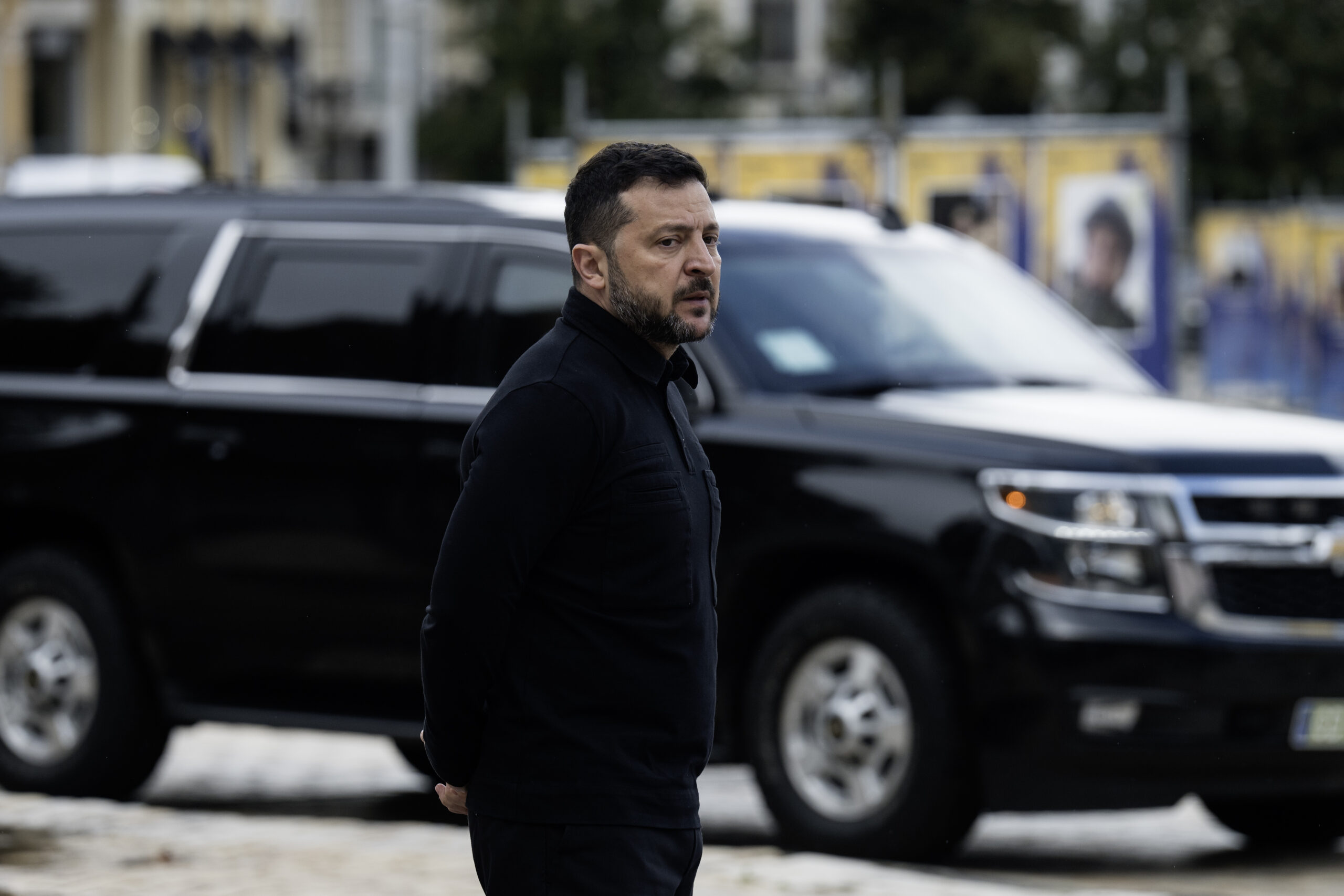
U.S. special envoy Steve Witkoff flew last week from Oslo, where he had held talks with Ukraine’s President Volodymyr Zelensky, to St. Petersburg for a meeting with Russia’s President Vladimir Putin. Witkoff reportedly carried with him updated proposals for a framework agreement to end the war. Putin reportedly responded that he is ready, in principle, to resume talks with Kiev in November.

It is time for the U.S. and Europe to put every effort behind those talks.

The narrative of why the West supposedly needs to keep backing Ukraine’s war effort has evolved over the course of the conflict, from upholding international norms to regaining territory to defending democracy to protecting Europe against an imperialist Russia.

But the time has come to stop creating narratives and start accepting the painful reality that Ukraine faces existential peril if the war continues. Each new narrative only provides more time for Ukraine’s crisis to become more acute. Ukraine is bleeding land, people, and money. Its ports, bridges, data centers, transportation, mining, agriculture, industry, and infrastructure are being annihilated. It can no longer defend itself from devastating attacks on the capital and elsewhere—so an end to Russian attacks must be negotiated.

A compromise peace, rather than the total defeat of Russia, is not a fair outcome. Nor would the details of such a settlement be fair; Ukraine would have to make more concessions than Russia. But the peace cannot be fair because the war was never fair: It wasn’t fair that the more powerful Russian army illegally invaded Ukraine, and it wasn’t fair that the West used Ukraine as a proxy to fight against Russia, rather than settling the war in its early weeks when the opportunity arose.

Despite the fact that a peace deal would not be fair, it would save Ukraine and stop the war from getting worse. And although Ukraine would have to make the more painful concessions, Russia too would need to give way on some things.

Under any reasonable settlement, Ukraine would remain a sovereign country and keep most of its territory. It would be free to join the European Union and orient itself toward the West: the dream of the 2014 Maidan protests. And it would retain a large, well-equipped military to defend its borders.

NATO membership, however, is probably off the table. At the close of the Cold War, Soviet leader Mikhail Gorbachev was told that NATO would not expand eastward. In 1991, Russia recognized the sovereignty of Ukraine on the basis of the Declaration of State Sovereignty of Ukraine, adopted when the latter withdrew from the Soviet Union. This document stated that Ukraine “solemnly declares its intention of becoming a permanently neutral state that does not participate in military blocs.”

Ukrainian neutrality should be restored. To that end, NATO and Ukraine must both sign legally binding commitments that the latter will not become a member of the former. This concession is essential to ending the war because Russia will not stop fighting without it; indeed, it was the key reason Russia launched its invasion.

For its part, Russia has made an important concession in dropping its objection to Ukraine joining the EU. Part of the reason for Moscow’s initial opposition to this is that the EU’s Association Agreement with Ukraine was also a security agreement. It committed Ukraine to “deeper involvement in the European security area” and “military and technological cooperation.” That is now a key reason why Ukraine must be granted EU membership: With the NATO door closed, EU membership may be the strongest security guarantee Ukraine can reasonably expect to get. 

Ukraine will have to cede some territory for the war to end, though how much remains up for discussion. That would set a bad precedent for international order, yet Russian-speaking citizens of Ukraine in Crimea and Donbas do deserve full protection of their cultural, linguistic, and religious rights, and Kiev’s relinquishing these territories could facilitate this guarantee. The Minsk Agreements, which ultimately collapsed, had been intended to solve this problem in part by expanding autonomy for these regions. However, Ukrainian and European leaders appear to have seen these commitments more as a way to buy time for Ukraine to rearm than as a serious solution to the problem. The idea of increased autonomy within Ukraine is now off the table, and Putin will not stop the war without directly annexing as much of this territory as possible.

By giving up NATO membership and some territory, Ukraine can survive, and eventually thrive, as an intact nation, aligned with Europe and boasting a strong military and adequate security guarantees. Any proposed security architecture should embrace not just Ukraine, but all of Europe, including Russia, finally putting in place the foundation for peace that was never established after the Cold War.

Ukrainians are suffering through a conflict that their leader, and leaders in Europe, have had difficulty stopping because of promises they made to defeat Russia. But it is time to end this war—even if that requires an unfair peace.

The post Russia–Ukraine Peace Compromise Is Necessary. It Won’t Be Fair appeared first on The American Conservative.

The Left Wants America to Look Like France

The Left Wants America to Look Like France

The Hexagon is reaping the consequences of socialism and mass migration.

TOPSHOT-FRANCE-SOCIAL-DEMO
TakiMag
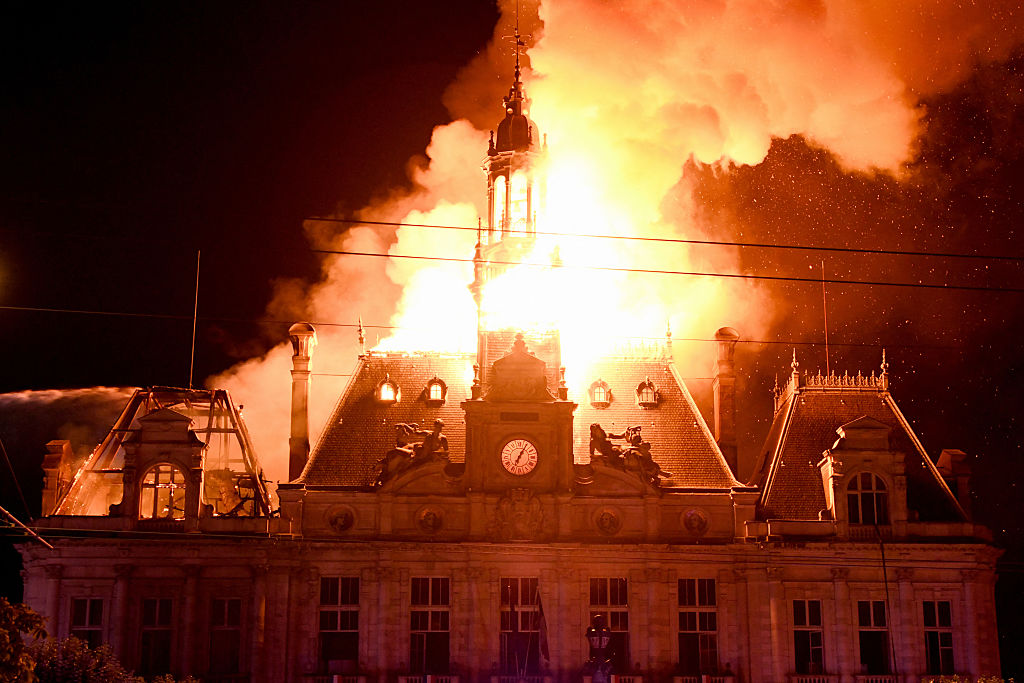
(Pascal LACHENAUD / AFP via Getty Images)

I think all writers, especially those writing about politics, have been guilty of getting their facts wrong at times, not on purpose, mind you, but in their eagerness to make their point. This one stuck out like the proverbial you-know-what. The writer, Rich Lowry, I used to know in the old Bill Buckley days. Last week he wrote about the troubles in France, prompting me to write this column. However incredible it may sound, I knew the French general involved in the story I’m about to tell you, the one that would reject an assertion made by Lowry. 

Lowry writes, “In 1968, President de Gaulle himself briefly fled Paris for fear that student protesters were going to topple the government, before finding his nerve.” When I read this line, it was like hearing someone say that Leonidas and his 300 Spartans had fled before the Persians at Thermopylae. Although not particularly drawn to de Gaulle, I happen to know first-hand why he had left Paris, and it was not because he feared the spoilt and pretentious students who had risen against his government and were burning down the ancient city.

De Gaulle had flown to Germany to meet with French General Jacques Massu, the tough-as-nails paratroop leader and veteran of Indochina and Algeria colonial wars. Massu was based in Germany with a French army group. De Gaulle wanted to know if Massu and his troops were ready to come to Paris if needed and to crack the whip. The start of the conversation went  as follows. De Gaulle: “Alors Massu, toujours con?” (So, Massu, still an a–hole?) Massu: “Oui, mon General, toujours Gaullist.” (Yes, General, still a Gaullist.”) (The same exchange between the two men has been reported as occurring a decade earlier.)

Army people talk like that, semi-tough, semi fun between them. Massu had first sided with the generals who had revolted against de Gaulle when he granted Algeria her independence. They formed the OAS and began a guerrilla war against the mainland. But Massu ultimately remained loyal to de Gaulle, who forgave him. How do I know what went on between Le Grand Charles and the toughie Jacques? That’s an easy one: The latter told me while we were watching tennis at Roland-Garros in the players section.

That’s where we first met, back in the early Sixties, when I spotted Massu sitting alone and watching the matches. None of the players had a clue who he was. I introduced myself and he asked about various tennis players. Massu was very well read, like many Frenchmen, and was close to generals Salan, Challe, Jouhaut and Zeller, the OAS leaders who all eventually were locked up but retained the respect of the French people, who considered Algeria part of France.

Well, we all know how it ended. France lost Algeria in 1962, but gained millions of its nationals over subsequent decades. Many of them have remained Arab, Muslim, and feeling foreign despite having been born in France. There has been no cultural assimilation whatsoever. (As the U.S. Congresswoman Ilhan Omar allegedly said, she and her compatriots are “Somalis first, Muslims second.” I predict Omar will be with us for the duration.) They have also remained anti-French, anti-Catholic, and anti-establishment. France today is what those nice socialist Democrats would like the U.S. to become one day, with open borders and welfare payments for everyone. One-hundred thousand Somalis in Minneapolis will one day turn into millions.

The irony is that de Gaulle had foreseen all that when he headed the new Fifth Republic upon his return to power in the late ’50s. He broke with Israel because he knew the country’s policies would alienate the Arab world, and remained an independent member of NATO. De Gaulle was personally very brave. He had made his reputation when as a colonel he led a bold counterattack during the Guderian blitz in May 1940. When the OAS sprayed his presidential Citroen limo in Petit Clamart, he did not even flinch or bow his head, but miraculously escaped unscathed. Hence the idea that a bunch of publicity-seeking, smelly lefties drove him from Paris in 1968 is quite false.

France at present is what our socialist friends would like America to become. For decades, despite apocalyptic warnings by both politicians of the right and writers such as Michel Houellebecq, France has taken the path to disaster. The warnings have been ignored, and those doing the warning have been persecuted as Nazis. What motivated the mob back in 1968 and still does is greed, laziness, entitlement, and envy. The rioters are not the weak and starving, but the indulged and ignorant children of a welfare state and woke culture. They smash windows, grab designer goodies, and the media headline them as revolutionaries. 

And another thing. The deep-seated hostility toward free markets and enterprise derives from the French passion for philosophers, clowns like Michel Foucault, a pseudo-philosopher, and others who taught “nothingness” as a value system. Those clowns were venerated by leftist media and publications and taught that history was false, all lies in order to exploit the people. The only joy, according to those false prophets, was the criminal act. 

The French state owns nearly all public services, public transport, energy interests, and utilities. Public debt stands at 120 percent of GDP, the highest since right after the Second World War. Pensioners enjoy a higher income than workers. If you wish to see the same thing over here, vote for those nice socialists next month. It will be a start.

The post The Left Wants America to Look Like France appeared first on The American Conservative.

Campaign Staffer for Abdul El-Sayed Caught on Undercover Camera Saying ‘Americans Are Idiots’ (VIDEO)

Screencap of Twitter/X video.

A campaign staffer for Abdul El-Sayed, the radical leftist running for Senate in Michigan, was recently caught on an undercover camera saying that ‘Americans are idiots.’

The staffer is apparently angry about the scrutiny El-Sayed is getting over his family’s reported ties to the Muslim Brotherhood.

To make matters even more ironic, this staffer is supposedly El-Sayed’s ‘conservative and independent outreach captain.’

The Midwesterner reports:

U.S. Senate nominee Abdul El-Sayed’s staffers have no issue with his ties to the Muslim Brotherhood, an issue he waves off as a genuine concern “because Americans are idiots.”

T.J. Wolfgram, Independent and Conservative Outreach Captain for El-Sayed’s campaign, broke it all down in an undercover video obtained by The Midwesterner.

“The Muslim Brotherhood was the revolution in Egypt that we were, we as the United States, were either neutral on or even supportive of at the time,” Wolfgram said in the Oct. 15 recording. “And now it’s like, ‘Oh in 1999, Abdul’s mom, who did not raise him because he grew up with his father and stepmom, she worked for a company that transferred $60,000 to the Muslim Brotherhood in 19’ … it’s like, it’s so ridiculous.”

“Why wouldn’t you support revolutionary movements for your people? I’m not offended by it,” an undercover agent prodded.

“Yeah, right,” Wolfgram said. “It’s because Americans are idiots.”

“I don’t have any issue with the Muslim Brotherhood,” he said. “And if I knew more about it, I might support some of what they do.

“I mean, granted, there’s gonna be cultural differences,” Wolfgram said, “so there’s gonna be things about the way they go about what they do that I don’t agree with.

See the video below:

So there you have it.

This is what these people think of their fellow Americans when they think no one else is listening.

The post Campaign Staffer for Abdul El-Sayed Caught on Undercover Camera Saying ‘Americans Are Idiots’ (VIDEO) appeared first on The Gateway Pundit.

Lula’s Victory Is Surprising Because He Has So Little to Offer Brazil

Lula’s Victory Is Surprising Because He Has So Little to Offer Brazil

The left-wing incumbent’s fresh policies were largely reversals of those he implemented previously.

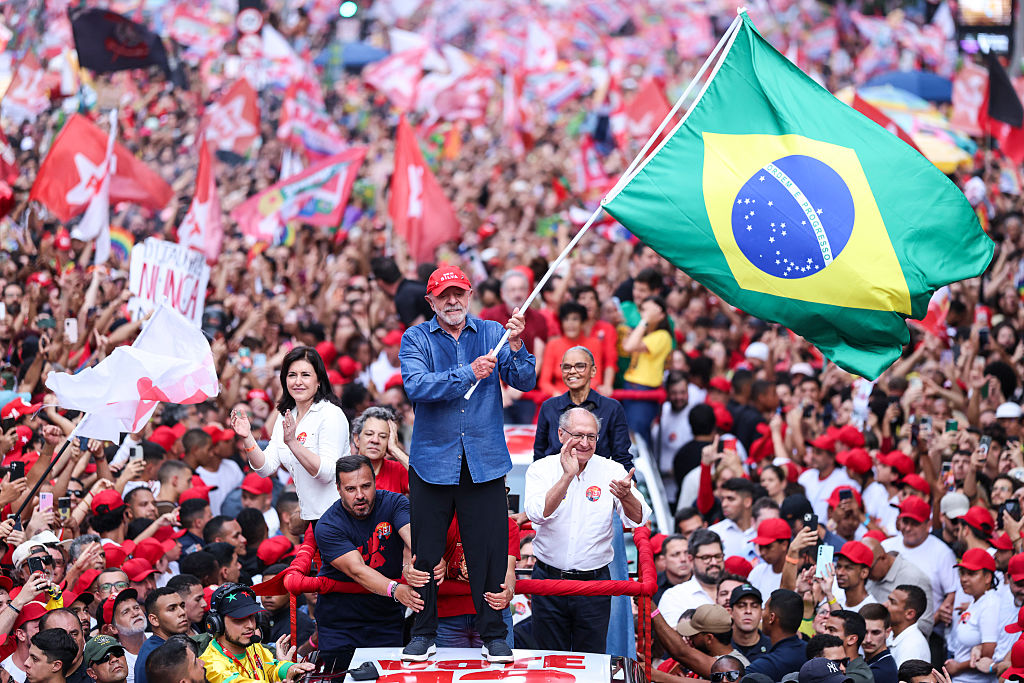
Lula Da Silva Holds Last Rally Ahead Presidential Runoff
Photo by Alexandre Schneider/Getty Images

On the eve of the second round of Brazil’s presidential election, every major research institute believed that Flávio Bolsonaro would win. Even Lula voters were pessimistic. Things began to change when the Workers’ Party (PT) asked the Superior Electoral Court to extend the voting time by two hours (that is, until 7 p.m.) in Salvador and nearby cities, arguing that Bolsonarist mayors had made it harder for residents to vote by reducing the number of buses. This is not an unusual accusation, and the higher courts are generally seen as favorable to Lula. (Even though the president of the electoral court happens to be a justice appointed by Bolsonaro, his decisions were disregarded by fellow members.) Notably, Salvador votes heavily for Lula.

But the transit difficulties were caused—at least in part—by the activity of Lula’s partisans themselves. Trade unionists glued PT stickers on buses while they were still in the garage; because such advertising would constitute a crime under Brazil’s election laws, city workers had to remove the stickers before the buses could start their routes. By 10:30 a.m., traffic was more or less back to normal.

When the PT used this to ask the courts for an extension, Flávio’s campaign did the same, arguing that some southern cities whose voters tilt toward him should have their polling hours extended to account for weather-related issues. The surprise came when the PT went further, and asked not the Electoral Court, but the Supreme Court, to keep the polls open until 7 p.m for the entire country. The Supreme Court, operating under an unaudited system, picked Cristiano Zanin, Lula’s former personal attorney, to decide the matter. And Zanin ruled as his former client wanted. (The decision also created ambiguity around voting machines: Some machines had already been sealed in anticipation of a 5 p.m. closure, and the Court’s decision did not allow these to be reopened). 

Following this decision, Lula won the election, to the amazement of many Brazilians. What will happen next is unclear. It is worth noting that Brazil elected an opposition-controlled Senate with a penchant for impeaching justices. And we may also see appeals for help from outside Brazil, since Bolsonaro supporters are unlikely to get redress in their own country.

Regardless of where such efforts go, it remains to explain why Lula’s performance was so poor up until the second round. A modest but persistent fact sums up Brazil’s political reality: Lula’s campaign appealed overwhelmingly to the elderly. After over 16 years of PT rule, Lula failed to persuade Brazil’s youth that a fourth term augured an auspicious future.

In Brazil, presidents are limited to two consecutive terms but face no limit on the total number of terms. Thus, Lula served two terms between 2003 and 2010, handed things off to a PT successor, Dilma Rousseff, who served until 2016, and then himself returned to office in 2023. The interruption in PT governance consisted of Rousseff’s neoliberal Vice President Michel Temer (2016–19) and Jair Bolsonaro (2019–23), who currently is in prison and barred from running for office. In 2022, older voters compared the good times of Lula’s prior terms to the chaotic, Covid-hobbled Bolsonaro administration and concluded that the elder leftist could bring back the 2000s. Lula’s third term made it clear that he couldn’t.

It’s well known in Brazil that Lula lucked out during his previous presidencies. During the 2000s, China became an economic powerhouse with 1.4 billion mouths to feed. Brazil, on the other hand, transformed into an agricultural dynamo, thanks in part to government-sponsored research conducted during military rule (1964–85). The country’s Central-West Region went from a barren land to a global breadbasket. Lula’s administrations have no comparable accomplishment; his most-celebrated feat was the reduction of poverty through an income transfer program called Bolsa Família, in which families received cash payments in exchange for sending children to school. Inspired by Milton Friedman’s negative income tax, the program has precedents in the neoliberal administration of Fernando Henrique Cardoso (1995–2003). The key difference between Cardoso and his successor was the latter administration’s more bountiful sources of funding.

All things considered, one could argue that Lulismo is a neoliberal version of Chavismo. In both cases, the president relies on commodities to transfer income to the poor and win elections. Notably, each administration’s primary goal is maintaining itself in power, as opposed to spurring long-term development. But while Chavismo used Venezuela’s state oil company to raise funds, Lulismo depends on a cozy relationship with financialized agribusiness giants. Neither model worked, of course, and in Brazil the consequence has been the decimation of a once mighty manufacturing industry. The best the average Brazilian can hope for in 2026 is driving an Uber and complementing his income with Bolsa Família. Instead of doctors driving taxis as in Cuba, Brazil has engineers with student debt driving for Uber.

In this regard, Brazil is similar to the United States, many of whose factories decamped for China and elsewhere, leaving behind a “basket of deplorables.” Of course, deindustrialization in Brazil came later, much of it happening during Lula’s first term. In 2004, Brazil signed an agreement recognizing China as a market economy, thereby dropping key anti-dumping barriers: a flood of cheap Chinese imports subsequently enraged São Paulo’s Industrial Federation. Decades later, Brazilian industry has suffered another blow from the EU-Mercosur agreement, which Lula approved in 2025. Naturally, it benefits Brazilian agribusiness at the expense of manufacturing.

What, then, was Lula doing to entice voters? During the campaign, he improvised three big commitments: shortening the work week, ending the so-called “shirt tax,” and banning online gambling. The first was embraced only under pressure from the upcoming vote. As for the shirt tax—a 20 percent import duty on small-value foreign parcels coming into Brazil—Lula himself created it in 2024. The tax was imposed on imports from websites like AliExpress, and was aimed at favoring Brazilian retailers while increasing tax revenue. In effect, Lula lauded undoing his own work as a great victory. Much the same can be said of online gambling, since Lula himself tolerated and regulated the industry following its initial approval by Temer. (Online gambling, of course, was a much appreciated source of tax revenue.)

By the end of the campaign, the incumbent was making increasingly desperate attempts to shore up his candidacy. Just twelve days before the first round, he announced a 15 percent increase for Bolsa Família. When asked why he had gone more than three years without raising Bolsa Família despite inflation, he said he hadn’t realized the program had lost buying power. Lula also proposed a $80-a-month stipend for university students, as well as debt forgiveness for micro-entrepreneurs. Who exactly qualifies as an individual micro-entrepreneur? Anyone, potentially; the category was created during Lula’s second term, as a way of recognizing individuals otherwise lacking labor protections. 

In the end, Lula had nothing to offer Brazilians uninterested in living off of welfare. Voters, moreover, were concerned with many noneconomic issues such as crime, corruption, woke ideology, and judicial abuse. It’s no wonder then that Lula resorted to fear-mongering against his opponent. His campaign went so far as to insinuate that the evangelical Flávio Bolsonaro would dethrone Our Lady of Aparecida as the country’s patroness. (The authority for such a move lies with the pope.)

With the legal-electoral outcome somewhat in the air but clearly trending toward upholding Lula’s victory, the question is whether the younger Bolsonaro would have been a better alternative to Lula and the PT. After all, Flávio is a close ally of Argentina’s Javier Milei, whose administration’s economic policies have increasingly subjected Argentines to something approximating a vegan diet. (Brazilians had hoped, however, that Flávio would follow a different path from that of his anarcho-capitalist neighbor.) 

The younger Bolsonaro’s candidacy also prevailed over that of São Paulo Governor Tarcísio de Freitas, who was favored by market-friendly Milei enthusiasts on the right. Naturally, that faction was supported by financial and agribusiness elites, many of whom embrace the environmental, social, and governance policies abhorred by Bolsonaristas. Adherents of this brand of market fundamentalism are also fond of financial jargon centered on spending cuts and “efficiency.” One such proponent, Flávio-advisor Daniella Marques, floated replacing civil servants with AI—a proposal which was subsequently seized upon by Lula’s campaign.

While the elder Bolsonaro’s sons have no history of developmentalist politics, it seems this may have changed. Trump’s tariffs for instance have upended entrenched dogma over free trade on the Bolsonarista right. Last year, Eduardo Bolsonaro shocked both left and right by defending the legacy of the heterodox Brazilian dictator Getúlio Vargas, who, despite governing as an anticommunist, is often celebrated by leftists.

More promising, however, was the backing of two of Lula’s former cabinet members, Aldo Rebelo and Roberto Mangabeira Unger, who broke with the president over his subservience to fanatical foreign and environmental lobbies. Rebelo is a former communist, while Unger is a Harvard professor and philosopher. The pair spoke with Flávio for over an hour, and all of them committed to a defense of Brazil’s sovereignty.

The post Lula’s Victory Is Surprising Because He Has So Little to Offer Brazil appeared first on The American Conservative.

WATCH: Trump Shreds Obama for Cheesecake Factory Comments, “He Doesn’t Notice the Dirt and Filth that Hadn’t Been Cleaned”

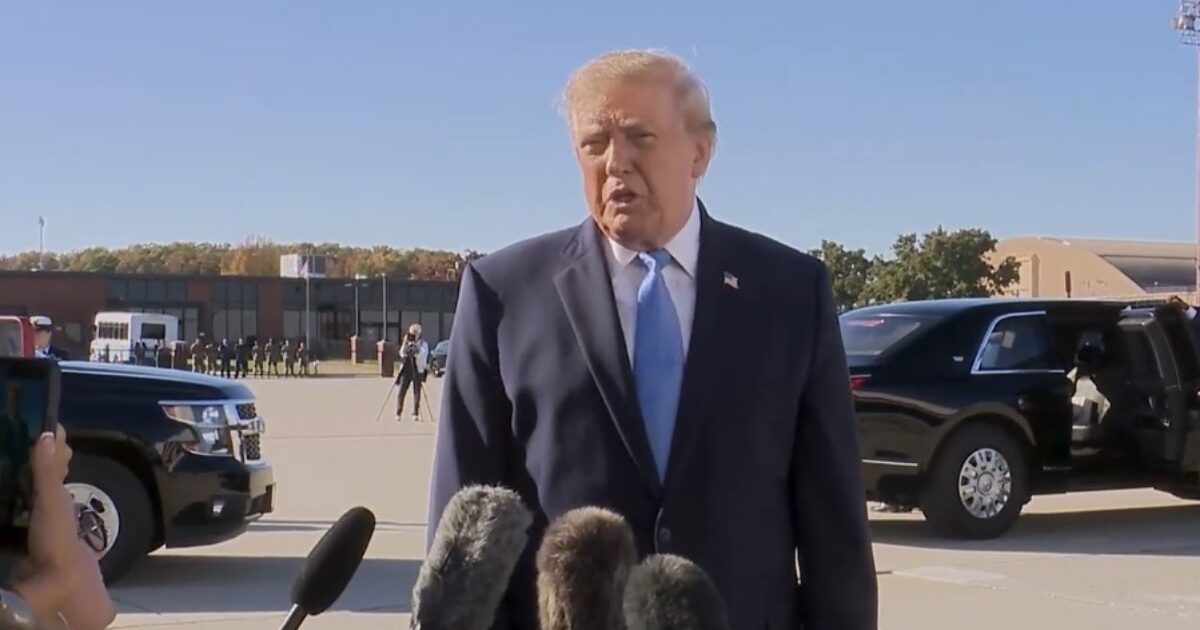
Trump speaks to reporters at Joint Base Andrews

President Trump went off on Obama for attacking his White House renovations, slamming Barack’s “poor taste” and “inability to notice the dirty and broken Presidential living quarters.”

Obama was out stumping for Democrats on Saturday, and he attacked Trump’s White House renovations. “He should be on HGTV,” Obama said, slamming Trump over the Ballroom, White House Rose Garden, and his helipad.

“There’s gold everywhere! What’s up with the gold? Everything, more gold! He’s got the White House looking like Saddam Hussein opened up a Cheesecake Factory. It’s gold everywhere!”

Somehow, Obama thought this is a bad thing.

“I’ve taken care of the White House. I fixed it with the artisans in the world. We’ve reskinned it. It was in horrible shape. A lot of the ornaments and things originally built for the White House were missing, damaged, or gone for a long time. They were lying on the ground in some cases, and it was in terrible shape,” Trump told reporters in response on Monday.

“The exterior plaster was broken, cracked. The painting was terrible, and I’ve reskinned the building beautifully with the highest, most talented people anywhere in the world. You’re not going to find more talent, and the White House looks beautiful.”

Trump then slammed Obama’s poor taste, saying, “Guys like Obama, they would pass the front door; they’d see the broken masonry, they’d see the broken, the beautiful pilasters that were all broken— for years. They were broken, and he wouldn’t notice because he doesn’t notice that. He doesn’t notice dirt and filth that hadn’t been cleaned, where the walls hadn’t been cleaned for years. He doesn’t notice areas that haven’t been painted.”

“So, it’s very easy for me to do. I do it very, very simply because it’s by nature, you know, a very clean person, and the White House was in terrible shape. The White House is now in the best shape it’s been since 1792 when it was built. It’s in beautiful shape,” he said.

“We have to explain that to Obama because he doesn’t understand it because he’s not a smart guy. Let me tell you, in my opinion, he’s not smart at all because the way he ran the country, only a stupid person would run the country like that,” Trump continued, slamming Obama for carelessly living in squalor.

“We have to explain to Obama that the White House is a symbol of America, and it has to be maintained properly. It has to be painted, and the exterior plaster can’t be falling off the walls, and the decorations and ornaments around the windows that are magnificent can’t be on one side of the window and falling off on the other side.”

“The White House, to President Obama, is a symbol of America. It has to be clean. The columns can’t be broken. The bricks can’t be falling off from under the plaster, and for you to say it’s a cheesecake factory that just shows why you were a lousy president,” he added before walking away from reporters.

WATCH:

The post WATCH: Trump Shreds Obama for Cheesecake Factory Comments, “He Doesn’t Notice the Dirt and Filth that Hadn’t Been Cleaned” appeared first on The Gateway Pundit.

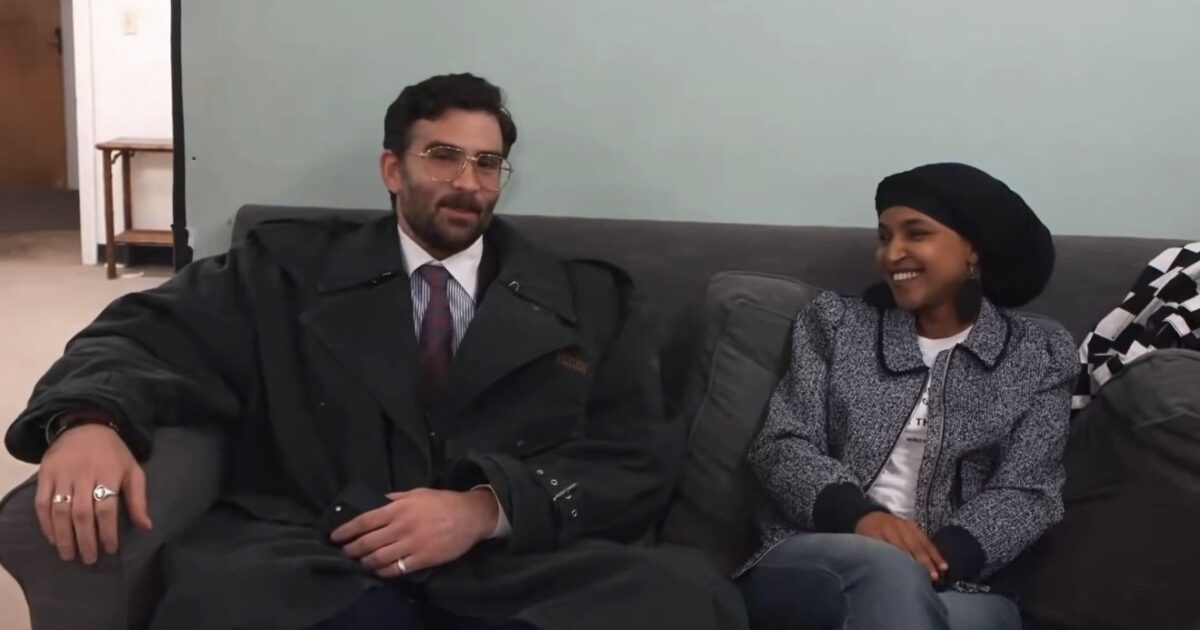
Ilhan Nur Said Elmi AKA Ilhan Omar Campaigns with Hasan Piker – Claims During Interview the Right is Fixated on Her Because of “Really Good” Looks (VIDEO)

Hasan Piker interviews Ilhan Omar

Somali Rep. Ilhan Omar, whose real name is Ilhan Nur Said Elmi– just like her brother-husband– appeared on Communist streamer Hasan Piker’s stream ahead of an event in Minneapolis hosted by Socialist State Senator Omar Fateh. 

During what looked like a flirtatious moment on Piker’s couch, she shrugged off the Trump Administration’s ongoing criminal fraud investigation, which exploded two weeks ago with a raid on her Washington, DC, home.

As Piker was railing against the media and claiming the press fixates on people like him and Omar more than they do White people, Omar chimed in, “I think we just look really good on their screens” before Piker suggested she’s “hotter” than “fascists.”

“Yeah, they’re like she’s so charismatic. I could see that, 100%. I agree with that,” Piker said as the two smiled at each other.

Don’t tell Ilhan’s brother.

She continued, “They get tired of looking at their, you know, Botox faces.”

“So, you’re saying if the fascists were hotter, then they would get more–” Piker said as Ilhan interrupted, “there would be less of us on TV.”

Ilhan then said she’s doing “good” when asked how she’s holding up with the ongoing investigation and claimed, “It tracks for me; that’s kind of most of my weeks and months.”

WATCH:

Omar appeared at the controversial event, dubbed “I’m the Host Now!” on Monday, with pushback even from her Democratic colleagues.

During the discussion, moderated by Omar Fateh, Omar pointed out that there was no Minnesota flag on his desk, but instead a Somali flag. “Am I the only one that noticed?” she said, laughing about the occupation of an American state.

WATCH:

Fox reported:

Rep. Ilhan Omar, D-Minn., is set to share the stage with far-left streamer Hasan Piker on Monday night despite mounting opposition from fellow Minnesota Democrats, some of whom have publicly urged the congresswoman to cancel the appearance just eight days before the midterm elections.

Rep. Angie Craig, D-Minn., has called Piker’s rhetoric “polarizing and dangerous” and said embracing him is “a mistake,” while Sen. Amy Klobuchar’s gubernatorial campaign called a number of his past statements “reckless and unacceptable.” Other Democratic officials and party groups have gone further, calling on Omar and state Sen. Omar Fateh, who is hosting the sold-out Minneapolis event, to cancel the appearance.

The controversy is exposing a divide among Minnesota Democrats in the closing stretch of the midterms over whether Piker’s enormous following among younger progressives outweighs the political liability of his past rhetoric. University of Minnesota political science professor Larry Jacobs told FOX 9 the event would “create a split within the DFL,” arguing it could distract statewide Democrats from their closing message and put candidates in a difficult position with moderate and Jewish voters.

“Early voting among people under 40 is down, and we need to do everything to get young people to the polls,” the Somali congresswoman’s campaign said, defending the decision to share a stage with Piker.

“The Congresswoman knows the Democratic Party is a Big Tent party, and she’s excited to join Senator Omar Fateh’s event to mobilize young voters and get them to vote in this critical midterm election.”

The post Ilhan Nur Said Elmi AKA Ilhan Omar Campaigns with Hasan Piker – Claims During Interview the Right is Fixated on Her Because of “Really Good” Looks (VIDEO) appeared first on The Gateway Pundit.

JUST IN: Foreign-Born Biden Judge Blasts Trump, Blocks Admin From Cutting Down Trees at Potomac Golf Course

US District Judge Ana Reyes on Monday issued a preliminary injunction over the Trump Administration’s effort to renovate the East Potomac Golf Course.

Last week, Uruguayan-born Judge Reyes, a Biden appointee, blocked the Trump Administration from cutting down any more trees at the East Potomac Golf Course until at least October 26 (today).

On Monday, Judge Reyes blasted the Trump Administration and ordered the government to halt its project.

“Rarely, if ever, has the United States Department of Justice urged a federal court not to believe the sitting President. Not to believe him that a cabinet secretary has “developed” a federal land project. Not to believe him that the secretary’s agency will destroy a historic golf course already on the land. Not to believe him that “Restoration work” will begin “IMMEDIATELY!” Not to believe him that the course “will be closed” for over a year. Not to believe what the President has repeatedly told the American public,” Judge Reyes wrote in a scathing 70-page opinion.

“And yet, here we are,” Judge Ana Reyes wrote.

Judge Reyes repeatedly attacked President Trump for posting about the golf course on his Truth Social page this month while his Justice Department was in court claiming that the renovations on the golf course were set to begin in November.

The Trump Administration removed more than 400 trees from the East Potomac Golf Course earlier this month, and Judge Reyes flipped out.

Judge Reyes previously screamed at DOJ lawyers on Monday during a hearing on the Trump Administration’s renovation project.

“I’m furious,” Judge Reyes said earlier this month.

“What has happened has cost the government all of its credibility,” Reyes added.

Judge Reyes screamed at the DOJ lawyers: “Ignorance is not an excuse!”

Top White House advisor Stephen Miller previously blasted the crazed, foreign-born judge.

“I missed the part of the Constitutional Convention that put federal judges in charge of golf course maintenance. The Left is endlessly enraged that, after allowing DC to decay for decades, the Trump Administration is making it safe, clean and beautiful,” said Trump Deputy Chief of Staff for policy Stephen Miller last week.

“Also, notice that leftist judges are never “enraged” when Democrats free illegal alien rapists and murderers. That kind of anger is reserved solely for improving long-neglected public golf courses,” Stephen Miller added.

The Trump DOJ will likely immediately appeal Judge Reyes’ injunction.

The post JUST IN: Foreign-Born Biden Judge Blasts Trump, Blocks Admin From Cutting Down Trees at Potomac Golf Course appeared first on The Gateway Pundit.

Mike Rogers Calls Out Kristen Welker and the Rest of the Media for Continually Defending Abdul El-Sayed (VIDEO)

Screencap of YouTube video.

Mike Rogers, the Republican candidate for U.S. Senate in Michigan, appeared on Meet the Press over the weekend and did battle with host Kristen Welker about Abdul El-Sayed’s reported family ties to the Muslim Brotherhood.

Welker acts like a campaign surrogate for El-Sayed. In fact, she asked Rogers more questions about El-Sayed than she did of El-Sayed himself in an interview she did with him last week.

Rogers held his own and called out Welker and the rest of the media for continually going to bat for this guy.

Transcript via Real Clear Politics:

KRISTEN WELKER: Let me ask you about one of the big issues that you’ve raised in this campaign, which is Abdul El-Sayed, your challenger’s background. President Trump posted overnight calling Abdul El-Sayed “a Muslim Brotherhood Jihadist who hates Jews and Blacks and Americans.” As you know, there’s no evidence to support any of those claims. Do you agree with the president, Congressman? Yes or no?

FMR. REP. MIKE ROGERS: Boy, I don’t understand the national press. They have to work and twist themselves in knots not to understand Abdul’s relationship with the thinking of the Muslim Brotherhood.

When you write a letter, supporting of Morsi in 2012 and 2013 saying you should “purge the police” and “purge the media,” and by the way, he will not answer this question. Look at The New York Times, who said, “He just won’t answer this question,” there’s a reason. He is getting money from groups that support the Muslim Brotherhood. Group money from groups that support Hamas and Hezbollah. That’s a thinking issue. I wore the uniform of the United States, Kristen, so that people could vote any way that they want to in this country. It’s not how you pray, it’s how you think. And that has a consequence.

KRISTEN WELKER: Congressman, he has denied and denounced the Muslim Brotherhood and denied any ties to them. For context, I just want to –

FMR. REP. MIKE ROGERS: Nope, he has not. He dismissed the question –

KRISTEN WELKER: He did in an interview with me — he said he had no ties to the Muslim Brotherhood–

FMR. REP. MIKE ROGERS: He won’t answer The New York Times, he won’t answer a local newspaper. I just don’t buy that.

KRISTEN WELKER: Let’s talk about the 2012 letter. I want give folks some context. In 2012, Egyptians were rising up –

FMR. REP. MIKE ROGERS: Listen, I get you guys want to defend this guy. But I think it’s unbelievable that you would not hold him accountable for his beliefs– and what he thinks America ought to look like–

Watch the video below:

If Kristen Welker was a paid employee for the El-Sayed campaign, how would she sound any different than she did here?

The post Mike Rogers Calls Out Kristen Welker and the Rest of the Media for Continually Defending Abdul El-Sayed (VIDEO) appeared first on The Gateway Pundit.