Trump, Like Biden, Has Become a President of Inflation and War

Trump, Like Biden, Has Become a President of Inflation and War

That makes winning the midterms difficult, to say the least.

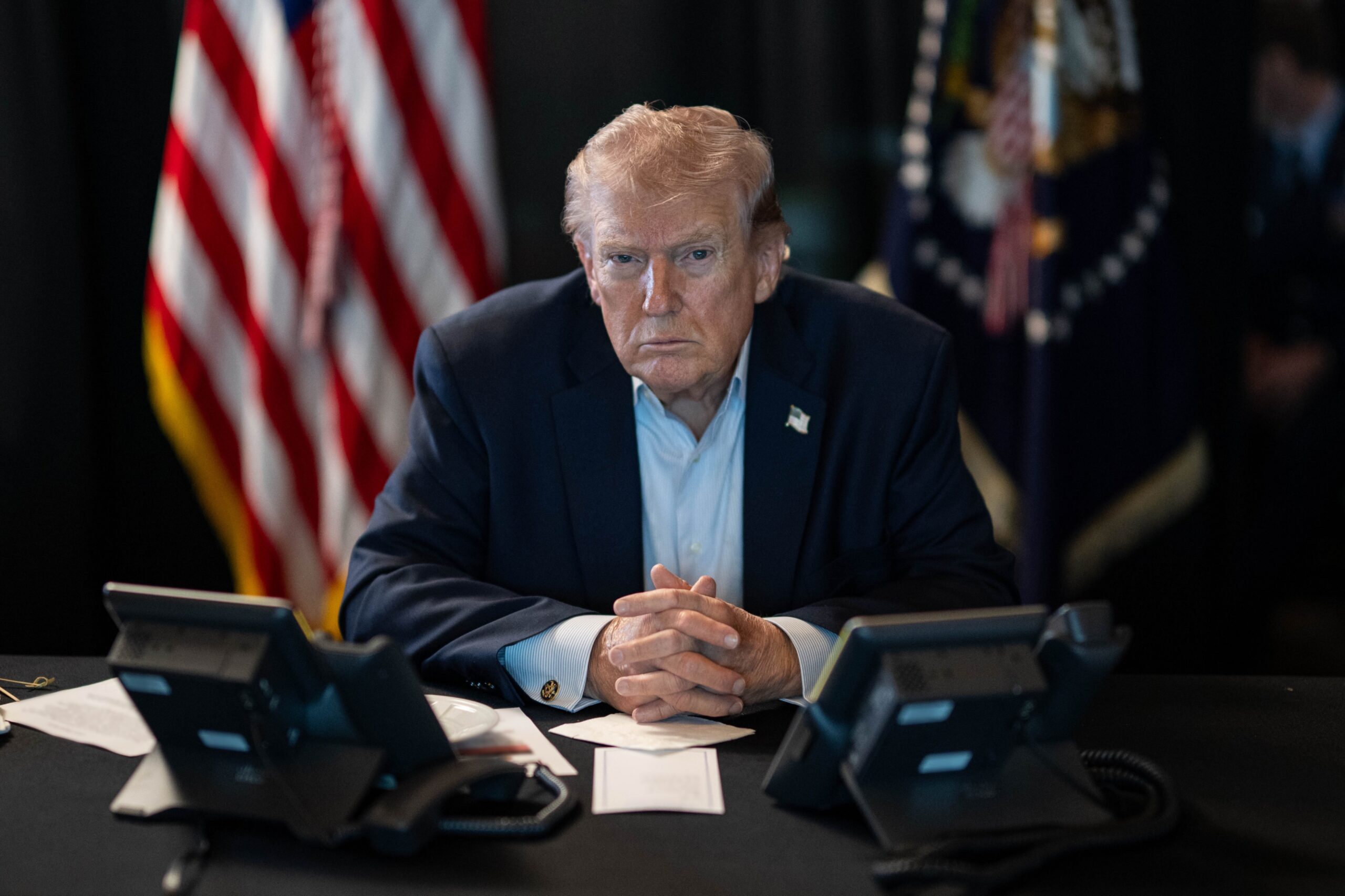
Trump Monitors Military Operations at White House
Photo by The White House via X Account/Anadolu via Getty Images

In the last consumer price index report before the midterm elections, inflation was up to 3.7 percent. It’s still a far cry from the 9.1 percent peak under former President Joe Biden, but that offers little comfort to vulnerable congressional Republicans.

President Donald Trump’s job approval rating on the economy sits at just 33.8 percent in the RealClearPolitics average of polls. On inflation specifically, only 27.2 percent approve of the job he is doing, while nearly 70 percent disapprove. A Fox News poll this month found that 77 percent disapproved of Trump on inflation, while a meager 22 percent approved.

It is against this backdrop that Republicans will be defending their narrow congressional majorities. And while the polls in some of the most competitive Senate races look iffy, the national electoral environment is indisputably bad for the GOP.

These dire conditions have arisen as a result of Trump’s own choices. The biggest driver of the most recent inflation is a spike in energy prices caused by the Iran war.

Just as Biden chose to do another COVID stimulus right as lockdowns were ending and people were going back to work, Trump chose to start a war with Iran he cannot now end.

Biden was warned by political allies that what he was doing would exacerbate inflationary pressures on the economy but persisted anyway, dooming his party’s congressional majorities and, ultimately, his presidency.

Trump was warned that the Iran war would have similar political consequences. He was counseled by his own team that the regime in Tehran was not as close to collapse as outside agitators for war were claiming, and he was advised that an attack would cause the Iranians to close the Strait of Hormuz and choke off oil supplies.

Like Biden before him, Trump ignored all these warnings and pressed ahead. The electoral impact is likely to be similar.

Biden had defeated the socialists who demanded passage of the Green New Deal in the Democratic primaries, only to then follow their lead on opening the border and jacking up federal spending.

Trump had routed the neoconservatives, running many of them out of the Republican Party entirely, yet ended up giving them the war George W. Bush never did (albeit mainly because W. couldn’t, having already taken their lead on Iraq).

Both disasters were predictable and predicted. Trump even had the benefit of watching Biden so spectacularly misread his mandate. Trump’s successor-turned-predecessor’s errors paved the way for his own return to the White House.

And yet here we are.

Trump’s tariffs have also been unhelpful. Voters associate them with higher prices, even when the connection is dubious. (Though it is true that tariffs raised some prices.) But at least Trump had made some kind of case for trade protectionism and reshoring American jobs on the campaign trail, even if the electorate was then more concerned about the cost of living than jobs and unemployment.

While Trump appealed to Republicans with disparate views on foreign policy, there was little in his first term and virtually nothing in his 2024 campaign to indicate to voters that a war with Iran was in the offing. 

Inflation was always going to be a difficult issue for Trump. Even if he did nothing to make the problem worse, price increases are cumulative. In most cases, he was only going to be able to cause the rate of inflation to decline, slowing price increases rather than immediately dropping them back down to where they were in his first term.

But inflation likely would have continued to come down if he had avoided the Iran war. His positions would then have been more defensible, even if midterm elections are typically hard for the party that controls the White House.

Trump could have more plausibly made the resurgence of inflation Biden’s legacy. Now he shares responsibility for this, and his party will almost certainly share the same fate as the Democrats in Congress who enacted Biden’s spending plans. And this GOP Congress didn’t even get to vote on the war (unless you count the war powers resolutions voted on after hostilities began). 

Trump says the latest round of inflation is a small price to pay for preventing Iran from getting a nuclear weapon. Yes, high gasoline and diesel prices are preferable to nuclear annihilation, if you believe those were the stakes.

Most voters don’t, however. And Trump himself was ready to end the fighting back in June. This war is continuing because of the Strait of Hormuz, which was open before Trump went down this road. But if and when the president succeeds at breaking this oil logjam, he will not receive the same credit for fixing a problem he helped create.

Now Trump is on the campaign trail, sometimes in the reddest parts of the country, seeking to stop an electoral bloodbath like that suffered by the GOP in 2006, when another ill-advised Mideast war shredded its congressional majorities.

Trump, in other words, is furiously trying to fix a problem of his own creation.

The post Trump, Like Biden, Has Become a President of Inflation and War appeared first on The American Conservative.

The Israel Lobby’s Changing Fortunes

The Israel Lobby’s Changing Fortunes

A follow-up to Mearsheimer and Walt shows a project in flux.

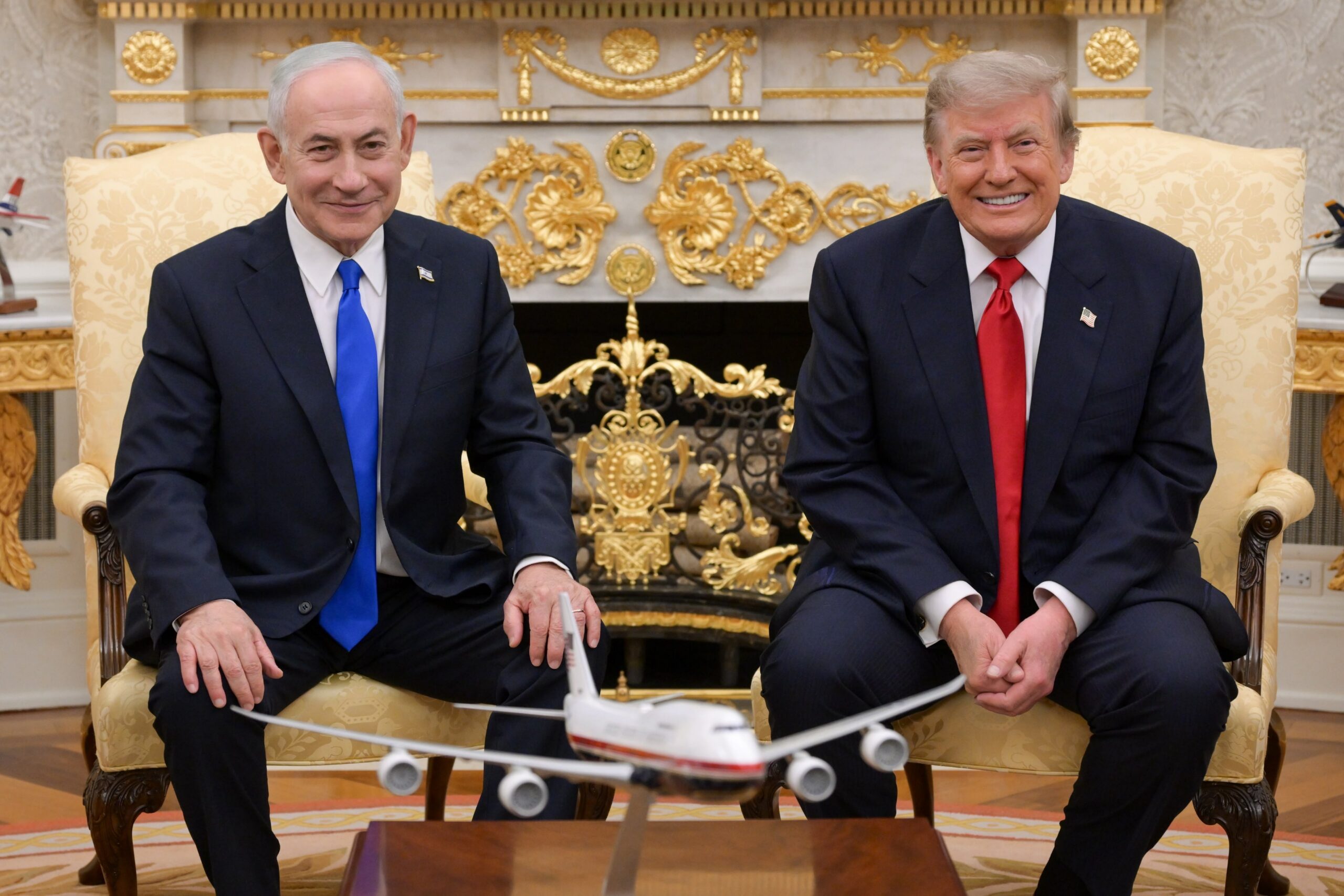
Trump-Netanyahu meeting in Washington DC
(Maâayan Toaf (GPO)/Handout/Anadolu via Getty Images)

Israel’s Lobby, by Eli Clifton and Ian Lustick. Atria/One Signal. 304 pages

A natural question to ask about Eli Clifton and Ian Lustick’s Israel’s Lobby is how it differs from the magisterial work of similar name published by John Mearsheimer and Stephen Walt nearly 20 years ago. Certainly its entry into the American debate is less dramatic: Mearsheimer and Walt’s work had behind it the force of taboo-breaking, taking on a subject which had been more whispered about than debated for two generations. Despite a massive campaign to denigrate their work by the lobby’s many allies in the mainstream media (I believe The American Conservative was the only American print publication to give it a positive review), Mearsheimer and Walt’s book became not only a best-seller but a genuine international publishing sensation. 

Though it wasn’t obvious at the time, Mearsheimer and Walt’s book appeared at a moment when there was still a clear open path towards a moderate future, sanctioned by a strong international consensus. This was true both for the American-Israeli relationship (they urged that America treat Israel like a normal country, while maintaining a moral commitment to defend it) and the Israeli–Palestinian conflict (they favored a two-state solution). The Iraq War, pushed relentlessly by Benjamin Netanhayu and other Israeli officials, and in great part the project of small group of passionately pro-Israel neoconservatives in American journalism and government, was already in the rearview mirror. The two authors cheered the birth of new liberal Zionist institutions like J Street, created to encourage United States support for a more moderate Israel at peace with its neighbors. 

Clifton and Lustick’s impressive follow-up does not, to say the least,  arrive at such a propitious time. Lustick is an accomplished Ivy-League political scientist who has produced important work on how ethnically driven conflicts can be managed or resolved. Clifton is a Quincy Institute co-founder and journalist who belongs to the cohort of American millennials who grew up when it was no longer outlandish to question the moral correctness of Zionism. Their book arrives as an erratic American president has started, at Israel’s behest, a war against the largest and most highly educated country in the Mideast, and oscillates between uttering threats of genocide and claims that the war is already won. On the home front it has become almost shockingly commonplace for entertainers and college students alike to shout slogans that call implicitly or explicitly for the destruction of Israel, something unimaginable 20 years ago.  Meanwhile Israel, in response to the Hamas attack of October 7, 2023, has conducted a brutal campaign against Gaza’s defenseless civilians that is often described as a genocide and is indisputably a project of ethnic cleansing. Israel’s lobby today is both similar and quite different from the one Walt and Mearsheimer described. Is it stronger or weaker? Some of both certainly, and while it may be weaker overall, it is clearly dangerous the way all wounded creatures are. 

Of the many elements which have changed since 2007, three stand out. The main institutions of the lobby, always wealthy relative to their opponents and competitors, are far richer. Israel itself has changed. Its commitment to peace with the Palestinians, if in the past more advertised than actual, has been completely submerged; no Israeli leader of consequence even pretends to want a settlement with the people who inhabit the land Israel now controls, and the country’s policy of seeking outright military domination of its entire region, though challenged by many Israeli former officials and scholars, faces no substantial political opposition. And finally, in a point emphasized by Clifton and Lustig, its lobby has more or less abandoned efforts to explain or justify Israeli policies, to convince Americans of their necessity and appropriateness. Instead increasingly Israel’s supporters in the United States seek to conflate any opposition to Israel and American support for it with antisemitism. 

That is to say, to challenge seriously  Washington’s special relationship with Israel is presented as a major moral failing, the kind of mark which would place one beyond the pale of respectable discourse. And while these three developments make Israel as influential as ever in  Washington and particularly within the Trump administration, its actual popularity among voters, particularly among Democrats and the young of both parties, has sunk like a stone.  

In a key section, the authors document how in the last generation America has seen  the greater concentration of wealth in the hands of the super-rich. The percentage share of national wealth held by the top 0.1 percent rose by two-thirds. Meanwhile, two court decisions from 2010 have made it much easier for billionaires to buy national policies to their liking. 

As pro-Israel think tank and advocacy money rose, so did Israel-related campaign and advocacy group contributions. When Citizens United v. Federal Election Commission was decided in 2010, no one anticipated it would weigh critically on American Mideast policy. The decision struck down limitations on campaign spending by unions and corporations, and in conjunction with the consequences of the SpeechNow.org v. FEC decision, opened the gates for increased spending by the super rich. Individual campaign spending limitations, $1,000 until 2003, later raised to roughly $3,000, suddenly became almost irrelevant as ultra wealthy individual donors began to dispense virtually unlimited funds to support or oppose  candidates through so-called superPACs. 

In principle this enhanced capacity of billionaires to buy policies of their choosing was available to anyone; in practice those passionate about supporting Israel used it the most effectively. Sheldon and Miriam Adelson, virtually unknown before 2012, became the most important donors in the Republican Party. They spent more than $100 million on mostly losing candidates in 2012, but “forced the relatively niche issue of Israel into the Republican primary and general election discourse and normalized the idea of political megadonors across party lines, no longer restricted by campaign finance laws, largely underwriting campaigns.” 

It wasn’t just the Adelsons of course; scores of Israel-First billionaires joined them with more power to shape American policy than ever before. As Clifton and Lustick put it, “These donors form the backbone of an Israel First movement which crosses party lines…. The donors are funding both the election of politicians as well as shaping the world view of these same elected officials, creating an echo chamber of pro-Israel talking points and policy recommendations for politicians already indebted to pro-Israel donors.” To give a sense of the rising volume of the echo chamber, the authors track the exponential rise in the budgets of pro-Israel advocacy groups. AIPAC had $19.5 million in assets in 2000, nine times that amount in 2023. Similar advances were made by the Washington Institute for Mideast Policy and the Jewish Institute for National Security of America. The Foundation for Defense of Democracies, the most influential Beltway group pushing for war with Iran, increased its revenues 16-fold from 2011 to 2022. 

As its American lobby has grown richer, Israel too has changed considerably. Until the last 15 years, most Israeli leaders at least paid lip-service to making a durable peace with the Palestinians, and some believed peace as necessary for Israel’s own flourishing. But no Israeli prime minister since Ehud Olmert has breathed a word about trying to accommodate Palestinian national aspirations. The authors consider this a profound shift; Israel, they claim with a borrowed phrase from an Israeli political scientist, has become a “crazy state,” increasingly dismissive of the legitimate interests and opinions of other countries. 

Along the way they  provide an unexpected, quite complimentary digression about  Vladimir Jabotinsky, an early right-wing Zionist leader and popularizer of the so-called Iron Wall strategy; its point was to win battles so forcefully as make Arabs realize they had no hope of destroying Israel and would have to accept it in the region. But such acceptance by Arabs was actually a goal, and a corollary of the Iron Wall doctrine was that Israel should not go out of its way to kill Arab civilians. Many times ignored, such scruples did exist in principle. 

Today they do not. Replacing them is a near hysteric view of Palestinian resistance. As Clifton and Lustick put it, “Palestinian resistance was understood as illegitimate, evidence of intransigence, and often as akin to Nazi antisemitism.” This justified a ramp-up in the brutality of Israeli tactics, as Palestinian enmity came to be understood as “pathological and ineradicable” and such Israeli measures as mass imprisonment, breaking the bones of protesting children, and torture of prisoners became commonplace.

This transformation in Israel had a parallel shift in the lobby’s accelerating efforts to police Israel-related discourse in the United States. In the early 2000s, the former Soviet dissident and right wing Israeli politician Natan Sharansky began to push the idea of a “new antisemitism” which would include any statement which “demonized” or “delegitimized” Israel or held it to a “double standard.” Activists following his lead soon persuaded a minor organization, the International Holocaust Remembrance Alliance, to adopt a definition of antisemitism incorporating these notions, and then pressed governments and institutions to embrace the “widely accepted” IHRA working definition. In a campaign that unfolded over years, Israel advocates eventually got the Obama State Department to incorporate the definition in an annual report. By 2018 the Trump Department of Education had adopted it, and would eventually use it as a weapon to punish pro-Palestinian academics and students at American universities. The authors provide a detailed account of the new definition’s rise and codification, a fascinating window into the nuts and bolts and high stakes of what might at first glance have seemed a somewhat niche academic debate. 

Despite these efforts, the lobby has clearly become less able to police the American discourse than it was 20 or 40 years ago. Israel’s poll numbers are bad, particularly among younger Americans. The lobby hopes that by gaining control of such internet platforms as TikTok, such opinion shifts can be reversed. (Oracle’s CEO is quoted in a hacked email telling an Israeli leader, “We have to embed the love and respect for Israel in American culture.”) It is difficult to see that happening; a great part of pro-Israeli argument now increasingly rests on such claims as “God Gave Us This Land,” which is likely to be less persuasive to a diverse and fairly secular America than snappy catchphrases popular in the 1950s like “a land without a people for a people without a land.” 

Meanwhile, in genuinely stunning political developments, candidates far more anti-Zionist than Walt and Mearsheimer have been able to win major elections in New York City and potentially in Michigan. 

At the same time, the last several months have been a very cold shower for people who thought the Israel lobby was no longer an extremely consequential voice when Washington decided matters of war and peace. No one seriously expected that President Donald Trump would try to deliver a peace settlement between Israelis and Palestinians, which he clearly had no real interest in, and which relatively few Palestinians or Israelis seemed ready for. But it was also assumed that assuring, with American military might, Israel’s  complete dominance of the Mideast was not part of an America First agenda. Trump had displayed a great deal of bravado in 2015, mocking the Adelsons’ lavish support of Marco Rubio while boasting that he didn’t need their money. In 2024, it turned out that he did. 

The man who had famously denounced the Iraq war in a Republican debate and campaigned explicitly against more stupid wars would, in office a second time, turn to Benjamin Netanyahu as his most consequential foreign policy advisor and satisfy the yearnings for an American war against Iran which Netanyahu—and all the voices in the Israel lobby echo chamber—had sought for a generation. It is this unexpected and calamitous development, this demonstration that even an America First candidate could be maneuvered into a costly war by Israel and its lobby, that has rendered the more extreme slogans of the anti-Israel left—“Free Palestine” etc.—less noxious than they seemed a  generation ago. 

Clifton and Lustick have written an important, extremely well-researched book, which tries to capture in motion a vast and complex phenomenon which is very much in flux, and whose fortunes are changing nearly month to month. They are to some degree men of the left, and some of their formulations—putting “woke” in scare quotes or describing the AfD, the German anti-immigration party that is one of the largest antiwar parties in Europe,  as “Nazi adjacent”—will seem lazy, at best, to most TAC readers. And perhaps a less progressive treatment would have noted the irony of both the lobby and the Trump administration borrowing heavily from tropes of the woke era in their efforts to portray Jewish college students as made to “feel uncomfortable” and “unsafe” by student protests against Israeli brutalities. 

But it cannot be denied that it is the American Left, not the Right, that has taken the lead in trying to free the United States from, as the authors call it in their book’s subtitle, “the grip of a foreign power.”  For that  it, and the authors, deserve commendation.

The post The Israel Lobby’s Changing Fortunes appeared first on The American Conservative.

America, the Colonized Empire

America, the Colonized Empire

A new film on Nigeria and the British Empire holds surprising relevance for citizens of the United States.

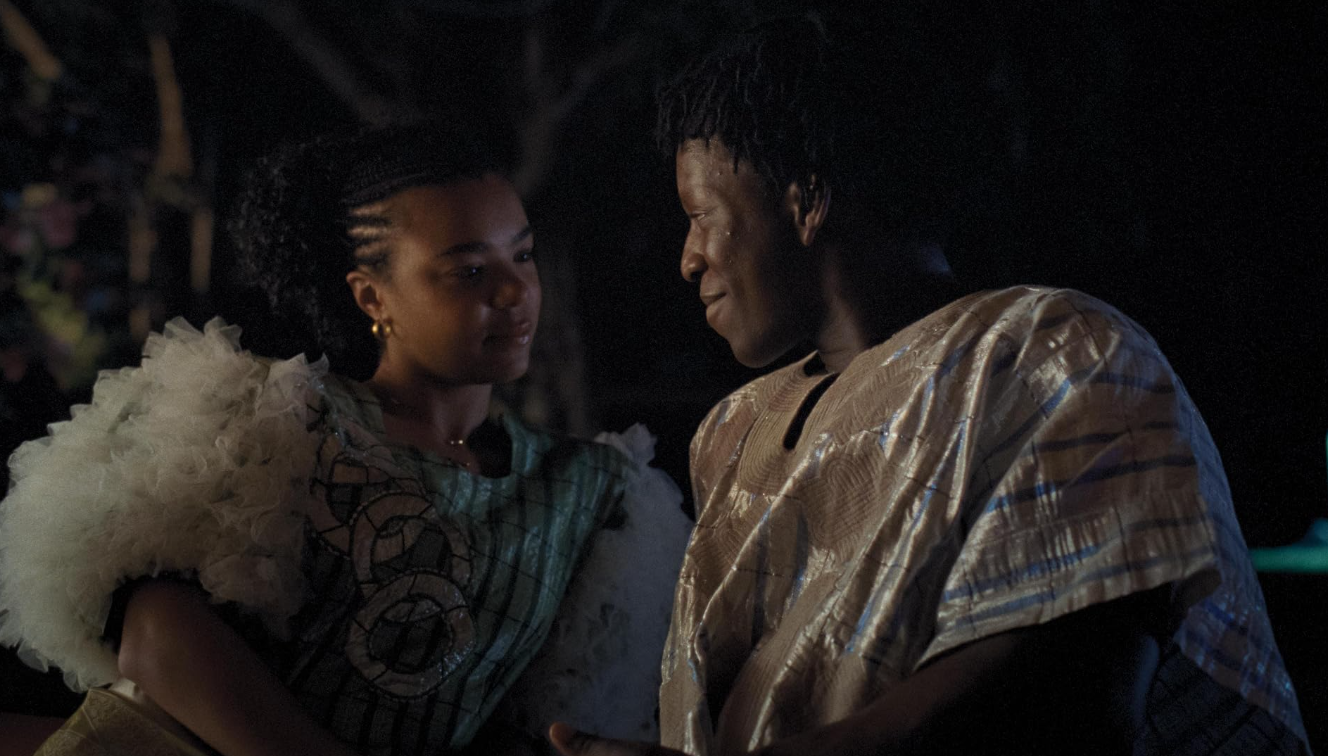
clarissa
(Neon/IMDb)

An American sitting in the Lincoln Center’s Alice Tully Hall on a Sunday evening for an early screening of the new film Clarissa might be forgiven for expecting, however wrongly, a standard “foreign” film on topics of distant concern.

Directed by twin brothers Arie and Chuko Esiri and set to hit theaters on December 11, the film reimagines Virginia Woolf’s 1925 novel Mrs. Dalloway, transposing the day-in-the-life story to contemporary Nigeria. I got the chance to see it on October 4 and found it surprisingly relevant to the concerns of a growing number of Americans.

The Lincoln Center always includes plenty of non-English language films in its New York Film Festival, and Clarissa has subtitles throughout its 135-minute runtime. So, it took this American audience member—dutifully reading the subtitles—a few minutes to realize, hey, they’re speaking English, albeit in a posh British accent.

This isn’t a case of Hollywood depicting citizens of the Roman Empire speaking the Queen’s English due to all the best actors being British, nor to a desire by the filmmakers to add a sense of gravity and elegance to the dialogue. The land and peoples that would become modern Nigeria were colonized, conquered, and controlled by the British Empire for more than 100 years. The British also provided (or imposed) Western education and English instruction, which was not distributed equally, and left the Nigerian elite sounding like their British overlords. 

Nigeria gained its independence in the 1960s and the British Empire is no more, but the presence of the latter is still felt in the former through not just the accents, but also the habitus—the manners, mores, and traditional obligations—which orders the lives of the film’s main characters: the protagonist Clarissa (portrayed as her contemporary self by the British actress Sophie Okendo and as her young self by the British actress India Amarteifio) and her circle of privileged friends. 

At the midpoint of Woolf’s novel, a traumatized veteran of the First World War, Septimus Smith, sits under a skylight, a few minutes past noon, in the office of the villainous psychiatrist Sir William Bradshaw. In the book, the implication is that the therapeutic state is the god of this world. Clarissa swaps Bradshaw for a benevolent female psychiatrist. The villain role is subtly filled by the long shadow of the British Empire and the inertia of the Nigerian social order. 

Americans should be able to empathize with both sides of the equation. America replaced Britain as the global superpower after the Second World War. It has tended to present itself as a vast apparatus of benevolent hegemonic order, but its imperial adventures have been well-documented. And like the British Empire, it has spread its version of English globally. In his book How To Hide An Empire, the historian Daniel Immerwahr recounted a representative story from the Philippines following America’s defeat of the Japanese there in 1945:  

Oscar Villadolid, a boy at the time, remembers a familiar scene from the aftermath of Manila’s “liberation.” A GI came down his street handing out cigarettes and Hershey bars. Speaking slowly, he asked Villadolid’s name. When Villadolid replied easily in English, the soldier was startled. “How’d ya learn American?” he asked. Villadolid explained that when the United States colonized the Philippines, it had instituted English in the schools. This only compounded the GI’s confusion. “He did not even know that America had a colony here in the Philippines!” Villadolid marveled.

America is an empire, the empire (for the time being), and it too casts a long shadow. While Woolf’s Septimus was a shell-shocked veteran of the late British Empire, Clarissa’s Septimus is traumatized from “his experiences fighting the country’s Boko Haram jihadist insurgency,” in the words of the film’s press materials.

According to Libertarian Institute Director Scott Horton, the American Empire helped make the indigenous Islamist insurrectionist group Boko Haram even more destructive than it would have been. First, the U.S. backed jihadists against the Libyan government, helping topple it in 2011. That jihad then spread to Mali, to which Boko Haram traveled in pursuit of both further Islamic indoctrination and weapons and tactics training. Saudi Arabia and Qatar, both Major non-NATO allies of the U.S., have both been accused of funding Boko Haram since at least 2014.  

On the other side of the equation, the United States was also a colony that broke away from the British Empire. It took America a long time to get out of Britain’s shadow. According to Gareth Porter and John Kiriakou in their book The CIA Insider’s Guide to Iran, in 1953 President Dwight D. Eisenhower wanted to work with Iran’s Prime Minister Mohammad Mosaddegh. Eisenhower was eventually undermined by the Anglo-American deep state of the time, and the U.S. did what Britain wanted, backing a coup that ousted Mosaddegh. We’re still dealing with the fallout of that decision today.

These days, Britain has been reduced to a pathetic vassal of its former colonies. But that doesn’t mean America is fully independent. The imperial center has been colonized by another foreign power, its ostensible client Israel. Walk through the halls of power in Washington, DC, and the Israeli flag is everywhere. Our elite are beholden to Israel and its lobby. Our children are thrown into its service on the frontlines of futile wars.

Eli Clifton and Ian Lustick detail this intolerable situation in their new book Israel’s Lobby: America in the Grip of a Foreign Power. Promotional copy for the book summarizes the sick state of affairs:

The greatest story in geopolitics and in American domestic affairs is how the far-right government of a small Middle Eastern country came to hold a controlling interest in United States foreign policy. Israel’s lobby is now in a position to police the speech of American politicians, college students and journalists, and coerce and persuade the White House to back unpopular, costly, and ultimately national security-threatening policies.

As our government gears up for more “kinetic action” against Iran, Americans are starting to notice that our elite all speak like Zionists. Clarissa does not just speak our language. In a deeper sense, it speaks to us.

The post America, the Colonized Empire appeared first on The American Conservative.
OUTRAGEOUS: City Allegedly Barred Man From Becoming a Firefighter – Because He Was Homeschooled (VIDEO)

Screencap of Twitter/X video.

A city in the state of Nebraska is under legal fire right now for allegedly barring a man from becoming a firefighter because he was homeschooled.

It’s so ridiculous, like, who cares how the man was educated? He is fit for the job or he isn’t.

At some point in recent years, the job of firefighter became politicized. People on the left decided that the profession had too many men in it, despite the fact that body strength is one of the most important aspects of the job.

In this particular case, the American Center for Law and Justice (ACLJ) has gotten involved and they are fighting for this man’s rights.

Jordan Sekulow, who is a lawyer and part of the ACLJ, writes at Townhall:

City Banned a Homeschooled Firefighter. Now It’s Displaying Disdain for Homeschooling.

Andrew Coates wants to be a firefighter. He’s a licensed EMT, has earned recognition as “Rookie Firefighter of the Year,” and has dedicated himself to pursuing a career serving and protecting his community.

But when Andrew applied to become a firefighter in Fremont, Nebraska, the city refused to let him compete for the position.

Why? Because Andrew was homeschooled.

Despite Nebraska law expressly protecting the right of families to homeschool their children, Fremont maintained a discriminatory hiring policy that excluded Andrew from consideration simply because of how he received his education.

It didn’t matter that Andrew was qualified. It didn’t matter that he had already demonstrated his dedication to emergency services. The city shut him out of the hiring process because he was homeschooled.

When the American Center for Law and Justice (ACLJ) learned what had happened, we stepped in to represent and defend Andrew’s rights.

We challenged Fremont’s unconstitutional restriction and demanded that the city stop discriminating against homeschool graduates. And our efforts forced the issue before the Fremont City Council.

See a video report below:

This case is still not settled.

The city has reportedly made some changes to the job requirements that put Coates at an even bigger disadvantage.

It’s all about the left’s disdain for homeschooling.

The post OUTRAGEOUS: City Allegedly Barred Man From Becoming a Firefighter – Because He Was Homeschooled (VIDEO) appeared first on The Gateway Pundit.

WATCH: Black Democrat Woman From Michigan Explains Why She is Voting for Republican Mike Rogers (VIDEO)

Screencap of Twitter/X video.

Melanie Rutherford is a black woman from Michigan who is also a Democrat. This fall, she will be voting Republican for the first time to support Mike Rogers in the Michigan Senate race.

Rutherford knows politics well. She served as a member of the Pontiac city council and has always been a Democrat but as she explains below, she believes Mike Rogers will do a better job of representing everyone in the state, rather than a select few.

This is what Abdul El-Sayed is up against in this race. The black community is not on board with the radical new vision of the Democrat Party introduced by the DSA wing.

Partial transcript via Eric Daugherty:

Black Democrat woman just went on national TV saying SHE’S VOTING MIKE ROGERS in Michigan

First time in her life voting Republican

NOT voting Abdul El Sayed.

“I started doing my research on Mike Rogers. I’m a staunch Democrat…my policies align with Rogers. He’s about the conglomerate of people, not just a select few.”

“I couldn’t in my right mind vote for this guy…his ideas don’t align with what I think is best.”

“You can be ostracized…everybody knows me as a staunch Democrat.” — Melanie Rutherford

Watch the whole thing below:

This is the Democrat Party’s greatest fear.

Imagine if there are hundreds of thousands of other Melanie Rutherfords out there, not only in Michigan, but other parts of the country.

If the black vote ever swings majority Republican, the way it used to, the Democrats are cooked as a party.

The post WATCH: Black Democrat Woman From Michigan Explains Why She is Voting for Republican Mike Rogers (VIDEO) appeared first on The Gateway Pundit.

JUST IN: Katie Zacharia Puts Out Statement Confirming Departure as Press Sec

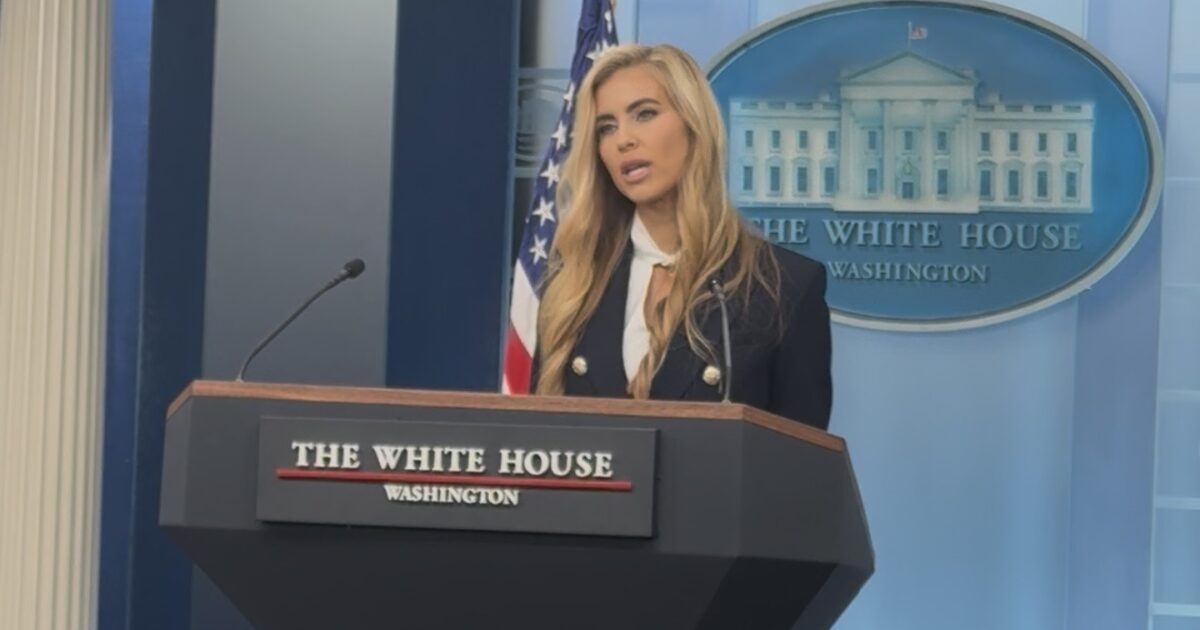
Katie Zacharia delivers her first White House press briefing – October 13, 2026 (photo by Jordan Conradson/TGP)

Katie Zacharia released a statement on Friday evening saying it was an “honor to work for” President Trump after her departure as White House Press Secretary earlier. 

This comes after Trump told reporters that he had asked her to reconsider accepting the job after the relentless abuse from the mainstream media following her first press briefing on Tuesday.

The attacks were even coming from within the administration, with officials trashing her to the press and reported controversy over her appointment to the role.

Zacharia told The Gateway Pundit that she had not been fired.

As The Gateway Pundit reported earlier, Trump weighed in on the media’s attacks on Zacharia over the week, telling reporters that she did not deserve to be treated so “nastily” by the hostile press, including Fox News.

Trump said Fox’s Sean Hannity and the Fox and Friends panel this morning were “tough” on her after Fox News grilled Zacharia in interviews.

BREAKING: Trump Weighs in on Media Attacks Against Katie Zacharia, Says Fox Was Tough on Her Amid Revelation She’s “Transitioning Out” of Role (VIDEO)

“Katie’s been treated very badly by the media, very, very badly, very unfairly, I think, and I just spoke to her about it,” Trump said.

WATCH:

Almost immediately after, Fox News reported that Zacharia had told Peter Doocy that she was “transitioning out” of her role in the press office.

“President Trump is a kind, wonderful, gracious, thoughtful, enthusiastic, and hardworking man. I wish more Americans appreciated him. No one will ever make America great the way he has and continues to,” Zacharia wrote on X.

“It was an honor to work for him.”

Zacharia reportedly joined Vice President JD Vance and his family for dinner tonight at his residence at the Naval Observatory in Washington, DC.

The post JUST IN: Katie Zacharia Puts Out Statement Confirming Departure as Press Sec appeared first on The Gateway Pundit.

AOC Says Discussing Abdul El-Sayed’s Reported Ties to the Muslim Brotherhood is… RACIST! (VIDEO)

Screencap of Twitter/X video.

Rep Alexandria Ocasio-Cortez of New York recently spoke to a reporter for TMZ in DC – an outlet that is obviously becoming one of her favorites – and explained that talking about Abdul El-Sayed’s alleged family ties to the Muslim Brotherhood is (drumroll please) racist.

To hear AOC explain it, Abdul El-Sayed is a victim here, because his family had some struggles when he was a little boy. Oh and also, if you examine anyone’s life hard enough, won’t you find some questionable connections? She actually tries to make this point.

For the Democratic Socialists of America (DSA), this is probably the mot important race in this election cycle. They think that if they can drag El-Sayed over the finish line in Michigan, they can do it anywhere in the country. For them, this is an important test case.

From TMZ:

AOC on Abdul El-Sayed – Racist Muslim Brotherhood Claims Are Dirty Politics!!!

Rep. Alexandria Ocasio-Cortez is coming out swinging for Abdul El-Sayed … calling claims linking the Michigan senatorial candidate to the Muslim Brotherhood flat-out racist.

Charlie got AOC on Friday at a Culver’s in Michigan, where she’s been campaigning for El-Sayed … and he asked whether the Muslim Brotherhood controversy was rooted in reality or racism.

AOC didn’t mince words … saying the allegations fall “into racist very clearly” and blasting critics for dragging El-Sayed’s painful family history into politics…

AOC points out El-Sayed’s parents split shortly after he was born, and he grew up without his mother … arguing just about everyone has relatives who’ve made questionable choices, but that doesn’t mean those choices define them.

And AOC isn’t budging on her support … calling El-Sayed “one of the most patriotic people” she’s ever met.

AOC isn’t fooling anyone with this:

If a Republican was running in this cycle and had family ties to a questionable organization and it was being reported in the news, do you think AOC would be out here defending him or her? Not a chance.

Everyone can see what is going on here.

The post AOC Says Discussing Abdul El-Sayed’s Reported Ties to the Muslim Brotherhood is… RACIST! (VIDEO) appeared first on The Gateway Pundit.

Amazing! American Flag Still Flying on Top of Patriots Hill in Orange County After Fire Torches Hillside (VIDEO)

Orange County fire in San Clemente / 10/16/2026

This is amazing.

An American flag was still flying on top of Patriots Hill in Orange County after a massive fired torched the hillside in San Juan Capistrano.

A massive vegetation fire erupted in South Orange County, California, on Friday afternoon amid gusty Santa Ana winds.

The blaze, dubbed the Norte Fire, has exploded to more than 570 acres in San Clemente and San Juan Capistrano.

Several homes in San Clemente and San Juan Capistrano are engulfed in flames.

More than 500 firefighters are currently battling the Norte Fire, according to the Orange County Fire Authority.

At the time of this publication, the Norte Fire is 14% contained.

Evacuation orders have been issued for San Juan zones 4,5 and 10. OC Fire also issued evacuation orders for San Clemente zones 12 and 13.

Evacuation shelters are available at:

• San Juan Capistrano Community Center
25925 Camino del Avion, San Juan Capistrano.

• San Clemente Community Center
100 Calle Seville, San Clemente.

The American flag at the top of Patriots Hill, a scenic point on a hiking trail in San Juan Capistrano, was untouched by the blaze.

“You can see that the fire really tore through these hills, but the flag is still flying on the top of the Patriots Hill there,” ABC 7 reporter said.

“So pretty amazing that that area kind of held up,” she said.

WATCH:

The post Amazing! American Flag Still Flying on Top of Patriots Hill in Orange County After Fire Torches Hillside (VIDEO) appeared first on The Gateway Pundit.

Epic Roast! Blathering Idiot AOC’s Former Prior Comments on Elon Musk Come Back to Haunt Her — MUST-SEE VIDEO

Epic roast! Chattering parrot AOC is roasted over her stupidity once again.

On Thursday night, Elon Muck showcased his latest absolutely amazing technological advancement!

Elon unveiled his next-generation Tesla Roadster during an event in Texas, showing off a car that can fly, do flips, and go from 0 to 60 mph in under one second.

During the event, a demonstration showed the car hovering off the ground, then flipping over multiple cars and a semi-truck cab.

“This will be an actual car that’s on the roads. You know, I’m not sure it’s necessarily legal in all jurisdictions,” Musk joked. “But there will be such a car that someone can own, so it’s going to be pretty wild.”

Tesla showed off its new flying Roadster EV Thursday at SpaceX’s Texas test facility.
Tesla showed off its new flying Roadster EV Thursday at SpaceX’s Texas test facility. (@Tesla / X screen shot)

Following this mind-blowing display, X user Maze posted a previous clip of blathering idiot Democrat Darling, Alexandria Ocasio Cortez (AOC), trashing Elon Musk as an unintelligent billionaire… with the flying Tesla in the background!

AOC: “This dude is probably one of the most unintelligent billionaires I have ever met or seen or witnessed.”

Here is this epic video by Maze.

Of course, this was posted on Elon-owned X social media. Epic.

The post Epic Roast! Blathering Idiot AOC’s Former Prior Comments on Elon Musk Come Back to Haunt Her — MUST-SEE VIDEO appeared first on The Gateway Pundit.

(VIDEO) Trump Responds to Rumors that Chief of Staff Susie Wiles is on Thin Ice as Insiders Leak Potential Replacements

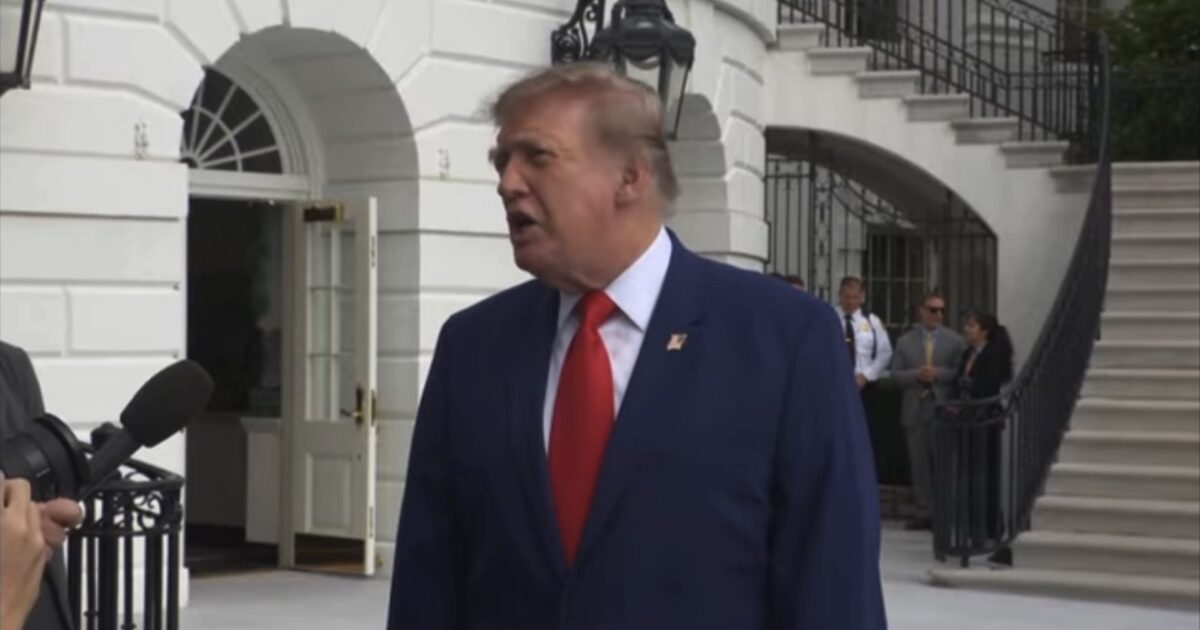
President Trump speaks to reporters at the White House

President Trump on Friday responded to rumors that his chief of staff, Susie Wiles, is on the chopping block as leaks from around the White House suggest that he’s looking for a replacement. 

Amid reports that Wiles was sidelined in Trump’s decision to hire Katie Zacharia as Press Secretary last week, according to anonymous sources who claimed he did not consult with her, Politico reported this week that Trump is turning sour on Wiles.

According to anonymous sources in Trump world, Trump has been asking allies for their thoughts on Wiles and potential replacements for the Chief of Staff role.

An unnamed senior elected Republican official told Politico that Trump had floated White House Deputy Chief of Staff Stephen Miller, President of the New York Yankees Randy Levine, Special Envoy to the Middle East Steve Witkoff, Federal Housing Finance Agency Director Bill Pulte, and former House Speaker Kevin McCarthy as possible successors. 

“TOTAL FAKE NEWS Politico doesn’t care about facts, integrity, or honest journalism — it’s why I kicked them out of the White House!” Trump said in response to Politico on Thursday. “Susie Wiles is my loyal and longest serving Chief of Staff – there is a reason for that. She has been with me since the beginning, is my trusted advisor, and has my COMPLETE confidence. President DONALD J. TRUMP.”

Now, the Daily Mail reports that seven insiders confirmed “three warring factions” of “Wiles loyalists, Jared Kushner allies, and the MAGA old guard” are pushing for their own choice of a replacement. Wiles allies are reportedly promoting deputy national security adviser Mike Needham, Kushner allies want Steve Witkoff or Agriculture Secretary Brooke Rollins, and the “MAGA old guard” are all in for Stephen Miller.

Others suggest John McEntee, who served as Director of the White House Presidential Personnel Office during Trump’s first term, is in the ring as a “wildcard.”

However, Trump dumped cold water on the rumors on Friday, telling reporters it’s a “false report that was written by Politico.” He continued, It’s fake news.”

“I could not be more happy with Susie. She’s done a great job from day one,” he added, noting that Wiles recently recovered from cancer and that she’s “fully recovered.”

“She’s been fantastic. It’s been one of the most successful administrations in the world, and she’s a part of it,” he added. “That story in Politico, I guess it was, is a total fake story. And we told them before they wrote it, so they put my disclaimer in there… But they put it in anyway because they’re fake news. That is a totally false story.”

Trump later doubled down, telling another reporter, “She’s been incredible. We’ve had maybe the most successful first two years, and it’s not even two years, in the history of the presidency. She’s been my chief of staff. She’s smart. She’s tough.”

WATCH:

This is a developing story.

The post (VIDEO) Trump Responds to Rumors that Chief of Staff Susie Wiles is on Thin Ice as Insiders Leak Potential Replacements appeared first on The Gateway Pundit.