‘Serial Killer’ Concerns Grip Michigan’s Capital as Similarities Are Noted in 5 Recent Deaths

Law enforcement in Lansing, Michigan, is concerned there may be a serial killer on the loose after five killings were committed in under one year on the same trail.

Earlier this month, police said they were investigating the possibility that a lone killer was targeting the Lansing River Trail, Fox News reported.

Karen Holt, a criminology professor at nearby Michigan State University, told the outlet, “I definitely think we need to be cautious, but we also need to be rational.”

“As someone who studies violence, the first thing that came to mind was the victims and the vulnerability of these victims and the method of the violence,” she added.

“One of the patterns with either single or serial homicide offenders or just violent offenders is that they tend to go after individuals who are particularly vulnerable,” Holt explained.

Authorities said all the victims were homeless men.

Holt said killers sometimes target homeless victims because they “lack credibility,” which possibly “decreases the likelihood that they’re going to be caught.”

The timeline of the killings spans from October 2025 to August 2026. The victims’ ages ranged from 22 to 70, with the cause of death in many cases being either blunt force trauma or stabbing.

Last month, Edward Joseph Smith, 23, was arrested in connection with the stabbing of Daniel Lusk, 22. No motive was released to the public, however, and it is still unclear if he is responsible for any of the other killings.

Holt told Fox News that Lusk’s murder “stands out” because he was the only who was stabbed.

Smith has been charged with murder in that case, but the other cases remain open, according to The New York Times.

Lusk’s father, Dean, said his son was struggling with addiction and had done stints in rehab, as well as prison, but that he visited his son frequently to bring food and clothing. 

“There were incidents that happened down there before my son got murdered,” Mr. Lusk said. “The cops were well aware of it, and they refused to do anything about it.”

Police Chief Robert Backus broached the subject of a possible serial killer during a news conference, saying, “We are looking at the idea — or the possibility — that these may be related cases… But we cannot move forward in an investigation thinking that these are all the same person. We have to look at these on a case-by-case scenario.”

Derick Byrd, 56, reportedly knew some of the victims and had previously stayed along the river trail.

“It’s scary knowing that even if you’re homeless, you can’t even lay out here and go to sleep without somebody beating you,” he said.

Backus announced that temporary cameras were placed along the trail, and the city is weighing whether to install better lighting.

He added that the trail is safe, except during the overnight hours.

The killings began with Gino Chouinard, 54, who was discovered dead on the trail, but his cause of death has yet to be determined.

The next victim, Dennis Dunnebacke, 70, was found under a bridge in July, and his cause of death is also undetermined.

The third victim, Robert Smith, 57, died of head trauma one day after Dunnebacke, and his case was declared a blunt force homicide.

The other two deaths occurred 10 days apart back in August, with both victims being found under bridges like Dunnebacke.

One of the victims was Lusk, and the other was Louis Woodruff, 57, who had severe facial trauma. He passed away on Sept. 1, and his death was ruled a blunt force homicide.

Chief Backus blamed the case delays on a lack of witnesses, limited surveillance footage, and inconclusive or pending reports from the medical examiner.

This article appeared originally on The Western Journal.

The post ‘Serial Killer’ Concerns Grip Michigan’s Capital as Similarities Are Noted in 5 Recent Deaths appeared first on The Gateway Pundit.

Former Knicks Star Trades Basketball for Badge- Graduates from Florida Police Academy

Amar’e Stoudemire/ Image: Miami Dade College/Instagram

Former New York Knicks star Amar’e Stoudemire has made a major career move and traded a basketball and the shining lights of stardom for a police badge.

Miami Dade College shared a photo of Stoudemire, 43, following his graduation from the Miami-Dade Police Academy on Wednesday.

“Amar’e Stoudemire, @amareisreal, made his mark on the basketball court. A six-time NBA All-Star, 2003 Rookie of the Year and newly inducted Basketball Hall of Famer, he played for some of the league’s biggest teams, including our very own @miamiheat,” the post on Instagram read.

“Today, he’s celebrating a very different milestone: graduating from the MDC School of Justice Basic Law Enforcement Academy after months of rigorous training. And he’s graduating with special recognition, receiving the Harry “Coach” Everett Award for his contributions to the success of the academy program throughout his training.”

“For Amar’e, this is more than a second career. Becoming a police officer was a childhood dream, inspired in part by family members who served in law enforcement. Now, he will begin a new chapter as a police officer with the Miami Dade Schools Police Department, @miamischoolspd, giving back to our community and serving as a positive influence for the next generation.”

“Congratulations, Amar’e, and to all of graduates from BLE 401! Wishing you continued success as you take on this important responsibility in our community.”


View this post on Instagram


A post shared by Miami Dade College (@mdcollege)

Stoudemire told Sports Illustrated, “It’s something I always wanted to do since I was a kid.”

“I remember back when I was in grade school, elementary school. They asked you on career day, ‘What do you want to be when you grow up?’ And my initial response was a police officer.”

Stoudemire noted that the nearly 11 months in the academy, including intense physical training drills, was very different than his experience in the NBA.

.“Yeah, it was a little bit [more] challenging actually because now I’m running a lot more than I had before,” Stoudemire told the outlet.

“Obviously, in the NBA you run short distances, right? And the police academy, you’re running more long-distance mileage.”

Stoudemire will serve and protect in the county’s school police department.

Miami Dade College shared photos from graduation and congratulated the newest class.

The post Former Knicks Star Trades Basketball for Badge- Graduates from Florida Police Academy appeared first on The Gateway Pundit.

BREAKING: Trump Announces Fort Hood Shooter Nidal Hasan’s Execution Will NOT be Livestreamed

President Donald Trump announced Thursday that the scheduled firing squad execution of Fort Hood shooter Nidal Hasan will not be livestreamed.

The Pentagon had previously planned to let the public watch.

The immediate families of the victims will be allowed to attend and watch in person if they choose to do so.

President Trump announced the decision Thursday in a post on Truth Social.

The post read in full:

Nidal Malik Hasan, a former U.S. Army Major turned traitor, is a very bad and evil man, who killed 13 people, including a pregnant soldier, who died, along with her unborn son, and injured, very seriously, 32 more innocent people. Barack Hussein Obama’s Federal Bureau of Investigation (FBI) intercepted electronic communications between Hasan and the radical Yemeni-American cleric, Anwar al-Awlaki. When reviewed by his FBI terrorism task force, investigators concluded that Hasan’s emails were not a threat. This assessment of the Obama Administration’s actions was later considered to be a key intelligence failure. With all of that being said, I think streaming the execution for all to see might have been a strong deterrent for the World to witness how America deals with Terrorists and SCUM like Hasan but, many very good and well meaning people would rather not watch him die, through streaming, or through any other visual device. He will die, as scheduled, by firing squad, but this event will not be streamed. That said, the execution may be viewed in person by the immediate families of the victims, if they so choose. They deserve to witness JUSTICE! Thank you for your attention to this matter. President DONALD J. TRUMP

Hasan’s execution is set for 1 p.m. CST on December 3 at Fort Hood, Texas.

It is set to be the first military execution in 65 years and the first by an Army firing squad since World War II.

Trump approved the death sentence on October 2 after the appellate process upheld the conviction.

Defense Secretary Pete Hegseth recommended using a firing squad.

Hasan, a former Army major, opened fire on November 5, 2009, at the Soldier Readiness Processing Center at Fort Hood, killing 13 and wounding more than 30.

He was convicted in 2013 of 13 counts of premeditated murder and 32 counts of attempted premeditated murder and sentenced to death.

The Supreme Court declined to review his case last March.

Hasan has been held on military death row at Fort Leavenworth.

The post BREAKING: Trump Announces Fort Hood Shooter Nidal Hasan’s Execution Will NOT be Livestreamed appeared first on The Gateway Pundit.

Trump Has Had Enough! US Intel Officials Warn Ukrainian Embassy that Further Strikes on Russian Energy Sites Will Result in Complete Halt in all Intelligence Sharing

The skies above Valuyki, Belgorod Oblast Russia are set ablaze after Ukraine bombs another oil depot.

Trump has seen enough.
President Trump is getting tired of the constant lies and broken promises from the globalist puppet Volodymyr Zelenskyy.

It is pretty clear at this point that Ukrainian President Volodymyr Zelenskyy can not be trusted.

How many times has he turned on President Trump and America? It is too numerous to count.

Zelenskyy agreed to an energy ceasefire with Trump but his globalist masters had other plans.

On Tuesday — two days after President Zelensky agreed to Trump’s energy ceasefire – Ukraine bombed the massive oil depot in Valuyki, Oblast, Russia.

Via Hormuz Report:

As Cristina Laila reported earlier, President Trump on Sunday announced an energy ceasefire between Russia and Ukraine.

But Ukraine continues to break its promise and is determined to see global energy prices soar before the 2026 midterm elections. It’s very obvious. The globalist puppet is determined to weaken Trump after he allowed his entire country to be obliterated by the Russians.

Apparently, President Trump has had enough.

The Hormuz Letter reported on Wednesday that US intelligence officials warned Ukraine that further strikes on Russian energy sites will result in a complete halt in all intelligence sharing with the Zelensky government.

And Zelenskyy is out spinning the line that actually he is the one betrayed by Trump.

From Hormuz Letter: “BREAKING: Zelensky says he has been betrayed by Trump, that Elon Musk and Trump deliberately blocked Starlink in Ukraine overnight and that people have been killed as a result. “I am sure they knew what they did, absolutely. Because it was 1am at night, Starlink was blocked by SpaceX and the United States,” he tells Piers Morgan.

“This decision will bring a lot of human losses. Of course, people will die.” He said interceptors that rely on Starlink did not work, and that “this is not the right side of history.”

Asked if he is angry with Musk, Zelensky said yes, calling it a big mistake.

“Now Putin is laughing because, I mean this is for him, simple victory,” he says on the Trump-Russia diesel deal.”

Community notes responded to Zelenskyy’s bogus attacks on Elon Musk pointing out, “Starshield was limited in Ukraine. SS is controlled by the US gov. Starlink is for comercial use.”

Elon Musk posted this on Wednesday in response to Zelenskyy:

Starshield systems are owned and controlled by the US government. Any limits on speed or usage are decided by the US military and ultimately POTUS.

Starlink is a commercial service owned and controlled by SpaceX. Usage of Starlink is limited to civilian or defensive activities and cannot be used for offensive military action, as doing so would be inappropriate for a commercial company.

Zelensky needs better talking points.

The post Trump Has Had Enough! US Intel Officials Warn Ukrainian Embassy that Further Strikes on Russian Energy Sites Will Result in Complete Halt in all Intelligence Sharing appeared first on The Gateway Pundit.

They Bought a Warehouse to Shelter the Homeless—Then Paid Security to Keep Them Out

They Bought a Warehouse to Shelter the Homeless—Then Paid Security to Keep Them Out

By Christine Bish

Sacramento County’s $64.7 million project raises questions about pandemic spending, years of delay and the decisions that left people waiting.

In California’s capital county, taxpayers financed a troubling contradiction: Sacramento County purchased a warehouse to shelter homeless people, then paid private security while homeless people were kept outside.

I visited and photographed the Watt Avenue property in April 2023. What I witnessed was private security keeping homeless people out of the property the county had purchased to shelter them.

The county’s federal spending records identify Patrol Solutions providing security at the North Highlands Safe Stay site during 2023 and 2024. The county did not announce its groundbreaking until January 23, 2025, more than two years after purchasing the property. [1,2]

The county’s publicized acquisition and construction figure is now $64.7 million. Its website still describes active construction and anticipates residents moving in during late 2026. [3,4]

How did an emergency response become a project that took years to deliver shelter?

“We had to spend it or lose it.”

I questioned former Sacramento County Supervisor Sue Frost about the purchase. Frost had worked in real estate. I asked her why the county would buy a warehouse for human occupancy when, in my assessment, its ingress and egress would never be approved by the fire department for that use.

Ingress means the way into a building. Egress means the way out, including the escape routes people need during a fire or other emergency. A warehouse’s suitability for storage does not establish its suitability for sleeping accommodations.

Frost’s response was: “We had to spend it or lose it.”

That was the explanation I received for a decision involving millions of taxpayer dollars.

A spending deadline does not establish that a property is suitable, reasonably priced or capable of providing help when people need it. The county’s inspection and feasibility records should show what officials knew before committing public money.

A premium purchase, followed by a different plan

The property at 4837 Watt Avenue in North Highlands, an unincorporated Sacramento County community, sold for $12.45 million in September 2021. About fourteen months later, the county purchased it for $22.8 million. An independent appraisal reportedly valued it at $16.9 million. [5]

The county paid $5.9 million above that reported appraisal.

The public deserves to see the evidence supporting that premium: comparable properties, competing offers, alternative sites and the estimated cost of making the building usable.

The original 2022 environmental filing described sleeping cabins inside the warehouse, bathroom and sprinkler work, a kitchen and outdoor vehicle sheltering. It invoked a shelter emergency to support an environmental exemption. [6]

But the indoor plan changed after the purchase.

The Sacramento Bee’s investigation found that officials favored the property partly because it could accommodate indoor cabins. An architectural review subsequently determined that conversion would cost too much. The Board approved moving the cabins outdoors in August 2024. [5]

Why was the affordability of the intended use resolved after taxpayers bought the building?

The county’s early estimate included approximately $17 million in capital improvements. By October 2024, it described approximately $42 million for construction. Those estimates involved changing scopes, so the difference alone does not establish a contract overrun. It does demand an explanation of what changed, who approved it and which costs were foreseeable. [7,8]

What could have opened sooner?

At the time of the purchase, I recall a 112-bed motel being available. Its availability and suitability should be examined against the county’s acquisition records.

A motel begins with rooms, bathrooms and a building designed for overnight occupancy. Repairs, accessibility improvements and operating requirements still matter. But an existing lodging property deserved a documented comparison with a warehouse requiring extensive conversion.

An RV community with utility hookups, sanitation and managed services also deserved consideration. A campground-style approach would have required infrastructure and oversight, but the relevant questions were practical: How much would it cost? How quickly could it open? How many people could it serve?

Could an alternative have delivered shelter for a fraction of this project’s cost? Where is the analysis?

Sacramento County should disclose which properties and approaches it evaluated, why it rejected them and how speed of delivery factored into the decision.

People died while the project remained unfinished

The consequences of delay extend beyond construction bills.

A Sacramento Bee analysis reported 325 homeless deaths in 2023 and at least 162 in 2024 using coroner records. Its broader investigation placed the combined total at least 500 after including additional deaths it documented. These counts include deaths in hospitals and other locations, not solely outdoors. [9,10]

Those figures do not establish that the Watt Avenue delay caused particular deaths. They establish the urgency of the crisis this project was supposed to address.

People needed shelter during the years officials were planning, redesigning and preparing to build.

The county projects that the campus will serve 18,000 people over fifteen years, using that forecast to describe a capital cost of approximately $3,600 per person. That calculation depends on future use and does not include the complete cost of operating the campus. [3]

People waiting outside cannot take shelter in a fifteen-year projection.

Federal money, local decisions

Federal pandemic relief helped finance this project. Sacramento County’s first-quarter 2026 report lists $43.3 million in cumulative American Rescue Plan Act expenditures for North Highlands Safe Stay. [1]

The $64.7 million publicized campus figure combines acquisition and projected construction. It is not $64.7 million in retrofitting on top of the purchase price. A complete, current ledger is necessary to establish final spending.

One seat on the Sacramento County Board of Supervisors has changed since the purchase. The spending and delays continued, and the Board’s responsibility did not disappear with the departing supervisor. In my view, the continuing waste and abuse—and the unanswered questions about possible fraud—demand an independent investigation of everyone responsible for approving and overseeing this project.

Who challenged the purchase premium? Who reviewed the building’s suitability? Who scrutinized the redesign? Who demanded a realistic opening date?

The financial commitment continues beyond construction. Staffing, security, maintenance and services will require ongoing funding. Sacramento County residents deserve to know the full obligation they are being asked to carry for years to come.

I have requested the acquisition, funding, construction, security and operating records. County release notices identify substantial documents, but those records must be reconciled to establish the full cost and responsibility for avoidable expenses.

Because federal funds were used, I am referring my findings for federal review through President Trump’s Task Force to Eliminate Fraud.

An independent financial and performance audit should determine which costs were avoidable, whether federal requirements were met and who is accountable.

The county should publish the purchase justification, alternatives analysis, construction changes, security invoices and operator payments. It should disclose when each component first admitted participants and how many people have actually been served.

Sacramento County purchased a property to shelter homeless people, then paid to secure it while those people remained outside.

“We had to spend it or lose it” leaves taxpayers with a question that deserves a public answer:

What did we lose because you chose to spend it this way?

THE BISH REPORT

TRUTH. FACTS. ACCOUNTABILITY.

Sources

[1] County Q1 2026 ARPA report

[2] County groundbreaking announcement January 23 2025

[3] County Watt Safe Stay fact sheet

[4] County project status

[5] Sacramento Bee December 12 2025

[6] CEQAnet October 27 2022 filing

[7] County acquisition release November 2022

[8] County construction update October 23 2024

[9] Sacramento Bee homeless deaths database

[10] Sacramento Bee January 30 2025 investigation

The post They Bought a Warehouse to Shelter the Homeless—Then Paid Security to Keep Them Out appeared first on The Gateway Pundit.


LOCK HIM UP! Dirty Jack Smith Had a Spreadsheet on Americans and Their Address Who Bought a Trump Hat Between 2021-2025

President Trump wears a 45-47 MAGA hat at a campaign rally in Dayton, Ohio, March 16, 2024, photo by TGP’s Kristinn Taylor.

Please tell me Republicans are NOT GOING to let this dirty criminal walk free without jail time?

Come’on, Republicans! You can do this!

We have lunatic Democrats who want to lock us all up for objecting to their insane socialist plans for America.

And yet, Republicans continue to build a mountain of evidence of criminal conduct by numerous Democrats including Barack Obama, Hillary Clinton, AG Merrick Garland, Jack Smith, and others and nothing ever happens!

On Wednesday we learned that former Special Counsel Jack Smith collected information on 639,000 Republican voters and donors during his sprawling Arctic Frost investigation, according to documents released by Senate Judiciary Chairman Chuck Grassley.

The information collected included the donors’ physical home addresses, credit card information, occupations and donation amount.

Later today we learned Jack Smith’s illegal spying investigation included Trump supporters who bought MAGA hats!

If you bought a red MAGA hat you likely ended up on Jack Smith’s spreadsheet along with your address.

Arrest this goon!

From Senator Grassley’s report earlier today.

Former Assistant Director of the FBI, Congressional Affairs, Marshall Yates, posted this earlier on X.

That is the definition of illegal spying.

Here is Senator Chuck Grassley’s full report – 2 pages.

Skip to PDF content

The post LOCK HIM UP! Dirty Jack Smith Had a Spreadsheet on Americans and Their Address Who Bought a Trump Hat Between 2021-2025 appeared first on The Gateway Pundit.

“Replacing Europe” – Latest Landmark Muckraker Documentary Follows Entire Illegal Immigrant Pipeline from Africa into Europe – With Governments Allowing This to Take Place! (Video)

Illegal immigrants are intercepted before reaching Spain. – screengrab from Muckraker documentary

Muckraker released their latest courageous and amazing documentary “Replacing Europe” Wednesday evening.

The investigative reporters followed the entire illegal immigrant pipeline from Africa into Europe.

This is a landmark production – never has this been filmed to such an extent.

As you may recall, Muckraker exposed the fate of 320,000 missing immigrant children who were trafficked across the US border during the Biden-Harris years.

Muckraker also exposed a secret Chinese staging hotel in Colombia with military-aged men heading to the open US border during the Biden years.

Muckraker followed the illegal immigrant pipeline from West Africa into Europe in their latest production, “Replacing Europe.”

On Wednesday, Muckraker released its daring expose’ on illegal immigrant pipeline from Africa and into Europe, via the Canary Islands or southern Spain.

Muckraker followed the illegal West African pipeline for over two months, starting in Senegal, into North Africa, and then into Spain.

The West African route into Europe starts in Senegal and ends in the Spanish Canary Islands or into southern Spain.

In the film you follow Muckraker team as they travel through Africa and into Europe. There is one particularly frightening scene when one of the Muckraker cameramen is bloodied by the angry mob they are filming.

Muckraker added this:

In this documentary, you’ll see:

• A UN migration worker admitting that governments profit from illegal immigration and have no interest in stopping it

• Illegal immigrants getting flown by plane to the European mainland

• Organizations openly guiding illegal immigrants across borders

“We were violently attacked and nearly arrested for exposing how Europe is being replaced.”

This is a shocking documentary that will revolt you.

How can political leaders do this to their populations?

It is unbelievable until you see this on camera!

TGP can see this project get a million views in no time!

The post “Replacing Europe” – Latest Landmark Muckraker Documentary Follows Entire Illegal Immigrant Pipeline from Africa into Europe – With Governments Allowing This to Take Place! (Video) appeared first on The Gateway Pundit.

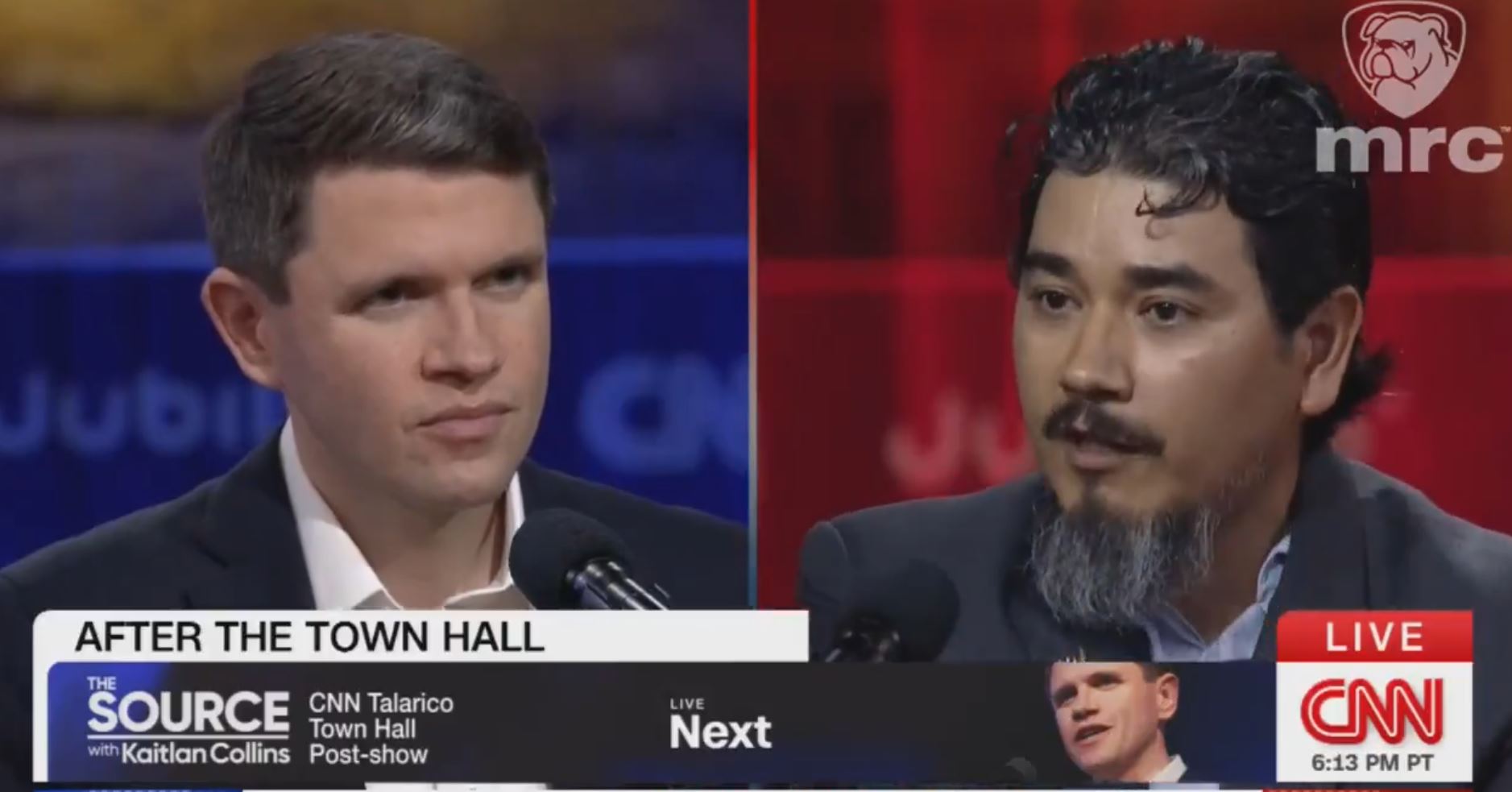
“Talarico Is So Full of Sh**” Scott Jennings Points Out James Talarico’s Lie About the SAVE America Act and Fair Elections

James Talarico lies about the SAVE Act and CNN lets him slide.

Democrat crackpot James Talarico lashed out at the SAVE Act back in August with this ignorant statement.

Talarico:  “We as human beings have the right to shape our own destinies, and we do that through the vote. And so many brave Americans, so many brave Black Americans have fought and died for that right. And so for politicians in Austin or in Washington, as they’re now doing with the SAVE Act, they are trying to rob our neighbors, particularly our Black neighbors, of those God-given rights. So I’ve had— I have a track record of, of using every tool in my toolbox to protect voting rights.”

The SAVE America Act (Safeguard American Voter Eligibility Act) is a House-passed Republican-backed bill that would require documentary proof of U.S. citizenship (such as a passport, birth certificate plus photo ID, or certain other government documents) to register to vote in federal elections, plus photo ID to cast a ballot.

But in August, Talarico pushed the lie that the SAVE America Act had something to do with race! What a nasty little buttercup!

But then on Wednesday night James Talarico feigned ignorance on the SAVE America Act during his candidate forum on CNN.

Of course, he had no pushback from the CNN host.

Talarico tonight claimed ignorance to the SAVE Act and said he supports the FAIR Voter ID instead that includes student IDs.

Democrats want nothing to do with free and fair elections. They know how unpopular their positions are.

What a liar!

Scott Jennings let him have it and called him out on his lies.

Jennings later added that Talarico is “more slippery than a wet panther.”

The post “Talarico Is So Full of Sh**” Scott Jennings Points Out James Talarico’s Lie About the SAVE America Act and Fair Elections appeared first on The Gateway Pundit.

A Long-Term Plan to Secure Peace for Ukraine

A Long-Term Plan to Secure Peace for Ukraine

The brutal, yearslong war might end in 2027—if the White House plays its cards right.

BRITAIN-UKRAINE-CONFLICT-DIPLOMACY

After months spent cheering Ukraine’s so-called turning of the tide, the fall has brought with it a more sober reality for Kiev and its European partners. Ukraine has now lost whatever momentum it had and faces a shortage of funds and a lack of air defense, while also being blockaded from the sea and barraged by drone and missile attacks that threaten to severely disrupt daily life in major cities. 

Sensing Ukraine’s desperation, Washington has half-heartedly restarted attempts at deescalation, with calls for an energy ceasefire or a truce in the Black Sea to facilitate grain exports. An initiative aimed at brokering the latter led jointly by Turkey and the UN is expected to intensify this month. Unfortunately, these and other similar efforts come too late and are likely to fail, leaving Kiev facing a difficult and punishing winter.

There is, however, something that Ukraine’s partners can do to help: start planning now for a serious push to end the war in 2027. To be successful, a future diplomatic campaign would have to look very different than past attempts to broker peace. Specifically, Kiev, Washington, and European capitals will need to internalize three lessons they have stubbornly ignored to this point: Shifts in momentum are temporary; more time will not fundamentally improve, and likely worsens, Ukraine’s negotiating position; and any peace will require painful and unpopular concessions by Kiev.

It is hard to say exactly when the narrative that Ukraine had recaptured the initiative and turned the tide of the war began, but by June the belief was widespread among Ukraine’s supporters in Europe and the United States. Early that month, Jack Watling, a senior fellow at RUSI in London, published a widely cited article in Foreign Affairs in which he argued that Ukraine now had a real chance of forcing Russia into a ceasefire. The article maintained that Ukraine had not only stalled Russian offensives but was now gaining territory on the frontline and imposing casualties at rates that exceeded Russia’s capacity for recruiting and reconstitution. He and others further suggested that Ukraine had regained the technological advantage in drone production and was successfully using mid-range strikes to interfere with Russia’s logistics. 

Other observers pointed to Ukraine’s successful campaign of drone and missile attacks on Russian oil refineries as the source of Kiev’s new momentum, optimistically fantasizing that the deep strikes would bleed the Russian economy and dry up funding for Putin’s war machine while also bringing the conflict and its consequences home for Russian citizens. Reports of widespread gas shortages and long lines at petrol stations across the country were taken as confirmation that the strategy was working. 

Ukraine’s deep-strike campaign even impressed Kiev’s most important audience in the White House, President Donald Trump. At the July NATO summit, Trump seemed more supportive of Ukraine than he had been in months prior. As one NATO diplomat explained: “It’s relatively simple. Trump likes winners. And Ukraine, recently, has started winning.” To give Ukraine time to build more leverage at the negotiating table, serious efforts at diplomacy were put on hold, and Secretary of State Marco Rubio indicated that Washington supported Ukraine’s decision to escalate its attacks inside Russia.

But even if Ukraine’s tactical successes made the war feel different, the underlying fundamentals never changed. While the Western media reported widely on Ukraine’s achievements and Russia’s setbacks, they failed to report accurately on the reverse—Ukraine’s struggles and Russia’s successes. If Ukraine held its own along parts of the frontline and even made some costly advances, it continued to lose strategically important territory elsewhere. By the middle of July, Russia had overcome challenges to its battlefield logistics, but this development and Russia’s growing momentum garnered little attention. 

Russia’s retaliation for the deep strikes into its territory also worsened the economic situation in Ukraine, especially as Kiev started to run out of air defense interceptors. Attacks on Ukraine’s petrol stations and logistics warehouses, framed as tit-for-tat responses to strikes on similar targets in Russia, created obstacles to military transport and disrupted civilian livelihoods. At the same time, Russian strikes on port infrastructure—launched in response to Kiev’s attacks on oil tankers in the Black Sea—cut off Ukraine’s access to maritime transport routes for its grain and other exports, putting a stranglehold on its economy.

Ukraine’s own leaders are beginning to acknowledge the severity of their country’s current difficulties. As Russia has expanded strikes to hit bridges and key energy, water, and sewage infrastructure in Kiev, the mayor warned residents that the city could no longer pretend “that we can live as we would in peacetime.” President Volodymyr Zelensky too has been signaling his concerns to the international community, warning of Russian escalation while also pleading with global partners to provide more support, including air defense and money. In August, Zelensky revealed that the government had already spent its military budget for the summer and winter of this year, accruing a $30 billion deficit that he expects European partners to fill. 

So far, though, Ukraine’s partners have failed to react with the urgency Zelensky desires. They have attached economic reform demands to Ukraine’s requests for additional funding, and new supplies of air defense have been painfully slow to arrive. Poland and Romania have denied requests to accept more of Ukraine’s grain exports. Peace seems no closer and Ukraine’s situation considerably worse than in the spring of this year, before Kiev “turned the tide.”

Right on schedule, as Ukraine’s position has deteriorated, the U.S. and others have started talking seriously about diplomacy again. Trump’s envoys Steve Witkoff and Jared Kushner traveled to Moscow and then to Kiev in September, close on the heels of a surprise trip by CIA director John Ratcliffe. In the wake of those meetings, efforts to broker an energy ceasefire or a deal to reopen grain export routes in the Black Sea picked up steam. At one point, frustrated by high oil prices, Trump declared that the two sides had already reached an energy truce, though no such agreement had been achieved. Kiev has expressed interest in these proposals, but Moscow’s reception has been unsurprisingly lukewarm.

These efforts (which may include trilateral technical talks held by the end of the month), while well-intentioned, come too late. The time to start talking seriously about an energy ceasefire was six months ago, when the now-looming winter was a long way off and progress on the frontline had stalled. The Russian side might not have agreed to deescalation at that point, but the proposition was never tested. Instead, the U.S., Europe, and Ukraine wasted the opportunity and made the mistakes they’ve repeated several times over the course of the war: interpreting a temporary shift in momentum as a permanent one and believing that more time on the battlefield would improve Ukraine’s position at the negotiating table. 

For Moscow, deescalation now brings no benefits. Russia has significant advantages and the opportunity to press them over the coming months. Ukraine’s lack of air defense, for instance, gives Russia the opportunity to maximize the effect of its ballistic missile strikes on Ukraine’s critical infrastructure, including energy targets, bridges, and transport corridors. Its jet-powered drones, which can evade Ukraine’s interceptors, have facilitated some gains along the frontline, allowing Russian forces to overwhelm defenders. And after Ukraine reopened the maritime front with its attacks on Russian tankers, Russia has blockaded Ukraine from the sea and is choking its economy. 

Moreover, Russia’s leaders have made clear that they see their own escalation as a necessary retaliation for Ukraine’s provocations. It was Ukraine that first broke the original Black Sea ceasefire, Moscow has argued, giving Russia’s leaders little incentive to forfeit their leverage and return to a deal that they expect Ukraine might break again in the future. Obstacles to an energy ceasefire are similarly daunting. To be sure, Ukraine’s deep strikes on Russian energy targets do create economic pain inside Russia. But on net, from Russia’s perspective, these costs are manageable and far less than the benefits of its own campaign against Ukraine’s power grid and critical infrastructure. 

Instead of focusing on a near-term, partial agreement, then, Ukraine’s Western partners are better off looking to the future. If Moscow has little reason to stop fighting now, there are several reasons why a 2027 deal might be possible. Though economic pain is unlikely to be the reason that Moscow decides to end the war, the country’s economic situation is increasingly challenging for the Kremlin to manage. Concerns about long-term damage to Russia’s economy and permanent disadvantages in the global AI race might create momentum for ending the war in 2027. 

Military and political factors might also favor a 2027 end to the war. When spring comes, Russia’s ability to strike Ukrainian energy infrastructure will matter less (with warmer temperatures), and the next winter will be months away. A deal in 2027 would allow Russia’s President Vladimir Putin to avoid an unpopular mobilization to raise more manpower for frontline offensives. It also might be Moscow’s last chance to get a deal that involves the U.S. under Trump’s leadership. As the 2028 election cycle gets under way, a distracted Washington might be less willing or able to give Russia the types of credible commitments on Ukraine’s NATO non-membership and other security matters that Putin is hoping for. Since the next president might have a very different attitude toward Ukraine and toward Russia, Putin might see benefits to seizing the closing window of opportunity that Trump’s second term presents.

The Trump administration should do five things to maximize the chances for successful diplomacy in 2027. First, it should start serious conversations with Moscow and with NATO allies about how a credible and lasting commitment promising no further NATO expansion could be structured. Not all NATO members will be interested in participating in this discussion, but several may be. Such a commitment will be an important part of any armistice agreement and is aligned with the Trump administration’s National Security Strategy. 

Second, Washington will need to have a realistic discussion with Ukraine’s leaders about the grim prospects if war continues. More time will not improve Ukraine’s battlefield or negotiating position any more in the future than it has in the past. Washington will need to reiterate its commitment to a lasting peace but dispel fantasies of a just one. It can do this by working with European partners to create a set of financial and military incentives available to Ukraine only once a deal is reached. Washington will have to be ready to also withhold intelligence and other types of support, removing itself from the conflict entirely, if Ukraine resists necessary concessions.

Third, the U.S. should press Europe to come up with a plan for Ukraine’s EU integration, including some timeline and set of requirements. Washington does not have a stake in exactly how this occurs, but since EU membership is the closest thing to a security guarantee that Ukraine is likely to receive, it does have an interest in seeing some arrangement clearly specified. 

Fourth, the Trump administration should push European capitals to begin more serious outreach to Russia, not to discuss Ukraine, but to focus on deescalation and deconfliction, especially along the NATO–Russia border and in the Baltic Sea. Just as the Pentagon has pressed the 3.5 percent of GDP defense spending target, outreach to Russia should be a criterion for which European allies are held accountable. This is necessary to clear the way for meaningful discussions on Europe’s security architecture as part of a diplomatic push in the future.

Finally, the Trump administration needs to build a negotiating team with the expertise and endurance to lead the next round of talks. This team will need to include technical and subject matter experts from across the U.S. government as well as individuals with experience conducting similar types of negotiations in the past. A group like this, with Trump’s political backing, has a better chance of breaking through the obstacles that have derailed past rounds of diplomacy.

These five moves alone will not end the war, and a deal in 2027 is not assured. Difficult rounds of negotiations will be necessary to hammer out arrangements for implementing and enforcing a ceasefire, and a range of other issues including Kiev’s nonalignment and military capabilities, territory, POW exchanges, and protections for language and religious rights in Ukraine and Russia will need to be addressed. But the next few months would be better spent investing in the building blocks of a successful 2027 diplomatic campaign, rather than pushing for limited ceasefires that are unlikely to be reached and even less likely to last.

The post A Long-Term Plan to Secure Peace for Ukraine appeared first on The American Conservative.

The Trump–Putin Diesel Deal Isn’t What You Think

The Trump–Putin Diesel Deal Isn’t What You Think

Events of the last few days will have limited economic impact but bring political benefits for Russia.

U.S. President Trump And Russian  President Putin Meet On War In Ukraine At U.S. Air Base In Alaska
(Photo by Andrew Harnik/Getty Images)

While Ukraine’s negotiating team was meeting with the U.S. envoys Jared Kushner and Steve Witkoff last Friday, they were blindsided by President Donald Trump’s announcement that he had made a deal with Russia’s President Vladimir Putin.

Trump announced that Moscow had agreed to lift its export ban on diesel fuel and immediately supply 300,000 tons to the American and global market, followed by another 500,000 in November, then a further 1,000,000, and, eventually, another 3,000,000. To facilitate these imports, the U.S. would provide a sanctions waiver, and the U.S. Treasury would issue a temporary general license for Russia to sell diesel on the global market through April 7, 2027.

Kiev reacted with fury. The Ukrainian negotiators left Miami, flying home without attending the planned second day of talks. A senior Ukrainian official said that the deal “completely” ruined trust between Kiev and Washington. Ukraine’s President Volodymyr Zelensky complained, “It is certainly not how partners should treat each other.” Hours later, Ukraine struck a Russian oil refinery, as senior officials in Kiev had threatened it would do.

Trump and his supporters say the deal will lower diesel prices for the U.S. and the world. Ukraine, Europe, and Trump’s detractors say the deal will send more money into Moscow’s war machine. The deal will have less of an impact on either front than both sides claim—but that doesn’t mean it won’t prove significant.

Though it provides the appearance of a quick fix and may have briefly reduced oil prices, such effects could only be brief and trivial. Russia is now set to export 1.8 million tons of diesel fuel over the next few months and, eventually, another 3 million. But the world uses 3.5 million to 4 million tons a day, and the U.S. alone burns through half a million.

The deal won’t do much to boost the Russian economy, either, which is still functioning despite massive Western sanctions. Russia’s diesel production has apparently been running at a surplus for a while, and its own ban on exporting diesel would probably have been lifted shortly anyway. Exports to Central Asia were up dramatically last month. Though Europe may still refuse to purchase Russian diesel under the U.S. waiver, world demand is acute, and Russia would easily have found a market for its diesel amid a general supply crunch caused by the Iran War.

But the deal is symbolically and politically significant. It comes amid plummeting popular support in Ukraine for Zelensky. Trust in the Ukrainian leader and desire for him to stay on as president after the war are sinking. Polls show that he would likely lose the next election. The deal only worsens Zelensky’s political challenges, forcing him to either abide by Trump’s wishes for Ukraine to cease strikes on Russian oil refineries or risk further inflaming tensions with Washington. So far, Zelensky is choosing the latter.

When Ukraine struck another refinery after the announcement of the deal, Trump reacted with fury. “Do whatever you want, but don’t hit the diesel fuel,” Trump says he told Zelensky. “So, what does he do? He goes and hits refineries…. He’d better damn well stop.”

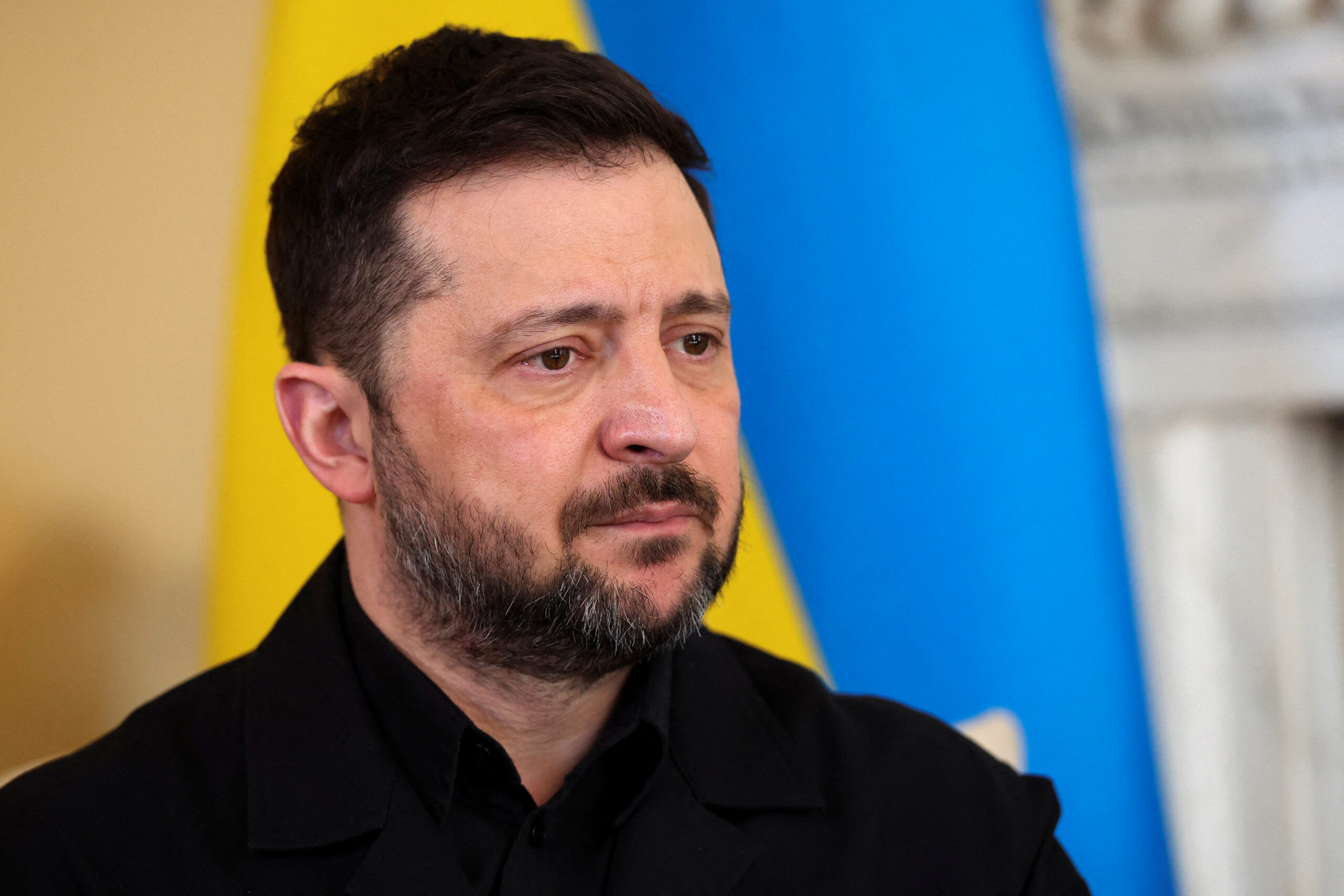
This rupture is the worst crisis in Zelensky’s relationship with Trump since their public confrontation in the Oval Office in February of last year. This summer, Trump seemed to be swinging in Zelensky’s favor—but not anymore. Zelensky said Trump’s deal was “not fair and not honest.” He accused Trump of using talks with Ukraine “as a smokescreen” while the U.S. cut “backroom deals” with Russia, and he said the episode demonstrated Trump’s weakness to the world. 

Trump shot back. “I think it’s time for Ukraine to get a new president,” he said. “I suggest they get a new leader who can make a deal because he could have made many deals, but for some reason, he never does.”

As the rift widened, Witkoff and Kushner warned the Ukrainian team that crucial intelligence-sharing could be cut off if Kiev doesn’t fall in line with Washington’s demands. On Monday night, when Kiev was struck by Russian ballistic missiles without warning, it was unclear if the U.S. had followed through on the threat. “Regarding this strike,” Zelensky said, “unfortunately, there was no warning from our partners.” But Ukraine’s Foreign Minister Sybiha said Ukraine is still receiving U.S. intelligence and that the failure was not due to policy but to the difficulty of tracking “specific type of weapons used by the Russian side.” Trump has since said intelligence sharing has not stopped. But on Tuesday night, Kiev was once again bombarded by ballistic missiles, and Zelensky again said his government had received “‌no advance warning from our partners.”

Adding to the danger for Ukraine, Elon Musk, whose Starlink satellites are crucial for the Ukrainian armed forces’ battlefield communications, tracking of Russian troops, and selections of targets, backed Trump’s call for Zelensky to be replaced, posting that “Zelensky has gone too far.” On Wednesday, Ukrainian officials said that SpaceX, Musk’s company, “had introduced a limit ‌on some Starlink services within the country, disrupting combat drone missions for which the technology is crucial.”

The significance for Moscow is that it has managed to make an economic deal with Washington that required no Russian concessions in peace negotiations with Ukraine. It is this unshackling of U.S.–Russia diplomacy from the war, not any financial windfall for American’s or Putin’s war machine, that is the true victory for Russia.

The events of the past few days, centering around the Trump–Putin diesel deal, will not have the economic effects the media is focusing on, but they have already brought significant political consequences for both Russia and Ukraine.

The post The Trump–Putin Diesel Deal Isn’t What You Think appeared first on The American Conservative.