LOCK HIM UP! Dirty Jack Smith Had a Spreadsheet on Americans and Their Address Who Bought a Trump Hat Between 2021-2025

President Trump wears a 45-47 MAGA hat at a campaign rally in Dayton, Ohio, March 16, 2024, photo by TGP’s Kristinn Taylor.

Please tell me Republicans are NOT GOING to let this dirty criminal walk free without jail time?

Come’on, Republicans! You can do this!

We have lunatic Democrats who want to lock us all up for objecting to their insane socialist plans for America.

And yet, Republicans continue to build a mountain of evidence of criminal conduct by numerous Democrats including Barack Obama, Hillary Clinton, AG Merrick Garland, Jack Smith, and others and nothing ever happens!

On Wednesday we learned that former Special Counsel Jack Smith collected information on 639,000 Republican voters and donors during his sprawling Arctic Frost investigation, according to documents released by Senate Judiciary Chairman Chuck Grassley.

The information collected included the donors’ physical home addresses, credit card information, occupations and donation amount.

Later today we learned Jack Smith’s illegal spying investigation included Trump supporters who bought MAGA hats!

If you bought a red MAGA hat you likely ended up on Jack Smith’s spreadsheet along with your address.

Arrest this goon!

From Senator Grassley’s report earlier today.

Former Assistant Director of the FBI, Congressional Affairs, Marshall Yates, posted this earlier on X.

That is the definition of illegal spying.

Here is Senator Chuck Grassley’s full report – 2 pages.

Skip to PDF content

The post LOCK HIM UP! Dirty Jack Smith Had a Spreadsheet on Americans and Their Address Who Bought a Trump Hat Between 2021-2025 appeared first on The Gateway Pundit.

“Replacing Europe” – Latest Landmark Muckraker Documentary Follows Entire Illegal Immigrant Pipeline from Africa into Europe – With Governments Allowing This to Take Place! (Video)

Illegal immigrants are intercepted before reaching Spain. – screengrab from Muckraker documentary

Muckraker released their latest courageous and amazing documentary “Replacing Europe” Wednesday evening.

The investigative reporters followed the entire illegal immigrant pipeline from Africa into Europe.

This is a landmark production – never has this been filmed to such an extent.

As you may recall, Muckraker exposed the fate of 320,000 missing immigrant children who were trafficked across the US border during the Biden-Harris years.

Muckraker also exposed a secret Chinese staging hotel in Colombia with military-aged men heading to the open US border during the Biden years.

Muckraker followed the illegal immigrant pipeline from West Africa into Europe in their latest production, “Replacing Europe.”

On Wednesday, Muckraker released its daring expose’ on illegal immigrant pipeline from Africa and into Europe, via the Canary Islands or southern Spain.

Muckraker followed the illegal West African pipeline for over two months, starting in Senegal, into North Africa, and then into Spain.

The West African route into Europe starts in Senegal and ends in the Spanish Canary Islands or into southern Spain.

In the film you follow Muckraker team as they travel through Africa and into Europe. There is one particularly frightening scene when one of the Muckraker cameramen is bloodied by the angry mob they are filming.

Muckraker added this:

In this documentary, you’ll see:

• A UN migration worker admitting that governments profit from illegal immigration and have no interest in stopping it

• Illegal immigrants getting flown by plane to the European mainland

• Organizations openly guiding illegal immigrants across borders

“We were violently attacked and nearly arrested for exposing how Europe is being replaced.”

This is a shocking documentary that will revolt you.

How can political leaders do this to their populations?

It is unbelievable until you see this on camera!

TGP can see this project get a million views in no time!

The post “Replacing Europe” – Latest Landmark Muckraker Documentary Follows Entire Illegal Immigrant Pipeline from Africa into Europe – With Governments Allowing This to Take Place! (Video) appeared first on The Gateway Pundit.

“Talarico Is So Full of Sh**” Scott Jennings Points Out James Talarico’s Lie About the SAVE America Act and Fair Elections

James Talarico lies about the SAVE Act and CNN lets him slide.

Democrat crackpot James Talarico lashed out at the SAVE Act back in August with this ignorant statement.

Talarico:  “We as human beings have the right to shape our own destinies, and we do that through the vote. And so many brave Americans, so many brave Black Americans have fought and died for that right. And so for politicians in Austin or in Washington, as they’re now doing with the SAVE Act, they are trying to rob our neighbors, particularly our Black neighbors, of those God-given rights. So I’ve had— I have a track record of, of using every tool in my toolbox to protect voting rights.”

The SAVE America Act (Safeguard American Voter Eligibility Act) is a House-passed Republican-backed bill that would require documentary proof of U.S. citizenship (such as a passport, birth certificate plus photo ID, or certain other government documents) to register to vote in federal elections, plus photo ID to cast a ballot.

But in August, Talarico pushed the lie that the SAVE America Act had something to do with race! What a nasty little buttercup!

But then on Wednesday night James Talarico feigned ignorance on the SAVE America Act during his candidate forum on CNN.

Of course, he had no pushback from the CNN host.

Talarico tonight claimed ignorance to the SAVE Act and said he supports the FAIR Voter ID instead that includes student IDs.

Democrats want nothing to do with free and fair elections. They know how unpopular their positions are.

What a liar!

Scott Jennings let him have it and called him out on his lies.

Jennings later added that Talarico is “more slippery than a wet panther.”

The post “Talarico Is So Full of Sh**” Scott Jennings Points Out James Talarico’s Lie About the SAVE America Act and Fair Elections appeared first on The Gateway Pundit.

A Long-Term Plan to Secure Peace for Ukraine

A Long-Term Plan to Secure Peace for Ukraine

The brutal, yearslong war might end in 2027—if the White House plays its cards right.

BRITAIN-UKRAINE-CONFLICT-DIPLOMACY

After months spent cheering Ukraine’s so-called turning of the tide, the fall has brought with it a more sober reality for Kiev and its European partners. Ukraine has now lost whatever momentum it had and faces a shortage of funds and a lack of air defense, while also being blockaded from the sea and barraged by drone and missile attacks that threaten to severely disrupt daily life in major cities. 

Sensing Ukraine’s desperation, Washington has half-heartedly restarted attempts at deescalation, with calls for an energy ceasefire or a truce in the Black Sea to facilitate grain exports. An initiative aimed at brokering the latter led jointly by Turkey and the UN is expected to intensify this month. Unfortunately, these and other similar efforts come too late and are likely to fail, leaving Kiev facing a difficult and punishing winter.

There is, however, something that Ukraine’s partners can do to help: start planning now for a serious push to end the war in 2027. To be successful, a future diplomatic campaign would have to look very different than past attempts to broker peace. Specifically, Kiev, Washington, and European capitals will need to internalize three lessons they have stubbornly ignored to this point: Shifts in momentum are temporary; more time will not fundamentally improve, and likely worsens, Ukraine’s negotiating position; and any peace will require painful and unpopular concessions by Kiev.

It is hard to say exactly when the narrative that Ukraine had recaptured the initiative and turned the tide of the war began, but by June the belief was widespread among Ukraine’s supporters in Europe and the United States. Early that month, Jack Watling, a senior fellow at RUSI in London, published a widely cited article in Foreign Affairs in which he argued that Ukraine now had a real chance of forcing Russia into a ceasefire. The article maintained that Ukraine had not only stalled Russian offensives but was now gaining territory on the frontline and imposing casualties at rates that exceeded Russia’s capacity for recruiting and reconstitution. He and others further suggested that Ukraine had regained the technological advantage in drone production and was successfully using mid-range strikes to interfere with Russia’s logistics. 

Other observers pointed to Ukraine’s successful campaign of drone and missile attacks on Russian oil refineries as the source of Kiev’s new momentum, optimistically fantasizing that the deep strikes would bleed the Russian economy and dry up funding for Putin’s war machine while also bringing the conflict and its consequences home for Russian citizens. Reports of widespread gas shortages and long lines at petrol stations across the country were taken as confirmation that the strategy was working. 

Ukraine’s deep-strike campaign even impressed Kiev’s most important audience in the White House, President Donald Trump. At the July NATO summit, Trump seemed more supportive of Ukraine than he had been in months prior. As one NATO diplomat explained: “It’s relatively simple. Trump likes winners. And Ukraine, recently, has started winning.” To give Ukraine time to build more leverage at the negotiating table, serious efforts at diplomacy were put on hold, and Secretary of State Marco Rubio indicated that Washington supported Ukraine’s decision to escalate its attacks inside Russia.

But even if Ukraine’s tactical successes made the war feel different, the underlying fundamentals never changed. While the Western media reported widely on Ukraine’s achievements and Russia’s setbacks, they failed to report accurately on the reverse—Ukraine’s struggles and Russia’s successes. If Ukraine held its own along parts of the frontline and even made some costly advances, it continued to lose strategically important territory elsewhere. By the middle of July, Russia had overcome challenges to its battlefield logistics, but this development and Russia’s growing momentum garnered little attention. 

Russia’s retaliation for the deep strikes into its territory also worsened the economic situation in Ukraine, especially as Kiev started to run out of air defense interceptors. Attacks on Ukraine’s petrol stations and logistics warehouses, framed as tit-for-tat responses to strikes on similar targets in Russia, created obstacles to military transport and disrupted civilian livelihoods. At the same time, Russian strikes on port infrastructure—launched in response to Kiev’s attacks on oil tankers in the Black Sea—cut off Ukraine’s access to maritime transport routes for its grain and other exports, putting a stranglehold on its economy.

Ukraine’s own leaders are beginning to acknowledge the severity of their country’s current difficulties. As Russia has expanded strikes to hit bridges and key energy, water, and sewage infrastructure in Kiev, the mayor warned residents that the city could no longer pretend “that we can live as we would in peacetime.” President Volodymyr Zelensky too has been signaling his concerns to the international community, warning of Russian escalation while also pleading with global partners to provide more support, including air defense and money. In August, Zelensky revealed that the government had already spent its military budget for the summer and winter of this year, accruing a $30 billion deficit that he expects European partners to fill. 

So far, though, Ukraine’s partners have failed to react with the urgency Zelensky desires. They have attached economic reform demands to Ukraine’s requests for additional funding, and new supplies of air defense have been painfully slow to arrive. Poland and Romania have denied requests to accept more of Ukraine’s grain exports. Peace seems no closer and Ukraine’s situation considerably worse than in the spring of this year, before Kiev “turned the tide.”

Right on schedule, as Ukraine’s position has deteriorated, the U.S. and others have started talking seriously about diplomacy again. Trump’s envoys Steve Witkoff and Jared Kushner traveled to Moscow and then to Kiev in September, close on the heels of a surprise trip by CIA director John Ratcliffe. In the wake of those meetings, efforts to broker an energy ceasefire or a deal to reopen grain export routes in the Black Sea picked up steam. At one point, frustrated by high oil prices, Trump declared that the two sides had already reached an energy truce, though no such agreement had been achieved. Kiev has expressed interest in these proposals, but Moscow’s reception has been unsurprisingly lukewarm.

These efforts (which may include trilateral technical talks held by the end of the month), while well-intentioned, come too late. The time to start talking seriously about an energy ceasefire was six months ago, when the now-looming winter was a long way off and progress on the frontline had stalled. The Russian side might not have agreed to deescalation at that point, but the proposition was never tested. Instead, the U.S., Europe, and Ukraine wasted the opportunity and made the mistakes they’ve repeated several times over the course of the war: interpreting a temporary shift in momentum as a permanent one and believing that more time on the battlefield would improve Ukraine’s position at the negotiating table. 

For Moscow, deescalation now brings no benefits. Russia has significant advantages and the opportunity to press them over the coming months. Ukraine’s lack of air defense, for instance, gives Russia the opportunity to maximize the effect of its ballistic missile strikes on Ukraine’s critical infrastructure, including energy targets, bridges, and transport corridors. Its jet-powered drones, which can evade Ukraine’s interceptors, have facilitated some gains along the frontline, allowing Russian forces to overwhelm defenders. And after Ukraine reopened the maritime front with its attacks on Russian tankers, Russia has blockaded Ukraine from the sea and is choking its economy. 

Moreover, Russia’s leaders have made clear that they see their own escalation as a necessary retaliation for Ukraine’s provocations. It was Ukraine that first broke the original Black Sea ceasefire, Moscow has argued, giving Russia’s leaders little incentive to forfeit their leverage and return to a deal that they expect Ukraine might break again in the future. Obstacles to an energy ceasefire are similarly daunting. To be sure, Ukraine’s deep strikes on Russian energy targets do create economic pain inside Russia. But on net, from Russia’s perspective, these costs are manageable and far less than the benefits of its own campaign against Ukraine’s power grid and critical infrastructure. 

Instead of focusing on a near-term, partial agreement, then, Ukraine’s Western partners are better off looking to the future. If Moscow has little reason to stop fighting now, there are several reasons why a 2027 deal might be possible. Though economic pain is unlikely to be the reason that Moscow decides to end the war, the country’s economic situation is increasingly challenging for the Kremlin to manage. Concerns about long-term damage to Russia’s economy and permanent disadvantages in the global AI race might create momentum for ending the war in 2027. 

Military and political factors might also favor a 2027 end to the war. When spring comes, Russia’s ability to strike Ukrainian energy infrastructure will matter less (with warmer temperatures), and the next winter will be months away. A deal in 2027 would allow Russia’s President Vladimir Putin to avoid an unpopular mobilization to raise more manpower for frontline offensives. It also might be Moscow’s last chance to get a deal that involves the U.S. under Trump’s leadership. As the 2028 election cycle gets under way, a distracted Washington might be less willing or able to give Russia the types of credible commitments on Ukraine’s NATO non-membership and other security matters that Putin is hoping for. Since the next president might have a very different attitude toward Ukraine and toward Russia, Putin might see benefits to seizing the closing window of opportunity that Trump’s second term presents.

The Trump administration should do five things to maximize the chances for successful diplomacy in 2027. First, it should start serious conversations with Moscow and with NATO allies about how a credible and lasting commitment promising no further NATO expansion could be structured. Not all NATO members will be interested in participating in this discussion, but several may be. Such a commitment will be an important part of any armistice agreement and is aligned with the Trump administration’s National Security Strategy. 

Second, Washington will need to have a realistic discussion with Ukraine’s leaders about the grim prospects if war continues. More time will not improve Ukraine’s battlefield or negotiating position any more in the future than it has in the past. Washington will need to reiterate its commitment to a lasting peace but dispel fantasies of a just one. It can do this by working with European partners to create a set of financial and military incentives available to Ukraine only once a deal is reached. Washington will have to be ready to also withhold intelligence and other types of support, removing itself from the conflict entirely, if Ukraine resists necessary concessions.

Third, the U.S. should press Europe to come up with a plan for Ukraine’s EU integration, including some timeline and set of requirements. Washington does not have a stake in exactly how this occurs, but since EU membership is the closest thing to a security guarantee that Ukraine is likely to receive, it does have an interest in seeing some arrangement clearly specified. 

Fourth, the Trump administration should push European capitals to begin more serious outreach to Russia, not to discuss Ukraine, but to focus on deescalation and deconfliction, especially along the NATO–Russia border and in the Baltic Sea. Just as the Pentagon has pressed the 3.5 percent of GDP defense spending target, outreach to Russia should be a criterion for which European allies are held accountable. This is necessary to clear the way for meaningful discussions on Europe’s security architecture as part of a diplomatic push in the future.

Finally, the Trump administration needs to build a negotiating team with the expertise and endurance to lead the next round of talks. This team will need to include technical and subject matter experts from across the U.S. government as well as individuals with experience conducting similar types of negotiations in the past. A group like this, with Trump’s political backing, has a better chance of breaking through the obstacles that have derailed past rounds of diplomacy.

These five moves alone will not end the war, and a deal in 2027 is not assured. Difficult rounds of negotiations will be necessary to hammer out arrangements for implementing and enforcing a ceasefire, and a range of other issues including Kiev’s nonalignment and military capabilities, territory, POW exchanges, and protections for language and religious rights in Ukraine and Russia will need to be addressed. But the next few months would be better spent investing in the building blocks of a successful 2027 diplomatic campaign, rather than pushing for limited ceasefires that are unlikely to be reached and even less likely to last.

The post A Long-Term Plan to Secure Peace for Ukraine appeared first on The American Conservative.

The Trump–Putin Diesel Deal Isn’t What You Think

The Trump–Putin Diesel Deal Isn’t What You Think

Events of the last few days will have limited economic impact but bring political benefits for Russia.

U.S. President Trump And Russian  President Putin Meet On War In Ukraine At U.S. Air Base In Alaska
(Photo by Andrew Harnik/Getty Images)

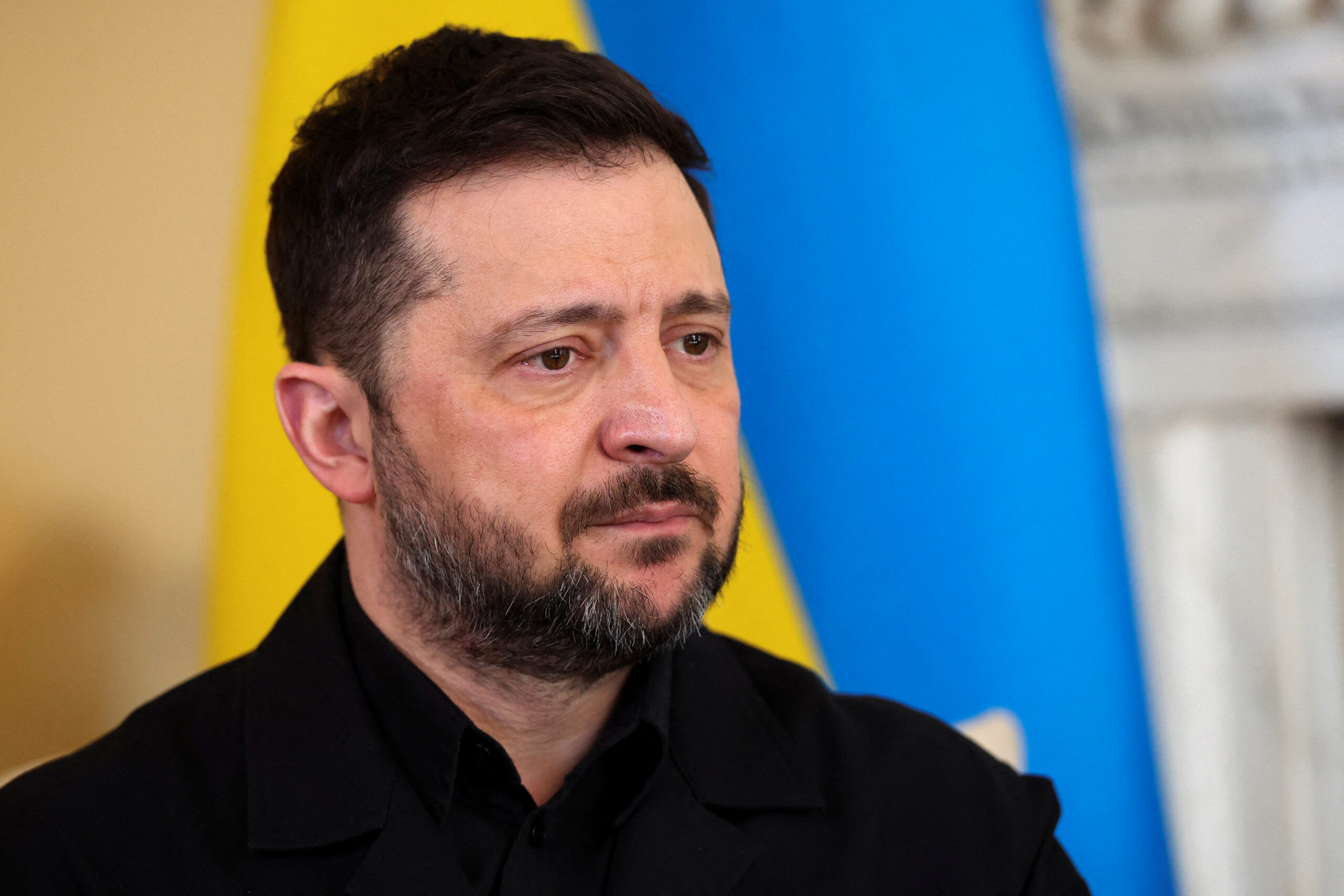
While Ukraine’s negotiating team was meeting with the U.S. envoys Jared Kushner and Steve Witkoff last Friday, they were blindsided by President Donald Trump’s announcement that he had made a deal with Russia’s President Vladimir Putin.

Trump announced that Moscow had agreed to lift its export ban on diesel fuel and immediately supply 300,000 tons to the American and global market, followed by another 500,000 in November, then a further 1,000,000, and, eventually, another 3,000,000. To facilitate these imports, the U.S. would provide a sanctions waiver, and the U.S. Treasury would issue a temporary general license for Russia to sell diesel on the global market through April 7, 2027.

Kiev reacted with fury. The Ukrainian negotiators left Miami, flying home without attending the planned second day of talks. A senior Ukrainian official said that the deal “completely” ruined trust between Kiev and Washington. Ukraine’s President Volodymyr Zelensky complained, “It is certainly not how partners should treat each other.” Hours later, Ukraine struck a Russian oil refinery, as senior officials in Kiev had threatened it would do.

Trump and his supporters say the deal will lower diesel prices for the U.S. and the world. Ukraine, Europe, and Trump’s detractors say the deal will send more money into Moscow’s war machine. The deal will have less of an impact on either front than both sides claim—but that doesn’t mean it won’t prove significant.

Though it provides the appearance of a quick fix and may have briefly reduced oil prices, such effects could only be brief and trivial. Russia is now set to export 1.8 million tons of diesel fuel over the next few months and, eventually, another 3 million. But the world uses 3.5 million to 4 million tons a day, and the U.S. alone burns through half a million.

The deal won’t do much to boost the Russian economy, either, which is still functioning despite massive Western sanctions. Russia’s diesel production has apparently been running at a surplus for a while, and its own ban on exporting diesel would probably have been lifted shortly anyway. Exports to Central Asia were up dramatically last month. Though Europe may still refuse to purchase Russian diesel under the U.S. waiver, world demand is acute, and Russia would easily have found a market for its diesel amid a general supply crunch caused by the Iran War.

But the deal is symbolically and politically significant. It comes amid plummeting popular support in Ukraine for Zelensky. Trust in the Ukrainian leader and desire for him to stay on as president after the war are sinking. Polls show that he would likely lose the next election. The deal only worsens Zelensky’s political challenges, forcing him to either abide by Trump’s wishes for Ukraine to cease strikes on Russian oil refineries or risk further inflaming tensions with Washington. So far, Zelensky is choosing the latter.

When Ukraine struck another refinery after the announcement of the deal, Trump reacted with fury. “Do whatever you want, but don’t hit the diesel fuel,” Trump says he told Zelensky. “So, what does he do? He goes and hits refineries…. He’d better damn well stop.”

This rupture is the worst crisis in Zelensky’s relationship with Trump since their public confrontation in the Oval Office in February of last year. This summer, Trump seemed to be swinging in Zelensky’s favor—but not anymore. Zelensky said Trump’s deal was “not fair and not honest.” He accused Trump of using talks with Ukraine “as a smokescreen” while the U.S. cut “backroom deals” with Russia, and he said the episode demonstrated Trump’s weakness to the world. 

Trump shot back. “I think it’s time for Ukraine to get a new president,” he said. “I suggest they get a new leader who can make a deal because he could have made many deals, but for some reason, he never does.”

As the rift widened, Witkoff and Kushner warned the Ukrainian team that crucial intelligence-sharing could be cut off if Kiev doesn’t fall in line with Washington’s demands. On Monday night, when Kiev was struck by Russian ballistic missiles without warning, it was unclear if the U.S. had followed through on the threat. “Regarding this strike,” Zelensky said, “unfortunately, there was no warning from our partners.” But Ukraine’s Foreign Minister Sybiha said Ukraine is still receiving U.S. intelligence and that the failure was not due to policy but to the difficulty of tracking “specific type of weapons used by the Russian side.” Trump has since said intelligence sharing has not stopped. But on Tuesday night, Kiev was once again bombarded by ballistic missiles, and Zelensky again said his government had received “‌no advance warning from our partners.”

Adding to the danger for Ukraine, Elon Musk, whose Starlink satellites are crucial for the Ukrainian armed forces’ battlefield communications, tracking of Russian troops, and selections of targets, backed Trump’s call for Zelensky to be replaced, posting that “Zelensky has gone too far.” On Wednesday, Ukrainian officials said that SpaceX, Musk’s company, “had introduced a limit ‌on some Starlink services within the country, disrupting combat drone missions for which the technology is crucial.”

The significance for Moscow is that it has managed to make an economic deal with Washington that required no Russian concessions in peace negotiations with Ukraine. It is this unshackling of U.S.–Russia diplomacy from the war, not any financial windfall for American’s or Putin’s war machine, that is the true victory for Russia.

The events of the past few days, centering around the Trump–Putin diesel deal, will not have the economic effects the media is focusing on, but they have already brought significant political consequences for both Russia and Ukraine.

The post The Trump–Putin Diesel Deal Isn’t What You Think appeared first on The American Conservative.

Aberdeen’s Bus Scheme Failure Is the Latest in UK Net-Zero Madness

Aberdeen’s Bus Scheme Failure Is the Latest in UK Net-Zero Madness

Scotland is learning it’s not easy being green.
UK Daily Life 2022
UK Special Coverage
(John Keeble/Getty Images)

Aberdeen, in the northeast of Scotland, has for decades been the municipal heart of the UK’s offshore oil and gas industry. But in 2021, in pursuit of greening its public-transportation system and embracing its post-hydrocarbon future, the city put 15 hydrogen-powered double-decker buses into service and then enlarged the fleet to 25 the following year. The total cost: nearly £14 million. Yet by mid-2024, the entire fleet was inoperative owing to failures at the city’s two hydrogen refueling stations. And in August of this year, Aberdeen City Council announced that it would be selling the idled fleet for a total cost of just £816,000, a write-off of 94 percent, for buses that were in service only two or three years.

Explaining the decision, the city council stated, “As manufacturers and operators increasingly favor EVs, demand for hydrogen in transport has diminished.” In other words, per the city council, only a few short years ago hydrogen as a transport technology was in robust demand, worthy of a £14 million investment, but then EVs came on like a dark horse and now hydrogen is fading in the home stretch.

Nonsense. For years, about half of the hydrogen produced has gone into making ammonia as a feedstock for synthetic fertilizers, while roughly the other half has been put toward petrochemical purposes. Except for rare cases—e.g., forklifts that operate in enclosed spaces where exhaust would be a problem, forklifts whose owners require quick refueling times that rechargeable batteries can’t match—there has basically never been robust market demand for hydrogen-powered transport. (Political demand is another matter.) Globally, transport accounted for less than 1 percent of hydrogen demand in 2024.

At any rate, hydrogen is hardly a novel technology whose time just hasn’t yet come. Its manufacture and potential applications have been studied and understood for centuries. The electrolytic process of making hydrogen from water was first observed in the late 1700s by the Dutch chemists Jan Rudolph Deiman and Adriaan Paets van Troostwijk. The first hydrogen fuel cell was made in 1842 by the Welsh scientist Sir William Robert Grove. In the 1930s and 1940s, hydrogen in both gaseous and liquified form was being tested as aviation, jet-engine, and rocket fuel. In the 1950s and 1960s, Allis-Chalmers tinkered with using hydrogen in a variety of vehicles: tractors, forklifts, golf carts, even a small, manned submersible. NASA used hydrogen fuel cells to power onboard systems in its manned space-flight programs, starting with Project Gemini. And in 1966, General Motors developed the Electrovan, a concept vehicle with a propulsion system weighing nearly 4,000 pounds and built around 32 hydrogen fuel cells. 

We’ve long understood the potential of hydrogen as a fuel source. The problem—which humanity once acknowledged but which we now too often skip past in the rush to validate alternative sources of energy—is that proof of concept is not necessarily proof of scalability and therefore economic sustainability. 

On a Hydrogen FAQ webpage, Aberdeen City Council proclaims, “Hydrogen is the most abundant element in the universe” and is “potentially one of the most flexible energy solutions available.” On its own website, Aberdeen’s First Bus, the operator of the short-lived hydrogen fleet, informs readers of the following (boldface in the original):

Hydrogen is the simplest and most abundant element in the universe—made up of one proton and one electron.
Hydrogen releases zero emissions, it’s clean, green, and only emits water from the exhaust!
Hydrogen is made from wind and water.

Sounds wonderful. Simple, abundant, clean, green. But in fact, hydrogen’s simplicity is partly what makes the element so difficult and uneconomical to work with in most applications. Hydrogen is minuscule, with an atomic weight roughly one-quarter that of helium and a volumetric density roughly half that of helium. As a result, it’s difficult to capture, store, transport, and dispense. There’s much leakage and loss, which reduces its efficiency as a resource. To make it useful at any scale requires either compression or cryogenic liquefaction. The former involves pressures ranging from 5,000 pounds per square inch to 10,000 pounds per square inch. (The higher the psi, the greater the volumetric density and therefore the efficiency. By comparison, propane is transported and stored at pressures generally ranging from only 100 to 200 psi.) And liquefaction requires chilling hydrogen to at least -423 degrees Fahrenheit, only 30-some degrees shy of absolute zero. (For comparison, natural gas is liquefied at -260 degrees Fahrenheit.) 

Both compression and liquefaction add to the cost and complexity of using hydrogen (involving specialized equipment, infrastructure, safety protocols, and handling, not to mention additional energy expenditures). What’s more, hydrogen is typically found bound with other elements in more-complex compounds, for example water (H2O) and methane (CH4). Therefore, at least at this point in human understanding, hydrogen can’t simply be found and extracted at scale, despite its abundance. It must instead be manufactured. So much for simplicity. 

Most hydrogen (76 percent worldwide) is produced by a method called steam-methane reforming, which involves mixing methane (basically natural gas) and steam at very high temperatures and under pressure. Another 22 percent of hydrogen is made through a different thermochemical process called coal gasification. Needless to say, such methods are hardly a pathway to decarbonization and net zero. But the remaining 2 percent of hydrogen is produced by electrolyzing water. And it is here, at the fringe of the fringe, where one can find so-called green hydrogen—that is, hydrogen produced by electrolysis using electricity that is itself produced by renewables, specifically solar and wind. This is the source of First Bus’s claim that “hydrogen is made from wind and water.” As of 2022, per the Sierra Club, green hydrogen accounted for 0.02 percent of hydrogen manufactured worldwide, or just 1 percent of the small amount of hydrogen produced via electrolysis. 

Why so little? Largely because wind and solar are intermittent, weather-dependent sources of power, and are therefore particularly unsuitable for sustained industrial processes. Even for domestic (i.e., non-industrial) electricity production, they require reliable, significant, and usually thermal backup. Aberdeen produced its hydrogen locally using electrolysis, but it did so by purchasing electricity off the national grid using what’s called a green tariff. Electricity from the grid is produced from a variety of sources, including fossil fuels, but the tariff theoretically serves to promote electricity production from renewable sources. It’s a sort of bureaucratic indulgence or sin tax more than a guarantee of anything truly green. 

Prior to the collapse of the hydrogen bus fleet, however, Aberdeen City Council had entered into a joint venture with BP to produce green hydrogen locally. Comically, that plan (which was thought robust enough to one day produce green hydrogen sufficient not just for a fleet of city buses but for rail, freight, shipping, heat, and possibly export as well) rested on the development of a solar farm near Aberdeen. It’s comical because solar power in Scotland has a capacity factor of barely 11 percent, meaning that in an annualized average it produces only 11 percent of whatever its “nameplate” capacity is. (For example, 40 megawatts’ worth of installed, or nameplate, solar results in less than 4.5 actual megawatts of production.) Again, proof of concept is not necessarily proof of scalability or economic viability. And that joint venture is now in the process of being dissolved.

But even if the uhopian dream of mass-produced green hydrogen came to pass, the economics of the hydrogen refueling infrastructure (at least vis-à-vis that of petrol, diesel, and electric vehicles) would remain poor. “A hydrogen refuelling station,” notes Michael Barnard in CleanTechnica, “is effectively a small industrial plant, with electrolysers that have finite stack life, high pressure compressors, drying systems, storage vessels, safety systems, and specialized dispensers.” Barnard’s research has shown that the operating and maintenance costs of such stations tend to range from 20 to 35 percent of annual capital expenditures (Aberdeen’s were estimated to be around 30 percent), whereas annual O&M costs at EV recharging stations and simple old gas stations tend to be about 4 percent.

What’s more, because of their cost and complexity, hydrogen refueling stations can’t easily be replicated in large numbers like EV charging stations and gas stations—which makes a hydrogen-powered transportation system dependent on a small number of stations that, should any of them fail, can cripple the entire undertaking. (So much for hydrogen’s supposed flexibility, as Aberdeen learned the hard way.) Yet the consistent lack of real demand for transport hydrogen makes investment in hydrogen refueling stations and the vehicles that depend on them (and that the stations, in turn, economically depend on) a big risk over the long term. 

It was in the face of such risk, which its city council knew about or at least should have known about, that Aberdeen launched its £14 million fleet of double-deckers. That fleet came into service after Aberdeen had run a 5-year pilot project involving 10 single-decker hydrogen buses. The pilot project demonstrated that although it was possible to run a small fleet of hydrogen buses, there was no actual demand—and even less economic reason—for doing so. When the pilot ended, the single-deckers were sold rather than kept in service as part of an expanded fleet (the lack of expansion indicating a lack of any real growth in demand). Further, at that point, the city’s refueling stations were five years down the road toward the end of their useful lives absent major refurbishing; per Barnard, electrolyzer stacks typically require such refurbishing within 10 years’ time. 

Staring down the barrel of this looming maintenance, and without a hint of organic market demand evident from its pilot project, Aberdeen hopefully put £14 million worth of double-deckers into service anyway, buses that were expected to operate for 15 years and 1 million kilometers. Two years later, the required maintenance (and its economic reality) came due, bringing the whole thing to a radically premature end. As Barnard tartly remarks, “It was arithmetic catching up with ambition.”

Even under the best of circumstances, the economics of transport hydrogen are poor. For buses specifically (and including both capital and energy costs), diesel and electric buses operate at about £0.93/km and £0.59/km, respectively. For hydrogen buses running at their expected useful life, Barnard estimates that the cost would be £1.76/km–£2.23/km. For Aberdeen’s double-deckers, which ran only a small fraction of their useful lives, the costs are estimated to have been between £3.00/km and £4.00/km. Barnard again, even more tartly: “The math does not improve because policy hopes it will.”

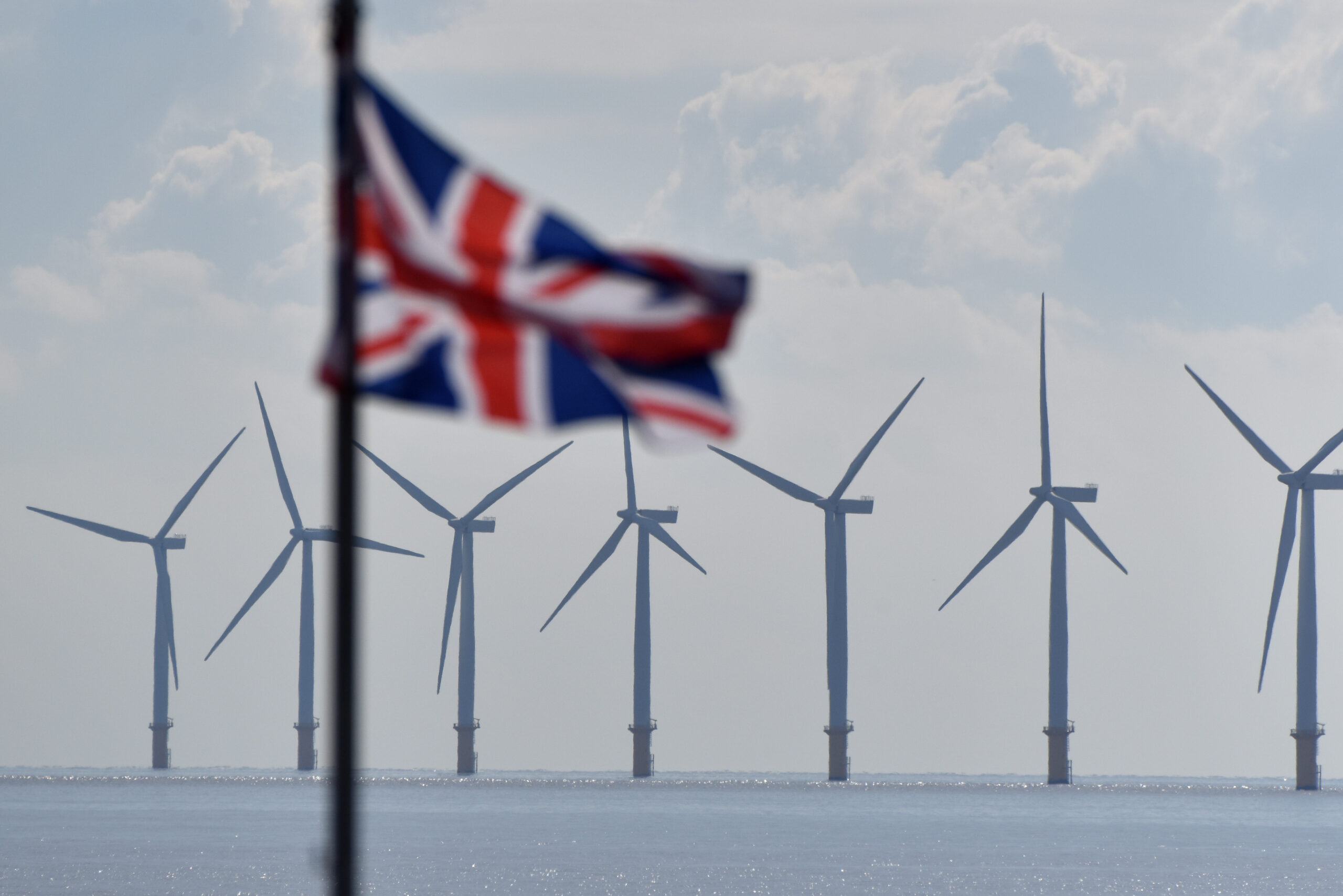
Math, alas, has been the nemesis of much green-energy uhopianism and ambition. For instance, as mentioned above, solar in Scotland (on which Aberdeen pinned its green-hydrogen dreams) had a 2025 capacity factor of 11.1 percent, which happens to be that year’s UK average for solar. The UK averages for onshore wind and offshore wind were 24.1 percent and 36.2 percent, respectively. Allowing for modest, weather-related variations from year to year, that’s roughly their technological maximum in those locations and latitudes. By contrast, and regardless of location and latitude, natural gas as a technology has a much greater potential capacity factor. Twenty-six years ago, for example, UK combined-cycle natural-gas plants posted a 75 percent capacity factor. This is because natural gas (like nuclear, hydro, coal, and biomass) is a dispatchable form of electricity production, meaning it can run day and night, in any season and in any kind of weather, providing always-on baseload power.

Somewhat loosely speaking, capacity factor is a proxy for reliability (e.g., you can count on this or that technology X percent of the time over a year). You don’t increase your system-wide capacity factor, and therefore your grid’s reliability, by turning an ever greater proportion of your grid over to intermittent technologies with low capacity factors. Mathematically, quite the opposite. The system-wide UK capacity factor is now less than half of what it was a quarter of a century ago, which is partly if not largely a function of wind and solar accounting for less than 1 percent of electricity production in 2000 versus 37 percent in 2024 (the most recent year for which numbers are available).

Put another way, you don’t increase reliability by multiplying unreliability. (It’s like multiplying fractions.) Yet reliability is paramount, and has a price, which brings us to the supposed relative costs of the various technologies. In the past decade or so we’ve been encouraged to believe that on a per-unit basis (say, pounds per megawatt hour) renewables are the cheapest form of electricity production, cheaper certainly than natural gas. But given the gross discrepancies in the respective technologies’ capacity factors, this isn’t comparing like to like. To even appear (not really be) modestly more reliable than they are, renewables must depend either on grid-scale battery storage or on thermal, dispatchable backup—the latter usually in the form of natural-gas “peaker” plants used primarily for the purpose of backstopping intermittent renewables (cycling up and powering down over and over, as the variability of renewables dictates).

To use natural gas in this fashion is to use it in the least efficient and therefore most expensive way—the apparent costs of which are then attributed to gas as a technology and a fuel source, supposed proof of its relative unaffordability. And it’s true that peaker plants have particularly high costs per megawatt hour. But to borrow a word popular in certain energy circles, those costs are an externality of renewables. Peaker plants, as their name implies, are operated largely in an auxiliary fashion to renewables. So the costs are directly traceable to the ever expanding use of renewables. (Gas could otherwise be used for baseload power, much more efficiently and at a high capacity factor.) 

The costs of grid-scale battery storage are another externality of renewables, costs that—given the material intensity of battery technology (the need for lithium, cobalt, nickel, copper, aluminum, lead, manganese, vanadium, etc.)—are subject to fluctuating commodity prices, supply-chain pressures, and the like. Those pressures and prices are often invoked as if to excuse the costs of grid-scale storage. (It’s not the technology’s fault! It’s not a failure of policy! It’s those darn supply chains!) But in fact, those pressures and prices are technologically inherent and must be (will be, whether we like it or not) priced into the use of such technology.

And sure enough, when you add the costs of battery storage and/or thermal backup to the capital costs of wind and solar, the supposed cost-competitiveness of renewables gets a lot more complicated and a lot less true (if not, depending on the country, outright false). One can put those costs on the scapegoats of fossil fuels, commodity markets, and supply chains, but those costs won’t go away until the technologies one prefers can truly, technologically obviate them.

Math. Aberdeen thought it could make hydrogen at scale through a continuous electrolytic process using intermittent, weather-dependent sources of electricity production, and then dispense that hydrogen on a cost-competitive basis through a refueling infrastructure that had operating and maintenance costs seven to eight times what is typical of other transport-refueling and -recharging infrastructures. The UK nationally over the past quarter of a century has seen its grid-wide capacity factor drop by more than half while its electricity prices have climbed to be among the highest in Europe. (Its industrial rates are the highest in Europe.) Over that same period, electricity production from intermittent, weather-dependent sources has climbed from less than one percent to roughly 37 percent of total electricity production. Yet the UK’s answer to the affordability crisis is to further increase the nation’s reliance on unreliable, low-capacity-factor sources of electricity production.

This, again, is like multiplying fractions and expecting a greater value, mathematically and otherwise.

The post Aberdeen’s Bus Scheme Failure Is the Latest in UK Net-Zero Madness appeared first on The American Conservative.

Minnesota Republican Senate Candidate Michele Tafoya Releases Five-Point Plan for Dealing With Somali Gang Violence (VIDEO)

Screencap of Twitter/X video.

Michele Tafoya, the Republican Senate candidate in Minnesota, has just released a common sense, five point plan for dealing with the rising problem of Somali gang violence in the state.

Democrats can’t even bring themselves to talk about this, out of fear of being called racist, and because they rely on the Somali community for so many votes.

This senate race has drawn a lot of attention in recent weeks because Tafoya is surprisingly competitive in this blue state. This is a real race.

Alpha News reports:

Her plan calls for naming Somali gang violence as a problem, establishing an FBI cyber threat assessment hub in Minneapolis, pushing for greater accountability from social media companies when their platforms are used for gang violence, pursuing federal prosecutions of repeat gang offenders, and increasing cooperation between federal, state, and local law enforcement.

“A politician who cannot even say the phrase ‘Somali gang violence’ will never fix this problem,” Tafoya said while outlining the first point of her plan.

Tafoya said she agreed with Ramsey County Sheriff’s Deputy Jama Shine, who she noted is Somali.

“‘We have to be honest, we do have a Somali gang problem,’” Tafoya said, quoting the deputy. “Once we name it, we can fix it.”

On prosecutions, Tafoya criticized Hennepin County Attorney Mary Moriarty and said she would work with the U.S. attorney to ensure repeat gang offenders are prosecuted in federal court using RICO or federal gun laws.

Tafoya also proposed directing grants through the Department of Justice’s Community Oriented Policing Services program toward a metro gang task force and expanding the U.S. Marshals Service’s North Star task force with a specific focus on gang offenders.

“I’m honored that the Minnesota Police and Peace Officers Association has endorsed me and not my opponent,” Tafoya said.

“These are five things I will do in my first eight weeks as our senator,” she added. “It will be more than Peggy Flanagan has done in eight years as second in command of our state.”

Watch the whole thing below:

It’s no wonder that Democrats are starting to worry about this race.

Tafoya is a serious candidate and has a clear political talent that comes naturally.

The post Minnesota Republican Senate Candidate Michele Tafoya Releases Five-Point Plan for Dealing With Somali Gang Violence (VIDEO) appeared first on The Gateway Pundit.

New Details Emerge in Death of ‘Breaking Bad’ Actor RJ Mitte

RJ Mitte / screen image

As the Gateway Pundit reported just days ago, RJ Mitte, one of the stars of the ‘Breaking Bad’ TV series, recently died by suicide.

Mitte suffered from cerebral palsy, but seemed like a generally happy person to casual observers.

Now, new details are emerging which may have contributed to his ultimate self-destruction. It’s a very sad story.

Breitbart News has details:

The cause of death for Breaking Bad star RJ Mitte was officially revealed on Tuesday after speculation swirled following the tragic news on Monday.

Reps for the actor confirmed initial reports from TMZ that the actor died by suicide at the age of 34. According to the Daily Mail, the actor had been struggling financially after he was allegedly defrauded of his wealth by a business manager, which left him with crippling IRS debt.

The actor’s financial woes dated back to his teenage years, when, aged around 17 or 18 and after three years working on Breaking Bad, he hired a business manager to handle his earnings and taxes.

He’d joined the show at 14 years old when it began in 2007, earning the Screen Actors Guild minimum for the pilot episode. As it grew in popularity, so did the cast’s earnings. Mitte once estimated he’d made between $3 million and $5 million from the series.

But instead of paying the IRS, Mitte’s manager allegedly pocketed the money and sent him forged tax filings instead. Mitte was later hit with a tax bill from the IRS that wiped out his earnings and lumbered him with a debt that took nearly a decade to pay off.

The report goes on to suggest that Mitte was frustrated by a lack of work in Hollywood and believed he would never get another job as good as the role he had on Breaking Bad.

He did not feel that his ability to play roles should have been limited by his disease, but thought that casting directors saw it that way.

There are also reports that suggest Mitte was caught in a feud between his mother and his fiancée.

It’s very sad news all around. He was a young man with a future.

The post New Details Emerge in Death of ‘Breaking Bad’ Actor RJ Mitte appeared first on The Gateway Pundit.

Watch Joe Rogan List the ‘Insane’ Things That Drove Him Away From the Democrats Under Biden (VIDEO)

Screencap of Twitter/X video.

During a recent episode of his podcast, Joe Rogan reminded listeners what drove him away from the Democrat Party during the Biden years.

Rogan pointed to the open border and the daily flood of illegals easily crossing it, the fact that the Democrats haven’t held an actual, real primary in years, and the fact that Biden was a president in name only, while other, unelected people were actually running the country.

This is a good reminder because Rogan was not alone in this. Millions of people had the same questions he did.

Partial transcript via Kanekoa the Great:

Joe Rogan slams Democrats for opening the border to 10 million illegal immigrants, lying about Joe Biden’s cognitive decline, and COVID tyranny.

“It was insane to just not only leave the border open, but give people instructions on how to get in and also transport them to cities and then put them up in hotels.”

“It seems crazy to have 10 million people of unknown origin enter into your country over a period of four years.”

“Biden wasn’t the president for four years… And then they gaslit us for four years while whoever is behind the scenes, unelected, is actually running the country.”

“I didn’t like the coercion. I didn’t like keeping people from flying… It was all crazy. And to me, that’s what that group stood for.”

He’s not exaggerating. Biden’s CHNV parole program let in ~530,000 people, and the CBP One app scheduled 900,000+ border entries.

Watch the video below:

Of course, Democrats have learned nothing since then.

If they get back into power, they will immediately try to go right back to many of these policies.

The post Watch Joe Rogan List the ‘Insane’ Things That Drove Him Away From the Democrats Under Biden (VIDEO) appeared first on The Gateway Pundit.

EPIC! Dirty RINO Thom Tillis Gets Schooled on X for Ignorant Post on “Starlink”

Man in a suit speaking to reporters in a marble hallway at Capitol Hill, surrounded by microphones and a camera.

Man in a suit speaking to reporters in a marble hallway at Capitol Hill, surrounded by microphones and a camera.
RINO warmonger Thom Tillis is taken down by community notes on X.

Dirty RINO Thom Tillis is doing all he can these last few weeks of his less than memorable senatorial career.

Tillis is currently out pushing a book full of BS and hits on President Donald Trump.

Thom is just the latest Republican who can’t stand Trump or his voters and is doing everything he can to derail the MAGA movement.

Whose paying for this, Thom?

On Wednesday, Tillis lashed out at Elon Musk for disruptions to “Starlink” terminals in Ukraine.

Tillis wants to know why Musk is disrupting “Starlink” service to Thom’s allies in Ukraine.

Dirty RINO Thom Tillis:

.@elonmusk please tell me these overnight disruptions to Starlink terminals in Ukraine were unintended – that @SpaceX is doing everything it can to fix a temporary glitch.

I’m confident this does not reflect a change in SpaceX policy because if so, intentionally degrading Ukraine’s ability to defend itself might be construed as aiding and abetting a mass murderer. Can you confirm that’s not SpaceX’s intent?

Ukrainians simply want to live in peace. They did not ask Putin to bomb their homes, schools and hospitals. They do not want Putin to kidnap and brainwash their children. They are not interested in destroying energy infrastructure – in Ukraine or in Russia. They only want to defend their country and live their lives.

Supporting Ukrainian sovereignty – or at the very least, allowing for it – should not be a gray area for the U.S. government or for American corporations. Can you clarify the SpaceX position?

Here is the tweet.

Community notes then notified Thom Tillis, “This disruption was StarShield, not StarLink.”

Here is the full community notes response:

The post EPIC! Dirty RINO Thom Tillis Gets Schooled on X for Ignorant Post on “Starlink” appeared first on The Gateway Pundit.