Garland Favorito and VoterGA Appeal Inexplicable Dismissal of Curling vs. Raffensperger Election Ruling

A court drawing of J. Alex Halderman hacking a Dominion Voting Tabulator in court in Georgia on January 19, 2023 using only a pen!

The 8-year-long federal lawsuit seeking to ban voting systems in the State of Georgia that store a voter’s intent on a QR code rather than human-verifiable text ended in April.

Judge Amy Totenberg issued her ruling over a year after the trial concluded, determining that “the Court lacks jurisdiction to consider the merits of Plaintiffs’ claims.”

The Gateway Pundit covered this trial from Day 1 in court, witnessing several egregious manipulations of the voting system demonstrated live and on the record in the courtroom.

University of Michigan computer science professor Dr. J. Alex Halderman successfully hacked the Dominion ICX system in court using a BIC pen in one hack and tools you can purchase on Amazon for several other hacks.

Part 3: Full Scope of Dominion ICX Hack in Federal Court is FAR Worse than Just the BIC Pen Hack

The hacks resulted in the ballots printing human-readable text that were inconsistent with the voter’s intent.  In other words, if you voted for Candidate A, the hack would cause the ballot to print from the ballot marking device showing a vote for Candidate B. The QR code would also record the vote as a vote for Candidate B.

One thing is certainly clear following the decision – How on earth did this case progress for eight years, a 17-day trial, and a 14-month long lull from Judge Totenberg in rendering a decision?

But, this case is not yet over.
Last week Garland Favorito and VoterGA last week appealed the inexplicable dismissal of Curling vs. Raffensperger by far left Judge Amy Totenberg.

ATLANTA, GA, JULY 10, 2025 – VoterGA co-founder Ricardo Davis yesterday appealed an inexplicable U.S. District Court dismissal of Plaintiffs claims in the case known as Curling v. Raffensperger. The case involves the question of whether or not Georgia’s voting system is constitutionally deficient. Judge Amy Totenberg abruptly ruled on March 31, 2025, that all plaintiffs, including Davis, no longer had standing to pursue their claims.

Federal courts have made numerous rulings in the Plaintiffs’ favor over the life of the case which originated in 2017. Rulings that confirmed the Plaintiffs’ standing include:

  • Totenberg’s August 15, 2019 Order;
  • An 11th Circuit Court of Appeals denial on February 7, 2019, of a challenge to all Plaintiffs’ standing;
  • Totenberg’s 37-page analysis confirming Plaintiffs’ standing in an October 11, 2023 order that initiated a three-week trial in January 2024.

Davis heard about the dismissal the next day and said: “I thought it was an April Fool’s joke”. He added: “But more unprecedented was the way I was prevented before and during trial from presenting my case. The court rejected my original attorney and did not allow me to call any witnesses. Even the Defendants agreed I was entitled to the attorney of my choice.”

The Davis appeal counters Totenberg’s decision that Plaintiffs’ claims were speculative and did not represent a cognizable injury to a legally protected interest with three basic arguments:

  • The court erred in finding Plaintiffs no longer had standing since they had no change in status over the 7-year life of the case and standing was already determined years earlier;
  • Davis presented legally cognizable injuries to justify pursuing his claims such as inaccurate election results, system malfunctions and negligence by the Defendants;
  • The court abused its discretion by denying Davis the attorney of his choice, the ability to call rebuttal witnesses and previously deposed witnesses, to fully question Defendant witnesses and Plaintiffs’ experts and to designate deposition transcripts for the record.

Attorney David Oles, who argued valiantly for Davis, explained: “Ricardo Davis tried for seven years to show evidence of real problems in the Dominion Voting System.  He was denied his day in court when that evidence was excluded.” Co-founder Garland Favorito, who attended trial every day as advisor to Davis, added: “It was the most judicially dishonest decision I have ever seen”.

VoterGA has four other active election cases involving Georgia’s 2020 and 2022 elections.

VoterGA is a non-partisan, 501(c)3 registered non-profit organization created by a coalition of citizens working to restore election integrity in Georgia. We advocate for independently verifiable, auditable, recount capable, transparent and tamper proof elections.

Donate to VoterGA

The post Garland Favorito and VoterGA Appeal Inexplicable Dismissal of Curling vs. Raffensperger Election Ruling appeared first on The Gateway Pundit.

Born to Revolution: The “Red Diaper Baby” Roots of Zohran Mamdani and Today’s Leading Democrats

The term “Red Diaper Baby” refers to children raised by parents dedicated to the Communist Party USA (CPUSA) or other radical leftist movements. “Red” denotes communism, while “diaper baby” emphasizes early exposure to ideological indoctrination.

These children are often immersed from a young age in socialist, anti-American, and Marxist worldviews, frequently attending union rallies, radical schools, or political protests alongside their activist parents.

Today, the term “Red Diaper Baby” has become a relevant lens for examining the intergenerational transmission of radical ideology within the Democratic Party’s leadership, many of whom have been molded by beliefs of radical parental figures. Before examining the case of Zohran Mamdani, let’s look at a few key figures.

Kamala Harris: Kamala’s father, Donald Harris, is a self-described Marxist economist who taught at Stanford University and has frequently critiqued capitalism in support of democratic socialism.

Donald Harris has long critiqued free market systems and praised socialist alternatives. In his 1978 book, Capital Accumulation and Income Distribution, dedicated to Kamala, Harris argued that Marx’s model “remains today as a powerful basis” for analyzing the growth dynamics of capitalist economies.

President Barack Obama listens to Transportation Secretary Ray LaHood speak during a briefing on the response to Hurricane Sandy at FEMA headquarters in Washington, D.C., Oct. 31, 2012. Pictured, from left, are Secretary LaHood; Energy Secretary Steven Chu; John Brennan, Assistant to the President for Homeland Security and Counterterrorism; FEMA Administrator Craig Fugate; Homeland Security Secretary Janet Napolitano; and Defense Secretary Leon Panetta. (Official White House Photo by Pete Souza)

Barack Obama: In his best-selling memoir Dreams from My Father, Barack Obama describes his childhood mentorship under Frank Marshall Davis, a card-carrying CPUSA member and one of the first “Black Bolsheviks” in 1930s Chicago.

In the 1940s, Davis was sent to Hawaii by COMINTERN to organize a dockworkers strike aimed at expelling the U.S. navy from Hawaii – a move designed to open up Southeast Asia to Soviet expansion.

Davis became a journalist for the communist newspaper The Honolulu Record in Hawaii. Davis was later subpoenaed by the House Un-American Activities Committee, where he invoked the Fifth Amendment.

In my 2012 documentary Dreams from My Real Father, I presented extensive evidence that Davis, whom Obama resembles to a tee, was not only Obama’s ideological mentor but also his biological father.

Pete Buttigieg: Buttigieg’s father, Joseph Buttigieg, was a Marxist professor of English at the University of Notre Dame. Joseph Buttigieg was a leading promotor of Antonio Gramsci, the Italian communist whose theories of cultural hegemony made him a founding figure in Western Marxist theory. Gramsci argued Marxists could achieve power by reshaping cultural norms and values.

Joseph Buttigieg founded the International Gramsci Society and translated Gramsci’s work, The Prison Notebooks, making Gramsci’s Marxist theories widely accessible and cementing Buttigieg’s status as a key figure in disseminating Gramscian Marxism in the United States.

Rep. Jamie Raskin: Raskin’s father Marcus Raskin co‑founded the Institute for Policy Studies, a prominent left‑progressive think thank that advocated for redistribution of wealth and anti-capitalist policies during the Cold War and Vietnam eras. He called for the transformation of capitalism and U.S. global power through nonviolent revolution. Raskin supported many socialist-aligned global movements, particularly in Latin America, and advocated for the term “radical democracy” over “communism” to make communism more acceptable.

David Axelrod: The long-time Obama advisor’s radical political roots can be traced back to his mother, Myril Axelrod, who worked as a journalist for PM, a progressive communist New York City newspaper that operated from 1940 to 1948. PM was known for its explicitly pro-labor and staunchly leftist editorial stance. Axelrod became a key architect of Obama’s rise to power, helping to craft his US senate and presidential campaigns.

Zohran Mamdani: Zohran’s father, Mahmood Mamdani, is a Columbia University professor whose scholarship revolves around Marxist and anti-colonial theory. Mamdani has praised Frantz Fanon’s theories of decolonization, racial identity, and revolutionary violence. His analysis of state power, violence, and identity politics follows a historical materialist approach – an intellectual offshoot of Marxism. Mamdani’s book, Good Muslim, Bad Muslim, which he dedicated to Zohran, critiques the “war on terror” as a racialized, imperialist project. The book is described as “a brilliant look at the rise of political Islam”. Active in Pan-African and Third World solidarity movements, Mamdani has offered sympathetic critiques of leftist regimes in Africa.

Children of radical leftist parents – the “Red Diaper Babies” – are typically raised in households where anti-capitalism, anti-Americanism, and class struggle are not only discussed but revered as moral imperatives.

Ideological conformity in these homes is often non-negotiable, and deviation can result in emotional withdrawal of affection by parents. As a result, “Red Diaper Baby” children may internalize the idea that parental love and approval depend on radical political ideology and loyalty to Marxist ideas.

As adults, history shows that many “Red Diaper Babies” feel compelled to continue their parent’s ideological mission, becoming progressive leaders, academics, or activists.

Some are driven by the need to earn validation from their radical parents, while others may be driven by guilt over abandoning the cause. In both cases, the psychological impact of growing up under radical ideological pressures stifles any independent thought.

Today, the influence of “Red Diaper Baby” legacies is an unmistakably presence in the Democratic Party’s most visible figures, and continues to expand with Zohran Mamdani’s candidacy for mayor of New York City.

Joel Gilbert is a Los Angeles-based film producer and president of Highway 61 Entertainment. He is the producer of the new film Roseanne Barr Is America. He is also the producer of the films: Dreams from My Real Father and There’s No Place Like Utopia and many other films. Gilbert is on Twitter: @JoelSGilbert.

The post Born to Revolution: The “Red Diaper Baby” Roots of Zohran Mamdani and Today’s Leading Democrats appeared first on The Gateway Pundit.

Former VP Mike Pence: “The Time Has Come” to Release All The Epstein Files

Screenshot of Mike Pence via CBS News YouTube Channel


Former Vice President Mike Pence has called for the Trump administration to release all of the Epstein files.

Pence made the statement during an interview with CBS News correspondent Major Garrett, when he was asked his thoughts on the Trump administration’s handling of the Epstein files.

Pence stated, “I think the time has come for the administration to release all of the files regarding Jeffrey Epstein’s investigation and prosecution.”

He added, “It’s important that we protect the names of the victims. They should be excluded from any disclosure.”

“Anyone who participated or was associated with this despicable man ought to be held up to public scrutiny,” concluded Pence.

WATCH:

Per CBS:

Former Vice President Mike Pence on Wednesday called on the Trump administration to release all records related to Jeffrey Epstein’s prosecution and alleged co-conspirators, saying “the time has come” for transparency while emphasizing that the names of victims should be protected.

“I think the time has come for the administration to release all of the files regarding Jeffrey Epstein’s investigation and prosecution,” Pence said in an interview with CBS News chief Washington correspondent Major Garrett. “It’s important that we protect the names of the victims. They should be excluded from any disclosure.”

His remarks come as President Trump has taken a sharply different tone. In the Oval Office on Wednesday, Mr. Trump dismissed the scrutiny surrounding Epstein’s associates as politically motivated. “It’s a big hoax,” Mr. Trump said. “It’s started by Democrats. It’s been run by the Democrats for four years.” He claimed the matter was being pushed by “some stupid Republicans” doing Democrats’ work.

In a Truth Social post earlier in the day, Mr. Trump wrote that the “Jeffrey Epstein Hoax” is being used by “past supporters” who had been “conned by the Lunatic Left” and declared, “I don’t want their support anymore.”

While Mike Pence has spoken up about releasing the Epstein files, Vice President JD Vance has been notably silent on the subject since President Trump has called it a Democrat hoax.

In November of last year, while on comedian Theo Von’s podcast, JD Vance was quite vocal on the Epstein files and stated, “Seriously, we need to release the Epstein list.”

WATCH:

The post Former VP Mike Pence: “The Time Has Come” to Release All The Epstein Files appeared first on The Gateway Pundit.

Brewing Independence: Yaupon, Tariff-Proof Tea for American Patriots

Woman drinking

When the Sons of Liberty dumped over 92,000 pounds of British tea into Boston Harbor in 1773 protest against the Tea Act, patriots knew they wouldn’t abandon their caffeine ritual.

After the Townshend Acts sparked widespread boycotts, the colonists turned to “liberty teas” from native plants like yaupon, North America’s only native caffeinated plant, long cherished by Indigenous peoples in the South.

Yaupon, a hardy evergreen holly from North Carolina to Texas, grows wild and abundant, yet most Americans overlook this homegrown treasure. That oversight may end soon.

Post-Revolution, cheap foreign tea overshadowed it, but today’s tariffs, highest on tea since 1773, could revive yaupon. These bold tariffs on imports, including tea, reminds us of the colonial fight for economic independence, shielding American workers from unfair trade.

America imports millions in tea from China and India, but yaupon thrives here, untaxed and sustainable.Tea industry leaders warn tariffs hurt, as the U.S. isn’t a major tea producer, but yaupon offers a patriotic alternative.

Cultural anthropologist Christine Folch sees this as yaupon’s shining moment amid trade tensions. As she puts it, “The tariffs give us an opportunity to ask really deep questions about who we are and what we bring to the table.”

With a growing push for American-grown products and production, the yaupon industry is poised for growth. A dedicated group of “yauponers” already harvests and produces it, from Texas ranches to Florida farms, poising it for a resurgence.

Yaupon brews like traditional tea, and is currently available bottled at chains like Sweetgreen. Yaupon can be chopped and roasted to suit different tastes, capable of expressing the familiar green and black flavor profiles.

In Texas, CatSpring Yaupon transforms nuisance brush into jobs, partnering with locals for dark and green roasts. They are already seizing the opportunity to brand with a new emphasis that yaupon is homegrown Americana.

Florida’s Yaupon Brothers cultivates rows like yerba mate, harvesting efficiently for scale, and providing a model for other companies to follow.

Crystal Stokes, through her organization Project CommuniTea, educates the Richmond community on the history and benefits of Yaupon. She provides lessons on how to grow yaupon at home, and hope she’ll encourage more people to try the tea for their first time.

Educating consumers remains key, as farmers pivot to teach yaupon history and share its health benefits.

Yaupon adds rural employment, sustains post offices, and replaces imports on menus nationwide. Farmers are excited at the opportunity to resurrect this long forgotten American tea.

CatSpring Yaupon has become so popular that they brought manufacturing jobs back to their rural Texan community, they are sending out so much mail they prevented the closure of their local post office.

As Folch notes, tariffs prompt reflection on American identity and innovation, and creates new markets.

If yaupon surges, it honors our revolutionary spirit. A 250-year comeback for a truly native brew is perfect for this administration’s vision.

The post Brewing Independence: Yaupon, Tariff-Proof Tea for American Patriots appeared first on The Gateway Pundit.

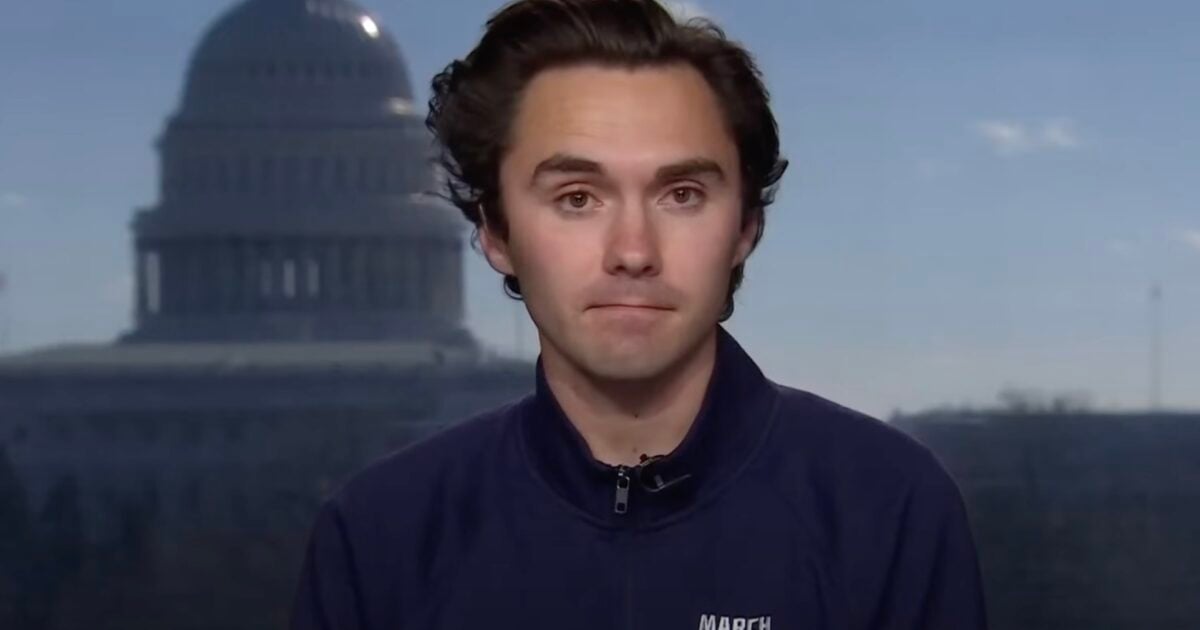
Whoops: David Hogg’s First PAC-Backed Primary Candidate Goes Down in Flames

Tuesday gave us a preview of ex-Democratic National Committee Vice Chair David Hogg’s plan to meddle in the party’s primaries to get more young, far-left activists involved.

TL;DR: If early returns are any indication, this wasn’t worth ruining his DNC gig over.

With 77 percent of the vote counted as of Wednesday morning, Adelita Grijalva — the daughter of the Arizona Rep. Raúl Grijalva, whose death sparked the special election — had 62 percent of the vote, according to Associated Press figures.

Deja Foxx, the Gen Z influencer that Hogg’s Leaders We Deserve PAC was backing, was a beyond-distant second with 21 percent of the vote.

Given that Arizona’s 7th Congressional District is as deep blue as they come, the September general election is merely a formality.

“This is a victory not for me, but for our community and the progressive movement my dad started in Southern Arizona more than 50 years ago,” Grijalva said in a statement after the victory.

However, the real takeaway could best be summed up by The Washington Post, which called it “the Mamdani sequel that wasn’t.”

“Foxx, who had appeared to gain a bit of momentum in recent weeks, left some Democrats wondering if she could pull off a surprise win like Mamdani,” the Post noted.

“But the antiestablishment message that Mamdani deployed in New York was harder for Grijalva’s opponents to replicate given her support from many of the same liberal groups and leaders who backed Mamdani, and the fact that she had not held prior federal office.”

Indeed, Foxx’s main qualification came from being a hashtag activist on Instagram, particularly when it came to the right to abort babies; she’d gone viral in her teens for confronting then-Arizona Sen. Jeff Flake and has never given up the spotlight on left-bubble social media.

This was enough to convince Hogg — whose plan to spend $20 million to primary older establishment Democrats in blue seats is suspected by many to be the reason why the DNC chose to oust him on procedural grounds — to back the 25-year-old Foxx in what seemed to be a pilot run.

“Deja Foxx has been holding Republicans’ and career politicians’ feet to the fire since she was 15 years old. She’s an organizer who has carved her own path after experiencing homelessness and working at a gas station — and she is ready to fight for [Tucson], her hometown,” Hogg said in his endorsement earlier this month.

“Deja knows people like her haven’t been seen in politics, and she has translated her story to represent a new vision of generational change that speaks truth to Trump’s cruel policies.”

And Foxx, meanwhile, was touting polling that showed her within striking distance of Grijalva — who, it’s worth noting, not only has name recognition but actual governing experience as a former Pima County supervisor:

Not. Even. Close.

It’s unclear whether Hogg sealed Foxx’s fate, or whether it was the other way around. Hogg’s brand is more toxic than a Superfund site after his exit from the DNC, and while his endorsement was supposed to add momentum to the influencer’s campaign, it might have scared people willing to give her a chance off due to the damage Hogg has already managed to wreak in the party.

On the other hand, tying this brilliant proposal to inject new blood into the Democratic Party with a 25-year-old “Gen Z influencer” — which is seriously the only three words on her CV — was a very preventable mistake that Hogg apparently couldn’t be disabused of.

What other warning signs did he need? The fact the dead politician’s own daughter, who has political experience, was running for the seat? Or that she had picked up endorsements from people who usually side with Hogg’s apoplectic twaddle, like Sen. Bernie Sanders and Rep. Alexandria Ocasio-Cortez? Or simply the still-undefeated maxim that the internet is not real life?

This is a preview of what David Hogg basically ruined his career in legitimate political activism to pursue. Nice work. Now, if you’ll excuse me, I have to make a gift purchase of the book “When Bad Things Happen to Horrible People” from Amazon for a certain someone. Anyone know Leaders We Deserve PAC’s address offhand?

This article appeared originally on The Western Journal.

The post Whoops: David Hogg’s First PAC-Backed Primary Candidate Goes Down in Flames appeared first on The Gateway Pundit.

JUST IN: Senate Passes Trump-Backed Rescission Plan to Defund PBS, NPR and Slash Foreign Aid

The Republican-controlled Senate narrowly approved a sweeping Trump-endorsed rescission bill that slashes nearly $9 billion in previously approved federal spending—including full defunding of PBS and NPR and deep cuts to U.S. foreign aid—by a razor-thin 51–48 vote during a late-night vote.

The measure advanced through a late-night vote-a-rama.

Only two GOP senators—Susan Collins (R‑ME) and Lisa Murkowski (R‑AK)—sided with Democrats to try to block Trump’s efforts to restore fiscal sanity.

Democrat Sen. Tina Smith (D-MN) was notably absent from the vote — her staff citing a hospital stay “out of an abundance of caution,” according to Politico.

Vice President JD Vance broke tie votes in committee motions—but wasn’t needed on the final tally.

Because the Senate made minor changes to the bill, it now heads back to the House for final approval, where Speaker Mike Johnson is expected to fast-track the vote.

President Trump is poised to sign the bill into law by Friday, delivering yet another blow to the radical globalist agenda that has drained American taxpayer dollars for far too long.

The post JUST IN: Senate Passes Trump-Backed Rescission Plan to Defund PBS, NPR and Slash Foreign Aid appeared first on The Gateway Pundit.

How Trump Can Promote Religious Liberty

How Trump Can Promote Religious Liberty

Several U.S. allies and partners suppress minority faiths.

St.,Basil's,Cathedral,-,An,Orthodox,Church,On,Red,Square

President Donald Trump visited the Middle East in May but devoted little attention to one of the region’s most pervasive challenges: religious intolerance and persecution. Virtually every country, including Israel, either officially abuses minority faiths or unofficially tolerates private violence and discrimination against unpopular believers. Indeed, Washington partners with some of the worst oppressors, most notably Saudi Arabia and Egypt.

Of course, Trump has never paid much attention to human rights abuses of any kind. The most dramatic example during his first term was when Trump boasted about shielding Saudi Crown Prince Mohammed bin Salman from any ill consequences after he had Jamal Khashoggi, a critical journalist living in America, murdered and dismembered. Moreover, the Kingdom of Saudi Arabia officially bans any faith but Islam, putting it near the top of the religious persecution hall of infamy.

No president has found it easy to balance America’s claim to uniquely represent moral virtue with the realities of power politics in a messy world. Trump’s predecessor, President Joe Biden, was a spectacular failure. He entered office promising to treat MbS, as the Saudi heir is known, as a pariah. When Biden visited the Kingdom, he did a veritable kowtow while begging for increased oil supplies. Spurned by the killer prince, a humiliated Biden ended up offering to turn the U.S. military into a modern Janissary force tasked to defend the Saudi royals.

Although any administration will have to be practical and prudent in dealing with foreign authoritarians, Washington should promote a world that values human life, liberty, and dignity. U.S. officials should accept the inevitable charge of hypocrisy while nevertheless seeking to move debate and policy forward. When it comes to religious liberty, the United States Commission on International Religious Freedom (USCIRF) provides a sensible reform agenda.

The ecumenical panel, filled by appointees of the president and congressional leaders, identifies nations in which the state either persecutes or tolerates persecution, making these governments deserving of U.S. attention. USCIRF highlights the worst of the worst, which it recommends that the State Department designate as “Countries of Particular Concern” (CPCs). In its latest report the Commission so tagged Afghanistan, Burma, China, Cuba, Eritrea, India, Iran, Nicaragua, Nigeria, North Korea, Pakistan, Russia, Saudi Arabia, Tajikistan, Turkmenistan, and Vietnam. The International Religious Freedom Act, which established the Commission, reserves that label for nations guilty of “particularly severe violations.”

On a slightly higher circle in hell sit members of the “Special Watch List.” (The terms are clunky, but that shouldn’t surprise since they are a congressional creation.) Into this category fall countries responsible for “severe violations of religious freedom.” USCIRF cites Algeria, Azerbaijan, Egypt, Indonesia, Iraq, Kazakhstan, Kyrgyzstan, Malaysia, Sri Lanka, Syria, Turkey, and Uzbekistan. For good measure, the Commission also named several “Entities of Particular Concern.” The groups so tagged are: Boko Haram, Hay’at Tahrir al-Sham, Ansar Allah (the Houthis), Islamic State–Sahel Province, Islamic State in West Africa Province, Jama’at Nasr al-Islam wal Muslimin, and Al-Shabab. 

Every faith faces persecution somewhere. Measured by sheer number of victims, Christians suffer the most. In terms of intensity, Jews are most vulnerable the world over. In Iran, Baha’is likely endure the worst treatment. In Russia, Jehovah’s Witnesses may be the most victimized. In some countries, oppression is particularly intense within faiths, such as between Sunni and Shia Muslims.

Religious persecution is an affront to religious as well as secular values. Attempting to force someone to change their beliefs is an obvious and fundamental assault on freedom of conscience. That applies as much to atheists as to adherents to a formal faith. However, the greatest affront is to God, who seeks genuine belief and commitment. Consider Jesus’s instruction: “when you pray, do not be like the hypocrites, for they love to pray standing in the synagogues and on the street corners to be seen by others.” (Matthew: 6:5) Even when coercion causes someone to publicly recant their faith and profess another, the result is empty, verbal assent surrendered to avoid violence or other brutal acts. 

Although almost any believer could be a victim, some are more likely to be perpetrators. USCIRF’s list highlights the most common determinants of religious crimes. The first is a majority Muslim state. Virtually every self-styled Islamic government disadvantages and abuses religious minorities. Many employ or encourage violence against “the other,” whoever the latter may be.

Islam is the dominant faith in seven of the CPCs: Afghanistan, Iran, Nigeria, Pakistan, Saudi Arabia, Tajikistan, and Turkmenistan. Of the dozen countries on the Special Watch List, only one, Sri Lanka, is not a majority Muslim country. All of the Entities of Particular Concern are Islamic. Although the degree of force employed varies, many on the list, especially the CPCs, are widely recognized for their barbarity.

Next is authoritarian rule, especially by avowed (or former) communist regimes. That encompasses seven CPCs: China,Cuba, Eritrea, Nicaragua, North Korea, Russia, and Vietnam. Of course, several of the Muslim-majority states are also highly repressive. The same with those on the Special Watch List. Tyrants especially fear belief in a transcendent order in which even the greatest secular powers are bound by divine rules. In North Korea the ruling dynasty is treated as possessing supernatural powers.

Finally, persecution in the remainder reflects a potpourri of causes. Particularly important are other militant faiths—violent Hindu nationalism in India and even more incongruous Buddhist nationalism in Burma and Sri Lanka. In only one of the USCIRF-cited nations, Russia, are Christians systematically using the state against other faiths, and in return they are being used by the authorities.

Although American politicians typically flaunt their faith and created the Commission to promote religious liberty worldwide, a surprising number of U.S. allies/friends/partners are on the Commission’s naughty lists. Afghanistan was a wartime ally; India is being cultivated to counter China; Pakistan is a complicated frenemy; a succession of presidents proclaimed their eternal friendship with Saudi Arabia’s royal family; for decades Washington has provided Egypt with abundant economic and military aid; the U.S. liberated Iraq from Saddam Hussein’s rule and continues to maintain forces there; the Pentagon maintained bases in Kyrgyzstan and Uzbekistan to support combat in Afghanistan; and Turkey remains a NATO member with American military facilities and personnel. All of these governments not only violate religious liberty, but persecute Christians, members of America’s dominant religious faith.

Of course, the U.S. has long compromised on human rights to advance security interests. In 1941 Washington allied with Joseph Stalin’s Soviet Union to defeat Adolf Hitler’s Germany. Washington made many deals with many devils during the Cold War. Nevertheless, it is striking how many of the worst persecutors have enjoyed the favor of multiple U.S. administrations. Even now, after the president supped with Saudi Arabia’s murderous crown prince, the halls of power resound with talk of protecting the rules-based order and promoting democracy. No wonder much of the Global South has contemptuously rejected requests for support against Russia from Western countries widely seen as colonial powers, military aggressors, authoritarian sympathizers, and flagrant hypocrites. 

Obviously, there are no panaceas to the problems of religious intolerance, hostility, and persecution. Enabling the world’s people to worship freely and live according to their faith will never be a central U.S. foreign policy objective. Even if it was, it would not be achievable, given how fearful tyrannies are of all forms of liberty, especially of conscience. And even if America’s record in promoting international liberty was substantially better, the U.S. government’s principal responsibility would remain to its own people, those expected to pay, and die, for its foreign misadventures. No matter how well-intentioned, the U.S. should not be a crusader state.

Nevertheless, Washington should push foreign nations to do better. Although America’s ability to influence the internal affairs of other countries will always be limited, the U.S. should include religious liberty when promoting human rights abroad. And Washington can do even more when other nations are seeking favors from America. For instance, the U.S. no longer should be subsidizing the Egyptians, and, even worse, defending the Saudis, especially when these systems are exemplars of tyranny. Turkey has long ceased to be an ally and cannot be trusted in a crisis; its NATO membership should be reevaluated. Having rightly dropped sanctions on Syria, Washington should point to the future treatment of vulnerable minorities as the proverbial canary in the mine in assessing the new regime’s direction. Moreover, if the president is going to weaponize trade, he could press India and Vietnam to better respect the lives and liberties of religious minorities.

People of faith should stand with one another for this essential liberty. Indeed, all people of goodwill should insist on the fundamental human right to believe freely and live accordingly. There should be no special pleading when it comes to religious liberty; everyone is entitled to pursue their understanding of the human person and his or her relationship to the transcendent. That freedom is essential for believers and nonbelievers alike. A system which does not respect the right of others to be wrong will not teach anyone how to recognize what is right.

The president is widely thought to desire the Nobel Peace Prize. Alas, he has found conflicts such as Russia–Ukraine more difficult to resolve than he apparently expected. He also is hampered by his unashamed transactional approach to international relations. If the U.S. is going to be cold and calculating, unaffected by moral principle, why should other governments operate differently?

Leavening his international approach with a commitment to human rights, including religious liberty, would provide him with an additional tool, increasing his persuasiveness and effectiveness. Even if doing so gets him no closer to that cherished Nobel Prize, it might make the world a better place, saving a few lives along the way. And that, more than his usual bluster, would earn a worthy assessment of his presidency: “Well done, good and faithful servant.”

The post How Trump Can Promote Religious Liberty appeared first on The American Conservative.

Our War President 

Our War President 

Trump caves on Ukraine and looks the other way in Gaza.

President Trump Meets With Visiting Crown Prince Of Bahrain

So much for ending the Ukraine War in 24 hours. 

It’s been six months since Donald Trump was sworn in as the 47th president. On the campaign trail, Trump promised the American people that he would end the Russian President Vladimir Putin’s war with Ukraine within 24 hours of assuming the presidency. He later amended that promise, claiming he would actually end the war before he even took office. When reporters inquired about his plan, what exactly he would do differently from President Joe Biden, Trump often argued that ending the war was a “very easy negotiation,” despite the reality that the United States is firmly stuck between a rock and a hard place in the region. 

The truth is, Trump believed he would simply bowl over Putin with his words and his empty threats to “bomb the s*** out of Moscow” and that would be that. But Trump was wrong. The war continues. 

In the six months since Trump began his second term in office he has hemmed and hawed and complained and lashed out against both Putin and Ukraine’s President Volodymyr Zelensky. But his most recent volley came against Putin on Sunday evening during a brief meeting with reporters at Joint Base Andrews. Trump, who has resorted to pleading with Putin to end the war, accused the Russian leader of speaking “so beautifully” during the day while bombing Ukraine during the night. “I’m very disappointed with Putin,” admitted Trump. 

“No one’s saying this can be done in 12 hours,” stated Secretary of State Marco Rubio in April. He’s technically right. After all, Trump said over and over again that it would take twice as long—24 hours, to be exact. But in reality, it’s been more than 4,000 hours since Trump was inaugurated for a second term, and in that time nothing the president has said to Putin has changed the course of the war. Perhaps it is we, the voters, who are to blame for believing such a promise. Twenty-four hours. Were we so naive? 

With cameras rolling in the Oval Office on Monday, Trump reiterated that Putin “talks so beautifully” in private during the day and then continues his bombing campaign at night. “I go home, I tell the first lady, you know I spoke to Vladimir today, we had a wonderful conversation,” Trump recounted. “She said, Oh, really? Another city was just hit.” Melania, the truth-teller. 

With NATO Chief Mark Rutte sitting to his right in the Oval Office, Trump then announced his administration will provide Patriot missiles to Ukraine via NATO so the sale isn’t directly linked between the U.S. and Ukraine. The former secretary of state Mike Pompeo, a noted neoconservative who fell out with Trump’s base, loved the announcement. “What President Trump announced yesterday alongside Gen. Secretary Rutte, the head of NATO, was a closer, deeper, bigger step towards peace than we have seen so far,” cheered Pompeo. 

Rutte was pleased, too. “You are the police agent of the whole world, you are the most powerful nation on Earth,” said Rutte of Trump and the U.S. Trump, the American First president, refused to interject or amend Rutte’s statement. “Police agent of the whole world”: Where have we heard talk like that before? The interaction caught the attention of the MAGA stalwart Steve Bannon, who rightfully pointed out that policing the world is the opposite of why Trump was elevated to the presidency. But Bannon couldn’t bring himself to lay the blame at Trump’s feet, instead claiming that Rutte doesn’t understand what America First really means. 

“No, the answer is that is incorrect,” Bannon argued on his War Room podcast Monday. “We’re about America first. We’re not the cop on the beat for the entire world.” Pity the president doesn’t appear to agree.

Trump then threatened to exact “very severe” secondary tariffs (sanctions in MAGA drag) of 100 percent on Russia if a ceasefire with Ukraine was not reached within 50 days. But the threat of sanctions wasn’t enough for Trump. On Tuesday, the Financial Times reported that the president is now privately urging Zelensky to use those American-made weapons to “step up deep strikes on Russian territory.” Forget ending the war in 24 hours; Trump is now responsible for building and selling the munitions to continue the war in perpetuity.

Despite whiplash decision making (the president now says Ukraine should not target Moscow with strikes), Trump refuses claims that he is being played by the smooth-talking Russian leader. “He fooled a lot of people,” Trump said of Putin as Rutte listened. “He fooled Clinton, Bush, Obama, Biden. He didn’t fool me.” That’s right. Despite overwhelming evidence otherwise, Trump is still, somehow, totally in control. 

The situation in Ukraine is so troubling, so out of step with Trump’s campaign promises, that it can be easy to overlook the dire reality in Gaza, where the Israelis continue to starve and murder Palestinians daily. Trump, who enjoys dreaming of Gaza paved in concrete and adorned with gold statues in his likeness, has essentially signed off on the Israeli Prime Minister Bibi Netanyahu’s reign of terror. Though Trump often states he is unhappy with the situation in Gaza, and though news outlets were hopeful for some movement on the topic when Netanyahu was greeted as a respected statesman in DC just last week, the president has stopped short of condemning the Israelis for committing a state-sponsored ethnic cleansing. 

Trump, who bemoaned last Friday that he “is pissed” with Putin for failing to wrap up the war in Ukraine, has refused to make such incendiary statements about Netanyahu. During last week’s meeting in Washington, Trump called Netanyahu “the greatest man in the world,” and the prime minister returned the tongue-bath by nominating Trump for the Nobel Peace Prize, something the president has long angled for. Trump, the man who is currently calling for “deep strikes” into Russian territory, the man who bombed Iran when Israel said “jump,” and the man who breaks bread with Netanyahu, nominated for a Nobel Peace Prize. On Wednesday, Israel attacked the Syrian capital of Damascus and Trump didn’t utter a word of criticism. 

A peacemaker Trump has not proven to be. In less than one year, Trump has overseen 529 strikes compared to 555 during President Biden’s entire four-year term. For those of us who voted for Trump with the hope that the wars might indeed end, Trump is not unlike the other characters who have called 1600 Pennsylvania Avenue home these last few decades. Every time he has been presented with the opportunity to wash his hands of these tawdry wars occurring thousands of miles from our shores, Trump has fallen short. He should have interrupted Rutte and firmly explained that we are no longer the world’s police, that all of this gamesmanship and war abroad has severely weakened us on the domestic front. But interrupt Rutte, he did not. As with other failed promises from the campaign trail, now that Trump is in office, it is much much easier to roll over and allow the wars continue.

And so Trump, the man who predicted we would have World War III if the Democrats won, is now the main figure pushing war across the globe. He is, whether we like to admit it or not, our latest war president. 

The post Our War President  appeared first on The American Conservative.

Trump Flirts with NATO’s Demand for Russia’s Surrender to Ukraine

Trump Flirts with NATO’s Demand for Russia’s Surrender to Ukraine

The president should instead outline reasonable peace terms and extricate the U.S. from the conflict.

Washington,–,Feb.,28,,2025:,President,Donald,Trump,Welcomes,Ukrainian

Credit: Joshua Sukoff/Shutterstock

Multiple reports in Western news media highlight President Donald Trump’s growing dissatisfaction with Russian President Vladimir Putin. The Financial Times reported that Trump had encouraged Kiev to punish Putin by striking deep inside Russian territory—perhaps even hitting Moscow—if the U.S. provided it with more long-range weapons. (Trump has denied he supports such strikes.)

In marked contrast to the initial weeks of his second term, Trump has now effectively signed on to NATO’s uncompromising strategy of insisting on Russia’s capitulation with respect to the terms of a peace accord between Russia and Ukraine. The Western demands include Russia’s complete withdrawal from conquered Ukrainian territory (including Crimea) and its acquiescence to Kiev’s possibly joining NATO. 

Former NATO Supreme Allied Commander Europe Admiral James Stavridis expresses the prevailing mentality of hardliners when he contends that sending Ukraine openly offensive weapons might be the most effective way to force Moscow back to the negotiating table.

The ongoing transformation of Trump’s overall approach to the war between Russia and Ukraine has been breathtaking. During the 2024 presidential election campaign, Trump portrayed the Biden administration’s participation in NATO’s policy of using Ukraine in a proxy war against Russia as an expensive, potentially dangerous blunder. Trump led his political followers to believe that he would terminate the Ukraine entanglement as soon as possible, since it was inconsistent with his overall concept of an “America First” foreign policy. On one occasion, he even boasted that he could bring an end to the Russia–Ukraine conflict in 24 hours. Instead, he has now decided to help rearm Ukraine and even escalate Washington’s support by accelerating shipments of Patriot air defense missiles and other munitions to Kiev.

Trump’s attitude toward Putin and Ukrainian President Volodymyr Zelensky has undergone a similarly radical transformation. In the initial weeks of his second term, Trump seemed to grasp that improving Washington’s relations with Moscow needed to be a high priority, and that the Ukraine conflict was the principal obstacle to achieving that objective. His rhetoric toward Putin was conciliatory, in marked contrast to the openly hostile and contemptuous attitude of Biden administration officials. At the same time, Trump seemed to regard Zelensky as an arrogant, ungrateful U.S. and NATO client determined to continue pursuing a “wag the dog strategy” toward his Western patrons.

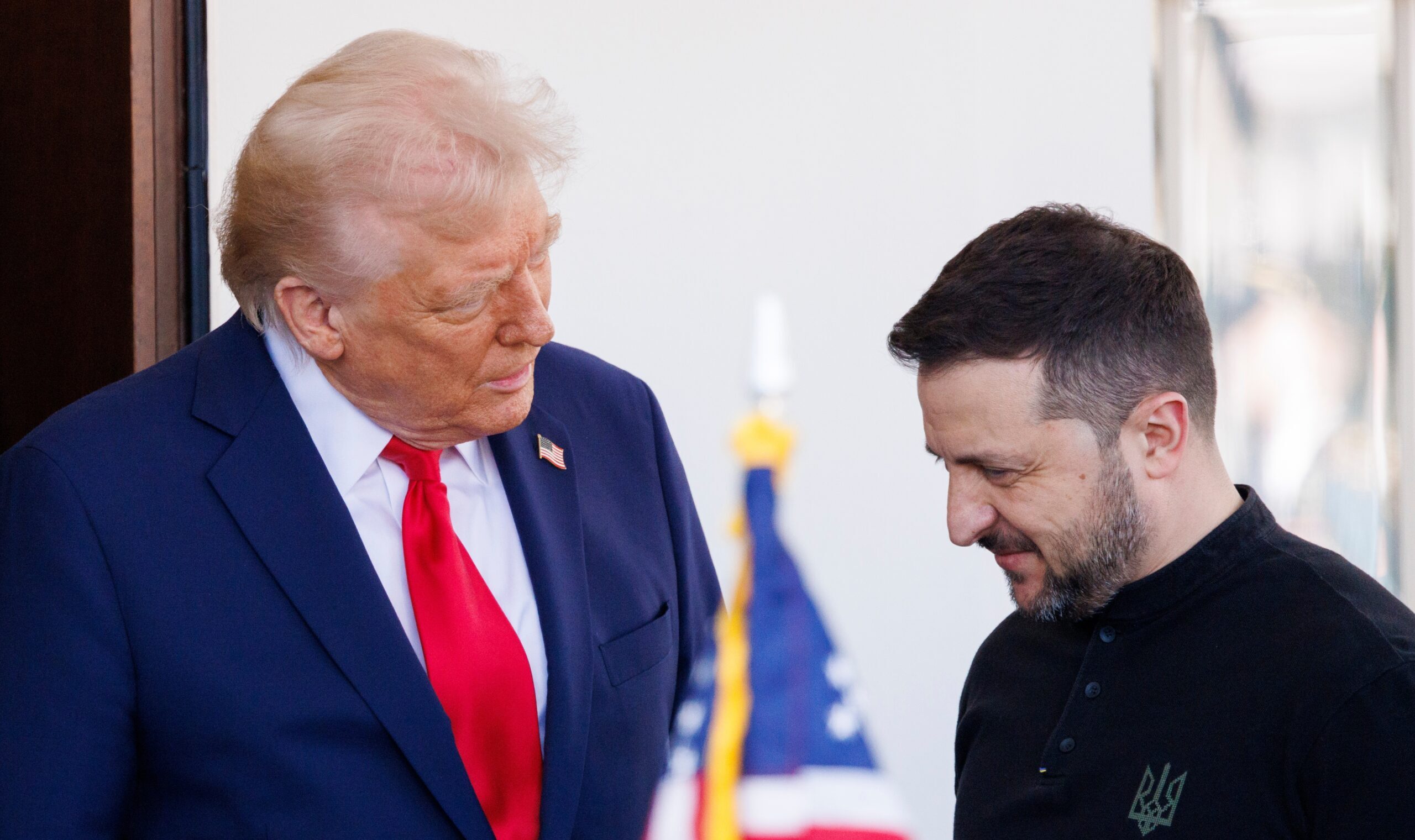
That phase of the trilateral relationship between Ukraine, Russia, and the United States reached its apogee in late February, during a much-publicized session in the White House when both Trump and Vice President J.D. Vance berated Zelensky for a lack of cooperation regarding negotiations for a peace accord and a lack of gratitude for the financial and arms support that the U.S. and its NATO allies had already given to Ukraine.

Almost immediately thereafter, though, Trump’s tone regarding the Russia–Ukraine war shifted dramatically. He became increasingly critical of Putin, now seeing him, rather than Zelensky, as the principal obstacle to a peace accord. Putin’s reluctance to accept a comprehensive ceasefire especially annoyed the White House. Over the succeeding weeks, Trump’s comments regarding the Russian president became ever more caustic and, much to the cheers of Kiev’s supporters in Europe and the United States, the gap between Washington’s policy and that of its NATO allies regarding Ukraine has narrowed dramatically. The White House now is demanding that Moscow accept a ceasefire and commence negotiations for a peace settlement with Kiev within 50 days.

The de facto U.S. capitulation to NATO’s unrealistic position regarding the Ukraine issue is unfortunate. Trump’s demand that Putin conclude a ceasefire is likely a non-starter for Moscow unless NATO members agree to pause their shipments of weapons to Ukraine. Otherwise, the now beleaguered Ukrainian forces would have that entire time to replenish their dwindling arsenals, while Russia, which currently holds the military advantage, would enjoy little or no benefit. Washington’s lobbying for constructive negotiations regarding peace terms is even more fanciful under existing conditions. Kiev and its NATO backers cling as firmly as ever to maximalist demands that ignore even the most basic realities on the battlefield. Without at least some signs from the opposing side of a willingness to compromise, Moscow has meager incentive to participate in talks either during or after a ceasefire.

The maximalist demands that NATO and its Ukraine proxy make might be achievable if Russian forces had been defeated in the war. But the reality on the ground is totally different. Russia is winning the war, albeit in a far costlier, bloodier, and more grinding fashion than Kremlin leaders originally predicted. Russian forces now occupy 20 percent of Ukraine’s territory, and that percentage is increasing, not decreasing.

Western officials have gone to sometimes absurd lengths in their attempts to obscure that fundamental reality. They circulate transparently inflated figures of alleged Russian military fatalities. Secretary of State Marco Rubio was the latest Western official to attempt that ploy, asserting that Moscow had lost 100,000 troops just since January 2025. As one expert pointed out, that estimate was preposterous on its face, since evidence confirmed that the overall size of the Russian force in Ukraine had increased rather than shrunk. The credibility of Rubio’s argument that Moscow could not sustain the drain on its manpower was not enhanced by the continuing refusal of Western analysts even to provide a rough estimate of Ukrainian casualties. Such clumsy attempts at concealment suggest that the actual news on that front is not good.

In addition to Ukraine’s continuing failure to produce the definitive battlefield triumph that Kiev’s NATO backers keep predicting, the broader elements of the West’s strategy to bring Russia to its knees also have faltered. The effort to obtain global support for isolating Russia economically has been a spectacular flop outside the West. Comprehensive Western sanctions have inconvenienced and damaged Russia’s economy to some extent, but Moscow has been surprisingly adept at finding alterative markets for its exports, especially oil, gas, and other raw materials. Moreover, NATO’s European members seemingly have suffered at least as much economic pain from the impact of sanctions as Russia has experienced.

Consequently, neither battlefield conditions nor economic suffering is sufficient to get Moscow to accept a dictated surrender. Yet that is what Ukraine and its NATO sponsors continue to demand. And that is the approach with which the Trump administration now seems to be aligning.

It is an impractical strategy even if one ignores the broader context of the West’s frigid relations with Russia and thus its inability to coax Moscow into diplomatic concessions. When the United States and NATO do not even appear to be offering anything beneficial in return for Russian concessions, they’re not calling for negotiations, they are demanding a great power’s unconditional surrender in a war that it has not lost, much less lost overwhelmingly.

Rather than sign on belatedly to such a worthless strategy, Trump should promptly extricate the U.S. from the Ukraine morass and let Russia and the European members of NATO sort out matters. If he can’t bring himself to make a clean break, he should at least propose terms that do have a plausible chance of leading to meaningful negotiations between Kiev and Moscow.

For example, what if Washington promoted a compromise in which Ukraine agreed not to join NATO, but Moscow was willing to accept Ukrainian membership in the EU, which is supposedly a political and economic body, not a military alliance? How about a proposed territorial compromise in which Russia keeps Crimea—which Soviet dictator Nikita Khrushchev arbitrarily transferred from Russia to Ukraine—and UN-conducted elections determine the political fate of the oblasts in the Donbas? Such proposals might at least begin a worthwhile discussion and minimize the risk of a catastrophic war between NATO and Russia.

The current strategy is utterly bankrupt. Yet Trump is making matters even more pointless and dangerous by signing the United States onto that manifestly doomed approach.

The post Trump Flirts with NATO’s Demand for Russia’s Surrender to Ukraine appeared first on The American Conservative.

Joe Rogan Reveals the Reasons He Decided to Interview Trump on His Podcast Before the Election (VIDEO)

If you recall, early on in the 2024 election, Joe Rogan did not want to interview Trump on his podcast.

He eventually changed his mind due to a combination of factors. He explained the details during an appearance on the ‘Ultimate Human’ podcast.

The clip below is from earlier this year but it just became available this week.

FOX News has more:

Podcaster Joe Rogan spoke candidly about how a series of political revelations persuaded him to interview then-candidate Donald Trump in the 11th hour of the 2024 election.

The 2024 presidential election was dubbed by some to be the “podcast election,” as many suggested that Trump’s appearances on numerous podcasts popular with young men swayed the outcome. The biggest example of all was Trump’s interview on the “Joe Rogan Experience” in late October, which currently has 59 million views.

In a newly released interview conducted earlier this year, “Ultimate Human” podcast host Gary Brecka noted how Rogan was initially hesitant to interview Trump on his show, and asked him what eventually changed his mind.

“Well, there was a bunch of things that happened,” Rogan said. “First of all, there was the lawfare. There was these lawsuits that they were trying to pin on him. They were trying to convict him and turn him into a felon, and they were doing it so blatantly and obviously. The case with the bookkeeping error or the bookkeeping, whatever it was. The misdemeanor that they had charged him with 34 felonies for, which isn’t even a felony. It’s a misdemeanor, and it’s also past the statute of limitations. None of it made any sense. And people were cheering it on. ‘He’s a convicted felon.’”

Here’s the clip:

One thing is for sure. The Trump episode of the Rogan podcast was historic and will be watched and talked about for years to come.

The post Joe Rogan Reveals the Reasons He Decided to Interview Trump on His Podcast Before the Election (VIDEO) appeared first on The Gateway Pundit.