Five Reasons for Ukraine to Give Up Donbas

Five Reasons for Ukraine to Give Up Donbas

Russia’s demands are unfair, but ceding territory in the east could help end the current war and prevent future conflict.

UKRAINE-RUSSIA-CONFLICT-WAR
A Ukrainian serviceman searches for land mines in a wheat field in Donetsk region on October 7, 2022. (Photo by ANATOLII STEPANOV/AFP via Getty Images)

It is misleading when Western governments and the Western media say that Russia’s President Vladimir Putin has not made compromises and is unwilling to negotiate. Though Russia has not changed its essential goals since the start of the war, it has compromised significantly around the edges of those goals. 

The concession not to object to Ukraine’s membership in the European Union grants the key wish of the Maidan protestors of 2014. Raising the ceiling on caps on the Ukrainian armed forces and the recognition that Ukraine deserves robust security guarantees, barring the presence of NATO member troops on Ukrainian soil, are large security concessions. Possible compromises on the postwar borders demanded at the beginning of the war are significant territorial concessions. 

But Moscow has insisted that there can be no compromise on the entirety of Donbas and Crimea being part of Russia. That demand is a difficult one for Ukraine’s President Volodymyr Zelensky to acquiesce to, and it is unfair. But little in war is fair, and nothing in this war has been fair. It was unfair for the U.S. and NATO to lie about eastward expansion. It was unfair for the U.S. and NATO to ignore Russia’s security concerns, take core issues off the table, and refuse the request for diplomacy on the eve of the war. It was unfair for the U.S. to promise Ukraine as much as it needs for as long as it takes if they go to war with Russia and then to break that promise. And it was, of course, unfair for Russia to go to war with Ukraine.

And it is especially unfair for Russia to compel Ukraine to cede land diplomatically that it has not lost militarily. Russia, though, has hinted at a willingness to exchange land outside the eastern Donbas that it has conquered for land inside Donbas it has not. Agreeing on borders after a war with mutual swapping of territory to make the borders coherent is not unheard of, and the failure to do so in the past has, at times, sown the seeds of future conflict. 

The real unfairness is the demand for Ukraine to cede territory at all, because it is illegal under international law to acquire territory by force (though Russia would claim that the land was acquired by the will of the people as expressed by a referendum and not by force). Article 2.3 of the UN Charter demands that member states “settle their international disputes by peaceful means,” and Article 2.4 requires all members to “refrain in their international relations from the threat or use of force against the territorial integrity or political independence of any state.” This norm has no exemptions and cannot be modified, including, according to the International Court of Justice, in self-defense.

Though it is undeniably unfair for Ukraine to have to cede all of Donbas to Russia, there are five practical reasons for it to do so.

The most urgent is the need for Ukraine to end this war. The loss of Ukrainian lives is horrific and unsustainable. Ceding the last 10 to 14 percent of the Donbas could be part of the key to doing that. Russia has two core goals in this war: preventing NATO from absorbing Ukraine and protecting ethnic Russians in Donbas. The first has been achieved. That leaves the second. After the diplomatic betrayal of the West and the resultant failure of the Minsk Agreements that would have given the Donbas provinces autonomy within Ukraine, that left, from Russia’s perspective, incorporating the region within itself. That goal now seems nonnegotiable. Yielding to it could end the war.

The most practical reason is that Ukraine can cede Donbas to Russia diplomatically, or they can lose Donbas to Russia by war. The outcome is inevitable; the choice is real. The Donbas will be lost, but it is better to lose it with no more loss of life if possible.

The third reason is that a border drawn at the west of Donbas makes ethnic and historical sense. Ukraine has always been a nation divided. Northwest and central Ukraine has historically oriented its gaze westward to Europe; southeast Ukraine has historically oriented its gaze eastward to Russia. Elections and culture have traditionally reflected this divide. Though pushing a boundary beyond the Donbas makes no ethnic or cultural sense, drawing it at Donbas does. And arguably it reflects the will of the people as expressed in multiple referendums going back to the ’90s. It might also prevent Ukraine from slipping back into civil war once the international war with Russia is over.

Ceding the Donbas to Russia might also go some distance in accomplishing Ukraine’s need for security guarantees. The need for Ukraine to acquire security guarantees against Russian attack is now demonstrably clear. But Russia attacked based on its perception of an existential threat posed by NATO and possible war in the disputed territory of the Donbas and Crimea if Ukraine became a member of NATO. Removing those causes reduces the odds of future Russian attack. Ceding the Donbas, along with Crimea, which already seems to be conceded, could be not just a key to ending this war, but a key to preventing future war.

There are other ways in which ceding the Donbas to Russia could help Ukraine to better move forward. A sovereign Ukraine on 80 percent of its original territory integrated with the West with membership in the European Union could be sold, very plausibly, as a victory for Ukraine. But Ukraine can only clear a path to EU accession by conforming with the organization’s requirements for guarantees of freedom of religion and linguistic diversity. The monist vision of what it means to be Ukrainian, with its suppression of the language, cultural, and religious rights of ethnic Russian citizens of Ukraine, dominates in Ukraine and has only gotten stronger since the war. The path to EU membership could be facilitated by allowing the separation of predominantly ethnic Russians in the Donbas. 

For similar reasons, ceding Donbas to Russia could help a sovereign Ukraine avoid immediately descending back into the same civil strife that preceded the war with Russia in which the enemy is internal ethnic Russians.

And finally, the de jure recognition of the Donbas as Russian could help prevent the stage being set for future battles of a Donbas that has only de facto been recognized as under Russian control. De facto recognition allows for negotiations down the road. But it could also allow for conflicts down the road. 

It is unfair for Ukraine to be forced to agree to losing all of Donbas to Russia because it is against international law to acquire territory by force. But there are many practical reasons why ceding the Donbas to Russia could benefit Ukraine by ending the war without unnecessary additional deaths and by moving into a future integrated with Europe and with greater security against both external and internal conflict.

The post Five Reasons for Ukraine to Give Up Donbas appeared first on The American Conservative.
War on Iran Will Squander America’s Military Edge

War on Iran Will Squander America’s Military Edge

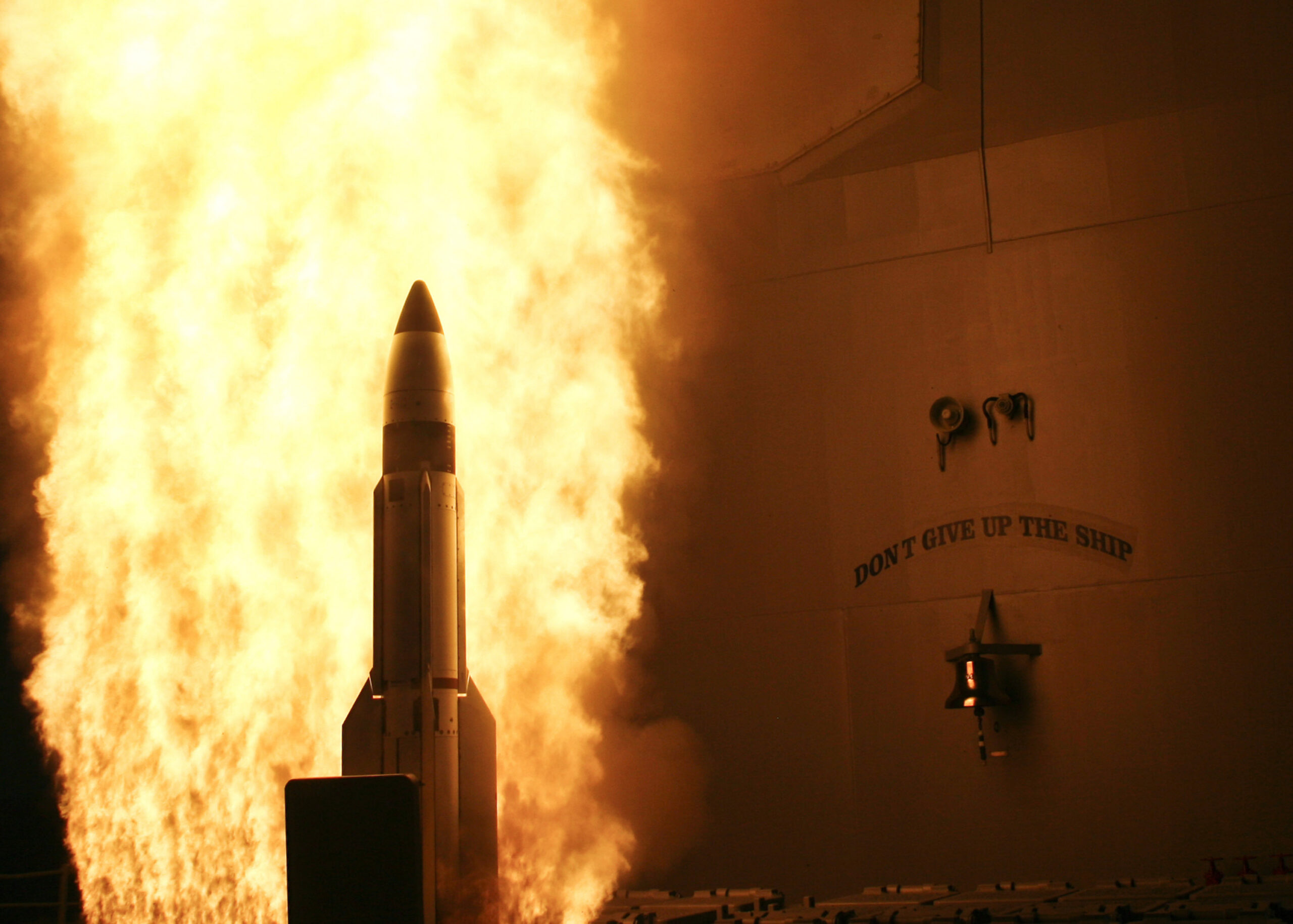
The U.S. can sustain combat operations for a long while—but Americans won’t be safer afterwards.

US Navy Shoots Down Disabled Satellite

Early Tuesday morning, President Donald Trump lashed out at those arguing that the United States would soon run out of missiles to fuel his war of choice in Iran. “The United States Munitions Stockpiles have at the medium and upper medium grade, never been higher or better…Wars can be fought ‘forever,’ and very successfully, using just these supplies…” he posted on Truth Social. 

Trump is right about one thing. Lack of U.S. weapons will not be a constraint on the fighting in Iran. Stockpiles are not unlimited, but they are plenty deep to allow the military to fight for as long as Trump chooses. But Trump’s war will still do long-term damage to U.S. military power, creating an extended period of vulnerability that the United States will struggle to overcome. 

The Trump administration may believe that its combat operations in Iran are a powerful manifestation of American military dominance, but in the end, this war is likely to accelerate the overdue death of the American imperial project, possibly on terms quite unfavorable to the United States and its allies. 

Concern about the depth of U.S. missile arsenals has been on the rise since 2022, when the conflict in Ukraine reminded policymakers and military analysts about the massive defense industrial demands of modern warfare. These concerns did not stop the Biden administration from draining U.S. stockpiles, however, by providing over $100 billion in military aid to Ukraine and doubling down on military assistance to Israel after October 7, 2023.

The Trump administration’s exploits in the Middle East in 2025—against the Houthis and in the 12-Day War—put additional pressure on U.S. magazine depth, depleting supplies of some of the most advanced U.S. weapons, including Tomahawk missiles and THAAD and Patriot air defense interceptors. The revelation that the United States expended 25 percent of its THAAD missile holdings defending Israel in June 2025, for instance, triggered alarm bells for U.S. officials and the general public. 

Still, warnings that the United States will run out of missiles in Iran or predictions that relative magazine depth will be the war’s decisive factor go too far and fundamentally misunderstand the risks and costs of the new war in the Middle East.

It is indisputable that the United States has limited quantities of its most advanced and exquisite precision and air defense missiles, including Patriot and THAAD interceptors, the new Precision Strike Missile (PrSM), and Tomahawk Land Attack Missiles. But the Pentagon’s supplies of less advanced munitions are deep and can be replenished relatively rapidly, especially if financing is available. 

The United States has large stockpiles of Small Diameter Bombs and Joint Direct Attack Munitions that turn cheap bombs and missiles into precision weapons and even more substantial supplies of gravity bombs which lack precision targeting but can still hit and destroy hardened targets. These weapons are all that will be needed once the United States establishes air superiority, a level of control Secretary of Defense Pete Hegseth suggests the U.S. military may already have. 

When it comes to air defense, the United States also has a diversity of options, including several variants of Standard Missiles and Sea Sparrows for protection of naval assets and AIM-120 and other air-launched missiles that can be fired by fighter jets. Efficient counter drone systems are in shorter supply, but even here, the U.S. military has a growing number of choices, including laser-guided weapons such as the Advanced Precision Kill Weapon System, that offer low-cost solutions for Iran’s large supply of Shahed drones.

The bottom line is that the idea that the United States will be forced to cease combat operations in Iran because it has no more missiles or interceptors is unrealistic. However, as supplies of the best munitions dwindle, the Pentagon will have to prioritize targets and accept more risk in both its offensive and defensive missions. It will have to tolerate higher levels of civilian collateral damage and lower air defense interception rates, which will mean more U.S. casualties and damage to U.S. military hardware. While this is far from ideal, it will allow the Trump administration to continue the war for as long as necessary to achieve something that it can declare a success.  

But the ability of the United States to keep fighting the war does not mean that rapid expenditures of expensive U.S. weapons in the Middle East—a region where the United States has few strategic interests—and against Iran—a nation that poses no threat to the U.S. homeland—will not have costs for the United States. It absolutely will. Most eyes are focused on the short-term implications of the fighting in Iran, but it is the longer lasting geopolitical costs—costs that will weaken the United States for years if not decades to come—that matter most.

While U.S. missile and air defense interceptor stockpiles will likely last through this war, they will have to be rebuilt afterward—along with the arsenals of Gulf partners. Already high demand for Patriot missiles is likely to skyrocket, along with orders for counter drone systems and offensive munitions of all kinds, as states (including the U.S.) try to fill gaps revealed by the current round of fighting. 

This spike in U.S. requirements and the needs of Middle East partners could not come at a worse time. Today, European allies, fearful of the threat from Russia, are looking to acquire U.S. munitions in large quantities. Ukraine is almost wholly dependent on U.S. air defense for protection of civilians and critical infrastructure. And allies in Asia are also looking to increase their own purchases of U.S. air defense and missile systems with an eye on China’s rising military power. 

These demands and those of the U.S. military can be addressed, but only with immense amounts of time and money. For some weapons, the limit is production capacity. For others, the issue is that high cost and limited budget space constrain what the United States and U.S. clients can feasibly purchase at a given time. Once this war ends, long backlogs of orders are likely, especially for weapons that the U.S. military needs most. The most exquisite weapons require long lead times, can take years to build, and single points of failure can derail production schedules at almost any time.

The inevitable result is a prolonged period of strategic vulnerability for the United States, one that will ripple across its network of allies and partners. During this period, Washington will face a stark geopolitical reality. U.S. military forces abroad will be more exposed and less protected than they are today. If a conflict were to erupt in Europe or Asia—even one that the United States managed to stay out of—the U.S. ability to secure American bases and materiel could be constrained. Its ability to support weakened allies and partners would be even more limited.

In a post-Iran war future, Washington will have to make harsh choices. It will have to decide whether to keep its global military footprint and accept the higher risk to its forces and assets or to reduce its global presence to protect U.S. assets and personnel. At the same time, commitments that the United States made decades ago will be largely insolvent. 

For at least a period of several years, the United States will likely not be able to defend Taiwan if it were to be attacked. European allies, also weakened by lack of U.S. military supplies, will similarly be left to fend for themselves. More immediately (as soon as next month), Washington’s ability to support Ukraine’s air defense and munitions needs will be reduced, with possible implications for its ongoing war against Russia. Over time, U.S. allies will move away from the United States, perhaps permanently, building their own defenses and finding new partners.

For those that have long argued for U.S. global retrenchment, this outcome may not be entirely unwelcome. But there is a meaningful difference between a retrenchment made by choice and managed to protect U.S. interests and one forced on the United States after a wasteful war that consumes what remains of U.S. global military advantage. 

The latter case offers no guarantees that the United States will be able to protect its interests abroad and ensures a loss of strategic flexibility that will leave Americans less safe. Most importantly, in the event of a future crisis that does have implications for Americans, there is no guarantee that the United States would be positioned or equipped to respond. The result could be damage to U.S. economic interests or even the physical security of the homeland—the exact opposite of “America first.”

Therein lies the ultimate irony: A war fought as a needless display of American military hegemony is ultimately likely to destroy the very hegemony it sought to entrench.

The post War on Iran Will Squander America’s Military Edge appeared first on The American Conservative.

The Iran War Has Ended the Trump Coalition

The Iran War Has Ended the Trump Coalition

The president’s betrayal has driven apart the disparate factions he brought together.

Trump and Biden supporters gathered at the ballot counting center in Philadelphia

Has Trump’s Iran invasion wrecked MAGA? For the White House and its allies, the question is nonsensical: MAGA is whatever Trump says it is. It’s rooted in the words Trump uttered before a single primary vote was cast in 2016: “I could stand in the middle of Fifth Avenue and shoot somebody and I wouldn’t lose any voters.” It’s reflected in the doctrine of Trump infallibility that permeates the White House. Many Trump supporters have long considered those notions ridiculous, while at the same time recognizing that Trump was exceptional in many ways. They would roll their eyes, chuckle and support him nonetheless. He was, they would say to themselves, actually quite good on very important issues, many of his appointments were first rate. Others have argued that for many low-attention voters, backing Trump has no relation to actual issues anyway; people root for him as a fun disruptive personality, as they might a professional wrestling favorite. These theories are about to be tested. 

Up against this is the sheer enormity of Trump’s betrayal—a betrayal obviously not of all his supporters but of those who found his regular critiques of forever wars compelling and thought credible his promotion of himself as the “peace candidate.” This was one of the two salient issues (the other was immigration) that in 2016 separated him from the GOP establishment represented by Jeb Bush and Marco Rubio and Ted Cruz, and in 2024 from Nikki Haley. Trump had, if not exorcised neoconservatism from the GOP foreign policy playbook, demoted it from its previously dominant position. His attack on Iran demonstrated that this view of Trump was completely mistaken, and those who held it feel saddened, shocked, betrayed, and stupid, in various degrees. He lied to his core supporters for years. As someone wrote on social media, the scale of the con is breathtaking. 

What does this mean politically for MAGA? Supporters of the war and the Trump administration claim all is fine: Eighty-five percent of Republicans support Trump’s war, though some polls like the Washington Post’s put the figure at 81 percent. George W. Bush went to war with 93 percent Republican support, so from the outset of Trump’s war there are two to three times as many Republicans in opposition as Bush had. Are these war opponents Never-Trump Republicans, GOPers who never liked him because of his character and style, or people who liked him because he was the “peace candidate”? More the last, I would surmise—a big part of “never-Trumpism” was due to his seeming disdain for hawkish GOP foreign policy orthodoxies. In any case, I don’t find 85 percent a particularly impressive display of MAGA support, particularly for a political faction that has never won national elections against Democrats by large margins. 

These anti-war Republicans will not be able to constitute a new post-Trump MAGA movement within the Republican party. Their most clear path to continued influence in the GOP was through J.D. Vance, perceived as a genuine foreign policy realist, a young and often brilliant Iraq vet skeptical of promiscuous armed interventions. But Vance can’t oppose the war as vice president. One can’t even imagine a Hubert Humphrey–style resurrection—the strategy of quietly letting it be known to insiders you have doubts about your boss’s war, while relying on your inside track as vice president to secure the nomination. Humphrey had a 20-year record as a good liberal and effective politician to draw upon. Vance was two years in the Senate. He faced a real choice about whether his career would be better served by remaining a senator from Ohio, and was cognizant of the risks; it’s now obvious he chose wrongly. 

Perhaps the best analogy to what will happen to the “pro-peace Trumpers” is the Obamacons, former Republicans and conservatives who voted for Barack Obama over “bomb, bomb Iran” John McCain. There were never a lot of them—Nebraska’s Sen. Chuck Hagel and Colin Powell were the most prominent; several were upper-middle-level GOP apparatchiks; National Review’s senior editor Jeffrey Hart was the most interesting. Less prominent was this writer (who endorsed Obama and canvassed for him). But one can imagine that this coterie helped bring some former Bush voters over to Obama. Ten percent of Republicans voted for Obama in 2008, and some data-monitoring political scientists argue that Bush voters switching or sitting the race out were more critical to Obama’s victory than new voters. One key here was that Obama, despite his exotic biography, ran as a mainstream figure; he was clearly antiwar, but his victory or at least the scope of it was in great part due to his seeming to have a greater grasp of the seriousness of the financial crisis than McCain. He did not turn really to the left and begin emphasizing divisive racial politics until after his second victory in 2012. 

It is already clear that among “influencers,” the group of conservative defectors from the Trump war far outstrips the 2000s. It includes most obviously Tucker Carlson and Megyn Kelly, Sohrab Ahmari, Matt Walsh, and Ann Coulter. They reach far more people than Jeffrey Hart did. It should be mentioned that Trump has already obliterated any GOP orthodoxy on fiscal matters, so that the brake mechanism of “what about the deficit?” is already moot. Of course the Democratic choice remains to be seen: It might or might not include “defund the police,” transgender transitioning for children, and a return to Biden’s open borders. But if not, it’s easy to imagine a large chunk of the 15–20 percent who oppose Trump’s war sitting the election out or crossing over. The result would be a landslide. 

An ancillary casualty of Trump’s war is a project like Yoram Hazoney’s national conservatism. His conferences both helped bring about and reflected a kind of truce between mostly Jewish neoconservatives and moderate paleoconservatives, with emphasis on common ground: borders, the danger of unrestricted immigration, the importance of national economies, the importance of the nation state as a focus for belonging in global society increasingly without moral or actual boundaries. The younger generation of neocons had more or less given up their support for fairly open immigration, chastened perhaps by Muslim migrant terrorism. Foreign policy was on the back burner, and Hazony’s conferences brought together old friends who had split over the Iraq War and the related, more general question of whether Israel’s influence over American foreign policy was excessive. The shared perspectives possible when such issues were distant are obviously out the window, as dead as Vance’s presidential prospects. Both will be missed. 

The post The Iran War Has Ended the Trump Coalition appeared first on The American Conservative.

CNN Doesn’t Understand Why Angry Comments From Leftists Haven’t Stopped Trump’s Construction of White House Ballroom

Screencap of YouTube video.

Trump is moving forward with plans to construct a new ballroom for the White House. This is something that has been needed for years. When the White House does large events on the lawn, they have to put up tents and guests have to use port-a-potties, it’s ridiculous.

It’s going to be beautiful when it’s finished. See the image below.

Over at CNN, they are reporting that the plan is moving forward, despite lots of nasty comments from the left. Look at this:

There was a lot of negative feedback in Chicago about Obama’s hideous monument to himself. Funny how CNN overlooked that.

From their report:

Approval for President Donald Trump’s massive East Wing ballroom project – from a government commission that oversees planning for federal buildings and land in the nation’s capital – is delayed after it received over 32,000 comments from the public overwhelmingly opposing the construction.

The National Capital Planning Commission was expected to take a final vote to approve plans for the ballroom on Thursday, marking the latest clearance for the project in a process that has been on a fast track since Trump suddenly demolished the East Wing last October. But the commission announced Thursday that the vote was postponed to April 2 “given the large amount of public input on the project.”…

Dozens of experts – architects, historians, preservationists and former White House staffers; representatives from key groups like the National Trust for Historic Preservation, the DC Preservation League, and the American Institute of Architects; and concerned citizens voiced opposition to the project during Thursday’s meeting. Just one person, the owner of a local historic event venue, spoke in support of it.

Some 9,000 pages of public comments to the NCPC released ahead of the meeting detailed major objections from Americans who expressed concerns about the project’s size and scope, cost and destruction of history, among other complaints.

How ridiculous.

The left hates the idea of Trump’s ballroom because it will be a reminder of his presidency, which they want to erase from history.

Too bad for them.

The post CNN Doesn’t Understand Why Angry Comments From Leftists Haven’t Stopped Trump’s Construction of White House Ballroom appeared first on The Gateway Pundit.

Bill O’Reilly Slams Liberal Media Coverage of Iran Strikes: ‘The Press is Rooting for Iran’ (VIDEO)

Screenshot of Bill O’Reilly via News Nation YouTube Channel

Bill O’Reilly appeared on NewsNation with Chris Cuomo last night and blasted the liberal media coverage of the Iran strikes, claiming that the media is ‘rooting for Iran, not the people of Iran, but the regime.

He cited coverage from ABC News, which he watched and claimed was entirely negative.

The point he is making is solid. The media knows that if things go sideways in Iran, they can use it as a weapon against Trump, which they would absolutely love to do.

Transcript via Overton News:

Bill O’Reilly says the quiet part out loud about the media’s coverage of the Iran conflict:

“They want America to lose.”

O’REILLY: “Right now the press id doing everything it can to root for Iran.”

“The press is actually rooting for Iran.”

CUOMO: “When you say Iran, you mean the people or the regime?”

O’REILLY: “They want American lose.”

“So world news tonight on ABC and I worked for ABC, so did you.”

“Did 15 minutes last night, did 8 segments every segment negative.”

“And I mean, really negative…every segment.”

“Not one positive word.”

“Not ONE word on how bad the mullahs were.”

“After watching it, I wanted to surrender, we should surrender to Iran watching ABC News.”

“We lost!”

“That’s how crazy it is. They want Trump BROKEN!”

Watch the segment below:

O’Reilly is right about all of this.

The media would like nothing more than for this to completely backfire and take Trump down politically. It’s so obvious.

The media will claim that they support our troops and all that, but the truth is that they would love to see this effort fail.

The post Bill O’Reilly Slams Liberal Media Coverage of Iran Strikes: ‘The Press is Rooting for Iran’ (VIDEO) appeared first on The Gateway Pundit.

JUST IN: Clinton Judge Orders Trump Admin to Refund $130 Billion in Tariffs

Serious expression of a man in a suit during a formal event, highlighting intense focus and engagement.

Serious expression of a man in a suit during a formal event, highlighting intense focus and engagement.

A federal judge on Wednesday ordered the Trump Administration to refund $130 billion in tariffs.

The US Supreme Court recently struck down President Trump’s tariffs in a 6-3 decision.

The Supreme Court said President Trump does not have the authority to impose the tariffs under the International Emergency Economic Powers Act (IEEPA).

The high court’s decision only invalidates Trump’s tariffs under the IEEPA.

Chief Justices Roberts, Amy Coney Barrett, and Neil Gorsuch sided with the three liberal justices.

Conservative Justices Alito, Clarence Thomas, and Brett Kavanaugh sided with President Trump.

In his dissent, Kavanaugh warned that refunding the tariffs would be a ‘mess.’

The Trump Administration asked for a 90-day delay in refunding the tariffs, but the Federal Circuit Court of Appeals denied the request on Monday.

The Federal Circuit Court of Appeals on Monday rejected the Trump Administration’s request to delay the Supreme Court’s ruling on tariffs.

On Wednesday, Judge Richard Eaton, a Clinton appointee, said the Trump Administration to begin refunding $130 billion in tariffs.

Fox News reported:

A federal judge ordered the Trump administration on Wednesday to begin the drawn-out task of refunding billions of dollars to companies that paid tariffs the Supreme Court recently invalidated.

Judge Richard Eaton, an appointee of former President Bill Clinton, laid out the estimated $130 billion refund process in a three-page order, saying it would begin with U.S. Customs and Border Protection calculating what importers would have paid without the now-invalid tariffs. Eaton also made clear he had sole jurisdiction over the refunds, which more than 1,000 companies have sued over in the U.S. Court of International Trade.

“The Chief Judge has indicated that I am the only judge who will hear cases pertaining to the refund of [International Emergency Economic Powers Act] duties,” Eaton wrote. “So there is no danger that another Judge, even one in this Court, will reach any contrary conclusions.”

The case in question was brought by Atmus Filtration, Inc., a company that paid President Donald Trump’s tariffs, which Trump imposed on nearly every country on an emergency basis under IEEPA last year.

Last week FedEx filed a lawsuit seeking a refund.

“Plaintiffs seek for themselves a full refund from Defendants of all IEEPA duties Plaintiffs have paid to the United States,” the lawsuit said.

The post JUST IN: Clinton Judge Orders Trump Admin to Refund $130 Billion in Tariffs appeared first on The Gateway Pundit.

Football Legend Lionel Messi Follows Ronaldo and Meets with President Donald Trump in the White House

Donald Trump walks down a red carpeted hallway in the White House, flanked by two men, with photographers capturing the moment.

Donald Trump walks down a red carpeted hallway in the White House, flanked by two men, with photographers capturing the moment.
Soccer great Lionel Messi joined President Trump in the White House today. (White House photo)

President Trump has now met with Ronaldo and Lionel Messi in the White House this year.

President Trump was invited this year’s champions Inter Miami CF to the White House today.
It looks like the entire team showed up.

Trump asked the team, “Who’s better, him or Pele?”
The team took Messi.

Messi and the Inter Miama CF team presented President Trump with a #47 jersey.

The Miami team loved Trump!

The post Football Legend Lionel Messi Follows Ronaldo and Meets with President Donald Trump in the White House appeared first on The Gateway Pundit.

Corey Lewandowski to Leave Department of Homeland Security After Noem Fired as DHS Chief: Report

Corey Lewandowski speaks at an event while Kristi Noem discusses his departure from the Department of Homeland Security in a CBS News segment.

Corey Lewandowski, advisor to Kristi Noem and former Trump campaign manager, will depart the DHS after the President fired Noem on Thursday.

President Trump on Thursday afternoon fired Kristi Noem as DHS Chief and immediately announced that Senator Markwayne Mullin (OK) will become the next Secretary of Homeland Security effective March 31.

NBC News reported earlier Thursday morning that Trump was not happy with Kristi Noem’s performance during the Congressional hearings.

The outlet reported that Trump was unhappy with Noem about her decision to approve a $200 million DHS ad campaign.

Noem reportedly approved a limited-bid contract and then lied to Congress when she claimed Trump approved the $200 million ads contract.

One of the three firms that was approved was linked to Lewandowski, who is long-rumored to be in a romantic relationship with Noem.

Lewandowski will be departing the DHS.

“Noem and Lewandowski were quite aware that the president was not happy with something that Noem said in her testimony to the Senate Judiciary Committee, where she was grilled about this $220 million ad campaign featuring her,” CBS reported.

Fox News also reported that Lewandowski will depart the DHS.

“I’m told the president spoke with Kristi Noem just before that Truth Social post went out, which means when she was on camera giving her remarks, she didn’t actually touch on what happened,” Fox News reporter Jacqui Heinrich said.

“She was aware of what was happening. I’m further told Corey Lewandowski is expected to leave with her. Of course, the rumors of an affair between the two were one of the factors that I’m told compelled the president to remove her as DHS Secretary,” she said.

The post Corey Lewandowski to Leave Department of Homeland Security After Noem Fired as DHS Chief: Report appeared first on The Gateway Pundit.

(VIDEO) Tim Burchett SMOKES War Pig Lindsey Graham Calling for Trump to Bomb Lebanon – “Lindsey Hasn’t Seen a Fist Fight He Hasn’t Wanted to Turn into a Bombing”

Two men speaking at a press conference, one gesturing while the other addresses the audience, surrounded by reporters and cameras.

Two men speaking at a press conference, one gesturing while the other addresses the audience, surrounded by reporters and cameras.

Rep. Tim Burchett (R-TN) slammed RINO Senator Lindsey Graham (R-SC) on Tuesday after the Senator demanded that President Trump not only start a war with Iran but also bomb Lebanon.

Not one week into starting a war with Iran, Graham wants to wage even more war.

It can be recalled that Graham previously called for the US to ” go all-in to help Israel finish the job” after Israel started the “12 Day War” with Iran. Approximately two weeks later, Trump ordered Operation Midnight Hammer, which took out Iran’s nuclear capabilities– or so we were told.

Now, we’re in the midst of Operation Epic Fury, which Trump has said could last “two or three days” or several weeks.

For some reason, Lindsey Graham has the President’s ear, despite Trump’s MAGA base hating the warmongering Neocon.

As the late Charlie Kirk famously said last June, “Lindsey Graham quickly went from ‘We need to take out the nuclear facilities’ to ‘We need to take out the Ayatollah.’ Taking out the nuclear sites with direct, strategic, violent precision is a defensible position, topping yet another regime is pathological and asinine.”

Now that the “job” is finished, Lindsey Graham is once again going from “We need to take out the Ayatollah” to “join Israel to attack Hezbollah” in a matter of days.

After Secretary of State Marco Rubio briefed lawmakers on the Iran operations, Lindsey Graham said this:

And they support Hezbollah, Hamas, and the Houthis. One thing to President Trump, in case you’re watching, in 1983 Ronald Reagan sent marines and sailors to try to police and deal with the Lebanese civil war. They were at the end of the runway. Hezbollah attacked the Marine barracks, killed 220 Marines, 18 sailors, and wounded 100 others.

Ronald Reagan, who I admire and love, withdrew and never did anything about it. So, I’m calling on President Trump today, join Israel to attack Hezbollah, avenge the Marines. America never forgets those 220 Marines and 18 sailors’ families. We want to go after the infrastructure that killed your loved ones. There are IRGC assets in Beirut, as I speak

President Trump, come up with a new operation called Semper Fi, fly with Israel, and go after Hezbollah, who has American blood on its hands. Not only take the mothership of Iran down, also take the proxy of Hezbollah, settle the score, even the account.

Tim Buchett, the nononsense House Rep from Tennessee, was asked to respond to Graham’s comments, and slammed the Senator while shrugging off his war-obsessed comments.

WATCH:

Reporter: Senator Lindsey Graham is now calling for the US to start bombing Lebanon in response to the Hezbollah faction.

Burchett: Lindsey hasn’t seen a fist fight he hasn’t wanted to turn into a bombing, right? So, I just take it with a grain of salt, dude.


The post (VIDEO) Tim Burchett SMOKES War Pig Lindsey Graham Calling for Trump to Bomb Lebanon – “Lindsey Hasn’t Seen a Fist Fight He Hasn’t Wanted to Turn into a Bombing” appeared first on The Gateway Pundit.

Communist Cuba PANICS: Trump Says Regime “Wants a Deal So Badly” After U.S. Shows Strength Against Iran and Venezuela — Hints Major Developments Could Be Weeks Away

Donald Trump speaks at an event honoring the 2025 champion Inter Miami FC soccer team, with team members in attendance.

Donald Trump speaks at an event honoring the 2025 champion Inter Miami FC soccer team, with team members in attendance.
Screenshot

The communist regime in Cuba may soon face a reckoning as President Donald Trump signals that the island’s leadership is quietly scrambling for negotiations after America’s recent displays of strength abroad.

During an appearance with the championship Inter Miami CF organization, Trump delivered a striking message while addressing team co-owner Jose Mas, whose family emigrated from Cuba.

The president suggested that one day Cuban exiles may soon be able to freely return to their homeland, without restrictions from Washington.

Trump suggested that a historic moment could soon arrive for Cuban exiles.

“Congratulations as well to co-owners Jorge and José Mas. Who came from Cuba, right? Originally from Cuba? Your parents came. You’re going to go back. And you won’t need my approval. You just fly back in. I can just see that. It’s going to be a great day, right?” Trump said.

The president continued, hinting that dramatic developments involving the communist island may be just weeks away.

“We’re going to celebrate that separately. I just wanted to wait a couple of weeks… but we’ll be together again soon, I suspect, celebrating what’s going on in Cuba. They want to make a deal so badly. You have no idea.”

WATCH:

The comments come amid rapidly escalating geopolitical pressure on authoritarian regimes aligned against the United States.

Earlier in the day, Trump made headlines when he told reporters that Cuba could be next to collapse following recent U.S. operations targeting hostile regimes in the Western Hemisphere and the Middle East.

“Cuba’s going to fall, too,” Trump told Politico while discussing the growing pressure on Havana.

“We cut off all oil, all money, or we cut off everything coming in from Venezuela, which was the sole source. And they want to make a deal,” he said.

More from Politico:

Asked whether the United States was playing a role in the Cuban government’s demise, Trump responded: “Well, what do you think? For 50 years, that’s icing on the cake. Venezuela is doing fantastically. [Delcy Rodríguez] is doing a fantastic job. The relationship with them is great.”

Trump also confirmed the United States is in touch with Cuba’s communist leadership as instability on the island intensifies following the capture of Venezuelan leader Nicolás Maduro.

“They need help. We are talking to Cuba,” Trump said.

And he suggested the island’s worsening situation is partly the result of U.S. pressure, including cutting off the Venezuelan oil supplies that once sustained Havana.

“Well, it’s because of my intervention, intervention that is happening,” Trump said. “Obviously, otherwise they wouldn’t have this problem. We cut off all oil, all money, … everything coming in from Venezuela, which was the sole source.”

“How long have you been hearing about Cuba — Cuba, Cuba — for 50 years?” Trump added. “And that’s one of the small ones for me.”

According to the president, the Cuban government is now in a desperate position after losing crucial economic lifelines and facing mounting internal instability.

Trump has previously revealed that Secretary of State Marco Rubio, himself the son of Cuban immigrants, is already handling the situation at the highest levels.

“Marco Rubio is dealing with Cuba at a very high level,” Trump said, suggesting negotiations with Havana are underway.

WATCH:

The post Communist Cuba PANICS: Trump Says Regime “Wants a Deal So Badly” After U.S. Shows Strength Against Iran and Venezuela — Hints Major Developments Could Be Weeks Away appeared first on The Gateway Pundit.