Marjorie Taylor Greene Pushes Theory That Trump’s Assassination Attempt Was a Hoax

A woman with long blonde hair speaks passionately at a conference, highlighting her role in political discussions.

A woman with long blonde hair speaks passionately at a conference, highlighting her role in political discussions.
“Marjorie Taylor Greene” by Gage Skidmore, CC BY-SA 2.0

Former Congresswoman Marjorie Taylor Greene is now pushing the theory that the Trump assassination attempt was a hoax.

In one of the defining moments of the 2024 election cycle, Trump came within inches of losing his life after he was shot by the deranged gunman Thomas Matthew Crook.

The bullet miraculously only grazed his ear, causing only minor injuries.

Greene, a former MAGA stalwart who resigned from Congress at the beginning of this year, now appears to believe that the whole thing may have been staged.

Posting on the X platform, Greene shared a post by a woman called Trisha Hope suggesting that Trump has “shown no interest in investigating what really happened.”

“Now, I want you to look critically at this photo,” the post states. They allowed President Trump to stand up, exposing multiple potential kill shots, as the flag is gently lowered.”

”Interesting that the other SS agents lower their heads as the perfectly time ICONIC photo is taken.”

“Honestly, it couldn’t have been scripted better if were to have been done in a studio.”

Greene responded:

Extremely important post worth the read and consideration. Corey Comperatore’s family deserves to know the truth about Matthew Crooks and what happened in Butler on July 13, 2024.

President Trump, of all people, should be leading the charge. Why isn’t he? That’s the question.

Earlier this week, the former Georgia congresswoman called for invoking the 25th Amendment to remove Trump from office.

“I think that is completely unacceptable for the president of the United States, for any leader of any country around the world, to call for an entire civilization to be killed,” she said of his comments on Iran.

“In a sense, the innocent lives to be wiped out,” she continued. “And, that really gave me grave concern for his mental capacity and that’s what the 25th Amendment is for.”

Marjorie Taylor Greene Demands Invocation of 25th Amendment on Trump: ‘Grave Concern For His Mental Capacity’ (VIDEO)


The post Marjorie Taylor Greene Pushes Theory That Trump’s Assassination Attempt Was a Hoax appeared first on The Gateway Pundit.

Outrage in Italy: Nigerian Migrant Arrested After Killing and Cooking Cat on Makeshift BBQ Next to Children’s Playground

Person in casual attire crouching near playground equipment, with colorful slides in the background, engaged in an unclear activity on a sunny day.

Person in casual attire crouching near playground equipment, with colorful slides in the background, engaged in an unclear activity on a sunny day.

A Nigerian migrant was arrested by Italian police after he was caught killing a cat and attempting to cook it on an improvised grill in a public park right next to a children’s playground.

The incident occurred on Tuesday afternoon in Crociata Park (Parco della Crociata) in Sarzana, in the province of La Spezia, south of Genoa.

Local residents who witnessed the scene immediately called the Carabinieri and State Police.

Officers arrived to find the man, described as shoeless, roasting the freshly killed cat on a grate placed over an open fire.

The man was arrested at the scene and charged with animal cruelty offenses.

It remains unclear whether the cat was a stray or a family pet.

The shocking photos of the man cooking the cat quickly spread across Italian social media and news outlets, triggering widespread public fury and condemnation.

Sarzana’s Administrative Officer and Security Councillor Stefano Torri addressed the incident directly on social media, calling it “an atrocious act that cannot and should not have a place in a civilised society.”

Torri continued:

“As an Administration, we are ready to reiterate strongly: we will not allow anyone to come into our territory to import sick and barbaric customs. Those living in our country have a duty to respect our laws and our sensitivity towards animals. We won’t tolerate our land being turned into a theatre of the uncivilised by those who have no respect for the rules of civil life.”

Torri also promised to improve safety in the park and “return it to the citizens.”

Deputy Prime Minister Matteo Salvini condemned the act as “a heinous act that must not go unpunished,” according to reports in Il Secolo XIX.

The post Outrage in Italy: Nigerian Migrant Arrested After Killing and Cooking Cat on Makeshift BBQ Next to Children’s Playground appeared first on The Gateway Pundit.

Tiny $2 Mining Stock 2X Bigger Than Barrick? Is This The #1 Gold Play For 2026?

Man in a black blazer and blue shirt speaking confidently in an office setting, with decorative shelves in the background.

Note: The information provided here or in any related communications is for informational purposes only and should not be considered as financial advice. We do not provide personalized investment, financial, or legal advice. Gateway Pundit benefits from purchases made through our sponsors.

Man in a black blazer and blue shirt speaking confidently in an office setting, with decorative shelves in the background.

Barrick is one of the largest mining companies in the world, with a value of nearly $100 billion.

Since its IPO several decades ago, Barrick shares have risen by as much as 54X – enough to turn a $2,500 investment into $135,000.

Yet as great as that is, Barrick’s results might be dwarfed over time by this much smaller $2 gold stock.

While Barrick has reserves of 86 million ounces of gold, this tiny gold play is sitting on the equivalent of 161 million ounces.

That makes it almost 2X bigger than Barrick!

But despite that, this virtually unknown stock is just 1/100th the size of Barrick.

After July 1st, however, everything could change practically overnight for this tiny $2 gold play.

And investors could see a tiny stake grow by 10X or more over the next few months alone.

Click here to learn the urgent details.

The post Tiny $2 Mining Stock 2X Bigger Than Barrick? Is This The #1 Gold Play For 2026? appeared first on The Gateway Pundit.

Flashback: LOCK THEM UP: FBI “Verified Authenticity of Hunter Biden Laptop in November 2019! – Then 51 Top Intel Officials Lied to American Public and Said it Was Russian Propaganda Before 2020 Election

Image features a controversial magazine cover titled "Spies Who Lie," depicting various intelligence figures alongside an image of a man in a provocative pose.

Th Hunter Biden laptop is back in the news this weekend.
Never forget that the debate moderator was likely in on the deceit!

The House Ways and Means Committee recently released their interview with Gary Shapley, Jr. from May 26, 2023.

In the report the committee included this nugget:

In October 2019, the FBI became aware that a repair shop had a laptop allegedly belonging to Hunter Biden and that the laptop might contain evidence of a crime. The FBI verified its authenticity in November of 2019 by matching the device number against Hunter Biden’s Apple iCloud ID.

Here is the screen grab from page 12 of the report.

The FBI and intelligence community knew in November 2019 that Hunter Biden’s laptop was authentic and contained evidence to hundreds of international crimes that included his father Joe Biden.

Then knew this in November 2019!

Chris Wray and the FBI said NOTHING!

Then during the second presidential debate in 2020, Joe Biden and hack reporter Kristen Welker teamed up against President Donald Trump.

At one point, Joe Biden interrupted Welker for his planned response to the Hunter Biden Laptop from Hell scandal. Joe Biden told the audience 50 intelligence leaders signed a letter saying the laptop was “Russian propaganda.”


The 51 spies who lied openly to the American public.

The intel leaders all lied. They knew it was a lie. Joe Biden knew it was a lie. The media knew this was a lie.

The Biden Campaign and current Secretary of State Tony Blinken organized this massive lie.

The laptop was real and EVERY SINGLE INTEL ‘EXPERT’ who signed that letter knew it was real!

There were 60 dishonest intel officers (9 who refused to publicly post their name) who lied to the American public about the Hunter Biden laptop being a Russian disinformation operation.

These 60 should be outed, subpoenaed, and jailed for pushing such a brazen political lie to swing a presidential election. 

Justice must be served!

The post Flashback: LOCK THEM UP: FBI “Verified Authenticity of Hunter Biden Laptop in November 2019! – Then 51 Top Intel Officials Lied to American Public and Said it Was Russian Propaganda Before 2020 Election appeared first on The Gateway Pundit.

Wife of Ex-Microsoft CEO Steve Ballmer Bails Out NPR With $80 Million Donation After Trump Cut Federal Funding

Close-up of a woman with short gray hair and green eyes, expressing a thoughtful emotion in a softly lit indoor setting.

Close-up of a woman with short gray hair and green eyes, expressing a thoughtful emotion in a softly lit indoor setting.
Connie Palmer during an appearance on CBS’s 60 Minutes.

National Public Radio (NPR) has secured $113 million in donations as it continues to grapple with the fallout from major federal funding cuts under the Trump administration.

The largest donation, $80 million, came from philanthropist Connie Ballmer, the wife of former Microsoft CEO Steve Ballmer.

NPR said it is the biggest donation from a living donor in the network’s history.

The company said in a statement:

These gifts will be used to expand audience connection, accelerate digital transformation, and increase the sustainability of the national NPR Network. These gifts are extraordinary and unprecedented commitments that will help secure NPR’s future as America’s premier public service journalism network.

Philanthropist Connie Ballmer has given $80 million to support the digital innovation that is essential to meeting the needs and serving the interests of public media audiences wherever they are and whenever they seek information.

Further gifts from an anonymous donor totaling $33 million will go towards strengthening and increasing the sustainability of the NPR Network, enabling NPR to build and acquire tools and services that will be shared with public media organizations serving communities across the nation.

I support NPR because an informed public is the bedrock of our society, and democracy requires strong, independent journalism,” said Ballmer. “My hope is that this commitment provides the stability and the spark NPR needs to innovate boldly and strengthen its national network.

Despite being a public broadcasting organization, NPR is notorious for its aggressive left-wing bias and support for the Democratic Party.

The funding boost comes after Congress slashed roughly $1.1 billion from public broadcasting last year, putting over 200 NPR stations and hundreds of PBS outlets at risk.

NPR CEO Katherine Maher said the donations would help secure the network’s long-term financial footing.

Just last month, an Obama judge ruled that Trump’s executive order targeting NPR and PBS violated the First Amendment, finding it sought to punish media outlets over content.

Obama Judge Blocks Trump’s Executive Order Aimed at Ending Federal Funding For NPR, PBS

However, the ruling did not restore any of the lost funding, leaving networks reliant on private donations to close the shortfall.

The donations mark one of the largest private interventions in American public broadcasting history.

Both Steve and Connie Balmer have pledged to give away most of the billions in wealth that he acquired from his stake in Microsoft.

Their organization, the Ballmer Group, says it is focused on “improving economic mobility for children and families” and giving money to “leaders and organizations that have demonstrated the ability to reshape opportunity.”

The post Wife of Ex-Microsoft CEO Steve Ballmer Bails Out NPR With $80 Million Donation After Trump Cut Federal Funding appeared first on The Gateway Pundit.

Anchor Baby Boom: New Pew Data Shows Nearly 10% of All U.S. Births in 2023 Were to Illegal Alien or Temporary Immigrant Mothers

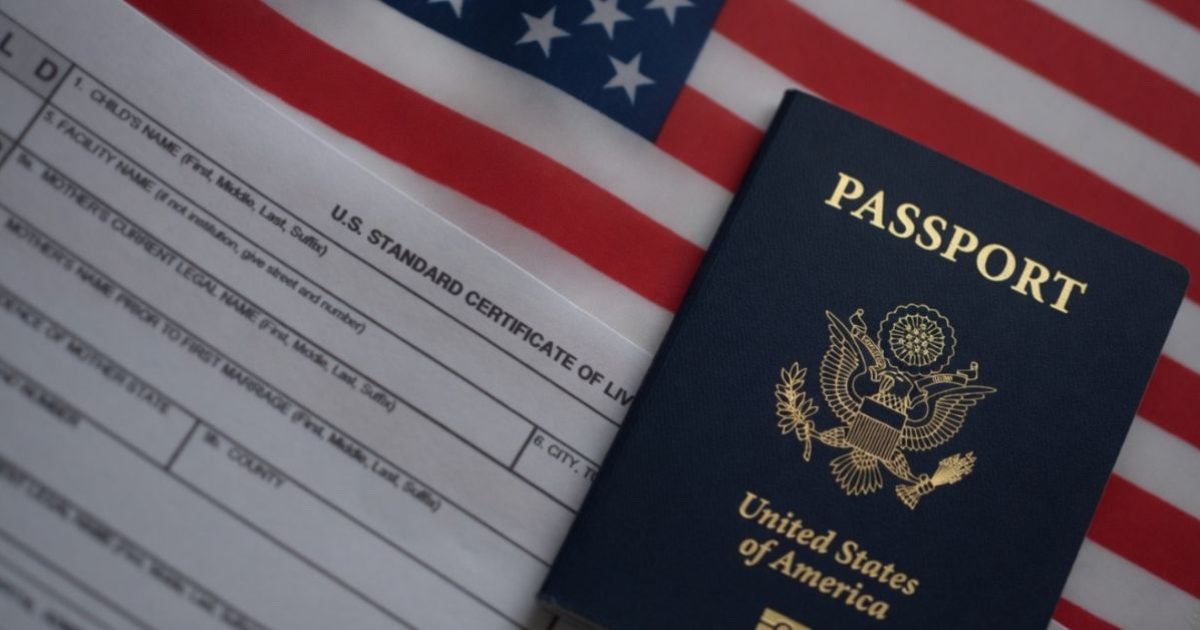
United States passport on top of an American flag and a U.S. standard certificate of live birth form, symbolizing citizenship and documentation.

United States passport on top of an American flag and a U.S. standard certificate of live birth form, symbolizing citizenship and documentation.

Nearly 10 percent of all babies born in the United States in 2023 were to mothers who were either illegal aliens or holding temporary legal status, according to new data released by the Pew Research Center.

The figures, published late last month, show that 320,000 of the roughly 3.6 million babies born across the country that year had mothers who were non-citizens.

This marks the highest total of anchor babies since 2010, when Pew recorded 325,000 such births, and represents an increase for the third straight year.

Of the 320,000 births:

Approximately 245,000 were to mothers who were unauthorized immigrants, with fathers who were neither U.S. citizens nor lawful permanent residents.

Another 15,000 involved mothers with temporary legal status and fathers who were not citizens or lawful permanent residents.

The remaining 60,000 were born to illegal immigrant mothers where the father was a U.S. citizen or lawful permanent resident.

Pew reports:

Generally, the trends in births to unauthorized immigrants follow the growth and decline of the unauthorized immigrant population. The number of unauthorized immigrants more than tripled from 1990 to 2007. The number of births also more than tripled, from 120,000 in 1990 to a peak of about 380,000 in 2006.

In 1990, births to unauthorized immigrant mothers were about 3% of the 4.1 million births in the U.S. that year. In 2006, these births were about 9% of the total.

Between 2006 and 2019, the annual number of births to unauthorized immigrant mothers dropped by more than 40%, to 215,000.

Pew estimates that roughly 260,000 of these children would not have qualified for automatic U.S. citizenship under President Donald Trump’s January 2025 executive order limiting birthright citizenship to cases where at least one parent is a citizen or lawful permanent resident.

That order is currently facing a legal challenge at the Supreme Court, which heard oral arguments on April 1.

Critics of birthright citizenship have long argued that the current interpretation of the 14th Amendment creates an incentive for illegal immigration by granting citizenship, and associated benefits such as welfare, Medicaid, and future sponsorship rights, to children born on U.S. soil.

“Under the current erroneous birthright citizenship interpretation, these children automatically become citizens and unlock food stamps, welfare, specialized schooling for English education, and eventually college aid,” Brandy Perez Carbaugh of the Heritage Foundation told The New York Post.

“High volumes of illegal and temporary aliens are having children in the US because they are exploiting the decades-old erroneous interpretation that such children are US citizens,” Carbaugh said.

“Emergency Medicaid loopholes allow illegal aliens to qualify for free labor, delivery, and often prenatal care in some states, so taxpayers pay for these ‘anchor babies,’” Carbaugh added.

The post Anchor Baby Boom: New Pew Data Shows Nearly 10% of All U.S. Births in 2023 Were to Illegal Alien or Temporary Immigrant Mothers appeared first on The Gateway Pundit.

Minnesota GOP Senate Candidate Michele Tafoya Signals Openness to ‘DIGNIDAD Act’ Amnesty Pathway for Illegal Aliens

Two hosts engage in a discussion on a video podcast, featuring a backdrop with the title "Will Cowherd" and various decorative elements.

Two hosts engage in a discussion on a video podcast, featuring a backdrop with the title "Will Cowherd" and various decorative elements.

Minnesota Republican Senate candidate Michele Tafoya expressed openness to the controversial DIGNIDAD Act during an appearance on Will Cain’s radio show this week, while stressing the need for “nuance” in addressing immigration and seasonal labor.

Tafoya, a former NFL sideline reporter, told Cain that immigration is “a very nuanced problem” and rejected a “zero-sum game” approach.

The candidate said she does not want to set arbitrary numbers for how many illegal aliens must be deported or allowed to stay and pointed to conversations with Minnesota farmers who use seasonal workers.

“A bill can be really good, and you can slide in a specific I would not agree with,” Tafoya stated.

Tafoya added that lawmakers should examine long-term residents already in the country and consider options such as full citizenship, different levels of legal status, taxation requirements, and voting rights.

“We need to look at the people who have been here for years, and years, and years. And decide are they people that we want to stay here? Do we give them full citizenship? Or do we say ‘yeah you know, there’s a different level of citizenship for different kinds of people? Do they get to vote? Do you pay taxes?’ I think anyone who lives here as a person who’s living in our country needs to be a taxpayer.”

The DIGNIDAD Act (H.R. 4393), formally known as the “Dignity for Immigrants while Guarding our Nation to Ignite and Deliver the American Dream Act of 2025,” was introduced in 2025 by Republican Rep. María Elvira Salazar and co-sponsored by Democrat Rep. Veronica Escobar.

The bill proposes a renewable seven-year legal status under the “Dignity Program” and a pathway to citizenship for some long-term illegal alien residents, including DACA recipients and Dreamers.

Critics argue it amounts to amnesty for millions of illegal immigrants.

Cain pressed Tafoya on the bill’s practical challenges, particularly the difficulty of verifying how long someone has been in the country illegally.

“The hard part is to ever answer this question, ‘When did you come in?’” Cain said.

Tafoya agreed, saying, “You don’t know. We don’t know. They don’t know, unless there is a record of it.”

WATCH:

The interview comes as Tafoya faces skepticism from some Republicans over past statements, including a 2022 Substack post urging Donald Trump not to run again because of his “baggage.”

The Daily Caller noted, “Her candidacy has drawn skepticism from some Minnesota Republicans over her past positions, even as she quickly secured backing from the National Republican Senatorial Committee (NRSC).”

The post Minnesota GOP Senate Candidate Michele Tafoya Signals Openness to ‘DIGNIDAD Act’ Amnesty Pathway for Illegal Aliens appeared first on The Gateway Pundit.

Socialist Democrat Congresswoman-Elect Delivers One of the Most Ridiculous Interviews of the Year (VIDEO)

Democrat congresswoman-elect Analiilia Mejia appears surprised during a discussion, with text overlay expressing disbelief.

Democrat congresswoman-elect Analiilia Mejia appears surprised during a discussion, with text overlay expressing disbelief.


A newly elected Democrat in New Jersey is making headlines. This attention is not for legislative accomplishments but for a revealing media appearance that highlights the party’s continued shift toward Socialism.

Following the election of Mikie Sherrill to the governor’s office, her vacant congressional seat was filled in a special election by Democrat Annelelia Mejia, a candidate widely described as aligned with the Socialist wing of the party.

According to coverage from MSNOW, Mejia has positioned herself alongside figures such as Alexandria Ocasio-Cortez and Bernie Sanders, signaling a clear ideological direction from the outset.

Mejia’s victory margin, reported as nearly 20 points, has been cited as evidence of electoral strength.

However, that framing omits a critical detail: the district in question is deeply Democrat, making such a result far less surprising than headlines suggest. In practical terms, the outcome reflects partisan alignment more than a sweeping endorsement of any specific policy agenda.

What has proven more revealing is Mejia’s post-election media appearance.

In an interview aired on MSNOW, she described herself as Congress’s “unbought, unbossed, sassy new member,” a characterization that drew attention less for its substance and more for what it omitted.

The interview, rather than clarifying policy priorities or legislative strategy, leaned heavily on branding and identity-driven messaging.

This approach reflects a broader pattern within progressive politics, where media presentation often substitutes for detailed policy discussion.

While alignment with figures like AOC and Sanders suggests support for expansive government programs, including increased federal spending and structural reforms, those positions were not meaningfully explored during the interview itself.

Instead, the exchange highlighted a recurring dynamic: mainstream media outlets offering favorable coverage that avoids rigorous scrutiny.

The segment focused on tone and persona rather than substance, leaving key questions unanswered regarding fiscal policy, regulatory priorities, and the practical implications of the progressive platform.

The contrast becomes clearer when comparing coverage across different political contexts.

Elections in reliably Republican districts are often framed with greater skepticism when margins are narrow, yet similar scrutiny is rarely applied in safely Democrat areas. This inconsistency reinforces the perception that media narratives are shaped as much by political alignment as by objective analysis.

Mejia’s early positioning also raises broader questions about the direction of the Democrat Party.

The increasing prominence of candidates aligned with the progressive wing suggests a continued shift away from centrist policy frameworks. 

That shift carries significant implications, particularly in areas such as taxation, healthcare, and federal authority, where progressive proposals often involve substantial structural changes.

At a minimum, the interview serves as an early indicator of how Mejia intends to navigate her role in Congress—prioritizing messaging and alignment over detailed policy articulation.

For voters and observers seeking clarity on legislative priorities, that approach offers limited insight.

As new members enter Congress, media appearances often provide an initial window into governing philosophy.

In this case, the window revealed more about presentation than about policy, reinforcing concerns that political branding continues to outpace substantive debate within key segments of the national conversation.

The Patriot Perspective has recently switched its main platform from YouTube, and we would greatly appreciate it if you subscribed to us there. [HERE]

The post Socialist Democrat Congresswoman-Elect Delivers One of the Most Ridiculous Interviews of the Year (VIDEO) appeared first on The Gateway Pundit.

The Final Chapter of the Unipolar Moment

The Final Chapter of the Unipolar Moment

All things pass, but the Iran War is hastening the process.

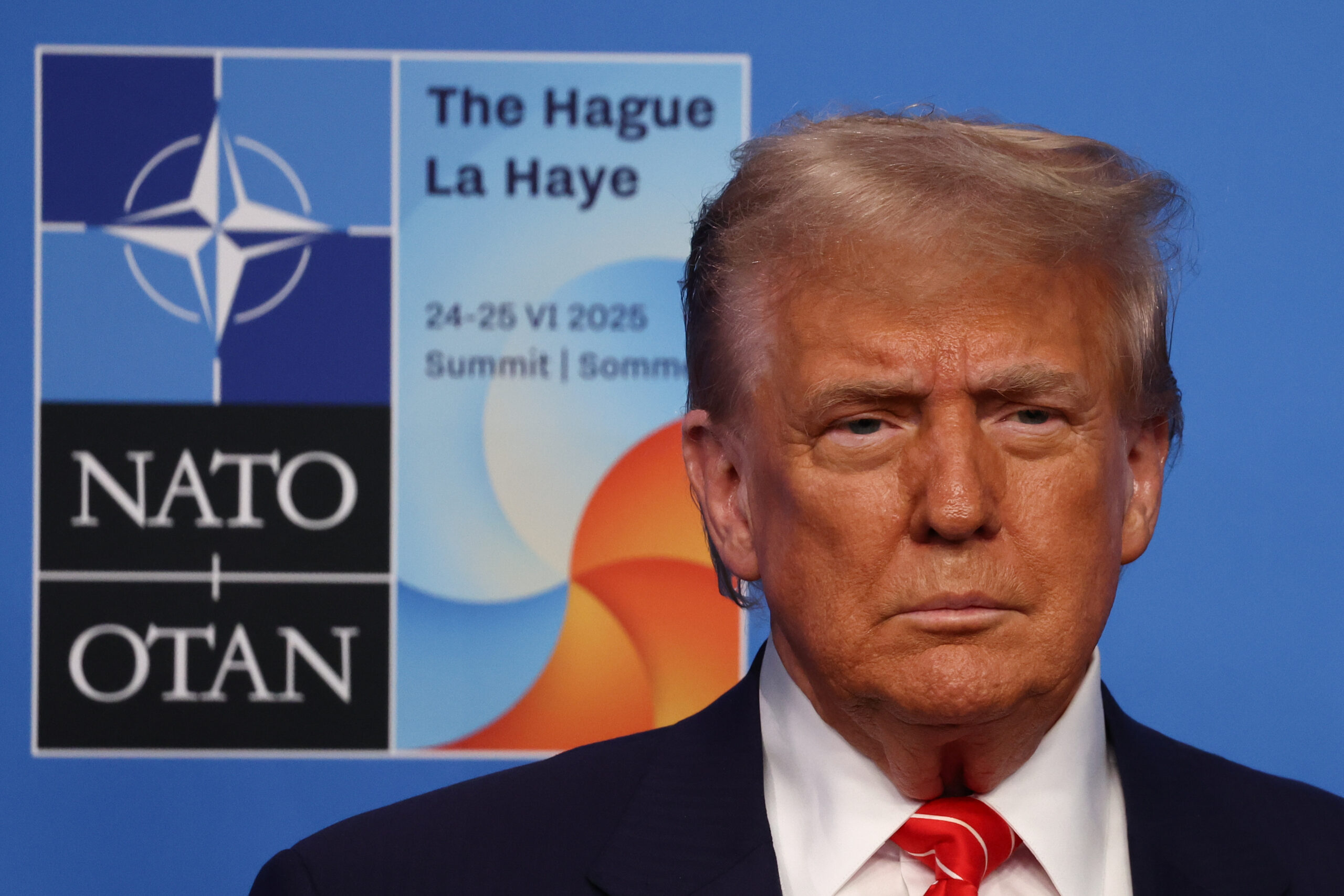
NATO Summit In The Hague Final Day
(Jakub Porzycki/NurPhoto via Getty Images)

The attar of Nishapur, when asked by the king to say something that might make a happy man sad and a sad man happy, noted īn nīz bogzarad (this too shall pass). As a matter of history or political analysis, the phrase doesn’t offer much specific. But as a summation of all things temporal, it is unparalleled. At the time of writing, there is no clarity “why” we are in another war against one of the most objectively beautiful and historic countries in the world, renowned for its poetry, architecture, food, and, most importantly, tehzeeb (refinement). We just know that we are determined to turn it to rubble like barbarians, a realization increasingly difficult to internalize—being on the side of utter barbarity while speaking of high civilization. This will indeed pass. But for what it is worth, the mismanaged Iran War, initiated by an empire in relative decline, almost exclusively due to being chain-ganged by a reckless protectorate, that killed roughly 160 schoolgirls on the first day of the conflict, is likely to be remembered by history less for its immediate military results than for marking the definitive end of unchallenged global dominance of the United States of America. 

Yours truly isn’t the attar of Nishapur, or of anywhere else for that matter, and historians should avoid the prediction business, but it would be prudent to look at the trends. The Iran War, for all practical purposes, will be the final war of a century of American unilateralism. That doesn’t imply that America will be powerless in future. In fact, this might finally force this country to realize that prudence and retrenchment are key to survival. But the structural trends that lasted from the Great White Fleet all the way to the Global War on Terror’s final battle marks the end of the American century, all tactical military brilliance aside. It is already evident from the conduct of this war that the U.S. is incapable of high-intensity war on multiple fronts, even against middle powers, without strip-mining assets from other theaters. The logical conclusion is that the defense-industrial base remains optimized for short, high-technology engagements and imperial policing, rather than the prolonged, munitions-intensive industrial warfare characteristic of great-power conflicts. 

But war isn’t all about tactics or materiel. Perceptions of American political incoherence and strategic unpredictability amplified by partisanship and policy reversals have already eroded trust among allies. Large and ill-conceived wars rarely remain confined to the region where they begin. At the very least, they trigger strategic recalculations across the system. Consider that countries such as China and Turkey observe the conflict with careful attention to how American resources and attention spans are distributed. Likewise, for years European leaders have debated the idea of strategic autonomy, the notion that the continent should possess the military and industrial capacity to defend its interests independently of the United States when necessary. Within Europe, however, longstanding rivalries are returning to fore, especially between France, which traditionally advocates for a strong and independent European defense posture under French regional hegemony, and the real economic hegemon of Europe, Germany, which plans to dwarf every other country in military spending by 2030. At the same time, proposals for deeper coordination among the core Anglosphere (CANZUK) should accelerate. 

America will remain a primus inter pares, as the structural advantages enjoyed by the United States are unchallenged. Its economy is still foremost in the world, supported by technological innovation, global financial networks, and the wealthiest consumer market in history. While American military appetite will be low, no one can mistake it for a collapsing military power. Potential global challengers will also continue to face significant constraints. Russia maintains formidable military capabilities but operates with a relatively limited economic base and under demographic pressures. China lacks any alliance loyalty or appetite for even deploying military power beyond its immediate region to protect its interests in Afghanistan, Panama, and Africa. There is no other political entity that challenges American hegemony; if America prefers to retrench and recuperate, the world will be more anarchic and contested, but there will not be any single great power taking over rapidly as a successor hegemon.

Within America, the debate about any future alliance entrapment will only grow. This is Israel’s war, just as Ukraine is Europe’s war, and the president, the secretary of state, the recently resigned director of counterterrorism at the Office of the Director of National Intelligence, and numerous others all point to that on and off the record. There is nothing that Israel provides that the U.S. cannot manage on its own, from research to intelligence to “over the horizon” military capabilities. But the Iran war is demonstrating, more than anything, that no matter how many times America packs up and leaves the region, for as long as Washington is underwriting Israeli security, there is no incentive for Israeli leadership to not maximize its own security or power. Absent America’s explicit assurance, Israel’s ability to project power regionally would face far greater limitations and risks. This unique “special relationship” effectively shields Israel from many of the natural repercussions of its actions, and is a significant cause of America’s current political isolation and lack of strategic prioritization. It grants a level of impunity across political, diplomatic, economic, and military domains, allowing Israeli maximalists to operate with reduced fear of consequences. By offering near-unconditional backing, Washington also reduces any real incentive for Israel to pursue meaningful compromises or a balanced, stable coexistence with the Palestinians and neighboring states. 

Yet it is foolish and downright morbid to just blame it all on a foreign power while overlooking the biggest internal causal chain. The current war is the culmination of two distinct social and cultural forces within the U.S. One is the power of low-church, lower-middle-class conservatism over high-church and mainline Protestantism. The second, is the deep Huntingtonian instinct hidden within the former. 

Populist movements have been built on at least one oft-repeated noble lie, that most people are anti-interventionist by nature. That is of course garbage history. In fact, if there is one book that both exemplifies and explains the worldview of current American civilizationalists and populists it is a now-obscure one titled In Defense of Internment: The Case for ‘Racial Profiling’ in World War II and the War on Terror, by Michelle Malkin, incidentally also from the starting phases of another long Middle Eastern war. The arguments therein will sound similar to most cheerleading this war; they may be crudely summarized as “fight them there, and put them in a camp here, to defend civilization”. Many people who supported the Iraq War did so on evangelical and crusading grounds, only to claim 20 years later that it was a mistake. While most serious academics and foreign policy realists indeed were opposed to the Iraq and now the Iran War, the masses even then, as now, were easy marks; whatever happens, in a system of two-party democracy, most people will tribally support their own side. The long-term legacy of recent anti-interventionist efforts likely will depend heavily on how the Iran conflict unfolds. If the war becomes prolonged or expands geographically, it may overshadow earlier attempts to redefine American strategy. But if there is one core lesson from this war, it is that Kissingerian realpolitik is difficult in an age of social media–fueled mass democracy and demagoguery. 

The Iran War could accelerate the push to control social media. It is already happening in Europe, and the efforts will reach these shores soon. Social media platforms have transformed the speed and scale at which information circulates and political leaders may feel trapped into responding quickly to viral stories or emotional appeals, even when the underlying information is incomplete or misleading. Algorithms often prioritize content that provokes strong reactions, and both foreign actors and foreign lobbies can rapidly exploit these systems to spread propaganda or manipulate debate. In the 15th century, the printing press resulted in a similar debate about foreign influence, corruption, and religious fanaticism, with criticisms of new technology ranging from humanists such as Nicollo Perotti, to monks such as Filippo de Strata, to Ottoman Sultan Bayezid, who outlawed printing, making it punishable by death. Balancing freedom of expression with the need to protect public discourse from manipulation will likewise become one of the defining dilemmas of functionally post-democratic societies, as any attempt to regulate digital platforms risks accusations of censorship, while leaving them entirely unregulated will allow foreign interference, appeals to emotions, and coordinated disinformation campaigns to flourish. 

Underlying many debates about the Iran War, however, is the deeper question about how international politics should be understood. Realism emphasizes the importance of geography, material and relative power, and strategic interests. An alternative framework interprets global politics through the lens of civilization and identity. According to this view, conflicts reflect deeper cultural divisions between religious or historical communities. Political leaders sometimes adopt this language because it resonates emotionally with domestic audiences and simplifies complex geopolitical struggles. The difficulty with civilizational narratives is that they can transform limited disputes into existential confrontations. When wars are framed as clashes between entire cultures, compromise becomes politically difficult and escalation appears morally justified. Such rhetoric may mobilize support in the short term but can also entrench hostility for generations. Realist analysis does not eliminate the possibility of war, but it reduces the temptation to interpret every confrontation as a cosmic struggle. The Iran War demonstrates the continuing tension between these two frameworks. The civilizational framing appeals to simpletons, because it is so binary. It is also ahistoric, and will always result in crusading impulses. 

It is an easy social science correlation to tally the voices who supported the Iraq War, their worldview, and the voices currently cheerleading the Iran War, and their support for “civilizational” politics in the U.S. One might notice that something is changing. This is also the dusk of Christian Zionist and low-church evangelical power in the U.S. For much of the early 21st century, American Middle Eastern policy was shaped by this powerful ideological coalition—itself a theological aberration—which somehow defeated both the high-church establishment WASPs (as represented in the cabinet of George H.W. Bush, and a constituency that is now significantly liberal), as well as left-wing non-interventionist atheists, nationalists, and secular liberals. Neoconservative strategists argued that American power should be used actively to shape global order, remove hostile regimes, and promote liberal political systems abroad. These ideas found political alliances with evangelical movements that emphasized fanatical support for the modern state of Israel (which they ahistorically portray as equivalent to the biblical Israelites) and the ushering of Judgement Day, married with moral arguments about the transformation of authoritarian societies. 

Even during the Iraq War of 2003, many policymakers believed that American military superiority and political influence made ambitious regional transformation possible. The subsequent two decades of difficulties in Iraq and Afghanistan did not entirely discredit this worldview, but they introduced doubts among generations who grew up during the Global War on Terror about the feasibility and cost of such projects. The Iran War now arrives at a moment when the political coalitions that supported interventionist strategies are undergoing an unalterable change. The Iran war may therefore mark one of the final hurrahs of the older interventionist consensus. Win or lose in Iran, America is unlikely to nation-build again. 

It is always interesting for a historian to contemplate how historic memory remembers an empire, and how the views shift over time. The British Empire, arguably the most liberal empire in history, is remembered by the post-colonials not for eradicating slavery, sati, or jizya, or for all the technological achievements from the steamship to telegraph, naval charts, modern medicines, but for events such as the Jalianwalabag massacre and the Bengal famine, both of which were caused by individual or structural incompetence, and neither of which was planned and orchestrated by the empire as a matter of policy. That selective memory results partly Marxist and decolonial historiography of a hundred years, entrenched in and promoted by both Soviet and American academia. It bears little resemblance to history, of course, given that such events do not define the empire in totality, nor do they explain why contemporaries viewed the empire as a positive force, as established historically in writing of the times. 

The American empire will inevitably suffer a similar fate someday. It is not an iron law of history, but even partial decline of a great power is rarely kind towards the historical memory of the residents and subjects of that great power. Historical memories are not of course permanent, but that’s rare solace to those living in the present. The Germans who hated Roman power in the 5th century would be shocked to see the resurgence of Roman popularity in the 21st. And the admirers of liberal Ottoman rule in parts of Eastern Europe in the 16th century would not believe the current memory of the Turks.

It is inevitable that there will be an immediate attempt at crafting a narrative surrounding the United States’ intervention in Iran that will attempt to show that America needs even more allies and international commitments. If the principal lesson drawn from another discretionary conflict is the necessity of bolstering alliances or forming new ones, such a conclusion risks overlooking the structural causes that have entangled the United States in simultaneous commitments in Eastern Europe and the Middle East. Extensive alliance networks and security guarantees have historically functioned not only as instruments of influence but also as mechanisms that bind the United States to regional disputes that may not align with its core strategic interests. Any such call for further expansion of alliances or security commitments risks deepening the very patterns of overextension that have contributed to the present strategic dilemma. A more sustainable approach would involve a deliberate reduction of peripheral commitments and a reallocation of limited political, economic, and military resources toward priorities determined by geographic realities and material capabilities. 

For good or for bad, the populist movements were unable to form a counter-elite, a difficult endeavour for a movement which is philosophically opposed to any elite. As the Iran War generates widespread frustration with ideological crusades or strategic miscalculations, as well as social media manipulation and epistemic anarchy, voters and policymakers may rediscover the appeal of more restrained and un-democratic elite approaches to foreign policy. The current “civilizational” wars of religion that started in 2003 and are still continuing will also lead to urgent social and international recalibration, especially toward further regulation of social media and further consolidation of elite diplomacy as opposed to a more volatile public opinion–fuelled foreign policy. 

The U.S. will survive, given the blessings of geography and technological and economic might. But hegemonic transitions are rarely kind to protectorates, especially one that will be considered by history to be the final causal actor that led to the decline of the relative power of the said hegemon. 

Finally, this is perhaps curtains for evangelical and Zionist power in the U.S., as well as the bipartisan support Israel has enjoyed in the American political system since at least the Truman years. A fanatical worldview, without any social or cultural pedigree but in the vicinity of power for 30 years under various names and forms, has proven to be as crusading and myopic as any other dogma; it will be forever remembered as what dragged down the empire in its final unipolar war and hurried the shift to multipolarity. The two final players of the game who will be remembered: Benjamin Netanyahu, talking of a great Israeli regional empire, and Donald Trump, visibly exhausted, his apparent purpose to ensure Israel’s maximalist impulses are fulfilled, his domestic and foreign policy legacy cheered on and then ruined. He has created and then lost a once-in-a-generation multiracial coalition and squandered the opportunity to transform the great power for the next 250 years; instead of economic resurgence or cultural and social unity, the administration chose shock-and-awe crusades against real and perceived civilizational enemies, from Minneapolis–St. Paul to the mountains of Persia. 

The post The Final Chapter of the Unipolar Moment appeared first on The American Conservative.

Cameras BANNED? Charlie Kirk Shooting Trial Goes Dark…

A man raising his fist in a tribute event for Charlie Kirk

Defense attorneys in the trial over conservative activist Charlie Kirk’s killing now seek to ban cameras, risking a media blackout that could shield justice from public scrutiny.

Charlie Kirk Case Sparks Renewed Clash

Tyler Robinson faces charges for shooting Charlie Kirk in the neck while the conservative activist spoke to thousands on a college campus in September 2025. In April 2026, Robinson’s defense attorneys filed a motion to ban cameras from the Utah courtroom. They argue that media coverage risks sensationalism and jury bias, potentially denying their client a fair trial. This move reignites longstanding debates over courtroom access. Prosecutors counter that openness counters distorted narratives.

Historical Precedents Shape the Argument

The 1935 trial of Bruno Richard Hauptmann for the Lindbergh baby kidnapping turned courtrooms into spectacles. Photographers climbed tables and flashbulbs startled witnesses, leading to new rules banning cameras for decades. In 1962, the Supreme Court overturned Billie Sol Estes’ conviction in Estes v. Texas, decrying televised trials as threats to justice. Yet an 8-0 ruling soon after allowed states to permit cameras absent empirical harm. These cases highlight enduring tensions between publicity and fairness.

O.J. Simpson Trial Highlights Modern Risks

The 1995 O.J. Simpson murder trial flooded homes with testimony and analysis over months. Cornell Law professor Valerie Hans noted participants played to cameras more than the jury, raising bias concerns despite Simpson’s acquittal. Today’s social media amplifies these issues with conspiracy theories. Defense attorneys warn of prejudicial publicity; prosecutors see transparency as key to accountability. Judges hold broad discretion over broadcasts.

In Trump’s 2024 New York hush money trial, state law barred cameras, forcing sketch artists. Utah’s judge now weighs similar balances for Kirk’s case.

Shared Frustrations Over Justice and Elites

Americans across the political spectrum distrust a federal government prioritizing elite interests over citizens. Conservatives decry attacks on figures like Kirk amid unchecked violence; liberals fear media-driven miscarriages. Both sides see deep state influences warping truth. This camera debate underscores First Amendment press rights clashing with Sixth Amendment fair trials. Transparency builds trust, yet spectacles erode it—judges must protect impartial justice without elite media dominance.

Sources:

Cameras in courtrooms from WOKV

Cameras in courtrooms from WSB-TV

Cameras in courtrooms from WSB Radio

Cameras in courtrooms from WPXI

Cameras in courtrooms from KIRO 7

Cameras in courtrooms from WFTV