A federal judge on Monday ordered Maurene Comey to be reinstated after President Trump fired her as a New York Federal prosecutor last year.
US District Judge Jesse Furman, an Obama appointee, said the Trump Administration broke the law in firing Maurene Comey.
“First, Comey’s removal was not authorized by any statute; to the contrary, it violated the CSRA [Civil Service Reform Act],” the judge wrote in an order reviewed by The Gateway Pundit.
“Yes, the Attorney General is authorized by law to remove an AUSA. But the Attorney General (and anyone to whom the Attorney General delegates that authority) is also limited by law, namely the CSRA, to do so only in a particular manner and only for certain reasons,” Judge Furman wrote.
“And Comey’s removal indisputably violated the CSRA,” the judge said.
Last September, Maurene Comey filed a lawsuit against the Trump Administration over her firing and demanded to be reinstated.
Maurene Comey, daughter of James Comey, was fired as a federal prosecutor in the Manhattan US Attorney’s office in July 2025.
Comey’s lawyers claimed the firing was purely political because her father is the former FBI Director.
“Defendants fired Ms. Comey solely or substantially because her father is former FBI Director James B. Comey, or because of her perceived political affiliation and beliefs, or both,” the lawyers wrote.
“There was no specific reason given for her firing from the U.S. attorney’s office in the Southern District of New York, according to one of the people who spoke to the AP on the condition of anonymity to discuss personnel matters,” the AP reported.
Maurene Comey didn’t call out Trump by name, but she attacked the president and his administration in a message after being fired.
“Fear is the tool of a tyrant, wielded to suppress independent thought,” Maurene Comey wrote in a message to colleagues.
“Despite her exemplary performance, Ms. Comey was abruptly fired on July 16, 2025, the day after the U.S. Attorney’s Office had asked her to take the lead on a major public corruption case and just three months after her latest receipt of an “Outstanding” review. Defendants did not identify any cause or provide Ms. Comey any due process for her removal,” Comey’s lawyers wrote.
Comey’s lawyers claimed the firing was unconstitutional.
“Ms. Comey’s termination—without cause, without advance notice, and without any opportunity to contest it—was unlawful and unconstitutional. In addition to her fundamental constitutional rights, Ms. Comey had statutory protections under the Civil Service Reform Act (“CSRA”) that governed how and why she could be terminated, including specific prohibitions against termination for discriminatory reasons such as political affiliation. Her termination violated every one of those protections,” the lawyers wrote.
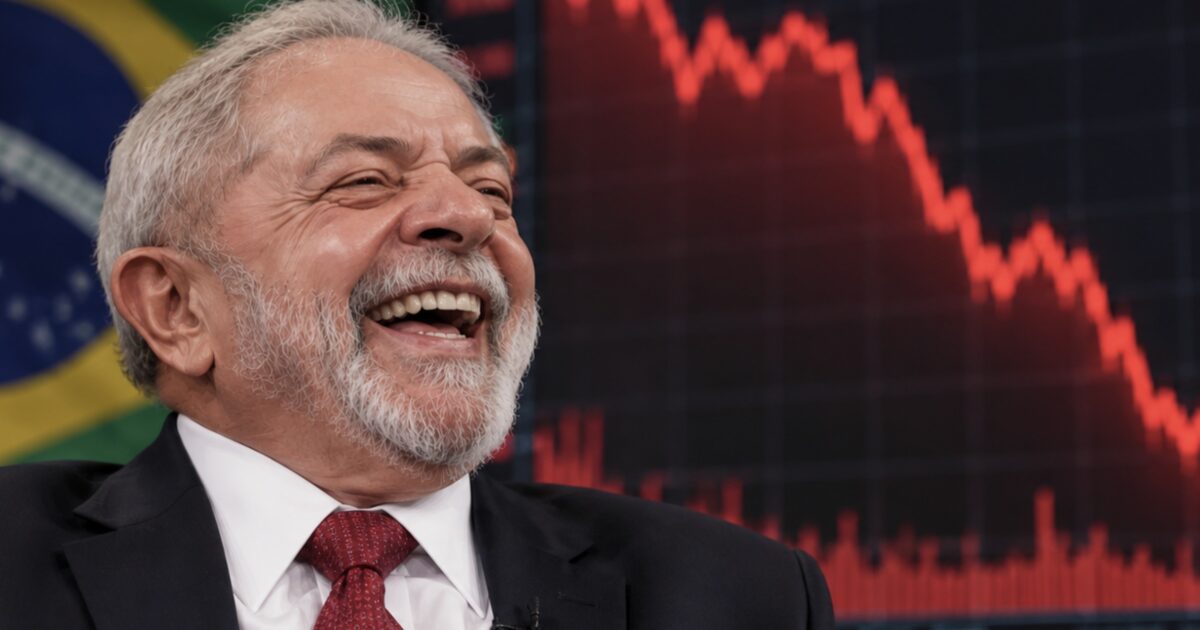
Brazilian financial markets plunged on Monday morning following the apparent re-election of left-wing President Luiz Inácio Lula da Silva.
The country’s stock exchange was forced to suspend trading after suffering devastating losses.
CNBC reports that the benchmark Ibovespa index collapsed 10 percent shortly after opening, triggering an automatic 30-minute trading halt designed to prevent further panic.
Meanwhile, Brazil’s currency, the real, plunged approximately 12 percent against the U.S. dollar, while stock index futures tumbled nearly 15 percent.
The dramatic sell-off followed Lula’s victory lávio Bolsonaro, son of former President Jair Bolsonaro, in Sunday’s presidential runoff.
Lula is said to have secured 51.8 percent of the vote against Bolsonaro’s 48.2 percent, mysteriously defying polls and first-round voting trends.
Investors had been betting heavily on Bolsonaro, whose first-round lead earlier this month sparked a rally in Brazilian stocks and strengthened the currency.
Brazilian companies also suffered enormous losses in overseas trading, with an exchange-traded fund tracking Brazilian equities plunging more than 26 percent in pre-market trading in New York.
Major financial institutions were among the hardest hit, with shares in Itaú and Bradesco falling approximately 28 percent and 25 percent respectively in early U.S. trading.
The turmoil extended to government bonds, prompting Brazil’s Treasury to cancel two scheduled debt auctions later this week.
Investors are particularly concerned about Lula’s spending policies and the country’s deteriorating public finances, with government debt already exceeding 82 percent of GDP.
The market collapse represents an extraordinary reversal after financial markets had rallied strongly in anticipation of a Bolsonaro presidency.
Lula was literally crying on live TV before his lawyer extended the election by two hours pic.twitter.com/8xTx4dt19k
There is also a serious risk of political turmoil after Bolsonaro refused to concede and demanded that the result be annulled.
Bolsonaro had won the first round by more than two million votes and led in nearly all opinion polls, only for Lula to emerge with 51.8 percent in the runoff.
This required a staggering 10 million vote swing, which is possible but statistically improbable.
He is also challenging the decision to extend voting by two hours, a decision granted by Lula’s left-wing allies on the Supreme Court.
HOLY CRAP! A defiant Flavio Bolsonaro just walked out and declared THE RESULTS ARE INVALID after Lula STOLE it from him — BOLSONARO IS MOVING TO ANUL THE RESULTS.
“It is impossible—it is IMPOSSIBLE—to recognize the election results in the context of how these things happened.… pic.twitter.com/CkHkFhOess
This week’s Top Ten showcases the fake polls… and the way Democrats will try to rig the midterms – with millions of illegal aliens voting by mail-in ballot.
Watch Wayne’s “America’s Top Ten Countdown” with his World-Famous “Final Four” airing every Saturday at NOON ET/9 AM PT on Real America’s Voice TV Network. Also, watch Wayne’s new nightly show, “America Speaks”- now LIVE at 6 PM ET/3 PM PT on Real America’s Voice YOUTUBE channel and replayed on Real America’s Voice TV at Midnight ET/9 PM PT. Call-in and speak to Wayne at (800) 347-ROOT. Also, watch Wayne’s daily podcast, “WAR ZONE LIVE Presented by The Gateway Pundit” with a new time! Weekdays at 4:30 PM ET/1:30 PM PT at TheGatewayPundit.com
More than a week has passed since three children and a teacher were killed at Silver Rail Elementary in Bend. The accused shooter also died, and two others were wounded. Yet officials held only two press conferences, refused to repeat the accused shooter’s name, Griffin J. John II, and mixed up his first and last names, leaving journalists struggling to find information about him. The authorities have not held another press conference to answer any questions the most important, the status of the toxicology report on Griffin J. John II. That failure of transparency is shocking. The public bears the consequences of these mass killings. It deserves answers.
The same state that tests the evidence decides whether the public gets to see it, making the government both the interpreter of the findings and the gatekeeper against independent scrutiny.
Oregon’s Public law, ORS 192.345 conditionally exempts medical examiner, autopsy, and laboratory reports, including toxicology, from disclosure “unless the public interest requires disclosure in the particular instance.” The institution holding the evidence initially decides whether the public interest warrants its release. This case, and every mass killing, demands full disclosure. Lawmakers must strengthen the public records law so officials cannot use privacy claims to shield information from the public.
The public won. Lawmakers rewrote the rules.
In 2008, the Oregon Court of Appeals ruled in Colby v. Gunson that guaranteeing relatives access to autopsy and laboratory reports did not make those records confidential. The legislature responded in 2009 with SB 87, creating a specific exemption for those reports.
Seventeen years later, that barrier remains.
The public won a transparency ruling. The legislature then gave government a new legal basis to withhold the records.
Oregon already has a costly warning about hidden laboratory findings. In September 2025, Nicholas McGuffin reached a $14 million settlement over his wrongful conviction: $9 million from the Oregon State Police forensic lab and $5 million from Coquille and its police department. Unidentified male DNA that did not match McGuffin had been left out of laboratory reports and withheld from his defense. Neither the police nor the lab admitted wrongdoing in the settlement.
That was a DNA case, not a toxicology case. But the lesson applies: a laboratory report can leave out evidence that changes everything. Independent access is a safeguard, not an inconvenience.
A “negative” toxicology report does not mean no drugs were present. A test can miss a psychiatric drug because the lab did not test for it or because the amount was below the test’s cutoff. The drug may have been present without appearing in the results.
The public can be kept in the dark in three ways: the lab never tests for the drug, the amount falls below what the lab reports, or officials withhold the report itself. The result is the same: the public cannot see the full picture of possible psychiatric drug use.
The public needs to know whether the deceased had psychiatric drugs in their system, including at levels labeled “therapeutic.” Those findings are not beside the point. They are the point. Collecting and examining that data is vital to investigating possible drug safety risks, identifying patterns across deaths, and protecting consumers. A “therapeutic” label should trigger inclusion in the data, not exclusion from scrutiny.
Tennessee’s landmark 2025 law provides a model. For certain deceased mass shooters, it requires drug testing explicitly including “therapeutic levels of psychotropic drugs.” Oregon should follow that lead. Test for it. Report it. Do not dismiss it because the level is labeled “therapeutic.”
Privacy does not require blanket secrecy. Officials can redact intimate details and justify any investigative hold in writing, with a firm deadline for review.
Oregon must explain which psychiatric drugs and their breakdown products it tests for after death, how small an amount its tests can detect, and what levels it reports. It must disclose whether all detected concentrations appear in the findings, including those labeled “therapeutic.” The state must also explain what prompts testing beyond its standard panel, when it uses outside laboratories, and who makes those decisions.
Repeal the report specific exemption in ORS 192.345. Replace it with a presumption of disclosure for completed reports in cases of substantial public concern, narrow redactions, justified investigative holds with deadlines, and independent review of denials.
In Bend, Police Chief Mike Krantz told reporters, “I will not say his name again,” after identifying the dead suspect at the October 16 press conference. Since then, narratives have trickled out while basic questions remain unanswered: Was toxicology ordered? Which drugs were tested for? Will the complete findings, including levels labeled “therapeutic,” be released?
With the midterm elections approaching, officials’ failure to hold another full public press conference raises a serious question: Is political image taking priority over public accountability? The public deserves direct answers about this investigation, not carefully managed narratives. An election is no excuse to withhold facts.
The public bears the cost of these killings. It should not have to fight for the facts afterward.
Seventeen years of this barrier is enough. Repeal the exemption. Disclose the testing limits. Release the findings. The state must not control the evidence and then deny the public the means to challenge its account.
AbleChild is a 501(c)(3) nonprofit organization that has recently co-written landmark legislation inTennessee, setting a national precedent for transparency and accountability in the intersection of mental health, pharmaceutical practices, and public safety.
What you can do. Sign the Petition calling for federal hearings!
Donate! Every dollar you give is a powerful statement, a resounding declaration that the struggles of these families will no longer be ignored. Your generosity today will echo through generations, ensuring that the rights and well-being of children are fiercely guarded. Don’t let another family navigate this journey alone.
Donate now and join us in creating a world where every child’s mind is nurtured, respected, and given the opportunity to thrive. As a 501(c)3 organization, your donation to AbleChild is not only an investment in the well-being of vulnerable children but also a tax-deductible contribution to a cause that transcends individual lives.
In a speech Sunday night, former Serbian president and prime minister Aleksandar Vucic conceded defeat in his country’s parliamentary elections. Vucic, who has dominated Serbian politics since 2012, lost to a new student-backed political grouping called Student List-Students Win, which took around 140 seats to his party’s 103.
Students have played an outsized role in the opposition to Vucic’s government. Following the 2024 Novi Sad train canopy collapse, they led street demonstrations demanding accountability for the disaster, which quickly snowballed into broader anti-corruption protests. Ahead of the election, Student List-Students Win cited ending corruption, protecting media independence, raising living standards, and improving relations with neighboring countries as its chief priorities.
It is not yet clear who the bloc will tap to be prime minister.
(Note: Thank you for supporting businesses like the one presenting a sponsored message below and working with them through the links below which benefits Gateway Pundit. We appreciate your support!)
Dr. Peter McCullough’s wife was bitten by a tick after a kayak outing near Lake Grapevine, Texas.
He couldn’t get in to see an infectious disease doctor, so he did this instead: he started her on doxycycline.
Here is Dr. Peter McCullough telling his story on the Grant Stinchfield podcast:
“If people don’t have a medical emergency kit and they let this tick insert Borrelia burgdorferi – the organism in the body – you’re essentially screwed…
I learned the lesson: my wife actually got Lyme Disease years go on Lake Grapevine. It had flooded and she was with my brother in a kayak and she came home and she had the classic “target” lesion, which is only present in about 15 percent of bites.
I tried to get an infectious disease doctor to see her. Of course, I couldn’t get an appointment.
Thank goodness I acted and I treated her empirically with doxycycline and she has been spared a lifetime of misery of Lyme Disease.”
Dr. Peter McCullough says:
“The key drug is doxycycline. We have written protocols that if you have a tick bite within 72 hours, take one dose of doxycycline. That can prevent years of misery with Lyme Disease…”
In addition to doxycycline, it contains an assortment of life-saving medications – including ivermectin, amoxicillin, and Z-pak. Plus, it includes a guidebook to aid in the safe use of these life-saving medications.
This kit is prescription-only – you can’t find it in any store or pharmacy. Simply fill out a short questionnaire after purchase and a trusted Wellness Company doctor will confirm your suitability and issue your prescription Medical Emergency Kit.
Excellent Kit! This medical emergency kit is great. Having it “just in case” gives me peace of mind. Highly recommend. Thank you! – Melinda C.
Glad that I purchased your Medical Emergency Kit! Though I haven’t yet needed to use any of the medications that are in our kit, I am happy that I ordered it! One never knows when “an emergency might occur”, and I feel safer having your M.E.Kit at my disposal IF needed! We’re so glad we ordered ours! Thank you for making it available! – Susan M.
Peace of mind. It is an amazing peace of mind to have this kit in case of emergencies and shortages. The Wellness Company did an excellent job of getting this to me in a timely manner and I and thankful to have it. – Phyllis T.
Great medical emergency kit. Kit came as advertised! Neat and orderly. The guide is great. Only plan on using it in an emergency during a difficult time. Confident it is what I was counting on. – Fred D.
Note: The information provided on this website is intended for informational purposes only and should not be considered medical advice or used as a substitute for professional healthcare guidance. It is your responsibility to comply with all applicable laws, regulations, and guidelines regarding the purchase, possession, and use of prescription medications.
Despite undergoing new management, CBS got caught once again spreading another massive lie on its signature Sunday evening program this week.
On Sunday, “60 Minutes” aired a story about a 57-year-old illegal alien named Moussa Diawara, who was deported from the United States back in July.
Diawara, originally from Mali, had lived in the Houston area for more than 25 years and worked as an Uber driver. During his time in America, Diawara also married a U.S. citizen and raised two children.
6o Minutes reported that ICE detained Diawara on July 11 and put him on a charter flight to Ghana at the end of the month. Ghanaian authorities then sent him back to Mali.
Diawara claims he was deported without being able to speak to his lawyer or a judge.
Naturally, “60 Minutes” portrayed Diawara as a victim of what they considered a ‘cruel and inhumane’ deportation policy. The outlet further tries to evoke sympathy for Diawara by softly interviewing members of his family.
WATCH:
“It feels really empty without him,” says 16-year-old Corey Diawara, whose father was deported in July.
His father had lived in the U.S. for 25 years and had no criminal record. Moussa Diawara says he was deported without being able to speak to his lawyer or a judge. He was eventually sent to Mali, a country a U.S. immigration judge ruled he could not be deported to.
In a statement, the Department of Homeland Security told 60 Minutes that Ghana had provided the U.S. with “diplomatic assurances for his safety.” DHS also questioned the credibility of Diawara’s arguments for fearing persecution in Mali. https://t.co/P6flp7Q41f
The 60 Minutes report stated that Diawara entered America on a tourist visa, overstayed, and then received a 2012 immigration judge’s ruling that said he could not be sent to Mali on the grounds that he would face persecution there.
“60 Minutes” claimed that Diawara’s persecution concerns revolved around his conversion to Christianity. Mali is a Muslim-majority nation.
But as is the case with so many immigration stories via the corporate media, a key piece was missing.
DHS General Counsel James Percival revealed that Diawara claimed the reason why he was scared to go back home to Mali was that he was gay, not due to a conversion to Christianity.
“This illegal alien is @60Minutes poster child for what it claims are wrongful deportations,” Percival wrote on X. “I pulled his file. His claimed reason for fearing Mali was that he is ‘gay,’ just in case you’re wondering how bad the immigration fraud problem is.”
This illegal alien is @60Minutes poster child for what it claims are wrongful deportations. I pulled his file. His claimed reason for fearing Mali was that he is “gay,” just in case you’re wondering how bad the immigration fraud problem is.
Percival is correct regarding the massive immigration fraud problem regarding migrants lying about their sexual orientation to gain admission. In recent years, federal authorities have successfully prosecuted attorneys for coaching clients to make up such persecution claims.
Police clash with rioters in Rome. Left-leaning media have portrayed the rioters’ grievances as justified, while right-leaning media have called for their arrest. Photo: Screenshot from a video posted on X by Fonsi Loaiza.
On October 18, the day after rioters looted central Milan, the communist daily Il Manifesto ran its front-page story under “La bella stagione” (The Beautiful Season), with the headline “The city’s excluded take the streets.” In the right-wing La Verità, editor Maurizio Belpietro titled his editorial “Them in jail, us in the streets” and wrote that the destroyers “should not be understood, but punished.”
Those contrasting responses reflect the Italian media’s longstanding political divide, evident in coverage of Milan’s riots.
The main right-leaning dailies are Il Giornale, Libero and Il Tempo, controlled by Lega deputy Antonio Angelucci, and Belpietro’s La Verità. On the left are the center-left La Repubblica and La Stampa, Domani, Il Manifesto, and Marco Travaglio’s anti-system Il Fatto Quotidiano. Corriere della Sera, ANSA and Sky TG24 sit closer to the center.
Left-leaning papers frame the violence as a symptom of economic hardship and state repression, calling the government’s emergency security decree an overreach. Right-leaning papers emphasize failed immigration policy, Islamist influence and a political left they accuse of tolerating or supporting the violence.
The two camps disagree most sharply over the rioters’ identities and the significance of the alleged organizer’s detention.
The unrest began on October 17, when a cost-of-living march called “Italia in Piazza” (Italy in the Square) turned violent in central Milan. Of roughly 5,000 marchers, about 500 young people broke away and attacked police with stones, firecrackers and barriers in Piazza Duomo. Looting continued on October 18. Police took 271 people to headquarters, 220 of them minors, and held 174 preventively. Police figures put officer injuries at 14: ten State Police and four local police.
Early injury reports differed. ANSA initially reported at least four officers and 20 protesters injured. Citing Lombardy’s emergency service, Areu, the Giornale di Brescia reported ten officers and about 15 protesters injured. A politician quoted in Sky TG24’s live coverage claimed more than 100 officers were injured, though the reports did not establish a common timeframe or geographic scope for comparison.
Meloni wrote that demonstrating is a right but setting cities ablaze is not. She called on the opposition to condemn the violence without ambiguity.
On October 20, the Council of Ministers approved a decree sending 500 additional soldiers to Milan. A provision granting them police powers was dropped after the Presidency of the Republic objected.
Reported provisions included a new offense of “violenza organizzata nelle manifestazioni pubbliche” (organized violence at public demonstrations), carrying penalties Meloni described as up to five years in prison and fines up to 20,000 euros ($21,600). Reporting also described measures concerning preventive detention and criminal responsibility for minors aged 14 and older, and parental fines of 500 to 1,000 euros ($540 to $1,080).
Milan’s second weekend of protests, on October 24, passed without looting. With 1,400 police, carabinieri and soldiers deployed, police identified 2,921 people, took 196 to headquarters, held 171 preventively, referred 44 to prosecutors and arrested five.
That morning, police detained Youssef Siher, a 30-year-old Italian of Moroccan origin whom Milan prosecutors identify as the creator of “Movimento 17 Ottobre” (October 17 Movement), the online group that called the protests. He is under investigation for incitement to commit crimes with an alleged terrorist purpose, an aggravating circumstance, and for organized violence under the new decree.
A 2024 trainee at the Milan-based Institute for International Political Studies (ISPI), Siher also wrote for Il Fatto Quotidiano but reportedly stopped about 18 months ago. Early reports of his origins conflicted: Il Sole 24 Ore described him as of Palestinian origin and LaPresse as of Egyptian origin, before ANSA and most outlets reported Moroccan origins. Il Tempo reported that judicial review of his detention was due by October 26.
On the far left, Il Manifesto portrayed the riots as an uprising of excluded youth. Its correspondent described two days of spontaneous revolt by marginalized, racialized young people labeled “maranza,” a slang label often applied to street youths, including second-generation immigrants. It attributed their anger to police repression and institutional indifference. According to Libero, Brothers of Italy (FdI) deputy Emanuele Loperfido publicly condemned the paper’s front page.
Il Fatto Quotidiano emphasized protesters’ accounts. One feature quoted a 19-year-old in Milan who said repression was the only response to young people’s complaints about an unsustainable life. It cited living costs, rearmament and difficulty making ends meet as drivers of the protests. Its reporting on Siher focused on legal proceedings, citing prosecutors’ description of him as an effective instigator and a flight risk. It also reported that Genoa prosecutors were checking for links to a network accused of financing Hamas, while noting that Siher had never been named in that investigation.
Domani focused on police conduct, reporting that two adult students with no criminal records had their home searched without a warrant on October 24. Nothing was found.
Open, founded by television journalist Enrico Mentana, emphasized student organizers’ accounts. A Deriva collective member said media coverage of the clashes made them invisible. Another report listed protesters’ concerns: living costs, stagnant wages, school funding, the new cap on foreign students per classroom, European rearmament and Palestine.
La Repubblica and La Stampa covered the violence while emphasizing its causes. According to the Swiss daily Corriere del Ticino, La Repubblica reported that recruitment through Telegram and TikTok targeted second-generation Italians from the Lombard provinces. La Stampa’s October 18 front-page commentary argued that violence had undermined the protest’s aims.
Avvenire, the Italian Bishops’ Conference newspaper, took a similar line despite not being left-wing, publishing an op-ed criticizing the decree. Milan Archbishop Mario Delpini told La Repubblica that aggression cannot be contained by repression alone.
The right-leaning press blamed immigration and the left. Libero, edited by Mario Sechi, quoted FdI’s Lombardy security councillor Romano La Russa, who blamed leftist social centers and maranza he described as products of Democratic Party integration policies. Columnist Pietro Senaldi accused Milan Mayor Beppe Sala of attacking the Interior Ministry instead of those who looted his city.
After Siher’s detention, Libero ran the headline “Non è disagio, è Islam” (It’s Not Hardship, It’s Islam), alleging an Islamic political project to destabilize Italy behind the looting. It also accused Il Fatto Quotidiano of blaming the government while the alleged organizer was a former contributor to the paper.
La Verità described the October 18 looters as hundreds of hooded youths, mostly minors and of foreign origin, and called Sala’s complaint about insufficient police “surreal.” An editorial argued that the riots’ only political impetus came from progressive elites seeking to exploit the anger of “new Italians.” Lega MEP Silvia Sardone told the paper that Siher’s case revealed an alliance between Muslim radicalism and the radical left.
Il Tempo emphasized organization and intelligence warnings. It reported that Bruno Valensise, director of Italy’s domestic intelligence service, AISI, had warned of convergence with the radical left, describing links among far-left militants, Islamists, pro-Palestinian activists and maranza. Its Siher profile said he contributed to Al Mayadeen, a Hezbollah-aligned Arab satellite channel, and was a leader of the Young Palestinians of Italy. Il Giornale highlighted Meloni’s description of the rioters as thugs exploiting demonstrations to sow chaos.
The populist-right Il Giornale d’Italia broke with other right-wing papers after Siher’s detention, mocking them for abandoning hardship as an explanation once the alleged organizer emerged as Muslim and a former Il Fatto contributor. It questioned whether he had organized everything alone.
The center-right Rome daily Il Messaggero reported that deploying Folgore paratroopers to Milan aimed to blunt the propaganda of Roberto Vannacci, the former Folgore general who leads Futuro Nazionale (National Future) and has pressed the government on security.
Official accounts leave key questions unresolved. In his initial assessment, Interior Minister Matteo Piantedosi said findings excluded structured links to radical-left groups, describing the unrest as spontaneous and fluid. Defense Minister Guido Crosetto called it a product of hybrid warfare. By October 24, prosecutors had identified an alleged organizer.
Police counted 60 foreign nationals among the 271 people brought in on October 18. The figures do not separately identify second-generation immigrants with Italian citizenship, leaving competing claims about the rioters’ backgrounds unresolved.
Dublin, Ireland Anti-Mass Migration Protest via Twitter
Like many countries in Europe, the very essence of Irish culture is being destroyed from within as Ireland grapples with the violent consequences of a torrent of migrants flowing into the country without any apparent limit and the financial and social implications that follow.
Reports suggest there are at least 322 migrant plantations spread across the country, some in rural parts of the island nation, which are changing the very fabric of the nation.
In 2025, MMA Champion Conor McGregor visited the White House for St. Patrick’s Day and delivered a devastating message about what is happening in his homeland thanks to Ireland’s globalist leaders.
A Sudanese migrant was charged over a medieval, barbaric knife attack in north Belfast that left a man with horrific injuries.
Protests have erupted across the country, including in Ballinrobe, Co Mayo, over plans to bring 50 male migrants to the small town.
The International Protection Accommodation Service reported roughly 33,250 people in its accommodation system at the end of 2025, a 450 percent increase since 2021.
Yet what does the Irish government choose to focus on?
Grandparents hugging their grandchildren ‘without consent’.
In a video put out by the Irish government, the narrator notes, “Not everyone wants a hug,” as two grandparents lean in to love on their granddaughter, “Even from the people who love them.”
“Awkward? Maybe. Important? Absolutely.”
“We-consent is here to help.”
Watch:
The Irish state has published an advert discouraging grandparents from hugging their grandchildren, as part of a campaign designed to promote “consent”. https://t.co/mQKRn8Dvu3
Apple’s first foldable iPhone was engineered and launched as a top-tier luxury device, and the company built the buying experience to match: high price, carefully staged availability, and a retail rollout designed to put the product in customers’ hands with theater and control rather than chaos.
At a Glance
Apple introduced iPhone Duo, its first foldable iPhone, as a flagship-class device.
Pricing starts around $2,000, positioning Duo at the apex of the iPhone line.
Preorders opened a week ahead of the in-store debut, channeling early demand online.
Apple’s global retail launch emphasized demonstrations and assisted shopping in stores.
What Apple Launched: A Foldable iPhone Positioned as Luxury
Apple formally unveiled iPhone Duo as its inaugural foldable iPhone, making a clear statement about where foldables belong in the iPhone hierarchy: at the very top. The announcement placed Duo as a showcase for Apple’s foldable engineering and software, not as a mass-market experiment. That strategic framing matters. It tells you who it’s built for—early adopters comfortable paying for novelty and refinement—and how Apple intends to pace production, marketing, and channel allocation in the first cycle of an entirely new form factor.
The price seals that message. Duo starts at roughly $2,000, with mainstream business and consumer reporting pegging the entry configuration at $1,999 and running materially higher at the top end. That pricing pushes Duo beyond “premium smartphone” into luxury electronics territory, where exclusivity, craftsmanship, and first-adopter status are part of the product proposition as much as the spec sheet.
How Apple Structured Demand: Preorders, Then Theatrical Retail
Apple opened preorders one week before physical retail availability, a cadence it has used repeatedly to meter early demand and tune store-day operations. Preorders went live October 16 at 5 a.m. Pacific on Apple’s website and in the Apple Store app; in-store sales followed on October 23. That gap does more than build anticipation—it shifts the heaviest surge of demand into a controlled digital queue, sets delivery expectations early, and gives Apple retail the ability to plan demonstrations and assisted purchases without fielding an undifferentiated crush of walk-ins.
On retail launch day, Apple’s own account emphasized that Duo “made its debut at Apple Store locations worldwide,” with customers filling stores while team members provided demonstrations and shopping support. This is classic Apple choreography: prime the channel with preorders, then stage an in-person experience where staff can educate, up-sell, and make the device feel scarce but attainable. The company’s public materials highlighted availability across apple.com, the Apple Store app, and physical stores—language shaped to communicate access while keeping flexibility around mix and timing in each channel.
Scarcity, Exclusivity, and the First-Run Playbook
With a new form factor, the question consumers invariably ask—“Will I get one on launch day?”—has less to do with a binary of “shortage” versus “plenty” and more to do with placement along a familiar spectrum: high demand, conservative early production, and deliberate allocation converge to produce the perception of rarity. Historically, Apple launches have generated queues, constrained configurations, or elongated ship times, and analysts habitually disagree about the relative weight of demand versus supply. That ambiguity isn’t new; it’s the baseline whenever Apple debuts a device with new manufacturing steps or novel components.
The Duo’s price intensifies that dynamic. At $2,000 and up, the product competes with luxury electronics and boutique laptops more than mainstream phones. In luxury markets, scarcity signals status and reduces price sensitivity among target buyers. It also changes how to interpret lines outside a store or a sold-out color on day one: in many cases, that is the intended customer experience—evidence that you are buying into something leading-edge, not merely an appliance with a SKU.
Mechanics Behind a Foldable First Generation
First-generation foldables concentrate complexity in three places: the display stack, hinge assembly, and software choreography across states (folded, partially open, fully open). Apple’s industrial design favors tight tolerances, longevity targets measured in years, and a “disappearing act” approach to the seam or crease; those priorities ripple back through the supply chain. Early runs of any such device will be gated by yield on specialized parts, new assembly sequences, and the need to validate durability envelopes at scale. Apple’s preorder-first cadence allows the company to align these manufacturing realities with the customer-facing story—early adopters can signal demand, while Apple tunes mix and throughput before the retail show begins.
On the software side, Apple typically treats a new form factor as a platform event. The operating system must fluidly adapt UI and windowing across modes, keep application state persistent through transitions, and deliver that “of course it works this way” feeling that hides the underlying complexity. That integration work often lands just-in-time with hardware availability; staging the debut via preorders and a guided retail launch gives Apple room to ship day-one updates and coach customers in-store on how to extract value from new interaction patterns.
Apple reportedly knew the iPhone Duo would be in short supply. It launched in over 70 countries anyway.
Now, some customers who pre-ordered the $2,000+ foldable are reportedly facing delivery dates in January 2027.
For prospective buyers, the practical question isn’t whether Duo is “available” in the abstract; it’s how to navigate channels and timing. Apple’s own materials specify two clear paths: preorder online during the advance window, or engage with the retail experience on launch day and beyond. Each path has trade-offs. Preordering maximizes the odds of securing a preferred configuration and an early delivery date, while retail provides hands-on evaluation—vital for a device whose hinge feel, crease visibility, and two-state ergonomics will make or break long-term satisfaction.
Price and storage choices also shape outcomes. At luxury price points, buyers often skew toward higher storage tiers and premium finishes, compressing availability in those SKUs first. That behavior can ripple into perceived scarcity—one configuration sells out while another remains bookable—and it mirrors patterns seen in earlier iPhone cycles when specific color/storage combinations were harder to secure even as other variants remained orderable.
What This Signals About Apple’s Strategy
Duo’s launch signals two strategic through-lines. First, Apple believes foldables have matured enough—material science, hinge reliability, panel lifespan, and software coherence—to warrant an iPhone-class treatment, not a side project. Second, the company intends to shape demand through premium positioning rather than chase volume out of the gate. By pricing Duo at the top of the range, front-loading preorders, and centering the retail debut on guided experiences, Apple preserves optionality: it can dial production as yields improve, expand color or storage mixes as the supply base stabilizes, and roll learnings into subsequent revisions without flooding channels.
For consumers, the takeaway is straightforward. If Duo fits your budget and you want it early, align with Apple’s cadence: preorder windows for speed, store visits for certainty and fit. If price or timing is flexible, second-wave inventory typically smooths out as production ramps and configuration pressure eases. Foldables reward patience—both for the manufacturing system and for buyers deciding how a new form factor fits daily life. With iPhone Duo, Apple has designed the product and the buying journey to meet at that intersection of desire, access, and showmanship—and, by intent, not everyone will arrive there on the same day.


 HOLY CRAP! A defiant Flavio Bolsonaro just walked out and declared THE RESULTS ARE INVALID after Lula STOLE it from him — BOLSONARO IS MOVING TO ANUL THE RESULTS.


 The Irish state has published an advert discouraging grandparents from hugging their grandchildren, as part of a campaign designed to promote “consent”. https://t.co/mQKRn8Dvu3
